Madelyn Elizabeth Jeffries (née Bally)
Born in Portsmouth in 1795, Madelyn Elizabeth Jeffries transformed from merchant's daughter to colonial matriarch following her husband's mysterious disappearance in 1821. Facing scandal and suspicion whilst raising her infant son alone, she proved herself a shrewd businesswoman and generous philanthropist. Her decades-long stewardship of the Jeffries empire and establishment of The Haven Home for Children secured both the family legacy and her reputation as one of Tasmania's most enigmatic and influential women.
Portsmouth Roots and the Bally Heritage
Born on 12 June 1795 at Portsmouth, England, Madelyn Elizabeth Bally entered a world of commerce and respectability. Her father, Thomas Henry Bally, had established himself as a successful merchant, building a thriving business through judicious trading and careful cultivation of business relationships. Her mother, Elizabeth Anne Spencer, brought her own merchant family connections to the union, creating a household where commercial acumen was inherited alongside the family silver.
The Bally residence in Portsmouth stood as testament to their social position—comfortable without ostentation, prosperous without excess. Thomas ran his business with methodical precision, maintaining detailed ledgers that young Madelyn would occasionally glimpse in his study, noting the careful columns of figures that represented cargoes and contracts, risk and reward. Elizabeth managed their household with similar efficiency, ensuring that her children received the education and accomplishments expected of the merchant class whilst maintaining the domestic economy with practiced skill.
Madelyn grew up surrounded by the rhythms of maritime commerce. Portsmouth's harbour bustled with ships bearing goods from across the British Empire, their holds filled with the exotic and the essential. Conversations at the Bally dinner table frequently touched upon shipping schedules, commodity prices, and the fortunes of various merchant families. This exposure to commercial discourse would prove invaluable in ways young Madelyn could never have imagined.
As the eldest daughter, Madelyn received the education deemed appropriate for a young woman of her station. She learned needlework and household management, music and French, all the accomplishments that would make her an attractive marriage prospect. But she also absorbed something less tangible—the merchant's instinct for value, the trader's understanding of negotiation, and the entrepreneur's capacity for strategic thinking. These qualities, cultivated inadvertently through her father's dinner conversation and her mother's practical wisdom, lay dormant but ready.
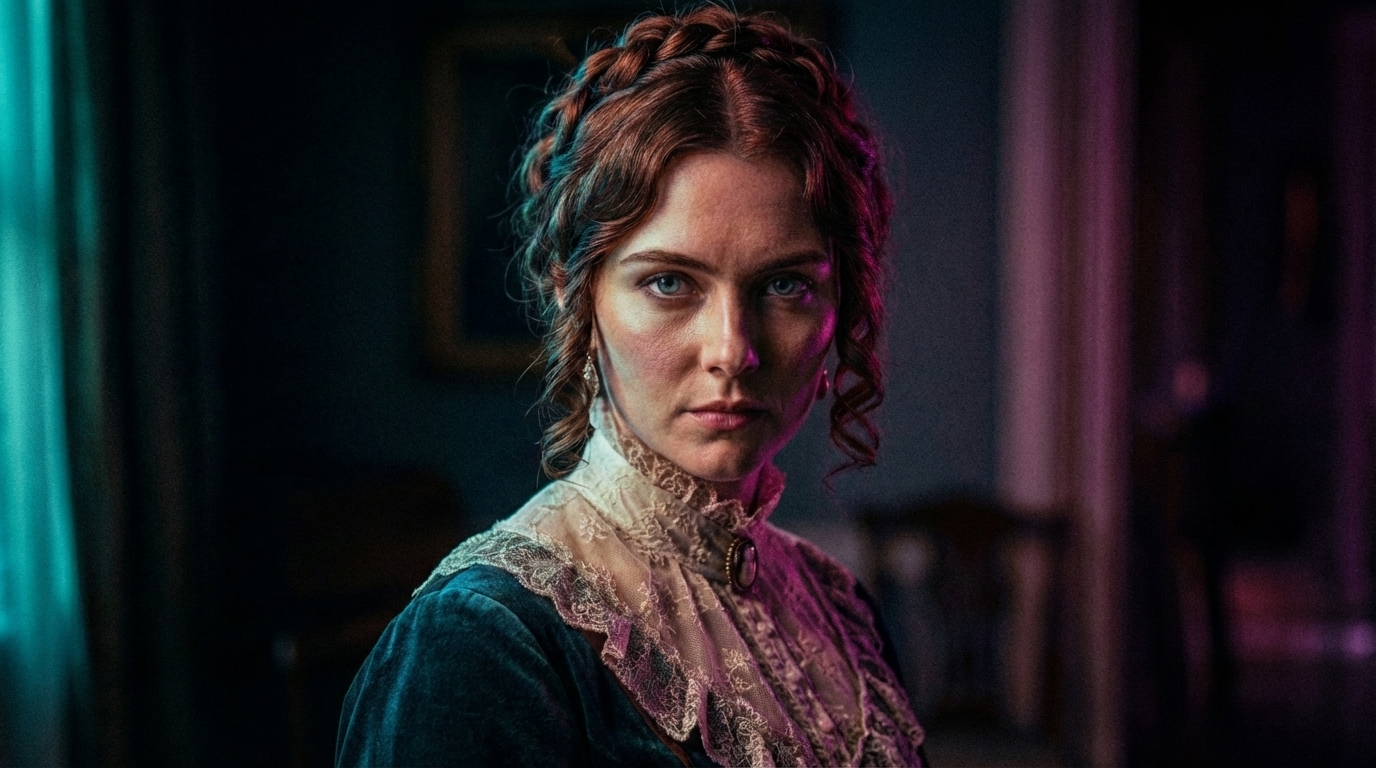
Madelyn's physical beauty attracted attention as she matured into womanhood. Standing with natural grace, she possessed delicate features—high cheekbones, a refined nose, and expressive hazel eyes that conveyed both warmth and intelligence. Her dark, lustrous hair was often styled according to the latest fashions, complementing her impeccable sense of dress. She moved through Portsmouth society with dignified presence and commanding social skills, charming those around her whilst maintaining a certain reserve that only increased her appeal.
A Fateful Encounter
The arrival of William Thomas Jeffries Sr. in Portsmouth during early 1818 marked the pivot point upon which Madelyn's entire future would turn. William, then thirty-three years old, had sailed from Van Diemen's Land on business that remained somewhat obscure, though he presented himself as a successful colonial entrepreneur seeking to expand his trading connections. His manner combined colonial directness with carefully cultivated gentility, and his obvious wealth impressed Portsmouth's mercantile families.
Their meeting occurred through the interconnected web of business acquaintances that bound Portsmouth's commercial class. Thomas Bally, always alert to potentially lucrative connections, entertained the prosperous colonist, and William's eye immediately fell upon Madelyn. At twenty-three, she represented everything he might have hoped to find in an English wife—beauty, intelligence, proper upbringing, and the merchant family connections that might prove useful to his expanding enterprises.
William's courtship proved intense and surprisingly brief. He possessed a charismatic charm that could be overwhelming, and Madelyn found herself drawn to his confidence and his tantalising descriptions of life in the distant colony. He spoke of grand estates and expanding opportunities, of a growing society where a clever woman might find scope for her talents. He painted Tasmania as a land of possibility, carefully omitting the darker aspects of his business dealings and the shadowy sources of his wealth.
The ten-year age difference concerned neither family particularly—such gaps were commonplace in respectable matches. Thomas Bally investigated William's credentials as thoroughly as circumstances allowed, receiving satisfactory assurances about the colonial gentleman's financial position. What he could not investigate—indeed, what no one could have discovered through conventional inquiry—was the true nature of William's wealth and the terrible bargain that had secured it.
Madelyn's own feelings remain somewhat opaque at this remove. She clearly felt genuine attraction to William, drawn to his vitality and his vision of their future together. Whether she sensed the shadows behind his smile, whether some instinct warned her of complexities she could not yet name, the historical record provides no answer. What is certain is that she accepted his proposal, preparing to exchange the familiar comforts of Portsmouth for the unknowable challenges of colonial life.
The Journey to a New World
Their wedding on 28 June 1818 was a lavish affair befitting a merchant family's eldest daughter. The ceremony united not merely two individuals but two worlds—the established mercantile society of Portsmouth and the colonial ambitions of Van Diemen's Land. Elizabeth Bally wept as she embraced her daughter, understanding with maternal prescience that this farewell might well be permanent. The distance was too vast, the journey too expensive and dangerous, for casual returns to England.
On 13 July 1818, the newlyweds boarded the Persephone for the long voyage to Tasmania. The journey would test Madelyn in ways no Portsmouth drawing room ever could. Confined aboard ship for months, she experienced the tedium of endless ocean, the terror of storms, the constant proximity to strangers, and the physical discomforts of maritime life. Yet she proved resilient, adapting to circumstances with practical grace that impressed even the hardened crew.
William's behaviour during the voyage offered glimpses of both the man she had married and the mysteries she had yet to uncover. He could be attentive and charming, entertaining her with stories of colonial society and their future plans. But there were also moments when he retreated into brooding silence, standing at the rail and staring at the horizon with an expression she could not interpret. When she attempted to draw him out, he would deflect with easy charm, leaving her questions unanswered.
The Persephone encountered pirates near the Cape of Good Hope, a terrifying episode that revealed William's capacity for decisive action. His calm command during the crisis impressed the ship's officers and reassured Madelyn, though she noted the ease with which he handled violence—a facility that suggested prior experience she had no context to understand. The pirates were repelled, and the ship continued its journey, but the incident planted seeds of questions Madelyn lacked the framework to articulate.
Mistress of Jeffries Manor
When the Persephone finally sailed into Hobart Town on 16 September 1818, Madelyn's first sight of Van Diemen's Land struck her with its savage beauty. The settlement clung to the shore beneath the looming presence of Mount Wellington, whilst the surrounding bush sprawled in untamed profusion. This was no genteel English landscape but something wilder, more primal, simultaneously beautiful and faintly threatening.
The journey to Jeffries Manor revealed the extent of William's holdings. The estate sprawled across acres of prime land along the Derwent River, its Georgian manor house standing as an assertion of English civilisation imposed upon colonial wilderness. Completed mere weeks before Madelyn's arrival, the house represented William's ambitions made manifest—grand reception rooms, elegant bedchambers, extensive servants' quarters, all furnished with careful attention to English standards of comfort and taste.
Madelyn stepped into her role as mistress of Jeffries Manor with careful determination. She understood that colonial society, however rough its edges, operated according to hierarchies she could navigate. Her task was to transform William's impressive but somewhat stark establishment into a proper home, to create the social context that would cement their position amongst Tasmania's emerging elite.
The household staff presented her first challenge. The convict servants who maintained the manor and worked the estate lands watched their new mistress with wary calculation, assessing whether she would prove harsh or fair, knowledgeable or naive. Madelyn approached them with firmness tempered by pragmatism, establishing clear expectations whilst demonstrating that competent service would be rewarded with fair treatment. She learned to manage the peculiar dynamics of a household where servants served under compulsion rather than contract, adapting her English assumptions to colonial realities.
Social obligations followed swiftly. Colonial Tasmania's elite, hungry for refined company and eager to assess the new arrival, called upon Mrs William Jeffries with competitive frequency. Madelyn discovered that her Portsmouth upbringing had equipped her admirably for this challenge. She could converse knowledgeably about English fashion and London society, could perform at the pianoforte with creditable skill, and could host dinners that impressed the wives of government officials and successful merchants. The grand ball held at Jeffries Manor in August 1820 announced definitively that the Jeffries family had arrived as players in colonial society.
Yet beneath the surface accomplishments, Madelyn sensed undercurrents she could not fully identify. Servants exchanged glances she was not meant to see. William conducted business in his locked study, refusing her entry even for innocent purposes. Visitors arrived at odd hours, their business concluded behind closed doors. And there were the rumours—never voiced directly to her, but whispered in corners, published in veiled newspaper references—suggestions that William's wealth derived from less than entirely legitimate sources.
Motherhood and Mounting Shadows
The birth of William Edward Jeffries Jr. on 8 November 1819 brought Madelyn the joy and purpose of motherhood whilst simultaneously intensifying her determination to protect what she was building. The labour was difficult—colonial medicine being what it was, far from the reassurances of experienced Portsmouth physicians—but she endured with characteristic resilience. When the midwife finally placed her son in her arms, Madelyn felt the fierce protective love that would define much of her remaining life.
Young William became the centre around which Madelyn's world revolved. She nursed him herself despite the raised eyebrows of some colonial ladies who considered such intimacy beneath a woman of her station. She supervised his nursery with exacting attention, dismissing one nurse for rough handling and insisting upon cleanliness standards that servants found excessive. This child represented not merely William Sr.'s heir but the purpose that would sustain her through challenges she could not yet imagine.
Motherhood also heightened Madelyn's awareness of her husband's increasingly troubling behaviour. William Sr. grew more preoccupied, more frequently absent on mysterious business, more prone to dark moods that no amount of wifely solicitude could penetrate. The loving attentiveness he had shown during their courtship and early marriage eroded into distracted impatience. When Madelyn ventured questions about his concerns, he deflected with increasing irritation, making clear that his business remained his own affair.
The year 1820 brought mounting strain. Reverend Barrows confronted William about rumours connecting the Jeffries enterprise to the disappearances of young men from the colony. Madelyn, overhearing fragments of heated conversation, felt cold dread settle in her stomach. What business was William conducting that attracted such terrible speculation? When she attempted to discuss the matter, William dismissed her concerns with contemptuous assurance that gossip required no response from respectable people.
By early 1821, the marriage had frayed badly. Conversations at dinner became stilted performances, each partner performing normality for the servants' benefit. William's absences grew longer and less explained. When present, he retreated into his study, emerging red-eyed and dishevelled after hours spent with paperwork and brandy. Madelyn recognised the signs of a man under mounting pressure, but he refused her attempts at support with wounded pride that forbade discussion.
The Vanishing
The events of August 1821 shattered Madelyn's world with brutal finality. The fateful dinner on 9 August 1821 passed in tense silence, William pushing food around his plate without eating, responding to Madelyn's gentle inquiries with monosyllabic dismissals. When he retired to his study afterwards, she heard the lock turn with metallic finality. Later, standing outside the door, she detected the murmur of his voice—speaking to whom? The house held only servants, all of whom were accounted for elsewhere.
The following morning brought the discovery that would transform everything. Madelyn woke to cold sheets, William's side of the bed unslept in. Initial irritation—he must have fallen asleep at his desk again—transformed to alarm when she found his study empty, papers scattered across the desk, the window standing open to admit the morning chill. When frantic searches of the house and grounds revealed nothing, when the staff could offer no explanation for their master's absence, Madelyn felt the first stirrings of the terror that would haunt her for decades.
Her report to Constable Broadmoor began the nightmare of official scrutiny. The constable's careful questions, his assessment of her demeanour, his methodical examination of the manor—all signalled that she herself had become a suspect. The whispered rumours that had swirled around William now attached themselves to her. Had the wealthy widow arranged her husband's convenient disappearance? The gossip that would follow her for years took root in those first hours of investigation.
The search party Broadmoor organised combed the estate grounds and the surrounding bush, finding nothing. William had simply vanished, leaving no trace beyond the open window and scattered papers. Each passing hour deepened the mystery and darkened Madelyn's prospects. Colonial society, initially sympathetic, began viewing her with speculation that ranged from pitying to suspicious.
The interrogation by Detective Inspector Lockhart on 16 August 1821 tested Madelyn's composure to its limits. His questions probed the marriage's intimate details, sought contradictions in her statements, attempted to corner her into admissions of foreknowledge or complicity. She maintained dignified composure through hours of questioning, answering honestly whilst recognising that honesty itself made her appear evasive. How could she explain undercurrents she had sensed but not understood? How could she articulate suspicions she had never allowed herself to fully form?
When Lockhart's investigation eventually cleared her of direct involvement, the exoneration proved hollow. Public opinion, always more powerful than legal conclusions, continued viewing her with doubt. She was the woman who had somehow benefited from her husband's disappearance, inheriting his wealth and continuing to live in his grand manor. That she had played no part in his fate mattered little against the compelling narrative of the ambitious wife disposing of her inconvenient husband.
Forging a New Identity
The weeks following William's disappearance forced Madelyn into transformations she could never have imagined during her Portsmouth girlhood. Elizabeth Whitehall, one of the few colonial ladies who offered genuine friendship rather than curiosity-driven sympathy, counselled her with practical wisdom: focus on young William Jr., maintain the estate's operations, and demonstrate through consistent behaviour that the Jeffries name stood for respectability and competence.
Martha Elizabeth Taylor, William Sr.'s capable business manager, proved instrumental in Madelyn's transition from dependent wife to independent estate manager. Martha, herself navigating a male-dominated commercial world, recognised in Madelyn the intelligence and determination necessary for survival. She patiently explained the intricacies of William's business holdings, walking Madelyn through ledgers and contracts, teaching her to read balance sheets and assess investment opportunities. What began as emergency education evolved into genuine expertise as Madelyn discovered she possessed her father's merchant instincts.
The receipt of the title deed to Prospect Hill Estate on 27 September 1821 marked a significant milestone. This formal recognition of her stewardship transformed her legal position from uncertain widow to property owner. The deed represented more than mere paperwork—it signalled that colonial authorities acknowledged her capacity to manage substantial holdings, that she had successfully navigated the immediate crisis of William's disappearance without collapsing into helpless dependency.
Her first board meeting at Jeffries Industries on 10 November 1821 tested her newfound confidence. The assembled businessmen—some genuinely supportive, others openly sceptical—awaited her direction. Madelyn stood before them, conscious of their assessment, aware that weakness would invite challenges to her authority. Drawing upon Martha's coaching and her own merchant family background, she conducted the meeting with quiet competence, demonstrating that she understood the business's fundamentals and intended to protect its interests. The meeting concluded without dramatic incident, but its successful completion established a precedent: Madelyn Jeffries was not merely a placeholder awaiting masculine rescue but a capable manager in her own right.
The Business Matriarch
The years 1821 through 1837 saw Madelyn's transformation into one of colonial Tasmania's most formidable businesswomen. She expanded Jeffries Industries beyond its original scope, diversifying into agricultural holdings, securing strategic partnerships, and investing in the Van Diemen's Gazette to ensure favourable media coverage. Each success reinforced her growing reputation whilst simultaneously distancing her from the scandal that had marked William's disappearance.
Her investment strategy displayed remarkable shrewdness. Where William had concentrated on high-risk ventures that promised spectacular returns, Madelyn pursued steadier growth through diversified holdings. She expanded the family's agricultural properties in 1834, recognising that land represented security that commerce alone could never guarantee. Her partnership with the Van Diemen's Land Company in 1837 demonstrated sophisticated understanding of how strategic alliances could amplify modest resources.
The legal challenges she faced tested both her business acumen and her personal resilience. Rivals attempted hostile takeovers, questioning whether a woman could legitimately control such extensive holdings. She defended Jeffries Industries in court on 11 July 1823, presenting evidence and testimony with such clarity that the judge ruled decisively in her favour. The victory sent a powerful message to any who might challenge her authority: Madelyn Jeffries understood both business and law, and would deploy both to protect what was hers.
Her management style balanced firmness with fairness. She demanded competent performance from employees and business associates whilst rewarding loyalty and skill. Those who served her well found her a generous patron; those who attempted deception or disloyalty discovered she possessed both her husband's ruthlessness and her father's merchant's instinct for detecting dishonesty. The contrast between her social grace and her business steel often caught rivals off guard—the elegant lady who could discuss needlework with equal facility as shipping contracts proved a formidable opponent.
The Philanthropic Turn
Madelyn's establishment of The Haven Home for Children in 1825 marked a significant shift in her public identity. The orphanage, housed in the former Rosehill estate that Madelyn renovated at considerable expense, provided shelter and education for Hobart's abandoned children. Her inaugural speech at the opening ceremony on 25 November 1825 moved listeners with its evident sincerity, as she spoke of giving orphaned children the security and opportunity that William Jr. had been fortunate enough to inherit.
The Haven became Madelyn's passion project, channelling her maternal instincts and her wealth towards creating something meaningful beyond mere family legacy. She visited regularly, involved herself in selecting staff and developing curriculum, and personally funded expansions as the institution's reputation grew. Her collaboration with Eliza Jane Campbell, who shared her philanthropic vision, created a partnership that enhanced both women's social standing whilst accomplishing genuine good for vulnerable children.
This philanthropic work served multiple purposes. It demonstrated that the Jeffries wealth could benefit the broader community, countering lingering whispers about William Sr.'s dubious business practices. It provided Madelyn with purpose beyond business management, fulfilling emotional needs that commerce alone could never satisfy. And it positioned her as a benefactor rather than merely a businesswoman, earning respect that pure commercial success could never command.
The contrast between her business ruthlessness and her philanthropic generosity created a compelling public persona. She could negotiate contracts with hard-nosed pragmatism, then turn around and donate substantial sums to charitable causes. This duality confused observers expecting simple categories—was she businesswoman or philanthropist, hard or soft, calculating or compassionate? The answer, of course, was that she encompassed all these qualities, deployed strategically according to circumstances.
Raising the Heir
Throughout these years of business expansion and philanthropic work, Madelyn never lost sight of her primary purpose: preparing William Jr. to assume his inheritance. She approached his upbringing with the same strategic intelligence she brought to business matters, understanding that his success would ultimately determine the Jeffries legacy's survival.
His enrollment at Hutchins School in September 1832 represented careful calculation. The prestigious institution would provide him with education and social connections, preparing him to move confidently amongst Tasmania's elite. But it also distanced him from Jeffries Manor during the years when rumours about his father's disappearance might prove most troubling to a sensitive child. Madelyn visited regularly, maintaining their bond whilst allowing the school environment to shape him into the gentleman Tasmania expected him to be.
His graduation with honours in December 1837 vindicated her investment. The multiple academic prizes he received, his evident popularity amongst his peers, his graceful acceptance of accolades—all suggested that William Jr. possessed the intelligence and character necessary to honour the family name. Madelyn watched him receive award after award, her tears blending pride with relief that he had survived the shadow of his father's disappearance to emerge as a respected young man in his own right.
When William Jr. took control of Jeffries Industries on 8 November 1837, his eighteenth birthday, Madelyn orchestrated the transition with characteristic care. She spent months prior preparing him, walking him through every aspect of the business, introducing him to key partners and associates, ensuring he understood both the opportunities and the responsibilities he was inheriting. Her willingness to cede control demonstrated confidence in his readiness whilst also marking her own success: she had preserved and expanded William Sr.'s empire sufficiently to pass it intact to the next generation.
Later Years and Legacy
Madelyn's official retirement from active business management in February 1841 marked the beginning of a new phase rather than genuine disengagement. She remained a trusted adviser to William Jr., consulted on major decisions whilst avoiding the day-to-day operations that had consumed her previous two decades. Her retreat from public business life allowed her to focus more intensively on philanthropic work, expanding The Haven Home's capacity and establishing additional charitable initiatives.
Her sixtieth birthday celebration in September 1838 had demonstrated the transformation of her public standing. Colonial society that once whispered suspicions now fêted her as a remarkable woman who had overcome tragedy to build a legacy of philanthropy and business success. The elaborate celebration at Jeffries Manor, attended by Tasmania's elite, signalled her complete social rehabilitation—from suspected murderess to respected matriarch.
William Jr.'s marriage to Ellen Cross on 15 June 1843 brought Madelyn particular satisfaction. The union of her son with Judge Cross's daughter represented ultimate vindication—respectable society embracing the Jeffries family despite the scandal that might have destroyed them. Standing beside the newlyweds, Madelyn could reflect that she had not merely survived William Sr.'s disappearance but had transformed it from potential catastrophe into the foundation of an enduring dynasty.
The birth of her granddaughter, Madelyn Jeffries, on 18 November 1845, created a poignant circle. The child bore her name, would grow up in the world her grandmother had fought to secure, would inherit advantages purchased through determination and sacrifice. Madelyn held her namesake granddaughter, conscious that this child would never know the uncertainty and fear that had defined her grandmother's middle years, and felt that her struggles had achieved their intended purpose.
The Final Years
Madelyn's health remained relatively robust through her sixties, though the mysterious ailment that struck her in April 1835 presaged the gradual decline of her later years. By the 1860s, she moved more slowly through the manor's corridors, relied increasingly upon servants for tasks she had once accomplished independently, and spent longer hours in quiet reflection. Yet her mind remained sharp, her interest in family affairs undiminished, her pride in what she had accomplished unshaken.
Her final public appearance in June 1866 drew substantial attendance from those who remembered her remarkable life. She spoke briefly, her voice weakened but still carrying authority, thanking those who had supported the family through difficult times and expressing satisfaction that the Jeffries name stood for more than mere wealth—it represented resilience, philanthropy, and contribution to colonial society's development.
On 18 November 1867, Madelyn Elizabeth Jeffries passed away peacefully in her sleep at Jeffries Manor, aged seventy-two. Her death ended a life that had witnessed Tasmania's transformation from raw penal colony to prosperous settlement, that had survived personal scandal to create enduring institutions, that had proved a woman's capacity to navigate and dominate the masculine worlds of business and property.
She was laid to rest in the family mausoleum on the manor grounds, her resting place overlooking the lands she had preserved and expanded. The funeral drew mourners from across the colony, testimony to the respect she had earned through decades of competent management and generous philanthropy. The Van Diemen's Gazette published a lengthy obituary praising her business acumen and charitable works whilst tactfully avoiding detailed discussion of the scandal that had marked her early widowhood.
The mystery of William Sr.'s disappearance remained unsolved at her death and would continue haunting the Jeffries legacy for generations. But Madelyn's own legacy transcended that mystery. She had demonstrated that catastrophe could become opportunity, that scandal could be transformed into respectability, that a merchant's daughter from Portsmouth could become one of colonial Tasmania's most influential women. Her life embodied resilience, strategic intelligence, and the determination to create meaning from chaos—qualities that would echo through the Jeffries family for generations to come.







