Lydia Hope Baker
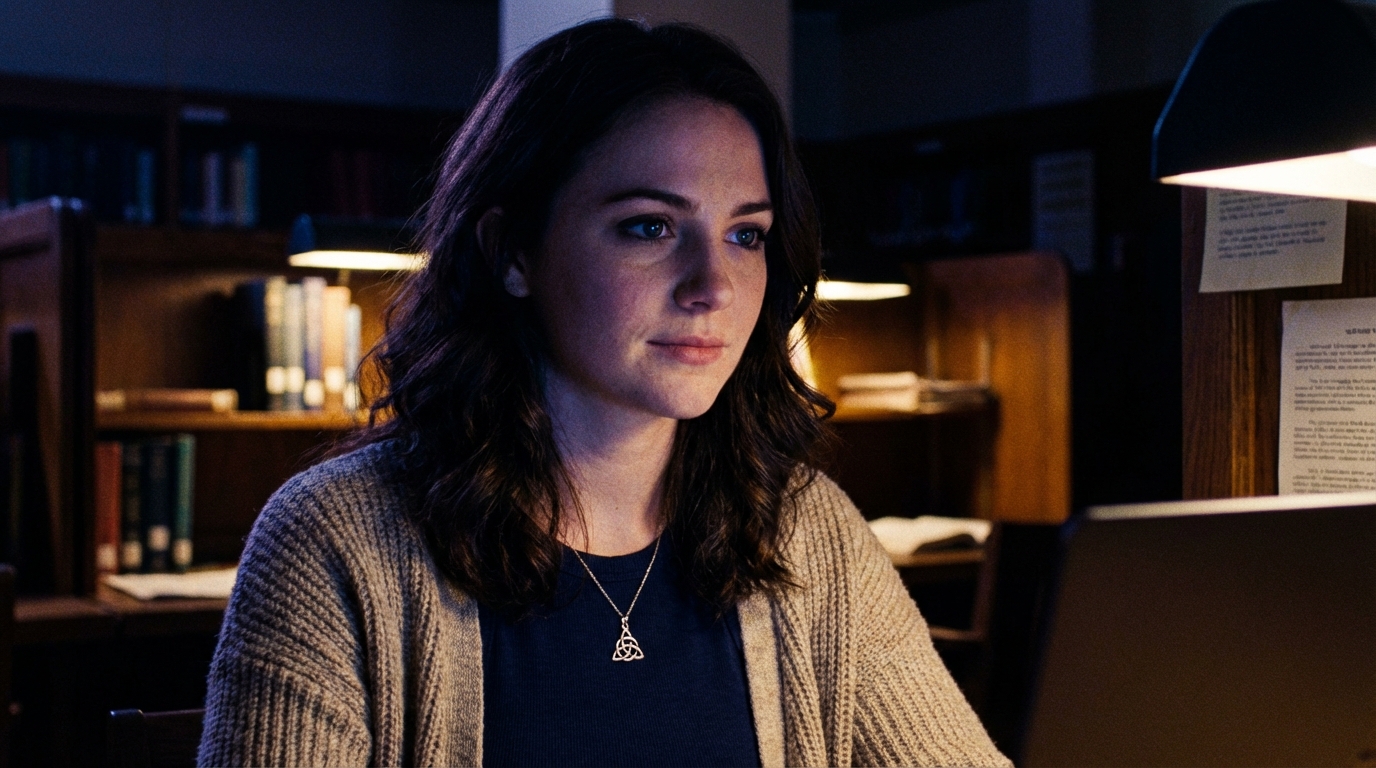
Lydia Hope Baker, born 4 June 2000 in Adelaide, South Australia, is the sixth of seven children in the Baker household of Smithfield. Known for her calm demeanour and natural empathy, she discovered her vocation in midwifery during her final years of high school. Now a student at Flinders University, she navigates the demands of clinical placements whilst processing a family fracture she didn't anticipate: in 2019, her parents and four siblings relocated to Clivilius, leaving Lydia among the three Baker children who remained on Earth. Her choice to stay—driven by educational commitment and quiet uncertainty—has shaped her into someone learning to build identity independent of the family constellation that once defined her.
Birth and Early Childhood
Lydia Hope Baker was born on 4 June 2000 at the Lyell McEwin Hospital in Elizabeth, the sixth child and fourth daughter of Jonathan Edward Baker and Evelyn Margaret Dawson Baker. Her middle name, Hope, was chosen by her mother during a difficult pregnancy that had threatened miscarriage in the first trimester—a name that carried weight Lydia wouldn't fully understand until years later.
Her arrival completed the trio of Baker daughters who would close out the family's childbearing years: Rebecca eighteen months before her, Chloe eleven months after. These three girls, born in quick succession after a run of four boys and Amelia, formed their own subset within the larger sibling constellation. They shared bedrooms, hand-me-down clothes, and the particular experience of being younger sisters in a household where the older children had already established patterns and personalities.
The Smithfield home that shaped Lydia's earliest memories was a place of constant motion and managed chaos. Seven children across eight years meant overlapping needs, competing demands, and a noise level that visitors found overwhelming. Lydia learned early to find stillness within commotion, to create internal quiet when external quiet was impossible. It was a survival skill that would later serve her well in delivery rooms, though at the time it simply felt like the only way to exist in a household where attention was perpetually divided.
Her relationship with her parents reflected the realities of large-family life. Her mother Evelyn, juggling Relief Society responsibilities alongside household management, was a constant presence but rarely an undivided one. Conversations happened whilst folding laundry or supervising homework; affection was expressed in brief touches between tasks. Lydia didn't experience this as deprivation—she had no framework for comparison—but she did develop an early attunement to the unspoken, learning to read her mother's moods through posture and silence rather than explicit communication.
Her father Jonathan was more peripheral in her early childhood, present for family devotions and weekend activities but largely occupied with work during weekday hours. What Lydia remembered most from those years was his workshop—the smell of sawdust, the careful way he handled tools, the quiet that surrounded him even when the house was loud. She liked sitting in the corner whilst he worked, not speaking, just sharing space. It was perhaps her first experience of companionable silence, a mode of connection she would later recognise as distinctly her own.
Growing Up in a Large Family
Lydia's position as sixth of seven children granted her a particular kind of invisibility that carried both freedom and cost. She was neither the eldest with its attendant responsibility, nor the youngest with its concentrated attention. She existed in the comfortable middle-lower region of the birth order, old enough to be expected to manage herself, young enough that expectations remained modest.
This invisibility suited her temperament. Lydia was never the child who demanded attention or created drama; she preferred observation to participation, listening to speaking. Family dinner conversations swirled around her whilst she absorbed rather than contributed. Teachers sometimes forgot she was present; siblings sometimes talked past her as though she weren't in the room. She learned to treat this erasure as protection rather than rejection, though the distinction wasn't always clear even to herself.
Her closest sibling relationship was with Chloe, eleven months her junior. The two girls shared a bedroom through childhood, developing the wordless communication that comes from constant proximity. Where Lydia was calm, Chloe was intense; where Lydia absorbed, Chloe analysed. They complemented each other in ways that felt natural rather than negotiated, each filling gaps the other left. Lydia looked out for Chloe with protective instinct; Chloe drew Lydia into engagement she might otherwise have avoided.
Her relationships with older siblings were more distant, shaped by age gaps that felt larger in childhood than they would in adulthood. Amelia, seven years older, had functioned as a second mother during Lydia's early years—competent, reliable, but not quite peer. The brothers—Benjamin, Nathaniel, Samuel—existed in a separate sphere of masculine interests and activities that didn't intersect naturally with the younger girls' world. Rebecca, closest in age among the older children, was Lydia's primary model for adolescence, though their temperaments differed enough that emulation never quite fit.
School provided a space where Lydia's quietness registered differently than at home. In classrooms where teachers had time to notice individual students, her calm attention and thoughtful responses earned recognition she didn't receive in the family competition for attention. She wasn't academically exceptional—her strengths lay in consistency rather than brilliance—but she was reliably present, reliably prepared, reliably kind to struggling classmates. Teachers described her as "a calming presence" and "mature beyond her years," assessments that pleased her parents without capturing the full complexity of a girl who had learned stillness because the alternative felt impossible.
Education and the Discovery of Vocation
Lydia attended Smithfield Primary School and then Craigmore High School, following the path her older siblings had worn. Her academic performance was steady without being remarkable—she worked conscientiously, met expectations, avoided the extremes of either struggle or excellence that attracted attention. She preferred subjects that engaged her sense of pattern and care: biology, health sciences, the human systems that fascinated her in ways she couldn't initially articulate.
The discovery of midwifery as a vocation came through an unlikely source: a Year Eleven health class assignment on maternal mortality. The research led her to birth stories, which led her to midwifery memoirs, which led her to a recognition that felt less like revelation than like remembering something she had always known. Here was work that combined her gifts for calm presence with meaningful contribution, that valued the quiet holding of space she had been practising her entire life.
She kept this discovery private at first, testing it internally before exposing it to family scrutiny. When she finally mentioned midwifery at a family dinner, the response was positive but glancing—her parents expressed approval, her siblings offered brief acknowledgment, and the conversation moved on to more pressing topics. Lydia wasn't surprised; announcements in a family of nine rarely commanded sustained attention. But she was quietly hurt in ways she didn't examine, recognising that her vocation—the most significant self-discovery of her adolescence—had registered as minor news.
Her application to Flinders University's Bachelor of Midwifery programme became her focus through Year Twelve. The programme was competitive, demanding strong academic performance and demonstrated commitment to healthcare. Lydia approached the application with characteristic thoroughness, arranging observation experiences at a local birth centre, volunteering with a community maternal health organisation, crafting personal statements that articulated her calling without melodrama. When the acceptance letter arrived in late 2018, she felt satisfaction more than celebration—another step completed on a path that felt increasingly certain.
The timing of her university acceptance coincided with the intensifying crisis in her family—the strange events surrounding Chloe, the cryptic conversations between her parents, the sense that something was shifting beneath the surface of their household. Lydia registered these disturbances without fully understanding them, focused on her own transition whilst her family navigated transformations she wouldn't comprehend until they had already occurred.
The 2018 Crisis and the Choice to Stay
The events that drew the Baker family toward Clivilius reached Lydia through the same fragmented channels as her other siblings: partial conversations, unexplained absences, a growing sense that her parents possessed knowledge they weren't sharing. She knew something was happening with Chloe—her closest sibling had become withdrawn, preoccupied, engaged in activities Lydia couldn't access or understand. But the full picture remained obscured, either by deliberate protection or simple chaos.
When her parents announced their intention to relocate in early 2019, Lydia was eighteen years old and preparing for her first semester at Flinders. The decision confronted her with a choice she felt unprepared to make: follow her family into circumstances she didn't understand, or remain in Adelaide to pursue the education she had worked toward.
The practical arguments for staying were compelling. She had secured a place in a competitive programme that wouldn't transfer to wherever they were going. Her entire academic and professional future depended on completing a degree that required specific clinical placements and institutional relationships. Walking away meant abandoning years of preparation for an outcome she couldn't envision.
But the practical arguments masked deeper uncertainties she was less willing to examine. Lydia didn't fully believe in the spiritual framework her parents used to explain their decision. She had inherited their faith without inheriting their conviction, maintaining practice without developing the personal testimony that seemed to drive their choices. The idea of uprooting her life based on revelation she hadn't received felt wrong in ways she couldn't articulate without seeming faithless.
She also, if she was honest with herself, wanted distance from the family intensity she had navigated her entire life. The prospect of building an identity independent of the Baker constellation—of being Lydia rather than "one of the Baker children"—carried appeal she felt guilty for acknowledging. Staying wasn't just about education; it was about self-discovery, about finally having space to become someone defined by her own choices rather than her family position.
The decision to remain came with costs she anticipated and costs she didn't. She expected to miss her parents and siblings; she didn't expect the particular loneliness of being left behind whilst others embarked on extraordinary journeys. She expected practical challenges of independence; she didn't expect the identity questions that arose when the family matrix that had always defined her suddenly relocated to another dimension.
University Life and Professional Development
Flinders University's Bedford Park campus became Lydia's new world from February 2019, its brutalist architecture and eucalyptus-lined pathways replacing the familiar geography of Smithfield. The Bachelor of Midwifery programme demanded everything she had anticipated and more: rigorous academic content, intensive clinical placements, the emotional labour of accompanying women through birth's uncertainties. She discovered that she was suited to the work in ways that confirmed her vocational choice, and challenged by it in ways that exposed limitations she hadn't recognised.
Her calm demeanour, refined through years of family navigation, served her well in clinical settings. Labouring women responded to her steady presence; anxious partners relaxed in her company; experienced midwives noted her capacity to hold space without intruding. She could be present for hours without requiring acknowledgment, could absorb others' fear without becoming fearful herself, could offer comfort through touch and silence when words felt inadequate.
But midwifery also demanded skills she had to consciously develop. Her tendency toward passivity, adaptive in a large family, sometimes manifested as hesitation in clinical contexts where decisive action was required. Her comfort with observation sometimes delayed necessary intervention. Her difficulty expressing her own needs meant she often neglected self-care during demanding placements, arriving at exhaustion before recognising she should have asked for support. The feedback from clinical supervisors was consistent: excellent presence, developing skills, needs to advocate more strongly for herself and her patients.
She lived in student accommodation for her first year, sharing space with strangers after a lifetime of sharing with siblings. The adjustment was simultaneously liberating and disorienting. She could eat when she wanted, sleep when she wanted, exist without constant negotiation. She could also go days without meaningful conversation, experiencing a loneliness that felt different from the isolation she had sometimes felt within her family. That had been invisibility within connection; this was simple absence of connection altogether.
Her second and subsequent years saw her move into a shared house with other midwifery students, women who understood the particular demands of their programme and could offer mutual support through clinical challenges. These friendships—functional, practical, grounded in shared experience—provided community she hadn't realised she needed. They weren't the deep bonds she had known with Chloe, but they were real, and they sustained her through the years when her biological family existed primarily through screens and scheduled calls.
Faith and Its Complications
Lydia's relationship with the Church of Jesus Christ of Latter-day Saints followed patterns common among young adults raised in devout households: maintained participation without deepened conviction, continued practice without personal revelation. She attended her local ward, accepted callings when offered, engaged with the community her family's faith had given her. But she also carried questions she rarely voiced, uncertainties that the family's extraordinary experiences had intensified rather than resolved.
Her parents' decision to relocate to Clivilius rested on spiritual conviction she couldn't share. They described promptings, testimonies, certainties she didn't access through the same channels. Their faith had been tested and confirmed by experiences she hadn't witnessed; her faith remained theoretical, inherited rather than discovered. She wondered sometimes whether she was deficient in some spiritual capacity others possessed, whether her failure to receive confirming revelation indicated inadequacy or simply difference.
These doubts remained largely private. She continued attending church partly from habit, partly from genuine appreciation for the community, partly from reluctance to add faith crisis to the complications already marking her relationship with her family. If she stopped attending, her parents would worry; if she expressed doubt, they might feel they had failed her. The path of least resistance—continued participation without deep engagement—felt manageable even if it wasn't entirely honest.
She found more spiritual resonance in her midwifery work than in Sunday meetings. The sacred quality of birth, the threshold between existence and non-existence, the profound vulnerability of bodies bringing forth new life—these experiences touched something in her that felt genuinely religious, even if it didn't fit neatly into doctrinal categories. She began to wonder whether her spirituality might find different expressions than her parents' tradition allowed, though she wasn't yet ready to explore what that might mean.
Family Relationships from a Distance
The video calls that connected Lydia to her family in Clivilius carried texture she found difficult to describe. The faces were familiar; the settings were not. Her parents appeared against backdrops she couldn't place, referencing experiences she couldn't contextualise, inhabiting a reality that diverged further from hers with each passing month. The conversations were warm but constrained, full of topics that couldn't be fully discussed across the dimensional divide.
Her relationship with Chloe, once the closest bond in her life, suffered most from the distance. The eleven months between them had felt like nothing when they shared a bedroom; it felt like everything when Chloe existed in a world Lydia had chosen not to enter. They still talked regularly, but the ease was gone. Chloe had married Charles Smith, was raising children, was building a life that Lydia could acknowledge but couldn't really know. The sister who had once finished her sentences now lived experiences Lydia could only approximate through description.
Her connections with siblings who remained on Earth—Amelia in Mount Barker, Benjamin in Adelaide—provided more accessible relationship, though different from what they had been. Amelia, seven years older, had always functioned more as auxiliary parent than peer; that dynamic persisted, with Lydia receiving advice and concern rather than equal exchange. Benjamin, the accountant, was temperamentally similar to their father—reliable, reserved, more comfortable with parallel activity than emotional conversation. They met occasionally for dinners that were pleasant without being intimate, maintaining family connection through proximity if not depth.
The grief Lydia carried was complicated and largely unacknowledged. Her family wasn't dead; they were simply elsewhere. She couldn't mourn them in conventional ways, couldn't access the support structures that existed for more recognisable losses. She was supposed to be happy for them—they had followed their convictions into adventure and purpose. Her sadness at their absence felt selfish, inappropriate, something to manage privately rather than express.







