Julia Anastasia Novak
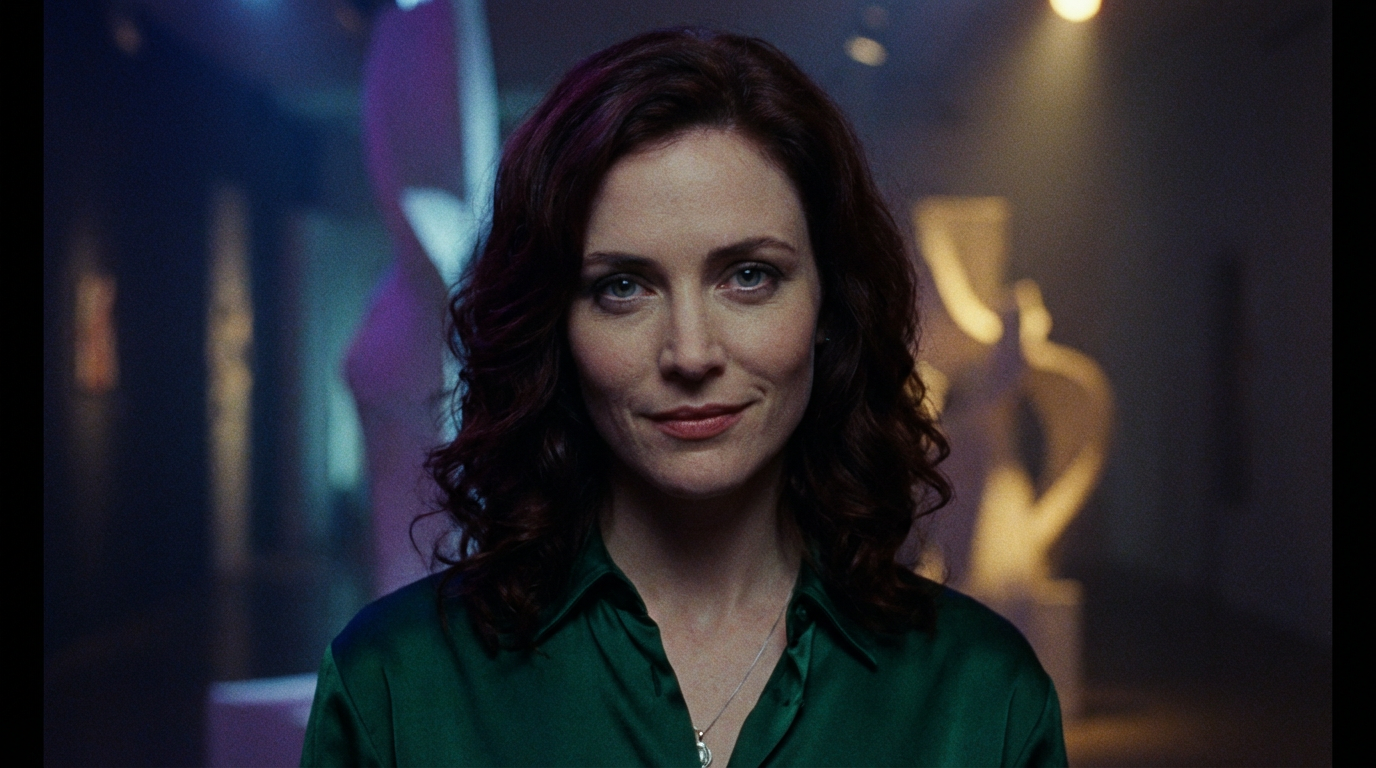
Julia Novak represents the precarious edge where passionate art appreciation transforms into consuming obsession, a woman whose inheritance-funded devotion to contemporary sculpture has led her from Melbourne's gallery openings to a murder investigation in the Australian outback. Born into professional privilege in 1993, she has spent three decades attempting to reconcile her artistic soul with her family's pragmatic expectations, ultimately finding dangerous freedom in financial independence and fatal attraction in the work of sculptor Teppo Jaskalainen.
Privilege and Rebellion
Julia Anastasia Novak entered the world at Melbourne's Epworth Hospital on 15th August 1993, the only child of Dr. Mikhail Novak and Natalia Novak QC. Her birth into Toorak's professional elite established immediate expectations—the surgeon father and barrister mother had delayed parenthood until their careers were firmly established, viewing their daughter as the culmination of careful planning rather than happy accident.
Mikhail Novak, who emigrated from Prague in 1985, had transformed himself from refugee to renowned cardiothoracic surgeon through relentless discipline. His surgical suite at St. Vincent's Hospital became legendary for both technical excellence and emotional distance—qualities that would define his parenting. Natalia, née Blackstone, descended from three generations of Victorian barristers, her chambers at Owen Dixon specialising in corporate litigation worth millions. Together, they embodied Melbourne's meritocratic ideal: immigrant determination wedded to establishment pedigree.
The Novak residence on Albany Road, a modernist mansion overlooking the Yarra, provided Julia's first gallery. Mikhail collected Eastern European modernists—Kupka, Filla, Čapek—whilst Natalia preferred Australian contemporaries. Their disagreements over acquisitions became Julia's earliest art education, learning that aesthetics could provoke passion in parents who otherwise communicated through schedules and achievements.
Young Julia's childhood proceeded with orchestrated precision. Piano lessons with Madame Rostova on Tuesdays, Mandarin tutoring on Thursdays, tennis at Kooyong on Saturdays. Yet between structured activities, she would disappear into the house's art-filled spaces, spending hours before a single painting, inventing stories about brushstrokes and colour choices. Her nanny, Rosemary Hutchinson, noted the child's unusual capacity for stillness before artworks, contrasting sharply with typical childhood restlessness.
The first conflict emerged aged seven when Julia refused to continue violin lessons, declaring she wanted to paint instead. Mikhail's response—that hobbies shouldn't interfere with real education—established a pattern of dismissal that would define their relationship. Natalia negotiated compromise: painting lessons permitted if academic performance remained exceptional. This conditional support taught Julia that artistic expression required constant justification.
Family Tree
Education as Battleground
Julia's enrolment at Melbourne Grammar School's Grimwade House in 1999 placed her amongst Australia's future elite. The school's Gothic revival architecture and tradition-soaked atmosphere initially overwhelmed the introspective child who preferred observing to participating. Her Form I teacher, Mrs. Penelope Ashford, described Julia as "intellectually engaged but socially peripheral," a pattern that would persist throughout her education.
Primary school revealed Julia's divergent intelligence. Whilst excelling in humanities and arts, she struggled with mathematics and sciences—subjects her parents considered foundational. Mikhail hired expensive tutors, interpreting artistic inclination as intellectual weakness requiring correction. These sessions became battlegrounds where Julia's resistance met parental determination, neither side yielding.
Her refuge came through art teacher Ms. Bronwyn Tierney, a young educator who recognised Julia's exceptional visual intelligence. Under Ms. Tierney's guidance, Julia won the 2004 Victorian Schools Art Prize for her multimedia piece "Suburban Gothic," which reinterpreted Toorak through medieval manuscript illumination techniques. The victory provided ammunition against parental skepticism, though Mikhail dismissed it as "encouragement award for wealthy children."
Senior school at Melbourne Grammar's Wadhurst campus from 2005 intensified academic pressure. Julia's parents expected medicine or law, professions befitting their surname's growing prominence. Her House Tutor, Dr. Geoffrey Pemberton, attempted mediating between Julia's artistic interests and parental expectations, suggesting architecture as compromise—creative yet professional. Julia rejected this, recognising it as capitulation disguised as negotiation.
The International Baccalaureate programme, begun in 2009, provided unexpected freedom through its Theory of Knowledge component. Julia's extended essay, "The Epistemology of Abstract Expressionism: Knowledge Through Non-Representation," demonstrated sophisticated understanding of both philosophy and art history. Examiner comments praised its "exceptional synthesis of disparate disciplines," though her parents remained unimpressed by what they considered intellectual masturbation.
Her final year rebellion took the form of university applications. Whilst her parents believed she was applying to medicine and law programmes, Julia secretly assembled portfolios for art history departments. The deception required elaborate subterfuge—forged signatures, intercepted mail, hidden portfolio pieces. When acceptances arrived from University of Melbourne's Art History programme, the confrontation proved volcanic.
University Liberation
Despite parental threats of disinheritance, Julia commenced Bachelor of Arts (Art History) at University of Melbourne in March 2011. Mikhail agreed to pay fees but refused living expenses, forcing Julia to remain at home—a compromise that satisfied neither party but avoided complete rupture.
The daily commute from Toorak to Parkville became Julia's decompression chamber, train journeys spent reading Berger, Sontag, and Benjamin. Professor Adrian Mountford's first-year survey course "From Cave to Contemporary" validated her choice, his passionate lectures confirming art history as legitimate intellectual pursuit rather than privileged dilettantism.
Julia's undergraduate years established patterns of obsessive focus. She would fixate on particular artists or movements, researching exhaustively until achieving near-encyclopaedic knowledge before moving to the next fascination. Her second-year paper on "Violence and Void in Anselm Kiefer" demonstrated this intensity, incorporating German philosophy, Holocaust studies, and materials science in analysing single paintings.
The transformation accelerated during her third year when she discovered contemporary sculpture. Professor Yuki Tanaka's course "Space, Form, and Meaning" introduced works that transcended traditional boundaries between object and experience. Julia's encounter with documentation of Teppo Jaskelain's early installations triggered something beyond academic interest—a visceral response she struggled to articulate.
Her semester abroad at the Sorbonne in early 2013 proved pivotal. Living in a tiny sixth-floor apartment in the Latin Quarter, she immersed herself in Parisian art culture with convert's zeal. Daily visits to the Pompidou, evening openings in Marais galleries, weekend trips to see installations across Europe. She attended Jaskelain's exhibition "Northern Silence" in Helsinki, queuing overnight for entry, an experience she would later describe in her journal as "religious revelation without religion."
Returning to Melbourne for her final year, Julia seemed transformed. Her confidence had solidified, her aesthetic vision clarified. Her honours thesis, "The Influence of Abstract Expressionism on Contemporary Australian Art," earned First Class Honours, though its true significance lay in establishing her reputation within Melbourne's art community. Supervisor Dr. Catherine Westwood noted Julia's "unprecedented access to private collections and artist studios," evidence of networking skills that would define her post-university life.
The Collector Emerges
Graduation in December 2014 brought expected parental pressure to pursue "real career." Julia's compromise—interning at the National Gallery of Victoria—barely satisfied them. The unpaid position required her savings from birthday money and secret gifts from her grandmother, Elena Blackstone, who alone in the family supported Julia's artistic pursuits.
The NGV internship under Senior Curator Prudence Hammond exposed Julia to the machinery behind major exhibitions. She assisted with "Melbourne Now," handling logistics that brought her into contact with artists, dealers, and collectors. Her ability to discuss work with sophisticated understanding, combined with her obvious wealth markers, made her valuable connection for emerging artists seeking patronage.
Post-internship, Julia established herself as freelance art consultant, a title that masked uncertain income and parental subsidy. From 2015 to 2017, she advised nouveau riche collectors seeking cultural capital, her Toorak address and Melbourne Grammar connections providing credibility her age couldn't. Clients included tech entrepreneurs and mining executives whose money exceeded taste—people who needed guidance navigating Melbourne's complex art ecosystem.
Her consulting practice revealed talent for identifying undervalued artists before market recognition. She convinced property developer Brian Chen to purchase entire series by Indigenous artist Warwick Thornton months before his Venice Biennale selection tripled prices. Such successes earned commissions that funded her own collecting, though her parents remained unimpressed by what they considered glorified shopping.
The relationship with her family deteriorated steadily. Dinners became interrogations about her future, her mother's cross-examination skills deployed against her daughter's life choices. Mikhail's disappointment manifested as arctic silence, speaking to her only when absolutely necessary. Julia began avoiding family events, claiming client meetings that didn't exist.
Inheritance and Independence
Everything changed on 4th March 2018 when Elena Blackstone died, leaving Julia her entire estate—$3.2 million in investments plus her Armadale house. The inheritance, hidden from Elena's daughter Natalia until the will reading, created family rupture that proved irreparable.
The money represented more than financial freedom—it was posthumous validation from the only family member who understood her. Elena, herself a frustrated artist who'd abandoned painting for suitable marriage, had secretly followed Julia's career, attending her exhibitions under assumed names. Her letter accompanying the bequest read: "Live the artistic life I couldn't. Let beauty be your only master."
Julia's first major acquisition post-inheritance was Jaskelain's "Threshold III" for $45,000, a purchase that required flying to Stockholm for the gallery opening. Meeting the artist proved anticlimactic—Jaskelain was reserved, almost dismissive, showing little interest in her passionate analysis of his work. Yet this indifference somehow intensified her fascination, his unavailability making him more desirable.
The inheritance liberated Julia from consulting's compromises. She could now collect seriously, attend international art fairs, build relationships with galleries worldwide. Her Instagram account @JNovakCollects grew from 500 to 50,000 followers within a year, her posts combining scholarly analysis with glamorous lifestyle that made serious art accessible to younger audiences.
Her Fitzroy apartment, purchased with inheritance funds, became artwork itself. The converted warehouse's top floor provided perfect gallery lighting and walls to display her growing collection. She hired architect Tamsin Rathborne to design custom display systems that could accommodate everything from paintings to large sculptures. The space appeared frequently in design magazines, though always focusing on the art rather than the collector.
Digital Influence and Obsession's Growth
Julia's blog "The Collector's Eye," launched in January 2019, established her voice in contemporary art discourse. Her writing combined academic rigour with personal narrative, making complex artistic concepts accessible without condescension. Posts like "Why Beauty Isn't Enough: The Politics of Contemporary Sculpture" garnered international readership, leading to speaking invitations and panel appearances.
Her digital presence masked growing isolation. The inheritance had severed family connections, whilst her wealth created distance from university friends struggling with rent. Her social circle contracted to art world acquaintances—relationships predicated on mutual benefit rather than genuine affection. She spent increasing time alone with her collection, conducting silent dialogues with artworks that couldn't disappoint her.
The Jaskelain obsession intensified throughout 2019 and 2020. She attended every exhibition within feasible distance, flying to Tokyo, New York, and Berlin for openings. Her collection included seven Jaskelain pieces, each acquisition requiring greater effort as prices rose with his reputation. She began commissioning pieces from other artists that referenced or responded to his work, creating satellite collections orbiting her central fixation.
Her journal entries from this period reveal troubling progression. Initial entries analyse his work with scholarly detachment, but gradually become more personal, even romantic. She writes about dreams featuring his sculptures, elaborate fantasies where she becomes his muse, theories about hidden messages in his work meant specifically for her. The boundary between admiration and obsession blurred, then disappeared entirely.
COVID-19 lockdowns in 2020-2021 accelerated her isolation and fixation. Unable to attend physical exhibitions, she created virtual shrine to Jaskelain's work, spending hours manipulating digital images, creating elaborate collages that inserted herself into documentation of his installations. Her blog posts became increasingly focused on his work, other artists mentioned only in relation to him.
The Pilgrimage to Silverton
When the announcement came in November 2022 that Jaskelain's newest work "Mirage" would debut at Silverton's John Dynon Gallery, Julia interpreted it as destiny. The remote location, the limited attendance, the sculpture's title suggesting illusion and desire—everything seemed personally meaningful.
Her preparations for the January 2023 event exceeded reasonable anticipation. She booked accommodation three months in advance, researched Silverton's history obsessively, planned multiple outfits for different lighting conditions. Her journal entries reveal elaborate fantasies about encountering Jaskelain in the desert, how the remote setting would finally enable the connection previous meetings had failed to establish.
The journey to Silverton became pilgrimage. Flying to Adelaide, driving to Broken Hill, then the final approach to Silverton—each stage ritualised in her mind as approach to sacred space. She arrived three days before the opening, spending time photographing the landscape, visiting local galleries, inserting herself into the town's rhythm.
Her first viewing of "Mirage" on 13th January triggered response she struggled to process. The sculpture—twisted metal capturing light in ways that seemed to defy physics—appeared to her as Jaskelain's masterpiece, the culmination of everything she'd loved in his work. She spent four hours at the opening, circling the piece obsessively, photographing from every angle, avoiding other attendees who might obstruct her communion with the work.
The encounter with Naomi Simmons proved frustrating. The gallery volunteer, attempting to manage crowd flow, repeatedly asked Julia to allow others viewing space. Their interaction escalated when Julia attempted to touch the sculpture, violating explicit gallery rules. Naomi's firm but polite intervention felt to Julia like sacrilege—this provincial nobody denying her rightful intimacy with the work she understood better than anyone.
Night of Consequences
Julia's actions on the night of 13th January remain partially obscured, known only through her police testimony and investigative reconstruction. Her admitted return to the gallery around 11:30 PM, finding the door ajar, entering the outdoor sculpture garden—these facts she confirmed. What happened next becomes contested territory.
According to Julia, she merely wanted private time with "Mirage," to experience it under moonlight without crowd interference. She claims she observed the open door as invitation, that she never entered the main building, that she left after twenty minutes of solitary contemplation. The absence of Naomi's body during this visit, if true, suggests Julia's presence preceded the murder.
Detective Harding's interrogation on 16th January revealed Julia's sophisticated understanding of legal boundaries. Her admissions were carefully calibrated—acknowledging presence whilst denying criminality. Her lawyer, Rebecca Steinberg from Melbourne firm Ashford Whitlam, had clearly prepared her well. Yet Julia's emotional responses when discussing the missing sculpture seemed genuine, her distress at "Mirage's" theft appearing to exceed concern for murder charges.
The search of Julia's hotel room revealed disturbing evidence of obsession's depth. Hundreds of photographs of "Mirage," detailed sketches with measurements suggesting reproduction plans, notes about transportation logistics that could indicate theft preparation. Her laptop contained extensive research on art theft, security systems, and insurance fraud—though her lawyer argued this represented normal art world professional knowledge.
Her journal entries, subpoenaed despite legal resistance, proved most damaging. The year-long documentation of growing obsession, culminating in entries suggesting she "must possess 'Mirage' at any cost," provided prosecutors with evidence of motive and potentially premeditation. One entry, dated 12th January, read: "Tomorrow I claim what was always mine. N.S. cannot stop destiny."
The Suspect's Life
Following the interrogation, Julia's life transformed from privileged collector to public suspect. Melbourne media, delighting in scandal involving Toorak privilege, painted her as "Fatal Attraction meets Art World." Her Instagram followers divided between supporters who believed her innocence and trolls conducting amateur investigation, dissecting every post for evidence.
Her parents' response proved predictably devastating. Mikhail issued a statement through the hospital distancing himself from his daughter, whilst Natalia's law firm quietly dropped the Novak name from her professional listings. The family rupture, already severe, became irreparable. Julia found herself truly alone, her inheritance now funding legal defence rather than art acquisition.
The art world's reaction proved more complex. Some galleries quietly removed her from invitation lists, whilst others, perhaps calculating that notoriety brought attention, continued cultivating her patronage. Her blog traffic increased exponentially, though comments sections became battlegrounds between defenders and accusers. She stopped posting new content, the last entry titled "When Appreciation Becomes Accusation."
Marcus Lowe's public defence of Julia in September 2023 provided unexpected support. As fellow suspect, his statement carried unique weight—suggesting investigators were scapegoating art community rather than pursuing actual evidence. This solidarity between suspects created media narrative of artists versus establishment, though Julia privately worried association with Marcus might damage her case.
Isolation and Introspection
House arrest conditions, imposed whilst awaiting trial, transformed Julia's Fitzroy apartment from gallery to prison. The artwork-filled space that once provided joy became constant reminder of choices leading to current circumstance. She spent days rearranging pieces, creating new dialogues between works, using curation as only remaining creative outlet.
Her journal entries during this period reveal psychological fragmentation. Some days she writes with clarity about her situation, acknowledging how obsession corrupted judgment. Other entries descend into paranoid speculation—theories about frameups, conspiracies between Naomi and other galleries, elaborate justifications for actions she simultaneously denies taking.
The relationship with her collection evolved from possession to conversation. She began attributing personalities to pieces, conducting elaborate dialogues with paintings, asking sculptures for advice. Whether performative or genuine psychological break, these interactions suggested isolation's toll on someone whose identity derived from aesthetic engagement.
Virtual therapy sessions with Dr. Ingrid Lombardini, court-ordered psychiatric evaluation extended voluntarily, revealed childhood patterns underlying adult obsessions. The parents who showed love through objects rather than affection, the conditional acceptance requiring constant achievement, the art that provided unconditional beauty in emotionally sterile environment—all threads weaving toward present crisis.
Financial pressures mounted despite inheritance's cushion. Legal fees exceeded initial estimates, whilst artwork sales to fund defence required accepting below-market prices as buyers recognised desperation. Watching collection disperse piece by piece proved more painful than criminal charges—each sale felt like amputation of identity.
The Collector at Thirty-Two
At thirty-two, Julia Novak exists in liminal space between who she was and what she might become. The passionate collector has become cautionary tale, her story used in art world whispers about where appreciation ends and obsession begins. Yet she maintains innocence, her defence team preparing arguments that passion isn't crime, that presence doesn't equal guilt.
Physical changes reflect psychological burden. The elegant figure from Instagram posts has become gaunt, her red hair now showing premature grey, hazel eyes carrying wariness that sophistication can't mask. She moves through her apartment like curator of her own life's museum, present but not participating, observing rather than living.
Her daily routine follows rigid structure imposed partly by house arrest, partly by psychological necessity. Morning yoga facing her favourite Rothko print, afternoon writing that might become memoir or evidence, evening reading that alternates between art history and legal documents. The discipline provides framework preventing complete dissolution.
Relationships remain severed or strained. Former clients avoid association, gallery contacts maintain careful distance, family silence continues absolute. Her lawyer provides primary human contact, their discussions about case strategy substituting for normal conversation. Even delivery drivers avoid eye contact, her address now known throughout Melbourne.
The art world continues without her, openings attended by others, collections built by different hands. She follows developments through online channels, watching former acquaintances achieve recognition she once sought. The particular pain comes from Jaskalainen's continued success—each new exhibition reminder of devotion that led to downfall.
Trial Preparation and Uncertain Future
As trial approaches in late 2025, Julia's legal team constructs defence based on reasonable doubt rather than innocence proclamation. The strategy acknowledges obsession whilst denying criminality—she was passionate collector, not thief or killer. The distinction requires jury to separate emotional intensity from criminal action, challenging in atmosphere where her privilege invites resentment.
Rebecca Steinberg's defence will emphasise absence of physical evidence linking Julia to murder, the circumstantial nature of presence at scene, the journal entries as artistic expression rather than criminal planning. Expert witnesses will testify about collector psychology, the normality of obsessive behaviour in art world contexts, the distinction between wanting and taking.
The prosecution, led by Crown Prosecutor David Hartley, presents Julia as someone whose privilege bred entitlement, whose obsession eliminated moral boundaries. The narrative paints her as woman who believed money could purchase anything, who killed when obstacle appeared between her and desired object. The missing sculpture's value provides clear motive for someone whose identity depended on possession.
Julia's own testimony, if she takes the stand, remains undecided. Her intelligence argues for participation, but emotional volatility when discussing Jaskelain could prove damaging. Mock cross-examinations reveal inability to discuss "Mirage" without visible distress that could be interpreted as guilt or innocence depending on jury's perception.
The verdict's implications extend beyond legal consequences. Acquittal might enable art world return, though reputation would remain permanently stained. Conviction means prison, but also final severing from world that gave her meaning. Either outcome transforms her from collector to collected story—cautionary tale about passion's dangers.







