Jeffries Manor, Tasmania
Jeffries Manor has stood as Tasmania's most enigmatic colonial estate since 1817, its Georgian sandstone walls bearing witness to two centuries of the Jeffries family's tumultuous legacy. Built by the former convict William Jeffries Sr. on fifty acres along the Derwent River, the manor transformed from a symbol of colonial ambition into a repository of dark secrets—surviving the mysterious disappearance of its founder, hosting generations of family tragedy, and ultimately becoming the site of the infamous 2018 massacre. Today, the estate remains as both a testament to Tasmania's colonial heritage and a haunting reminder that some ancestral homes harbour mysteries deeper than mere architecture.
The Foundation: Convict Dreams and Colonial Ambition
The story of Jeffries Manor begins not with architecture but with audacity—the remarkable transformation of William Jeffries Sr. from transported convict to colonial entrepreneur. Arriving in Van Diemen's Land in 1815 after completing his sentence in New South Wales, William possessed something that transcended his criminal record: an extraordinary capacity for recognising opportunity where others saw only hardship, and a ruthless determination to seize prosperity regardless of the cost to his conscience or his competitors.
Within two years of setting foot on Tasmanian soil, William had navigated the complex systems of colonial commerce with such skill that he accumulated sufficient wealth to purchase a vast tract of land along the Derwent River, just outside New Norfolk in what would become the town of Granton. The acquisition itself raised eyebrows amongst the colonial elite—former convicts simply didn't amass such resources so quickly through legitimate means alone. Yet William's business dealings, whilst perhaps morally questionable, remained technically legal, a testament to his understanding that the colony's frontier chaos created spaces where ambitious men could operate beyond traditional constraints.
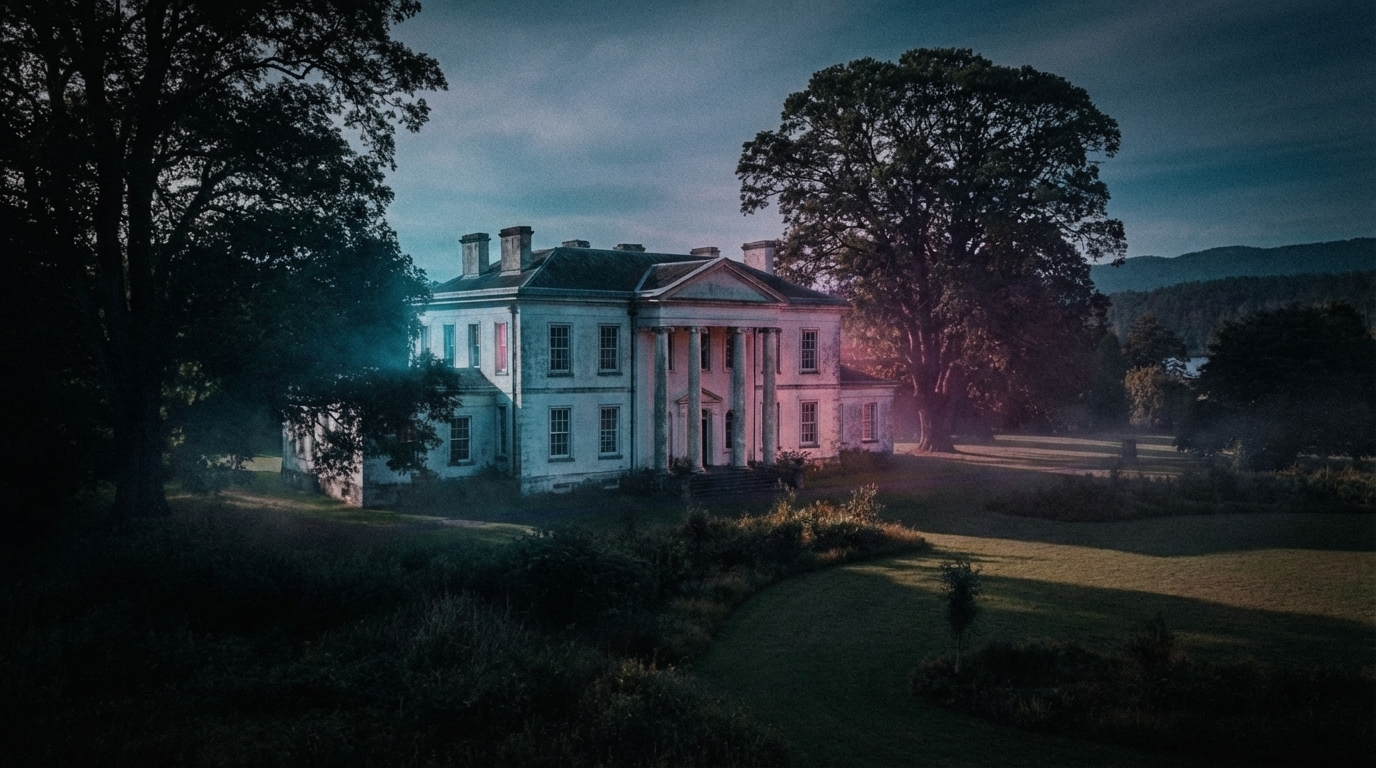
The construction of Jeffries Manor commenced in 1817, an undertaking that would transform William's commercial success into architectural permanence. The design reflected Georgian sensibilities adapted to colonial circumstances—a two-storey structure built from locally sourced sandstone, featuring elegant proportions that announced the builder's aspirations towards gentility whilst maintaining the fortress-like quality necessary for frontier existence. The manor's façade, with its symmetrical windows and imposing entrance, projected an image of established respectability that William desperately craved, as if proper architecture could somehow legitimise an improper past.
The labour force that raised Jeffries Manor's walls came predominantly from the nearby penal settlement, convicts assigned to William's service who worked under conditions that sparked whispered criticisms even in an era accustomed to brutal treatment of transported prisoners. Some workers spoke of William's excessive harshness, of punishments administered for minor infractions, of a taskmaster whose own convict origins had somehow hardened rather than softened his treatment of those still in bondage. Others mentioned strange occurrences during construction—tools vanishing overnight, unexplained sounds echoing through incomplete rooms, a general atmosphere of unease that seemed to permeate the sandstone itself as it rose from the earth.
By the time the manor stood complete in late 1818, it represented more than mere shelter—it embodied William's conquest of his circumstances, his transformation from society's rejected to Tasmania's emerging elite. The building comprised six bedrooms on the upper floor, each designed for family and distinguished guests, whilst the ground floor featured the grand entrance hall, formal dining room, library, study, and drawing rooms that proclaimed the owner's cultural pretensions. The kitchen and servants' quarters occupied a separate wing, maintaining the class distinctions that Victorian sensibilities demanded even in colonial contexts.
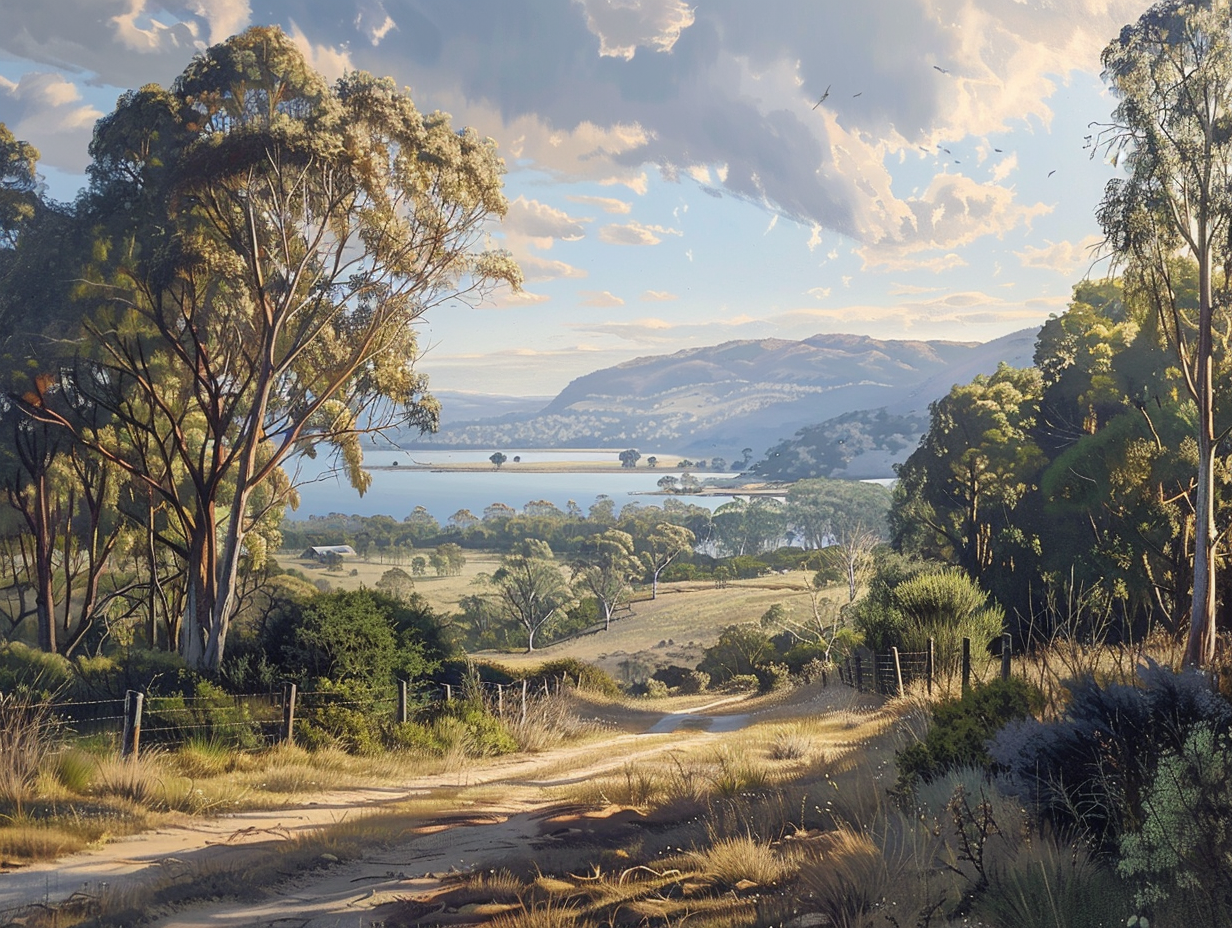
The manor's grounds received equal attention to architectural detail. William engaged landscape designers to create gardens that combined English formality with adaptation to Tasmanian conditions. Lawns swept down towards the Derwent River, whilst carefully planned groves of European trees mingled with native eucalypts in a botanical statement about colonisation itself—the imposition of British order upon Australian wilderness. Outbuildings included stables that would house the finest horses in the colony, servants' cottages discreetly positioned beyond the main house's sightlines, and the various structures necessary for a gentleman's estate to function as both residence and statement of social arrival.
Mystery Takes Root
In 1818, William returned briefly to England, ostensibly for business matters but actually to secure something his new wealth still couldn't quite purchase—a respectable wife who might overlook his convict origins in exchange for the security his fortune provided. He returned with Madelyn Bally, a young woman of considerable charm whose family's reduced circumstances made the match acceptable despite William's questionable past. Tasmania's isolation meant few would investigate too deeply into credentials, and Madelyn adapted to colonial life with pragmatic grace, transforming Jeffries Manor from a bachelor's domain into a functioning household.
Their son, William Jr., arrived in August 1819, cementing the dynasty William had envisioned. The manor hummed with domestic activity—servants managing the household, tenant farmers working the surrounding acreage, guests arriving for dinners and social occasions that established the Jeffries name amongst Tasmania's emerging elite. Yet beneath this veneer of normality, darkness gathered. Servants whispered about their master's increasing paranoia, his habit of walking the grounds late at night carrying lanterns, his obsession with security that seemed excessive even for a man protecting newly acquired wealth.
Then, on a winter night in August 1821, William Jeffries Sr. simply vanished. He retired to his study after dinner, as was his custom, requesting not to be disturbed whilst he attended to correspondence. When a servant knocked the following morning, the study stood empty—the desk undisturbed, no signs of struggle, the windows locked from inside. William had seemingly dissolved into air, leaving behind a young wife, a two-year-old son, and a mystery that would haunt Jeffries Manor for the next two centuries.
The investigation into William's disappearance consumed colonial Tasmania's attention for months. Theories proliferated wildly: murder disguised as disappearance, with Madelyn the obvious suspect given wives' traditional positions in such scenarios; faked death, perhaps William had staged his vanishing to escape debts or enemies his business dealings had created; even alien abduction, though this explanation emerged primarily from those inclined towards sensational speculation rather than rational deduction. Madelyn herself became the investigation's focus, enduring interrogations that presumed guilt until proven innocent, yet no evidence ever emerged connecting her to her husband's fate.
As the investigation stalled and eventually subsided, Madelyn faced a choice: abandon the manor that had become synonymous with scandal, or claim her place as its mistress and heir. She chose the latter with determination that surprised those who had underestimated her. Taking control of William's business interests, she demonstrated competence that suggested her late husband had chosen his wife for qualities beyond mere prettiness. The manor became her domain, and she managed it with efficiency that maintained the Jeffries fortune whilst raising her son to eventually assume his inheritance.
Generations of Prosperity and Paranoia
William Jeffries Jr. grew up in the shadow of his father's disappearance, but under his mother's capable guidance, he avoided becoming consumed by the mystery. Educated at the finest schools Tasmania could offer, he eventually travelled to England for further refinement, returning with Ellen Cross as his bride in 1843. Ellen, daughter of a prominent Hobart judge, brought not just social standing but also a passionate commitment to philanthropy that would transform Jeffries Manor from a symbol of wealth into a centre of cultural and charitable activity.
Under Ellen's influence, the manor's rooms hosted not just society dinners but fundraising events for Tasmania's poor, musical soirées that brought culture to the colony, and gatherings of reformist thinkers who debated everything from convict treatment to women's education. The estate evolved into something more complex than a wealthy family's residence—it became a space where Tasmania's future was actively discussed and shaped, where Ellen's progressive values challenged the conservative status quo even as William Jr.'s business acumen ensured the family fortune continued to grow.
Their children—Madelyn, William III, Elizabeth, and Thomas—were raised with advantages their grandfather could scarcely have imagined, yet also with the weight of family history constantly present. The locked study where William Sr. had last been seen remained essentially unchanged, a shrine to mystery that exerted gravitational pull on successive generations. Young William III, in particular, displayed an unhealthy fascination with his grandfather's fate, spending hours in the manor's library researching the disappearance, accumulating documents and theories that would eventually consume his adult life.
The transition to William III's ownership in 1880 marked a turning point in the manor's history. His marriage to Jane Barwick had brought fresh vitality to the estate, but William's increasing obsession with solving his grandfather's disappearance gradually transformed Jeffries Manor from a welcoming social centre into something darker and more isolated. Locks appeared on doors that had stood open for decades. Guards patrolled grounds where guests had once strolled freely. The manor's atmosphere shifted from Ellen's warm hospitality to William III's paranoid suspicion, as if the building itself absorbed its owner's deteriorating mental state.
Jane Barwick Jeffries did her best to maintain normality, continuing her mother-in-law Ellen's charitable traditions and shielding their children from their father's worst episodes. But the manor during the 1880s and 1890s became increasingly difficult to manage as a family home, its rooms witnessing William III's descent into conspiracy theories and his desperate attempts to uncover secrets the sandstone walls kept locked away. When Jane died in 1895, weakened by years of managing both household and husband, the manor lost its last restraining influence on William's obsession.
Scandal and Transformation
William III's death in 1905 should have brought peace to Jeffries Manor, but his will—dividing the estate amongst all his children rather than following primogeniture—ensured that family conflict would continue to echo through its halls. The legal battles that followed poisoned relationships between siblings, transforming the manor from a family sanctuary into contested property whose very ownership became a source of bitter dispute.
The inheritance finally settled on William IV, though by then the damage to family unity was irreparable. His 1910 marriage to Grace Woolley brought perhaps the most significant transformation in the manor's history since its construction. Grace, a shopkeeper's daughter whose elevation to society's heights shocked colonial Tasmania, approached the estate with practical intelligence rather than inherited reverence. She modified the heavy Victorian furnishings that had accumulated over decades, admitted light into rooms that had grown oppressively dark, and established a proper library to organise the chaotic collection of books and papers William III had accumulated in his investigations.
Most significantly, Grace claimed something no previous Mrs. Jeffries had possessed—her own study, a space where she could write the poetry that would eventually, under the pseudonym M. Grey, win literary recognition. The manor under Grace's management became simultaneously more functional and more complex, its rooms witnessing her navigation between her working-class origins and her current elevated station, her management of William IV's increasing mental instability, and her fierce determination to prevent the family's self-destructive patterns from consuming another generation.
The birth of William V in 1923 and James III in 1925 marked what should have been the manor's renewal as a family home filled with children's laughter and youthful energy. Instead, William IV's decision to name James as heir—announced in 1947 with devastating effect—created perhaps the deepest rift in the family's tortured history. The manor's dining room, where William made his shocking announcement, became the site of confrontation that nearly erupted into violence, its elegant furnishings bearing silent witness to a family tearing itself apart over inheritance and perceived injustice.
Grace's death in 1962 removed the last figure capable of maintaining even fragile family unity. The manor, now under James III and Thelma Rose's stewardship, entered a period where the weight of history seemed to press more heavily with each passing year. James, an artist and reluctant businessman, tried to balance preservation of the estate's heritage with necessary modernisation, yet the manor's atmosphere grew increasingly heavy with accumulated secrets and unresolved mysteries.
From Heritage to Horror
The late twentieth century brought the manor under Thomas Jeffries' control in 2008, following James III's death. Thomas, great-great-great-great-grandson of the builder, inhabited a property that had witnessed nearly two centuries of family drama, yet he seemed determined to write the darkest chapter yet in its history. Rumours of secret dealings and hidden agendas swirled around the estate, the manor's isolation serving not as genteel privacy but as concealment for activities that generated increasing speculation amongst Tasmania's law enforcement community.
The disappearance of Thomas's son Kain and brother-in-law Jamie Greyson in July 2018 marked the beginning of the manor's transformation from family residence to crime scene. Detective Karl Jenkins and his partner Sarah Lahey arrived at the estate on 2 August 2018, responding to Louise Jeffries' frantic emergency call reporting Luke Smith—a wanted suspect in multiple missing persons cases—trapped in the manor's shed. What followed would become legend in Tasmania's criminal history: Jenkins' inexplicable disappearance from the shed, his partner's traumatised account of events that seemed to defy rational explanation, and the manor itself standing as silent witness to yet another vanishing that echoed its founder's mysterious fate two centuries earlier.
Nine days later, on 11 August 2018, Jeffries Manor became the site of unspeakable horror. The Jeffries Manor Massacre claimed the lives of Louise Jeffries and her daughters Rebecca and Emily, their bodies discovered within rooms that had witnessed two hundred years of family history but nothing approaching this level of violence. Thomas, his youngest daughter Katie, and his grandmother Thelma vanished, their fates remaining unknown, whilst the estate's sandstone walls absorbed yet more tragedy into their already-burdened stones.
The forensic investigation that followed transformed every room into evidence, every piece of furniture into potential testimony. Detective Sergeant Alexander Stout and his team methodically catalogued the manor's contents, searching for explanations that might make sense of the inexplicable. They found hidden safes behind landscape paintings, Victorian desks yielding aged shipping manifests, motorcycle tracks in gardens where no motorcycle should have been—fragments of evidence that suggested connections between past and present mysteries but offered no clear narrative of causation.
The Structure's Evolution
Throughout its history, the physical structure of Jeffries Manor has undergone numerous modifications whilst maintaining its essential Georgian character. The original 1818 construction established the main residence's footprint—a two-storey sandstone building featuring six bedrooms on the upper floor and the formal reception rooms below. The grand entrance hall, with its sweeping staircase and elaborate plasterwork, made immediate impression on visitors, announcing the Jeffries family's social aspirations through architectural grandeur.
The outbuildings accumulated gradually across generations: a detached two-bedroom caretaker's cottage constructed around 1850 to house senior staff; stables that were eventually converted into an art studio in 1997 when Charles Jeffries briefly returned to the estate; a three-car garage with workshop added in the early twentieth century as automobiles replaced horses; and the conservatory added in 1923, Grace Woolley Jeffries' contribution to the manor's amenities. Each addition reflected the needs and values of its era whilst maintaining aesthetic cohesion with the original structure.
The grounds themselves evolved from William Sr.'s initial landscaping vision into the fifty-acre estate that exists today. The property is bounded by the Derwent River to the east, offering water views that make the location particularly desirable, whilst neighbouring properties—Granton Park to the north, Willowbank Estate to the south, and the Derwent Valley Rail Trail to the west—define its borders. The gardens, originally laid out in formal English style, have been modified by successive generations to balance heritage preservation with practical maintenance requirements.
Inside, the manor's rooms accumulated the physical evidence of two centuries of occupation. The library that Grace Woolley Jeffries organised still contains books and papers spanning generations of Jeffries family interests and obsessions. The study where William Sr. vanished remains essentially preserved, its furnishings unchanged as if family members subconsciously maintained it as a shrine to unsolved mystery. The dining room where William IV announced his controversial inheritance decision, where family celebrations and conflicts played out across decades, bears the scars of use—tables marked by generations of meals, walls bearing portraits of ancestors whose gazes seem to judge subsequent generations' choices.
The servants' quarters, separate from the main house yet integral to its functioning, tell their own stories of the class dynamics that defined colonial and post-colonial Tasmanian society. These spaces, where Elizabeth Harrington managed household operations from 1817 until 1852, where successive generations of staff maintained the manor's operations whilst remaining invisible to society guests, represent the labour that enabled the Jeffries family's lifestyle. Their architectural modesty contrasts sharply with the main house's grandeur, a spatial manifestation of social hierarchy embedded in the estate's very structure.
The Estate's Legal Journey
The chain of title for Jeffries Manor reads like a genealogy of conflict and mystery:
William Jeffries Sr. (1817-1821) established the property through purchase of land and construction of the main residence, his ownership terminated not by sale or death but by disappearance.
Madelyn Jeffries (1821-1843) assumed control following her husband's vanishing, managing the estate with competence that ensured its survival and her son's inheritance.
William Jeffries Jr. and Ellen Jeffries (1843-1895) expanded the property's social significance whilst maintaining its commercial viability, their joint ownership reflecting the partnership that characterised their marriage.
William Jeffries III and Jane Jeffries (1895-1948) presided over the manor during its darkest period of paranoia and isolation, their ownership marked by William's obsessive investigation into his grandfather's fate.
James Jeffries III and Thelma Rose (1948-2008) brought artistic sensibility and attempted renewal to the estate, though they could never quite escape the weight of accumulated family history.
Thomas Jeffries and Louise Jeffries (2008-2018) represented the final generation of Jeffries ownership, their tenure culminating in tragedy that ended the family's two-century possession of the property.
Following the 2018 massacre, the estate entered a legal limbo designated as the Jeffries Estate (2018-2023), managed by courts and executors whilst ownership questions were resolved and the property prepared for sale.
In 2023, siblings Jasper and Olivia Murphy purchased the property for $2,850,000, becoming the first non-Jeffries owners in the manor's history. Their acquisition included specific legal clauses acknowledging the property's dark history and releasing the estate from liability for its past, a recognition that Jeffries Manor's reputation had become inseparable from its physical structure.
Architecture of Mystery
Over two centuries, Jeffries Manor has evolved from mere building into something more complex—a character in its own right within Tasmania's collective imagination. The estate's sandstone walls, quarried locally and assembled by convict labour, seem to absorb and retain the tragedies they've witnessed. Visitors to the property often report atmospheric unease that transcends rational explanation, as if the manor itself remembers the conflicts, disappearances, and violence that have marked its history.
The architectural elements that made the manor impressive in 1817—its Georgian proportions, its elegant façade, its positioning along the Derwent with commanding views—have remained constant even as their meaning has shifted. What once announced colonial ambition and social arrival now suggests isolation and concealment. The very features that made Jeffries Manor a symbol of success have transformed it into an icon of Tasmania's darker heritage, a physical reminder that grand aspirations often harbour shadowed secrets.
The manor's rooms have witnessed the full spectrum of human experience: births and deaths, marriages and betrayals, celebrations and confrontations, ordinary domestic moments and extraordinary crises. The drawing room where Ellen Jeffries hosted charitable gatherings saw William III's paranoid accusations decades later. The study where William Sr. vanished watched successive generations of Jeffries men attempt to solve the mystery. The dining room where families shared meals became the site of the announcement that shattered family unity. Each space carries layers of accumulated meaning, architectural palimpsests where successive events overwrite without fully erasing previous uses.

