Janice Marie Jennings
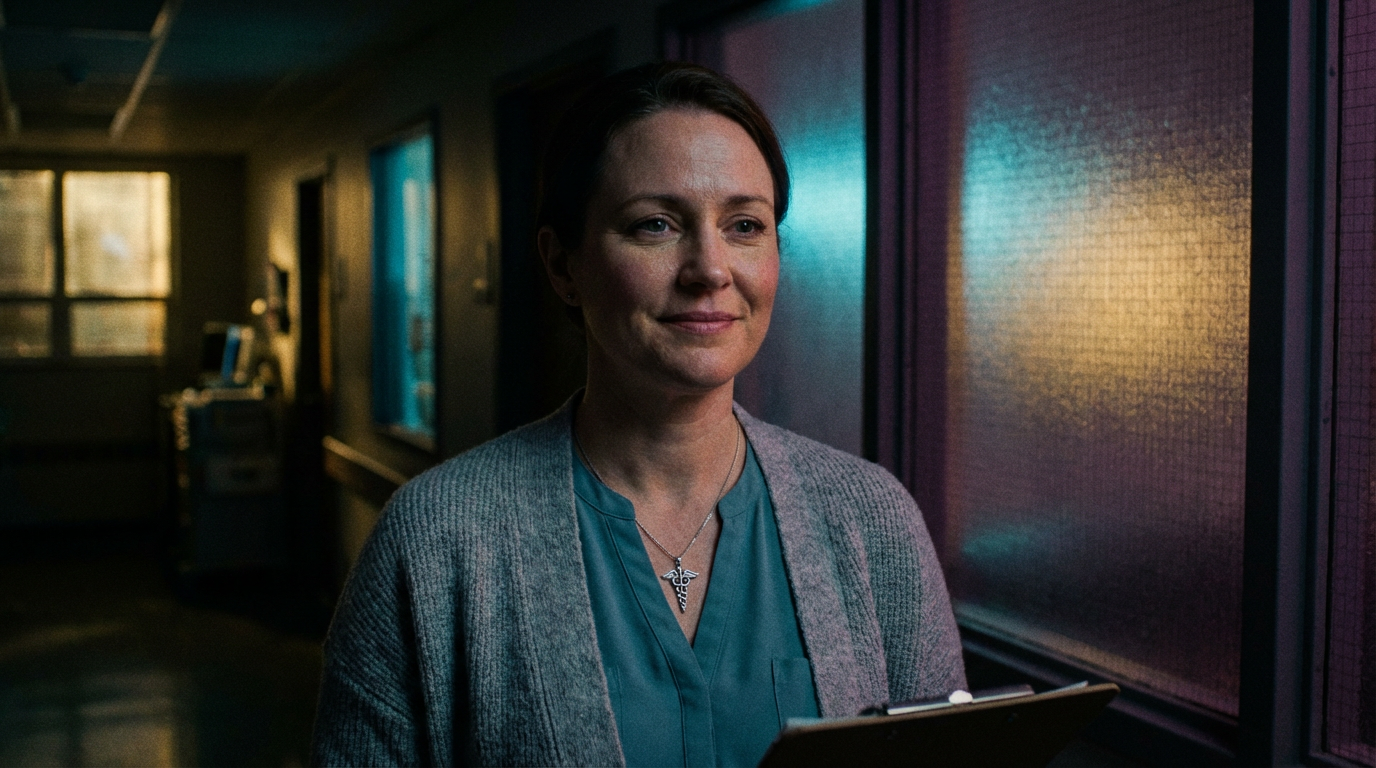
Janice Marie Jennings, born on 12 September 1975 at the Hutchinson Hospital in Gawler, South Australia, was the fourth child of Brian Edward Jennings and Patricia Anne Jennings (née O'Connor). A Clinical Nurse Specialist at the Royal Adelaide Hospital, she devoted her career to critical care nursing and her spare time to community health and education initiatives at the Jennings Family Farm. Janice died on 8 November 2019, aged forty-four, after contracting a rare form of meningitis.
Early Life and a Nurturing Disposition
Janice Marie Jennings was born on 12 September 1975 at the Hutchinson Hospital in Gawler, South Australia, the fourth of seven children born to Brian Edward Jennings, a farmer and mechanic, and Patricia Anne Jennings (née O'Connor), a former education student turned matriarch of the Jennings Family Farm. Her arrival came nine days after her father's thirtieth birthday—a coincidence of timing that Brian regarded with quiet satisfaction and which lent a private bond between father and daughter that endured throughout his life.
Janice grew up in a household already well established in the rhythms of large-family farming life. By the time of her birth, her elder siblings—Cody (1968), Anne (1970), and Catherine (1973)—had created a domestic ecosystem of their own, and the farmhouse on the outskirts of Gawler hummed with the particular energy of a home in which children outnumbered quiet corners. Three more siblings would follow: Kenneth (1978), Raymond (1980), and Tania (1982), completing a family of seven whose individual temperaments and talents would eventually scatter them across vastly different professions and circumstances.
From a young age, Janice displayed a compassion and attentiveness to others that her family recognised as something more than ordinary kindness. She was the child who noticed when someone was upset before anyone else did, the one who gravitated towards the injured bird in the yard or the younger sibling nursing a scraped knee. Her mother Patricia, herself a woman of deep empathy and intellectual warmth, encouraged this instinct without sentimentalising it, understanding that the capacity to care for others was not merely a personality trait but a vocation waiting to declare itself. Janice often took on the role of caretaker for her younger siblings—Kenneth, Raymond, and Tania—with a natural authority that combined gentleness with the unsentimental pragmatism of a child raised on a working farm, where the realities of life and death were neither hidden nor softened.
She shared a particular bond with her elder brother Cody, the firstborn, who recognised in Janice a kindness and perceptiveness that he valued deeply. Cody, whose own life was already beginning to take turns none of his family could have understood, encouraged Janice to pursue her dreams with a sincerity that reflected his awareness of how easily ambition could be deferred or abandoned. The relationship between the two would become, in later years, a source of both comfort and anguish for Janice, as Cody's increasingly erratic absences and emotional distance created a mystery she could sense but never resolve.
School Years and the First Aid Club
Janice attended Gawler Primary School, where her teachers noted her diligence, her ability to empathise with classmates, and a quiet competence in the sciences that distinguished her from the more conspicuously academic students. She was not the loudest voice in the classroom, but she was often the most observant one—the girl who noticed that another child was struggling before the teacher did, who offered help without being asked and without expectation of recognition.
At Gawler High School, Janice's academic strengths crystallised around the sciences, particularly biology and human physiology. She excelled in subjects that connected theoretical knowledge to the tangible realities of the body and its functions, finding in the study of anatomy and biology a framework for understanding the compassion she had always instinctively felt. Her teachers praised her not only for her academic performance but for the quality of attention she brought to her work—a meticulousness and care that reflected a deeper commitment to getting things right when it mattered.
Outside the classroom, Janice became an active member of the school's first aid club, where she gained her earliest formal exposure to the principles and practices of emergency care. She also volunteered at local nursing homes in Gawler, spending afternoons and weekends in the company of elderly residents whose stories and vulnerabilities further shaped her understanding of what it meant to care for people at their most dependent. These experiences were not abstract exercises in community service; they were the practical foundations of a career that Janice was already, in her quiet way, building towards.
The departure of her younger brother Kenneth for the Sydney Conservatorium of Music in February 1986, when Janice was ten years old, left an impression on her that she carried into adulthood. Kenneth's extraordinary musical talent demanded an education that Gawler could not provide, and the family's decision to send him to live with Patricia's siblings, Thomas and Margaret O'Connor, in Sydney represented the farm's first great departure—a rupture in the household that was both necessary and painful. For Janice, who had helped care for Kenneth as an older sister, watching him leave reinforced an understanding that love sometimes expressed itself through sacrifice, and that supporting someone's calling might require accepting their absence. It was a lesson that would resonate with particular force in the years to come, as other departures—less voluntary, less comprehensible—fractured the family in ways no one could have anticipated.
The University of South Australia and a Calling Confirmed
After graduating from Gawler High School in 1993, Janice enrolled in the nursing programme at the University of South Australia. The decision surprised nobody who knew her; it was the logical culmination of a childhood spent caring for others, a high school career oriented towards the sciences, and years of volunteer experience in settings where the needs of the vulnerable were immediate and real. Nursing was not something Janice chose so much as recognised—it was the professional articulation of an instinct she had carried since her earliest years on the farm.
At university, Janice thrived in an environment that combined rigorous academic study with the practical demands of clinical placements. She earned excellent marks and demonstrated a capacity for remaining calm under pressure that her instructors identified as an essential quality for the most demanding branches of the profession. It was during her time at the University of South Australia that Janice met Dr Colin Bradshaw, a fellow healthcare professional whose values and temperament complemented her own. Their relationship developed with the steady warmth of two people who shared not only personal attraction but a common commitment to the care of others. Though they never married, their partnership endured throughout Janice's life, characterised by deep love, mutual respect, and a shared enjoyment of travel, medical conferences, and volunteering with local healthcare charities.
Janice graduated from the University of South Australia in 1997 and began her career as a registered nurse at the Royal Adelaide Hospital. The timing of her graduation carried a weight she could not have anticipated. Barely months into her professional life—a life devoted to saving others—her father Brian suffered a fatal heart attack on 18 November 1997 whilst working on the farm. He was fifty-two years old. For Janice, then twenty-two and freshly immersed in the realities of critical care, her father's death represented a devastating collision between her professional world and her personal one. She was learning to fight for the lives of strangers in the hospital's corridors whilst confronting the reality that medicine's reach had limits, and that no amount of skill or devotion could have saved the man who had been the quiet foundation of her family.
Critical Care and the Royal Adelaide Hospital
Janice's nursing career at the Royal Adelaide Hospital was defined by a dedication and clinical competence that earned her the respect of colleagues and the gratitude of patients and their families. She specialised in critical care nursing, working in the hospital's intensive care unit, where the stakes were highest and the margin for error narrowest. The ICU demanded a particular temperament—the ability to remain composed in situations of extreme urgency, to make sound judgements under pressure, and to sustain emotional resilience in an environment where death was a constant presence rather than an abstract possibility. Janice possessed all of these qualities, and she brought to her work an additional dimension that her colleagues recognised and valued: a genuine warmth that humanised the clinical environment and reminded patients and families that they were being cared for by someone who saw them as people rather than cases.
In 2005, at the age of thirty, Janice was promoted to the position of Clinical Nurse Specialist, a role that expanded her responsibilities to include the mentoring and guidance of junior nurses. She approached this aspect of her work with the same combination of high standards and personal kindness that had characterised her patient care, understanding that the development of young nurses required not merely the transmission of technical knowledge but the cultivation of the emotional skills—empathy, composure, the capacity to absorb others' suffering without being destroyed by it—that separated competent practitioners from exceptional ones.
Throughout her career, Janice maintained the same commitment to ongoing learning that her mother Patricia had modelled throughout her own life. She attended medical conferences with Colin, stayed abreast of developments in critical care practice, and brought back to the ward a willingness to adapt and improve that kept her nursing contemporary even as her experience deepened. Her colleagues described her as the nurse they most wanted beside them during a crisis—a testament not to dramatic heroism but to the quiet reliability and clinical precision she brought to every shift.
Patricia's Death and the Deepening of Loss
The death of Patricia Jennings on 5 September 2002, five years after Brian's passing, struck the family with the force of a second foundational loss. Patricia had been diagnosed with cancer, and her prolonged illness carried a particular weight for Janice, who watched her mother's decline with the dual perspective of a devoted daughter and a trained healthcare professional. The experience of witnessing a loved one's suffering whilst knowing the clinical realities of the disease—its progression, its prognosis, the limits of what treatment could achieve—was an anguish that Janice bore with characteristic steadiness, though not without cost.
Patricia's death was compounded by the behaviour of Cody, the eldest sibling, whose response to their mother's passing was to retreat further into the pattern of distance and absence that had troubled the family for years. Cody sent a final letter to his siblings expressing his love and instructing them not to search for him—a communication that offered no explanation and provided no comfort. For Janice, who had always been attuned to her brother's moods and who had sensed something fundamentally altered in him since the late 1980s, Cody's withdrawal was an open wound. She was left to navigate the grief of losing her mother whilst absorbing the secondary loss of a brother who was alive but unreachable, present in memory but absent in every way that mattered.
The Jennings Family Farm and Community Work
Despite the demands of her nursing career, Janice remained deeply connected to the Jennings Family Farm and to the Gawler community that had shaped her. She made frequent visits to the farm, cherishing the time spent with her siblings and their growing families. She was particularly close to her sister Anne's children—Naomi, Darren, and Lily—often volunteering to babysit and sharing her love of baking with them in the farmhouse kitchen that Patricia had once presided over.
Janice's community involvement extended well beyond familial obligation. She became closely involved in the farm's school tours and the native garden programme that Anne had developed as part of the property's evolution towards sustainable agriculture and community education. Janice coordinated therapeutic gardening sessions with NDIS participants, bringing her healthcare expertise to bear on programmes that connected vulnerable people with the restorative qualities of working the land. These sessions reflected Janice's understanding that health was not merely the absence of disease but a broader condition encompassing connection, purpose, and engagement with the natural world—a philosophy that owed as much to her upbringing on the farm as to her clinical training.
She was known in the community for an earthy, unsentimental humour that cut through pretension and put people at ease. Janice possessed the rare ability to be simultaneously warm and direct—to make people feel cared for without ever allowing sentiment to obscure the practical realities of a situation. It was a quality that served her equally well in the ICU and in the farm's garden beds, and it made her a beloved figure in a community that valued authenticity above all else.
The Sibling Reunion and the Gathering of What Remained
On 15 August 2008, the surviving Jennings siblings gathered at the farm for a family reunion—an event that carried particular significance given the losses and dispersals the family had endured since their parents' deaths. By this time, the seven children born between 1968 and 1982 had scattered to lives their parents could scarcely have imagined. Kenneth performed internationally as a concert pianist from his base in Melbourne. Catherine had established the Gawler Wildlife Haven. Tania was building a career as a novelist. Raymond ran his own automotive workshop. Anne managed the farm. And Cody remained a mystery, his absence the unspoken presence at every family gathering.
For Janice, the reunion was an affirmation of the bonds that had survived distance, grief, and the particular anguish of Cody's disappearance from their lives. She approached the gathering with the same instinct for holding people together that had characterised her role in the family since childhood—ensuring that the occasion was warm and inclusive, that old tensions were navigated with grace, and that the emphasis remained on connection rather than loss.
Illness and Death
Janice Marie Jennings died on 8 November 2019 at the age of forty-four, after contracting a rare and aggressive form of meningitis whilst working at the Royal Adelaide Hospital. The illness struck with a swiftness and severity that defied the best efforts of the colleagues who fought to save her—the same colleagues who had worked alongside her for over two decades and who understood, perhaps better than anyone, the cruel irony of a healer felled by the very environment in which she had devoted her life to healing others.
Her passing was a devastating blow to a family that had already endured the deaths of both parents, the unexplained disappearance of Cody the previous year, and the accumulated weight of losses that seemed disproportionate to any single family's share. Janice's funeral was held at St Peter's Anglican Church in Gawler—the same church where her parents had married in 1967, where her father's funeral had been held in 1997, and where the Jennings family's milestones and griefs had been marked across generations. The community gathered in numbers that reflected the breadth of lives Janice had touched—patients, families, colleagues, neighbours, and the many people she had quietly helped through her volunteer work at the farm and in the wider Gawler district.
Colin Bradshaw, her partner of over two decades, bore the loss with a dignity that mirrored Janice's own composure in the face of others' suffering. Anne, who had relied on Janice's involvement in the farm's educational and community programmes, felt the absence not only as the loss of a sister but as the removal of a vital link between the farm and the community it served. The Janice Jennings Nursing Scholarship was established at the University of South Australia to support aspiring nurses who demonstrated the qualities of empathy, clinical excellence, and commitment to others that had defined Janice's life and career.
She was buried in the Gawler cemetery, where her father Brian already lay. Her mother Patricia rested nearby. In time, Raymond would join them—killed in a car accident on 14 February 2023 at the age of forty-two. Of the seven Jennings siblings, four survived Janice's death. By the time of Raymond's passing, only four remained alive: Anne, Catherine, Kenneth, and Tania.







