James Andrew Fletcher
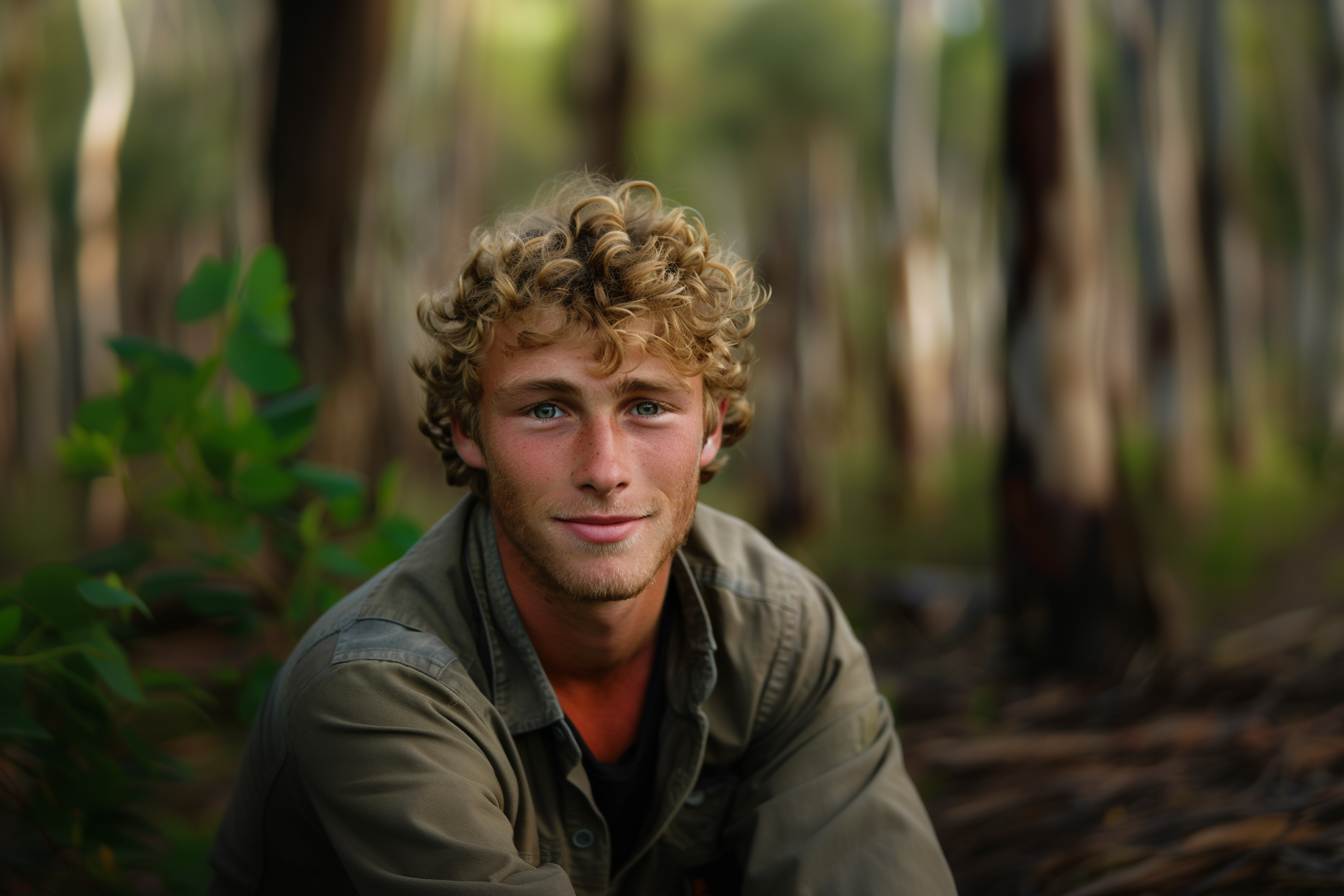
James Andrew Fletcher was born in Hobart in 1994 to a marine biologist and a primary school teacher whose combined influence made the natural world feel like home. His career in wildlife conservation — from Healesville Sanctuary internship to Bonorong Wildlife Sanctuary Manager by twenty-four — demonstrated genuine capability alongside the easy charm that made visitors feel they'd found a friend rather than a guide. The disappearance of Grant and Sarah Ironbach in July 2018 thrust James into operational leadership during the sanctuary's most difficult period, his institutional knowledge proving essential as new management reshaped the organisation. His subsequent connection with Luke Smith would eventually draw him toward Clivilius itself.
Birth and Family Origins
James Andrew Fletcher was born on 17 March 1994 at Royal Hobart Hospital, the first child of Michael David Fletcher and Catherine Anne Fletcher (née Morrison).
Michael David Fletcher had built a steady career as a marine biologist with the CSIRO Marine Research division in Hobart, specialising in temperate reef ecosystems. Born in 1962 to a family of fishermen in Triabunna on Tasmania's east coast, Michael had watched declining catches throughout his childhood and chosen science over the family trade, hoping to understand what his father and uncles could only witness. His work involved research cruises, monitoring programs, and the patient documentation of oceanic change.
Catherine Anne Morrison grew up in Sandy Bay, the daughter of an accountant and a nurse. Her aptitude for working with children led to an education degree from the University of Tasmania and a career in primary teaching at Lenah Valley Primary School spanning over two decades. Students remembered her as firm but fair, someone who expected effort and rewarded it with patience.
The couple married in 1992 and settled in a weatherboard cottage in Lenah Valley, close enough to Catherine's school for easy commute and close enough to bushland that wallabies occasionally grazed in the garden. The household accumulated field guides, nature documentaries, and the occasional specimen jar that Michael brought home from work.
Emily Rose Fletcher arrived on 8 November 1997, completing the family. James proved protective in ways that sometimes bordered on excessive, appointing himself Emily's guide to the natural world with enthusiasm she learned to match. She would eventually pursue veterinary nursing, her career mirroring James's conservation work without duplicating it.
Childhood and Early Education
James's childhood unfolded in spaces where suburban comfort met Tasmanian wilderness. Michael's weekend explorations became family rituals — rock pool investigations at Blackmans Bay, bushwalks in the Mount Wellington foothills, patient observation of whatever creatures presented themselves.
Lenah Valley Primary School (1999–2005) provided formal education under his mother's watchful presence, a complication James learned to navigate with the easy charm that would characterise his adult life. His academic performance was solid without being spectacular, excelling in science and subjects that allowed observation and expression while struggling with mathematics and heavily structured work. Teachers noted his ability to explain complex ideas to struggling classmates, nascent communication skills that would later prove valuable.
Social dimensions of childhood came easily. James made friends without apparent effort, his genuine warmth creating connections that popularity-seeking couldn't replicate. He noticed when classmates struggled and included the excluded without making performance of it.
Secondary Education and Emerging Direction
Rose Bay High School (2006–2011) provided James's secondary education. His interests crystallised during these years, vague appreciation for nature sharpening into genuine fascination with wildlife and the systems that sustained it.
His science teachers recognised aptitude worth developing. James participated in environmental programs, field studies, and occasional weekend expeditions. A Year 9 camp in the Tarkine rainforest proved formative — three days of immersion in old-growth wilderness, guided by rangers whose passion for their work made conservation seem like something a person could actually do for a living. The experience clarified his ambitions: hands-on work with wildlife rather than research in laboratories or teaching in classrooms.
His social patterns during these years established templates that would persist. James dated casually, his charm attracting interest that his restless attention sometimes failed to sustain. Friends noticed his tendency toward complicated people, the ones with layers and contradictions. The pattern would prove durable.
University and Professional Formation
James enrolled at the University of Melbourne in 2012 to pursue a Bachelor of Environmental Science. Melbourne's scale required adjustment after Hobart's intimate geography, but he found footing through his cohort, where shared interests created community. His communication abilities flourished in tutorials and group projects, his capacity to translate complex concepts into accessible language making him valuable to study groups and popular with lecturers.
The summer of 2013–14 brought his first formal conservation experience: an internship with Zoos Victoria at Healesville Sanctuary in the Yarra Valley. Working alongside professionals who'd devoted careers to wildlife care, James experienced the daily reality of conservation — the early mornings, the demanding physicality, the emotional weight of caring for creatures whose survival often hung in precarious balance. Healesville's platypus program offered particular fascination, the impossible creatures representing everything strange and wonderful about Australian wildlife.
He graduated with First Class Honours in 2015, his thesis examining visitor engagement strategies in wildlife sanctuaries and their impact on conservation attitudes.
Early Career and Finding Home
A twelve-month contract with Parks Australia took James to Kakadu National Park in the Northern Territory following graduation. Working as a Junior Wildlife Ranger, he participated in monitoring programs, learned Indigenous perspectives on land management, and discovered capabilities he hadn't known he possessed.
But Kakadu also clarified where he belonged. The tropical heat, the vast distances, the isolation from family — all of it confirmed what he'd perhaps always known. Tasmania was home. The unique ecosystems, the endemic species, the island's particular relationship between wilderness and human habitation — this was where his work mattered.
He returned to Hobart in early 2016, joining Bonorong Wildlife Sanctuary as a Wildlife Conservation Officer. The position represented exactly what he'd been preparing for: hands-on wildlife care combined with public education. Grant and Sarah Ironbach, the siblings who ran Bonorong, recognised his potential almost immediately. They promoted him to Senior Wildlife Conservation Officer in 2017, expanding his responsibilities to include staff supervision and program development.
By early 2018, James had become Wildlife Sanctuary Manager at twenty-four, his ascent reflecting both genuine capability and the Ironbachs' confidence in his future.
The Bonorong Incident and Its Aftermath
The afternoon of 29 July 2018 transformed James's understanding of what reality could contain. During a routine tour, he encountered a stranger whose attention moved differently than ordinary visitors — assessing infrastructure and operations with purposes that tourism didn't explain. The mutual interest that developed during the tour ended abruptly when Sarah Ironbach appeared and mistook the stranger for Brad Coleman, a Guardian whose conservation partnership she had been expecting.
What followed happened too quickly for intervention. The stranger, whose actual name was Luke Smith, activated a portal in the staff building. Grant and Sarah, believing themselves embarked on a two-week assessment trip, stepped through and vanished. James, left holding the koala that Grant had transferred to him moments before, watched his colleagues disappear. The real Brad Coleman arrived minutes later.
The weeks following tested James in ways nothing had prepared him for. The official story — a research expedition with communications difficulties — satisfied no one but required maintenance regardless.
James stepped into the operational vacuum because no one else could. Staff looked to him for direction. Volunteers needed coordination. Animals required care that couldn't wait for human crises to resolve. The sanctuary's board scrambled to address absent leadership, and the new management that eventually arrived came packaged as rescue — a consortium of conservation interests offering resources that a sanctuary in crisis couldn't refuse. The arrangement preserved Bonorong's mission while changing its character, the family atmosphere giving way to organisational efficiency that served different purposes.
James adapted because adaptation was required. His role evolved from manager to senior operational staff, his institutional knowledge valued even as decision-making authority shifted to newcomers who didn't understand what they'd inherited.







