India
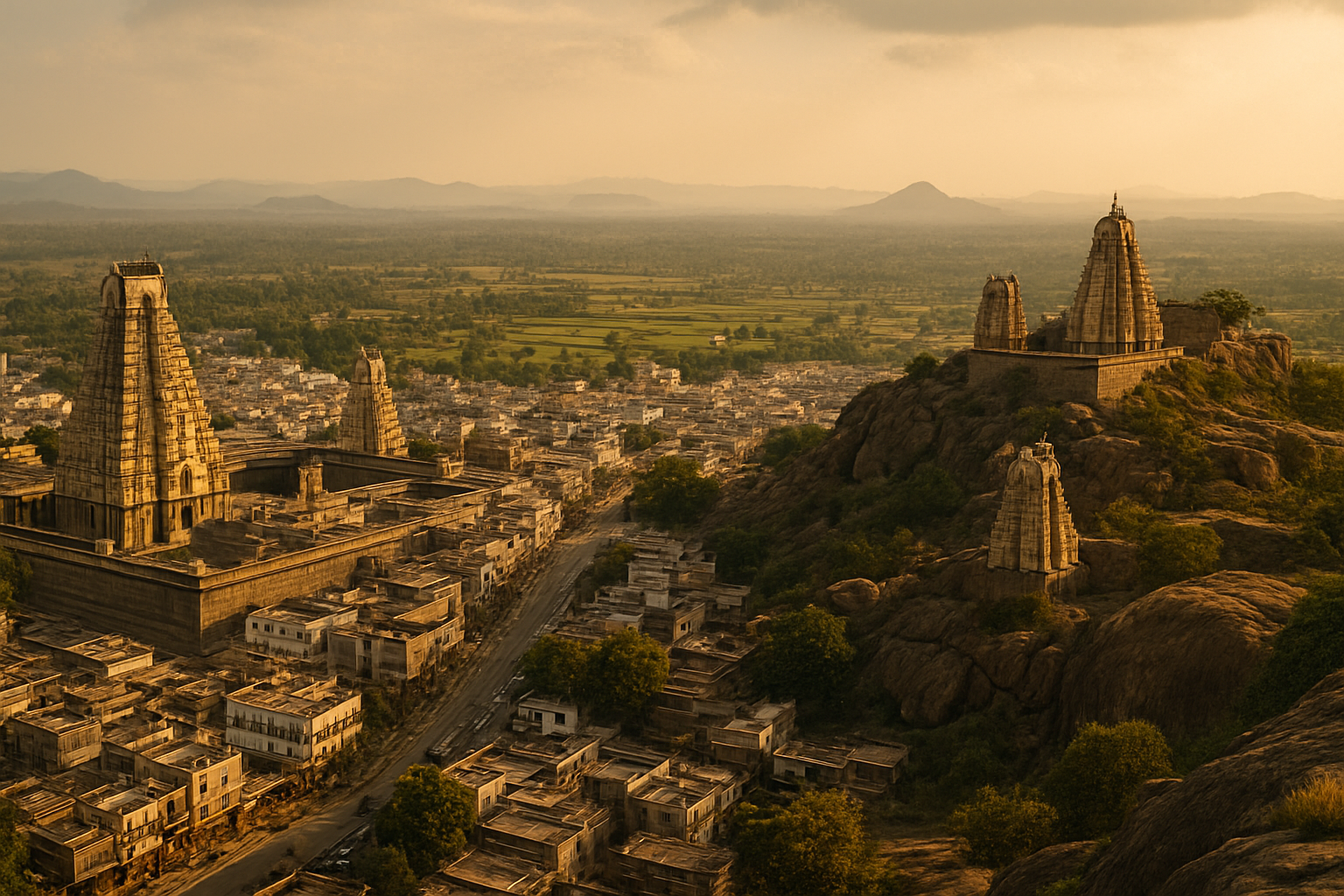
India is a country occupying the greater part of the South Asian subcontinent, bounded by the Himalayas to the north, the Indian Ocean to the south, and the Arabian Sea and Bay of Bengal to the west and east. The subcontinent's geographic diversity — from the Gangetic plains to the Western Ghats, from the Thar Desert to the Bengal delta — has sustained one of the longest continuous records of human civilisation on Earth.
Geography
The Indian subcontinent forms a roughly triangular landmass extending southward from the Eurasian continental plate into the Indian Ocean. The Himalayan range defines its northern boundary — a wall of geological force produced by the ongoing collision between the Indian and Eurasian plates, rising to elevations exceeding 8,000 metres along its highest sections. South of the Himalayas, the Indo-Gangetic Plain stretches east to west across the northern interior, a vast alluvial lowland deposited by the Indus, Ganges, and Brahmaputra river systems and constituting some of the most fertile agricultural land on Earth. The Thar Desert occupies the northwest. The Deccan Plateau, an ancient craton of Precambrian rock, fills much of the southern peninsula, flanked on its western edge by the Western Ghats — a mountain range running parallel to the coast for over 1,600 kilometres whose dense monsoon forests harbour extraordinary biodiversity, including the Kurumba forest-dwelling communities and the melanistic leopard populations of the southern ranges.
The monsoon system dominates India's climate. The southwest monsoon, arriving between June and September, delivers the majority of the subcontinent's annual rainfall in a concentrated wet season whose timing and intensity determine agricultural outcomes, river levels, and the viability of communities from the Gangetic plain to the southern coast. The northeast monsoon brings secondary rains to the southeastern coast between October and December. Between these systems, dry seasons of varying severity shape settlement patterns, trade routes, and the distribution of population across the subcontinent's diverse terrain.
Historical Overview
Human habitation of the Indian subcontinent extends deep into prehistory, with archaeological evidence of settlement spanning hundreds of thousands of years. The Indus Valley civilisation, centred on the cities of Mohenjo-daro and Harappa in the northwest, represented one of the world's earliest urban cultures, flourishing between approximately 3300 and 1300 BCE with sophisticated urban planning, standardised weights and measures, and extensive trade networks reaching as far as Mesopotamia.
The subsequent period saw the emergence of the Gangetic kingdoms — political entities organised along the fertile plains of the Ganges and its tributaries, where agriculture, trade, and urbanisation produced centres of growing wealth and complexity. The kingdom of Magadha, situated in the eastern Gangetic plain with its principal settlement at Pataliputra, became one of the most powerful of these polities and would eventually form the nucleus of the Maurya Empire under Chandragupta Maurya in the fourth century BCE. It was from the merchant communities of Magadha that Devraj, the Guardian who would found the Clivilius settlement of Andhakara, emerged in the fourteenth century BCE — centuries before Magadha's political ascendancy, when the kingdom was still a regional trading centre whose merchant routes connected the Gangetic plain to the western coast and beyond.
India's political history is one of recurring consolidation and fragmentation. The Maurya Empire, the Gupta period, the Delhi Sultanate, and the Mughal Empire each imposed varying degrees of political unity across the subcontinent before dissolving into successor states and regional kingdoms. The Delhi Sultanate, established in 1192, made Delhi the seat of Muslim political power in the subcontinent. The Mughal emperor Shah Jahan founded Shahjahanabad in 1639, creating the walled city that would define Delhi's urban core for centuries. European commercial penetration began in the sixteenth century, with Portuguese, Dutch, French, and English trading companies establishing coastal footholds that gradually expanded into territorial control.
Colonial Period and Independence
The British East India Company transformed its commercial presence into political dominion through the eighteenth and nineteenth centuries, a process that accelerated dramatically after the Battle of Plassey in 1757 established effective British control over Bengal. Calcutta, founded as a Company trading post in 1690, served as the capital of British India from 1772 until 1911, when the administration was transferred to Delhi. The colonial period reshaped the subcontinent's economy, legal systems, infrastructure, and political geography, whilst generating the resistance movements that would culminate in independence.
The opium trade constituted one of the most lucrative dimensions of the colonial economy. Opium grown in Bihar and Bengal was processed and auctioned in Calcutta before being shipped to Chinese ports, generating revenue that financed much of the Company's operations and attracting merchant officers like Charles Redley — a former convict transport officer who spent two decades in the Calcutta-to-Canton opium and textile trade before his violent death in a Calcutta tavern in 1839.
India contributed substantially to the Allied effort during the Second World War, providing over two million military personnel — the largest volunteer force in history — across theatres ranging from North Africa and Italy to Burma and the Pacific. The war strained the colonial relationship to breaking point, and Indian independence was achieved on 15 August 1947, accompanied by the traumatic partition of the subcontinent into India and Pakistan.
Modern India
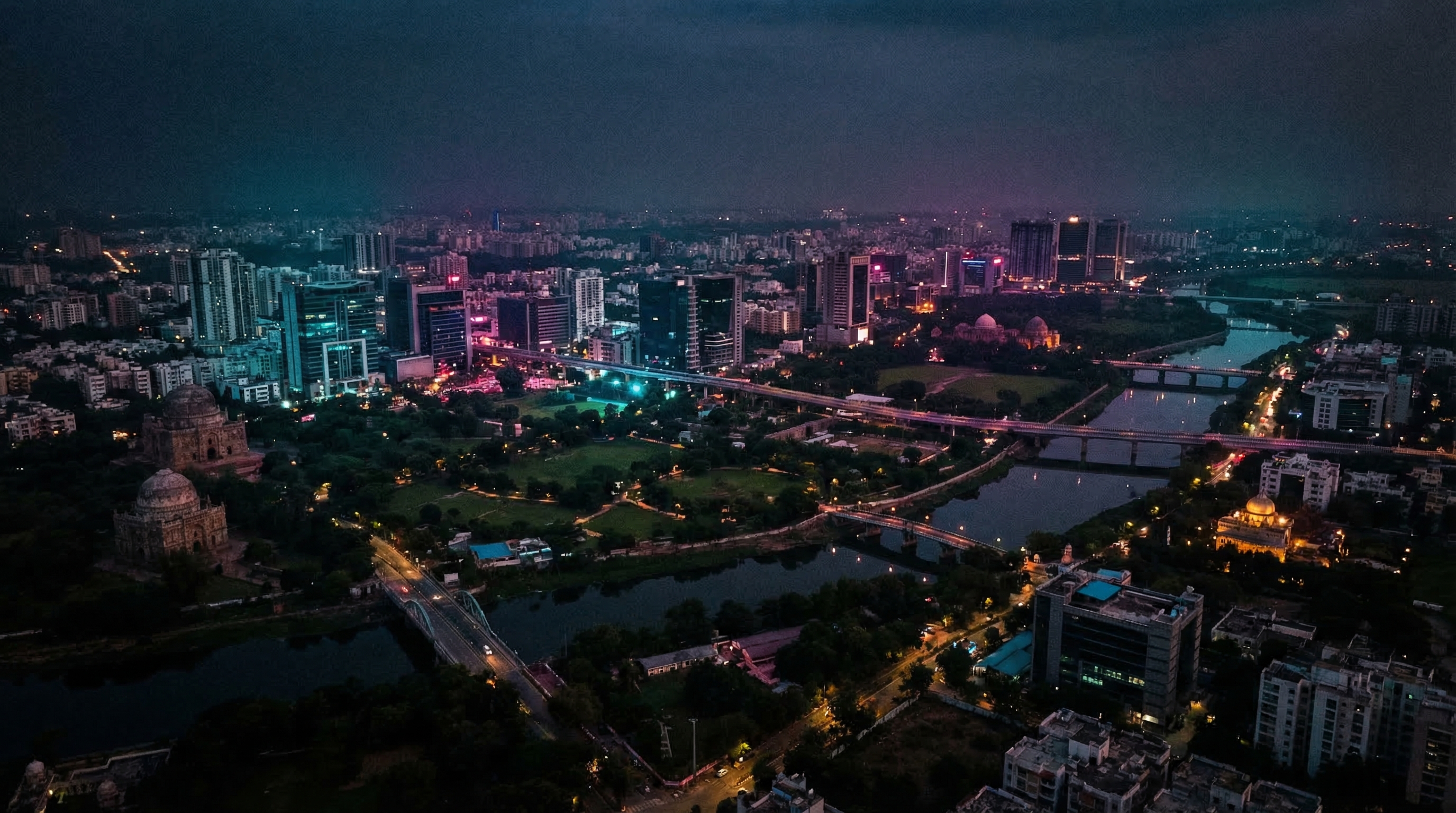
The Republic of India, established on 26 January 1950 with the adoption of its constitution, has developed into the world's most populous democracy. Delhi, the national capital, hosts the institutions of central government alongside a concentration of educational and research establishments, including the Indian Institute of Technology Delhi — one of the subcontinent's foremost engineering institutions, whose graduates have contributed expertise across fields from infrastructure development to environmental science. Akshita Priya Klima, born in Delhi on 15 May 1984, studied environmental engineering at IIT Delhi before applying her training to energy and water management in the Clivilius settlement of Bixbus, where she served as Secretary of Energy and Water.
India's population exceeded 1.4 billion in the early twenty-first century, making it the most populous country on Earth. The economy has grown rapidly since the liberalisation reforms of 1991, producing a technology and services sector of global significance alongside persistent challenges in poverty, infrastructure, and environmental management. The subcontinent's geographic and cultural diversity — over twenty official languages, hundreds of ethnic communities, and religious traditions spanning Hinduism, Islam, Buddhism, Sikhism, Christianity, and Jainism — continues to define a nation whose complexity resists simple characterisation.







