Hobart, Tasmania, Australia
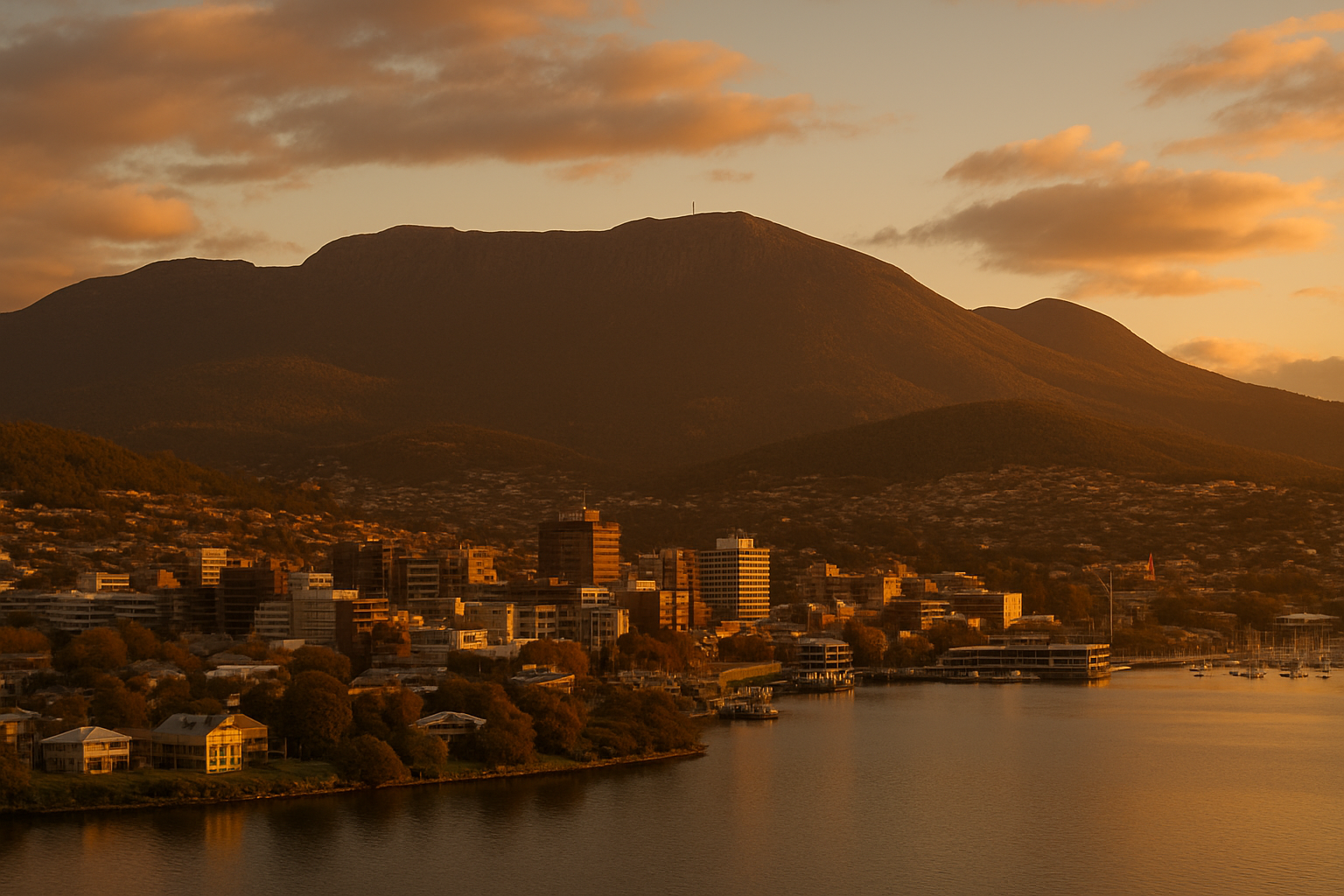
Hobart is the capital of Tasmania, Australia, situated on Muwinina country at the confluence of the Derwent River and the slopes of kunanyi/Mount Wellington. Founded as a British penal settlement in 1804, it evolved from convict outpost to colonial mercantile centre, surviving the 1975 Tasman Bridge disaster and the traumatic events of 2018. Hobart balances heritage preservation with cultural transformation, its island isolation breeding distinctive resilience and character.
Ancient Shores and First Peoples
Long before European sails appeared on the horizon, the lands surrounding the great river belonged to the Muwinina people of the South East nation. For millennia, they moved through the forests of kunanyi—the mountain the colonisers would rename Wellington—down to the sheltered coves where the Derwent widened toward the sea. The river provided abundantly: fish, shellfish, and the rhythms of seasonal migration that structured Aboriginal life across the region. Shell middens along the shoreline, some dating back thousands of years, testify to the deep relationship between the Muwinina and this place of water and mountain. Their pathways through the landscape, their knowledge of country, and their stewardship of the land would be violently disrupted by colonisation, yet the Muwinina connection to this country endures, woven into the very geography that the city now occupies.
Colonial Foundation and Early Settlement
The establishment of the British settlement at Sullivan's Cove in 1804, under Lieutenant-Governor David Collins, marked the beginning of Hobart Town as a colonial outpost of the expanding British Empire. The choice of location proved fortunate: the deep-water harbour of the Derwent River provided excellent anchorage, whilst the mountain behind offered timber and fresh water. The settlement developed rapidly from its founding as a strategic response to French interest in the region and as an extension of the penal system that defined early Australian colonisation.
The Whale and Whistle Tavern, which had opened on 15 January 1798 in anticipation of settlement, became one of the first commercial establishments to serve the growing community. Such establishments catered to the rough-and-ready population of convicts, soldiers, and free settlers who comprised early Hobart Town. The waterfront bustled with activity as ships arrived bearing human cargo destined for the penal system, whilst others departed laden with the colony's early exports of timber and whale oil.
By the 1810s, the settlement had begun to develop the commercial infrastructure necessary for growth. The Jeffries Trading Company, established on 8 November 1815 by William Jeffries Senior, represented the entrepreneurial spirit that would transform Hobart from penal outpost to mercantile centre. Jeffries himself embarked on the walk to the docks that day to begin his trading enterprise, a journey that would lead to the establishment of Jeffries Industries in 1819 and a commercial dynasty that would shape the city for generations. The Abernathy and Co. Land Agency, established in 1810, facilitated the colonial property commerce that enabled settlement expansion across the region.
The Convict Era and Institutional Development
The convict system fundamentally shaped Hobart's early character. Transported men and women provided the labour that built the colony's roads, bridges, and buildings. The sandstone quarried from local deposits became the signature material of colonial architecture, its warm honey tones lending a distinctive character to the growing town. The penal settlement at Port Arthur, connected to Hobart by the Tasman Peninsula, served as the endpoint for those deemed incorrigible, whilst Hobart itself functioned as the administrative centre of Van Diemen's Land.
Institutional development proceeded alongside physical construction. The Colonial Bank of Tasmania, founded in 1821, provided financial services to the growing commercial class and would survive the banking crisis of 1893 that destroyed many colonial financial institutions. The Hobart Magistrates Court, established in the same year, brought formal legal authority to the colony. These institutions represented the extension of British governance and commerce to the antipodean settlement, creating the frameworks within which colonial society would develop.
The Haven Home for Children, established in 1825 by Madelyn Jeffries, represented a different aspect of colonial development—the emergence of charitable institutions to address the social consequences of the convict system. Orphaned and abandoned children, many the offspring of convict unions, required care that the colonial government was ill-equipped to provide. Private philanthropy, often driven by the wives of successful merchants, filled this gap.
Victorian Prosperity and Urban Development
The mid-nineteenth century brought prosperity and respectability to Hobart. The transportation of convicts to Van Diemen's Land ended in 1853, and the colony was renamed Tasmania in 1856, shedding the taint of its convict origins. The discovery of tin and other minerals in Tasmania's interior generated wealth that flowed through Hobart as the island's commercial and administrative capital. The city's population grew, and with it came demands for civic amenities befitting a respectable colonial city.
The architectural legacy of this era remains visible throughout central Hobart. The Hobart Town Hall, completed in 1867 to a neo-classical design by architect Henry Hunter, became the symbol of civic pride and municipal governance. Its sandstone façade, with elegant proportions and refined detailing, announced Hobart's aspirations to metropolitan sophistication. The Royal Society Room at Customs House, established in 1843, provided a venue for the scientific and intellectual pursuits of the colonial elite. The Tasmanian Museum and Art Gallery, founded in 1846, collected and displayed the natural and cultural heritage of the island.
Legal and commercial dynasties consolidated their positions during this period. Blackwood and Associates, established in 1866 by Thomas Erasmus Blackwood, began what would become a century-and-a-half legal legacy in the city. The firm's origins in the Victorian era reflected the professionalisation of colonial society, as university-educated practitioners replaced the rough-and-ready legal adventurers of the early settlement. Robert Cornelius Blackwood, born in Hobart on 10 March 1845, and subsequent generations of the family would maintain the firm's presence in Hobart's legal circles.
The Hutchins School, founded in 1832 by the Anglican Church, educated the sons of Hobart's elite, whilst institutions like the Hobart Conservatorium of Music would later cater to the cultural aspirations of the middle classes. Lenna of Hobart, constructed in 1874 as a grand Victorian mansion, exemplified the domestic architecture of successful colonial families before its twentieth-century conversion to a luxury hotel.
Federation and the Early Twentieth Century
Tasmania's entry into the Australian Federation in 1901 integrated Hobart into the newly formed nation, though the island state's geographical isolation continued to shape its development. The city remained the administrative capital, home to state parliament and the apparatus of government, but economic power increasingly shifted to the mainland. Hobart developed the character of a regional capital—significant within its own sphere but peripheral to the great events shaping Melbourne and Sydney.
The birth of Alastair Prometheus Blackwood on 17 April 1910 in Hobart represented the continuation of established families into the new century. Alastair would go on to found Vaucluse Nursing Home in 1947, an institution that would develop its own complex significance in the city's history. The early twentieth century also saw the reorganisation of Tasmania Police in 1917, establishing the Southern Division that would serve approximately 250,000 residents from its headquarters at 47 Liverpool Street.
The Hobart Electric Tramway Company connected the city's expanding suburbs to the commercial centre, enabling the residential development of areas beyond walking distance of the waterfront. Fine Art Gallery, established in 1928 in a Georgian building on Macquarie Street, added to the city's cultural institutions. These developments reflected a city consolidating its urban form whilst remaining distinctly smaller and slower-paced than the mainland capitals.
Post-War Transformation
The decades following World War II brought significant change to Hobart. The Hobart Ambulance Service, established in 1948, professionalised emergency medical response. The opening of Hobart Airport in 1956, situated near the Derwent River estuary, connected the island capital to the mainland in ways that maritime transport could not. Air travel shrank the Bass Strait barrier, though Hobart retained its sense of remove from the continental mainstream.
The Royal Hobart Hospital, Tasmania's oldest public healthcare institution dating to 1804, underwent significant modernisation during this period to meet contemporary medical standards. The hospital's role as a teaching institution connected it to the University of Tasmania and positioned it as the state's premier healthcare facility. The Forensic Science Service Tasmania, established in 1978, provided scientific support to law enforcement and the justice system.
Wrest Point Casino, which opened in 1973, held the distinction of being Australia's first legal gambling venue. Its waterfront tower became an instantly recognisable element of the Hobart skyline, representing a break from the city's conservative colonial heritage. The casino's establishment reflected broader social changes in Australian attitudes toward gambling and entertainment, though it remained controversial among those who valued Hobart's traditional character.
Disaster and Resilience: The Tasman Bridge
The evening of 5 January 1975 brought catastrophe to Hobart. The bulk carrier MV Lake Illawarra, travelling up the Derwent River, struck the Tasman Bridge, the vital link connecting the eastern and western shores of the city. Two spans of the bridge collapsed onto the ship, which sank with the loss of twelve lives, including both crew members and motorists whose vehicles plunged into the river. The bridge's central section simply disappeared, severing the most direct connection between the city's two halves.
The disaster's impact extended far beyond the immediate tragedy. Eastern shore communities like Lindisfarne found themselves isolated from the city centre, dependent on emergency ferry services and the circuitous route via the Bridgewater Bridge far to the north. Families were separated, commuters faced hour-long diversions, and the daily rhythms of urban life were fundamentally disrupted. The bridge would not reopen until October 1977, nearly three years after the disaster.
Yet the crisis revealed the resilience that had always characterised Hobart. Communities on both shores adapted to the new reality, developing local services and support networks that reduced dependence on cross-river travel. The disaster became a defining moment in collective memory, a shared experience that bound generations of Hobartians together. The rebuilt bridge, when it finally reopened, symbolised recovery and continuity, though the scars of that January evening never entirely faded from the city's consciousness.
Late Twentieth Century: Cultural Renaissance
The closing decades of the twentieth century saw Hobart begin a cultural transformation that would accelerate dramatically in the twenty-first. The Cromwell Specialist Clinic, established in 1985, expanded healthcare options before its acquisition by Obsidian Healthcare in 2005. The TerraNova Conservation Foundation, established on 10 January 2015 with backing from the Aegis Consortium, represented growing environmental consciousness in a state increasingly aware of its natural heritage.
Media organisations reflected the city's developing identity. The Tasmanian Observer, founded in 1954 by Rebecca Brown, provided progressive journalism from its Salamanca precinct headquarters. The Tassie Independent, founded and edited by Lachlan James Green, born in Hobart on 12 October 1981, offered alternative perspectives on state affairs. These publications contributed to a public discourse that engaged with issues of development, conservation, and cultural identity.
Hobart Family Doctor's Practice, established in 2003 in the foothills of Mount Wellington, exemplified the suburban healthcare provision that supported the city's expanding residential areas. Bell and Associates, established on 2 May 2013 by Marcus Bell, born in Hobart on 19 April 1980, added to the legal profession that had developed since the Victorian era. First Point Real Estate, established in the early 1990s under Managing Director Graeme Higgs, served the luxury property market that emerged as Hobart attracted new residents drawn by lifestyle considerations.
The Summer of 2018
The year 2018 proved a watershed in Hobart's recent history. A series of disappearances and deaths shook the institutions that had long maintained order in the city. Detective Karl Jenkins vanished under circumstances that remained unclear, creating ripples through the Tasmania Police Southern Division. Detective Sarah Lahey, who died on 4 August 2018, had been investigating matters that touched upon some of the city's most established families and institutions. The construction of the new Hobart Police Station between 2001 and 2003 at Liverpool and Argyle Streets had seemed to herald a new era for law enforcement, yet the events of 2018 revealed fractures within the system.
The Jeffries Manor Massacre of 11 August 2018 brought tragedy to one of Hobart's most prominent families. Emily Louise Jeffries, born in Hobart on 13 December 1992, died in the violence that engulfed her family's historic estate. The Jeffries name, which had been associated with Hobart commerce since William Jeffries Senior's arrival in the early nineteenth century, became linked with catastrophe. Evelyn Marie Jeffries, born in Hobart on 15 October 1982, had broken barriers as the first female Chief Executive Officer of Jeffries Industries, yet even her achievements could not shield the family from the events that unfolded that August.
These tragedies created institutional trauma within Tasmania Police and raised questions about the city's established order. Detective Inspector Sienna Blackwood, whose son Henry Theodore Rankin was born in Hobart on 4 May 2017, worked to restore confidence in law enforcement. Journalists including Jessica Anne Goss, born in Hobart on 17 October 1986 and working for The Tasmanian Observer, and Michael James Anderson, born on 12 February 1985, investigated the events that had shaken the community. The summer of 2018 became a dividing line in Hobart's contemporary history, separating an era of assumed stability from a more uncertain present.
Contemporary Character and Institutions
Modern Hobart presents a city of productive tensions between preservation and innovation, isolation and connection, tradition and transformation. The mayoral leadership of Kevin Thomas Woolley, born in Hobart on 3 March 1970 and serving since 2015, has navigated these competing pressures. Pafistis Construction Co., founded in 2010 by Adrian Pafistis, represents the commitment to sustainable building practices that increasingly characterises development in the city. EcoTech Innovations and the Tasmania Parks and Wildlife Service reflect the environmental consciousness that has become central to Tasmanian identity.
The city's healthcare infrastructure serves a population spread across the greater Hobart area. The Royal Hobart Hospital remains the primary acute care facility, with specialists like Finn Maurice Montgomery, born on 14 July 1982, serving as Head of Emergency. The medical profession has become increasingly diverse, with practitioners drawn from across Australia and internationally. Forensic scientist Archer Matthew Donovan, born in Hobart on 22 February 1983, provides scientific expertise to investigations, whilst legal professionals like Oliver Parsons, born on 21 March 1977 and serving as magistrate, maintain the judicial traditions established in the colonial era.
Cultural institutions continue to flourish. The Museum of Old and New Art, though located across the river in the northern suburbs, has transformed Hobart's international profile since its opening in 2011. The Salamanca precinct, with its Saturday market and renovated warehouses, draws visitors and residents alike. St David's Cathedral maintains the Anglican presence established in the colonial period, whilst the built heritage of Battery Point and the waterfront preserves the architectural character of the nineteenth century.
Geography and Environment
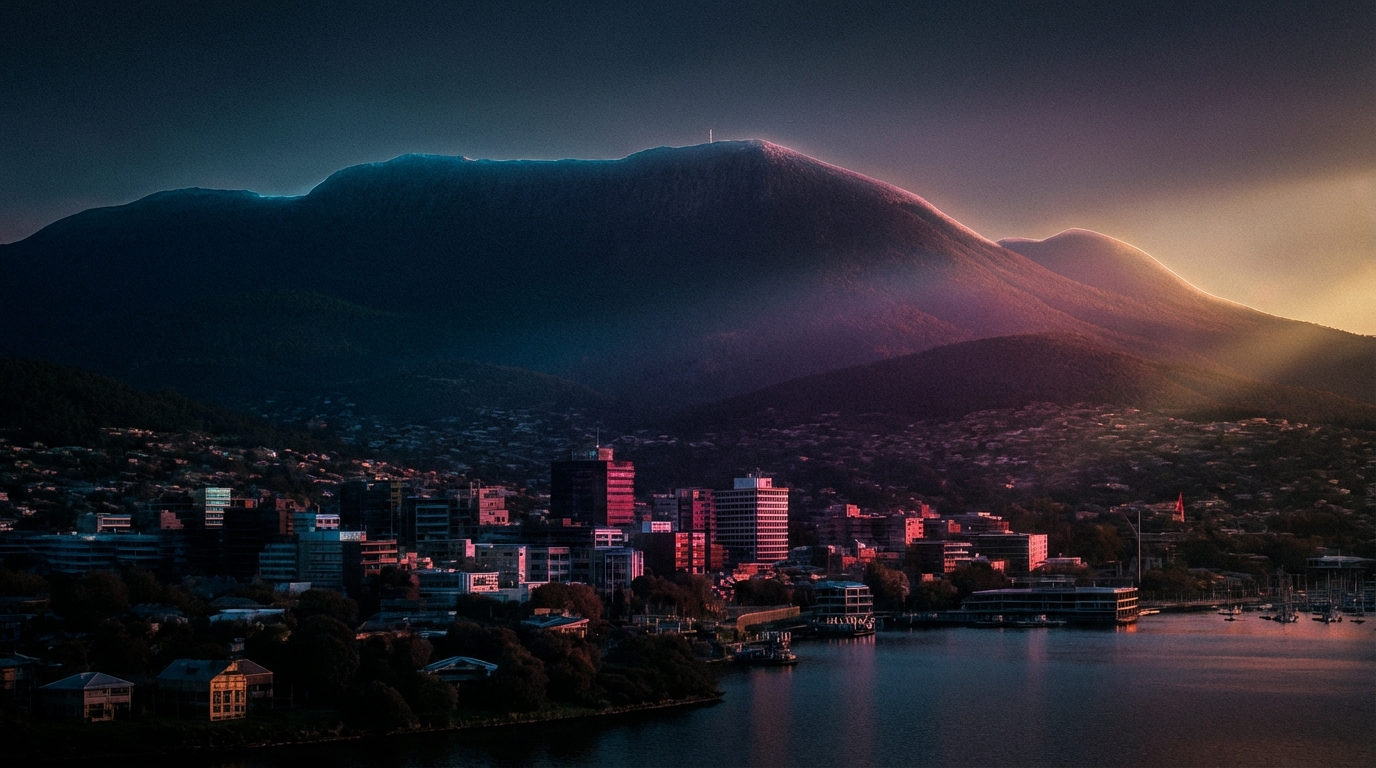
Hobart's geography fundamentally shapes its character. The Derwent River, widening as it approaches Storm Bay and the Southern Ocean, provides the setting for the city's waterfront and the defining feature of its urban form. The river separates eastern and western shores, creating distinct communities connected by bridges whose significance was so dramatically demonstrated in 1975. Mount Wellington, rising to 1,271 metres immediately behind the city, dominates the visual landscape and moderates the climate, its snow-capped winter peak a reminder of Hobart's position as the second-most southerly state capital in the world.
The mountain—known by its Aboriginal name kunanyi in recognition of Indigenous heritage—provides recreational opportunities from bushwalking to skiing, whilst also creating the microclimates that characterise different parts of the city. The foothills support residential suburbs like those surrounding Hobart Family Doctor's Practice, whilst the summit offers panoramic views across the city, the river, and beyond. The relationship between city and mountain defines Hobart in ways that few other Australian capitals can claim.
Beyond the immediate urban area, suburbs and satellite communities extend along both shores of the Derwent. Lindisfarne on the eastern shore, Battery Point and Sandy Bay to the south, Taroona and Mount Nelson further around the river—each possesses its own character whilst remaining connected to the metropolitan centre. Coordinates -42.88056 latitude and 147.32500 longitude place Hobart at the heart of this urban constellation, a regional capital serving not just the greater metropolitan area but the entire island state.
Legacy and Continuity
Hobart enters the third decade of the twenty-first century as a city conscious of its complex heritage. The Muwinina pathways that once traversed this country now lie beneath streets and buildings, yet acknowledgment of Indigenous custodianship has become an increasingly prominent feature of civic life. The convict past, once a source of shame to be concealed, is now understood as foundational to Tasmanian identity and actively preserved at heritage sites throughout the region.
The families whose names appear throughout the city's history—Blackwood, Jeffries, and others—continue to shape Hobart's present, though the events of 2018 demonstrated that establishment status provides no protection from tragedy. The institutions built over two centuries—hospitals, courts, schools, and businesses—maintain their functions whilst adapting to contemporary circumstances. The natural environment that first attracted settlement, with its harbour and mountain and river, remains the essential context within which urban life unfolds.
Hobart's gift, perhaps, lies in its capacity to hold complexity: to be simultaneously a colonial settlement and Aboriginal country, a provincial capital and an international cultural destination, a traditional community and a site of unsettling events. The city's relative isolation has preserved characteristics lost in larger metropolitan centres whilst also breeding a resilience tested by disasters both natural and human. As Mount Wellington watches over the streets below and the Derwent flows toward the Southern Ocean, Hobart continues the work of becoming—never complete, always in process, shaped by those who have gone before and open to those yet to arrive.


