4338.209 · July 28, 2018 AD
Growl
A night that begins with quiet reflection turns violently surreal when an unknown force breaches the boundary between comfort and chaos. As fear takes shape in growls, screams, and impossible light, Glenda and the others must confront a truth more terrifying than monsters: they are no longer the only ones here.
“There are nights when the world holds its breath. And you realise—maybe it isn’t the dark you fear. It’s what listens in it.”
Adjusting the log on the campfire, its embers leapt skyward in a fleeting display of brilliance—a swarm of sparks flaring into being before fading into the night. For a moment, I lost myself in the hypnotic dance of light and ash, my eyes following the sparks as they dissolved into the looming black above. A thin veil of smoke curled upward, carrying with it the scent of scorched wood and the false comfort of safety.
I glanced across our makeshift encampment, taking in the stillness that had settled like a dense blanket. Each of the settlers—this odd, eclectic family fate had thrown me into—was now folded into their chosen place for the night, some huddled beneath blankets, others simply curled against the earth as if trying to become part of it. The quiet hum of breath and fabric shifting filled the spaces between the crackles of fire. It was almost peaceful. Almost.
The air had cooled, but not to a threatening degree. It was that deceptive sort of chill that whispered across the sands and brushed your skin like a ghost—not enough to harm, but just enough to remind you that comfort here was borrowed, not owed. Even without the fire, we wouldn’t have frozen. But the fire wasn’t really about warmth anymore. It was about light. A border between what we could see and what we dared not imagine.
As I passed Lois, I reached down to stroke her fur. She leaned into my hand with that gentle nuzzle only she could manage—equal parts affection and unspoken reassurance. I smiled faintly. Her fur was warm from the fire and faintly tinged with dust, a sensory reminder of the terrain we now called home.
Dragging out blankets for the men still sitting up—Luke, Paul, Kain—felt unnecessary, or so I told myself. They were hardy enough, surely. But in truth, it was a little lie I clung to, one of many I’d learned to accept since arriving in Clivilius. The kind of lie that let me feel like I wasn’t failing anyone. Let them sit by the flames, trading murmured conversation or simply watching the fire decay into glowing rubble. They seemed content enough, or at least willing to feign it for one another’s sake.
My eyes flicked towards the tents. Karen’s departure earlier had been volcanic—sharp, swift, and impossible to ignore. Her silhouette, disappearing into the shadows with her arms stiff at her sides, replayed in my mind’s eye like a haunting. It lingered longer than I wanted it to, like a warning rather than a memory.
Chris had disappeared soon after, presumably to find her, to patch things over with soft words or silence. Either would do. Their marriage, for all its tension, had an elasticity I envied—strained, but always pulling back to one another.
Jamie would be with Joel now. I imagined them in their tent: the soft murmur of shared words or shared silence, maybe Joel asleep, maybe not. That relationship, forged in the crucible of this strange new life, fascinated me. A father and son learning how to re-know one another under a sky they had never seen before.
Lois had been interested in the coins earlier. Intensely so. Her snout, always driven by some canine logic I could never quite predict, had been drawn to them as if they exuded something more than metal. She’d sniffed and nosed at them with a persistence that made me uneasy. I had scolded her, gently but firmly—too aware that those coins were more than mere relics. Symbols now. Secrets.
She’d since wandered to Paul’s side, tail wagging in unconscious loyalty. Watching her lay her head on his foot, I realised how quickly these new bonds were formed—not through obligation, but through instinct. Through trust. I couldn’t help but envy that simplicity. In a world so fractured and uncertain, how effortless it was for her to choose companionship. No politics. No strategy. Just faith in the warmth of another.
Satisfied the fire was well-fed for the remainder of the night, its embers pulsing like a slow, steady heartbeat, I turned from the camp and withdrew into the relative sanctuary of my tent. The air inside was slightly cooler, tinged with the dry scent of canvas and dust. I let the flap fall shut behind me, cocooning myself in a silence that felt almost reverent.
Lying down, I let the night settle around me. The canopy above was nothing more than black fabric, but it stretched like a void, wide and unknowable. I reached beneath my shirt and withdrew the coins, holding them in my palm. One by one, I rolled them between my fingers, the metal cool and smooth, a contrast to the dryness of my skin. Each pass of their weight between thumb and forefinger was steadying. Familiar. Real. A connection to something far beyond our little camp.
Time passed interminably, and as my eyelids began to flutter with heaviness, my mind, untethered in the darkness, drifted to my father. To the times before all of this—before Clivilius, before the portal, before we were asked to survive instead of simply live. He had spoken of Clivilius in hushed tones, always with reverence, like it was more than a name. A place, yes, but also an idea. A warning. A promise.
I tried to hold his voice in my mind, but the details were slippery, dissolving as soon as I reached for them. So I closed my eyes tightly, shutting out the world, and summoned his image with the determination of a child craving comfort. And there he was—unexpectedly vivid. Sitting in the golden lamplight of his study, brushing a strand of hair from my cheek, his expression tender.
"Glenda," he said, and I didn’t know if I’d spoken his name aloud or only dreamed it. Either way, it answered some ache that had been gnawing at me.
"Father," I whispered, barely audible, even to myself. "Where is Chewbathia?"
It wasn’t a question meant for logic or maps. It was a plea. A wish sent into the ether, like a note in a bottle cast into the sea of night.
His response came not in words, but in the certainty of his imagined voice. "You know how to find it. You know how to find all of them."
The declaration struck like a chord inside me, trembling with something half-forgotten, half-imagined. My brow furrowed as I tried to make sense of it. Could I know something I didn’t know I knew?
"The secret key that you kept hidden in your study?" I offered aloud to the darkness, the memory of that mysterious, sacred room flooding back—its forbidden bookshelves, the desk drawers that never quite closed, the sense that truth slept in every corner.
His laughter—playful, affectionate—bubbled up in my mind, wrapping around me like a blanket pulled up under my chin.
"Well, it was hardly secret nor hidden then, was it?" he teased, and I saw the sparkle in his eyes as clearly as if he stood before me. That look reserved only for me, as if the world paused whenever we spoke.
And then: "I always knew that you used to spy on me through the crack in the door, late at night when you should have been tucked away in bed and fast asleep."
The flush that crept up my cheeks was so immediate, so familiar, that it took me by surprise. A child’s guilt mingled with a daughter’s love. I smiled into the dark. He had known. Of course he had. And still, he had let me watch.
But then—the smile vanished.
A sound. Low. Wrong.
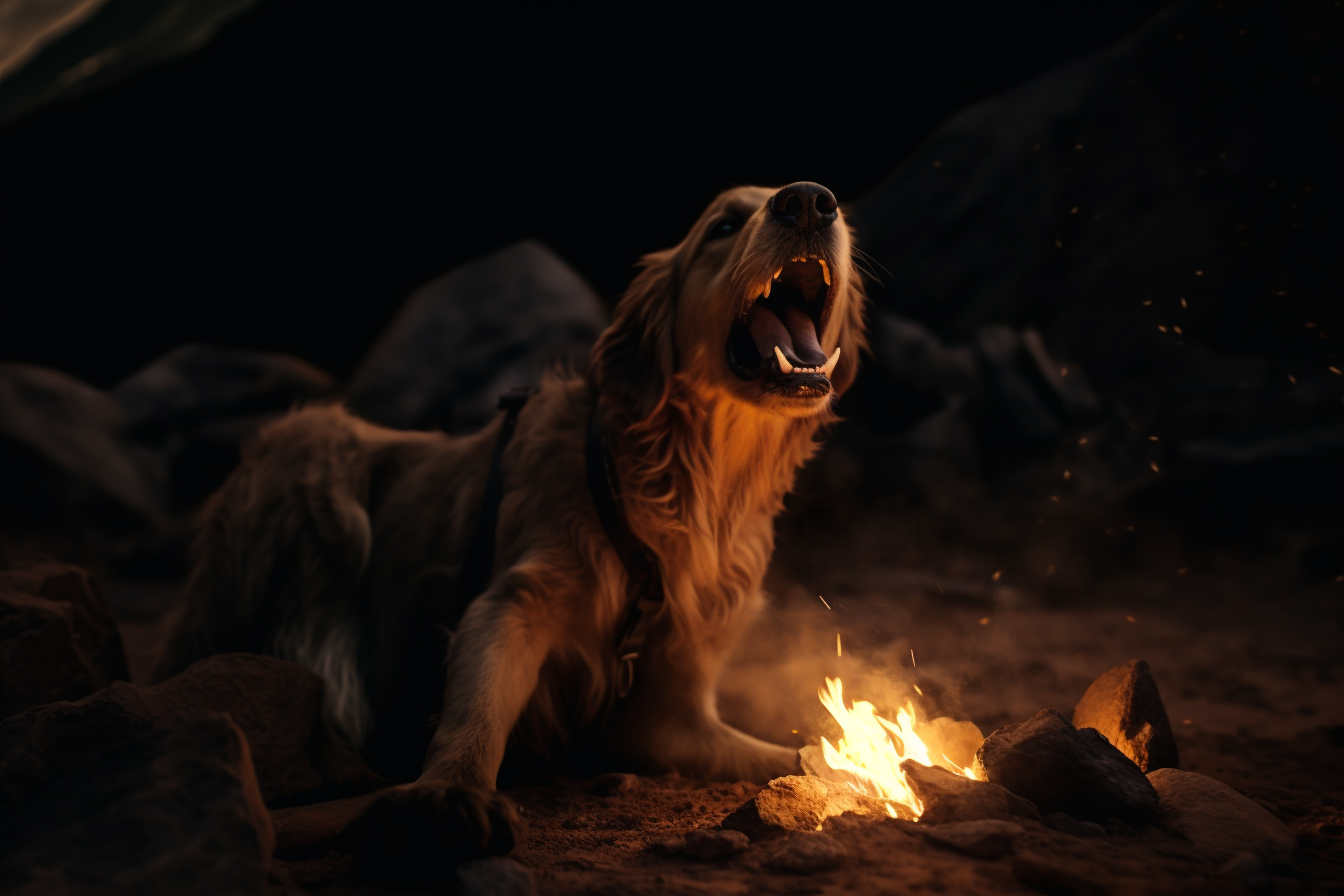
A growl. Deep and guttural. Not the idle murmur of a restless animal, but something primal. Purposeful. The kind of sound that bypasses logic and roots itself in the body, where instinct lives. My blood chilled, rushing away from the surface, my skin suddenly clammy.
The moment, the warmth of my father’s presence, the safety of memory—it all dissolved in an instant, swept away like ashes in wind. The darkness of the tent, once a cradle for nostalgia, became suffocating. The thin walls around me might as well have been paper.
Then, the tent’s entrance stirred. Not a breeze—no. This was different. Intentional. A rustle, slow and deliberate. The brushing of fabric against fabric.
I sat bolt upright. "Father?" I heard myself whisper, the name tumbling from my lips before I could stop it, absurd and desperate. Hope is a strange thing—how it lingers, even in the face of the impossible. "Father, is that you?"
No answer. Only silence. Thick. Expectant. And the growing certainty that I was no longer alone.
Sweat bloomed along my brow and temple, cold and sudden. The dream, the warmth, the coins pressed to my skin—it all seemed so distant now, so ludicrous against the edge of fear creeping up my spine.
Then: Lois.
A bark—sharp and commanding—split the night, sharp enough to cut.
It wasn't her usual bark. It was her warning. The one she used when things were wrong.
I froze. Every muscle locked in place. Then came a second sound—closer now—her growl. Deep. Feral. Protective.
The primal part of me surged to life. I dropped to all fours, crawling across the tent with frantic precision, my hands skating over canvas and grit as I fumbled towards the entrance. Every inch forward felt like crossing a chasm, the fabric walls warping with shadows beyond my comprehension.
Outside, the fire popped. But it no longer felt warm. It felt like bait.
Lois growled again, this time shorter—clipped. Urgent.
I reached the entrance. My fingers trembled as they found the zip. I paused, chest heaving, heart thundering against my ribs like a drumbeat of alarm. I could feel something—no, sense it—on the other side. Watching. Waiting.
The tension in the air was no longer human. Something else had taken its place.
And it was hungry.
"What's going on? Why is Lois barking?" My voice tore through the tent flap, a half shout laced with anxiety. I emerged into the night, squinting as my eyes adjusted to the firelight, the world beyond our camp an indistinct sea of shadows. Paul, Luke, and Kain stood like statues, their postures rigid, carved in stark relief against the flickering orange glow.
They weren’t just standing—they were listening. Watching. And that sent a cold shiver down my spine.
Paul’s gaze was fixed ahead, eyes narrowed towards the black beyond our reach. His expression, though composed, was taut with tension. "We don't know," he replied flatly, not looking at me. His voice was controlled, but something in it—some taut string just beneath—betrayed the truth. This wasn’t nothing. This wasn’t routine.
I followed his line of sight. There was only darkness. Vast. Swallowing. A stillness so unnatural it rang louder than noise.
"Probably just the wind picking up dust," Luke offered, but the way his hand hovered near his side, fingers flexing slightly, told another story. The reassurance was there in tone only, a painted veneer of calm over something raw and unsettled.
As if to echo his claim—or challenge it—a gust swept through the camp, sudden and sharp. Dust lifted in curtains, stinging the skin and momentarily blinding us. I turned my face against the grit, eyes watering, strands of hair whipping across my mouth like a silken gag.
I told myself Luke was right. He had to be right.
The wind explained Lois’s agitation. The wind explained the tent’s rustling. The wind explained the crawling sense of dread threading its way up my spine—didn’t it?
But even as I blinked against the dust, I felt something else creeping in. The timing of the gust—it was too perfect. As if summoned. As if something had listened and responded.
The word Clivilius surfaced unbidden in my mind, a whisper against the howling dark. And with it came a hollow thud in my chest, the slow, creeping realisation that we might not be alone. Not truly. Not tonight.
I glanced down at Lois. She hadn’t stopped growling.
The urgency in Luke's voice sliced through the tension like a blade. "We’d better get inside the tents!" he bellowed, the command not so much barked as torn from his throat, raw with panic. It echoed off the surrounding dunes and bounced back at us as though the land itself was alarmed.
My eyes darted to Lois. She stood, hackles raised, a low, guttural growl building in her throat like something about to break. "Come, Lois," I pleaded, reaching for her collar with trembling fingers.
But she didn’t budge.
Lois—normally obedient, loyal, eager to please—stood rooted like a sentinel carved from flesh and fur. Her growl deepened, a vibration that seemed to shake the very air around her.
Something was wrong.
"Duke! Get back here!" Jamie’s voice came from the darkness, sharp with panic. There was a desperation to it, a parent calling for a child lost in a crowd.
"Lois!" I hissed, my voice splintering under the strain. The tension was thick as oil now, coating everything. My words hit the night and dissolved, powerless.
Then Kain's voice tore through the dark like a flare. "Shit! We're surrounded!"
The firelight suddenly felt too small, too fragile. Kain scrambled back towards its glow like a drowning man to a life raft—only there was no water here, just dust and shadows. My skin went clammy. The ground felt less like earth and more like something watching. Waiting.
"I mean it, Lois. Get inside," I barked, the edge in my voice betraying my rising terror. But she only bristled harder, locked in place, her gaze fixed beyond the ring of firelight where the dark seemed to breathe.
A tent rustled. Karen’s voice, sharp and confused, broke through the chaos. "What’s going on?" She emerged half-dressed, hair tousled, blinking as if torn from a dream and dumped into a nightmare.
And then—a shimmer.
Across the dunes, the Portal came alive.
A kaleidoscope of colours ripped across the night sky—violent and beautiful. Like a bruise blossoming in reverse.
What the hell?
I squinted. The colours churned like oil and fire, far too vivid, too alive. My stomach twisted. Something was off. It challenged every memory I had of the Portal. This wasn’t right.
Karen stumbled forward. "Is that Luke?" she asked, dazed, pointing towards the distant blaze of colour.
"I’m right here," Luke called back, his voice taut.
A weight dropped in my gut.
If he’s here… then what the fuck is that?
And then, Lois lunged forward. I tried to stop her—too late. My hands caught only empty air, my balance teetered, and I crashed backwards, the earth unforgiving. Pain shot up my spine, the thud ringing louder than it should have. For a second, everything went still.
The Portal flickered. Lois growled. And something unseen began to move.
"Duke, stop barking!" Jamie’s voice cracked through the dark like a whip, his command more plea than order, drowned almost instantly beneath the rising din.
I lay sprawled on the earth, the cold grit biting into my palms, and for a heartbeat I couldn’t move. Everything—my limbs, my breath, even my thoughts—felt paralysed. The Portal still shimmered out there like a wound torn in the sky, its light an otherworldly pulse that made sense of nothing.
A sickness settled low in my gut.
This wasn’t just a bad night. This was a breach.
The scream came without warning.
Not human. Not animal. Just terror—pure and unfiltered.
It ripped across the desert, primal and so grotesquely real it hollowed out my lungs. The sound seemed to warp the air, freezing it, thickening it, as if time itself had staggered back in horror. My breath caught. Every hair on my arms lifted.
The dust around us twisted upward in vicious, whirling columns—miniature tempests spinning in manic circles around our camp. The fire guttered. For a moment, it looked like the night itself might devour us whole.
Then Lois moved.
Like a bolt loosed from a bow, she shot forward, muscles coiled with purpose. There was no hesitation in her, no fear—only instinct. Protection. Loyalty.
"Lois!" I screamed, scrambling to my feet, a cry ripped straight from the pit of my soul. She vanished into the void beyond the campfire’s reach, her silhouette swallowed whole by the black.
I staggered forward, every step weighted by panic. The coins inside my bra felt hot against my skin now, as though their secrets were burning through me.
Don’t let her die. Please, don’t let her die.
My knees buckled on the uneven ground, but I didn’t stop. Couldn’t stop. My lungs burned with effort, throat raw from the cold night air.
And then—a flicker of movement beside me.
Paul. Close. His boots pounding in rhythm with mine.
His presence was a lifeline—brief, faltering, but enough. Not words. Not questions. Just the unspoken knowledge between us:
We were running towards whatever had screamed. And we had no choice.
The desert floor shifted like a living thing beneath my bare feet, treacherous and sly. The fine dust, once merely an inconvenience, now clawed at my every step, dragging, resisting—as though the earth itself wanted me to turn back. Each movement forward was a fight against the land, against my own panic. The dunes rose like waves, unforgiving in their silence, and I was their flailing captive.
As I crested the second dune, my foot slid on a loose patch of grit. For one suspended moment, I teetered—weightless—before the ground gave way.
The fall wasn’t graceful. My body twisted in the air, reaching for purchase that wasn’t there. I hit the slope hard and tumbled, limbs flailing, dust choking every breath. My ears filled with the thunder of my own movement, my vision reduced to a dizzying blur of sand and dust.
When I finally skidded to a halt, half-buried in the slope, my lungs heaved in ragged desperation. The desert had tried to swallow me whole.
"Are you—" Paul’s voice—urgent, strained—pierced the chaos.
But it was severed.
Another scream. Closer. Worse.
This one didn’t rise—it burst, sudden and rupturing, tearing into the night like meat from bone. It was the sound of something breaking. Not just a body. Something deeper. Something human.
My skin went cold.
The wind howled around me, as though the scream had summoned it. My pulse thudded in my ears, every instinct screaming at me to run away—but I didn’t.
Then, like lightning tearing through stormclouds, the sky above us fractured into a kaleidoscope of shifting colours. The Portal—but wrong. Beautiful. Terrible. Its glow rippled across the dunes like a hallucination too vivid to ignore.
And there—just beneath the pulsing light—a small, incongruous shape.
Out of place. Utterly mundane.
A phone.
It rested awkwardly in the dust like someone had dropped it mid-flight, mid-run, mid-scream. The desert returned to blackness, but the outline burned behind my eyelids like an afterimage.
Crawling, breath shallow, I reached it. My fingers closed around its cold frame. As I lifted it, the screen—miraculously—lit up, a faint blue glow breaking through the suffocating dark.
Locked. No signal.
But it glowed.
And in that moment, it felt like a thread to the real world—one thin, trembling line in a night unravelling at the seams.
With the phone’s dim glow carving a narrow, trembling path through the dark, I pushed forward through the sand, each step sinking slightly as though the ground itself wanted to claim me. The desert no longer felt like a place—it felt like an entity, pulsing with an intent I couldn’t name.
Then—Paul.
He sat slumped in the dirt, a silhouette barely distinguishable in the shadow-thick night. His head moved slightly at my approach, but his gaze roamed, unfocused, as though the darkness had swallowed not just his sight but his orientation, his very place in the world.
I reached for him.
His recoil was immediate—sharp, reflexive.
"It’s me," I breathed quickly, my fingers closing firmly around his arm. My grip wasn’t just for his benefit—it steadied me, too. We needed to anchor each other, or risk drifting away into whatever this night was becoming.
He blinked, his eyes locking on the phone’s ghostly light. "Where the hell did you get that?" His voice, hoarse with strain, was threaded with disbelief.
"I found it face down in the dust, over there, near the Portal," I said, tightening my hold on his arm as the wind rose again, dragging grit across our skin like sandpaper.
Together, we staggered upright, limbs stiff and unsure. As we rose, the Portal flared again—no warning, no rhythm. Just eruption. Violent, impossible colour spilled into the night, painting us in shifting hues. Behind us, our shadows reared up against the dunes, tall and twisted, grotesque reflections of ourselves wavering in silence.
Then—Luke’s voice, loud and clear over the wind. "Everyone okay?"
His figure turned to look back, a pale outline framed by the unnatural glow. That momentary eye contact, that flash of recognition—it was enough. It said: We see each other. We’re still here.
"I think so," Paul responded, voice steadier now, though he glanced at me for silent confirmation.
I gave a small nod. It was all I could manage.
But even as I nodded, a doubt throbbed in the back of my mind. How much could Paul really see in this uncertain light? Did any of us really understand what we were witnessing?
"Good. I'm going in," Luke said flatly.
He didn’t wait for objections. The way he said it—like a decision already made—left no room for protest. He was doing it. Risk and all.
I opened my mouth to stop him—but I never got the chance.
Just as suddenly as it had ignited, the Portal died. Colours vanished. Shadows collapsed. Clivilius went dark.
And in that void, the silence wasn’t peace—it was a warning.
The sudden extinguishing of the Portal’s light left the world hollow. As if the night, momentarily held at bay by brilliance, had crept back in with vengeance. Luke had vanished. The colours—gone. What remained was absence. And absence, I realised, could be terrifying.
The phone in my hand—so small, so human—had become something else entirely. Its dim glow illuminated nothing but shadows, and yet it felt as though it was glowing with the burden of what had just happened. It pressed at me. A fragile hope, yes—but also a tether to something dark and unknowable.
Then—a sensation. A soft brush of fur against my leg. I flinched so hard I nearly cried out.
"That darn dog," I muttered, the words more a steadying mechanism than genuine frustration. My voice barely hid the tremble behind the mask of annoyance. Lois, ever present. Always at the centre of the storm, like she had been born for it.
"Lois! Stay!" I commanded, sharply, the order cracking through the stillness like a whip. My fingers released Paul’s arm instinctively as I reached down to her. The movement was automatic, protective.
I bent quickly, fumbling with the phone to cast its faint light across her body. The bluish-white glow skimmed her fur, highlighting the wild rise and fall of her chest. Her eyes caught the light and flashed back something I didn’t recognise—not fear, not confusion, but something primal. Something ancient.
My hands moved over her flank, my fingers desperate for reassurance—no cuts, no blood, no signs of harm. My heart thudded in my ears as I searched her with trembling hands. Please, not Lois. Not her.
Then—"Whoa!" Kain’s voice rang out from the black, a sharp note of alarm that shot adrenaline through me like a current.
Lois’s body tensed beneath my touch.
She snarled.
Not barked. Snarled. Deep and guttural, a noise I’d never heard from her before. It rumbled through her chest like a threat forged in the core of the earth.
"She’s baring her teeth," I said to Paul, every word a notch higher in pitch. My gaze flicked upward, finding nothing in the darkness, but knowing something was out there. "She’s never done that before."
Paul’s breath drew in sharply, a rasp of instinct rather than reply, as a sudden gust of wind lashed across us—this time heavier, grittier. Dust whipped against my face and stung my eyes, forcing them shut even as my grip on Lois tightened. The air was changing, heavy with particles that felt less like windblown earth and more like decay.
The world wasn’t just dark.
It was hostile.
And Lois was the only one brave enough to speak the truth of it.
Then, cutting through the turmoil, Kain's scream—a sound so raw and filled with agony—it froze me to my core.
It was the kind of scream that didn’t allow for imagination. No ambiguity. No maybe. It was pain—a pure, primal sound that stripped the night of all illusion. I felt it more than heard it. It hit like an iron rod through the chest, hollowing me out with a wave of icy dread.
A scream like that didn’t just echo—it changed the shape of the darkness.
My breath hitched. For a suspended second, my body refused to move. I was gripped by the sheer reality of it: this wasn’t some nightmare of wind and paranoia. This was real, and whatever had hurt Kain was still out there. Still near.
In that moment, my fear for Lois, for Paul, for all of us, crystallised into a jagged knot in my chest. We weren’t bystanders in some cosmic riddle—we were in it, blood and bone and breath. And the night? It wasn’t just empty anymore. It was hunting.
"Go and find him, girl," I urged Lois, the urgency in my voice pushing past the lump in my throat. My fingers pressed against her hindquarters, a firm nudge, half command, half prayer.
She didn’t hesitate. She launched forward into the night, a flash of fur swallowed immediately by shadow.
I ran after her.
The wind clawed at my face. The phone’s frail light bobbed ahead of me, jolting wildly with each stride—more a flicker than a guide. The desert swallowed sound and sense alike. My boots hit the earth with dull, desperate thuds.
"Kain!" I called. "Kain!" Each shout cracked through the dark, an offering hurled into a void too vast, too silent.
"Where are you, Kain?" Paul’s voice boomed nearby, its depth ragged with panic. It steadied me, reminded me I wasn’t alone.
Then—a sliver of hope.
"I see tracks," I announced, my voice tight with breath but lit with urgency. Lois’s pawprints, a fleeting trail in the dust, glowed beneath the soft halo of the phone screen. The wind had already begun its cruel work, ghosting them into obscurity. I moved faster, chasing footprints before they vanished like memories.
"Lois found him!" I shouted, my chest heaving, eyes wide with relief as their silhouettes formed from the murk—Lois standing guard, and beside her, slumped and motionless—
Kain.
But even before I reached them, I knew: something was wrong.
Terribly, unmistakably wrong.
I rushed to Kain's side, the world narrowing to that single moment—his prone body sprawled beneath the indifferent sky, his breath ragged, his form curled in pain. I dropped beside him, knees hitting the ground with a muted thump, the fear in my chest blooming into full-blown urgency.
"Kain," I said, my voice cracking as I gently pushed Lois aside, her frantic attempts to comfort him becoming more hindrance than help. Her warm tongue swept across his face, and I could feel her confusion, her desperation. She was trying to fix something she couldn’t understand.
"Kain, are you okay?" My words trembled with dread and hope, hands fluttering over his body, afraid to cause more harm but desperate to find where it hurt.
"Is he alive?" Paul’s voice rang out behind me, sharp, urgent—an arrow of dread piercing the rising fog of panic.
Kain grimaced in response, his mouth stretching open in a silent, distorted scream. He couldn’t speak—his body wouldn’t let him—but his eyes flicked downwards, a trembling gesture towards his leg.
And then he made a sound. Garbled. Guttural. Like something torn between a growl and a sob.
The phone’s weak glow swept across him—and I saw.
A deep, ragged gash ran along his thigh, a wound so vicious it barely looked real. His trousers had been shredded to ribbons around it, the fabric soaked and darkened with blood. The torn cloth clung stubbornly to his leg, a futile veil trying to hold in the damage beneath.
My breath caught. For a heartbeat, time stalled.
Then instinct surged forward, hard and cold and clear. The medic in me shoved the woman aside.
"Yes, but his leg is wounded. Come help me move him," I called over my shoulder, voice hardening with command. I needed Paul beside me, needed hands, needed focus—because this was bad. This wasn’t a scratch or a stumble. This was trauma.
Kain's scream tore through the air.
"My leg!" he wailed, his voice splintering into sobs. A spray of bloody spit followed the cry, catching the dim light like something spectral. "I think it's bleeding!"
His panic was like a drowning man’s—thrashing, helpless, suffocating in his own realisation.
"It is," I said, as gently as I could manage. My hands hovered over the wound, blood already slicking my fingers. The light from the phone trembled in my grip, casting quivering shadows across the torn flesh. The shadows moved like they had intent, like they were alive, mocking us.
We were no longer in control of this night. We were surviving it, second by second.
Paul's arrival was a relief—brief, breathless, and immense. His silhouette emerged from the swirling dust like a promise I hadn’t dared to hope for. His presence steadied me, a solid figure in the chaos.
"We need to move him out of this dust storm," I said, turning to him, the urgency in my voice sharpening every word. My brain spun with calculations—how much weight Kain could bear, how quickly we could get him to shelter, what we'd do if we were followed. Every second mattered now.
"You hold the light, I'll help him," Paul responded without hesitation, slipping seamlessly into action beside me.
I passed him the phone, its flickering glow pitiful against the dark but better than nothing. Even so, the full extent of Kain's injuries remained obscured, cloaked in shifting shadows and blood-matted fabric. The storm whipped around us like a living thing—restless, searching. It was no longer just weather; it felt like the land itself had turned hostile, as if something out there had roused and would not rest until more damage was done.
The thought haunted me: What did this to him? The wound wasn’t clean. It was jagged, wild. Animal? No. No animal I’d ever encountered left marks like that. Too deliberate. Too cruel.
The realisation was like ice poured down my spine—we weren’t alone. But whatever else shared this planet with us… wasn’t friendly.
"Try not to put too much pressure on the leg," I told Kain softly, crouching beside him, trying to keep my voice measured. I watched his face contort, each muscle twitch a vivid portrait of pain. He clenched his jaw against the groan that still managed to escape. His hands dug into the dirt, seeking purchase against the agony.
Paul knelt too, his movements brisk but careful, positioning himself beneath Kain’s arm. A living support beam. "Okay. We can take shelter at the Drop Zone for now," he offered, but I caught the flicker in his eyes, the slight falter in his tone. He wasn’t certain. None of us were. Safety felt like a word from another world.
As they braced together, Paul steadied them both. "We're going to stand," he said with conviction—less an instruction than a promise. A quiet act of courage.
I stood back just enough to give them space but stayed close enough to intervene if Kain faltered. Watching them push upright—one bleeding, one bearing the weight—I felt something stir inside me. Admiration, yes. But also dread. This was only the beginning.
And the night was far from over.
Illuminating the path ahead with the phone's light, I took the lead towards the Drop Zone, each step an exercise in tense coordination—too fast and Kain might collapse, too slow and we might lose what little cover the shadows granted us. The wind had eased, but the dust lingered, curling around our feet like the breath of something watching.
The sight that greeted us—a ragtag assemblage of crates, salvaged panels, and stacked supply boxes—was absurdly welcome. That this patchwork mess, born of delayed labour and half-finished plans, now promised shelter, felt like a strange sort of blessing.
The Portal lit again—without sound, without warning—ripping a cascade of unnatural colour across the sky. I stopped in my tracks, the light pooling across the earth in ribbons of blue, violet, and unnatural golds. For a breathless moment, we were cast in its glow, our shadows long and warped, stretching against the surrounding crates like ghosts rehearsing an encore.
That light—so dazzling, so deceptive—reminded me how thin the barrier had become between wonder and threat. Magic, mystery, menace. We were one flicker away from any of them at any given time.
"Paul!" Luke's voice rang out, rough with urgency. It cut through the wind and fractured our focus.
"We're almost at the Drop Zone," Paul called back, his voice steady but winded, both an affirmation and a plea not to delay.
Luke's reply chased after us like an afterthought: "I need to check the house. I'll be back soon!" Then he was gone—just like that—swallowed by the dark.
We passed through the stone markers like watchmen, two irregular piles I had originally dismissed as temporary. Now they framed our entrance like a sacred threshold—marking the line between danger and whatever safety we could claim.
Following my guidance, we zigzagged between sheds and pallets, weaving our way towards the deeper centre of the Drop Zone. The terrain, littered with odd scraps and partially unboxed supplies, slowed our progress, but here, at least, the wind no longer screamed. The night was hushed again, but not quiet—not truly.
Kain's voice broke the stillness, small and strained: "Do you think we're safe here?"
I paused, letting the light linger on his face, drawn and pale beneath the blood-matted strands of his hair.
"I don’t know," I wanted to say. But I didn’t. He needed more than honesty.
Instead, I gave a soft, measured breath and tightened my grip on the light. I let it sweep across the walls of scrap and shadow, searching for signs of intrusion, as though reassurance could be found in the absence of movement.
But the truth settled heavy in my chest—what we’d seen tonight could not be easily hidden from, no matter how many boxes we stacked.
Not anymore.
As I carefully arranged Kain's leg, keeping it extended to minimise further injury, the tension in my shoulders mounted with each small adjustment. The wound throbbed beneath the cloth, a silent scream from torn flesh and trauma. I reached for Paul's shirt without hesitation, wordlessly tugging it free from where it clung to him. He offered no resistance, just a tired nod of understanding, as if we both knew instinctively that no sacrifice was too small tonight.
The fabric, warm with his body heat and thick with the dust of our ordeal, was quickly transformed into an impromptu bandage. I wrapped it around Kain’s thigh with as much care and pressure as the dim light would allow, hands steady though my thoughts scattered like the ash still drifting faintly through the air. It was a small act of control in a night that had stolen so much of it from me. Something tangible. Something I could fix.
"Lois hasn't growled once since we found you," Paul said softly, his voice fraying at the edges with cautious relief. His hand came to rest on Lois’s head, fingers weaving through her dirt-matted fur in a motion that was both grounding and grateful. The dog, always so alert, now seemed subdued—her flanks heaving with heavy panting, ears twitching occasionally but otherwise still. She was spent. Just like us.
"As soon as the wind calms, we need to get back to camp. Kain’s leg needs prompt medical care," I said, the words issuing with a flat practicality that betrayed none of the storm inside me. But it was pressing down—lead in my limbs, iron in my lungs. There was no choice in leadership, not now. Not when people were bleeding.
"Of course," Paul replied, already sagging with exhaustion, his back sinking into a stack of timber boards propped like a barricade against the storm.
Silence descended. The kind that wasn’t comforting, but thick and full of ghosts.
I moved quietly, digging a shallow depression into the dust beside one of the boxes. The phone, with its betraying, unnatural glow, was quickly buried beneath a layer of earth and tarp scraps. Its light snuffed out, I retreated into shadow. I pressed my spine to the cold, unforgiving surface of a crate, knees drawn up, arms wrapped around them—less for warmth and more to hold myself in place, to stop the pieces from coming apart.
Only then, with the chaos paused and everyone breathing but barely, did I allow the silence in my own head to speak.
A single tear slid down my cheek, unannounced. It was warm at first. Then cold. I wiped it away before it could fall, ashamed even in solitude.
I can't do this on my own, my mind sobbed, words I dared not voice aloud.
I need you, Pierre.
The name—his name—hung in the darkness, unspoken and sacred. It echoed inside me like a prayer. Like a wound.
