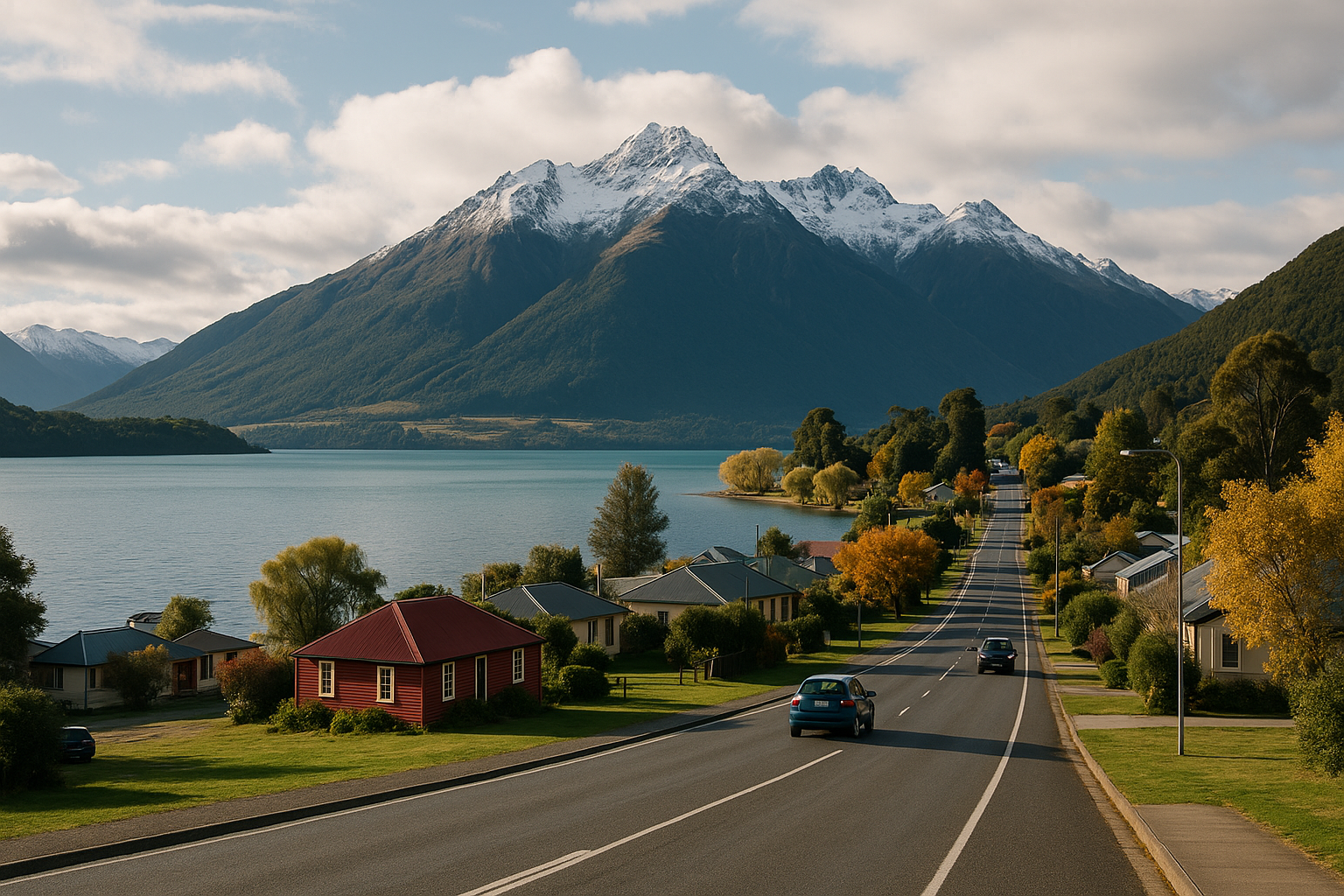
Glenorchy, Tasmania, Australia
Glenorchy is a suburban municipality situated on the western shore of the Derwent River, approximately eight kilometres northwest of central Hobart. Named by Captain William Steel in 1820 after a Scottish glen, the suburb evolved from pastoral estate to agricultural settlement before industrialising through the twentieth century. The area gained unexpected prominence in July 2018 when routine police operations intersected with an escalating missing persons investigation, transforming familiar streets into stages for pursuit, revelation, and tragedy.
Location and Geography
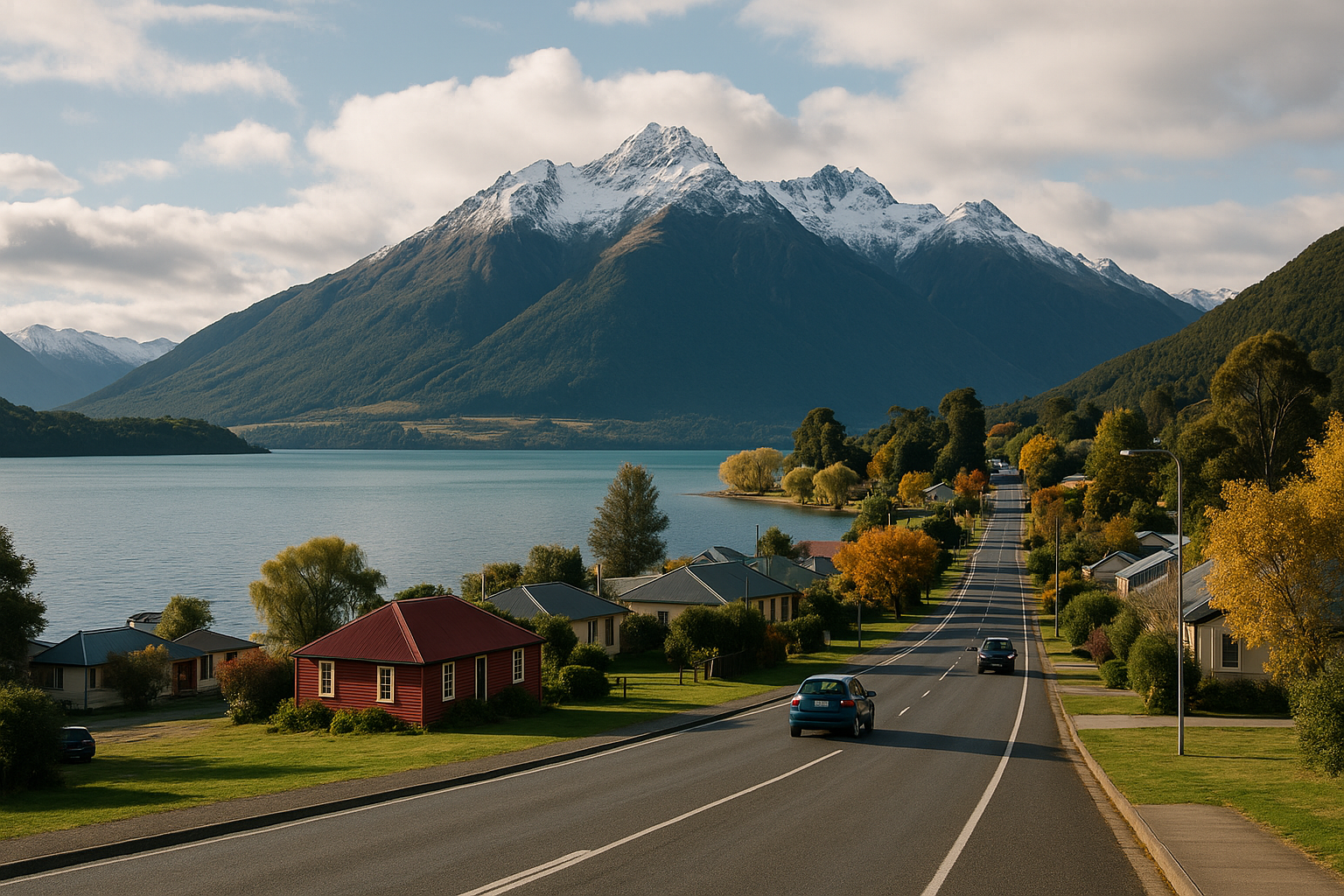
Glenorchy occupies a strategic position within the greater Hobart metropolitan area, stretching along the Derwent River's western shore where the waterway begins its journey inland from the harbour. The municipality encompasses approximately forty square kilometres, bounded by the river to the east and the foothills of kunanyi/Mount Wellington to the west. This geography has shaped the suburb's character across two centuries, providing both the fertile lowlands that attracted early settlers and the transport corridors that later facilitated industrial development.
The terrain rises gradually from the river flats through residential zones to the steeper slopes that mark the transition to Wellington Park's wilderness. Main Road, the suburb's primary artery, follows the contours of this landscape, connecting Glenorchy to Hobart in the south and the northern suburbs beyond. The Brooker Highway, constructed in the mid-twentieth century, carved a more direct route through the municipality, facilitating the transport networks that would transform Glenorchy from residential community to commercial and industrial hub.
The waterfront at Wilkinsons Point represents one of Glenorchy's most significant geographical features, offering reclaimed land that would eventually host the Derwent Entertainment Centre. Tolosa Park, transformed from neglected reservoir catchment into a community gathering space adorned with public art, provides green relief to the surrounding residential density. These spaces, whether natural or constructed, define the suburb's relationship with both water and mountain, creating the distinctive character that has attracted generations of residents seeking affordable housing within reach of Hobart's opportunities.
Historical Origins
The land that would become Glenorchy had been home to the Muwinina people for tens of thousands of years before European arrival. The Aboriginal inhabitants maintained complex relationships with this country, moving seasonally between river, plain, and mountain according to patterns of food availability and spiritual practice. The British colonisation of Van Diemen's Land from 1803 onwards initiated a process of violent displacement that would, within decades, effectively eliminate Indigenous presence from the Derwent Valley, leaving only place names and archaeological traces to mark millennia of prior occupation.
Captain William Steel, a military officer who had served in the Napoleonic Wars, received a substantial land grant in the area around 1820. Steel named his estate after Glenorchy, a parish in the Scottish Highlands, establishing the nomenclature that would persist long after his holdings were subdivided. The choice reflected the broader pattern of Scottish settlement in Van Diemen's Land, where emigrants brought not merely their labour but their place names, cultural practices, and dreams of recreating familiar landscapes in antipodean soil.
The Steel estate and surrounding grants established Glenorchy's early character as pastoral land supporting sheep, cattle, and the small-scale agriculture that sustained colonial households. Convict labour cleared the native vegetation, constructed buildings and fences, and transformed wilderness into productive farmland. By mid-century, the area had developed the infrastructure of a settled agricultural community, with roads connecting farms to Hobart's markets and the river providing an alternative transport route for heavier goods.
Agricultural Development and Transformation
Through the latter half of the nineteenth century, Glenorchy evolved from scattered pastoral holdings into a more densely settled agricultural district. Orchards proliferated on the fertile river flats, whilst market gardens supplied Hobart's growing population with fresh vegetables. Hop farms established in the area contributed to Tasmania's brewing industry, their distinctive kilns becoming landmarks in the rural landscape. The rhythms of planting, tending, and harvest shaped community life, creating the seasonal patterns and interdependencies characteristic of agricultural settlements.
The arrival of the railway in the 1870s accelerated Glenorchy's integration into greater Hobart, enabling faster movement of produce to market and encouraging residential development along the transport corridor. What had been farmland began yielding to subdivision, as speculators recognised the area's potential for housing workers who could commute to employment in the city. This transition from agricultural to residential character would continue through the following century, each decade seeing more paddocks converted to streets and houses.
The twentieth century brought more dramatic transformation as manufacturing and industry displaced agriculture as the suburb's economic foundation. Factories, warehouses, and commercial facilities spread along the main roads and railway lines, attracting workers who required affordable housing within reach of their employment. The Cadbury chocolate factory, whilst technically located in neighbouring Claremont, drew many of its workers from Glenorchy's expanding residential areas, creating economic dependencies that would shape the community for generations.
The Langford Family and Civic Service
Among the families who helped shape Glenorchy's civic character, the Langfords occupy a particularly significant position. Thomas Albert Langford arrived in the suburb in 1885, having relocated from Tasmania's north coast following an injury that curtailed his physical labour. He secured a position with the Glenorchy Town Board and would serve as council clerk for nearly four decades, his meticulous handwriting recording the suburb's transformation from rural district to modern municipality. His daily bicycle rides to the council office, leather satchel and umbrella in hand regardless of weather, became a familiar sight on Glenorchy's streets.
Thomas married Mabel Florence Beston in 1887, a woman who had grown up among the orchards of New Norfolk and brought to their union a curiosity about the natural world expressed through pressed flower journals and botanical observation. The couple established their home near Tolosa Street, raising five children whilst Mabel supplemented Thomas's modest income through practical contributions to community welfare. During the 1919 influenza epidemic, she coordinated a soup kitchen from their back verandah, serving broths and stewed apples to neighbours and railway families affected by the pandemic.
Thomas died in 1923, his passing noted in The Mercury as that of a faithful servant of municipal order. Mabel continued living in their Glenorchy cottage until her own death in 1949, her dried plant collection eventually donated to a local school. Their son Albert Roy, born in Glenorchy in 1895, would work as a linesman for the Hydro-Electric Commission, literally powering Tasmania's modernisation whilst maintaining the quiet domestic rhythms his parents had established. His daughter Edith May, born in Glenorchy in 1929 just days before the Wall Street Crash, would carry the Langford values of discipline and service into her career as a schoolteacher and her later life as matriarch of the Cramer household in Claremont.
Civic Institutions and Policing
The establishment of the Glenorchy Police Station in 1895 marked a significant milestone in the suburb's institutional development. Constable Samuel Walker, assigned as the district's inaugural officer, operated from a modest timber structure on Main Road, his jurisdiction encompassing the orchards, hop farms, and small holdings that defined Glenorchy's agricultural character. Walker's duties ranged from stock theft and licensing infractions to more serious matters of assault and vagrancy, embodying the practical demands of late-colonial policing in a community where everyone knew everyone else's business.
The Police Regulation Act of 1898 brought Glenorchy's constabulary into the newly unified Tasmania Police, professionalising operations that had previously answered to local magistracy. The station relocated twice over subsequent decades, each move reflecting the suburb's growth and evolving policing requirements. The King Street facility of the 1920s, built from locally quarried brick, housed officers like Sergeant Edith Reynolds, whose compassionate approach to Depression-era distress became part of the station's institutional character. The most recent relocation brought the station to modern premises on Terry Street, equipped with the technology and facilities contemporary policing demands.
Throughout these institutional evolutions, the Glenorchy station maintained its character as both neighbourhood constabulary and regional hub, serving the immediate community whilst supporting broader Southern Division operations. Officers like Sergeant David Mitchell provided supervisory continuity connecting historical ethos to contemporary practice, whilst newer recruits like Constable Michael Chen represented the multicultural composition of both modern policing and the community it served. The station's capacity to balance these roles would be tested severely during August 2018, when officers responded to a break-in at a Berriedale residence that escalated into one of Tasmania's most complex investigations.
Cultural Landmarks and Community Spaces
The Derwent Entertainment Centre, rising on reclaimed land at Wilkinsons Point in 1989, represented Tasmania's declaration that the island state deserved infrastructure capable of hosting world-class entertainment and sporting events. Commissioned as part of Australia's bicentennial celebrations, the venue provided seating for thousands and parking for over twelve hundred vehicles, addressing the practical requirements of a car-dependent population. The inaugural concert, Rick Astley performing on 30 March 1989, demonstrated that Tasmania could attract international acts at the peak of commercial success.
From 1989 to 1996, the Hobart Devils of the National Basketball League transformed the venue into what television commentators christened the Devils' Den, its enclosed space amplifying crowd noise into intimidating atmosphere. The franchise's departure created operational challenges, but the Centre established itself as Tasmania's premier venue for major concerts, hosting artists from Kylie Minogue to the Foo Fighters, whose 2015 concert drew nearly seven thousand patrons. Beyond entertainment, the facility served conventions, trade exhibitions, and ceremonial gatherings, including the 2009 visit of His Holiness the Dalai Lama.
In 2020, the Tasmanian Government purchased the Centre for eight million dollars, facilitating the National Basketball League's return through the Tasmania JackJumpers franchise. A sixty-eight-million-dollar redevelopment transformed the facility, renamed MyState Bank Arena through commercial arrangement. Yet the venue's significance extends beyond official functions. Its vast car park, designed for crowds but offering isolation when empty, has served purposes its architects never anticipated, providing anonymous space where private moments unfold beyond the observation that Tasmania's small population and interconnected communities rarely afford.
Working-Class Character and Community
Glenorchy's evolution through the twentieth century established its character as a working-class suburb where modest homes stand side by side, their varying states of maintenance telling the economic stories of the families within. The red-brick units and weatherboard cottages typical of mid-century construction house residents who navigate the careful mathematics of scarcity with quiet dignity. Properties like the Kate Gibbons residence on Bowden Street, within walking distance of Tolosa Park, exemplify this character, their compact layouts and functional designs reflecting priorities of necessity over luxury.
The suburb's commercial landscape reflects this working-class orientation. CityDirect Couriers depots sprawl near the Brooker Highway, providing employment for young men who leave school early for manual labour. Bottle shops and charity shops line the main roads alongside takeaway joints and practical retailers. The Bunnings Warehouse that opened on Howard Road in 2015, replacing Tasmania's original Moonah store, drew customers from across greater Hobart seeking affordable materials for home maintenance and renovation projects that residents largely undertake themselves.
Within this landscape, small businesses serve community needs with the personal attention that chain stores cannot provide. Salter's Garage, a modest workshop where Benny Salter repairs motorbikes and vehicles, operates through word-of-mouth trust rather than corporate enterprise. Such establishments embody the suburb's enduring character: practical, unadorned, serving neighbours through relationships built across years of residence. The corrugated iron sanctuaries and home workshops scattered through Glenorchy's residential streets continue a tradition of self-reliance that traces back to the suburb's agricultural origins.
The Events of July 2018
The final days of July 2018 transformed Glenorchy's familiar streets into stages for events that would resonate far beyond the suburb's boundaries. On 28 July, Detective Sarah Lahey examined a note she had taken from her sergeant's desk, its two words, Killerton Enterprises, leading her to research a San Francisco construction company with connections she could not yet comprehend. The discovery, made in her Glenorchy residence, represented the first crack in an investigation that would ultimately expose networks spanning continents and, some would later claim, dimensions.
The following day brought more dramatic developments when Detectives Karl Jenkins and Sarah Lahey, conducting traffic operations near Glenorchy, observed a silver Honda Civic exit a bottle shop at dangerous speed. The subsequent pursuit up Berriedale Road led to the apprehension of Gladys Cramer, a woman driving the vehicle of missing person Jamie Greyson. The breathalyser test Cramer passed could not explain why she possessed another person's car, nor why her phone contained a warning message sent to someone named Luke moments before the traffic stop.
Jenkins recognised Cramer as the sister of Beatrix Cramer, whom he had encountered during previous investigations that defied conventional explanation. The connection suggested patterns within the accumulating missing persons cases that transcended coincidence. Glenorchy's bottle shops and winding roads, its shopping centres and residential streets, had become unwitting accomplices to events that would escalate through August into tragedy. The suburb's unremarkable ordinariness amplified every tension, every revelation, providing stark contrast to the extraordinary circumstances unfolding within its familiar landscape.
The Gibbons Household
Among the households that witnessed Glenorchy's July 2018 events, the Gibbons residence on Bowden Street occupied a particularly poignant position. Kate Elizabeth Gibbons, a single mother who had raised her son Joel with fierce devotion and protective omission, maintained a modest life in this red-brick unit within walking distance of Tolosa Park. The property's compact layout, its thin brown-carpeted hallways connecting functional rooms, reflected the economic circumstances of a household navigating poverty with quiet dignity.
In the pre-dawn hours of 24 July, the residence's kitchen became the setting for revelation. Under harsh fluorescent light, Kate and her nineteen-year-old son Joel confronted an envelope from the Department of Justice containing Joel's birth certificate. The document bore a name Kate had kept secret for nineteen years: Jamie Greyson, the father Joel had been told was dead. The discovery shattered the careful fiction Kate had constructed, initiating a sequence of events that would draw Joel toward Berriedale, toward the man whose name appeared on paper, and ultimately toward circumstances from which he would not return unchanged.
By late July, the Gibbons residence had fallen into visible neglect, its front lawn overgrown and an old Holden Commodore sitting motionless on the brick driveway. The deterioration marked a household in crisis, Kate retreating into isolated grief whilst her son pursued truths she had tried to protect him from knowing. The property bore witness to how ordinary structures become repositories of extraordinary human experience, how the most profound transformations occur not in architecturally significant buildings but in the fluorescent-lit kitchens of working-class suburbs.
Aftermath and Legacy
The events of 2018 left marks on Glenorchy that extended beyond any single location or incident. The investigations that began with traffic stops and missing persons reports escalated through August into confrontations, deaths, and mysteries that remain officially unresolved. Kate Gibbons would meet her end at a Berriedale residence on 2 August, her death occurring during circumstances that tested the operational capacity of the very police station that had served the suburb since 1895. The discovery of human remains at the same location connected Glenorchy's present to tragedies stretching back decades.
For those who study the broader patterns of disappearance and unexplained phenomena that troubled Tasmania during this period, Glenorchy represents a significant node in networks that defy complete understanding. The connections between Gladys Cramer's traffic stop, the Killerton Enterprises note, the Greyson disappearance, and events at locations from Collinsvale to Myrtle Forest suggest operations of unusual scope. Whether these connections reflect ordinary criminal conspiracy or something stranger remains subject to interpretation and ongoing investigation.
The suburb itself continues much as it has for generations, its working-class character persisting through economic pressures and demographic changes. The JackJumpers now play at MyState Bank Arena, returning professional basketball to a venue that witnessed both sporting triumph and private tragedy. The police station maintains its dual role as neighbourhood constabulary and regional hub. New residents move into the modest homes that have housed working families for decades, unaware of the histories their walls contain. Glenorchy endures as communities do, absorbing the extraordinary into the fabric of ordinary life.



