Gareth William Briscoe
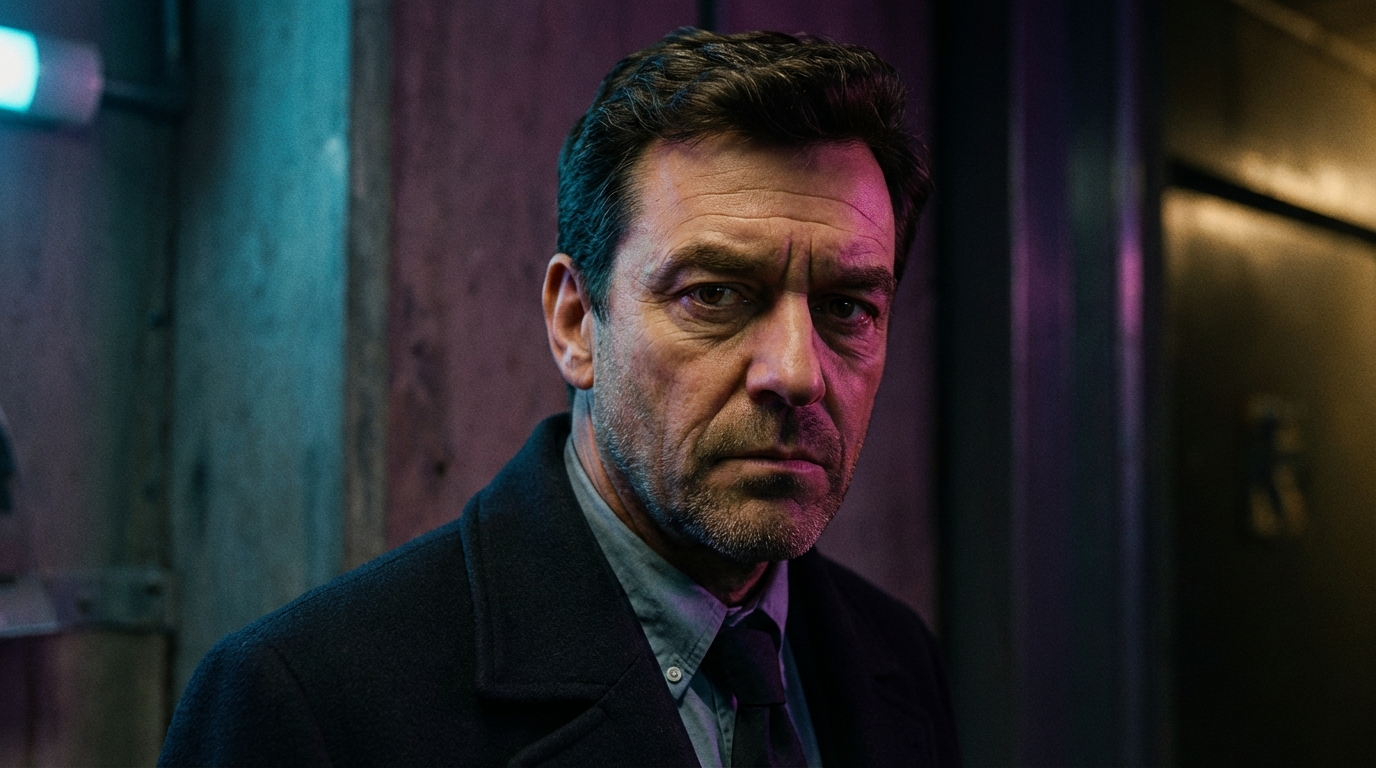
Born in the paper mill town of Burnie in 1971, Gareth William Briscoe joined the Tasmania Police at eighteen and spent more than three decades building a reputation as one of Hobart Police Station's most dependable sergeants. His career was shaped by a gift for holding things together when others fell apart — a quality tested to its limit in August 2018, when the disappearance of Detective Karl Jenkins was followed by the inexplicable vanishing of the police dog Jargus from the station's own secure kennels.
A Burnie Childhood
Gareth William Briscoe was born on 12 December 1971 in Burnie, a port city on Tasmania's north-west coast whose identity, in those years, was inseparable from the paper mill that dominated its skyline and its economy. He was the eldest of four children born to Robert Henry Briscoe, a shift supervisor at the Associated Pulp and Paper Mills facility, and Margaret Louise Briscoe (née Tait), who managed the household and supplemented the family's income through occasional work as a school cleaner at Burnie Primary.
The Briscoes lived in a weatherboard house in the northern suburbs, near enough to the mill for its low thrumming to register as ambient sound rather than intrusion — the kind of noise you stopped hearing until you left town and noticed its absence. The neighbourhood operated on the assumptions of working-class Tasmania in the 1970s: people knew each other's business, helped when they could, and kept their difficulties private when they couldn't. Robert Briscoe was a firm, sparing man whose approach to fatherhood drew more from discipline than tenderness, though his children never doubted his commitment to providing for them. Margaret softened the household's harder edges — she was warmer, more openly affectionate, and possessed the particular talent for defusing tension that four children and a tired husband required on a regular basis.
Gareth's siblings — Claire Margaret, born in 1974; Thomas Robert, known universally as Tom, born in 1976; and Andrew James, born in 1979 — grew up in his shadow in the way that younger children grew up in the shadow of an eldest brother who took the protective role seriously. He walked them to school, intervened in playground disputes that weren't his own, and absorbed, without complaint, the expectation that the firstborn carried responsibility for those who came after. The dynamic was not unusual for families of that era and place, but it left its mark on Gareth's temperament — a reflexive orientation towards looking after people, towards keeping order not through authority but through presence.
School and the Seed of Purpose
Gareth attended Burnie Primary School and later Burnie High School, where he distinguished himself more readily on the sporting field than in the classroom. He was a capable student — attentive, diligent, unlikely to cause difficulty — but his academic results reflected effort rather than natural aptitude. His teachers recognised a boy who worked hard and produced solid outcomes without ever threatening to excel, and they appreciated the absence of trouble he represented in an era when Burnie High's corridors could be testing ground for more volatile adolescents.
Australian rules football provided the arena where Gareth's qualities found their fullest expression. He captained the school's team for two consecutive years, not because he was the most talented player on the roster — there were boys with more speed, more instinct around the ball — but because he understood how a team functioned, where the weaknesses lay, and how to keep eleven volatile temperaments pointed in the same direction for the duration of a match. His teammates trusted him. His opponents respected him. The combination was rarer than either quality alone.
Athletics offered a secondary outlet, one that suited his build and his willingness to endure sustained physical discomfort without complaint. He was a middle-distance runner — not quick enough for sprints, not wiry enough for the longer events — and he approached training with the plodding consistency that would later characterise his professional life. The metaphor was almost too obvious, but Gareth was not a man who worried about metaphors.
The idea of policing arrived through Senior Constable Ian McGowan, a family acquaintance who lived three streets from the Briscoes and who occasionally spoke to Gareth about the work. McGowan was not a dramatic figure — he was a country cop who served his community with the quiet competence that small-town policing demanded — but his emphasis on fairness, on following the proper steps, on treating people decently even when they did not deserve it, lodged in Gareth's mind with the tenacity of something that had found the right soil. By the time he reached his final year at Burnie High, the direction was decided. He would be a police officer. The only question was when.
The Academy and Early Years
In January 1989, weeks after his eighteenth birthday, Gareth enrolled at the Tasmania Police Academy at Rokeby. He was not the fastest candidate in his intake, nor the sharpest shooter, nor the most commanding presence in a room. What he offered instead was a temperament that the academy's scenario-based training was designed to identify but could not, by itself, produce: the ability to stay level when circumstances deteriorated, to process information without panic, and to make decisions that were good enough quickly enough to matter. His instructors commended his performance in simulated incident control and conflict resolution exercises — the situations where other candidates lost their composure and Gareth, without visible effort, did not.
He graduated in December 1989 and received his posting to Hobart's Southern Division. The move south — from Burnie's compact familiarity to Hobart's more complicated urban landscape — represented the most significant dislocation of his life to that point. He left behind his family, his friends, the mill town rhythms he had grown up with, and entered a world that required him to learn a new geography, new social dynamics, and the full range of human behaviour that city policing placed in his path.
The early years consisted of foot and vehicle patrols through Hobart's central district, where Gareth encountered the inventory of urban misery and occasional violence that every new constable confronted: petty theft, public drunkenness, domestic disputes that ranged from the trivial to the dangerous, and armed confrontations that arrived without warning and departed leaving adrenaline and paperwork in their wake. He acquitted himself without distinction and without failure — a steady, unspectacular presence who did the work correctly, treated the public with courtesy, and gave his supervisors no reason to worry about him. In the culture of policing, where reliability was valued above brilliance, this represented a more substantial achievement than it appeared.
Sergeant Briscoe
The promotion to Senior Constable arrived in 1998, following a commendation for Gareth's role in a complex burglary investigation that required weeks of painstaking evidence assembly — the kind of case where the outcome depended not on a single breakthrough but on the accumulation of small, correctly executed steps. It was work that suited him perfectly, and the recognition confirmed what his colleagues had understood for years: Gareth Briscoe was someone who could be trusted with detail, with patience, and with the unglamorous labour that separated cases that were solved from cases that drifted into irrelevance.
In 2002, the events that earned him the rank of Sergeant arrived without preamble. A barricaded suspect at a Sandy Bay residence had created a hostage situation that required the particular combination of authority and restraint that specialised negotiation training addressed in theory but that real circumstances demanded in practice. Gareth's handling of the situation — his ability to keep the suspect engaged, to de-escalate without capitulating, and to maintain the safety of both the hostage and the responding officers — drew commendation from superior officers and cemented his standing within the force. The promotion followed.
As Sergeant, Gareth assumed responsibility for supervising patrol units, mentoring junior officers, and coordinating with the station's investigative teams. He was not a man who sought the spotlight, and the administrative dimensions of the role — rosters, reports, performance reviews, the bureaucratic apparatus that sustained operational policing — suited his preference for order and thoroughness. His desk at Hobart Police Station became quietly famous for its arrangement: every report squared, every logbook current, every pen in its designated position. Colleagues joked about it, but they also recognised what it represented — a mind that found comfort in structure and that applied that structure to everything within its reach.
His philosophy, repeated to the recruits who passed through his supervision with a frequency that made it something approaching a motto, was direct: do the job right the first time, and you won't have to fix it later. The advice was not original, but Gareth delivered it with the conviction of someone who had tested it across fifteen years of operational experience and found it reliable.
Angela, and the Cost of the Roster
In 2004, Gareth married Angela Rowena Holt, a legal clerk from Launceston whom he had met through mutual friends at a function he had attended reluctantly and she had attended with the kind of social confidence he quietly envied. Angela was articulate, organised, and possessed of the directness that Gareth appreciated in people and sometimes struggled to produce in himself. The marriage began with genuine affection and a shared understanding of what a life built around demanding work looked like.
It ended, amicably, in 2007. The reasons were the ones that appeared on divorce petitions across the policing profession with depressing regularity: incompatible schedules, the erosion of shared time, the slow accumulation of evenings spent apart until the apartness became the relationship's defining feature rather than its exception. Gareth did not blame Angela, and Angela did not blame Gareth. They had simply discovered that the life policing required and the life a marriage required occupied the same hours, and that neither of them had found a way to make the arithmetic work.
He did not remarry. The divorce left him not embittered but privately cautious — aware that the demands he placed on himself professionally were unlikely to accommodate the demands another person would reasonably place on him personally. It was, he recognised in his more honest moments, a convenient conclusion that allowed him to avoid the vulnerability that a second attempt would have required.
The Empty Kennel
By August 2018, Gareth had served at Hobart Police Station for nearly three decades. He had worked alongside Detective Karl Jenkins for more than a decade — not closely, but with the steady familiarity that long institutional proximity produced. When Jenkins vanished from Jeffries Manor on 2 August, the station absorbed the shock with the controlled professionalism that crisis demanded and the private anxiety that professionalism could not entirely suppress. A colleague had disappeared. The explanations were inadequate. And the investigation that followed, led by Detective Sergeant Alexander Stout, generated more questions than it resolved.
Gareth's role during the initial days was characteristic — he kept his teams focused, maintained the operational rhythms that the station's daily functions required, and provided the kind of steadying influence that institutions needed when their foundations were trembling. He did not insert himself into the investigation; it was not his case, and he respected the boundaries that rank and assignment established. But he watched, and he listened, and the unease he carried was no less real for being unexpressed.
On the morning of 6 August, the situation moved inside the building's own walls. A junior constable conducting the routine Monday welfare check of the K9 facility discovered that Kennel Four — where Jargus, Karl Jenkins' German Shepherd, had been housed since Jenkins' disappearance — was empty. The dog was gone. The kennel was locked. The facility log recorded nothing unusual overnight.
But the access logs told a different story.
Gareth took charge of the immediate response with the thoroughness that thirty years of procedural habit had made instinctive. He sealed the kennel area, secured the surveillance recordings, and arranged for the footage to be reviewed on six screens in a room whose access he personally controlled. What the cameras revealed was not a narrative that his training had prepared him to accept: an unidentified silver-haired woman accessing the facility using Karl Jenkins' own security card — a card that should not have existed in anyone's possession but Jenkins' — passing through locks and alarms that showed no record of a breach.
The footage was clear. The events it depicted were not ambiguous. And yet they resisted every rational framework Gareth possessed for making sense of what security systems recorded and what people did inside buildings whose access was supposed to be controlled. He had spent his entire career operating within systems that functioned according to known rules — locks secured doors, cards activated scanners, alarms responded to intrusion. The Jargus incident proposed a reality in which those rules had been suspended, and the suspension had left no trace that the systems themselves could identify.
Gareth reported what the footage showed. He documented what the access logs recorded. He followed the procedures that the situation required. And he carried, from that morning forward, an awareness that his belief in the ordered, explicable world that policing both served and depended upon had sustained damage that no amount of procedural discipline could repair.
After 2018
The years following the events of August 2018 saw Gareth continue in the role he had occupied for more than a decade and a half, his routine outwardly unchanged. He supervised patrol units, mentored constables, maintained the administrative apparatus that kept his corner of the station functioning. Colleagues who had watched him absorb the strangeness of the Jargus disappearance noted no dramatic alteration in his behaviour — he was the same unhurried, dependable presence he had always been, the same voice advising younger officers to do the job right the first time.
But those who knew him better — and there were not many, because Gareth kept that circle deliberately small — detected something quieter and more difficult to name. A watchfulness that had not been there before. A tendency to pause, almost imperceptibly, before accepting explanations that would once have satisfied him without hesitation. The change was not debilitating, and it did not compromise his work. It simply existed, like an additional weight distributed across everything he did, too evenly spread to be identified in any single action but too real to be dismissed as imagination.
Personal Life and Character
Gareth maintained his connection to Burnie through visits to his sister Claire, who had returned to the north-west coast after completing a teaching degree and settled into a career at a local primary school. Their relationship — the closest of the four siblings — sustained itself through the easy, undemanding affection of people who shared a childhood and did not require frequent contact to preserve what that shared history had built. Tom had moved to Queensland; Andrew had drifted through a sequence of jobs and relationships that the family followed with concern they expressed only to each other. The Briscoe family gatherings, when they occurred, carried the warmth and the complicated undercurrents that all families accumulate across decades.
His personal life settled into the contours of a man who had made peace, or at least an armistice, with solitude. He fished the Derwent River with the unhurried patience that the activity demanded and his temperament naturally produced. He avoided social media with the completeness of someone who found the concept genuinely unappealing rather than merely unfashionable. He preferred telephone calls and face-to-face conversation — modes of communication that required the other person to be present, accountable, and unable to hide behind the edited versions of themselves that screens encouraged.
His friendships, few in number, drew primarily from the policing world — colleagues and former colleagues who shared the frame of reference that decades of shift work, difficult encounters, and institutional loyalty created. They were not friendships built on emotional disclosure; they were built on shared experience, on the understanding that some things did not need to be said because both parties had been present when they happened. It was a limited model of human connection, and Gareth was not unaware of its limitations. But it was the model he had, and within its boundaries, it sustained him.
Those who served under Sergeant Briscoe, or alongside him, described a man whose authority derived not from volume or force of personality but from the simple, accumulative fact of being consistently right about the things that mattered — when to act and when to wait, when to speak and when to let silence do its work, when a situation required intervention and when it required the restraint to let others handle what was theirs to handle. He was not exciting. He was not inspirational in the way that speeches and commendation ceremonies celebrated. He was, instead, the kind of officer that every police station needed and that no recruitment campaign had ever successfully produced on purpose: someone whose steadiness was so deeply embedded that it functioned as infrastructure, noticed only when it was absent and indispensable when it was not.







