Emma Louise Finch
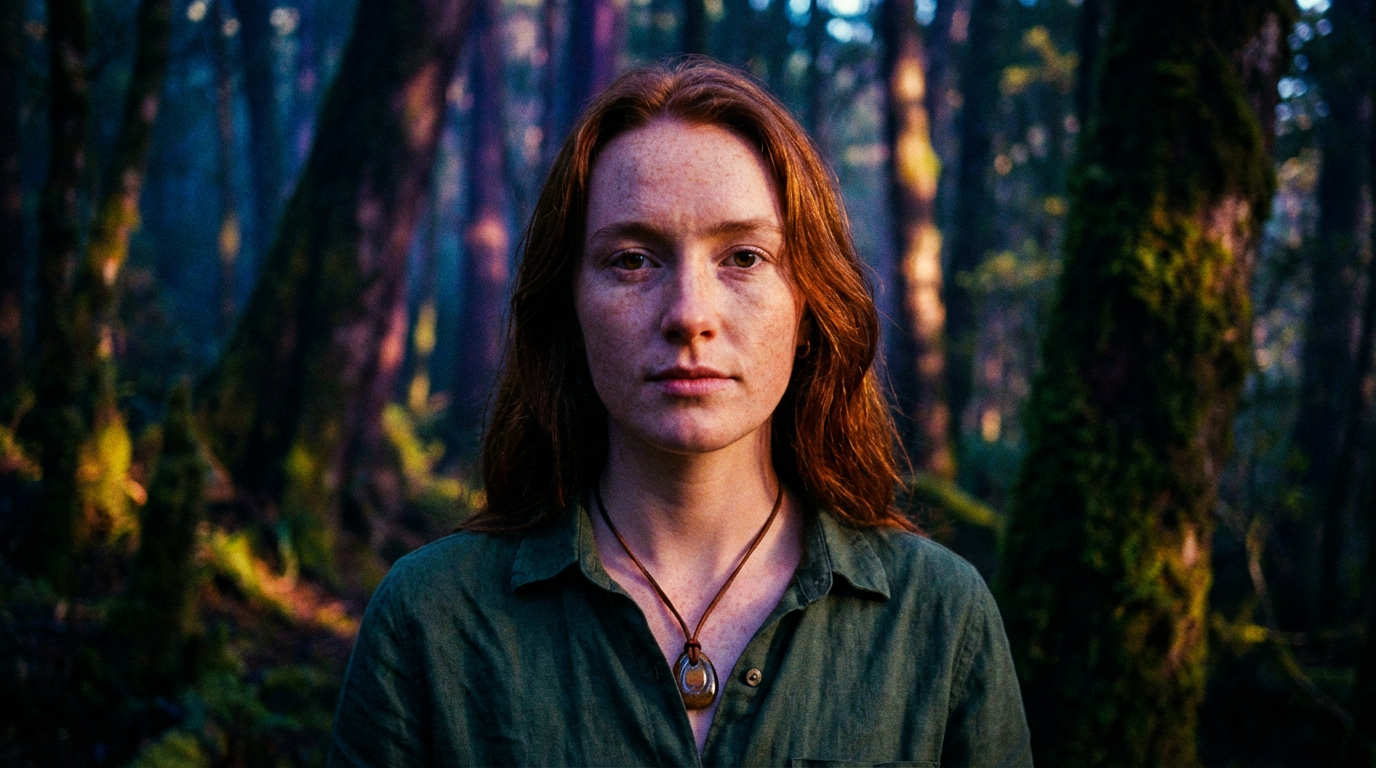
Emma Louise Finch, born on 14 April 2003 in Hobart, Tasmania, is the eldest child of Garry and Claire Finch. A dedicated environmental science student at the University of Tasmania, Emma’s love for nature was nurtured from a young age through family camping trips and her parents’ encouragement. Passionate about environmental advocacy, she is actively involved in local initiatives aimed at protecting Tasmania’s ecosystems. Emma’s journey reflects a deep commitment to both education and environmental preservation, with a future aimed at making a positive impact on the natural world.
Early Life and Family
Emma Louise Finch was born on 14 April 2003 in Hobart, Tasmania, the first child of Garry Edward Finch and Claire Elizabeth Finch (née Burgess). Her arrival came two years into her parents' marriage, transforming a couple into a family and establishing patterns that would shape the household for decades. Claire, a primary school teacher, reduced her working hours during Emma's early years before returning to full-time teaching. Garry continued his demanding career in warehouse management, his long hours a constant backdrop to Emma's childhood.
The Finch household blended two distinct family traditions. Through her father, Emma inherited connection to six generations of working-class Tasmanians stretching back to transported convicts Samuel Finch and Mary Ann Callaghan. Through her mother, she gained access to an intellectual tradition—her maternal grandfather David Burgess was a secondary school teacher, her grandmother Margaret Burgess (née Richardson) a librarian whose influence would prove particularly significant. These converging streams created a home that valued both practical capability and academic achievement, though Emma would come to identify more strongly with her mother's world.
Her younger brother Jack arrived on 8 November 2006, when Emma was three and a half. The age gap meant they occupied different developmental stages throughout childhood, their experiences of family life overlapping but distinct. Emma's memories of early childhood were of being the centre of attention; Jack's arrival required adjustment to a new role as older sister, with expectations of responsibility and example-setting that she absorbed without fully understanding.
Childhood
Emma developed an early affinity for books that delighted her mother and connected her to her grandmother Margaret Burgess. Weekend visits to the Hobart Public Library, where her grandmother had worked for years, became treasured rituals. The library's stacks offered endless exploration, and Emma moved through children's books with the appetite of someone who had found her element. By the time she entered primary school, she was reading well above her age level, a circumstance that brought both advantages and complications.
Her mother Claire taught at the same primary school Emma attended, a situation neither had chosen but both had to navigate. Emma felt perpetually visible in ways other children were not—her behaviour reflected on her mother professionally, her achievements were scrutinised for signs of favouritism, her difficulties exposed to someone who could not simply be a parent at the end of the school day. She learned early to perform competence, to meet expectations before they were articulated, to carry the weight of being the teacher's daughter without complaint.
The family's camping trips and bushwalks provided counterpoint to academic pressures. Emma discovered in Tasmania's wilderness a different kind of engagement—observation rather than performance, presence rather than achievement. She learned to identify native plants, to watch for wildlife, to appreciate the particular quality of Tasmanian light filtering through eucalyptus canopy. Her father, despite the exhaustion his work created, came alive during these outings in ways he did not at home, and Emma sensed without fully understanding that the outdoors offered him something his daily life could not provide.
Her relationship with Jack during these early years was shaped by their different temperaments. Where Emma gravitated toward books and conversation, Jack preferred objects he could manipulate and understand through touch. She tried to interest him in the stories she loved; he dismantled her toys to examine their mechanisms. They shared the camping trips and family routines, but their inner worlds diverged from the beginning. Emma sometimes felt responsible for her brother in ways that exceeded her years, an eldest child's burden that she accepted as natural.
Loss and Adolescence
Thomas Edwin Finch, Emma's paternal grandfather, died of heart failure on 17 March 2015, two days after Garry's thirty-eighth birthday. Emma was eleven, old enough to understand death's permanence but young enough to be devastated by it. She had known her grandfather primarily through visits to his auto-repair shop, where he had shown her engines and tools with patient explanations she only half understood. His death introduced her to grief in its adult dimensions—the way it settled into a household, changed relationships, persisted long after the funeral.
She watched her father withdraw into sadness he could not articulate, noticed her mother working to hold the family together whilst managing her own loss. Emma responded by becoming more helpful, more responsible, more attuned to her parents' needs—patterns that would intensify throughout her adolescence. The loss taught her that adults were vulnerable, that the stability she had assumed was not guaranteed, that she could contribute to family wellbeing through her own behaviour and achievements.
Secondary school began in 2015, the same year as her grandfather's death. The transition brought relief from the complications of attending her mother's workplace, allowing Emma to establish an identity separate from being Claire Finch's daughter. She excelled academically, particularly in sciences and humanities, developing the verbal confidence and analytical capability that would characterise her adult self. Teachers noted her diligence, her curiosity, her willingness to engage with difficult material.
Yet academic success carried its own burdens. Emma became the standard against which her brother would inevitably be measured, a comparison that benefited neither sibling. She felt pressure to maintain excellence, aware that her achievements mattered to her parents in ways that created expectation alongside pride. The responsible eldest daughter who helped at home, performed well at school, and caused no trouble—this role fit comfortably in some ways and constrained in others.
Environmental Awakening
Emma's childhood love of nature transformed during adolescence into something more urgent. She began reading about climate change, biodiversity loss, and environmental degradation with the same appetite she had once brought to fiction. The knowledge was distressing—Tasmania's ecosystems, which she had explored with such joy, faced threats that seemed overwhelming in scale. She experienced what would later be called eco-anxiety, a persistent worry about environmental futures that coloured her perception of the present.
Her response to this anxiety was action. Emma joined environmental clubs at school, participated in clean-up drives and tree-planting events, attended protests and awareness campaigns. She discovered that activism provided both purpose and community, connecting her to others who shared her concerns. The work felt meaningful in ways that academic achievement alone did not, addressing problems that mattered beyond personal advancement.
Yet activism also introduced her to frustration. The gap between the scale of environmental problems and the impact of individual or local action became increasingly apparent. She organised events that attracted modest attendance, wrote submissions that seemed to disappear into bureaucratic processes, watched governments make decisions that contradicted scientific evidence. The idealism of early adolescence gave way to more complicated understanding: change was slow, resistance was powerful, and caring deeply about outcomes you could not control was exhausting.
Her interest in combining environmental advocacy with storytelling emerged from this frustration. Emma recognised that scientific data alone rarely changed minds or motivated action. Stories, on the other hand, could make abstract problems personal, could create emotional connection where statistics produced only numbness. She began writing—journal entries initially, then longer pieces exploring environmental themes through narrative. Her mother, who harboured her own unfulfilled writing ambitions, encouraged this development with delight.
Family Dynamics in Late Adolescence
Emma's teenage years coincided with mounting strain in her parents' lives. Her father's work at Southern Freight & Logistics grew increasingly demanding, his exhaustion and frustration visible despite efforts to shield the children. Her mother managed household responsibilities whilst maintaining her teaching career, providing emotional support to a husband who struggled to articulate his difficulties. Emma observed these dynamics with the heightened awareness of adolescence, understanding more than her parents perhaps realised.
She responded by causing as little trouble as possible, by being the daughter who required minimal worry. This self-management came naturally in some respects—she genuinely enjoyed academic work, had no interest in the risky behaviours that concerned other parents—but it also represented a choice to suppress needs that might have added to family burden. She did not discuss her eco-anxiety in depth, did not bring home the full weight of her concerns, did not demand attention when attention seemed scarce.
Her relationship with Jack remained important but increasingly distant as their interests diverged. He inhabited a world of mechanics and practical projects that she could appreciate but not share. She saw him struggle with academics in ways she had not, watched him navigate their mother's workplace as she once had, understood that his experience of being a Finch child differed significantly from hers. They loved each other in the manner of siblings who had shared a childhood, but their adult selves were becoming strangers in certain respects.
The death of her grandfather Thomas had created a responsibility vacuum that her father's sister Lesley largely filled, coordinating care for grandmother Margaret Finch. Emma watched the adults in her family navigate ageing and loss, observed the invisible labour of maintaining relationships across generations. She helped where she could, visiting her grandmother, supporting her parents, playing the role of reliable eldest child that had become second nature.
Final Years of Secondary School
Emma completed her secondary education in 2020, a year disrupted by the COVID-19 pandemic. The shift to remote learning suited her better than it did many students—she was self-motivated, capable of independent work, and comfortable with solitude. Yet the isolation also intensified her tendency toward self-containment, reducing opportunities for the social connection that might have balanced her academic focus.
Her final results were excellent, reflecting years of consistent effort and genuine intellectual engagement. She had considered various university pathways but settled on environmental science as the field that best combined her scientific interests with her activist concerns. The University of Tasmania offered a strong programme and kept her close to home, to family, to the Tasmanian landscapes that had shaped her environmental consciousness.
The decision to stay in Hobart was practical but also reflected deeper patterns. Emma had always been the daughter who remained close, who helped, who could be relied upon. Leaving Tasmania would have meant abandoning that role, creating distance from parents whose marriage showed strain and grandparents whose health was declining. She told herself that staying was about the university programme, about connection to Tasmanian ecosystems, about the research opportunities available on the island. These reasons were genuine, but they were not complete.
University Years
Emma enrolled in environmental science at the University of Tasmania in February 2021, beginning the formal education that would structure her early twenties. The transition from secondary school brought both liberation and new pressures. University expected independent thinking rather than mere diligence, challenged her to develop original perspectives rather than simply absorbing existing knowledge. She found the work engaging but demanding, requiring adjustment from the approaches that had served her well in school.
Her activism continued alongside her studies. She became involved with campus environmental groups, participated in research projects examining Tasmania's ecosystems, and volunteered with local conservation organisations. These activities connected her to communities of people who shared her concerns, providing social connection that her reserved nature might otherwise have limited. She found friends among fellow environmental science students, relationships built on shared purpose even when personal temperaments differed.
The tension between academic work and activist engagement created ongoing negotiation. Research required patience, rigour, and acceptance that knowledge accumulated slowly. Activism demanded urgency, visibility, and willingness to act on incomplete information. Emma navigated between these modes, sometimes frustrated by academic caution when problems seemed to require immediate response, sometimes exhausted by activist intensity when she needed the retreat that careful study provided.
Her writing developed during these years, though it remained largely private. She kept journals documenting her fieldwork and observations, experimented with narrative approaches to environmental communication, and shared occasional pieces with her mother, who offered feedback and encouragement. The dream of combining science and storytelling persisted, though its practical realisation remained uncertain. Publishing required confidence she had not yet developed, vulnerability she found difficult, and time her studies and activism consumed.
Relationship with Brother
Jack's arrival at the University of Tasmania in 2025 brought the siblings into proximity after years of diverging paths. Emma was completing her degree as he began his, their academic schedules occasionally overlapping on the same campus. The reconnection was valuable if limited—they had lunch together sometimes, she offered advice about university life, they maintained the familial bond that shared history created.
Yet their differences had solidified during adolescence into distinct adult identities. Jack's practical orientation, his comfort with mechanical systems, his reserve that exceeded even her own—these characteristics made him someone she loved but did not entirely understand. She recognised in him their father's temperament, the Finch tradition of hands-on capability that had skipped her generation. He presumably saw in her their mother's intellectual bent, the Burgess tradition of books and teaching that had shaped her differently.
Emma sometimes wondered whether she had been too absorbed in her own concerns during Jack's childhood, whether her academic focus and activist commitments had left insufficient attention for a brother who processed the world so differently. The guilt was probably excessive—she had been a child herself, navigating her own challenges—but it surfaced occasionally when she noticed the distance between them. They were not estranged, merely parallel, siblings whose shared origins had produced divergent trajectories.
Completing University
By 2026, Emma was in the final stages of her environmental science degree, preparing to graduate with honours that reflected her consistent academic performance. The years of study had deepened her understanding of ecological systems, refined her research capabilities, and introduced her to the professional networks that might shape her career. She had conducted fieldwork in Tasmanian wilderness areas, contributed to research projects examining local ecosystems, and developed expertise that positioned her for various possible futures.
The transition from student to professional brought anxiety that her academic success had not eliminated. Environmental science offered limited job opportunities in Tasmania, and the positions that existed often involved compromises between conservation ideals and economic realities. She could pursue further academic study, seek work with government agencies or conservation organisations, or attempt to build a career combining science communication and advocacy. Each path carried uncertainties she found difficult to navigate.
Her writing aspirations had not disappeared but had not crystallised into concrete plans either. She continued to journal, to experiment with narrative forms, to imagine futures in which her environmental concerns found expression through storytelling. Her mother's encouragement persisted, and their occasional exchanges of work had become a valued dimension of their relationship. Whether Emma would ever pursue publication seriously remained an open question, complicated by her perfectionism and her uncertainty about whether her voice deserved wider audience.
Character and Perspective
Emma developed into a young woman of intellectual seriousness and quiet intensity. She cared deeply about environmental issues, sometimes to the point of distress that she had learned to manage but not eliminate. Her academic capabilities were genuine, her work ethic strong, her commitment to her values unwavering. Yet these strengths coexisted with tendencies that complicated her life—perfectionism that delayed completion, self-containment that limited intimacy, responsibility that sometimes felt like burden.
She had learned early to be reliable, to meet expectations, to cause no trouble. These patterns served her well in many contexts but also constrained her range of expression. She rarely asked for help, rarely admitted to struggles, rarely allowed herself the messiness that might have made her more accessible to others. The responsible eldest daughter who had helped hold her family together during difficult years had become a competent young woman who sometimes forgot that she was allowed to need things for herself.
Her relationship to Tasmania remained central to her identity. The island's ecosystems had provided both joy and purpose, landscapes she had explored since childhood and now studied with professional rigour. The thought of leaving felt like abandonment—of place, of family, of the environmental causes that required local advocates. Yet staying also meant accepting limitations, forgoing opportunities that existed elsewhere, and potentially sacrificing professional development for familial obligation.
At twenty-two, Emma stood at the threshold of adult life with capabilities that exceeded her confidence and concerns that sometimes exceeded her coping. She had inherited her mother's verbal facility and her father's connection to nature, her grandmother Margaret's love of libraries and her grandfather Thomas's appreciation for patient craft. The convict ancestors who had built Tasmanian lives from transported shame had passed down resilience she did not always recognise in herself—the capacity to persist, to adapt, to find meaning in work that mattered even when outcomes remained uncertain.







