Emily Grace Reynolds
Emily Grace Reynolds, born 22 August 1970 in St Ives, Cornwall, transformed her mother's nurturing hospitality into a career dedicated to early childhood education. The middle child between Thomas's maritime engineering and Sharon's artistic entrepreneurship, Emily remained closest to home, building a life in Falmouth teaching nursery-aged children. Her choice to stay in Cornwall whilst siblings departed reflected not limitation but deliberate commitment to community, family, and the patient work of shaping young lives during their most formative years.
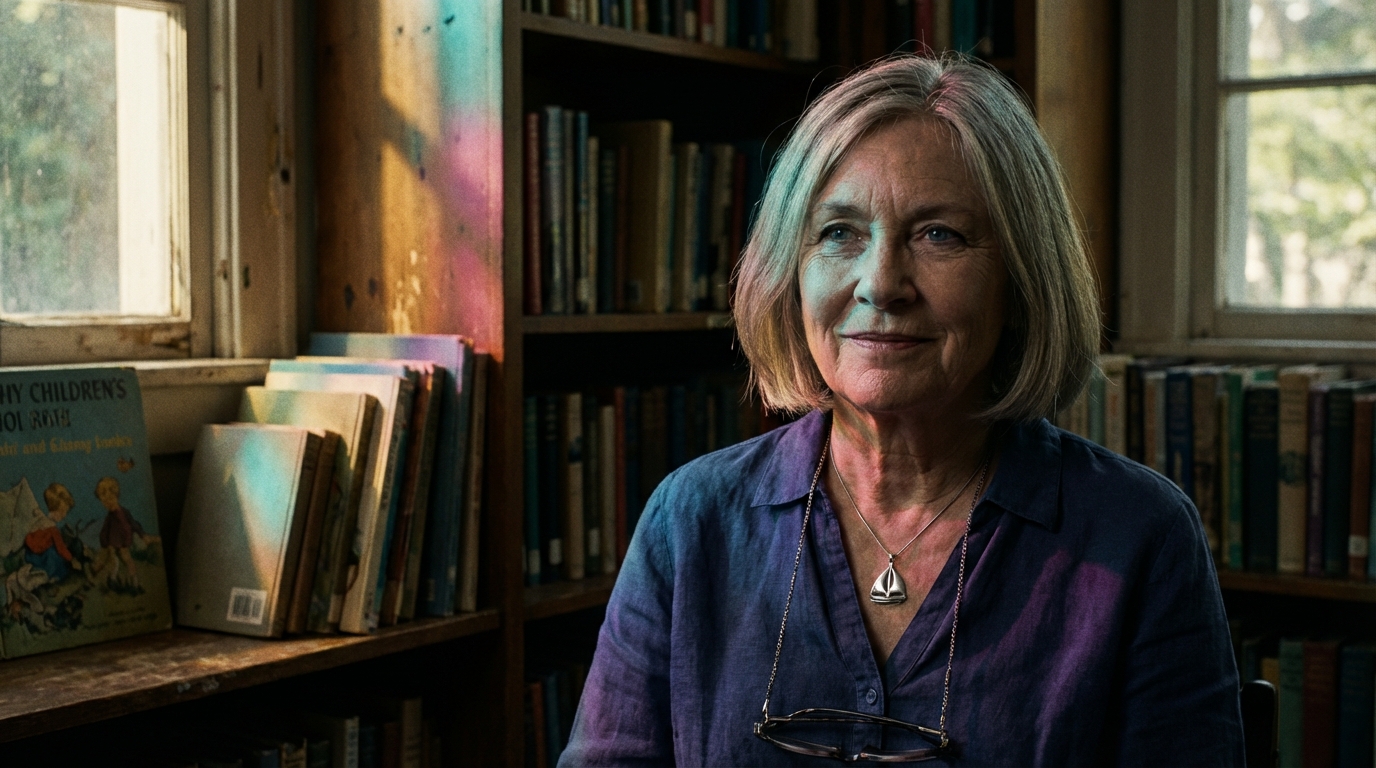
St Ives: The Middle Child's Arrival
Emily Grace Reynolds was born on 22 August 1970 at the West Cornwall Hospital in Penzance, arriving as the second child and first daughter of Margaret Ellen Reynolds (née Penrose) and Edward James Reynolds. Her birth came during a period when the family was finding its stride—The Rose Harbour Tearooms had been operating successfully for four years, Edward's fishing operations aboard the Cornelia had achieved reliable if modest profitability, and the three-year-old Thomas was providing Margaret with the first experiences of motherhood that would inform her approach to subsequent children.
The Back Road West cottage where Emily spent her childhood was by this time fully established as the family home, with the rhythms and routines that would characterise the Reynolds household throughout the 1970s and 1980s. Her earliest memories were shaped by the dual worlds her parents inhabited—her father's maritime life of dawn departures and uncertain returns, her mother's tearoom world of hospitality and community connection. Between these poles, Emily developed an understanding of work and family that would profoundly influence her own life choices.
Her name reflected both the family tradition and the particular hopes Margaret harboured for her first daughter. "Emily" was chosen for its gentle, classic quality—Margaret had always admired the name's literary associations with the Emily Brontë and the Emily Dickinson, writers whose work she had encountered during her own limited education. "Grace" honoured Margaret's maternal grandmother, Grace Tregenza, who had been particularly supportive during Margaret's difficult early years of balancing the tearoom establishment with motherhood. The naming was both aspirational and connective, linking Emily to the literary culture Margaret valued whilst also grounding her in the family history.
Emily's position as the middle child—with Thomas three years older and Sharon arriving five years later—shaped her personality and role within the family constellation. She wasn't the pioneering firstborn bearing the weight of the parental expectations and breaking new ground, nor was she the indulged youngest receiving the benefit of the parents' accumulated experience and resources. Instead, she occupied the flexible middle position, often mediating between the siblings, receiving less intense parental focus than either Thomas or Sharon, developing the capacity for independent navigation that would characterise her adult life.
Childhood: Between the Siblings
Emily's early childhood during the 1970s unfolded in the environment rich with the contrasts and the connections. The tearoom meant she spent considerable time observing Margaret's hospitality work—the careful preparation of the food, the genuine welcome extended to the customers, the creation of the comfortable spaces where the people felt valued. These observations weren't explicitly instructional but rather the absorbed lessons about how to care for the others, how to create the environments supporting the human flourishing, how to find the satisfaction in the service work often dismissed as merely menial.
Her relationship with Thomas was characterised by the typical older-younger sibling dynamics complicated by the gender differences in the 1970s Cornwall. Thomas was protective but also occasionally dismissive, including Emily in some activities whilst excluding her from others deemed too dangerous or simply too masculine for the younger sister. Yet they also shared the genuine affection and the mutual support, particularly during the family challenges or when navigating the parents' divided attention between the work demands and the family needs.
The arrival of Sharon in 1975 transformed Emily's position from the youngest to the middle child, a transition she navigated with the characteristic adaptability. At the age of five, Emily became the older sister expected to help with the infant care, to model the appropriate behaviour, to mediate between the baby's needs and the household routines. This early apprenticeship in the childcare proved formative, teaching Emily about the infant development, the toddler behaviour, the patience required for the successful caregiving—lessons that would later underpin her professional career.
Her formal education began at the St Ives Primary School in 1975, where she proved a conscientious and capable student particularly strong in the reading and the creative activities. The teachers noted her kindness towards the other children, her natural inclination to help the struggling classmates, her genuine pleasure in the collaborative rather than the competitive activities. These characteristics suggested the teaching or the caring profession as the natural career paths, though such explicit career guidance was rare for the primary school students in the mid-1970s Cornwall.
Emily was particularly drawn to the stories and the imaginative play, spending the hours creating the elaborate scenarios with the dolls and the stuffed animals, often involving the complex narratives of the family relationships, the adventures, and the emotional dramas. Margaret encouraged this creative play whilst also gently steering Emily towards the activities preparing her for the practical adult life—helping in the tearoom, assisting with the household tasks, learning the cooking and the sewing. These parallel tracks—the imaginative and the practical—would continue throughout Emily's development, eventually synthesising in her approach to the early childhood education.
Her relationship with her father Edward was warm though somewhat distant, shaped by his frequent absences for the fishing and his natural emotional reserve. Yet Emily understood from the early age that Edward's quiet presence represented the reliability and the commitment, that his limited verbal expression didn't indicate the lack of affection. She learned to read the subtle signals—the slight smile, the gentle teasing, the willingness to include her in the boat maintenance activities despite the traditional masculine domain—that communicated his love more clearly than the explicit words ever could.
Adolescence: Discovering the Calling
Emily began the secondary education at the St Ives School in 1981, following Thomas through the same institution. Her academic performance was solid without being exceptional—consistently above the average in the English and the humanities subjects, adequate in the mathematics and the sciences, displaying the particular strengths in the subjects requiring the empathy and the understanding of the human behaviour. Her teachers noted her maturity and her reliability, her tendency to support the struggling classmates, her natural leadership in the group projects requiring the collaboration rather than the competition.
During the early adolescence, Emily also began developing the clearer sense of her own identity distinct from both the siblings and the parents' expectations. Thomas's path towards the maritime engineering was already apparent by the mid-1980s, his interests and capabilities clearly aligned with the technical and the mechanical. Sharon, even as the young child, was displaying the creative and the artistic tendencies that would later manifest in her hairdressing career. Emily, positioned between them, began recognising that her own strengths lay in the interpersonal rather than the technical or the artistic domains—in the understanding of the people, the facilitation of the growth and the development, the creation of the supportive environments.
Her O-Level choices in 1985 reflected these emerging interests—the English Literature, the Psychology (newly available as the O-Level subject), the Home Economics, the Art, and the Mathematics. The combination wasn't particularly prestigious or obviously vocational, but it represented the genuine engagement with the subjects that interested her and might prepare her for the caring professions. Her results in 1986 were strong enough to continue into the A-Levels or to pursue the vocational training in the education or the social care.
During this period, Emily also began working part-time at The Rose Harbour Tearooms, gradually assuming the more substantial responsibilities as she matured. She waitressed during the busy summer seasons, helped with the food preparation, managed the younger part-time staff members. This work taught her about the customer service, the small business management, the balancing of the multiple demands—skills that would later prove surprisingly relevant to the classroom management and the parent communication in her teaching career.
Her relationship with Margaret deepened during the adolescence as Emily became old enough to appreciate her mother's accomplishments and the challenges. She observed how Margaret balanced the business demands with the family responsibilities, how she maintained the standards and the warmth despite the constant pressures, how she created the success through the sustained effort rather than the luck or the exploitation. These observations reinforced Emily's understanding that the meaningful work often involved the service to the others, that the success came in the multiple forms beyond merely the financial rewards.
Training and Professional Formation
Following her A-Levels in 1988—the English Literature, the Psychology, and the Sociology—Emily faced the decision about the career direction. The university education was theoretically possible given her adequate academic performance, but it would require the financial sacrifices her family could ill afford and might not provide the significantly better career prospects than the vocational training. After the considerable reflection and the discussions with the parents and the school's career adviser, Emily chose to pursue the Diploma in Nursery Nursing at the Cornwall College in Camborne, beginning in September 1988.
The two-year programme combined the theoretical coursework in the child development, the educational psychology, and the curriculum planning with the extensive practical placements in the nursery schools and the childcare centres throughout Cornwall. Emily thrived in this environment, discovering that her natural empathy and the patience, her genuine interest in the children's development, and her creative approaches to the learning activities made her an exceptionally capable student practitioner.
Her placements included the work at the St Ives Community Nursery, where she encountered the children from the diverse socioeconomic backgrounds and learned to adapt her approaches to the different family circumstances and the cultural contexts. She also completed the placement at the Penzance Children's Centre, working with the toddlers and the very young children requiring the particularly gentle and the patient approaches. These experiences taught her that the effective early childhood education required the understanding not just of the child development theory but also of the family systems, the community resources, and the social factors affecting the children's opportunities.
She was particularly influenced by her supervising teacher at the St Ives placement, Mrs. Dorothy Trewin, a veteran nursery teacher who modelled the approach combining the warmth with the clear expectations, the playfulness with the purposeful learning, the flexibility with the consistent routines. Mrs. Trewin taught Emily that the early childhood education was fundamentally about the creating of the safe and the stimulating environments where the children could develop at their own pace, that the best teachers were the careful observers who could recognise and support each child's unique developmental pathway.
Emily completed her Diploma in Nursery Nursing in July 1990 with the distinction, particularly praised for her "exceptional sensitivity to the children's emotional needs" and her "creative approaches to the facilitating of the learning through the play." She immediately began seeking the employment in the Cornwall's nursery schools, understanding that she wished to remain in the area where she had grown up, close to the family and the community she knew well.
Building the Career in Falmouth
In September 1990, Emily secured the position as the Nursery Assistant at the Falmouth Community Nursery, a well-established facility serving the families throughout the Falmouth area. The position was entry-level, involving the supporting of the qualified teachers whilst also taking the increasing responsibilities for the planning and the delivery of the activities. Emily approached the work with the characteristic diligence, gradually earning the respect of the colleagues and the parents through her reliable competence and her genuine affection for the children.
Falmouth, whilst close enough to St Ives for the regular family contact, also provided Emily with the important degree of the independence and the adult identity separate from her family of origin. She initially lived in the shared house with the other young women working in the education and the healthcare, gradually establishing the social networks beyond the family connections. She joined the local Methodist chapel, participating in the community activities and the volunteer work. She pursued the hobbies including the reading, the walking along the coastal paths, and the amateur photography focusing on the Cornwall's landscapes and the architecture.
Throughout the 1990s, Emily continued her professional development whilst working at the nursery. She pursued the additional qualifications including the Certificate in Special Educational Needs (1993) and the Advanced Diploma in Early Years Practice (1996), attending the part-time courses at the Cornwall College whilst maintaining the full-time employment. These additional qualifications enabled her progression from the Nursery Assistant to the Qualified Nursery Teacher in 1997, assuming the full responsibility for the class of the three and four-year-olds.
Her teaching approach reflected the synthesis of her family background, her professional training, and her own personality. Like her mother at The Rose Harbour, Emily created the warm and the welcoming environments where the children felt valued and safe. Like her father at sea, she maintained the consistent routines and the clear expectations providing the structure within which the creativity could flourish. Like her grandmother Violet (Margaret's mother), she combined the practical competence with the genuine warmth, understanding that the effective caring required both the skill and the heart.
Emily specialised particularly in the work with the shy or the anxious children, those who struggled with the separation from the parents or who found the busy nursery environment overwhelming. She developed the reputation for her exceptional patience and her ability to help these children gradually build the confidence and the social skills. The parents particularly appreciated her detailed observations and the thoughtful communications about their children's development, her ability to articulate both the strengths and the areas needing the support without ever making the parents feel judged or inadequate.
Personal Life and Community Engagement
Emily's personal life was characterised by the strong community connections and the sustained relationships rather than the dramatic romantic partnerships or the geographical mobility. She had several relationships during her twenties and thirties—with a primary school teacher, with a maritime surveyor working at the Falmouth docks, with a librarian from the Penryn—but none evolved into the marriage or the long-term cohabitation. These relationships ended amicably when it became clear that the fundamental compatibility was lacking or that the life goals were incompatible.
By her mid-thirties, Emily had essentially accepted that she might not marry or have the children of her own, a realisation bringing both the sadness and the certain peace. Her work with the young children provided the outlet for the maternal instincts and the caregiving abilities, whilst her independence meant she could structure her life according to her own preferences and values. She purchased a small cottage in Penryn in 2002, creating the home reflecting her personality—filled with the books, the photographs, the comfortable furniture, the garden producing the vegetables and the flowers.
She maintained close relationships with the family despite the geographic distances and the divergent life paths. Thomas's long deployments with the Royal Fleet Auxiliary meant the infrequent contact, though they maintained the connection through the letters and the occasional visits when he was on the shore leave. Emily's relationship with Sharon was warmer and more sustained—regular phone calls, the annual visits either to Tasmania or back to Cornwall, the genuine interest in each other's lives despite the vastly different circumstances. When Sharon's daughters Sarah and Brooke were born, Emily became the devoted aunt, sending the gifts and the cards for the birthdays and the Christmas, maintaining the connection across the hemispheres.
Her relationship with the parents deepened as they aged and as she remained the geographically closest child. She visited the St Ives regularly for the Sunday dinners, helped Margaret when The Rose Harbour needed the extra staff during the particularly busy periods, accompanied Edward to the medical appointments as his health declined, managed the practical arrangements when they eventually moved from the Back Road West cottage to the assisted accommodation. This caregiving wasn't burdensome but rather the natural expression of the love and the gratitude, the recognition that the family bonds created the obligations that were simultaneously the privileges.
Emily also maintained the active involvement in the Falmouth's community life. She volunteered with the local food bank, participated in the coastal cleanup efforts, served on the committee for the Falmouth Spring Festival. She was known throughout Penryn and Falmouth as the reliable and the kind presence, someone who could be counted upon for the practical help and the emotional support, whose life demonstrated that the significance came not from the dramatic achievements but from the sustained commitment to the values and the relationships.
Sharon's Disappearance and Its Impact
The news of Sharon's disappearance in August 2018—her vanishing alongside Adrian and the daughters into the circumstances that defied the explanation—devastated Emily in the ways that were both profound and complicated. Her youngest sister, the baby she had helped care for, whose childhood had unfolded before her eyes, whose adult life had taken her across the world but whose connection to the family had remained strong—simply gone, without the explanation or the closure or the possibility of the proper grief.
Emily became the crucial support for the parents as they processed their own devastating loss. She visited the St Ives more frequently, sat with Margaret through the long afternoons of the crying and the incomprehension, accompanied Edward to the police interviews and the follow-up meetings. She managed the practical details—the communication with the Tasmanian authorities, the organisation of the support from the extended family, the maintenance of the household routines that provided the small measure of the stability amid the chaos.
Yet Emily also experienced her own profound grief, complicated by the absence of the body or the clear explanation. She created the small memorial in her cottage—the photographs of Sharon, Sarah, and Brooke, the postcards Sharon had sent over the years, the last birthday card Sharon had given her. She found the solace in the work, in the daily rhythms of the nursery where the children's immediate needs and the simple joys provided the respite from the grief's relentless weight.







