Elizabeth Anne Killerton (née Harding)
Elizabeth Anne Killerton, née Harding (22 August 1795 – 2 November 1870), was a Salem-born philanthropist and community organiser who spent the greater part of her adult life in Boston, Massachusetts. Daughter of physician Dr. William Harding and his wife Mary née Sullivan, she married merchant George William Killerton on 15 June 1815 and built, alongside him, both a household of considerable intellectual and civic vitality and a sustained record of charitable work through the Boston Ladies' Benevolent Society. She raised two sons whose careers she championed with equal though differently tested conviction — architect Charles Edward and archaeologist Henry James — and survived her husband by five years, dying at the Pinckney Street house on 2 November 1870.
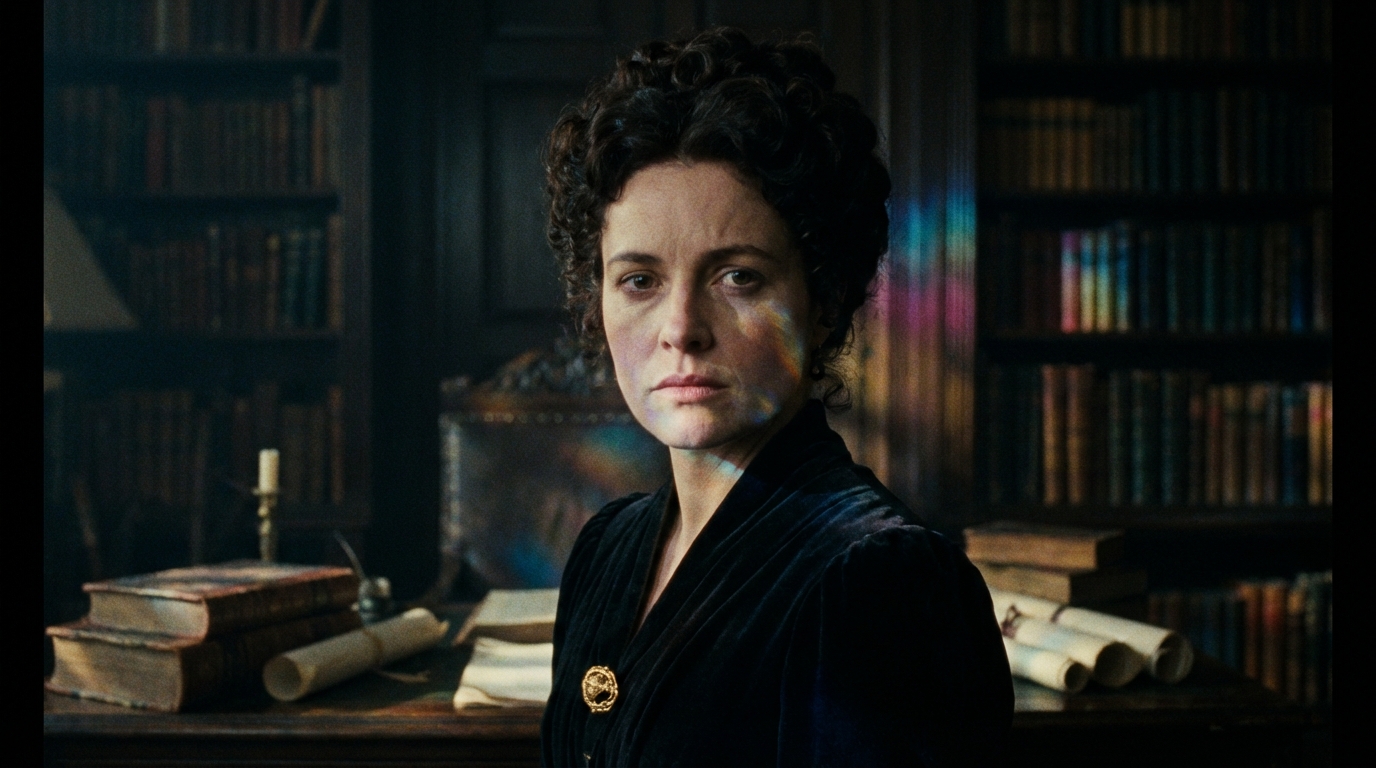
Salem Origins: The Harding Household on Essex Street
Elizabeth Anne Harding was born on 22 August 1795, at the family home on Essex Street, Salem, Massachusetts, the eldest child of Dr. William Harding and Mary Harding, née Sullivan. Salem in the closing years of the eighteenth century was a city in the midst of its final mercantile flourishing — the great era of its maritime trade was approaching its end, though few in 1795 could have known how quickly the decline would come, and the port still moved sufficient goods to sustain a prosperous professional class whose physicians, lawyers, and merchants occupied the handsome Federal-style houses of the town's better streets with the quiet confidence of people who believed they inhabited a permanent world.
Dr. William Harding was a well-regarded figure in that professional class. His practice on Essex Street was built principally on the families of the merchant community, though he maintained the habit, not universal among physicians of the period, of attending patients in the poorer districts of Salem without demanding payment he knew would not be forthcoming. This was not advertised virtue — it was simply what Dr. Harding did, in the manner of a man whose professional ethic had been formed before the economics of medicine in a growing city made such practices more complicated. The consequence, visible to anyone who spent time in the Harding household, was that the family's drawing room was visited by people from a wider range of Salem's social spectrum than the typical professional household received, and Elizabeth grew up in an atmosphere where the poor were not an abstraction.
Her mother, Mary Harding née Sullivan, was a woman of quiet practical intelligence whose public identity was shaped largely by her charitable and community activities — she was involved in the Salem Female Charitable Society and was known in the neighbourhood for the particular combination of organisational competence and genuine personal warmth that makes charitable work effective rather than merely well-intentioned. Mary was not, in the strictest sense, a scholarly woman, but she was a reader and she was attentive, and the household she maintained on Essex Street was one in which the education of children was regarded as a matter of some importance, not reducible to formal schooling alone.
Elizabeth had a younger sister, Catherine Jane Harding, born in 1798, and a younger brother, Thomas William Harding, born in 1801. The three children were close in their early years, though their adult trajectories would diverge considerably — Catherine married a Salem silversmith named Philip Dorset in 1820 and remained in Essex County, whilst Thomas followed his father into medicine, eventually establishing a practice in Newburyport.
Education and Formation in Salem
Elizabeth's formal schooling was provided initially by one of Salem's dame schools, and then, from approximately 1804, by the Salem Female Academy on Pickering Street, an institution that offered the daughters of the town's professional and merchant families instruction in reading, writing, arithmetic, geography, French, and — somewhat unusually for a New England female school of the period — a systematic programme of literature and composition that the academy's founder, a formidable woman named Mrs. Harriet Bray, had imported from her own education in Connecticut and defended against periodic criticism from parents who felt it exceeded what young women required.
Elizabeth thrived under Mrs. Bray's direction. She was an able student across most subjects, particularly strong in literature, French, and the written composition exercises that the academy emphasised, and she had the additional advantage of a home environment that reinforced rather than contradicted what the academy was trying to do. Dr. Harding maintained a library of some substance for a Salem physician — medical texts, history, a selection of the periodical literature of the day, a set of the Spectator essays that Elizabeth read as a child with the conviction that they were literature and the later discovery that they were considered light reading — and evenings in the Harding household frequently included a period of communal reading or discussion that treated the children's intellectual development as a matter of family business.
What the Salem Female Academy did not provide, and what Elizabeth's formation required, was supplied principally by Dr. Harding's practice itself. From her early teens, Elizabeth accompanied her father on his rounds with a regularity that was partly his preference — he found her observant and discreet, qualities he valued in an assistant — and partly her own. She was not training to be a physician; the thought would not have occurred to anyone in Salem in 1808. But she was, in ways that she was only able to articulate much later, absorbing a curriculum in the realities of sickness, poverty, grief, and practical care that no school curriculum of the period supplied. The households she visited with her father — the cramped rooms in the working-class districts near the waterfront, the families managing illness and infant mortality with resources that bore no relationship to the scale of the problem — were not invisible to her, and she did not treat them as invisible.
This was the formation that shaped her subsequent life in Boston more directly than any of her formal schooling. Her mother's involvement in the Salem Female Charitable Society provided the organisational model; her father's practice provided the moral urgency.
Meeting George William Killerton
In April 1815, Elizabeth attended a social gathering hosted by the Loring family at their house on Chestnut Street, Salem. The event was one of the periodic occasions at which Salem's professional and mercantile families mingled with their counterparts from neighbouring towns and from Boston, and it was at this gathering that she first encountered George William Killerton, a twenty-five-year-old Boston merchant attending at the invitation of a commercial connection whose business periodically brought him into the orbit of Salem's trading community.
Elizabeth was nineteen years old and had, by 1815, formed sufficiently clear views about what she was looking for in a future husband to make the assessment of a new acquaintance rather more direct than many young women of her time would have considered prudent to acknowledge. She had seen, in the households she visited with her father, what an ill-chosen marriage produced, and she had formed, partly from observation and partly from temperament, a preference for a man whose character she could read and whose solidity she could trust over a man whose charm was more immediately legible.
George Killerton was not charming in any easy or immediate sense. He was competent and confident, his conversation was economical, and he had the slight social awkwardness of a man from the North End of Boston among the better-connected families of Salem who had not yet lost the traces of where he had come from. What Elizabeth noted, attending carefully in the manner she had learnt from her father, was that he was honest and that his intelligence was practical rather than decorative — he said what he thought and what he said was worth listening to, which put him ahead of most of the alternatives available to her that evening.
They corresponded through the summer of 1815 — letters from George that were spare and direct, letters from Elizabeth that were somewhat warmer whilst being equally considered — and married on 15 June 1815 at the First Church on Washington Street, Salem. The ceremony was a modest family occasion attended by Dr. and Mrs. Harding, Catherine and Thomas, and a small number of Boston acquaintances on George's side, including a representative of his mentor John Wallace, whose brief congratulatory note arrived by post the following morning. Elizabeth was twenty years old. Dr. Harding, who had formed a clear and favourable opinion of George Killerton over the preceding months, gave his daughter away with the quiet satisfaction of a man who understood that he had done his work well enough to produce a daughter capable of choosing wisely for herself.
Boston, the Early Marriage, and the Making of a Household
The first years of the Killerton marriage were years of building from modest foundations in Boston — lodgings first on Hanover Street in the North End, close to the waterfront territory George had known since childhood, and then, as the trading business developed through the late teens and early 1820s, progressively more comfortable accommodation further from the commercial waterfront and closer to the expanding residential districts of a city that was growing rapidly and changing shape as it grew.
Elizabeth made the transition from Salem to Boston with fewer difficulties than might have been expected of a physician's daughter whose life until the age of twenty had been spent in a town considerably smaller and more socially coherent than the city she was now inhabiting. She was not a woman who required the familiar — she required the purposeful, and Boston's larger scale provided rather more scope for the kind of organised charitable work that her mother's example and her own inclination had prepared her for than Salem had been able to offer.
The marriage itself was, from the beginning, a practical partnership as much as a sentimental one, though it was not without genuine warmth of feeling — George and Elizabeth were two people who had each chosen the other with clear eyes and who respected the capacity for clear-eyed choice that they recognised in one another. They did not operate identically: George's manner was spare and direct almost to the point of abruptness, where Elizabeth was capable of a warmth and social ease in conversation that her husband rarely managed, and there were occasions in the early years when this difference created friction — George's impatience with the social demands of the charitable and civic circles that Elizabeth moved in, and Elizabeth's occasional exasperation at her husband's difficulty in recognising when the thing a situation required was not directness but tact.
These were not irresolvable tensions and they were not the dominant character of the marriage. They were the particular friction of two capable, strong-willed people who had agreed to build a life together and were discovering, as people always do, that the other person had not been entirely assembled from their own specifications.
Charles Edward Killerton was born on 2 March 1820, in the family home on Tremont Street, and Henry James Killerton followed on 17 May 1825. By the time Charles arrived, the family had established a sufficiently comfortable pattern of life that the addition of children was an expansion of something already well-founded rather than a disruption of something still precarious. Elizabeth was twenty-four when Charles was born and twenty-nine when Henry arrived, ages that gave her the practical maturity to mother both boys with attentiveness rather than anxiety.
Motherhood: Charles, Henry, and Two Completely Different Sons
The two boys were, from their earliest years, sufficiently different in temperament and inclination that parenting them required Elizabeth to hold two rather different models of what a child needed simultaneously in mind — a management challenge she met with a flexibility that the more rigid aspects of her husband's character did not always achieve as readily.
Charles, the elder, was methodical, serious, and drawn from a very young age to the built environment around him — to buildings, to drawings, to the mathematical precision of measured things. He was a boy who preferred questions with answers over questions without them, and whose response to uncertainty was to seek to eliminate it through further information rather than to tolerate it. He was, in other words, recognisably George Killerton's son in his fundamental orientation, which made him simultaneously easier for George to understand and more prone to the kind of direct collision of wills that two similarly stubborn people produce when they disagree.
The disagreement that mattered most came when Charles announced, in his mid-teens, that he intended to pursue a career in architecture rather than in his father's trade. George's scepticism was not feigned, and it was not entirely unreasonable — architecture in mid-nineteenth-century Boston was not the obviously stable profession that law or medicine offered, and George's practical assessment of risk was shaped by his experience of what business insecurity felt like from the inside. But his scepticism was also, in Elizabeth's reading of it, partly a merchant's instinctive preference for the familiar, and it was Elizabeth who said so, in the particular manner she had developed for managing the more rigid expressions of her husband's practical conservatism — not publicly contradicting him, which served no purpose, but finding the private moment and the precise argument that moved the position without requiring George to acknowledge that it had moved.
She was also, more directly, the parent who made clear to Charles that his ambitions were taken seriously, who sat with him over his drawing work and asked questions about what he was doing and why, who took him to Boston's new public buildings and stood with him outside the construction of the Customs House at the foot of State Street in the early 1840s whilst he explained what was technically interesting about its construction. This was not done in competition with George. It was done because it was the right thing for Charles, and Elizabeth's understanding of what her children needed was not filtered through what her husband found comfortable.
Henry, five years younger, was a different proposition entirely. Where Charles was contained and systematic, Henry was expansive, gregarious, and possessed of a curiosity that scattered itself across the surface of everything with an energy that was sometimes exhilarating and occasionally exhausting. He had his mother's social ease and something of her warmth in human encounters, and he also had, from an early age, an obsession with the ancient past that was entirely his own — tracing its origins was difficult even for Elizabeth, who had watched it develop from something indistinguishable from general childhood curiosity about old things into the focused, persistent intellectual passion that eventually carried him to Harvard and then to Vindolanda and Mesopotamia.
Elizabeth's father's library had included a small number of volumes on classical history — Gibbon's Decline and Fall and a popular account of the Greek and Roman antiquities — and Henry had read both of them by the time he was twelve with a concentration that stood in marked contrast to his usual difficulty with sustained attention. Elizabeth noted this and found ways to feed it: visits to the collections at the Boston Athenæum, subscriptions to periodicals that covered the emerging science of archaeology, and the quiet advocacy, when the question of Henry's university education came up in the early 1840s, for Harvard rather than the commercial training that George's instincts suggested would serve a younger son better.
She did not always get what she argued for with respect to her sons. George was not a man who yielded to argument he found unconvincing, regardless of who was making it. But she got enough, and she got it at the right moments, to make a material difference to the trajectories that both boys followed.
The Boston Ladies' Benevolent Society and a Public Life
Sometime in the early 1820s — the precise founding date is not recorded with certainty — Elizabeth became one of the founding members of the Boston Ladies' Benevolent Society, an organisation formed to provide practical relief and direct visitation to the poor and sick of Boston's working districts. The society was not the only charitable organisation of its kind in Boston, nor the largest, but it was among the more practically effective, and Elizabeth's role in it went well beyond nominal membership.
She brought to the society's work the same combination of qualities that her mother had deployed in the Salem Female Charitable Society a generation earlier and that she had observed in Dr. Harding's practice throughout her childhood: clear-eyed assessment of where the need actually lay, organisational precision in the deployment of whatever resources were available, and a personal manner with the people the society visited that was neither condescending nor sentimental. This last quality was the rarest and the most valuable. The charitable women of mid-century Boston were not, as a class, conspicuous for their ability to sit in a poor woman's kitchen and conduct themselves as one person in the presence of another rather than as the representative of a class delivering assistance to a lesser one. Elizabeth had learnt something different from her father, and it showed in how she worked.
She served on the society's organising committee through the 1820s and 1830s, coordinating the rota of visitors, managing the small fund of donations that paid for medicines and food, and maintaining the relationships with local physicians — including, occasionally, calling on the professional networks that Dr. Harding's Salem reputation had established in Boston's medical community — that allowed the society's relief efforts to be medically informed rather than merely materially charitable.
The Panic of 1837 placed unusual demands on the society at exactly the moment when its resources, like those of every private charitable organisation in Boston, were most severely constrained. The commercial crisis that devastated the Killerton Trading Company simultaneously impoverished many of the working families the society supported and reduced the contributions of the merchant-class patrons on whom the society depended for its funding. Elizabeth managed this contradiction with the equanimity of a woman who had encountered the intersection of economic misfortune and human need in quite direct terms, having been managing it in the Killerton household itself throughout that same period.
The household management during the Panic was, as noted elsewhere, a matter of real financial discipline and real personal cost. The decision to sell her jewellery in August 1837 to meet a payment George could not otherwise have covered was one Elizabeth made without discussion and without revisiting — it was the right decision and she had made it, and the fact that it was never formally acknowledged between herself and George was something she accepted as the price of George's pride and the cost of a marriage that was, on balance, worth the cost. She was forty-two years old in 1837 and had been managing the household finances with practical intelligence for twenty-two years; she understood both what was owed and what was possible, and she made her calculations accordingly.
The Pinckney Street Household and Its Character
By the early 1820s the Killerton family had settled at the house on Pinckney Street, Beacon Hill, that would serve as the family home for the remainder of both George's and Elizabeth's lives. The house was a sound, well-proportioned Federal-style residence in a neighbourhood that was establishing itself as the address of Boston's prosperous professional class, and Elizabeth's arrangement of it reflected both her aesthetic sensibility and her practical intelligence about what a household that was also a social space required.
She was an effective hostess in the specific sense that her gatherings served a purpose beyond mere sociability. The dinners and evening parties at the Pinckney Street house through the 1820s and 1830s were occasions at which George's business connections intersected with Elizabeth's charitable and civic networks, producing a guest list that was less narrowly commercial than George's professional instincts alone would have produced and more practically useful than a purely social gathering would have been. Elizabeth understood that the architecture of a useful evening — who was invited, how they were seated, which conversations were facilitated and which were allowed to develop naturally — was a form of management, and she managed it with the same precision she brought to the society's relief rota.
The household was also the environment in which Charles and Henry were raised, and Elizabeth's influence on the texture of daily life at Pinckney Street was felt principally in the quality of the conversation and the breadth of the reading that the household treated as ordinary. Books were present and used. Visitors from beyond the merchant class — physicians, educators, the occasional academic from Harvard through Henry's expanding connections — were received as a matter of course. The boys grew up in a home where intellectual curiosity was not an exceptional condition but an ambient one, and this was not accidental.
Mary Louise, the Portrait, and a Particular Friendship
When Charles brought Mary Louise Greenfield home in 1844, in the preliminary stages of what would become their formal courtship, Elizabeth received her with the attentiveness of a woman who had been watching her elder son's emotional landscape carefully enough to know that this was not a casual introduction. Mary Louise was twenty years old, a painter's daughter from Salem who had been studying art in Boston and who possessed, along with her talent and her opinions, a directness of manner that Elizabeth, who had spent twenty-five years managing the consequences of her husband's directness, recognised as a quality that would either make the marriage work or be the primary source of its difficulties, depending on whether Charles had enough flexibility to accommodate it.
Her own assessment, formed quickly and adjusted only slightly over the subsequent months of closer acquaintance, was that the match was a good one and that Mary Louise was a woman of genuine substance. She was not, Elizabeth observed, a woman who would subordinate herself to the role of architectural wife in any simple way, which was both a potential complication and, Elizabeth believed, precisely what Charles needed if he was not to spend his married life in a household that reflected only one kind of intelligence.
The friendship that developed between Elizabeth and Mary Louise through the second half of the 1840s and into the 1850s was real and mutual, grounded in the particular solidarity that can form between women of different generations who share a clear-eyed view of the men they are most closely connected to. They were also, coincidentally, both from Salem — a fact that provided a small but genuine reservoir of shared reference that was not without its uses in the early years of the relationship, when other common ground was still being established.
In 1858, Mary Louise painted Elizabeth's portrait — a three-quarter-length study in oils, set against the neutral ground of the Pinckney Street front parlour, that captured in Elizabeth's face the particular combination of watchfulness and warmth that those who knew her recognised as characteristic. The portrait was one of Mary Louise's better pieces of the period, and it hung in the parlour throughout Charles's life, looking out over the room in which the Killerton family had conducted so many of its most consequential conversations.
Grandson Francis and the Later Years
Francis Charles Killerton was born on 9 October 1850, and Elizabeth was fifty-five years old when he arrived — a grandmother of the age and experience to observe a grandchild with something closer to equanimity than parenthood usually allows. She had been through both the anticipation and the anxiety of Francis's birth more acutely than was immediately visible; Charles and Mary Louise had lost two earlier pregnancies in the late 1840s, and the knowledge of those losses — communicated to Elizabeth through Mary Louise, who found her mother-in-law easier to speak to on such matters than she sometimes found her own husband — meant that the arrival of a healthy child in October 1850 carried for Elizabeth a weight of relief that the occasion's ordinary joy did not entirely account for.
Her relationship with Francis in his early childhood was affectionate and characteristically attentive. She visited the Tremont Street house and, later, the Pinckney Street house regularly enough to watch the boy develop from infancy through early childhood, and she formed views about his character — that he had Charles's analytical quality carried with rather less of Charles's accompanying gravity, and that he had Mary Louise's eye for the visual world — that she expressed with the directness of a grandmother secure enough in her position to say what she actually thought.
Francis was fifteen in 1865 when George died, old enough to have formed real impressions of his grandfather and real memories of the Pinckney Street household at its most populated, and Elizabeth, in the five years of her widowhood that followed, maintained the Pinckney Street house with the intention of preserving it as a place to which the family could gather. She succeeded at this in a limited but genuine way: Charles visited regularly, Henry called when he was in Boston between expeditions, and Francis came with some frequency as a young man making his way through his schooling at Andover and then his studies at MIT.
Widowhood: September 1865 to November 1870
George Killerton died on 18 September 1865, after a summer's decline, and Elizabeth was seventy years old when she became a widow. She had been managing the household independently in most practical senses for some years before his death, as George's health had reduced his active involvement in domestic affairs through the early 1860s, but the legal and financial settlement of his estate required a level of engagement with the commercial and legal establishments of Boston that was, for a woman of her generation, an unusually direct and occasionally difficult exercise.
She managed it with the help of Thomas Aldgate, the senior agent of the Killerton Trading Company, and with Charles's involvement in the property portfolio matters, and the settlement was completed without serious complication by the spring of 1866. The house on Pinckney Street was hers outright; the property investments, reduced from their earlier scale but still substantial, provided an income adequate to the household's maintenance without difficulty. George had been careful in this respect, for all his other professional characteristics, and the provisions he had made were sound.
The five years of Elizabeth's widowhood were not years of withdrawal. She continued her involvement with the Boston Ladies' Benevolent Society through the late 1860s, attending committee meetings and undertaking her share of the visiting work until the autumn of 1869, when a persistent joint stiffness and general fatigue made the practical demands of the visiting rounds more than she could comfortably manage. She reduced her activity gradually rather than abruptly, in the manner of a woman who understood the difference between limitation and abandonment, and she remained a presence in the society's affairs through correspondence and attendance at less physically demanding events through 1870.
Henry, who had married Eleanor Rose March in September 1869 and was increasingly engaged with the archaeological expeditions that would eventually take him to Mesopotamia, visited his mother at Pinckney Street in the autumn of 1869 to introduce Eleanor, whom Elizabeth received with the same attentiveness she had brought to Mary Louise twenty-five years earlier. Eleanor Killerton née March was an English-born archaeologist, a woman of evident intelligence and independent professional standing, and Elizabeth's assessment of her was, characteristically, expressed principally through the warmth and quality of the attention she gave her rather than through direct statement. Henry, who understood his mother well enough to read the distinction, was satisfied.
Death
Elizabeth Anne Killerton, née Harding, died on 2 November 1870, at the Pinckney Street house, Beacon Hill, Boston, at the age of seventy-five. She had been unwell through October, attended by Dr. Robert Hargrove of Massachusetts General Hospital, whose assessment was that the combination of a weakening heart and the general diminishment that seventy-five years of living produces in a body had arrived at a point from which recovery was no longer a reasonable expectation. She understood this assessment clearly and received it without visible distress — she had, after all, been watching her father receive similarly composed accounts of medical realities in other people's households since she was twelve years old.
Charles and Henry were both present at Pinckney Street in the final days, having been summoned to Boston in the last week of October when Dr. Hargrove made clear that the end was close. Mary Louise had been coming to Pinckney Street daily since mid-October, and she was there through the final night and the morning of 2 November, sitting with Elizabeth in the manner of someone whose presence was wanted rather than merely offered. Francis was twenty years old and present in the house, having come from Boston Latin School where he had recently enrolled prior to his transfer to Phillips Academy Andover. The particular quality of his grandmother's death — the composed, clear-eyed management of it that those present witnessed — was something he carried as a formed memory through the rest of his life.
She was buried beside George William Killerton at Mount Auburn Cemetery in Cambridge, Massachusetts, in the family plot that George had arranged following his father Jonathan's death. Henry James Killerton, who survived his mother by fifty-two years, once said of her, in the course of a lecture at Harvard in 1901 on the formation of scholarly curiosity, that the first and most consequential education he had received was not at Boston Latin School or at Harvard but in a household on Pinckney Street where a woman had treated the intellectual development of her children as a matter worthy of the same sustained, practical intelligence she brought to everything else she undertook. He did not use her name in the lecture. His audience knew who he meant.







