
Elizabeth Anne Jenkins (née Thompson)
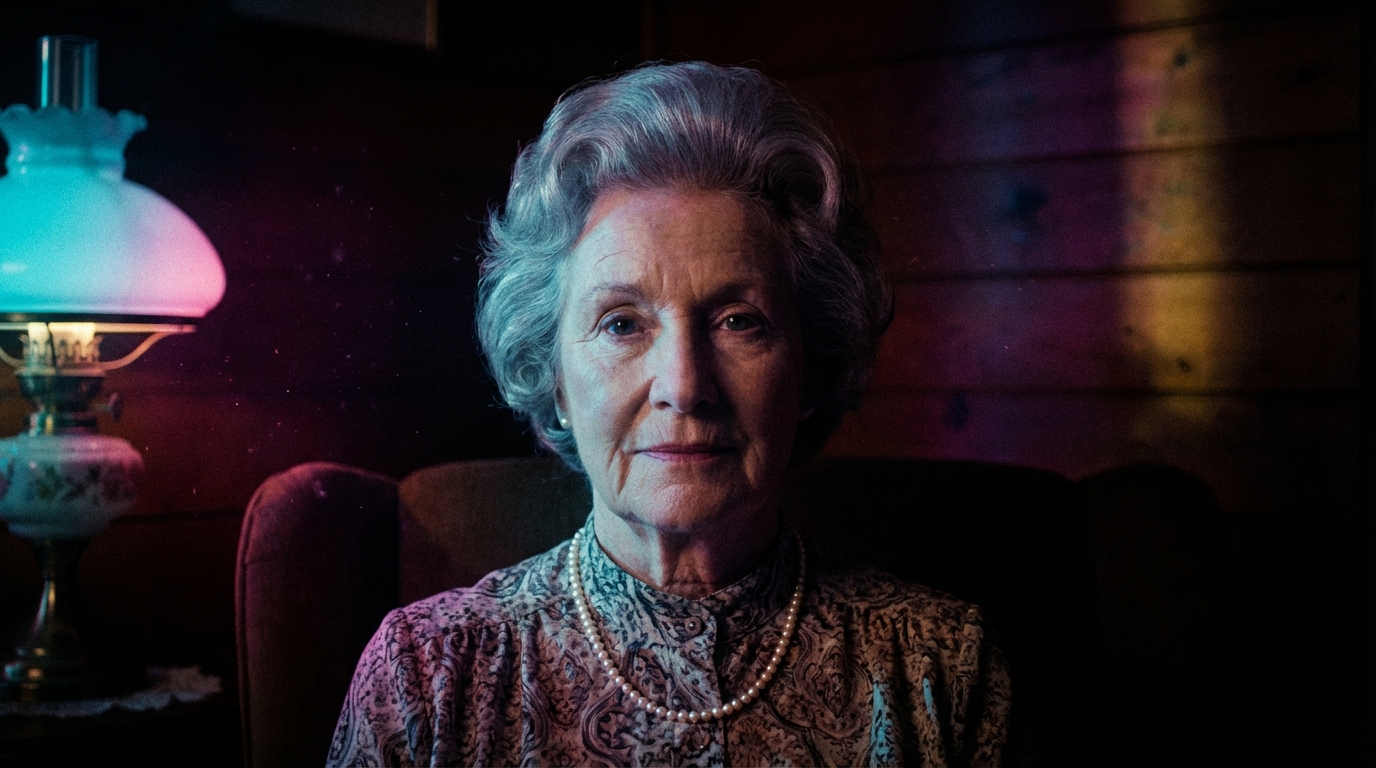
Born on 5 June 1952 in Norwood, South Australia, Elizabeth Anne Thompson was the eldest of three children to Robert Thompson, a postal worker, and Margaret Thompson (née Wilson), a homemaker who supplemented the family income with occasional seamstress work. The family lived in a weatherboard cottage on Beulah Road, close enough to the city centre that the trams rattled past every fifteen minutes, marking the rhythms of suburban life in post-war Adelaide.
Early Years and Family Background
Born on 5 June 1952 in Norwood, South Australia, Elizabeth Anne Thompson was the eldest of three children to Robert Thompson, a postal worker, and Margaret Thompson (née Wilson), a homemaker who supplemented the family income with occasional seamstress work. The family lived in a weatherboard cottage on Beulah Road, close enough to the city centre that the trams rattled past every fifteen minutes, marking the rhythms of suburban life in post-war Adelaide.
The Thompson household operated on tight margins but maintained appearances. Robert's postal wages were steady but modest, and Margaret's sewing work—taking in alterations for neighbours, making curtains and cushion covers—added crucial pounds to the weekly budget. The house was small, the three children sharing two bedrooms, but it was meticulously maintained. Margaret's pride wouldn't permit torn curtains or scuffed paintwork, even when funds for repairs required careful saving.
As the eldest child, Elizabeth absorbed expectations early. Help with the younger ones—Peter, born in 1955, and Susan, born in 1958—mind them whilst Mother worked at her sewing machine, set a good example in behaviour and schoolwork, don't cause additional worries. Robert worked long shifts at the General Post Office on King William Street, his presence at home often tired and preoccupied. Margaret managed the household with efficiency born of necessity, her hands constantly busy with cooking, cleaning, mending, making.
Church attendance at St. Paul's Anglican on Sydenham Road was non-negotiable—not from deep religious conviction but from social necessity. The Thompsons weren't wealthy, but they were respectable, and respectability required church attendance, clean children in pressed clothes, and participation in parish activities. Elizabeth attended Sunday School, sang in the junior choir, helped at church fetes where Margaret's sewn goods sold alongside other parishioners' contributions.
Money consciousness permeated childhood. New clothes were rare treasures, most garments made by Margaret or handed down from cousins. School expenses were carefully budgeted—the required textbooks, the excursion fees, the shilling for the school photograph. Elizabeth learnt early that asking for things meant watching her mother calculate what could be afforded, weighing this request against other family needs, and she learnt to ask for less.
But there were books. The Norwood Public Library became sanctuary—a place where wealth didn't matter, where anyone with a library card could access worlds beyond Beulah Road. Elizabeth consumed books voraciously: adventure stories, historical novels, eventually literature that challenged and provoked. Her teachers at Norwood Primary School noted her reading comprehension scores, her vocabulary, her written compositions that demonstrated facility with language beyond her years.
Education and Intellectual Development
The scholarship examination for Marryatville High School represented the first major hurdle. State high schools were free, but the academically selective schools like Marryatville offered pathways to university that ordinary high schools couldn't match. Elizabeth sat the examination in November 1964, competing against hundreds of other children for limited places. When the acceptance letter arrived in January 1965, Margaret cried—not from sentimentality, but from relief that her daughter's intelligence would have opportunity to develop.
Marryatville High School occupied an imposing building on Kensington Road, serving students from across Adelaide's eastern suburbs. The cohort included children from diverse economic backgrounds—some from professional families in Burnside and Kensington, others like Elizabeth from working-class Norwood and Payneham. The academic expectations were rigorous, the teachers demanding, and the implicit message clear: this was preparation for university, for professional careers, for lives different from one's parents.
Elizabeth thrived academically but navigated social complexities carefully. Some classmates had holiday houses at Victor Harbor, fathers who were doctors or lawyers, mothers who didn't need to work. Elizabeth learnt to neither apologise for nor advertise her family's circumstances, to participate in conversations about weekend activities without mentioning that her weekends involved minding younger siblings whilst Mother took in extra sewing work.
English and history captured her imagination most intensely. The English teacher, Miss Carmichael, was a formidable woman who'd studied at the University of Melbourne and spoke about literature as though it mattered profoundly. She introduced students to writers beyond the standard curriculum—Australian poets like Judith Wright and Douglas Stewart, novelists who wrote about recognisable Australian landscapes and experiences. History lessons revealed patterns of power and change, how societies transformed, how individuals could influence broader movements.
By fifth form, the question of future occupation required serious consideration. Teaching represented the most accessible professional pathway for academically capable girls from working-class families. The University of Adelaide offered teacher training through the Adelaide Teachers College, and teaching provided secure employment, respect, and the possibility of making actual difference in children's lives. Nursing was respectable but more physically demanding. Office work was steady but limited in advancement possibilities. University study towards arts or science degrees seemed financially impractical without clear career outcomes.
Robert and Margaret supported teacher training, though the financial implications were sobering. Even with a Commonwealth scholarship covering tuition, there were still costs—textbooks, transport, appropriate clothing, the opportunity cost of Elizabeth's potential wages if she'd entered clerical work after finishing high school. But they'd raised a daughter whose intelligence deserved development, and teaching was respectable, secure, appropriate for a young woman.
Elizabeth completed her Leaving Certificate in November 1969, achieving marks that secured her place at the University of Adelaide's teacher training programme commencing in 1970. The Christmas holidays before university began were strange—excitement about the future mixed with awareness that she was moving into territory her parents couldn't fully comprehend, becoming someone different from the girl who'd grown up on Beulah Road.
University, Teacher Training, and Meeting Thomas Jenkins
The Bachelor of Education programme at Adelaide Teachers College, affiliated with the University of Adelaide, combined academic study with practical teaching placements. The cohort was predominantly female—teaching primary school was women's work, though the college principal and most senior lecturers were men. Elizabeth found the academic components engaging: educational psychology, child development theories, curriculum design. The practical placements in local primary schools revealed the gap between theory and classroom reality, but also confirmed that she had aptitude for the work.
The social world of teacher training introduced Elizabeth to young women from diverse backgrounds: some from wealthy families pursuing teaching as appropriate occupation before marriage, others like her from working-class families for whom teaching represented social mobility. Friendships formed around shared experiences—the terror of being observed during teaching placements, the exhaustion of managing thirty restless children, the satisfaction of successfully teaching a difficult concept.
The meeting with Thomas Jenkins happened at the Thebarton High School dance in November 1967, during Elizabeth's final year of secondary school, not during university as family mythology sometimes suggested. Thomas was a year older, had completed school the previous year, and was working as an apprentice mechanic. He'd attended the dance with mates, slightly drunk, and asked her to dance perhaps on a dare or because alcohol had temporarily overridden his usual reticence.
The initial attraction was unexpected. Thomas wasn't university material, wasn't pursuing a professional career, represented a future that looked remarkably like the present Elizabeth was trying to transcend. But he possessed qualities that resonated: quiet competence, practical intelligence, lack of pretension. He didn't try to impress with words he didn't understand or opinions borrowed from others. When he spoke about mechanical work, it was with genuine engagement, and when he asked about her studies, he actually listened to the answers.
The courtship developed slowly over Elizabeth's university years. Thomas was completing his apprenticeship, working long hours, his hands perpetually marked by oil and small cuts. They would meet on Saturday evenings—pictures at the Norwood Cinema, occasionally coffee at a café, walks through Rymill Park when weather permitted. The relationship was companionable rather than passionate, built on compatibility rather than romance.
Robert and Margaret viewed Thomas with cautious reservation. He had a trade, which meant security, but a mechanic's wages wouldn't provide the comfortable middle-class life that Elizabeth's education might have opened pathways towards. Thomas's parents—Robert Jenkins the police constable and Margaret the homemaker—viewed Elizabeth with equal wariness. A girl with university education and professional ambitions might not be content with a working-class life.
But the relationship persisted through Elizabeth's three years of teacher training. By 1973, with Elizabeth's degree complete and her first teaching position at Glenelg Primary School secured, marriage became the logical next step. Both were in their early twenties, both had steady employment, and the cultural expectations of the era made prolonged unmarried courtship socially awkward. The wedding at St. Michael's Anglican Church in June 1973 was modest, appropriate for two young people from working-class families beginning adult lives together.
Early Teaching Career and the Balancing of Multiple Demands
Glenelg Primary School, where Elizabeth began teaching in 1974, occupied a heritage building near the beachside suburb's commercial centre. The student population drew from diverse socioeconomic backgrounds—children of professionals in the better streets near the beach, working-class families further inland, and a growing number of recent migrants whose English was limited. Elizabeth was assigned a Year 2 class of twenty-eight children, ages seven and eight, with abilities ranging from those reading confidently to others still struggling with letter recognition.
The reality of full-time teaching bore little resemblance to the teacher training programme's theoretical discussions. Twenty-eight children in a classroom meant constant vigilance—monitoring behaviour, managing conflicts, ensuring every child received adequate attention whilst simultaneously teaching curriculum content. Elizabeth's first year involved exhaustion that surprised her: arriving home mid-afternoon physically and emotionally drained, then facing hours of preparation and marking for the following day.
The work wasn't just teaching. There were parents to manage—some supportive and engaged, others hostile or neglectful, a few whose expectations bordered on impossible demands that their child receive individual attention in a class of twenty-eight. There were staff meetings, playground duties, administrative requirements that consumed time without directly benefiting students. The salary, whilst secure, was modest—Elizabeth's income was essential for household expenses, especially after Karl's birth in 1975.
Pregnancy and early motherhood forced difficult negotiations between professional and domestic demands. Elizabeth took the minimum maternity leave—three months—before returning to teaching, her mother caring for Karl during school hours. The arrangement worked functionally but created constant guilt: leaving an infant to return to work felt like abdication of maternal responsibility, but the family needed her income, and her career couldn't simply be paused without consequences.
The teaching itself remained engaging despite the exhaustion. Elizabeth developed teaching strategies that worked—structured routines that gave children security, creative approaches to literacy instruction that reached struggling readers, methods for managing behaviour that relied on consistency rather than harshness. By her third year, she'd developed confidence, and the school administration noticed. When the Year Level Coordinator position became available in 1980, Elizabeth's application was successful.
The coordinator role brought additional responsibilities: mentoring beginning teachers, coordinating curriculum across the year level, liaising between classroom teachers and administration. The extra duties came with minimal additional salary but significant additional time demands. Elizabeth would stay after school for meetings, take work home in the evenings, and increasingly felt the tension between professional ambitions and family needs.
Jessica's birth in 1978 intensified those tensions. Two children meant more complex childcare arrangements, more infections and illnesses that required someone staying home from work, more emotional needs competing for attention. Thomas's work at Adelaide Motors followed predictable hours but offered little flexibility—he couldn't simply take time off when children were sick. That responsibility fell primarily to Elizabeth, who accumulated sick leave taken for children's illnesses rather than her own, who scheduled medical appointments during school holidays, who managed the intricate choreography of professional and domestic demands.
Daniel's arrival in 1982 should have been the breaking point, but by then Elizabeth had developed systems for managing the impossible. Her mother provided essential childcare support. The school administration, recognising her competence, granted some flexibility in meeting schedules. Thomas's increasing income meant less financial pressure. But the exhaustion was cumulative—years of sleeping in fragments interrupted by children's needs, years of weekends spent preparing lessons and marking work, years of constantly calculating whether she was failing as mother, as teacher, or both.
Career Advancement and the Demands of Leadership
The appointment as Assistant Principal at Brighton Primary School in 1985 represented significant career advancement. Brighton Primary served a more affluent demographic than Glenelg, with correspondingly higher parental expectations and more resources. The Assistant Principal role involved substantial administrative responsibilities: timetabling, staff performance management, policy development, budget oversight. Elizabeth was moving from teaching into school leadership, from direct work with children into the management of adults and systems.
The transition revealed unexpected complexities. Leading teachers—many older and more experienced than Elizabeth—required different skills from teaching children. Some staff members resented taking direction from a woman in her early thirties. Others bristled at her expectations for lesson planning and assessment practices. Elizabeth learnt that leadership meant navigating interpersonal politics, managing resistance, implementing change despite opposition.
The demands on her time intensified further. School leadership extended beyond teaching hours—evening meetings with parent committees, weekend attendance at community events, constant availability for crisis management when staff conflicts or student incidents required immediate intervention. Thomas's establishment of Jenkins Auto Services in 1995 created additional household pressure. During the same years Elizabeth was building her career in school leadership, he was working sixty-hour weeks trying to establish a business, leaving Elizabeth to manage the majority of domestic and parenting responsibilities despite her own demanding career.
The arguments during those years often centred on that imbalance. Elizabeth would arrive home exhausted from managing staff conflicts and parental demands, face children needing help with homework or mediation of sibling disputes, begin preparing dinner, and Thomas would arrive home after nine in the evening expecting a meal and rest. Her frustration that he seemed oblivious to the reality that she also had a demanding full-time career, that domestic labour didn't simply happen automatically, would erupt in accusations of selfishness and disregard.
Thomas's defence was always the same: he was building the business for the family's security, for their children's futures. Elizabeth's counter-argument was that children needed a present father, not just a provider, and she needed a partner who recognised that her career was as demanding and important as his. Neither fully understood the other's perspective—he genuinely believed financial provision was the highest form of care, whilst she experienced his absence as abandonment despite his physical presence in the house.
But despite these tensions, Elizabeth's career continued advancing. The appointment as Principal of Blackwood Primary School in 1988 represented the culmination of over a decade of steady progression through teaching and leadership roles. Blackwood Primary served the Adelaide Hills suburb with a student population of approximately three hundred children, a staff of twenty teachers, and a school community with high expectations for academic standards and student wellbeing.
School Leadership and Educational Philosophy
Elizabeth's principalship at Blackwood Primary School, which lasted from 1988 to 2005, represented the most sustained and satisfying period of her professional career. The role permitted implementation of educational philosophy she'd developed through years of teaching: that effective education required understanding each child's particular needs and circumstances, that relationships mattered as much as curriculum content, that school culture shaped learning outcomes as powerfully as teaching methods.
Her early years as principal involved establishing credibility. Some teachers who'd applied for the position but been passed over resented her appointment. Some parents questioned whether a woman could provide sufficiently firm leadership. Elizabeth's approach was to demonstrate competence through action rather than argument—implementing systems that worked, making decisions that improved outcomes, supporting teachers whilst maintaining high expectations.
She introduced professional development programmes that brought contemporary educational research into teachers' practice. She established partnerships with local community organisations that provided additional support for families experiencing hardship. She developed behaviour management policies that emphasised restoration over punishment, that recognised difficult behaviour often signalled underlying needs rather than moral failure.
The student achievement data gradually validated her approaches. Literacy and numeracy outcomes improved. Teacher retention rates increased. The school developed reputation for being warm whilst maintaining high standards, for being inclusive whilst refusing to accept mediocrity. Elizabeth received recognition—awards from professional associations, invitations to present at educational conferences, acknowledgement from the Department for Education that Blackwood Primary exemplified effective school leadership.
But success came with costs. The principalship consumed immense energy—managing staff conflicts, responding to parent complaints, implementing departmental requirements that sometimes contradicted sound educational practice, maintaining the facade of confident leadership even during periods of doubt or exhaustion. Elizabeth worked through school holidays, took work home most evenings, attended weekend community events because principals were expected to represent their schools publicly.
Her relationship with her own children became mediated through this professional identity. Karl, serious and intense, seemed to judge whether she was meeting her own standards for parental involvement. Jessica learnt to navigate around her mother's professional demands, to schedule conversations for moments when attention was available. Daniel, seven years younger than Karl, experienced a mother whose career achievements came at the cost of present engagement with his childhood needs.
Karl's departure for Queensland in 2000, then Tasmania in 2003, created complex emotions. Pride in his police career mixed with awareness that the distance between them—emotional as much as geographic—had been growing for years. The conversations when he called were stilted, surface-level updates about work and weather rather than genuine connection. Elizabeth told herself this was natural, that adult children established independence, but privately worried that the emotional reserve she'd modelled—the prioritisation of competence and achievement over vulnerability and intimacy—had been absorbed too completely.
Educational Consulting and Broader Influence
The transition from Blackwood Primary School principal to educational consultant with the South Australian Department for Education in 2005 shifted Elizabeth's work from leading a single school to influencing educational policy across the state. The consultancy role involved reviewing school improvement plans, providing professional learning for school leaders, contributing to curriculum development, and advising on department policy initiatives.
The work provided intellectual stimulation that school principalship sometimes lacked. Elizabeth could engage with educational research, could analyse system-wide patterns rather than managing individual school contexts, could contribute to policy decisions that affected thousands of students rather than just one school community. The salary increased modestly, and critically, the role offered more control over her schedule than school leadership had permitted.
But the work also revealed frustrations. Department bureaucracy moved slowly, constrained by political considerations that often contradicted educational evidence. Initiatives Elizabeth believed would genuinely improve student outcomes were modified or abandoned based on cost implications or political optics. Good ideas became diluted through implementation, compromised by inadequate funding or insufficient professional development for teachers expected to enact them.
The decade as educational consultant—2005 to 2015—also coincided with significant family transitions. Jessica married in 2003, had her first child Emily in 2005. Elizabeth became grandmother with mixed emotions: joy in the arrival of a grandchild, awareness that Jessica was navigating motherhood and career balance much as she had, concern about whether she'd provided adequate model for how to manage those competing demands.
Daniel's move to Melbourne for university in 2000, initially intended as temporary, became permanent. He established career in technology, built life in Melbourne, maintained polite but distant contact with the family. Elizabeth worried about that distance but didn't know how to bridge it—the conversational patterns established in his childhood persisted, both uncomfortable with the vulnerability that genuine closeness would require.
Karl's promotion to detective, his partnership with Sarah Lahey, his preparation for transfer to Major Crimes Division—these were conveyed through brief phone calls or occasional visits that felt more like obligation than connection. Elizabeth could sense something unsettled beneath Karl's professional success, some unhappiness or struggle he couldn't articulate, but her attempts to inquire were deflected with assurances that everything was fine, just busy, nothing to worry about.
Retirement and the Reorganisation of Daily Life
Retirement from the Department for Education in 2015, at age sixty-three, was prompted partly by eligibility for superannuation benefits but more by accumulated exhaustion. Four decades of education work—teaching, school leadership, policy consultancy—had depleted reserves Elizabeth hadn't known she'd been drawing on. The prospect of unstructured time felt simultaneously liberating and terrifying.
Thomas had transitioned to semi-retirement the same year, selling Jenkins Auto Services whilst retaining consultant arrangement. The first months of mutual retirement were awkward. They'd spent four decades in parallel trajectories, both consumed by demanding careers, their marriage functioning primarily as logistical partnership managing household and children. With careers no longer structuring their days, they faced the question of what their relationship actually was beyond the practical arrangements that had sustained it.
Elizabeth had cultivated interests beyond work—book club with former teaching colleagues, volunteer work at the Burnside Library, involvement with the local Anglican parish's social justice committee. Thomas had garage workshop projects, occasional consultant work, and very little else. Elizabeth would find him in the workshop at odd hours, ostensibly working on restoration projects but really just occupying space, uncomfortable with unstructured time and uncertain how to be a person rather than a provider.
The grandchildren provided some structure. Jessica's children—Emily teenager, Jack entering adolescence—occasionally needed transportation or help with school projects. Elizabeth could be useful grandmother in ways that didn't require the constant availability that mothering small children had demanded. Daniel and Emma married in 2020; their daughter Sophie arrived in 2022. But Melbourne was far enough that grandmothering meant infrequent visits rather than regular involvement.
Elizabeth filled retirement with activities: reading the books she'd never had time for during working years, attending lectures at the University of the Third Age, maintaining correspondence with former colleagues scattered across Adelaide's education sector. She maintained photo albums meticulously, organised family documents, created systems for managing household paperwork that Thomas found incomprehensible but didn't resist.
The marriage in retirement was cordial but not intimate. They inhabited the same house, ate meals together, attended family gatherings jointly, but maintained separate internal lives. Elizabeth would sometimes watch her husband in the garage workshop and wonder what he was thinking, whether he ever questioned whether their marriage had been satisfying or simply functional. But asking would require vulnerability neither had practiced, and at seventy-three, the prospect of fundamentally reorganising their relationship felt more overwhelming than maintaining the familiar patterns.
Karl's Disappearance and Its Aftermath
The phone call came on 5 August 2018. Thomas answered, then stood frozen in the kitchen, the phone in his hand but clearly not processing what he was hearing. Elizabeth took the receiver, heard a man's voice identifying himself as Detective Sergeant Stout from Tasmania Police, heard words that made no sense: Karl was missing from an investigation scene, last seen pursuing a suspect, his partner had found the location where he'd been but there was no trace.
Elizabeth's first questions were practical: What are you doing to find him? Is there evidence of what happened? Should we come to Tasmania? The detective's answers provided little comfort: it was being treated as critical missing person case, searches were underway, yes, the family should come if possible, Detective Stout would meet with them. Elizabeth's mind simultaneously spun with possibilities and refused to accept any of them. Missing didn't make sense—Karl was a detective, competent, careful, the person who investigated problems rather than becoming one.
Jessica flew to Tasmania within twenty-four hours. Elizabeth wanted to go but was simultaneously paralysed by the uncertainty—if she went to Tasmania, that meant accepting this was real, that Karl was actually missing rather than some terrible misunderstanding. Daniel flew to Adelaide to be with his parents, both of them moving through the house like ghosts, neither knowing how to process or support the other.
The first weeks consumed Elizabeth with desperate hope alternating with crushing despair. Karl would be found, there would be explanation, this nightmare would resolve. Then evening would come with no news, another day of uncertainty, and hope would collapse into grief that had no focus because there was no body, no confirmation, just absence.
Jessica managed the practical matters—liaison with Tasmania Police, updates on search efforts, legal questions about Karl's affairs. Elizabeth existed in fragments: mornings waking and forgetting for thirty seconds before memory returned, afternoons where she found herself standing in Karl's childhood bedroom uncertain how she'd arrived there, evenings where she oscillated between desperate optimism and crushing certainty that something terrible had happened.
Thomas retreated to his workshop. Elizabeth cycled through every conversation she'd had with Karl in recent years, searching for signs she'd missed, warnings she'd failed to recognise. Had he been unhappy? Had there been something she could have done differently? The questions consumed her but had no answers, and the absence of answers was itself a torment.
As days became weeks, then months, the status shifted from acute crisis to chronic uncertainty. Tasmania Police moved the case from active to cold, the searches concluded without finding anything, and the family entered strange limbo of suspended grief. Karl was gone but not confirmed dead, missing but not findable, absent but not departed in any way that permitted proper mourning.
The declaration of presumed death in 2023, five years after the disappearance, provided legal closure but no emotional resolution. Elizabeth attended the Adelaide Magistrates Court proceeding, sat beside Thomas whilst lawyers discussed evidence supporting presumption of death, signed documents that officially declared her eldest son deceased. The legal finality didn't match the emotional reality—Karl was gone, but gone where? The question haunted her.
Seven years later, in 2025, Elizabeth is seventy-three. The grief is constant but has been accommodated into daily life. She maintains photo albums more meticulously than ever, tells stories about Karl to grandchildren who barely remember him or never knew him, keeps his memory present even as the details become harder to recall accurately. She's aware she's curating his memory, emphasising his achievements and positive qualities whilst softening the distance that had grown between them, but the alternative—acknowledging how little she'd actually known about his adult life—is too painful.
Family gatherings carry Karl's absence like additional guest. Christmas, birthdays, anniversaries—Elizabeth sets the table and counts chairs and always there's one too few. She watches Jessica manage her own grief whilst supporting her parents, watches Daniel struggle to mourn a brother he'd never been close to, watches Thomas retreat further into silence rather than share the grief they both carry.
Elizabeth has become keeper of family memory, the one who preserves stories and photographs, who maintains connection across the geographic dispersal of surviving children and grandchildren. She worries about Jessica's exhaustion from carrying too much emotional labour, about Daniel's distance not just geographic but emotional, about Thomas's retreat into himself rather than sharing what he feels.
The questions remain unanswered and unanswerable: What happened in that shed in Granton? Why did Karl disappear? Was he happy in those final years? Did he know his family loved him despite the emotional reserve that characterised their relationships? Could anything have been done differently?
Elizabeth doesn't speak these questions aloud except occasionally to Jessica, who shares them, who also searches for answers that don't exist. She exists now in the permanent aftermath of loss that defies understanding—a son who disappeared without explanation, a family that continues around his absence, questions that will remain unanswered until her own ending comes. She maintains photo albums, tells stories, keeps Karl present in family memory, and carries privately the weight of wondering whether she failed him in ways she'll never fully understand.







