Edward Thomas Blackwood
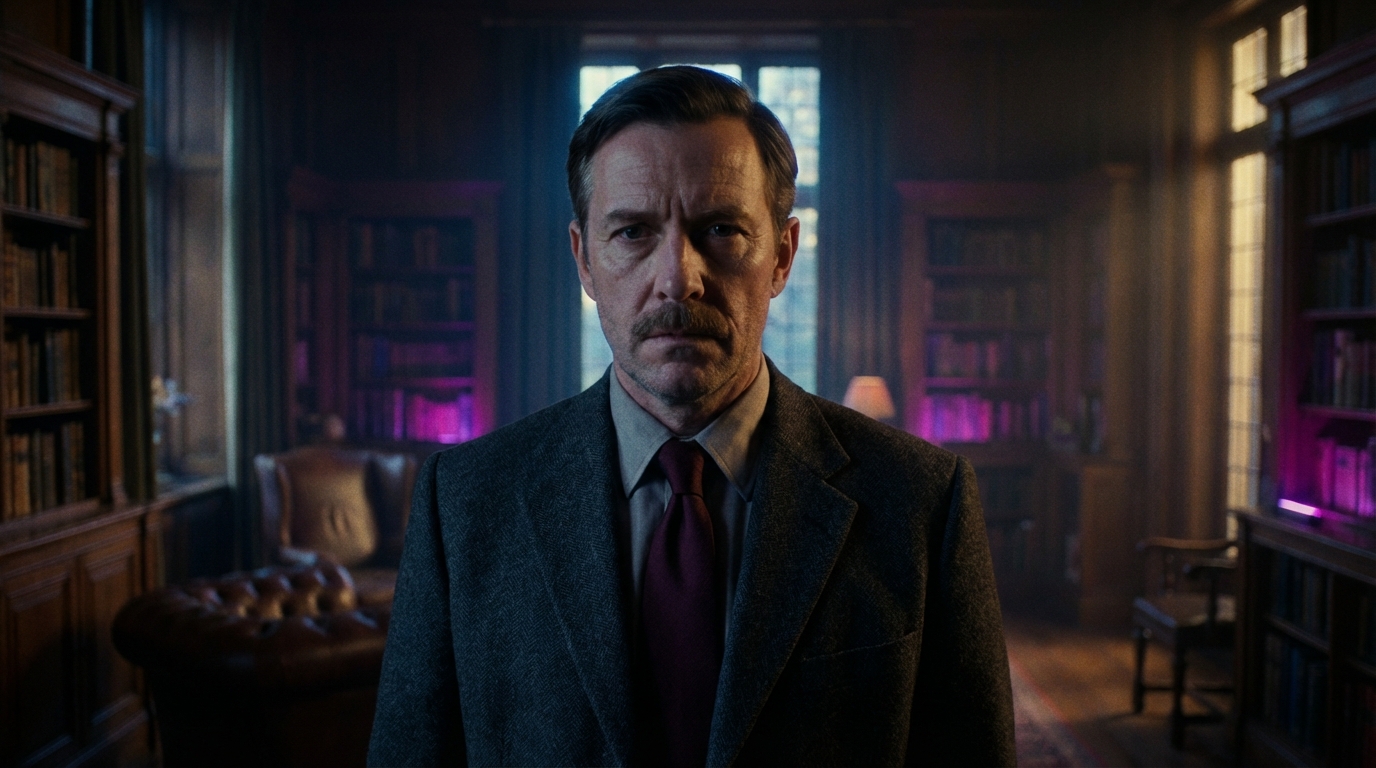
Edward Thomas Blackwood (1912–1970) was a thoracic surgeon whose career spanned the battlefields of the Second World War and the operating theatres of post-war Australia. The younger son of Thomas Alastair and Mary Eleanor Blackwood, he grew up in the shadow of a brother whose brilliance eclipsed him and a father whose sudden death left him fatherless at seventeen. He practised with distinction, married well, and died in Brisbane at fifty-seven.
Early Life and Family
Edward Thomas Blackwood was born on 22 August 1912 in Sydney, New South Wales, where his mother Mary Eleanor had travelled for the final weeks of her pregnancy — her Hobart physician having recommended the specialist obstetric care that Sydney's larger hospitals could provide, a recommendation whose urgency reflected the anxiety that the stillbirth of her first child in 1905 had permanently installed in Mary's approach to pregnancy. Edward arrived without complication, a healthy boy whose conventional names — Edward for no particular ancestor, Thomas for his father — announced, in the family's naming grammar, a life that would be expected to follow established paths rather than forge new ones.
He was the second surviving child of Thomas Alastair Blackwood, managing partner of Blackwood and Associates, and Mary Eleanor Blackwood, née Thompson, whose private intellectual life exceeded the domestic role she occupied with such composed efficiency. His brother Alastair Prometheus, two years his senior, had already demonstrated the exceptional intelligence that would define his career, and Edward grew up in the particular shadow that an extraordinary sibling casts — not the shadow of hostility or rivalry, but the subtler shadow of comparison, in which everything Edward did was assessed, by himself as much as by others, against a standard that his brother's gifts had set and that his own more moderate capabilities could approach but not match.
The household in which Edward spent his first eighteen years was shaped by the Blackwood family's accumulated patterns: the father absorbed by the firm, the mother managing the domestic world with the invisible competence that five generations of Blackwood wives had perfected, and the assumption — transmitted through every aspect of the home's organisation — that professional achievement constituted the highest expression of a life well lived. Edward absorbed these assumptions without questioning them, partly because questioning assumptions was Alastair's role rather than his, and partly because the assumptions suited his temperament. He was a boy who preferred structure to improvisation, who found comfort in clear expectations rather than open possibilities, and who responded to the family's professional pressure not with the resistance that might have signalled independence but with the compliance that signalled — depending on one's interpretation — either contentment or the absence of any alternative he could imagine.
The Death of His Father
Thomas Alastair Blackwood collapsed at his desk at Blackwood and Associates on 30 March 1930, dying within the hour of a cerebral haemorrhage. Edward was seventeen years old, completing his final year of school and preparing for the university entrance examinations whose results would determine the next phase of a life whose direction he had not yet chosen. His father's death — sudden, violent in its physiological mechanics, and freighted with the family's awareness that Erasmus Percival had died in the same posture a century earlier — removed the figure whose expectations had structured Edward's childhood without resolving the question of what those expectations required.
The question was answered, in the months that followed, by a process that Edward experienced as gradual realisation rather than conscious decision. He would not enter the law. The dynasty that had run from Erasmus Percival through Thomas Erasmus through Robert Cornelius to Thomas Alastair had ended with his father's body on the office floor, and neither Edward nor his brother would attempt to resurrect it. Alastair had already oriented himself toward the sciences with an intensity that left no space for legal study. Edward, whose own inclinations were less defined, found himself drawn toward medicine partly through his brother's influence, partly through the example of his great-aunt Evelyn Rose Parker's commitment to institutional service, and partly through the recognition — which arrived quietly, without the drama of vocation — that the practice of medicine offered the combination of structured knowledge, practical application, and human consequence that his temperament required.
Mary's response to her sons' abandonment of the legal tradition was characteristically complex. She had anticipated the departure, had in some sense engineered it through the intellectual atmosphere she had cultivated in the household, and yet the finality of the break — the knowledge that no Blackwood would lead Blackwood and Associates again — carried a weight that her progressive convictions could not entirely absorb. She supported both sons' choices, as she supported everything, with practical competence and private ambivalence.
Education and Medical Training
Edward enrolled at the University of Sydney in 1931, beginning the medical studies that would occupy the next five years of his life. The choice of Sydney over Melbourne — where his father and aunt had both studied — reflected both the specialist medical programme that the University of Sydney offered and the practical reality that Mary's Thompson family connections in Hobart provided less useful support for a Sydney-based student than the broader Blackwood network's mainland contacts. He lodged with a family in Glebe during the academic terms, returning to Hobart during vacations with the regular dependability that characterised his approach to all obligations.
He was a diligent medical student whose academic performance placed him consistently in the upper portion of his cohort without reaching the exceptional level that his brother's scientific work had already established as the Blackwood standard. He showed particular aptitude for anatomy and surgical technique, his hands possessing a steadiness and precision that his lecturers noted as unusual in a student and that would prove his most valuable professional asset. He graduated in 1936 and secured a position at the Royal Prince Alfred Hospital, where his surgical training began under senior practitioners whose methods — thorough, conservative, oriented toward reliable outcomes rather than innovative technique — aligned with Edward's own cautious professional temperament.
Marriage to Laura Elizabeth Carter
Edward met Laura Elizabeth Carter during his early years at Royal Prince Alfred. Laura, born on 3 May 1918 in Sydney, was a nursing student six years his junior whose professional competence and unaffected manner attracted Edward in ways that more socially polished women had not. She was the daughter of a Balmain boilermaker — a background whose working-class origins placed her at a social distance from the Blackwood family that Edward registered without regarding as an impediment, a response that reflected either genuine egalitarianism or the particular freedom that a family's fifth generation enjoys to make choices that the founding generation's social anxieties would not have permitted.
They married on 19 October 1940, in a ceremony whose wartime context — Edward had already received his commission with the Australian Army Medical Corps — lent urgency to a decision that peacetime might have allowed to develop at a more measured pace. Laura proved a partner whose practical strengths complemented Edward's professional capabilities in ways that echoed, though he would not have recognised the parallel, the pattern that Blackwood marriages had followed for over a century. She was direct where he was reserved, socially capable where he was awkward, and possessed of a resilience that the war years would test and confirm.
The War
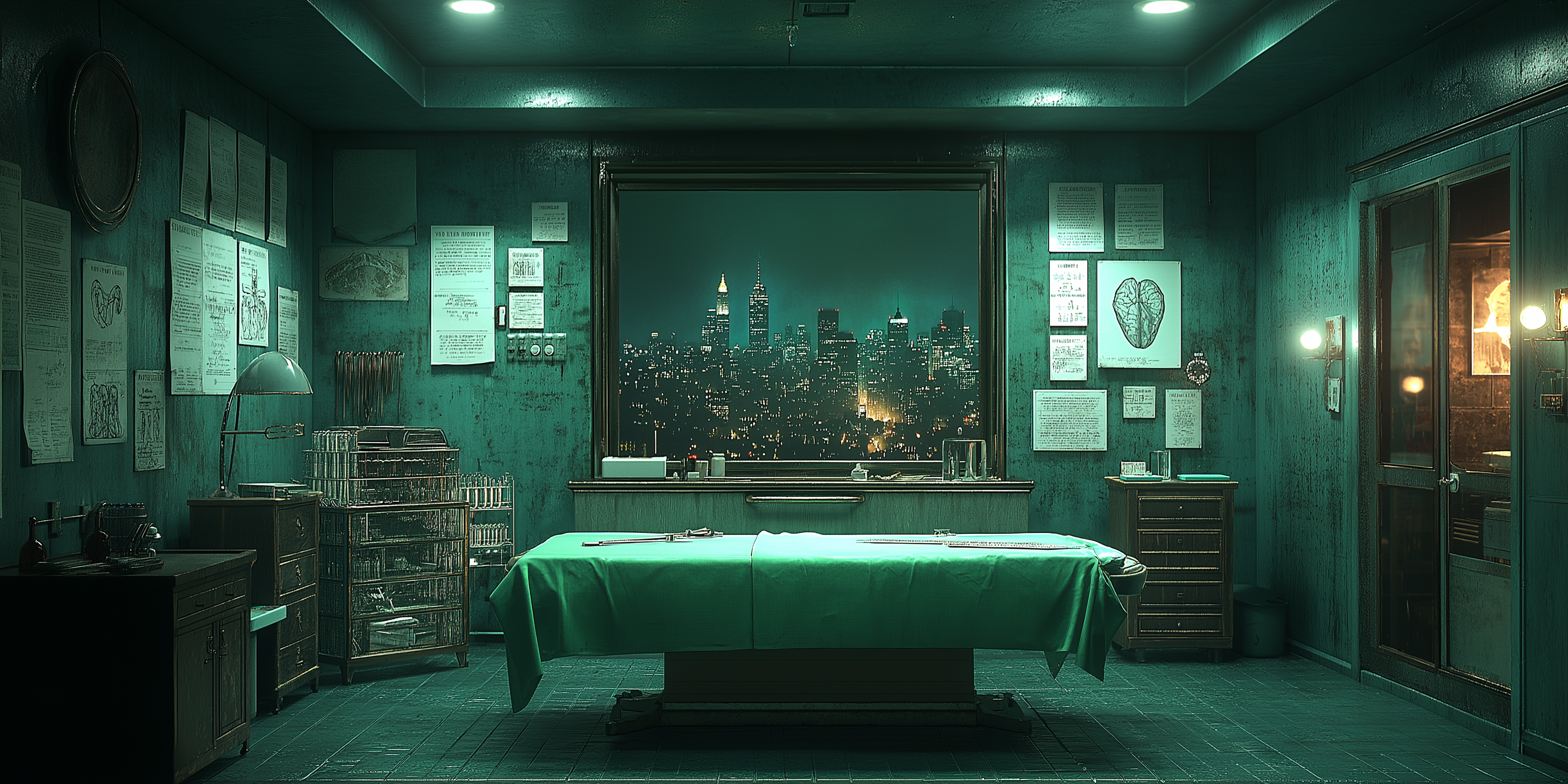
Edward served as a field surgeon with the Australian Army Medical Corps throughout the Pacific campaign, stationed at military hospitals in Queensland and New Guinea where the casualties arriving from the fighting in the islands required surgical intervention whose urgency exceeded anything his peacetime training had prepared him for. He operated under conditions — inadequate lighting, improvised equipment, the constant pressure of incoming wounded whose numbers overwhelmed the available surgical capacity — that demanded the rapid decision-making and technical adaptability that combat medicine imposed upon practitioners regardless of their temperamental preferences for caution and deliberation.
The war changed him in ways that he could not articulate and that Laura perceived without requiring articulation. He returned from each deployment quieter than he had been before, the reserve that had always characterised his manner deepening into something that those who did not know him might have mistaken for detachment but that Laura recognised as the particular silence of a man who had seen things that language could not accommodate. He did not discuss his wartime experiences with his family, did not seek the therapeutic processing that later generations would consider essential, and carried the memories of operating theatres where the patients were boys and the anaesthesia was insufficient and the outcomes were determined as much by the randomness of shrapnel trajectories as by the skill of the surgeon's hands into the civilian career that followed the war's end.
Alexander Edward Blackwood was born on 10 February 1942 at Brisbane's Mater Hospital, arriving during a period when Edward was stationed at a military hospital nearby and Laura was working nursing shifts until labour made continuation impossible. The timing was wartime — Edward had been operating on wounded servicemen for fourteen consecutive hours when summoned to Laura's bedside — and the circumstances of Alexander's birth, surrounded by the machinery of military medicine and the urgency that the Pacific theatre imposed upon everyone within its reach, would shape the boy's understanding of medicine as an enterprise conducted under pressure and at cost.
Post-War Career
Edward returned to the Royal Prince Alfred Hospital after the war and established himself as a specialist in thoracic surgery — the treatment of diseases and injuries of the chest, lungs, and heart that the mid-twentieth century's medical advances were making increasingly survivable. His wartime experience had provided training in chest trauma that civilian practice could not have replicated, and he applied the skills he had developed under combat conditions to the treatment of tuberculosis, lung cancer, and the cardiac conditions whose surgical management was transforming from experimental procedure to standard practice during the 1950s.
He was a capable surgeon rather than a pioneering one — the same distinction that had characterised his grandfather Robert's legal career and that Edward, had he been inclined toward the kind of self-analysis that the Blackwood men traditionally avoided, might have recognised as another iteration of the family pattern. His technical skill was genuine, his judgement in the operating theatre was sound, and his capacity for sustained concentration under pressure — the gift that the war had refined rather than created — made him a surgeon whom colleagues trusted with difficult cases and patients appreciated for the steady competence that his manner communicated. He was not brilliant in the way that his brother Alastair was brilliant, not innovative in the way that the surgical profession's leaders were innovative, but he was reliable in a way that saved lives as effectively as innovation did, if less conspicuously.
In 1955, he was appointed Chief of Surgery at Royal Prince Alfred, a position whose administrative demands competed with the clinical work he preferred and that he managed with the dutiful competence he brought to every responsibility — accepting the role because it was offered, fulfilling it because it was required, and relinquishing it in 1968 with a relief he confided only to Laura.
Brisbane and Later Life
The family relocated to Brisbane in the late 1950s, Edward accepting a position at a teaching hospital whose thoracic surgery programme required the leadership that his Royal Prince Alfred credentials qualified him to provide. The move separated him from the Sydney institutions that had defined his career and brought him closer to the city where Alexander had been born and where his son, now pursuing his own medical studies, would eventually establish the cardiology practice that carried the Blackwood name into a new discipline and a new century.
Laura adapted to Brisbane with the practical flexibility she had demonstrated throughout the marriage, establishing the household, managing the social obligations that Edward's professional position required, and maintaining the domestic infrastructure that his surgical schedule — still demanding, even as age and administrative responsibilities reduced his time in theatre — could not accommodate. Their marriage had settled, by this period, into the steady companionship that long unions between compatible temperaments achieve — the early passion replaced by something less dramatic and more durable, the shared history of wartime, parenthood, and professional life creating bonds whose strength derived from accumulation rather than intensity.
Death
Edward Thomas Blackwood died on 5 April 1970 in Brisbane, at the age of fifty-seven. He had been experiencing intermittent chest pain for several months — pain that he attributed to the muscular strain of decades of standing at operating tables and that he managed, with the particular stubbornness of medical professionals who apply their diagnostic capabilities to everyone except themselves, by ignoring it. The myocardial infarction that killed him arrived on a Saturday afternoon whilst he was reading in the garden, the heart that had sustained fifty-seven years of concentrated professional effort and unprocessed wartime trauma failing with the abruptness that cardiac events impose upon lives whose owners have been insufficiently attentive to the warnings that preceded them.
Laura found him in the garden chair, the book still open on his lap, his expression — she would tell Alexander later, in one of the few occasions on which she discussed the event — suggesting surprise rather than pain, as though the interruption of his reading had been more startling than the cessation of his heartbeat. He was pronounced dead at the hospital where he had spent the final decade of his career, by colleagues whose grief was professional as well as personal — the loss of a surgeon whose capabilities they had relied upon and whose steady presence in the department had provided an anchor whose weight they would discover only after it was removed.
He was survived by Laura, who would live another twenty-four years, and by Alexander, who was twenty-eight years old and already established in the cardiology that would define his career. His mother Mary was seven years dead. His brother Alastair was alive, pursuing the expansive and morally ambiguous medical career whose dimensions Edward had observed from a distance without entirely comprehending — understanding that his brother operated on a different scale and according to different principles, without possessing the framework to assess whether the difference constituted genius or something less admirable.
Edward Thomas Blackwood had been the quieter son, the competent one, the Blackwood whose gifts were solid rather than spectacular and whose life was shaped by duty rather than vision. He had followed his brother into medicine without sharing his brother's transformative ambitions. He had served in a war whose experiences he never discussed and whose costs he absorbed without acknowledgment. He had practised surgery with a skill that saved lives without attracting the attention that saving lives might have warranted. He had married a woman whose capabilities he appreciated and whose social origins he disregarded. He had raised a son who would become a better doctor than he was — a possibility that Edward, unlike the Blackwood men who preceded him, would have welcomed rather than resented, because the particular form of decency that characterised his approach to life included the understanding that the purpose of each generation was not to exceed the previous one but to provide the conditions in which the next one might.







