
Edward Samuel Killerton
Edward Samuel Killerton (22 April 1882 – 30 June 1967) was the younger son of Francis and Eleanor Killerton, a civil engineer and architect whose career at Killerton Enterprises spanned six decades and whose contributions to sustainable construction — most notably the Green Tower in downtown San Francisco — anticipated the environmental movement by a generation. Educated at Boston Latin School, Harvard University, and MIT, he served the family firm as Director of Innovation, Vice President, President, and finally Chairman, whilst maintaining a parallel life of obligation to the Guardian Order into which he had been initiated at the age of eighteen.
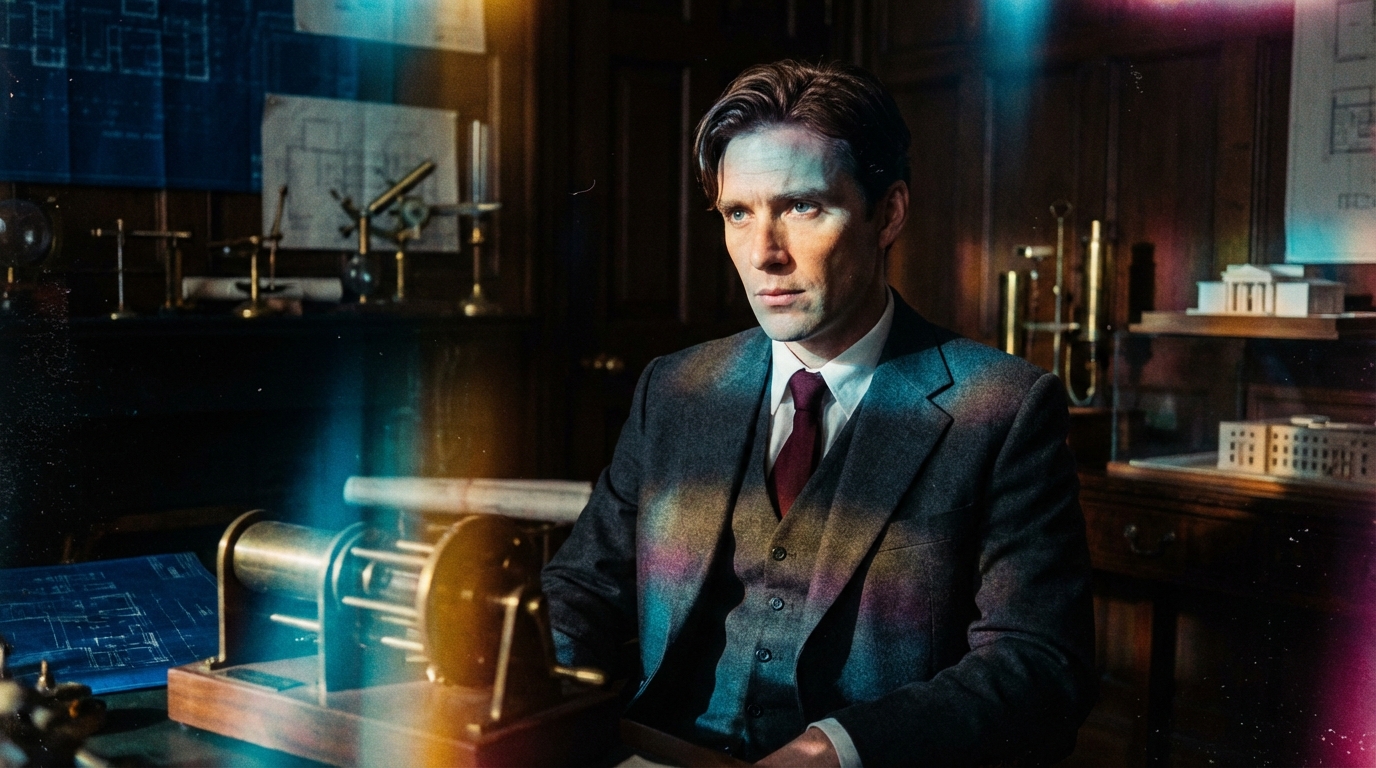
Pacific Heights: The Second Son
Edward Samuel Killerton was born on 22 April 1882 at Killerton House, Pacific Heights, San Francisco — the same house in which his brother George had arrived three years and nine months earlier, and the house that his mother Eleanor had shaped, through garden and interior and the steady accumulation of intellectual life, into one of the most distinctive private environments in the city. He was born into a household already in full operation: Francis had been running Killerton Enterprises for eight years by 1882, the firm was well established in the San Francisco construction market, and Eleanor's salon had been drawing engineers, architects, reformers, and scientists to the Pacific Heights drawing room for the better part of a decade. George, nearly four years old, was already navigating the particular world of the Killerton household — the mathematical precision of his father's table talk, the botanical garden that his mother had installed along the house's southern aspect, the visitors who arrived to argue about building methods and civic improvement and the future of California's cities.
Edward entered this world as a second child, which is to say he entered it already furnished. The frameworks that George had been the first to encounter — the particular expectations of the Killerton household, the quality of attention that Francis and Eleanor brought to their children's formation, the sense that knowledge was not merely useful but was the defining medium of a serious life — were waiting for Edward already settled into their characteristic shapes. The advantage was a kind of readiness; the disadvantage, if it was one, was that the original act of reception was his brother's. Edward's relationship to the family's intellectual inheritance was always mediated, at least partly, by the fact of George's prior encounter with it.
What he made of that inheritance was distinctly his own. George had absorbed the Killerton formation and directed it primarily toward structural engineering — the mathematics of forces and loads, the behaviour of materials under stress, the problem of how buildings stood or failed. Edward's intelligence moved along a different axis. The architecture of buildings — not merely how they stayed up, but what they were for, how they related to the people who inhabited them and to the natural environment that surrounded them, how the built world and the living world might be brought into something more like harmony than the industrial construction of the late nineteenth century had generally managed — was the question that most absorbed him, and it was a question that combined his father's technical formation with his mother's observational sensibility in a way that produced something recognisably neither Francis nor Eleanor but partaking of both.
The Private Schools Years
Edward's schooling through the 1880s and 1890s followed the same pattern as George's — the local private schools of San Francisco that served the children of the city's established professional families, teaching mathematics, natural sciences, the humanities, and the manual drawing that his mother's architectural influence made natural to him. He was, like George, a student of genuine ability, and his particular gift for the intersection of technical precision and aesthetic judgement — the capacity to hold a structural problem and a design problem in mind simultaneously — became apparent early enough that his teachers noted it.
The San Francisco of his childhood was the city that his father was, in a material sense, helping to build. The relationship between the Killerton household and the city's built environment was not abstract for either of the Killerton children — it was the substance of the table conversation at breakfast and dinner, the subject of the visitors who came to Pacific Heights on Tuesday evenings, the work that Francis left for in the morning and returned from in the evening with the particular quality of fatigue that belongs to people who have spent a day solving physical problems of considerable scale. Edward observed all of this from the younger child's position, which is attentive and absorptive in a way that the elder child's position, occupied with being first, sometimes is not.
His grandmother Abigail Stanton had died in November 1891, when Edward was nine years old. He had known her primarily through his mother's accounts of her — the writer, the educator, the Boston reformer whose intelligence and convictions had shaped Eleanor in ways that Eleanor had in turn transmitted to her children — and through the letters that continued to arrive from Concord and Boston in the years before her death. The loss, at nine, was one he experienced through his mother's grief rather than directly, but the character of what Abigail had been — the intellectual seriousness, the patience, the conviction that education was the instrument of a more just world — was something he absorbed from Eleanor's way of holding the memory.
Boston Latin School: 1896–1900
In the autumn of 1896, at the age of fourteen, Edward was sent to Boston to attend Boston Latin School — following George, who had made the same journey the same year under the same parental reasoning, which was that the Killerton educational tradition ran through Boston and that the family's children should encounter it at its source. The two brothers overlapped at Boston Latin for the first year or so of Edward's time there, George graduating in 1900 while Edward remained through his own four-year programme. The arrangement gave Edward a degree of readiness for Boston that George, arriving first, had not had — an older brother who already knew the school, the city, the rhythms of East Coast academic life, and was willing, in the particular manner of older brothers, to communicate this knowledge in the uneven mixture of guidance and competitive example that characterises such relationships.
Boston Latin in the late 1890s was as demanding as it had been when George encountered it, and Edward proved equal to its demands with the same combination of mathematical ability and broader intellectual curiosity that had distinguished him in San Francisco. He graduated with top honours in 1900, having spent four years in the rigorous classical and scientific curriculum that had prepared Killerton men — and New Englanders of distinction for two and a half centuries before them — for the higher education that followed.
The Boston years were also, for a fourteen-to-eighteen-year-old, a formative encounter with the world beyond Pacific Heights in a way that San Francisco had not been. The city, the school, the particular texture of New England intellectual life that was different from California's in ways that were instructive precisely because they were not immediately legible — all of this reached Edward at an age when the capacity to absorb environmental influence is at its most receptive, and the formation it produced was layered in ways that San Francisco alone could not have provided.
The Guardian Order Initiation: 1900
In the same year that he graduated from Boston Latin School and enrolled at Harvard, Edward underwent initiation into the Guardian Order. He was eighteen years old.
The Guardian Order's connection to the Killerton family predated Edward by more than a generation — running back through the Uruk expedition of 1873, through the artefacts that his great-uncle Henry Killerton and Victor Armitage had brought back from the ancient city of Ur, through the decades of accumulated relationship between Killerton Enterprises and the Order's purposes that Francis had navigated without ever making explicit in the family record. Edward was not the first Killerton to stand in relation to the Order, but he was the first for whom the relationship was formalised through initiation — the first to undergo the trials and receive the wisdom of the Guardian Elders as a young man at the beginning of his formation rather than encountering the Order's requirements later, as Francis had, through the practical necessities of building work.
The timing — initiation at eighteen, at the precise moment of the transition from school to university — suggests a deliberate preparation: that the years at Harvard and MIT were understood, by those who managed the relationship between the Killerton family and the Order, as a formation that would equip Edward not merely for engineering and architecture in their public dimensions but for the particular uses to which those skills would subsequently be put. The connection between ancient knowledge and modern construction — the idea that the Killerton family's technical inheritance was not merely professional but carried obligations to something older and less visible — was not simply an external assignment but appears to have been, from what can be reconstructed, a framework that Edward found genuinely meaningful and that shaped both how he understood his professional work and how he understood what it was for.
He did not discuss it.
Harvard and MIT: 1900–1908
Edward read civil engineering at Harvard University between 1900 and 1904, graduating with a Bachelor of Science with high honours. The Harvard years were defined by the same quality of engaged application that had characterised his schooling — the mathematical precision, the structural intelligence, the capacity to think simultaneously about technical and aesthetic dimensions of engineering problems — but now extended into the formal academic study of engineering that his family background had prepared him to take seriously rather than merely to endure.
His interest at Harvard was already moving toward the intersection of built structure and natural environment — the question of what responsible construction looked like in a city built on a geography as particular as San Francisco's, where the relationship between human building and natural force was not a theoretical abstraction but a practical and recurring challenge. The seismic awareness that George had also developed, from the same family background and the same city, shaped Edward's engineering thinking from the beginning, though it expressed itself differently — less in the purely structural direction of George's specialism and more in the broader question of how buildings might be designed to work with rather than merely against the conditions of the sites they occupied.
After Harvard, he pursued a Master of Architecture at the Massachusetts Institute of Technology, completing the degree in 1908. The shift from civil engineering at Harvard to architecture at MIT was not a departure but an integration — a deliberate choice to add the formal training in design, spatial organisation, and the relationship between buildings and the people who inhabited them to the structural and material foundation that his first degree had provided. Francis had attended MIT; the institution had a particular meaning in the Killerton family's educational imaginary, and Edward's graduate years there gave him both the professional credential and the intellectual framework that his subsequent career would require.
He was twenty-six when he finished at MIT. In the same year, he married Margaret Hamilton.
Margaret Hamilton, and the Making of a Household
Margaret Hamilton came from a background in botany and environmental science — a field that in the first decade of the twentieth century occupied an intellectual territory between the natural sciences and the emerging conservation movement, attentive to the living world in ways that the dominant culture of industrial expansion had not generally prioritised. She was, in the character that the family record conveys, a person of quiet seriousness — her commitments held without the need for public demonstration, her intelligence directed toward the patient and systematic understanding of living systems rather than toward the advocacy and argument that had characterised Eleanor Stanton's engagement with the world. The parallel with his mother's character was not lost on Edward, or on anyone else in the family.
They married in 1908, the year of Edward's MIT graduation and the year he joined Killerton Enterprises as a junior engineer. The house they established together became, like the Pacific Heights household in which Edward had grown up, a gathering place for people engaged with ideas — intellectuals, scientists, artists, the San Francisco progressive community whose interests extended from the technical to the social — and Margaret's botanical knowledge and environmental commitments shaped the household's character in ways that were distinct from but resonant with what Eleanor's garden and salon had been in the generation before.
Their four children arrived across a span of fourteen years. Charles, the eldest, was born in 1910; Lillian in 1913; Theodore in 1916; and Thomas, the youngest, on 3 March 1924, when Edward was forty-one years old. The long span between first and last child meant that the family Edward and Margaret were building was always in motion — the older children growing into their own characters whilst the younger were still being formed, the household never settling into the uniform developmental stage that a more compressed family spacing produces. Thomas, the youngest by eight years from Theodore, arrived during the difficult interwar decade and grew up in the shadow of the Depression, developing the Killerton intelligence in a direction that led him away from construction and business entirely — toward Harvard and Harvard Business School, then into the presidency and chairmanship of Killerton Enterprises in the generation following his father's — a trajectory that inverts the expectation that the youngest, most distant child takes the least conventional path.
Joining Killerton Enterprises: 1908 and the Post-Earthquake Years
Edward joined Killerton Enterprises as a junior engineer in 1908, two years after the earthquake and in the midst of the rebuilding work that had brought both Francis and George back to the firm's centre of gravity. George was by then a Senior Project Engineer in all but formal title, having spent two years applying his Stanford thesis to the practical problems of post-earthquake construction. Edward arrived into an organisation already shaped by the earthquake's consequences — its priorities, its methods, and its understanding of what San Francisco construction needed to be had all been recalibrated by the April 1906 event in ways that were consistent with the direction Edward's own Harvard and MIT training had pointed him.
His early years at the firm were spent learning the practical dimensions of construction work that no degree fully provides — the management of materials and contractors, the translation of design intentions into built outcomes, the particular resistances and possibilities of the California building environment — under the mentorship of his father and his brother, both of whom had knowledge he did not yet have and communicated it with the mixture of expectation and exigency that characterises family firms at their best.
In July 1905, before completing his MIT degree but already engaged with the Guardian Order's purposes, Edward had participated in the construction of the Grand Library of San Francisco. Beneath the library's public foundation, working with the engineering precision that his Harvard training had provided and the discretion that his Guardian initiation had instilled, he had built concealed chambers designed to house the Order's ancient texts and artefacts — a first exercise of the particular combination of professional skill and covert obligation that would define the most significant of his non-public contributions over the subsequent decades. He was twenty-three years old. The work was done quietly and well, and the chambers served their purpose.
Director of Innovation and the Green Tower: 1915–1925
Edward was promoted to Project Manager in 1910, the same year that George became Senior Project Engineer, and to Director of Innovation in 1915. The title was, by the standards of early twentieth-century construction firms, unusual — it acknowledged not merely a management function but a particular intellectual responsibility: the identification and development of the methods, materials, and design principles that would keep Killerton Enterprises at the frontier of what construction could be.
What Edward brought to this role was the synthesis of structural engineering and architectural thinking that his dual Harvard-MIT formation had produced, combined with the environmental consciousness that his mother's influence and his wife Margaret's professional world had deepened. He expanded the firm's operations into renewable energy and sustainable development at a moment when neither concept had acquired the vocabulary it would later develop — the work was not described in those terms in 1915 or 1920, because the terms were not yet available, but the underlying commitments were clear: to build in ways that used materials honestly, that related to their sites responsibly, and that considered the long-term effects of construction on the natural and civic environment in which they sat.
The Green Tower, completed in the early 1920s in downtown San Francisco, was the most visible expression of these commitments. A commercial skyscraper that incorporated solar panels on its southern face, a rainwater harvesting system connected to the building's service infrastructure, and a series of planted terraces at intervals through its upper storeys, the Green Tower was a building that made arguments through its construction — that the technical and the environmental were not competing values but complementary ones, that a building could be ambitious in scale and responsible in its relationship to the energy and water systems it drew upon, that the future of urban construction in a city with San Francisco's natural resources and constraints lay in integration rather than extraction. The arguments were not widely accepted in 1922. They would be, eventually.
Francis's Death and the Middle Years: 1922–1935
Eleanor died on 2 February 1922, when Edward was thirty-nine years old. He had watched her decline across the previous year — the progressive failure that had kept her largely indoors through 1921, the patient and unsentimental manner with which she had managed the approach of her own death, the clarity she had maintained about what still needed her attention and what could be released. The loss, at thirty-nine, was of the parent who had most completely represented the synthesis of intelligence and feeling that Edward had spent his professional life attempting to build into concrete and glass. Margaret's quiet grief for a woman she had admired and whose company had shaped the character of Edward's household as a younger woman's consciousness is shaped by an older one's example — was its own register of what Eleanor had been.
Francis died on 27 January 1925, at seventy-four, three years after Eleanor. He had been withdrawing from the firm's active management through his later years, the engineering work more and more George's province and then Edward's, the strategic decisions made by the two sons in consultation rather than referred upward to the founder. His death nonetheless had the particular weight of a founder's death — the sense that the person in whose imagination the whole enterprise had originated was no longer there, and that what remained was inheritance rather than source. Edward was forty-two. He had another forty-two years ahead of him.
The decade between his father's death and his formal elevation to Vice President in 1935 was the decade of the Depression — the most severe test of any business that encountered it, and a test that Killerton Enterprises met through the combination of fiscal conservatism, operational flexibility, and the reputation for quality that three generations of careful work had established. Edward's role through the early 1930s was primarily the Director of Innovation's role adapted to constrained conditions — finding the projects that could be built, identifying the clients whose resources survived the contraction, applying the sustainable methods that reduced material costs as a side effect of their environmental rationale. The Depression was not what he had planned the firm's development around, but it turned out that what he had been building toward — construction that did less with more, that built for the long term rather than the immediate moment — was precisely what difficult conditions rewarded.
Vice President and the Wartime Shadows: 1935–1945
George became President of Killerton Enterprises on 1 October 1935, and Edward became Vice President in the same transition. Edward was fifty-three. The arrangement formalised what had been operative for some time — the two brothers running the firm's complementary dimensions, George's structural and operational authority counterbalanced by Edward's innovation and design intelligence — and gave each the title that matched the function.
Between 1939 and 1945, the Second World War reached into the Guardian Order's obligations in ways that required Edward to act in dimensions of his dual life simultaneously and under pressure. The bombing campaigns across Europe threatened the Order's repositories of ancient artefacts and texts — collections accumulated over centuries in locations that the war was making dangerous — and the response required the engineering expertise, the logistical capacity, and the covert operational experience that Edward had been developing since the Grand Library work of 1905. He was fifty-seven when the war began and sixty-three when it ended. The work of creating hidden chambers, coordinating secure transport, and ensuring that what was irreplaceable survived humanity's most destructive conflict was not the work the public record attributed to him during those years — the public record showed a Vice President managing a construction firm through the wartime economy — but it was work that drew on everything he had, and it was work he did well.
The detail of those operations is not recoverable in full. What is clear is that they constituted the most dangerous and consequential of Edward's Guardian engagements — the fulfilment, in the most demanding possible conditions, of the obligations he had accepted at his initiation in Boston in 1900.
President and Chairman: 1950–1967
George died on 19 December 1950, at seventy-two. Edward, sixty-eight years old, had outlived his brother by the particular margin that means the elder's death is both expected and still genuinely surprising — the loss of the person who had been present for the entirety of one's own life, who had been the first Killerton to encounter everything that both of them subsequently encountered, who had spent forty years in the same firm working on problems whose solutions each could contribute to without duplicating the other. Edward continued as Vice President through the early 1950s, the firm's leadership settling into a new configuration that placed Robert Killerton, George's son, in an increasingly senior position alongside him.
Edward became President in 1955, at seventy-three years old — an age at which most men who have spent sixty years working have been retired for a decade. His presidency, from 1955 to 1965, coincided with the post-war expansion that transformed San Francisco's built environment as dramatically as anything since the 1906 rebuilding: the new civic infrastructure, the commercial towers, the residential developments that the baby boom and the migration of the wartime economy's beneficiaries were demanding at a scale and pace that the construction industry had not previously attempted. Killerton Enterprises, under Edward's presidency, participated in this expansion with the environmental and technical commitments intact — the sustainable methods now somewhat more legible in a culture that had begun, slowly, to develop a language for what they represented.
He served on the boards of MIT and several San Francisco universities, contributing to the educational philanthropic work that had been a consistent element of the Killerton family's civic engagement since Eleanor's Pacific Heights salon had made the household a resource for the city's intellectual life. Margaret's conservation advocacy, which had continued through the decades of their marriage without diminishing in either conviction or activity, found a natural complement in the institutional giving that Edward directed through the later years of his career.
Edward stood down as President in 1965, when Robert Killerton assumed the role. He became Chairman of the Board — the same transition his brother had made fifteen years earlier, the deliberate handing-over of operational authority while retaining the oversight that the firm's continuity required. He was eighty-three years old. Robert was fifty-three.
Death: 30 June 1967
Edward Samuel Killerton died on 30 June 1967, at the age of eighty-five, in San Francisco — the city in which he had been born eighty-five years earlier and which he had, across a working life of extraordinary length and range, helped to build, rebuild, and reimagine. He had been Chairman for two years.
Margaret, whose dates the family record does not preserve with the specificity of the others, had shared those years with him as she had shared every other decade of a marriage that began in 1908 and that was characterised throughout by the same quality of mutual intellectual seriousness that had distinguished Francis and Eleanor's partnership in the generation before. Thomas, their youngest son, was forty-three at the time of his father's death — a Harvard-educated engineer and businessman who had already begun the ascent of Killerton Enterprises' leadership that would carry him to the presidency and then the chairmanship in the generation following.
He had been initiated into the Guardian Order at eighteen, had built secret chambers beneath a public library at twenty-three, had spent the most destructive years of the twentieth century ensuring that what was ancient and irreplaceable survived a conflict that threatened to destroy everything. None of this appeared in his professional biography. What appeared was the Green Tower, the directorship of innovation, the presidency, the philanthropic boards — the publicly legible version of a life that had been conducted simultaneously in two registers for sixty-seven years.
Both registers were genuine. Both were the same man.







