Derek Jonathan Simmons
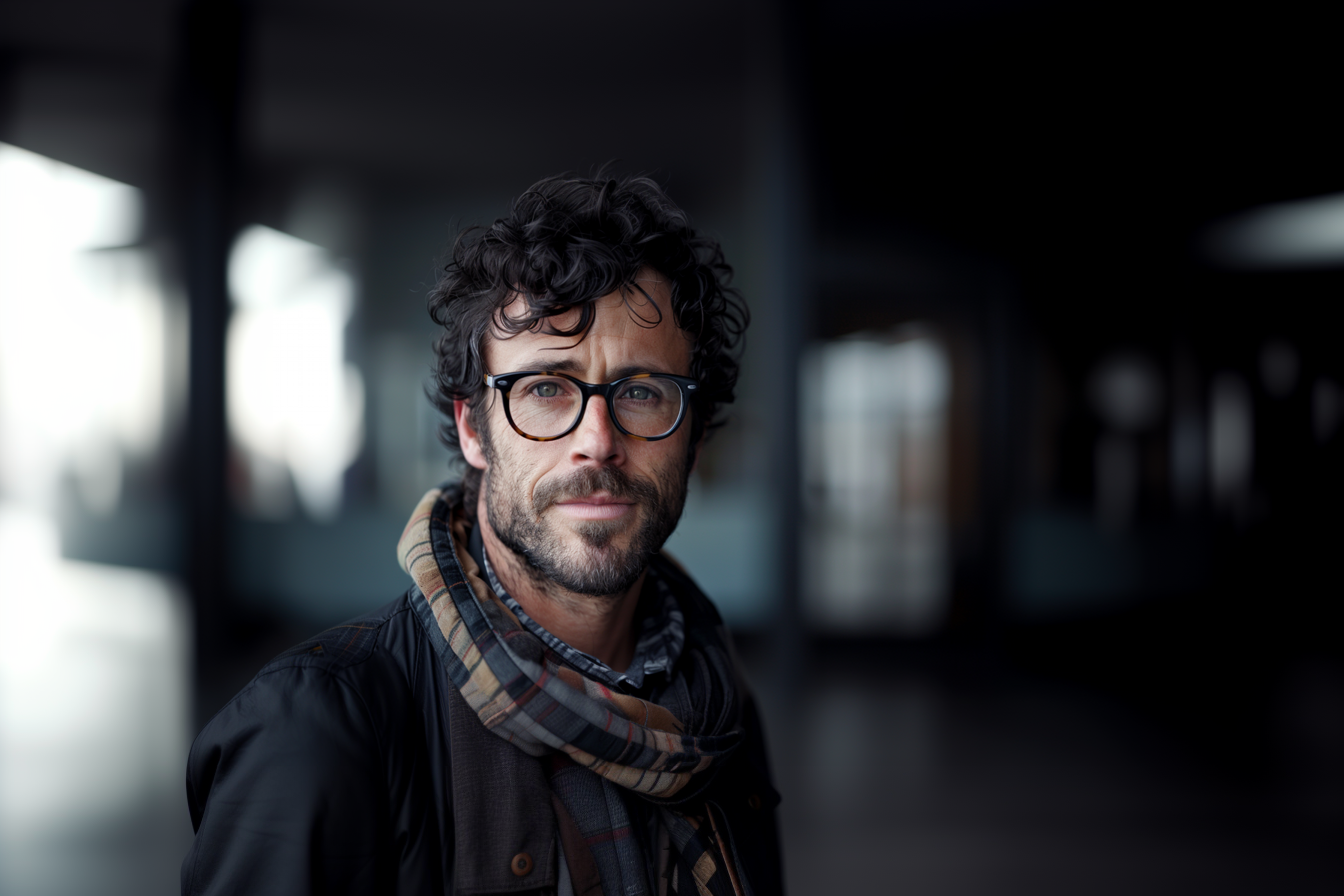
Derek Jonathan Simmons was born in Sandy Bay in 1979 to an electronics engineer and software developer whose household hummed with technology and innovation. His career as founder of EcoTech Innovations demonstrated genuine capability for integrating environmental science with technological solutions, though his brilliance often came packaged with impatience that colleagues found difficult to navigate. Recruited by Thaddeus Wainwright in 2013, Derek became a Guardian of Ender's Climb, his technological expertise proving essential for monitoring systems across both dimensions. His murder on 20 July 2018 removed capabilities the Guardians couldn't easily replace and left questions that investigation would struggle to answer.
Birth and Family Origins
Derek Jonathan Simmons was born on 9 April 1979 at Royal Hobart Hospital, the first child of Jonathan William Simmons and Claire Elizabeth Simmons (née Patterson). His arrival came during one of Hobart's crisp autumn mornings, his parents welcoming a son whose life would bridge technologies and dimensions they could not yet imagine.
Jonathan William Simmons had built a solid career as an electronics engineer at the Electrolytic Zinc Company's Risdon works, his expertise lying in the industrial control systems that kept the smelter's complex processes operating safely. Born in 1950 to a family of tradespeople in Moonah, Jonathan had been the first in his line to complete a university degree, his Bachelor of Engineering from the University of Tasmania opening doors that manual labour alone could not have accessed. He was methodical, patient, and possessed of the particular stubbornness that kept him troubleshooting problems long after others might have given up.
Claire Elizabeth Patterson had arrived in Tasmania by a different path. Born in Sydney in 1952 to a schoolteacher and an accountant, she had followed a boyfriend to Hobart in 1974 — a relationship that ended within months but left her stranded in a city she found unexpectedly appealing. Her aptitude for mathematics had led to a computing diploma at what was then the Tasmanian College of Advanced Education, and her timing proved fortunate: the expansion of computerised systems in the late 1970s created demand for programmers that her training equipped her to meet. She joined the Hydro-Electric Commission in 1976, writing code for the systems that managed Tasmania's power grid, and met Jonathan at a professional function in 1977.
The marriage in 1978 united two people whose technical inclinations aligned even when their temperaments differed. Jonathan approached problems with methodical persistence, testing hypotheses systematically until solutions emerged. Claire worked more intuitively, her code often appearing in bursts of insight that she couldn't always explain afterward. Their household in Sandy Bay — a modest brick house purchased the year before Derek's arrival — became a workshop as much as a home, spare rooms accumulating the components, tools, and half-finished projects that technical minds generate.
Rachel Claire Simmons arrived on 17 November 1982, completing the family. The three-and-a-half years separating the siblings created natural asymmetry, but their relationship developed with the comfortable friction of children whose interests overlapped without competing. Derek proved protective in ways that sometimes irritated his sister, his assumption that she needed help with technical matters persisting long after her own capabilities had rendered such help unnecessary. Rachel would eventually pursue medicine rather than technology, her career as a general practitioner in Melbourne representing departure from family patterns that Derek never quite understood.
Childhood and Early Education
Derek's childhood unfolded in spaces where technology and nature intersected. The family home's garage became Jonathan's workshop, a domain where Derek spent hours watching his father diagnose faults, replace components, and explain the principles that made complex systems function. Weekend expeditions often combined Jonathan's interest in bushwalking with Claire's amateur photography, their children absorbing both the natural world's beauty and the technical challenges of capturing it.
Waimea Heights Primary School (1984-1990) provided Derek's formal education, though teachers quickly recognised that his knowledge of electronics and computing exceeded what the curriculum could offer. He was bright, curious, and possessed of energy that classroom constraints sometimes couldn't contain. Science projects became showcases for capabilities beyond his years — circuits that flashed and beeped, simple programs that demonstrated logic his classmates hadn't yet encountered, constructions that teachers found impressive even when they didn't fully understand them.
But Derek's intellectual precocity came packaged with social difficulties that would persist throughout his life. He struggled to understand why other children didn't share his fascinations, his enthusiasm for explaining technical concepts often exhausting listeners who hadn't asked for instruction. He interrupted conversations with corrections when others made factual errors, genuinely puzzled by the social costs this imposed. Teachers noted both his capabilities and his isolation, the brilliant child who worked alone because collaboration required patience with others' limitations that he couldn't sustain.
His secondary education at The Hutchins School (1991-1996) provided more intellectually stimulating environment but didn't resolve the social patterns established earlier. Derek excelled in mathematics, physics, and the computing courses the school offered, his abilities earning respect from teachers and occasional resentment from peers who found his confidence grating. His co-founding of the school's robotics club demonstrated leadership potential, but the leadership style — directive, impatient, quick to criticise work that didn't meet his standards — limited how many students wanted to follow.
The competitions the robotics club entered produced victories that validated Derek's approach while obscuring its costs. Winning mattered; how teammates felt about the process of winning seemed less important. Derek graduated with marks that would have admitted him to any university in Australia, his academic record exemplary even as his reputation among classmates remained complicated.
University and Professional Formation
Derek enrolled at the University of Tasmania in 1997 to pursue a Bachelor of Computer Science. The decision to remain in Hobart rather than seeking mainland opportunities reflected both family attachment and a certain confidence that his capabilities would produce success regardless of institutional prestige. His undergraduate years combined academic achievement with the same social patterns that had characterised his schooling: excellent work, limited friendships, a reputation for brilliance undermined by a reputation for difficulty.
His academic performance was exceptional. Professors recognised genuine talent, the kind of insight that made complex problems seem simple once Derek had explained his solutions. But they also observed the impatience that accompanied his ability — the visible frustration when group projects required accommodating slower colleagues, the tendency to complete collaborative work himself rather than teaching others to contribute. His final-year project on environmental monitoring software earned high commendations while his peers' feedback on group work experiences suggested patterns that professional life would eventually need to address.
The CSIRO internship during summer 2000 provided first exposure to research environments beyond university. Derek assisted in developing software tools for environmental modelling, his contributions impressive enough that supervisors discussed extending the appointment. But the internship also revealed how his working style functioned in professional contexts — the same brilliance, the same impatience, the same difficulty accepting that institutional processes sometimes moved slower than his ideas.
He graduated with First Class Honours in 2001, his academic record opening doors that his interpersonal reputation might otherwise have complicated. The decision to pursue postgraduate study in London represented recognition that broader experience might serve his ambitions better than immediate employment in Tasmania's limited technology sector.
The Master of Environmental Technology at Imperial College London (2002-2004) provided both intellectual challenge and cultural exposure that Hobart couldn't have offered. Derek's research on sensor networks for real-time environmental monitoring earned publication in respected journals, establishing scholarly credentials that would support his later career. But London also confronted him with environments where his assumptions didn't automatically apply — international colleagues whose approaches differed from his own, institutional cultures that valued collaboration over individual brilliance, social contexts where the directness Australians often tolerated read as rudeness.
The two years abroad produced professional development alongside personal reflection. Derek recognised, perhaps for the first time, that his communication style created obstacles his technical ability couldn't always overcome. He didn't fundamentally change — personality patterns established in childhood don't transform easily — but he developed strategies for managing how his directness affected others, learned to soften criticism with acknowledgment, practiced patience he didn't naturally feel. The adaptations were imperfect, but they were genuine attempts to address limitations he had finally recognised.
Early Career and Entrepreneurial Foundations
Derek returned to Hobart in 2004 with credentials that exceeded what Tasmania's technology sector typically attracted. His appointment at EnviroTech Solutions as Junior Software Developer represented starting position that his qualifications might have transcended, but Derek understood that local experience mattered and that building reputation required foundations that overseas study alone couldn't provide.
His two years at EnviroTech demonstrated both capabilities and limitations. The software he developed for environmental impact assessments was technically excellent, earning client appreciation and internal recognition. His promotion to Project Manager in 2005 acknowledged contributions that had exceeded his initial role. But managing others proved more difficult than managing code. Team members respected Derek's expertise while finding his leadership style exhausting — the constant push for higher standards, the difficulty accepting good enough when perfect remained theoretically possible, the impatience with processes that his direct approach might have bypassed.
The decision to found EcoTech Innovations in 2005 reflected recognition that his capabilities might be better deployed building something new than navigating institutions whose constraints frustrated him. Derek had identified market opportunities that existing companies weren't addressing — the growing need for sophisticated environmental monitoring systems that could integrate hardware sensors with software analysis. His parents provided modest startup funding; his technical vision provided direction; his willingness to work harder than anyone else provided the effort that startups require.
The early years were difficult. Derek wrote code, designed hardware interfaces, pitched to potential clients, managed finances, and performed every other function that a one-person company demanded. His personal life contracted to accommodate professional demands — relationships that might have developed received attention he couldn't spare, friendships atrophied from neglect, his existence narrowing to work and the minimal recovery that work required.
But the company grew. Derek's technical solutions proved superior to competitors', his ability to understand both environmental science and technology providing integration that others couldn't match. Government contracts began arriving — monitoring systems for parks and reserves, assessment tools for regulatory agencies, custom solutions for research institutions. By 2008, EcoTech Innovations had become established enough to hire employees, expanding capabilities while creating new challenges that Derek's management style sometimes complicated.
EcoTech Innovations and Professional Maturity
The decade between 2008 and 2018 saw EcoTech Innovations evolve from startup to established company. Derek's role shifted from doing everything himself to directing others' work, a transition that his personality made difficult. He hired capable people but struggled to trust their judgment, reviewing their work with attention that sometimes felt like suspicion, intervening in decisions that delegation should have allowed them to make independently.
Employees who stayed learned to manage Derek as much as he managed them. They understood that his criticism reflected standards rather than personal animosity, that his impatience emerged from genuine commitment rather than contempt, that the difficulty he had with praise didn't mean he didn't recognise good work. Those who couldn't adapt to his style departed, their exits creating turnover that HR consultants would have found concerning but that Derek viewed as natural selection for the culture his company required.
The company's technical reputation grew despite — or perhaps because of — the demanding environment Derek created. EcoTech's monitoring systems were deployed across Tasmania and eventually interstate, their reliability and sophistication earning recognition that attracted clients willing to pay premium prices for superior products. Derek's consulting work with NGOs and research institutions extended his influence beyond commercial contracts, his expertise contributing to conservation efforts whose outcomes he genuinely cared about.
But professional success didn't resolve personal patterns. Derek's romantic relationships followed trajectories that his work relationships might have predicted: intense beginnings when partners found his focus attractive, gradual strain as that focus proved difficult to live with, endings when partners concluded that competing with his work for attention was competition they couldn't win. He dated intermittently throughout his thirties, each relationship teaching lessons he struggled to apply to subsequent ones.
By thirty-five, Derek had achieved professional success that exceeded what most people accomplish while remaining personally isolated in ways that success couldn't address. His parents worried about him — the brilliant son whose company thrived while his life outside work seemed sparse. Rachel's occasional visits from Melbourne reminded him of connections he had neglected. The recognition that something was missing coexisted with uncertainty about how to find it.
The Approach and Transformation
The approach came in 2013, after Derek had established EcoTech Innovations as Tasmania's leading environmental technology company. Thaddeus Wainwright appeared at a conference on environmental monitoring where Derek was presenting his company's latest sensor integration platform. The elderly Englishman asked questions that revealed knowledge exceeding what any ordinary attendee might possess — understanding of system architecture, data interpretation, and technological possibility that suggested expertise Derek hadn't encountered outside his own field.
The subsequent conversations unfolded across several weeks, Thaddeus revealing truths with patience that Derek's personality would have struggled to maintain had positions been reversed. The existence of Clivilius. The Portal Keys that enabled dimensional travel. The Guardians who carried these keys and the technological challenges they faced in environments where Earth's infrastructure didn't exist. Each revelation challenged assumptions Derek had never thought to question — but the evidence Thaddeus provided proved impossible to dismiss.
What distinguished Derek's response was immediate recognition of problems he could solve. Where others might have focused on philosophical implications of dimensional existence, Derek focused on practical challenges: How could environmental conditions be monitored without established power grids? How could data be collected and analysed without network infrastructure? How could technology designed for Earth's conditions be adapted for environments whose parameters differed fundamentally? The questions energised him in ways that ordinary consulting work no longer could.
The Portal Key Thaddeus presented in late 2013 represented not merely dimensional access but professional transformation. Derek's first journey through his portal introduced him to challenges that demanded exactly the integration of environmental science and technological innovation that his career had prepared him to provide. The monitoring systems that Clivilius settlements required were problems worthy of his capabilities — problems that might finally be adequate to the abilities he had spent his life developing.
He returned to Earth after several days with notebooks full of specifications and a purpose that transcended anything EcoTech's ordinary contracts could offer. The Guardians needed what he could provide; his capabilities could serve purposes larger than commercial success; the isolation that had characterised his life might finally find community in shared dimensional knowledge.
The Foundation and Technological Contribution
Derek's role in the TerraNova Conservation Foundation reflected the technological capabilities that his career had developed. The Foundation needed systems that could manage information across dimensions, coordinate activities that conventional documentation couldn't acknowledge, and maintain security that protected purposes no audit could be permitted to discover. Derek's expertise in environmental monitoring translated into expertise in organisational infrastructure — the sensors and systems that kept information flowing while maintaining the compartmentalisation that covert operations required.
His position on the Foundation's board — declared as potential conflict of interest given that EcoTech might provide services — provided both governance role and technical oversight. He designed the secure communication systems that Guardian coordination required. He developed the documentation management protocols that kept sensitive information separate from auditable records. He created the monitoring frameworks that Project Terra Nova's distributed operations demanded.
The work suited his capabilities while challenging his limitations. Collaboration with fellow Guardians required the patience that professional relationships had always demanded. Michael Tan's methodical approach sometimes frustrated Derek's preference for faster decision-making. Brad Coleman's enthusiasm occasionally exceeded what careful planning could support. Laura Chen's academic rigour sometimes seemed to delay action that practical urgency required. Abbey Stockton's relative inexperience demanded mentorship that Derek's teaching style didn't naturally provide.
But the relationships deepened despite — or perhaps through — the friction. Derek recognised in his fellow Guardians something he had rarely found in ordinary professional contexts: people whose capabilities warranted his respect, whose commitment matched his own, whose understanding of dimensional reality created bond that no other relationship could replicate. The arguments they had were arguments among equals, disagreements within community rather than conflicts between strangers.
Personal Life and Its Complications
Derek's personal life remained sparse throughout his thirties, professional demands and personality patterns combining to limit connections that others might have cultivated. The Sandy Bay townhouse he purchased in 2010 — just kilometres from where he had grown up — housed equipment, books, and the organised solitude of someone whose work provided company that human relationships hadn't replaced.
His relationship with his parents evolved as they aged. Jonathan's retirement from the zinc works in 2012 and Claire's from the Hydro in 2014 shifted family dynamics. They remained active, their technical interests undimmed by age, but they increasingly expressed concern about Derek's isolation — the successful son whose company thrived while his personal life seemed to have stalled. Sunday dinners became occasions for gentle inquiry about whether he was seeing anyone, whether he had time for activities beyond work, whether the life he was building was the life he actually wanted.
Rachel's rare visits from Melbourne provided different perspective. She had achieved the work-life balance that Derek hadn't — marriage, two children, a general practice that demanded long hours but left space for family that her brother's company hadn't. Her gentle observations about what he was missing carried weight that parental concern sometimes couldn't, sibling understanding that transcended the distance their different lives had created.
The Guardian dimension complicated matters in ways Rachel and his parents couldn't know. How could Derek explain the purpose that had transformed his understanding of what his capabilities might serve? How could he describe the community he had found among people who shared dimensional knowledge that his family couldn't be permitted to possess? The secrets that protected Guardian operations also isolated him from the very people whose concern for his isolation was genuine.
His romantic life remained intermittent and ultimately unsuccessful. Derek dated when opportunities arose, each relationship following patterns his earlier experiences might have predicted. Partners found his intensity initially attractive, then exhausting. His difficulty prioritising relationships over work became apparent. His communication style, despite years of attempted adaptation, retained edges that intimate relationships couldn't accommodate. By thirty-eight, he had largely stopped trying, the energy that relationships required redirected toward work that demanded less emotional navigation.
Character and Contradictions
Those who worked with Derek Simmons described someone whose technical brilliance commanded respect while his interpersonal style demanded tolerance. His solutions to complex problems demonstrated insight that few could match. His presentations, though sometimes longer than audiences preferred, revealed depth of understanding that justified attention. His commitment to quality produced results that clients valued even when his demands made projects difficult.
But the brilliance came packaged with limitations he had never fully overcome. The impatience that had characterised his childhood persisted into middle age, his tolerance for slower thinkers remaining lower than professional contexts required. The directness that Australians sometimes appreciated could wound in ways he didn't always recognise, his genuine puzzlement at others' hurt suggesting gaps in emotional understanding that intelligence alone couldn't bridge.
His self-awareness about these patterns had developed over years of feedback he couldn't entirely dismiss. Derek knew that his communication style created obstacles, that his difficulty with patience limited his effectiveness as a leader, that the intensity that drove his achievements also constrained his relationships. The knowledge produced effort without producing transformation — strategies for managing limitations rather than elimination of them, accommodation of reality rather than change of fundamental nature.
The Guardian dimension had provided something his ordinary life hadn't: context where his intensity served purposes worthy of it. The technological challenges of monitoring systems across dimensions demanded exactly the obsessive attention to detail that made him difficult in other contexts. The Guardian community valued his contributions while tolerating his personality in ways that commercial colleagues often wouldn't. He had found, finally, place where his particular combination of capabilities and limitations could function without constant friction.
The Murder
Derek Simmons was murdered on 20 July 2018. His body was discovered in the Hobart State Theatre, circumstances that investigation would struggle to explain.
The investigation into his murder would intersect with other investigations that July 2018 generated, threads connecting in ways that neither police nor Guardians could immediately perceive. Derek Jonathan Simmons — brilliant, difficult, lonely, essential — was dead at thirty-nine, his potential contributions to both dimensions terminated by violence whose purposes remained obscure.







