Daniel Alistair Campbell
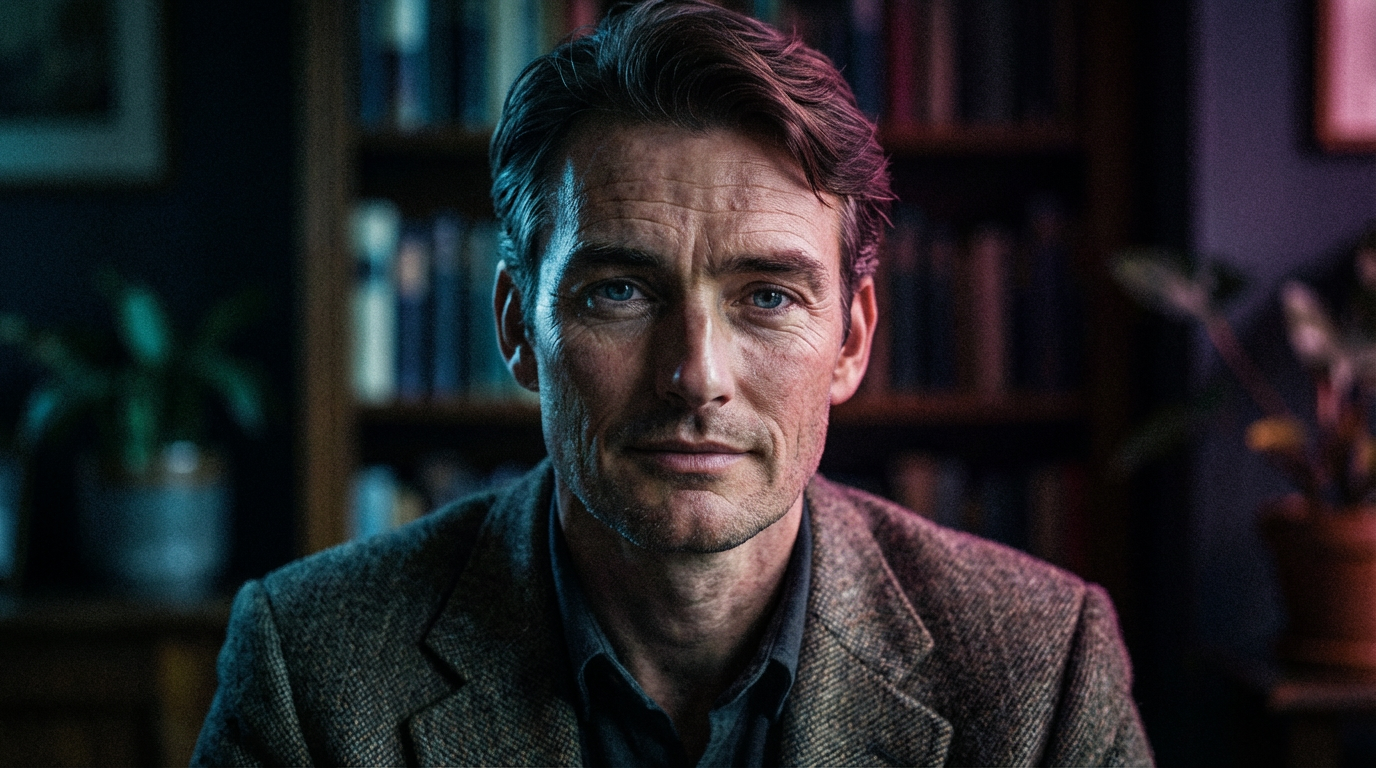
Born in Edinburgh on 3 September 1976, Daniel Alistair Campbell inherited a legacy he only partially understood—steward of hybrid plants cultivated for generations, their origins tied to secrets his historian father and botanist mother guarded with quiet devotion. His marriage to Eloise Turner brought intellectual partnership and three daughters before her sudden death in 2016 shattered the life they had built. Returning to Campbell Estate with his grieving children, Daniel tended café, greenhouses, and family whilst powerful factions circled closer. The fire that destroyed his ancestral home in April 2025 forced choices no amount of preparation could have anticipated.
Early Life and the Weight of Inheritance
Daniel Alistair Campbell was born on 3 September 1976 at Simpson Memorial Maternity Pavilion in Edinburgh, the first child of Alasdair William Campbell and Moira Jane Campbell née Fraser. His arrival represented continuation rather than beginning—the latest in a lineage stretching back through centuries of quiet stewardship, though the precise nature of what the Campbells guarded remained obscured even to those born into it.
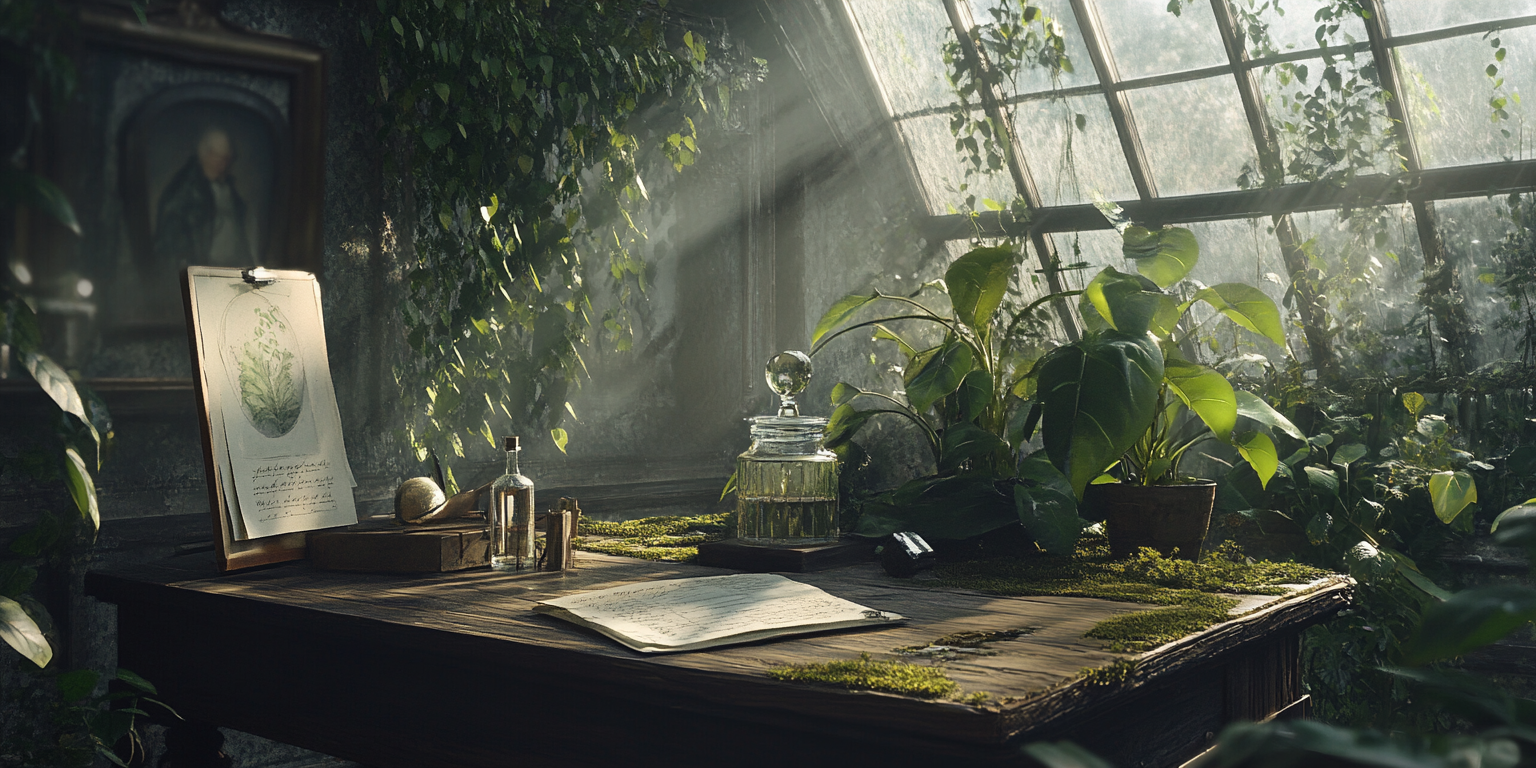
The family home stood on Braid Hills Drive in Edinburgh's Morningside district, a late-seventeenth-century Georgian manor whose weathered sandstone concealed underground passages and reinforced greenhouses. Campbell Estate occupied approximately six acres where the city's southern suburbs gave way to the Braid Hills, close enough to Edinburgh for convenience yet sufficiently secluded to keep secrets. Daniel spent his earliest years absorbing the rhythms of a household shaped by preservation—his father cataloguing historical documents in the library, his mother tending specimens in the greenhouses with care that exceeded ordinary horticultural interest.
Alasdair, a historian and archivist specialising in Scottish heritage and genealogy, approached the past with meticulous reverence. His work at the National Library of Scotland brought him into contact with forgotten records and hidden histories, skills he applied equally to the family's own archives. Moira, a botanist trained in genetic preservation, cultivated plants whose properties she documented but rarely explained. Between them, they created an environment where knowledge was treasured, questions were encouraged to a point, and certain doors remained firmly closed until one proved ready to open them.
Three siblings followed Daniel into the household. Fiona Alexandra arrived on 12 May 1979, displaying from early childhood the linguistic aptitude that would later draw her to ancient and obscure languages. Ewan James, born 4 November 1982, gravitated toward the natural world beyond the estate's walls, his interests running to wild spaces rather than cultivated ones. Colin Fraser, the youngest, arrived on 29 June 1985 with a practical bent that would eventually express itself in civil engineering and heritage restoration.
As eldest, Daniel occupied a particular position—not quite confidant to his parents' deeper secrets, yet unmistakably marked as heir to responsibilities his siblings would be permitted to escape. He watched his father trace genealogical connections through centuries of records, understanding that these exercises served purposes beyond academic interest. He accompanied his mother into the greenhouses' rear sections, observing her tend specimens growing in soil that looked ordinary but behaved in ways conventional botany could not explain. The questions he asked received answers calibrated to his age and readiness, each revelation opening onto further mysteries.
The weight of expectation settled gradually rather than arriving in single moments. Daniel understood before adolescence that Campbell Estate required a successor, that the knowledge his parents possessed demanded transmission, that his siblings' freedom to pursue their own paths depended partly on his willingness to remain. This understanding shaped him—fostering responsibility, certainly, but also a certain resignation to duty over personal ambition.
Family Tree
Education and the Pull of the Past
Daniel's formal education began at Morningside Primary School, where he proved a capable if unremarkable student, his intelligence expressing itself more through thoughtful observation than academic competition. Teachers noted his maturity, his tendency to consider questions from multiple angles before answering, his quiet reliability. He made friends easily enough but maintained a slight reserve, as though part of his attention remained always directed elsewhere.
Boroughmuir High School sharpened his interests without fundamentally altering his character. History and biology emerged as his strongest subjects—an inheritance from both parents that surprised no one. He developed particular fascination with the intersections between disciplines: how botanical knowledge shaped historical events, how archaeological evidence revealed agricultural practices, how the past persisted in landscapes and living things rather than merely in documents. His teachers recognised genuine intellectual curiosity beneath his composed exterior, encouraging him toward university study.
In 1994, Daniel enrolled at the University of Edinburgh to read History and Archaeology. The choice felt inevitable—his father's influence made obvious, his own interests aligned, the proximity to Campbell Estate allowing continued involvement in family responsibilities. Yet university also represented his first sustained experience of intellectual community beyond family walls, exposure to perspectives and methodologies his parents' focused expertise had not encompassed.
His academic interests coalesced around forgotten Scottish settlements, ancient botanical practices, and the intersection of folklore with recorded history. He found himself drawn repeatedly to gaps in the historical record—places where oral tradition preserved knowledge that written sources had lost or suppressed, where careful attention to landscape revealed what documents obscured. His professors noted both his rigorous methodology and his willingness to take seriously evidence that more conventional scholars might dismiss.
Daniel graduated with a Bachelor of Arts in 1998, his performance strong enough to warrant encouragement toward postgraduate study. He began an MSc in Heritage Management, drawn by the programme's practical focus on preservation and its potential application to his family's situation. The work engaged him intellectually, yet something had shifted. The further he progressed academically, the more clearly he recognised that his true education was occurring elsewhere—in the greenhouses, in the archives, in the careful conversations with his parents that revealed incrementally more of what Campbell stewardship actually meant.
In 1999, Daniel withdrew from his master's programme. His professors expressed disappointment, seeing a promising scholar step away from academic contribution. His parents, characteristically, said little—though Daniel sensed their understanding, perhaps even their relief. The estate needed him. The café his mother was planning needed someone to manage it. The knowledge passed through generations needed a vessel willing to receive it fully rather than dividing attention between family duty and institutional achievement.
The decision cost him. Daniel had genuinely enjoyed academic work, the satisfaction of research completed and arguments constructed. Walking away meant accepting that certain paths would remain forever unexplored, certain versions of himself unrealised. But he had watched his siblings claim their independence—Fiona pursuing languages across international borders, Ewan disappearing into conservation work, Colin building his engineering career—and understood that someone had to stay. The eldest. The heir. The one whose freedom purchased others' liberty.
Eloise and the Rare Bookshop
The meeting that would reshape Daniel's life occurred in autumn 1999, in a rare bookshop tucked along one of Edinburgh's older streets. He had come seeking historical botanical texts for research his mother was conducting; Eloise Margaret Turner was there assisting with a private collection's archival process, her editorial precision applied to cataloguing materials whose value exceeded their market price.
Their initial conversations circled around shared interests—historical preservation, the relationship between written records and material culture, the particular pleasure of handling documents that had survived centuries. Eloise, born 14 May 1978, had built her career as a book editor and literary scholar, her deep love for historical literature and folklore expressing itself in meticulous attention to textual accuracy and contextual understanding. She possessed what Daniel would later describe as an editorial eye for truth—the ability to distinguish authentic voice from later interpolation, original intent from accumulated interpretation.
The connection between them deepened gradually, built on intellectual partnership before it became romantic attachment. Eloise was drawn to Daniel's rootedness, his connection to place and tradition in an era that increasingly valued mobility and reinvention. Daniel found in Eloise someone who understood preservation not as resistance to change but as recognition that some things warranted protection across generations. Her reserved, introspective nature complemented his own tendency toward quiet observation. They shared a reverence for what she once called "history's whispered secrets"—the knowledge that survived not through grand monuments but through careful transmission between those who recognised its value.
Their courtship unfolded through bookshops and archives, walks through Edinburgh's historic streets, visits to Campbell Estate where Eloise encountered for the first time the scope of what Daniel's family maintained. She admired the estate's rich history without fully grasping the hidden responsibilities tied to the greenhouses' rear sections. Daniel shared what he could, constrained by obligations he had not chosen but had accepted. Eloise, perceptive enough to recognise boundaries, respected what remained unspoken whilst contributing her own expertise to preserving what could be openly acknowledged.
They married in 2002, a ceremony that brought together Edinburgh's academic and literary communities with the quieter networks that intersected at Campbell Estate. Eloise moved into Daniel's life fully, her editorial skills soon applied to family manuscripts and archival materials whose significance she sensed without entirely comprehending. The letters she restored, the documents she organised, the records she helped preserve would later prove vital in ways neither she nor Daniel could have anticipated.
The Leaf and Bean and the Art of Concealment
The Leaf and Bean Café emerged from Moira Campbell's vision and family history. The property in Morningside had once housed her grandmother's apothecary—Isobel Margaret Campbell had operated the Morningside Apothecary from 1932 until 1956, the shop serving as wartime herbal dispensary and quiet outpost for knowledge shared among those aware of deeper connections. When the property came available again in 2004, Moira and Alasdair acquired it with purposes that extended beyond commercial enterprise.
The conversion from defunct boutique to functioning café required substantial work, transforming the space whilst preserving echoes of its previous incarnations. Moira restored the greenhouse behind the shop, replanting species from cuttings her grandmother had maintained. The café would serve excellent coffee and homemade pastries, certainly—but it would also continue traditions stretching back through her maternal line, providing cover for activities that required legitimate business frontage.
Daniel took over management in 2005, applying organisational skills developed through years of helping his parents coordinate estate operations. He modernised systems whilst retaining the café's essential character—warm atmosphere, quality products, the sense of community gathering place that distinguished independent establishments from chain competitors. Under his direction, the Leaf and Bean became a favourite among students, professors, and Morningside locals, its reputation built on consistency and genuine welcome.
Yet the café served purposes beyond profit margins. Certain customers received items not listed on any menu—herbal preparations, specialty blends, products derived from specimens cultivated at Campbell Estate. Daniel learned to recognise those who came seeking what only the Campbells could provide, to conduct transactions that left no documentary trace, to maintain the careful boundaries between public business and private mission. The work required compartmentalisation he had not anticipated, the ability to shift between café proprietor and guardian of secrets within single conversations.
He found satisfaction in it nonetheless. The café connected him to community in ways estate stewardship alone could not, providing daily interactions beyond family and the small circles who knew what the Campbells truly guarded. He enjoyed the craft of coffee, the precision required to extract optimal flavour, the methodical development of blends that became house signatures. The testing room he designed adjacent to the kitchen—specialised equipment, temperature controls, detailed notebooks recording ratios and observations—reflected an analytical approach his parents recognised as genuinely his own rather than merely inherited.
Fatherhood and the Morningside Years
Isla Margaret Campbell arrived on 17 December 2006, transforming Daniel and Eloise's partnership into something larger. Their first daughter emerged with her father's analytical temperament, displaying from early months the observational intensity that would characterise her approach to the world. Daniel watched her watching him, recognising in her focused attention the same quality his parents had noted in his own childhood—the sense that information was being gathered, patterns identified, understanding constructed through careful accumulation.
Maeve Jane followed on 9 March 2008, her nature contrasting sharply with her elder sister's methodical approach. Where Isla observed and analysed, Maeve felt and imagined, her creative spirit expressing itself through stories, drawings, and the emotional intelligence that would make her the family's heart. Daniel saw Eloise in their second daughter—the same literary sensibility, the same capacity for empathy, the same gift for recognising what others needed and providing it.
Rowan Eloise, born 27 October 2010, completed the family. Her middle name honoured her mother; her character honoured neither parent specifically but rather the practical traditions both families had maintained across generations. Rowan emerged resourceful and determined, drawn to hands-on problem-solving, her engineering instincts apparent before she could articulate them. She would become the one who fixed what broke, built what was needed, translated her sisters' ideas into tangible reality.
The years between 2006 and 2016 represented Daniel's closest approach to ordinary happiness. The family maintained residence in Morningside, near enough to the café for daily involvement, close enough to Campbell Estate for weekend visits where the girls explored grounds their father had known since childhood. Eloise continued her editorial work whilst managing household logistics with characteristic precision. Daniel balanced café operations with estate responsibilities, his parents providing support whilst gradually transferring knowledge and obligation.
The girls grew into distinct personalities unified by shared experience. Isla assumed leadership among her sisters naturally, her analytical mind complemented by genuine protective instinct. Maeve wove stories that included her siblings as characters, her artistic vision making family mythology from ordinary moments. Rowan solved practical problems with determined competence, building confidence through demonstrated capability. They spent hours in the estate's greenhouses, absorbing their father's routines without yet understanding their significance, learning to tend plants whose properties would later reshape their lives.
Daniel watched his daughters with complicated emotion—pride in who they were becoming, anxiety about what they might eventually inherit, hope that their generation might navigate challenges his had merely postponed. He shared what seemed appropriate for their ages, answered questions as honestly as constraints permitted, tried to give them the childhood he had experienced: knowledge of being loved, awareness of family significance, freedom to develop their own interests within the framework tradition provided.
The Loss of Eloise
Eloise Margaret Campbell died on 19 November 2016. The illness that claimed her arrived suddenly, progressed rapidly, and concluded before anyone had properly absorbed that ending was possible. She was thirty-eight years old. Isla was nine, Maeve eight, Rowan six. Daniel was forty, and the life he had built shattered with a completeness that left him uncertain how to proceed.
The weeks following her death existed outside normal time. Daniel moved through necessary arrangements—funeral planning, legal matters, notifications to the circles Eloise had inhabited—whilst part of him remained fixed at her bedside, watching her breathe and then not breathe, trying to locate the precise moment when presence became absence. The girls needed him, his parents needed to help, the café needed someone to keep it functioning. He met these demands through mechanism rather than intention, performing competence whilst feeling nothing he could name.
Eloise was buried at Morningside Cemetery, her headstone bearing a Virginia Woolf quotation she had loved. Daniel visited often in the months that followed, standing before granite that contained nothing of who she had been, searching for meaning in ritual he was not certain he believed. The girls accompanied him sometimes, their grief expressing itself in ways that shifted as understanding deepened. Isla grew quieter, her analytical mind working to process what defied analysis. Maeve poured feeling into drawings and stories, transforming loss into narrative she could control. Rowan focused on practical tasks with intensity suggesting she understood, even at six, that keeping busy held something at bay.
The Morningside house became unbearable. Every room contained her absence, every routine revealed the space she had occupied. Daniel found himself unable to sleep in their bedroom, unable to cook in their kitchen, unable to sit in evening quiet where conversation should have been. The careful life they had constructed together now confronted him with everything it would never again contain.
Return to Campbell Estate
The decision to leave Morningside for Campbell Estate emerged from necessity rather than choice. Daniel could not maintain household, café, and his own precarious stability simultaneously. His parents offered what they had always provided—support, space, the family home that had sheltered Campbells through previous crises. In early 2017, Daniel and his three daughters moved from their Morningside residence to the estate on Braid Hills Drive.
The arrangement required adjustment. Campbell Estate had been his childhood home, but returning as widowed father of three transformed his relationship to its spaces and rhythms. The girls needed bedrooms, routines, the stability that grief had disrupted. Daniel needed proximity to his parents' support whilst maintaining the independence fatherhood required. The solution emerged through practical negotiation—Daniel and his daughters would occupy the main house's upper floors, whilst Alasdair and Moira would relocate to a purpose-built cottage providing separation within continued connection.
Construction of the cottage began in 2018, traditional Scottish vernacular adapted to contemporary needs. The single-storey structure rose near the estate's eastern boundary, approximately one hundred and fifty yards from the main house through woodland. The distance created domestic independence—daily routines would not automatically intersect—whilst preserving the ability to gather easily when desired. Completion in 2019 allowed the arrangement to function as intended: three generations sharing estate grounds, each maintaining appropriate autonomy, grief gradually transmuting into something bearable if never fully resolved.
Daniel's relationship with his parents shifted during these years. He had always been heir apparent, the eldest marked for responsibility, but Eloise's death accelerated transfers of knowledge he might otherwise have received more gradually. Alasdair shared archival materials previously held in reserve, historical connections that contextualised what the Campbells guarded. Moira brought him fully into greenhouse operations, explaining properties she had only hinted at during his earlier education. The hybrid plants—specimens growing in soil transported from Clivilius through means family records documented with varying precision—became his direct responsibility rather than peripheral awareness.
He learned what his parents had protected across their lifetimes: that the plants possessed properties conventional science could not explain, that their cultivation required techniques passed through generations, that various parties had sought this knowledge across centuries with intentions ranging from benevolent to catastrophic. The Stewart Sisters' legacy, the Guardian connections, the ancient pacts between families who understood what most of humanity did not—Daniel absorbed it all, his academic training helping him organise information that defied the frameworks he had learned at university.
The girls adapted to estate life with resilience that simultaneously relieved and pained him. Isla claimed spaces for study, her analytical interests finding focus in the botanical mysteries surrounding her. Maeve transformed grief into artistic production, her drawings of estate plants and family scenes creating archive of their changed circumstances. Rowan apprenticed herself to practical maintenance, learning systems that kept the property functioning. They visited their mother's grave together, the cemetery close enough to Campbell Estate for regular trips, the ritual providing continuity across the rupture her death had created.
The Testing Room and the Craft of Coffee
Among the changes Daniel made to Campbell Estate following his return, the testing room adjacent to the kitchen represented his most personal contribution. The space measured approximately twelve feet square, compact but precisely organised for its purpose. Specialised equipment lined the walls: grinders capable of particle-size precision, scales measuring to fractions of grams, temperature-controlled kettles, various brewing devices representing different extraction methodologies. A custom tasting bar crafted from pine matched the kitchen's massive table, creating material continuity between spaces dedicated to different aspects of the same craft.
Here Daniel conducted the methodical evaluations that distinguished the Leaf and Bean's offerings. His notebooks recorded ratios, temperatures, extraction times, sensory observations—the systematic approach his academic training had instilled applied to pursuit his parents had not anticipated. Coffee provided something Daniel needed: a domain that was entirely his own, neither inherited responsibility nor obligation to tradition, but genuine interest developed through personal choice. The precision required, the variables demanding control, the satisfaction of optimal extraction achieved—these engaged him in ways that balanced the weight of everything else he carried.
The testing room also served more sensitive purposes. Secure storage maintained controlled conditions for special ingredients—working amounts for experimental development whilst main supplies remained in the greenhouses. Daniel developed blends incorporating elements his mother's research had identified, products serving customers who knew to request what was not listed. The café's public face and private function intersected in this small room where he spent hours pursuing perfection in both dimensions of his work.
The Shadows Gathering
The years between Daniel's return to Campbell Estate and the catastrophe of 2025 passed in patterns that felt almost sustainable. The café operated successfully, its reputation maintained through consistent quality and Daniel's genuine care for the community it served. The greenhouses required constant attention, the hybrid specimens demanding conditions only those trained in their cultivation could provide. The girls grew through adolescence, each developing the particular strengths that would later prove essential. Alasdair and Moira aged gracefully in their cottage, available for consultation and support whilst respecting their son's authority over operations they had transferred.
Yet Daniel sensed pressure building beyond the estate's stone walls. His father's research had always suggested that the Campbells were not alone in knowing what they guarded—that other parties tracked hybrid plant cultivation across generations, waiting for opportunities to acquire what they could not create themselves. The attacks, when they finally came, surprised Daniel less than they devastated him.
The fire that consumed Campbell Estate on 7 April 2025 destroyed not merely buildings but centuries of accumulated stewardship. The main house, with its library of irreplaceable archives and the testing room where Daniel had pursued his craft, succumbed to flames that spread with terrifying speed. The greenhouses, targeted specifically during the assault, suffered catastrophic damage—reinforced glass shattering, iron frameworks twisting, specimens exposed to conditions they could not survive. The Clivilius soil lay contaminated amidst ruins, its unique properties possibly compromised beyond recovery.
The cottage survived through distance and luck, its position approximately one hundred and fifty yards from the main house providing natural firebreak. Daniel's parents were spared, the structure that sheltered them remaining when everything else fell. But survival meant something different when measured against loss of this magnitude. The estate that had defined Campbell identity for generations existed now only in memory, documentation, and the knowledge carried by those who had tended it.
What Remains
In the aftermath of destruction, Daniel faced choices his preparation had not encompassed. His daughters—Isla now eighteen, Maeve seventeen, Rowan fourteen—had been entrusted with the original Portal Keys of the Stewart Sisters, marking them as the new Guardians of New Edinburgh in Clivilius. The legacy he had inherited and tried to protect had passed to the next generation through circumstances none of them had chosen, thrusting teenagers into roles that centuries of careful stewardship had tried to defer.
The Campbell family's future lay no longer in Scotland but in a realm Daniel had known about without ever expecting to enter. His parents, now seventy-seven and seventy-five, prepared to leave the country where both had spent their entire lives. His daughters faced responsibilities that exceeded anything their ages should have required. The café that had anchored his identity in community stood empty, its purpose concluded along with the estate operations it had screened.
Daniel Alistair Campbell approaches his fiftieth year having lost nearly everything that once defined him—wife, home, the careful balance between public life and private duty he had maintained for decades. What he retains is harder to quantify: three daughters who carry forward what he could not protect alone, parents whose knowledge remains vital even as their strength diminishes, and the understanding that some legacies persist not through places preserved but through people prepared.
The man who returns to Morningside Cemetery to visit his wife's grave does so knowing he may never return again. The choices ahead will take him further from Eloise than death already has, into a realm she never knew existed, carrying children she never saw grow into the roles now demanded of them. Whether this constitutes failure or continuation, Daniel cannot yet determine. He knows only that the weight of inheritance has shifted once more, and he must follow where it leads.







