Cornwall, England
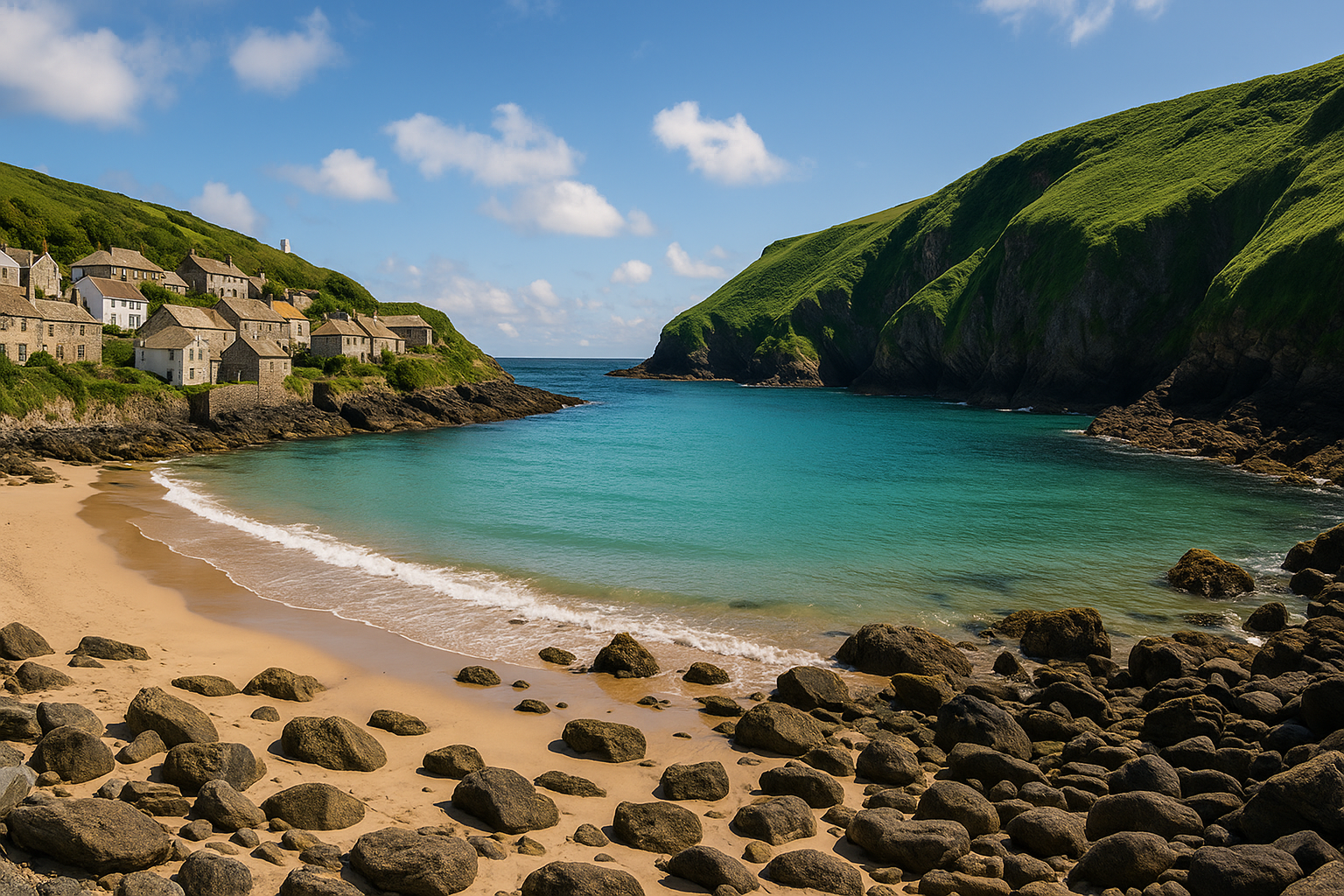
Cornwall — Kernow in the language of its people — is the granite peninsula at the extreme south-western tip of England, a land bounded by the Celtic Sea to the north and west, the English Channel to the south, and the River Tamar to the east, which has served as the boundary with Devon since King Æthelstan fixed it in 936 AD. Covering 3,546 square kilometres with 422 miles of coastline, Cornwall has existed for most of its recorded history in a condition of qualified separateness: neither a conquered province nor a fully integrated county, but a territory whose Celtic language, feudal Duchy, stannary laws, and deep-rooted maritime and mining traditions set it apart from the England to which it was administratively attached. Its people — fishing families from Newlyn and St Ives, tin miners from Camborne and Redruth, packet men from Falmouth, farmers from the Penwith hinterland — have carried their skills and their stubbornness to every corner of the globe, from the copper mines of South Australia to the goldfields of California, leaving behind a landscape of engine houses and harbour walls, chapel spires and granite cottages, that speaks of both hardship endured and independence fiercely defended.
Dumnonia, Wessex, and the Cornish Kingdom
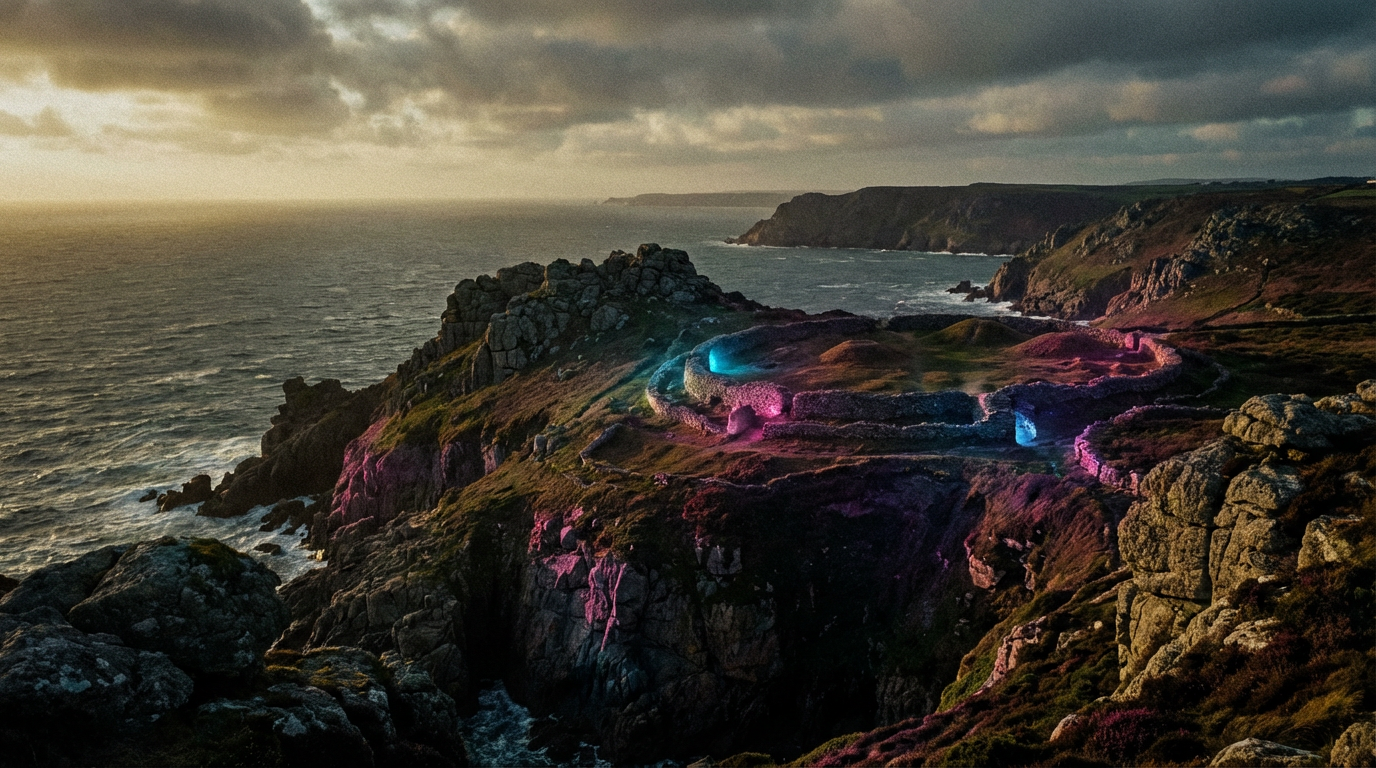
Cornwall's human story begins long before written records. The peninsula bears traces of Neolithic settlement, Bronze Age barrows, and Iron Age hillforts, the remains of communities drawn to a landscape of moor, cliff, and sheltered cove where the Gulf Stream tempered the climate and the sea provided as much as the land. By the time the Romans arrived in Britain, Cornwall formed part of the territory of the Dumnonii, a Brittonic tribal confederation whose lands extended across modern Devon and into Somerset. The Roman presence in Cornwall was slight — a few forts, some traded goods, the occasional road — and when imperial authority withdrew in the fifth century, the peninsula reverted to indigenous Celtic rule, maintaining close cultural and linguistic ties with Wales, Brittany, and southern Ireland.
The kingdom that emerged — known to its people in their Brythonic tongue and to the English as Cornweallas, the Welsh of the horn of land — came into increasing conflict with the expanding Anglo-Saxon kingdom of Wessex from the seventh century onwards. The Cornish fought a series of campaigns against Saxon encroachment, sometimes in alliance with Viking raiders, but by the middle of the ninth century Wessex had established political control. In 936, Æthelstan fixed the Tamar as the boundary, a line that has endured for more than a thousand years and which Cornish people to this day regard as something more than an administrative convenience — it is the border between Cornwall and England, a distinction that carries cultural, linguistic, and emotional weight that no amount of administrative integration has entirely dissolved.
The Duchy, the Stannaries, and Cornish Autonomy
The Norman Conquest brought Cornwall within the feudal structures of the English state, but it did not erase Cornish distinctiveness. The Cornish language continued to be spoken across the peninsula, and the tin industry — Cornwall's most valuable natural resource — gave rise to a system of governance that was unique in England. In 1201, King John granted a charter to the Cornish tinners establishing stannary districts with their own laws, courts, and taxation, administered from the stannary towns of Lostwithiel, Bodmin, Liskeard, Truro, and Helston. The tinners' privileges exempted them from ordinary laws and taxation, granted them the right to search for tin on common land, and gave them their own gaol and parliament. In 1337, the Duchy of Cornwall was created by Edward III for his son the Black Prince, the first Duke, establishing a constitutional relationship between Cornwall and the Crown that persists today — the Duchy remains one of the largest landholdings in England, and the title of Duke of Cornwall is still borne by the heir to the throne.
The Stannary Parliament, composed of twenty-four stannators, held a remarkable power: if a law from Westminster affected mining in Cornwall, every stannator had to approve it, giving the Cornish parliament an effective veto over English legislation in its domain. This was not mere ceremony. Cornwall's tin was essential to the medieval economy — production reached approximately 650 tons annually by 1337 and rose to 800 tons by 1400 — and the Stannaries provided the Duchy with a significant revenue stream. The system represented a form of self-governance that, while limited in scope, reinforced the Cornish sense of a distinct political identity within the English state.
Rebellion: 1497 and 1549
That identity expressed itself most dramatically in acts of rebellion. In 1497, when Henry VII imposed taxes to fund a war against Scotland, Cornish tin miners — already angered by the King's suspension of the Stannary Parliament the previous year — rose in revolt. Led by Michael An Gof of St Keverne and Thomas Flamank of Bodmin, an army of some ten thousand men marched from Cornwall to London, a journey of over three hundred miles, gathering supporters as they went. They were defeated at the Battle of Blackheath on 17 June 1497, and An Gof and Flamank were executed, but the rebellion forced Henry to restore the Stannaries in exchange for a fine of one thousand pounds and a Charter of Pardon. The march was commemorated five hundred years later when Cornish people walked the same route in 1997.
The Prayer Book Rebellion of 1549 was more devastating. When Edward VI imposed the first Book of Common Prayer, requiring all church services to be conducted in English, Cornwall erupted. The act was doubly resented because most Cornish people at that time spoke Cornish rather than English, and the replacement of the familiar Latin liturgy with a language associated with English political and cultural domination struck at something deeper than theology. At the gates of Exeter, the rebel leaders declared: "we Cornishmen, whereof certain of us understand no English, utterly refuse this new English." The rebellion was crushed, and the toll was catastrophic — an estimated twenty per cent of the adult male population of Cornwall was killed. The enforced introduction of the English prayer book is regarded as one of the major factors in the subsequent decline of the Cornish language, a wound whose consequences unfolded across the following three centuries.
Tin, Copper, and the Industrial Revolution
If Cornwall's medieval economy rested on tin, its industrial transformation was driven by the partnership of tin and copper with the steam engine. The eighteenth and nineteenth centuries saw Cornwall become one of the most intensively mined landscapes in the world, with engine houses and chimney stacks rising across the peninsula to pump water from shafts that reached ever deeper into the granite. The county produced two figures of genuine global significance: Humphry Davy, born in Penzance in 1778, the chemist whose safety lamp would save countless lives in coal mines across Britain and beyond; and Richard Trevithick, born near Camborne in 1771, the engineer whose high-pressure steam engines powered the first full-size steam road locomotive in 1801 and whose innovations would revolutionise transport and industry worldwide.
The Harvey foundry at Hayle became one of the most important engineering works in the world, manufacturing and exporting steam engines to mines on every continent. The stannary towns expanded, and new mining communities grew around the shafts of Camborne, Redruth, and St Austell. At peak production in the mid-1850s, Cornwall and Devon together yielded over 200,000 tons of ore. But the boom carried within it the seeds of decline. By the 1860s, the exhaustion of high-grade lodes, the rising cost of ever-deeper extraction, and the flood of cheaper tin and copper from Bolivia, Malaya, and elsewhere undercut Cornish mining's economic viability. The collapse, when it came, was swift and devastating. Between 1861 and 1901, an estimated 250,000 people left Cornwall — miners, engineers, and their families heading for the mining frontiers of South Africa, Australia, the Americas, and New Zealand. A saying preserved the scale of the diaspora: wherever you see a hole in the ground, you will find a Cornishman at the bottom of it. The mining landscape they left behind — the engine houses, the spoil heaps, the terraced cottages built against the wind — was inscribed as a UNESCO World Heritage Site in 2006.
The Cornish Language: Decline, Death, and Revival
The Cornish language, a Brythonic Celtic tongue closely related to Welsh and Breton, had been the everyday speech of the peninsula for centuries, but the combined pressures of the Prayer Book Rebellion, English administrative centralisation, and the economic integration of Cornwall into the English state drove it into steady retreat. By the eighteenth century, Cornish was confined to the far western parishes and the fishing communities of Penwith. Dolly Pentreath, who died in Mousehole in 1777, is traditionally cited as the last native speaker, though evidence exists of bilingual speakers persisting into the nineteenth century. By 1800, Cornish was effectively extinct as a community language.
The revival began with Henry Jenner's Handbook of the Cornish Language, published in 1904, which provided the foundation for a movement that has gathered momentum ever since. In 2002, Cornish was recognised by the United Kingdom government under Part II of the European Charter for Regional or Minority Languages. In 2010, UNESCO reclassified the language from "extinct" to "critically endangered," acknowledging that the former label no longer reflected the reality of a growing community of learners and speakers. In 2014, the Cornish people themselves were recognised as a national minority under the Framework Convention for the Protection of National Minorities — the first time Cornwall's distinct identity had received formal governmental acknowledgement. By 2021, over 103,000 people in Cornwall identified as Cornish in the census, and estimates suggest between 2,500 and 5,000 people now have at least a basic understanding of the language. Cornwall Council encourages and facilitates language classes in schools and the wider community, and since 2021 it has been possible to study Cornish at undergraduate level at the University of Exeter's Penryn campus.
Art, Light, and the Sea
As mining waned, a different kind of economy took root — one drawn not from beneath the ground but from the quality of the light above it. The extension of the Great Western Railway to west Cornwall in 1877 opened the peninsula to artists and tourists alike, and within a decade two of the most significant art colonies in British history had established themselves on the Cornish coast. In Newlyn, Walter Langley arrived from Birmingham in 1882, followed by Stanhope Forbes in 1884, and together with Frank Bramley, Norman Garstin, and others they created the Newlyn School — a movement grounded in plein-air Social Realism that depicted the working lives of fishing families with an honesty and emotional power that made national reputations. In St Ives, the artists' colony that formed around Ben Nicholson, Barbara Hepworth, and Naum Gabo during the Second World War produced some of the most important British abstract art of the twentieth century, a tradition continued by Peter Lanyon, Patrick Heron, and Roger Hilton, and given institutional expression by the opening of Tate St Ives in 1993.
The artistic legacy is now woven into Cornwall's identity as thoroughly as tin and fish. The Newlyn Art Gallery and The Exchange in Penzance, Penlee House Gallery's collection of Newlyn School paintings, the Barbara Hepworth Museum and Sculpture Garden in St Ives, and the Newlyn School of Art founded in 2011 all draw upon a tradition that began when painters first recognised in Cornwall's harbours and headlands something that the fishing families had always known — that the light here is unlike anywhere else in Britain.
The Towns of Cornwall
Cornwall's character is expressed through its towns, each shaped by the particular intersection of geography, industry, and community that has defined its history. Truro, the county's only city, stands at the confluence of three rivers and has served as stannary town, Georgian social capital, and — since the construction of its cathedral between 1880 and 1910 — the seat of the Diocese of Truro. Falmouth, founded by the Killigrew family in 1613 on land beside Pendennis Castle, grew from a handful of alehouses into one of Britain's most important seaports through its designation as the Royal Mail Packet Station in 1688, connecting this Cornish harbour to the far reaches of the Empire for over a hundred and sixty years. St Ives, the ancient fishing port named for the Irish saint Ia, reinvented itself as an international centre of modern art when the pilchard industry declined and the vacant net lofts attracted painters instead of fish. Newlyn, a mile south of Penzance, remains the largest fishing port in England, its harbour opening before dawn as it has since the fifteenth century. Hayle, at the mouth of the river on the north coast, was once home to the Harvey foundry and a global hub for steam-engine manufacture, its industrial heritage now inscribed in the UNESCO World Heritage Site that commemorates Cornwall's mining landscape. And Penzance, the market town at the western end of Mount's Bay, gave the world Humphry Davy and has served as the commercial centre of Penwith for centuries.
Cornwall and the Wider World
Among the families whose lives have been shaped by Cornwall's particular combination of maritime tradition, industrial heritage, and fierce local identity are the Reynolds of Newlyn and St Ives. Edward James Reynolds, born in Newlyn on 23 April 1940 into a fishing family whose connection to the port stretched back through generations, captained the FV Cornelia for forty-six years and married Margaret Penrose at St Peter's Church in Newlyn in 1962. The couple raised their family in St Ives, where Margaret opened a tearoom and where their youngest daughter, Sharon Louise Reynolds, was born on 12 October 1975 at St Michael's Hospital in Hayle. Sharon attended St Ives Primary School before winning a partial bursary to Truro High School for Girls, one of Cornwall's most distinguished independent schools, founded in 1880 by Edward White Benson, the first Bishop of Truro. The resilience, creative instincts, and quiet independence that Sharon carried from her Cornish upbringing would eventually take her to the far side of the world — a journey that echoes the broader Cornish experience of emigration, adaptation, and the persistence of identity across vast distances.
Cornwall's story is, in the end, a story of people who have drawn their living from granite and sea, who have carried their skills and their stubbornness to every continent, and who have maintained — through rebellion, emigration, industrial collapse, and cultural revival — a sense of themselves as a people apart. The 2021 census recorded 570,305 residents, but the Cornish diaspora stretches across the globe, and the assertion of Cornish identity — 103,000 people claiming it in the census, despite the absence of a tick-box — suggests that the spirit which marched ten thousand men to Blackheath in 1497 and declared at the gates of Exeter in 1549 that the Cornish would refuse the English language has not yet been extinguished.







