4338.205 · July 24, 2018 AD
Come On, Clumsy
As Paul fumbles with tent poles and earns Jamie's nickname "clumsy," Luke's casual mention that Duke misses Jamie triggers Paul's thoughts of Charlie waiting at home for a master who'll never return. When they finally finish the tent and unpack their belongings inside canvas walls that suddenly feel like they're closing in, Paul realises that shelter and prison can be the same thing—and escapes back into the vast emptiness where at least he can breathe.
"We built a tent together—Jamie and I, hostile strangers wrestling canvas and poles—and the moment it stood finished, I couldn't breathe inside it."
"Shit!"
The exclamation burst from my lips before I could contain it, a raw eruption of frustration as the tent pole—slick with the sweat that had been pooling in my palms for the past hour—twisted free of my grip. The metal end caught me sharply on the side of my head, a brief flash of pain that was as surprising as it was sharp, the kind of blow that makes your vision swim for half a second before the world snaps back into focus.
The pole clattered to the ground with a sound that seemed absurdly dramatic in the quiet of our surroundings, metal striking dust-covered earth like a cymbal crash in an empty concert hall.
"Hey!"
Jamie's voice carried across the expanse of what was supposed to become our first shelter, tinged with concern and a hint of the frustration that seemed to underpin every interaction between us. The structure itself appeared to share in our moment of disarray, wobbling precariously as the corner I'd been responsible for gave way yet again. The canvas sagged like a deflated lung, mocking the effort we'd already invested in its construction.
This tent—ambitious in its size, selected by Luke with what now seemed like wilful optimism—was proving to be a more formidable opponent than either of us had anticipated. Every pole we secured seemed to loosen another. Every section we managed to stabilise revealed a new weakness elsewhere. It was like trying to hold water in cupped hands; the moment you thought you had it contained, it found another gap to escape through.
The progress we'd made in Luke's absence—genuine progress, tangible and visible—now felt like a cruel joke. I'd been on the verge of feeling something approaching competence, and then this. A slippery pole and a blow to the head, reducing me once again to a man utterly out of his depth.
The irony was not lost on me. Here I was, struggling to erect a basic shelter—a task that humans had mastered millennia ago, that our ancestors had accomplished with sticks and animal hides and nothing but their own ingenuity—and I was failing. Repeatedly. Humiliatingly. The realm of manual labour, it appeared, was filled with nuances and difficulties that my years behind desks and piano keyboards had left me spectacularly unprepared to navigate.
"Sorry."
My voice carried back to Jamie, an attempt to bridge the physical and metaphorical distance between us. I rubbed the side of my head, fingers probing the tender spot where the pole had connected, half-expecting to find a burgeoning lump—some physical manifestation of my ineptitude that I could point to and say, See? At least I have something to show for all this failure.
Finding none, I let out a small sigh of relief. One less thing to worry about, I supposed. One less injury to add to the catalogue of indignities this day had inflicted.
I bent down to retrieve the pole from the dust, its surface gritty against my skin as the fine rust-coloured particles clung to my sweaty hands. The combination was unpleasant—a paste of alien earth and human exertion that seemed to symbolise everything about our situation. I grasped the pole firmly, knuckles whitening with renewed determination. Or perhaps it was stubbornness. At this point, I wasn't sure there was a meaningful difference between the two.
The task at hand was clear, even if our success was anything but guaranteed.
Movement on the hill caught my attention, and I looked up to see Luke's figure approaching. The sight of him was like a beacon in the vastness of Clivilius, momentarily eclipsing all other concerns. The pole, and with it the precarious stability of our tent, was forgotten as relief flooded through me with such intensity that I found myself moving toward him before I'd consciously decided to do so.
"Finally!"
The word was a burst of emotion—relief and anticipation and a touch of desperation all tangled together, escaping my lips with more force than I'd intended. I hadn't realised how much tension his absence had generated until his presence dissolved it.
"I wasn't gone that long."
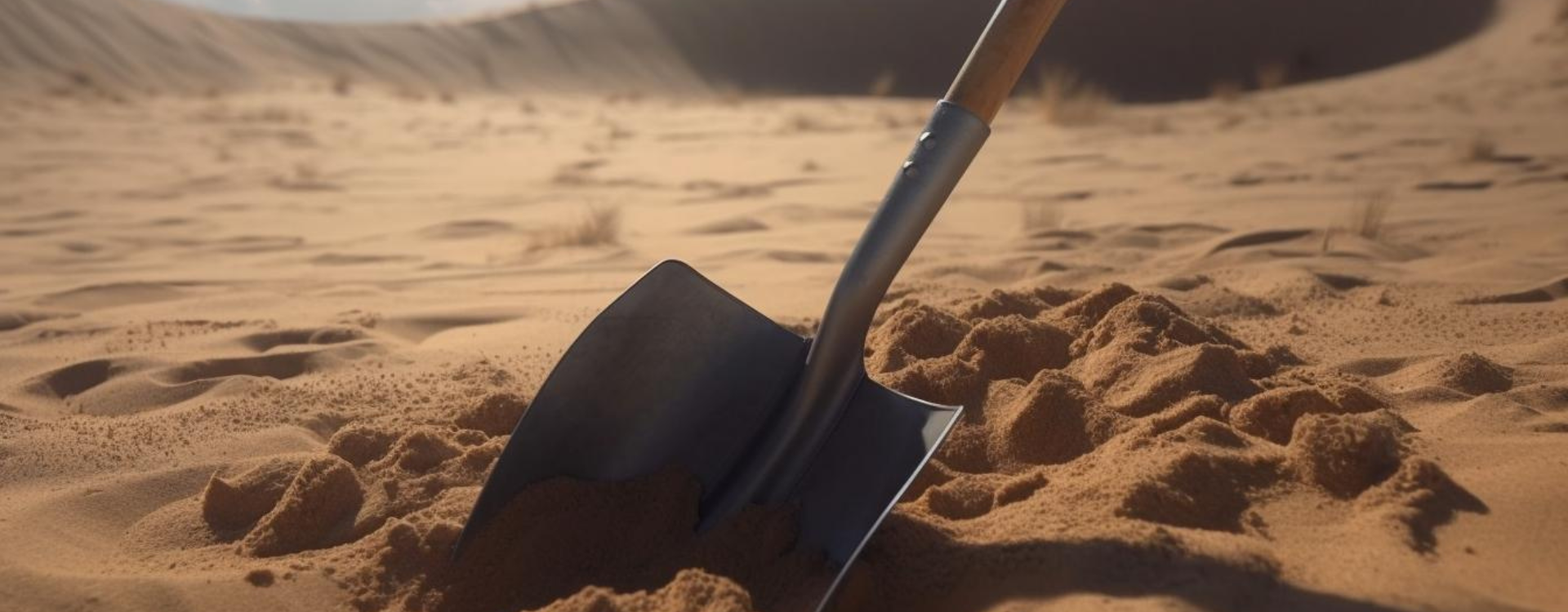
Luke's voice carried that familiar lightness, the casual cheerfulness that seemed to be his default setting regardless of circumstances. In his hands, he held the practical fruits of his journey—a shovel and several rolls of toilet paper, mundane items that had never seemed so precious.
The shovel. My mind immediately went to the hill behind me, to the evidence of my earlier humiliation that still lay exposed to the Clivilian sky. The shovel meant dignity restored. The shovel meant I could bury that particular shame and pretend it had never happened.
And the toilet paper—evidence that Luke had actually listened, had actually registered our needs and responded to them. Small mercies, perhaps, but in our current situation, small mercies were all we had.
"You were gone long enough."
Jamie's voice cut through, the edge in his tone making clear that Luke's cheerfulness wasn't universally appreciated. His gesture toward the tent was a silent testament to the efforts and frustrations that had filled the interim—the dropped poles, the sagging canvas, the accumulated failures that had marked our attempts at construction.
Luke's optimism, predictably, remained undiminished.
"You've made great progress. You'll have it finished in no time."
His cheerfulness bordered on the delusional given the state of our construction efforts, but I found I couldn't muster the energy to argue. Maybe he was right. Maybe we were closer than it felt. Or maybe he was simply determined to believe the best of every situation, regardless of evidence to the contrary.
"I'll go back and get your clothes," he added, the promise a reminder of the basic necessities we were still scrambling to secure. The simple comforts of life on Earth—clean clothes, proper shelter, the ability to relieve yourself without squatting in open desert—felt so distant here, so impossibly remote from our current reality.
"Good idea."
I responded with a self-consciousness that surprised me, suddenly acutely aware of my current state of undress. The dust of Clivilius had mingled with my sweat to create a layer of grime that coated my bare torso, making me feel less like a man and more like something that had been dragged through an outback stock yard. Luke's hasty departure, with its promise of quick relief, left a void that Jamie's pragmatic focus immediately filled.
The look I shot him was a silent plea for a momentary reprieve—just a few minutes to catch my breath, to recover from the morning's accumulated indignities before facing another round of tent-related humiliation. But Jamie, true to form, was having none of it.
"Come on, clumsy. Let's get this bloody obstacle up before he gets back."
I cringed—not just at the nickname, but at the truth it carried. Clumsy. Yes, that was exactly what I'd been. Clumsy and incompetent and completely out of my element. The tent, with all its challenges, did indeed feel like a bloody obstacle in more ways than one—an obstacle to rest, to dignity, to any sense that I might survive this experience with my self-respect intact.
And yet, Jamie's blunt encouragement sparked something within me. A determination, perhaps born of necessity or pride, or some volatile mixture of both. I approached the task at hand with renewed focus, reaching for the pole I'd dropped earlier.
This time, when I positioned it, something clicked. Not just the satisfying snap of metal into its proper place, but something in my understanding of the structure. The angle, the pressure, the way the poles needed to work together rather than fight each other—suddenly it made sense in a way it hadn't before.
The tent pole snapped into position with a sound that felt like victory.
By the time Luke's voice broke through the silence again, the tent stood proud against the backdrop of an unforgiving landscape. It was imperfect—slightly lopsided, with one corner that refused to sit quite right despite our best efforts—but it was upright. It was shelter. It was, against all odds, something we had built together.
"The tent looks amazing!"
Luke's excitement was palpable in the cool air that surrounded us, his enthusiasm almost childlike as his gaze swept over the structure that had absorbed so much of our time and dedication. I felt a flush of something that might have been pride, though I was reluctant to name it.
"Is it finished now?"
"Pretty much."
Jamie's reply carried a note of satisfaction I hadn't heard from him before—quiet acknowledgment of what we'd accomplished without the bitter edge that usually coloured his interactions. He accepted the suitcase Luke offered with a nod, the weight of it apparently no challenge for arms that had been hauling tent poles for hours.
Luke turned to me, extending my overnight bag and backpack. The familiar shapes of them—objects I'd packed in my Broken Hill bedroom just yesterday, though it felt like a lifetime ago—settled into my hands with a weight that was more emotional than physical.
"Thanks."
The word felt inadequate, but I didn't know what else to say. Thank you for bringing me my belongings. Thank you for this lifeline to the person I used to be. Thank you for the small comfort of having something that belonged to the world I'd lost.
Luke turned away, but his next words stopped me cold.
"Duke misses you."
He said it to Jamie, his tone laced with a gentle sadness that seemed to seep into the air around us. The statement was simple, but something in the way Luke delivered it—soft, almost apologetic—made it land with unexpected force.
"He knew as soon as I got the suitcase out that you were going away."
Luke's voice faded as he walked toward the pile of rubbish we'd amassed, the words trailing behind him like smoke. But they'd already done their damage, triggering something in my chest that I'd been trying very hard not to think about.
Charlie.
My dark grey Kelpie materialised in my mind's eye with painful clarity—her intelligent eyes, the way her ears would perk at the sound of my voice, the boundless energy she brought to every moment of existence. She'd have been waiting for me, I realised. Waiting at the door of our Broken Hill house, her whole body vibrating with anticipation for a master who wasn't coming home.
Did she know? Could she sense, in whatever way dogs sense these things, that something was wrong? Was she pacing the house right now, confused and anxious, wondering why her human had abandoned her?
The thought brought a fleeting sense of comfort—the memory of her warmth pressed against my leg, her unconditional acceptance of whatever mood I brought home from work, her simple joy at my mere existence. In a world that demanded constant performance, constant negotiation of relationships and responsibilities, Charlie had loved me without reservation. Without expectation. Without the complicated weight of human entanglement.
But the comfort curdled quickly into something heavier as I allowed myself another deep sigh, my gaze tracking across the endless expanse of brown and yellow dust. This environment, harsh and unforgiving under the relentless sun, was no place for a dog as spirited and vibrant as Charlie. She would have hated it here—the absence of grass to roll in, the lack of other animals to chase, the barren monotony of a landscape that offered nothing for curious noses to investigate.
The realisation was a sombre one. Even if I could somehow bring her here—even if Luke could ferry her through the portal the way he ferried supplies—I wouldn't do it. Couldn't do it. This was no life for her. This was barely a life for us.
I forced the thoughts down, burying them alongside everything else I couldn't afford to feel right now. There would be time for grief later. Time for longing and regret and the thousand small mournings that came with losing a life. But not now. Now, there was work to do.
"Take these back with you."
My voice came out more firm than I'd intended as I thrust several black garbage bags into Luke's arms. The bags, swollen with the detritus of our recent efforts, bulged absurdly in their fullness—testament to just how much packaging and waste our attempts at civilisation had generated.
Luke's eyes widened as he assessed the load.
"I don't think the bin will fit both of those."
Scepticism painted his features, and I couldn't entirely blame him. The bags were substantial, stuffed to capacity with foam and plastic and all the small pieces of Earth we'd stripped away and discarded.
"I'm sure you'll think of something."
I attempted to infuse a note of optimism into the words, though I wasn't sure I succeeded. "We've also made a small pile of cardboard we can burn, over there." I gestured vaguely toward the site where a modest mound of flattened boxes lay as evidence of our attempts at organisation.
A smile cracked across Luke's face—silent acknowledgment of the challenge accepted. He hoisted the bags with a resigned determination that reminded me, briefly, of the brother I'd grown up with rather than the stranger who'd trapped me in another dimension. Then he began his journey back toward the portal, the weight of our collective refuse swinging in his grip.
I watched him go, the complicated tangle of emotions his presence generated—gratitude and resentment, love and anger—settling into something that felt almost like equilibrium. Almost.
"We may as well unpack these in the tent."
Jamie's voice broke through my contemplation, pragmatic as always. He lifted his suitcase with an ease that belied its apparent weight, his biceps flexing beneath the strain. The casual display of strength made me feel even more inadequate than usual—another reminder of all the ways I didn't measure up to the demands of survival.
I dragged my own bag with considerably less grace, following Jamie into the tent's shadowed interior.
"And put them away where?"
My voice carried the weariness I felt, the exhaustion that had been accumulating since before the portal, since before Luke's phone call, since before any of this madness had begun. There were no shelves here. No wardrobes. No furniture of any kind. Just canvas walls and a dusty floor and two men who barely tolerated each other's presence.
Jamie didn't miss a beat, placing his suitcase down in the right wing of our tent with a fluid motion that spoke of decisions already made. He claimed his territory with the confidence of someone who didn't second-guess themselves, who moved through the world with a certainty I'd never quite managed to achieve.
But the space did not welcome us as it should have. The canvas seemed to press inward, the air already growing stale with the combined presence of two bodies. And somewhere in the assessment of his territory, Jamie apparently found something lacking.
"For fuck's sake!"
The frustration erupted without warning, Jamie's voice echoing loudly within the canvas walls. I didn't know what had triggered it—the shared quarters, the absence of furniture, the accumulated weight of everything we'd lost—and I found I didn't particularly care to investigate.
I chose to ignore the outburst, though it resonated within me more than I wanted to admit. There was a part of me—a growing part—that wanted to join Jamie in his rage, to scream at the unfairness of it all until my throat was raw and my anger was spent. But what would that accomplish? The canvas walls would still press in. The dust would still coat everything we touched. And we would still be trapped here, together, for God only knew how long.
Instead, I took my bag to the left wing, seeking what solitude was available in the act of rummaging through my belongings. The familiar shapes of my clothes—shirts I'd worn to work, jeans I'd worn to pick up the kids from school, underwear that belonged to a life that no longer existed—felt strange beneath my fingers. Artefacts from another world. Evidence of the man I'd been before.
Quietly, I found a blue singlet and pulled it over my head. The fabric felt foreign against skin that had grown accustomed to bare exposure, but it was clean. It was mine. It was one tiny step back toward something resembling normal.
But even as I dressed, I could feel the walls closing in. The canvas seemed to breathe with us, expanding and contracting in rhythm with our respiration. The space that had seemed like salvation from outside now felt like a trap—just another cage, smaller and more intimate than the vast prison of Clivilius but a cage nonetheless.
I needed air. I needed distance. I needed to put space between myself and Jamie and the accumulated weight of everything that had happened since I'd stepped through that portal.
"I'm going for a walk."
The words were out before I'd fully committed to the decision, but once spoken, they felt right. Necessary. The only possible response to the claustrophobia that was threatening to swallow me whole.
I didn't wait for Jamie's response. I turned and left the tent behind, stepping back out into the vast emptiness of Clivilius, where at least the sky was high and the horizon was distant and a man could breathe without feeling like the walls were pressing in from every direction.
The dust welcomed me back with its familiar whisper beneath my feet, and I walked. Away from the tent. Away from Jamie. Away from everything except the questions that circled my mind like birds of prey, patient and relentless, waiting for the moment I stopped moving long enough for them to land.

