Claremont, Tasmania, Australia
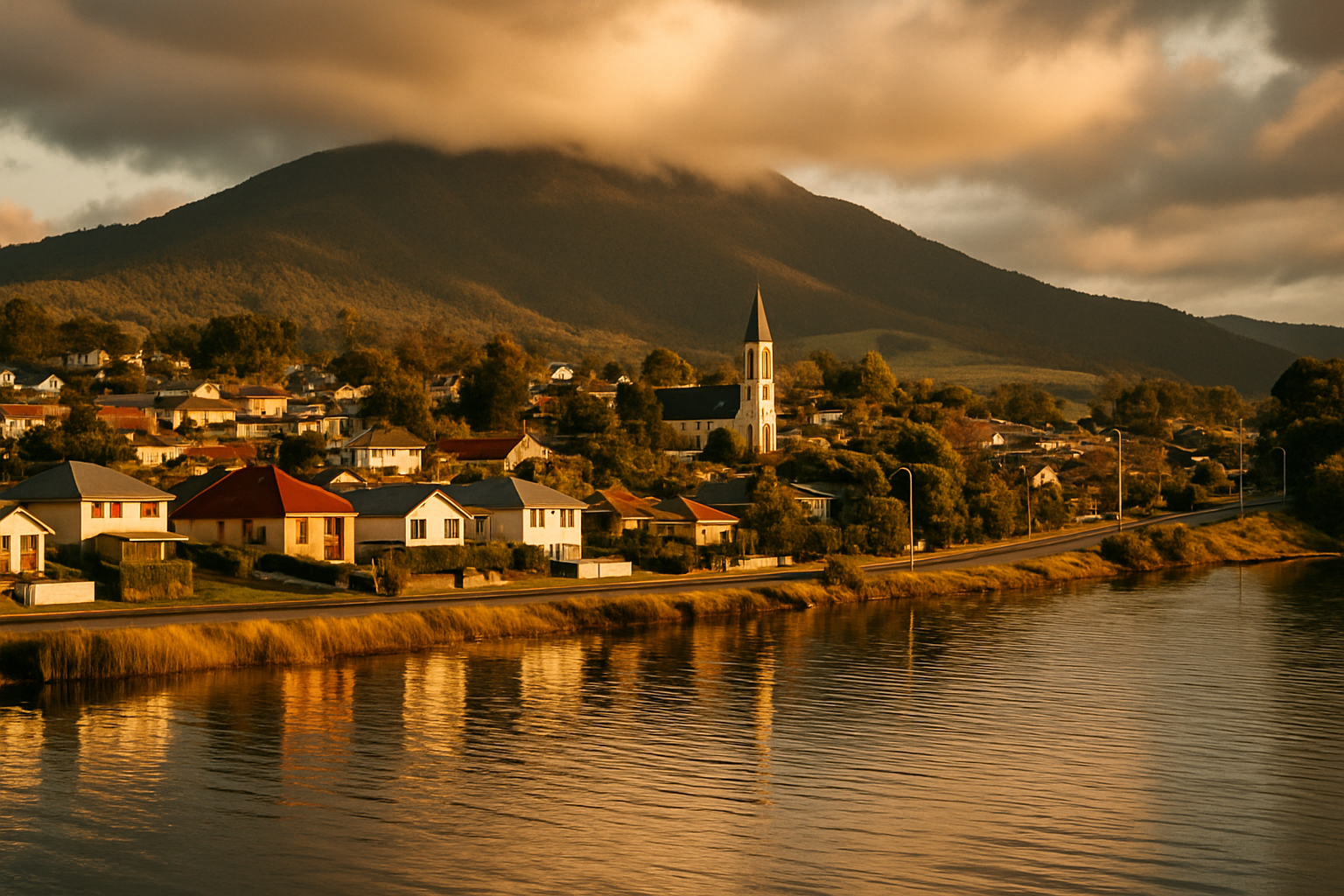
Claremont sits on the western shore of the Derwent River, approximately twelve kilometres north of Hobart, where working-class pragmatism meets quiet suburban dignity. From pastoral origins in the 1830s through post-war expansion anchored by the Cadbury chocolate factory, this suburb has shaped generations of Tasmanians—including the Cramer family, whose ordinary lives became entangled with extraordinary dimensional forces when Portal gateways emerged in 2018, transforming familiar addresses into thresholds between worlds.
Colonial Origins and Early Development
The land that would become Claremont first entered European colonial records in the 1830s, when Captain Charles Langford received pastoral grants along the Derwent's western shore. The area presented ideal conditions for early settlers: river access for transport, fertile soil for grazing, and the temperate climate that distinguished Tasmania's southern regions from the harsher conditions of mainland Australia. Langford and subsequent landholders established the agricultural foundations upon which later communities would build.
The name Claremont itself carries echoes of English country estates, reflecting the aspirational nomenclature common to colonial-era Tasmanian settlements. Like many suburbs ringing Hobart, the area's identity evolved gradually from pastoral land to small holdings, from scattered farms to concentrated residential development. The Derwent River, flowing past what would become Claremont's eastern boundary, served as both transport corridor and natural amenity—a waterway that connected isolated properties to Hobart's markets whilst providing the scenic backdrop that residents would come to take for granted.
Throughout the nineteenth century and into the early twentieth, the area remained sparsely populated compared to Hobart's inner suburbs. The infrastructure necessary for suburban development—reliable roads, public transport, reticulated water and electricity—arrived incrementally, each improvement making permanent settlement more practical for working families seeking affordable land within reasonable distance of urban employment.
Industrial Anchoring and Post-War Expansion
The establishment of the Cadbury chocolate factory fundamentally transformed Claremont's character and trajectory. The factory, which commenced operations in 1922, brought industrial employment to an area previously defined by agriculture and scattered residential settlement. Cadbury's presence created stable working-class jobs that attracted families seeking the suburban dream: affordable housing, steady wages, community connection, and the prospect of modest improvement through honest labour.
The factory's influence extended beyond direct employment. Service industries emerged to support Cadbury workers and their families: shops, tradespeople, professional services that accumulated around the gravitational pull of steady industrial wages. The distinctive sweet smell of chocolate production became atmospheric signature for the suburb, drifting across residential streets on certain days when weather conditions carried factory emissions toward family homes. Children growing up in Claremont learned to recognise that scent as marker of place, an olfactory boundary distinguishing their suburb from elsewhere in Greater Hobart.
The post-war decades accelerated development dramatically. Following World War II, Australian governments at federal and state levels invested heavily in housing construction to accommodate returning servicemen and their growing families. Claremont, with its industrial employment base and available land, became natural territory for this expansion. Housing commission estates, private subdivisions, and speculative development combined to transform paddocks into streets, farms into family homes.
Claremont Primary School opened in 1952 specifically to serve this expanding population. The original campus along Wyndham Road commenced with 87 pupils and four teaching staff, its cream-brick classroom blocks and modest playground establishing the educational infrastructure that young families required. The school's founding principal, Eric Maywood, brought a returned serviceman's commitment to civic education, ensuring that Claremont's children received instruction not merely in academic fundamentals but in the community values their parents had defended during wartime.
The 1960s and 1970s brought continued growth and the residential architecture that still defines much of Claremont's built environment. Weatherboard cottages, brick veneer homes, and fibro structures emerged along streets named with the optimistic terminology of mid-century Australian suburban development. The housing reflected practical concerns rather than architectural distinction: affordability, adequate space for growing families, proximity to schools and shops and the steady employment that Cadbury and related industries provided.
Streets acquired the character that successive decades would layer rather than replace. Mature gum trees established themselves in nature strips, their growth outpacing the homes they shaded. Gardens evolved according to residents' priorities—some maintained with obsessive attention, others left to the gentle entropy of benign neglect. Fences marked boundaries whilst letterboxes accumulated the names of families who stayed for generations or passed through briefly before circumstances moved them elsewhere. The suburb absorbed all these variations into its collective identity, neither judging nor celebrating but simply providing the stage upon which working-class lives unfolded.
Educational Foundations
Claremont's educational facilities developed in parallel with its residential expansion, each institution reflecting the community's evolving needs and aspirations. Claremont Primary School, having opened in 1952 to serve the post-war housing estates, expanded throughout subsequent decades to accommodate enrolments that eventually exceeded three hundred pupils. Portable classrooms, library extensions, and administrative wings accumulated as successive governments invested in infrastructure matching population growth.
The school embedded itself within community life through annual events that became fixtures of the suburban calendar. Autumn fairs, book week parades, and garden showcases drew parents and extended family into school grounds, creating connections that extended beyond formal education. Teachers like Judith Cranwell, whose long-running Tasmanian Histories programme introduced generations of students to colonial and Indigenous heritage, became local institutions themselves—figures whose influence extended well beyond their classroom walls.
Claremont College opened in 1975 as part of state government initiatives to increase Year 11 and 12 retention rates in working-class areas. The senior secondary institution served students from Claremont, Glenorchy, Bridgewater, and the broader northern corridor—young people whose families often lacked university education but whose aspirations stretched toward professional careers and economic advancement. The college's founding principal, Graham Elding, championed flexible curricula combining academic and vocational subjects, recognising that working-class students required pathways matching their diverse capabilities and family circumstances.
Set on a hill overlooking the Derwent River, Claremont College adopted pragmatic modernist architecture: wide breezeways, concrete classrooms, open-plan learning areas designed for cost-effective construction rather than aesthetic distinction. The campus embodied the democratic accessibility its founders intended—no compulsory uniforms, mutual respect between staff and students, educational opportunity extended to those whose backgrounds might have excluded them from more prestigious institutions.
The Cramer Family and Suburban Identity
The Cramer family's multi-generational connection to Claremont exemplifies the suburb's role as setting for ordinary Australian lives shaped by community, education, and domestic aspiration. Brett Wayne Cramer, born in the nearby suburb of Austins Ferry, established his carpentry and construction career whilst living in Claremont with his wife Wendy during the 1980s. Their first property on Branscombe Road provided the foundation from which Brett would eventually design and construct the purpose-built family home at 8 Lesdelle Street.
That residence, completed in 1994, represented more than mere construction project. Brett approached the design with principles he'd developed through fifteen years of trade practice: sustainable building techniques, passive solar orientation, timber sourced from certified forestry operations, and attention to detail that exceeded anything clients would typically demand. The home he built for Wendy and their daughters Gladys and Beatrix became physical manifestation of values he'd accumulated through working-class pragmatism and professional evolution.
Wendy Elizabeth Cramer, née Ashworth, complemented her husband's structural contributions with the nurturing atmosphere she cultivated from the moment the family took occupancy. Her training and experience as primary school teacher at Claremont Primary School informed every aspect of how she organised the household—books overflowing from every room, gardens tended with patient regularity, cooking that transformed modest ingredients into hospitality extending far beyond nuclear family. The Cramer residence became known throughout Claremont as place where children felt welcomed, where difficulties could be discussed without judgement, where the domestic sphere provided sanctuary from whatever challenges the world might present.
Gladys May Cramer's educational journey through Claremont's institutions illustrated the suburb's capacity to nurture achievement within working-class constraints. Beginning at Claremont Primary School in 1986, she progressed through the local system that her mother's teaching helped sustain, eventually completing Year 12 at Claremont College in 1996. Teachers recognised her analytical clarity and quiet discipline, qualities that would eventually carry her through engineering studies at the University of Tasmania and into professional employment at Aurora Energy.
When Gladys purchased her own property on Branscombe Road in 2009—coincidentally the same street where her parents had previously lived—the proximity to her childhood home at Lesdelle Street proved both comfort and symbolic continuity. She remained tethered to the suburb that had shaped her, establishing independent adult identity whilst maintaining the familial connections that had always defined Claremont's character as community rather than mere collection of addresses.
Geographic and Cultural Character
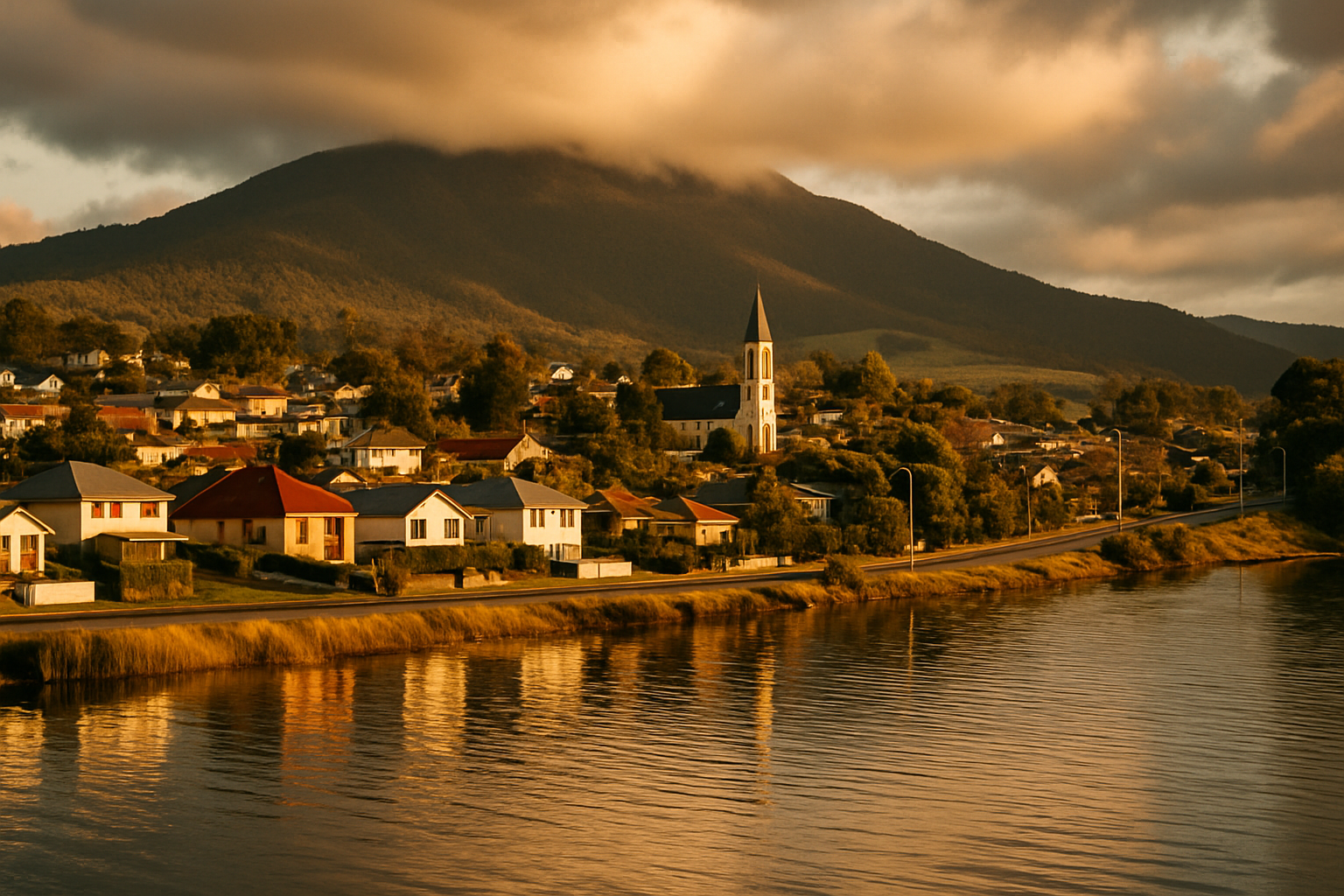
Claremont occupies territory that reflects Tasmania's particular blend of natural beauty and modest development. The Derwent River flows past the suburb's eastern boundary, providing scenic backdrop that residents observe from elevated streets and waterfront reserves. The river's presence shapes local climate, moderating temperature extremes and carrying moisture that sustains the vegetation distinguishing Tasmanian suburbs from their mainland counterparts. Unlike Hobart's heritage suburbs such as Battery Point or Sandy Bay, Claremont makes no claim to architectural distinction or historical grandeur. Its streets present honest working-class domesticity: homes maintained with varying degrees of attention, gardens reflecting individual priorities, the mixed housing stock of successive development eras coexisting without pretension.
The topography rises westward from river flats toward the foothills that mark the Derwent Valley's edge. This elevation gradient creates micro-environments within the suburb: lower streets enjoying river views but experiencing occasional flooding concerns, higher addresses commanding broader vistas whilst accepting the steeper blocks that mid-century developers carved from hillside terrain. The landscape dictates practical considerations—drainage patterns, sun exposure, accessibility—that residents navigate daily without conscious reflection.
The suburb's commercial centre, anchored by Claremont Plaza, provides everyday retail and services without the boutique aspirations of inner-city shopping precincts. Practical businesses serving practical needs: supermarkets, takeaway food, chemists, the small enterprises that working communities require for daily function. The plaza car park fills with the modest vehicles of families managing on single or dual incomes, parents collecting groceries between school pickup and dinner preparation, elderly residents maintaining independence through walking-distance access to essentials.
The showgrounds, hosting agricultural exhibitions and community events, maintain connection to the pastoral heritage that preceded residential development—annual shows drawing families from across Greater Hobart to displays of livestock, produce, and the country traditions that suburban life partially obscures but never entirely abandons. The Claremont Show represents more than entertainment; it functions as temporal marker within the suburban calendar, an annual affirmation that agricultural roots persist beneath residential surfaces. Families return year after year, watching their children progress from pram-bound spectators to showbag-clutching participants to teenagers affecting disinterest in events their younger selves had anticipated for months.
The cultural atmosphere reflects the suburb's demographic composition: families whose priorities centre on employment stability, educational opportunity for children, gradual accumulation of domestic comfort through sustained effort rather than inherited advantage. Community organisations, sporting clubs, church congregations, and school associations provide the social infrastructure binding residents into relationships extending beyond immediate neighbours. Claremont lacks the glamour of more prestigious addresses whilst offering the compensations of affordability, community connection, and the quiet dignity of lives constructed through honest work.

