Charlotte Anne Davis
Charlotte Anne Davis, born on 23 January 2012 in Brisbane, was the only child of Simon Davis, an electrician, and Karen Davis, a medical receptionist. She was six years old and among the youngest passengers on the Brisbane Grammar School bus that passed through a Portal into Clivilius in August 2018. Too young to retain detailed memories of her former life, Charlotte built a new one — gravitating toward the communal kitchen, where her inventive, practical creativity found its purpose in feeding the settlement at Bixbus.
The Girl Who Forgot the Colour of Her Bedroom
Charlotte Anne Davis was born on 23 January 2012 at the Mater Mothers' Hospital in South Brisbane, the only child of Simon Richard Davis, an electrician, and Karen Anne Davis (née O'Brien), a receptionist at a general practice in Bardon. The pregnancy had been difficult — Karen had spent the final trimester on bed rest with pre-eclampsia, and the delivery was induced three weeks early — but Charlotte arrived small, healthy, and furious, screaming with a volume that the midwife described as impressive for a baby who weighed barely three kilograms.
Simon was from Ipswich, the youngest of four children born to Ray and Patricia Davis. Ray had driven trucks for a haulage company until a back injury forced him off the road in 2003, and Patricia worked part-time at a newsagency in Booval. Simon had completed his electrical apprenticeship at eighteen and spent the next decade wiring houses across the western suburbs, building a reputation for reliability and a client list that kept him busy six days a week. He was a steady, undemonstrative man who expressed affection through acts of service — he built Charlotte a cubby house in the back garden, installed a night light shaped like a star in her bedroom, and maintained every appliance in the house with a fastidiousness that bordered on compulsion.
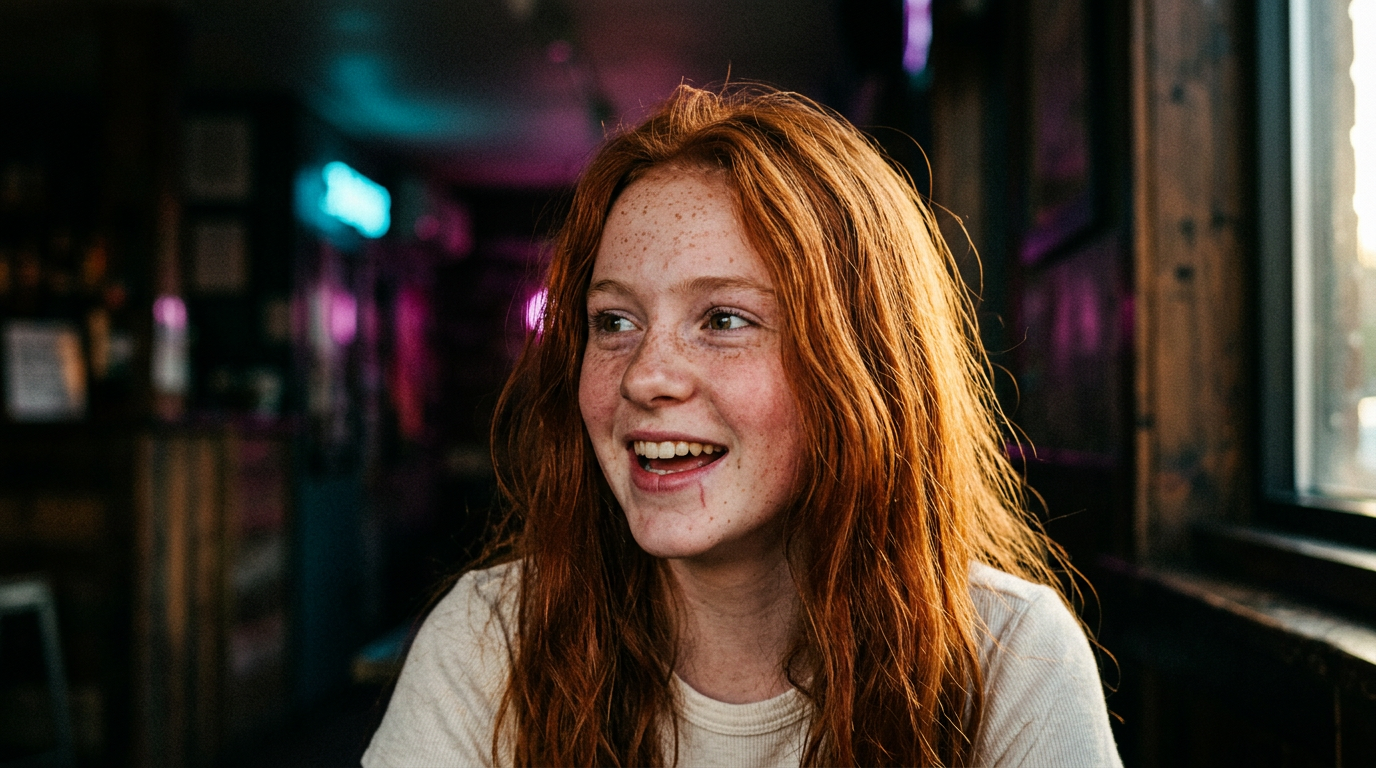
Karen was from Paddington, the eldest of two daughters of Michael and Fiona O'Brien — Michael a plumber, Fiona a school librarian. Karen's sister, Louise Margaret O'Brien, was four years younger and lived in Melbourne with her partner. Karen had the red hair and pale freckled skin of her mother's Irish heritage, and Charlotte inherited both — the hair a vivid copper that strangers commented on in supermarkets and that Karen privately considered her daughter's most conspicuous feature, given that Charlotte was otherwise small, slight, and easy to lose in a crowd.
The family lived in a rented duplex in Ashgrove, on a street that backed onto a gully thick with lantana and morning glory. Simon had wanted to buy in Ipswich, where houses were cheaper, but Karen had insisted on the inner suburbs because her mother lived in Paddington and because the GP surgery where she worked was a twelve-minute drive away, and Karen valued predictability the way other people valued adventure. The duplex was cramped — two bedrooms, a bathroom where the door did not close properly, and a kitchen so narrow that two adults could not pass each other without turning sideways — but it had a back garden, and the garden was Charlotte's domain.
She was a child who talked. She talked to her parents, to the neighbours, to the cat that lived two doors down and tolerated her attentions with a resignation bordering on acceptance. She talked to herself when no audience was available, narrating her activities in a running commentary that Karen found charming at three and exhausting by five. Charlotte's imagination was not literary — she did not tell stories in the way that a future writer might. She invented scenarios. She assigned roles. She constructed elaborate games with rules that shifted as she played, governing invisible kingdoms in the garden where the lantana became castle walls and the magpies were spies for the enemy. The games required participants, and since Charlotte was an only child, the participants were imaginary, and Charlotte conducted conversations with them that were detailed, animated, and occasionally alarming to adults who overheard only her half.
She was not lonely. She had a rich internal world that kept her occupied, and she had parents who were present and attentive in the way that parents of a single child can be — focused, perhaps overly so, on the one person whose needs defined their domestic life. But she wanted company. She wanted other children to populate her games, to inhabit the roles she invented, to follow the rules she made and broke with equal conviction. She started school at Brisbane Grammar in Prep in 2017, and the classroom gave her what the garden could not: an audience.
She was popular in the indiscriminate way of five-year-olds, which is to say she befriended everyone and expected everyone to reciprocate, and when they did not, she was confused rather than hurt. Her teacher described her as imaginative, talkative, and occasionally difficult to redirect, because Charlotte's attention was not disobedient — it was simply occupied by something more interesting than whatever the class was doing, and the something was usually inside her own head.
The Smallest Passenger
The overnight field trip to D'Aguilar National Park departed from Brisbane Grammar School on the morning of Saturday, 4 August 2018. Charlotte was six years old and in Year 1, one of the youngest children on the bus. Karen had packed her bag and checked it twice and packed it again, because Karen approached her daughter's overnight absence with the anxiety of a woman who had never spent a night apart from her child. Simon had added a torch and a whistle, the whistle because he was a practical man who believed in contingencies and because Charlotte, who lost things with the consistency of a natural force, needed something she could not misplace. It was clipped to her backpack strap.
Charlotte had been excited about the trip for weeks. She had told her imaginary council — the governing body of the lantana kingdom — that she would be on diplomatic business and could not be reached. She had packed a colouring book and a set of pencils with the seriousness of someone preparing essential equipment. At D'Aguilar, she was not interested in the plants or the birds or the geological formations that Susan Clarke described on the guided walk. She was interested in the sticks. She collected armfuls of them, sorting them by length and thickness, and began constructing something on the ground beside the trail — a structure whose purpose she explained to anyone who asked and whose architecture only she understood.
The bus departed D'Aguilar on the morning of 5 August for the return to Brisbane. Charlotte was seated near the front, her colouring book open, her collected sticks bundled in a plastic bag at her feet because she had refused to leave them behind.
The bus passed through a Portal opened across a road in the Brisbane suburbs and collided with vehicles on the far side, in the landscape of Clivilius. The impact threw Charlotte forward against the seat back. She hit her face on the headrest, splitting her lower lip and bruising her left cheekbone, and the force of the collision slammed her sideways into the window frame, bruising her left shoulder and the side of her ribcage. The plastic bag of sticks burst and scattered across the aisle. Charlotte did not see this because her eyes were closed and she was screaming — not a cry, not a whimper, but the full-throated, terrified scream of a six-year-old who did not understand what had happened and whose body, too small and too light to absorb the impact without being thrown, hurt in places she could not name.
She was not among the worst injured. The lip bled freely but did not require stitching. The bruises were deep but the ribs were intact. An adult — she did not remember who, and the detail never resolved itself in the years that followed — picked her up from the floor of the bus and carried her outside, and Charlotte pressed her face into the person's shoulder and screamed until she could not scream any more, and then she cried, and then she went silent, which was worse.
She was six. She did not observe the landscape with Emily Martin's strategic calm. She did not catalogue the injuries with Jacob Thomas's quiet attention. She did not fill the silence with Oliver Smith's defensive chatter. She was six years old and she was hurt and frightened and she wanted her mother, and her mother was not there, and the world outside the bus window was wrong in a way she could feel but not articulate, and the adults around her were bleeding and scared and none of them were Karen or Simon, and the knowledge that she was alone — truly alone, in a way that no game in the lantana garden had ever prepared her for — settled into her chest like a stone she would carry for years.
The Kitchen and the Kingdom
Charlotte's injuries healed within three weeks. The lip scarred faintly — a thin line along the lower edge that she would touch absent-mindedly for the rest of her childhood, a habit she developed before the wound had fully closed and never abandoned. The bruises faded from purple to green to yellow and then to nothing. The shoulder ached in cold weather for the first year and then stopped.
What did not heal was Charlotte's memory. She was six when she arrived in Clivilius, and six was young enough that the life she had left behind began to blur almost immediately. Within months, she could not remember the layout of the duplex in Ashgrove. Within a year, she could not recall the colour of her bedroom walls. She remembered her mother's hair — red, like hers — and her father's hands, which were large and rough and smelled of electrical tape. She remembered the cat two doors down. She remembered the sound of magpies in the garden.
But the details were dissolving, the way a photograph left in sunlight loses its definition, and by the time she was eight she was not sure whether the memories she retained were real or whether she had constructed them from the fragments, building a past the way she had once built kingdoms from sticks and imagination.
This was Charlotte's particular grief, and it was different from the grief of the older children. They remembered. Mason Clarke could describe his mother's flat in precise detail. Lucas White could recall the smell of his family's kitchen. Emily Martin carried the sound of fruit bats in the mango tree. Their grief was sharp because it was specific — they knew exactly what they had lost. Charlotte's grief was diffuse because it was uncertain. She had lost something she could no longer fully describe, and the inability to describe it felt like a second loss, as though she were losing her parents not once but continuously, in small increments, every time a detail slipped away.
She did not talk about this. She talked about everything else — she remained, in the Learning Grove and later at Bixbus School, a child of conspicuous verbal energy — but the subject of her parents was one she circled around without entering, because the honest answer to any question about them was "I don't remember," and saying it aloud made it true in a way that silence did not.
She attended the Learning Grove from September 2018, a small six-year-old with a split lip and a voice that carried across the shipping container classroom with an authority that belied her size. Jenny Triffett placed her with the youngest group, where her reading was behind — she had been in Year 1 for only two terms before the crash and her phonics were still forming — and her numeracy was basic, and her concentration was intermittent, not because she lacked ability but because her mind wandered into constructions of its own making with a frequency that no classroom structure could entirely contain.
The afternoon practical sessions gave Charlotte something the classroom could not. At the communal kitchen — the open-air structure where Bixbus's shared meals were prepared — Charlotte found a use for her particular talent. She had always been a builder, a constructor, a child who assembled things from whatever was at hand. In the kitchen, the materials were different but the process was the same: you started with ingredients, you combined them according to rules that could be followed or improvised, and the result was something that had not existed before. Charlotte, at seven, began helping to prepare vegetables. By eight, she was mixing dough. By nine, she had opinions about seasoning that the adults who ran the kitchen found presumptuous and, more often than they expected, correct.
Cooking was not her only occupation. She remained a maker of things — she built small structures from salvaged materials, arranged living spaces with an instinct for order and comfort that had no obvious origin in a child raised in a cramped duplex, and designed decorations for communal areas with a creativity that was practical rather than artistic. She did not draw. She did not paint. She assembled. The settlement's shared spaces bore her fingerprints in the form of shelving units, hanging mobiles made from wire and scrap, and the arrangement of the dining area that she reorganised twice before anyone asked her to and once after they told her to stop.
But the kitchen was her centre. The transition to Bixbus School in late 2019 gave her mornings in a classroom where her academics improved steadily — her reading caught up by age nine, her writing developed a fluency that her teachers attributed to the same verbal energy that filled every conversation, and her numeracy remained adequate without ever becoming a strength. Her afternoons, under the community mentorship programme, settled at the communal kitchen with a permanence that surprised the staff, because Charlotte was not a child anyone would have predicted for food preparation.
She was small and restless and her attention wandered. But the kitchen demanded a particular kind of focus — sequential, responsive, attentive to timing and proportion — and Charlotte, who could not sit still through a mathematics lesson, could stand at a bench for two hours preparing a meal without once losing track of what she was doing.
She cooked the way she had once played in the garden: with invention, with rules that she followed until she decided they were wrong, and with a conviction that the result would be good because she had made it and she did not make things that were not good. The adults who supervised the kitchen learned that Charlotte's experiments were worth tolerating, because for every batch of inedible flatbread there was a seasoning combination or a preparation method that improved the settlement's meals in ways that repetition alone would not have discovered.
Her social life was the opposite of Jacob Thomas's quietude and the opposite of Emily Martin's strategic withdrawal. Charlotte was loud. She was present. She occupied a room the way weather occupied a landscape — unavoidably, and with no particular regard for anyone's preference. She had friends across every age group, not because she sought them out but because she talked to whoever was near, and the talking, sustained over years, had produced connections that ranged from genuine closeness to the kind of familiarity that comes from hearing someone's voice so often that silence felt like absence.
She was closest to the children who had been youngest on the bus — the ones who, like her, were losing their memories of Earth. They shared a bond that the older children could not enter, because it was built not on shared recollection but on shared forgetting. They did not reminisce. They could not. Instead, they built the world they had, and Charlotte built it more energetically than most, because construction was the only skill she had ever trusted and because a kingdom made from sticks and imagination was better than a memory she could no longer reach.
She did not remember the colour of her bedroom walls. She had stopped trying. But she remembered her mother's hair, and she touched the scar on her lip when she was tired, and she built things — meals, spaces, arrangements of objects that turned bare rooms into places where people wanted to stay — because Charlotte had learned, in the absence of memory, that belonging was not something you recalled. It was something you made.







