Benjamin Sang-Hoon Almond
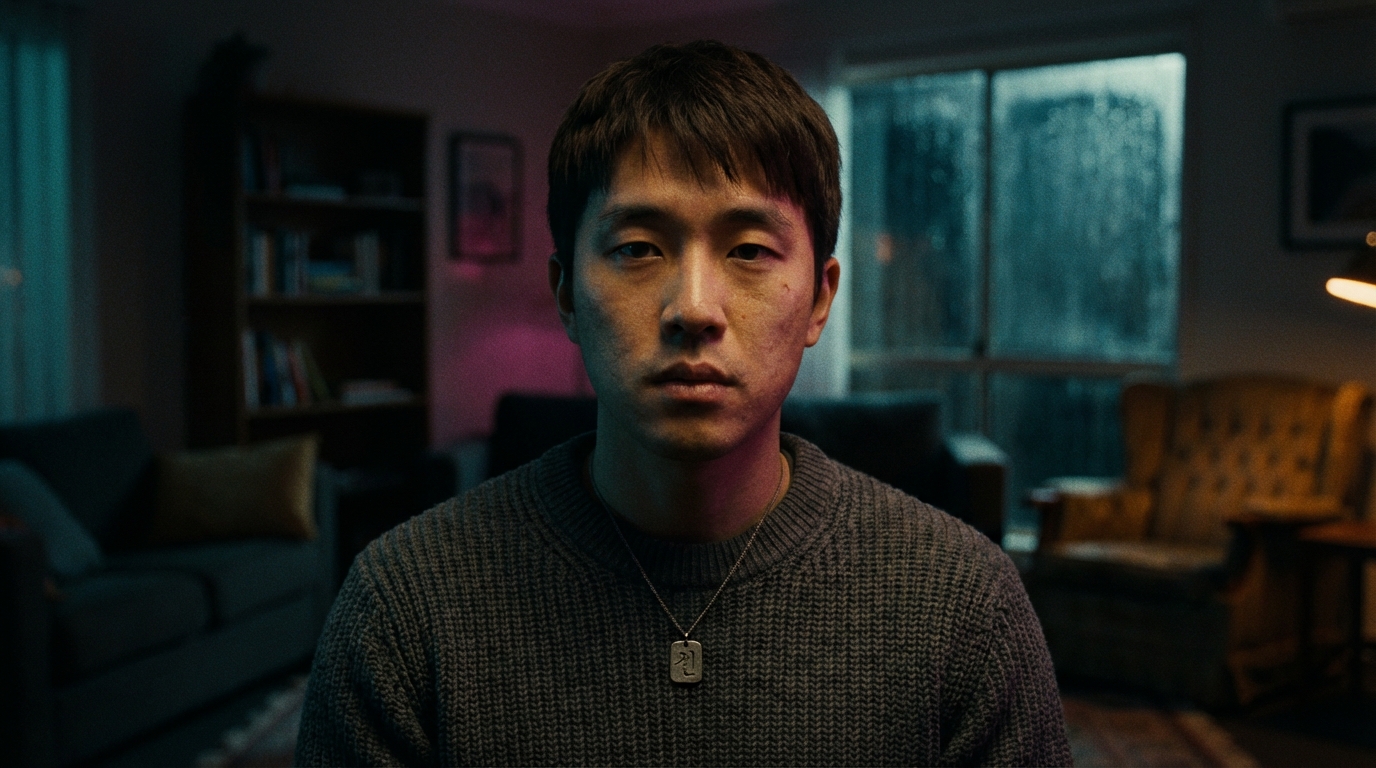
Born in Glenorchy, Tasmania, in 1988, Benjamin Sang-Hoon Almond is a Korean-Australian aged care specialist whose bicultural upbringing shaped a life devoted to quiet service. Trained in aged care and mental health support, he built a respected career marked by precision, cultural sensitivity, and profound emotional restraint. His tenure at Vaucluse Nursing Home revealed both his gift for compassionate caregiving and an intensity that colleagues found unsettling, particularly during the turbulent events of July 2018.
Early Life and the Almond-Kim Heritage
Born on 17 November 1988 at the Royal Hobart Hospital, Benjamin Sang-Hoon Almond entered the world during the final months of the Cold War, though his birth marked the beginning of something quieter and more enduring than geopolitical tensions. He was the first child of Graham Douglas Almond and Min-Jae Kim, two people whose dramatically different cultural origins had somehow converged in a working-class suburb of Hobart, where the rhythms of Korean tradition would come to blend with Tasmanian pragmatism in a household defined by ritual, respect, and reserve.
Benjamin's middle name, Sang-Hoon (상훈), meaning "noble merit" or "honourable instruction," was chosen by his mother to honour her father, Kim Jin-Tae, a former literature teacher and scholar from Daegu. The name reflects both aspiration and ancestral homage—values deeply embedded in Korean naming traditions that Min-Jae was determined to preserve in her Australian-born children. His surname, Almond, traces its origins to Cornwall, England, descending from a farming family that had settled in Devonport in the 1860s. Through his father's line, Benjamin is a fourth-generation Tasmanian, his great-grandfather having worked on the Emu Bay Railway during its construction. This dual ancestry afforded him a deep-rooted connection to the Tasmanian landscape whilst simultaneously linking him to a transnational history of perseverance and adaptation.
The Almond household in Montrose, a leafy suburb nestled between the foothills of kunanyi / Mount Wellington and the River Derwent, embodied this cultural integration. Kimchi jars shared space in the garage alongside footy posters in the hallway, and the sounds of Korean conversation at mealtimes mingled with the quieter rhythms of Tasmanian domesticity. Benjamin's upbringing, split between these two heritages, cultivated an emotional fluency that would later define both his professional approach and interpersonal complexity—deeply respectful of ritual and formality, yet quietly sceptical of authority.
Parents and Their Influence
Graham Douglas Almond was born on 12 June 1957 in Devonport, a coastal town on Tasmania's northwest shore. Raised in nearby Latrobe, a modest timber settlement, he developed an early appreciation for the Tasmanian wilderness that would shape his career and worldview. He studied environmental science at the University of Tasmania in the mid-1970s and began working for Forestry Tasmania soon after graduation, where he built a reputation for practical wisdom and unshakeable ethics. Known among colleagues for his methodical approach and quiet determination, Graham served two terms on the Glenorchy City Council during the 1990s, championing responsible development, green corridors, and affordable elder services for an ageing population.
Though not overtly expressive in his affections, Graham was a stabilising figure in Benjamin's life—a man who loved routine, maps, native birds, and long drives through the Central Highlands. He encouraged intellectual independence in his children whilst maintaining a deep, respectful affection for his wife's culture. Graham learned basic Korean and attended Lunar New Year services at Hobart's Korean Presbyterian Church, demonstrating through action rather than words that love could bridge cultural chasms without demanding either party abandon their heritage.
Min-Jae Kim was born on 2 March 1962 in Daegu, North Gyeongsang Province, South Korea, the daughter of a schoolteacher and a hanbok seamstress. Her childhood was shaped by post-war reconstruction and traditional values, yet she harboured ambitions that would carry her far from the city of her birth. In 1983, she received a government scholarship to study nursing abroad and chose Australia after reading about its healthcare reforms in a Seoul medical journal. She arrived in Hobart speaking only rudimentary English, supported by the then-small but active Korean diaspora in Tasmania.
After graduating from the Tasmanian College of Advanced Education, Min-Jae embarked on a career that would span three decades. She worked in geriatric nursing at the Royal Hobart Hospital for thirty-one years, developing expertise that extended beyond clinical practice into advocacy and systemic reform. In 1996, she co-founded the Aged Care Multicultural Advocacy Network (ACMAN) and published a widely circulated paper on cultural dissonance in elder support systems—work that influenced policy discussions across Australia's aged care sector.
A deeply spiritual woman, Min-Jae brought elements of Korean Confucian and Buddhist traditions into the home. She taught her children ritual respect, quiet endurance, and seasonal gratitude through ancestral memorials and shared tea ceremonies. These practices would later resurface in Benjamin's own spiritual life, particularly his adoption of Seon meditation—a Korean Buddhist tradition emphasising stillness and inner discipline.
Siblings and Family Dynamics
Eleanor Ji-Young Almond, born on 24 August 1990, inherited their mother's clarity and tenacity. A gifted student and vocal social advocate from an early age, she moved to Melbourne in 2008 to pursue a double degree in Architecture and Urban Planning at RMIT University. She has since worked on several major transport infrastructure projects with the Victorian Department of Transport and Planning, earning recognition for her emphasis on accessibility and urban green spaces.
Despite the physical distance separating them, Eleanor and Benjamin share a rich emotional shorthand developed through years of navigating their bicultural identity together. They exchange letters and voice memos rather than texts—a deliberate choice reflecting their shared preference for depth over convenience. Eleanor remains the only person Benjamin regularly opens up to about his inner struggles and doubts, a confidant whose understanding requires no explanation.
Nathaniel Min-Kyu Almond, the youngest of the siblings, was born on 6 May 1995. He showed early promise in mathematics and computer systems, his mind naturally oriented towards pattern recognition and logical structures. Diagnosed with generalised anxiety disorder during his teenage years, Nathaniel often withdrew into technical pursuits that offered the structured predictability he craved. He blossomed under Benjamin's quiet mentorship, finding in his older brother a patience and acceptance that didn't demand he perform neurotypical sociability.
Nathaniel earned his Computer Science degree from the University of Tasmania in 2016 and has since built a steady freelance career specialising in secure backend systems, working remotely from Launceston. He rarely travels and leads a private life, but maintains weekly digital chess matches with Benjamin—a tradition they've sustained for over a decade, a ritual of connection that requires no words beyond the movement of pieces across virtual boards.
Childhood and Formative Influences
Benjamin's childhood in Montrose was structured, loving, and intensely observed. The Almond household operated on principles that balanced Korean reverence for family hierarchy with Australian informality, creating an environment where children were expected to contribute meaningfully whilst being allowed the freedom to develop their own interests. Korean was spoken in the home, especially during mealtimes and visits from relatives, ensuring Benjamin developed bilingual fluency that would later prove valuable in culturally sensitive care work.
From ages five to twelve, Benjamin spent every Sunday afternoon at the Hobart Korean Cultural Centre, where he studied language, calligraphy, and Korean folk tales. These sessions instilled not only cultural knowledge but also the discipline of regular practice and the patience required for mastery—qualities that would define his approach to caregiving. His maternal grandmother, Park Eun-Sook, lived with the family intermittently during his childhood and played a vital role in maintaining cultural continuity. It was through her, during her later stages of Alzheimer's disease, that Benjamin had his first prolonged exposure to elder caregiving.
Watching his grandmother's gradual decline taught Benjamin things no classroom could convey. He observed how memory fragmented, how identity persisted in gestures and preferences even when names and dates dissolved, how presence could comfort when words failed. These lessons imprinted themselves deeply, shaping an understanding of dementia that was personal before it became professional.
Secondary Education
Benjamin attended Montrose Bay High School from 2001 to 2006, a public school known for its inclusive support programmes and strong community partnerships. Teachers described him as "deeply observant, often reticent, but unfailingly kind"—a characterisation that would follow him into adulthood. He gravitated towards health sciences and social studies, drawn by their emphasis on systems of care, ethics, and the complexity of human behaviour.
His Year 9 Health and Human Development teacher, Mrs Tanya Reardon, proved particularly influential, introducing him to the social determinants of health and the emerging field of aged care reform in Australia. With her encouragement, Benjamin initiated a student-led outreach programme that partnered with Rosetta Home for the Elderly, where students hosted monthly reading and music afternoons for residents. This experience confirmed what his grandmother's illness had suggested—that he possessed an unusual capacity for connecting with elderly people, for finding stillness amid their confusion and comfort in their presence.
Outside the classroom, Benjamin served as a Peer Listener and was co-editor of the school's annual cultural journal, Echoes from the Derwent. He participated in the school's aged care outreach club and was nominated for a Rotary Youth Leadership Award in Year 10. A pivotal moment came in 2004 when he completed a two-week work placement at St Anne's Residential Aged Care. It was there, helping a retired librarian through early-onset Parkinson's, that Benjamin found what he later called "the stillness at the centre of the noise"—a calling not of ambition but of silent service.
His final year personal research project, "Memory and Silence in Later Life: Exploring Non-Verbal Connection," was presented at the Tasmanian Youth Health Symposium in 2006. He graduated with commendation, receiving the school's Community Service Citation.
Tertiary Education and Professional Training
Driven by quiet certainty in his vocation, Benjamin enrolled in the Diploma of Community Services (Aged Care) at TasTAFE's Campbell Street campus in central Hobart in 2007. The programme provided a comprehensive foundation in gerontology, ethical caregiving, palliative practices, and multicultural service delivery. He excelled academically, known among instructors for his humility and scholarly rigour.
His clinical placements were both wide-ranging and impactful. At St John's Retirement Village in 2008, Benjamin led an initiative to create personalised memory boxes for residents with early-stage dementia, using family photographs and tactile cultural artefacts to aid recall. His final year placement at Royal Hobart Hospital's Geriatric Ward in 2009 involved shadowing palliative care nurses and contributing to case notes. He received special commendation for his de-escalation of a high-risk behavioural incident involving a patient with Korsakoff's syndrome.
His capstone thesis, titled "Fractured Continuities: Culturally Sensitive Dementia Care for Second-Generation Migrants in Southern Tasmania," was praised for its originality and was later adapted into training material by the Multicultural Council of Tasmania. He graduated in 2009 with Distinction Honours.
While working full-time at a residential facility, Benjamin returned to formal study through a part-time Certificate IV in Mental Health Support offered by the University of Tasmania's Institute for Regional Development between 2011 and 2012. This programme focused on foundational psychology, trauma-informed care, pharmacological literacy, and crisis intervention techniques, with special emphasis on co-morbidities in older adults. His independent research paper, "The Quiet Exit: Transitional Trauma in Dementia Patients Removed from Familiar Environments," drew on field interviews and case logs and was praised by faculty for its empathic insight and analytical restraint. He completed the course in November 2012 and was offered, but declined, a pathway to further study in clinical social work—preferring instead to remain in direct care roles where his presence could make immediate difference.
Professional Career
Benjamin began his professional journey in 2010 as a support worker at Strathglen Residential Care Facility in Hobart. Known for his attentive and ethical approach, he was quickly promoted to shift supervisor. In 2013, he received internal commendation for his handling of a critical incident involving medication misadministration, showcasing crisis response skills that combined calm authority with genuine compassion.
From 2015, Benjamin joined Vaucluse Nursing Home, a storied institution in Sandy Bay that would become the defining setting of his career. As of July 2018, he held the position of Senior Personal Care Assistant, working closely with residents experiencing mid- to late-stage dementia in the facility's Derwent Suite. His work was noted for its precision and quiet emotional depth. He introduced elements of Korean therapeutic frameworks to his practice, incorporating aromatherapeutic approaches and memory pathing techniques that drew on his cultural heritage.
Colleagues described him as "meticulous, often too serious, but deeply respected." His interactions with both staff and patients were defined by a calm presence—at times unsettling in its intensity, as though his very stillness carried weight. He possessed an unusual ability to read patients' unspoken needs, anticipating distress before it manifested and defusing difficult situations with an economy of words and firm, compassionate gestures.
The Events of July 2018
The events of July 2018 at Vaucluse Nursing Home cast Benjamin in an ambiguous light that has never been fully resolved. On 23 July 2018, an incident in the staff bathroom brought his unsettling intensity into sharp focus. His colleague Jamie Greyson, already struggling with personal difficulties in his relationship with his partner Luke Smith, found himself deeply unnerved by Benjamin's silent presence behind him in the confined space. What might have been an innocent coincidence felt, to Jamie, like something more predatory—Benjamin's cultivated stillness transformed into psychological pressure in ways that blurred the boundaries between professional and personal.
The incident exposed fault lines in Jamie's life that would soon rupture entirely. Benjamin's quiet intensity, his ability to occupy emotional spaces even whilst physically passive, became entangled with the moral crisis that preceded Jamie's disappearance later that month. A resident's complaint about "hanky-panky" involving staff members—lodged by the ninety-four-year-old Robert "Bob" Gangley—added another layer of scrutiny to Benjamin's workplace conduct.
When Jamie Greyson vanished on 28 July 2018, Benjamin's concern for his missing colleague was genuine. His enquiries about Jamie's whereabouts triggered a confrontation that revealed the raw emotions simmering beneath Vaucluse's professional surface. Yet no formal accusations were ever made against Benjamin, and he continued his work at the facility until 2019. The precise nature of his relationship with Jamie remains unclear, obscured by the larger mysteries surrounding the events of that turbulent month.
Personal Traits, Beliefs, and Private Life
Benjamin is characterised by introspection, emotional control, and discipline—qualities cultivated through both his bicultural upbringing and deliberate spiritual practice. Though perceived as aloof by those who encounter him superficially, he forms deep and enduring bonds when trust is established. His connections tend to be few but profound, marked by a loyalty that asks little whilst giving much.
He practices Seon daily, a Korean Buddhist meditation tradition introduced by his mother during adolescence. This practice has become central to his identity, providing both refuge and foundation. Through Seon, he cultivates the stillness that defines his professional presence—though this same quality sometimes unsettles those unaccustomed to such intentional quietude.
Benjamin has never married and remains private about romantic attachments, though he has had meaningful but complex relationships with colleagues that occasionally blurred professional boundaries. He deflects enquiries about his personal life with practised ease, maintaining barriers that even his sister Eleanor struggles to penetrate completely.
Outside of work, Benjamin pursues hobbies that reflect his cultural heritage and meditative temperament. He is a skilled calligrapher, practising techniques learned during childhood at the Hobart Korean Cultural Centre and later refined through independent study. He maintains a bonsai garden—both practices passed down from his maternal grandfather, Kim Jin-Tae, the literature teacher whose name Benjamin carries in his own. These pursuits require the same patience and attention to subtle detail that characterise his caregiving work, offering creative expression within disciplined forms.
