Alexander James Greene
Alexander James Greene (12 March 1850 – 15 February 1892) was a Manchester-born engineer whose expertise in structural analysis and materials science made him one of Killerton Enterprises' most valuable early recruits. Educated at Manchester Grammar School and Imperial College London, he brought to the firm the rigorous materials intelligence that its founding philosophy required, developing composite construction materials that gave the ancient-modern synthesis its practical physical form, before his death from tuberculosis at forty-one cut short a career of exceptional promise.
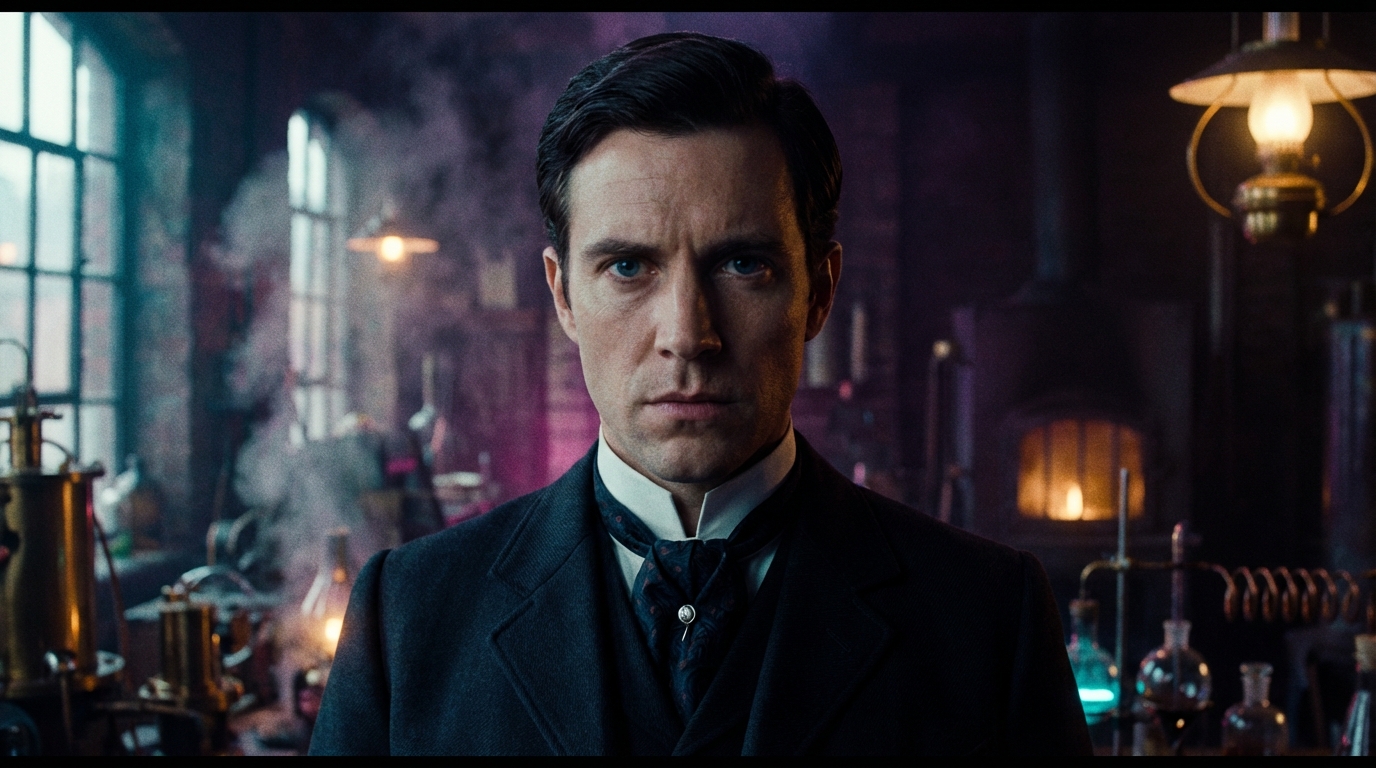
Manchester: The Greene Household
Alexander James Greene was born on 12 March 1850 in Manchester, Lancashire — a city that was, in the mid-nineteenth century, the most concentrated expression in the world of what industrial organisation and applied chemical science could produce when brought together at scale. The cotton mills along the Irwell and the Medlock, the dye works and bleaching yards, the chemical factories whose outputs supplied the textile trade, the railways converging on a city that had made itself the hub of northern England's commercial life — this was the environment of Alexander's formation, and it was one in which the relationship between scientific knowledge and material production was not theoretical but daily and visible.
He was the eldest son of Jonathan Greene, an industrial chemist whose practice served the Manchester textile trade — the analysis of dyes, the testing of bleaching compounds, the assessment of the chemical properties of new materials as they came through the city's voraciously innovative industrial economy. The work required precision and patience in roughly equal measure, and Jonathan brought both to it. His mother, Eliza, was a schoolteacher at one of the city's municipal primary schools, whose professional formation in the transmission of knowledge to children who were not always inclined to receive it gave the household its second register of disciplined intelligence. The home they kept — a modest Victorian terrace in Chorlton-on-Medlock, within walking distance of the Owens College and the city's commercial centre — was filled with the paraphernalia of Jonathan's analytical work alongside Eliza's lesson preparations: retorts and measuring instruments beside stacks of exercise books, the smell of chemical reagents mixing with ink and coal smoke.
Alexander grew up dismantling things to understand how they worked — a habit that his parents found more charming than alarming, recognising in it the natural expression of a mind that needed to understand mechanisms from the inside rather than from external description. By the time he entered Manchester Grammar School, he was already more practically conversant with materials and their properties than most boys of his age managed to become through formal instruction alone, and the school's rigorous mathematics and science curriculum gave that practical intelligence its theoretical framework with a speed that his teachers noted as exceptional.
Manchester Grammar School in the 1860s was one of the finest schools in the north of England, its alumni moving into the professions, commerce, and the sciences in numbers that reflected both the school's quality and the ambition of the industrial city that surrounded it. Alexander was a serious student — not the gregarious sort whose gifts announced themselves through social brilliance, but the kind whose quality of attention in a lesson, the precision of his written work, and the steadiness with which he built one idea on another marked him out to the teachers who were paying attention. He was interested in mathematics and physics with the focused enthusiasm of someone who understood that these subjects were not ends in themselves but tools for the analysis of the physical world, and he used them accordingly.
Imperial College London: 1867–1871
He moved to London in 1867, at seventeen, to study engineering at the institution then known as the Royal School of Mines — one of the component bodies that would become Imperial College — whose engineering programme combined rigorous scientific formation with the practical orientation that distinguished it from the older university engineering courses. The London of the late 1860s was a city in the middle of its own great engineering moment: the Metropolitan Railway was already running, the Embankment was being constructed along the Thames, the great Victorian infrastructure projects were producing a generation of engineers who understood their work as the most consequential practical science in the world. Alexander arrived into this environment from the industrial north with a formation that his southern contemporaries often lacked — the practical familiarity with materials and industrial processes that Manchester had given him — and found in Imperial's programme the theoretical grounding that his father's laboratory and his own dismantling habits had pointed toward.
He was drawn particularly to structural analysis and materials science, the twin disciplines that asked, respectively, how forces moved through structures and what the physical properties of materials determined about their behaviour under load. The influence of Henry Bessemer's steel process — which was transforming the materials available to construction engineering in precisely these years — was palpable in the curriculum, as was the legacy of Robert Stephenson's railway engineering, which had demonstrated what disciplined structural analysis could achieve at previously impossible scale. Alexander absorbed both influences with the particular quality of a student who understood that he was being trained to extend a tradition rather than simply to inherit it, and whose instinct was always toward the question of what the materials and the mathematics could do that had not yet been tried.
He was tall by the time he graduated in 1871 — six feet and an inch, lean and angular in the way of men who are too intellectually absorbed to think consistently about eating — with the deep-set grey eyes and the ink-stained fingers that would mark him for the rest of his life. His manner was direct to the point of occasional brusqueness; he had not been socialised in the milder conventions of southern English professional life and did not always remember to observe them. His intelligence compensated for most of what his social manner occasionally failed to provide.
Manchester Engineering: 1871–1874
He returned to Manchester on graduating and joined one of the city's established engineering firms, working on industrial buildings and bridge projects across the northern counties. The work was technically demanding and professionally instructive — the management of large construction sites, the translation of structural analysis from drawing board to physical material, the gap between what engineering theory proposed and what construction practice delivered — and Alexander moved through it with the methodical ambition of a young engineer who knew what he was capable of and was not in a hurry to pretend otherwise.
He married Clara Mayfield in 1873, the daughter of Henry Mayfield, a prominent Manchester businessman whose commercial activities spanned the textile trade and its supply chains. Clara was sharp, socially assured, and possessed of a practical intelligence that complemented Alexander's more abstracted technical gifts in the way that productive marriages often achieve. She had grown up in a household shaped by commerce and understood its rhythms; Alexander had grown up in one shaped by chemistry and engineering and understood its demands. The partnership they formed was one of genuine mutual respect, and Clara's capacity for managing the domestic and social dimensions of professional life — the household, the relationships with colleagues and clients, the demands that Alexander's absorption in his work regularly left unattended — was one that he relied on more thoroughly than he always acknowledged.
Their first child, Edward, was born in the early months of 1874. It was also in 1874 that Alexander made the decision to move the family to San Francisco.
The Move to San Francisco: 1874
The decision to cross the Atlantic and the continent with a young wife and a newborn was not one that Alexander took lightly, and the record does not fully preserve his reasoning. What it does suggest is that the professional opportunity presented by San Francisco in 1874 — a city of rapid expansion, of civic ambition, of construction at a scale that Manchester's more settled industrial economy was not producing — was one that his ambitions found irresistible. The transcontinental railroad had made the journey manageable; the city's construction boom made the professional case; and Alexander, who was twenty-four years old and in possession of a set of technical capabilities that established Manchester firms were happy to employ without necessarily extending, was drawn westward.
Clara managed the crossing and the settlement with the composed practicality that had become the characteristic note of her contribution to their life together. They arrived in San Francisco in the spring of 1874 and established themselves in a rented house in the Western Addition, within the English-speaking professional community that had formed around the city's commercial expansion, and Alexander presented himself to the local engineering world with the directness that was his natural mode and the credentials that were, in that world, sufficient to establish him quickly.
It was at a professional symposium — one of the gatherings through which San Francisco's engineering and construction community exchanged technical knowledge and professional connections — that he first encountered Francis Killerton. Francis was in the process of assembling the team that Killerton Enterprises, founded on 15 June 1874, would need to execute its ambitions, and Alexander's expertise in structural analysis and materials science was precisely the technical capability the firm lacked. The conversation between them was, by the account the existing record preserves, substantive from the beginning — Francis presenting the philosophy of ancient-modern synthesis that animated the company, Alexander engaging with it through the particular lens of a materials scientist who had spent his professional formation thinking about what the physical properties of substances determined about their structural behaviour, and who found in the Mesopotamian construction knowledge Francis described a set of empirical observations about material performance that his own analytical framework gave him a new way of understanding.
He was recruited as part of the Pioneers of Innovation intake on 1 July 1874 — two weeks after the firm's formal founding — and attended the Strategic Planning Meeting for the San Francisco Civic Center on 20 August, where his structural analysis work was integrated into the project's engineering plan alongside Samuel's broader engineering oversight and Theodore's architectural direction.
Materials Science and the Work at Killerton Enterprises
Alexander's contribution to Killerton Enterprises was concentrated in two areas whose intersection defined the most technically distinctive aspect of the firm's practice. The first was structural analysis — the systematic application of the mathematical and physical principles governing how forces distributed through building structures, which allowed him to assess the performance of proposed designs with a precision that the period's construction industry was only beginning to develop as a routine professional discipline. The second was materials science — the understanding of how the physical and chemical properties of construction materials determined their structural behaviour, their durability, their environmental performance, and their suitability for the particular conditions of the San Francisco Bay Area.
The composite materials work that he developed at Killerton through the mid-1870s and into the 1880s was his most original contribution. The principle was straightforward in its conception and demanding in its execution: the identification of combinations of traditional building materials — lime, timber, fired brick, natural stone, the compressed earth techniques that Francis's Mesopotamian research had described — with emerging modern materials, principally steel and later reinforced concrete, whose properties could be made to complement rather than simply replace what the traditional materials provided. A structure built from such composites would have the thermal mass, the durability, and the environmental compatibility of ancient construction methods alongside the tensile strength and structural precision of modern engineering, producing buildings that were, in Samuel's formulation, more resilient than either approach could achieve independently.
The development of these materials required the laboratory discipline that his father's industrial chemistry had modelled and that his Imperial College training had formalised, applied to questions that were simultaneously scientific and architectural. Alexander maintained a working laboratory in the Killerton Enterprises office, where he analysed material samples, tested composite combinations under load, and documented his results with the methodical precision of a man who understood that his findings were only as useful as their reproducibility. He was meticulous in his note-taking — the ink-stained fingers being both the consequence and the emblem of a practice of continuous documentation that left behind, when he died, a body of technical records that George Killerton and the firm's subsequent engineers drew on for years.
His relationship with the other senior figures at the firm was shaped by the particular quality of his intelligence and his manner. With Samuel Holloway he had the productive complementarity of two engineers whose capabilities were adjacent but non-overlapping — Samuel's broader structural and financial authority providing the institutional context within which Alexander's more specialised materials work operated. With Theodore Cartwright he had the more complicated relationship of a scientist and an architect whose professional orientations were not naturally aligned — Theodore thinking in form and historical precedent, Alexander thinking in properties and performance — but whose work on the Civic Center required them to find a working language between these orientations. They managed it, not always comfortably. With Emily Stanton, whose interest in sustainable construction gave her a direct professional investment in the materials choices Alexander was making, he had perhaps the most genuinely collaborative relationship of the three — her design philosophy and his materials science pointing toward the same practical outcomes from different starting points, and each finding in the other's expertise a resource that their own training did not provide.
His English directness — the Manchester grammar school manner, unmediated by the social conventions of Boston or the warmer sociability of California's professional culture — was an acquired taste for some of his colleagues and an immediate relief for others. Francis valued it precisely because it meant that Alexander's assessments were uncushioned by professional courtesy: when a material specification was inadequate or a structural proposal was unsafe, Alexander said so without the preliminary softening that the period's professional culture sometimes preferred, and Francis found this quality in a technical expert more useful than its absence.
Marriage, Family, and the San Francisco Years
Clara made of the San Francisco years a domestic life that was more socially engaged than Alexander's professional absorption would have produced without her. The house in the Western Addition — expanded to accommodate Alice's arrival in 1877 and the modest but genuine prosperity that Killerton Enterprises' growing reputation generated — became over the course of the 1870s and 1880s a household that reflected both parents' qualities: Alexander's technical seriousness in the laboratory that occupied one room of the upper floor, Clara's social intelligence in the drawing room below, where the British expatriate community and the broader professional circles of San Francisco's construction world mixed with the particular ease that a well-managed household produces.
Edward grew up watching his father work in ways that consciously replicated the formation Alexander himself had received in Jonathan's Manchester laboratory, and showing by his early teens the same analytical aptitude for materials and mechanisms that had distinguished his father at Manchester Grammar. Alice was quieter, more like her mother in her social intelligence and her practical management of the world, and more interested in the natural landscape of California — the Bay Area's particular ecology, the plant life of the coast — than in the engineering problems that consumed her father's attention.
The 1880s brought continued professional success and the first warnings of illness. Alexander was in his mid-thirties when the cough that had troubled him intermittently since the damp Manchester winters of his youth became something that Clara and his physician began to regard as requiring more sustained attention. The diagnosis, when it came in the late 1880s, was the one that the symptoms had been suggesting for some time. Tuberculosis in San Francisco in this period was not a rare occurrence — the city's dense housing, its maritime climate, and its large immigrant population created conditions in which the disease moved through communities with a persistence that the medical profession of the era could observe but not yet effectively treat.
The Long Decline and Death: 15 February 1892
Alexander continued working through the years of his illness with a determination that his colleagues found both admirable and difficult to watch. The lean frame that had always been his physical signature became thinner; the grey eyes kept their intensity longer than the body sustained the energy behind them; the ink-stained fingers continued their documenting work as long as he had the strength to hold a pen. He was meticulous in the completion and organisation of his technical records in the final period, a professional conscientiousness that was also, those who knew him understood, a form of preparation — the ensuring that what he had developed and understood would survive his absence in usable form.
He died at home on 15 February 1892, with Clara beside him and Edward, then eighteen, in the house. Alice was fifteen. He was forty-one years old and had been in San Francisco for eighteen years and at Killerton Enterprises for seventeen of them. Francis Killerton visited the house the afternoon before his death and sat with him for an hour; what passed between them the record does not preserve. He was buried in Laurel Hill Cemetery in San Francisco, on a hillside above the city that he had come to from Manchester as a young man with a wife and a newborn and a set of technical capabilities that a new firm needed, and that he had spent the best of his working life applying to buildings whose structural integrity owed something to the composite materials he had spent years developing in a cramped upper-floor laboratory with ink-stained fingers and deep-set grey eyes that saw, in the properties of materials, what most people could not.
Clara remained in San Francisco with the children. Edward followed his father into engineering, studying at the University of California in the early 1890s and eventually finding his way, a decade after Alexander's death, into the materials science work at Killerton Enterprises that his father had established. The connection between the Greene family and the firm his father had joined as a young immigrant from Manchester proved, in this way, more durable than the life that had founded it.







