Alastair Promethus Blackwood
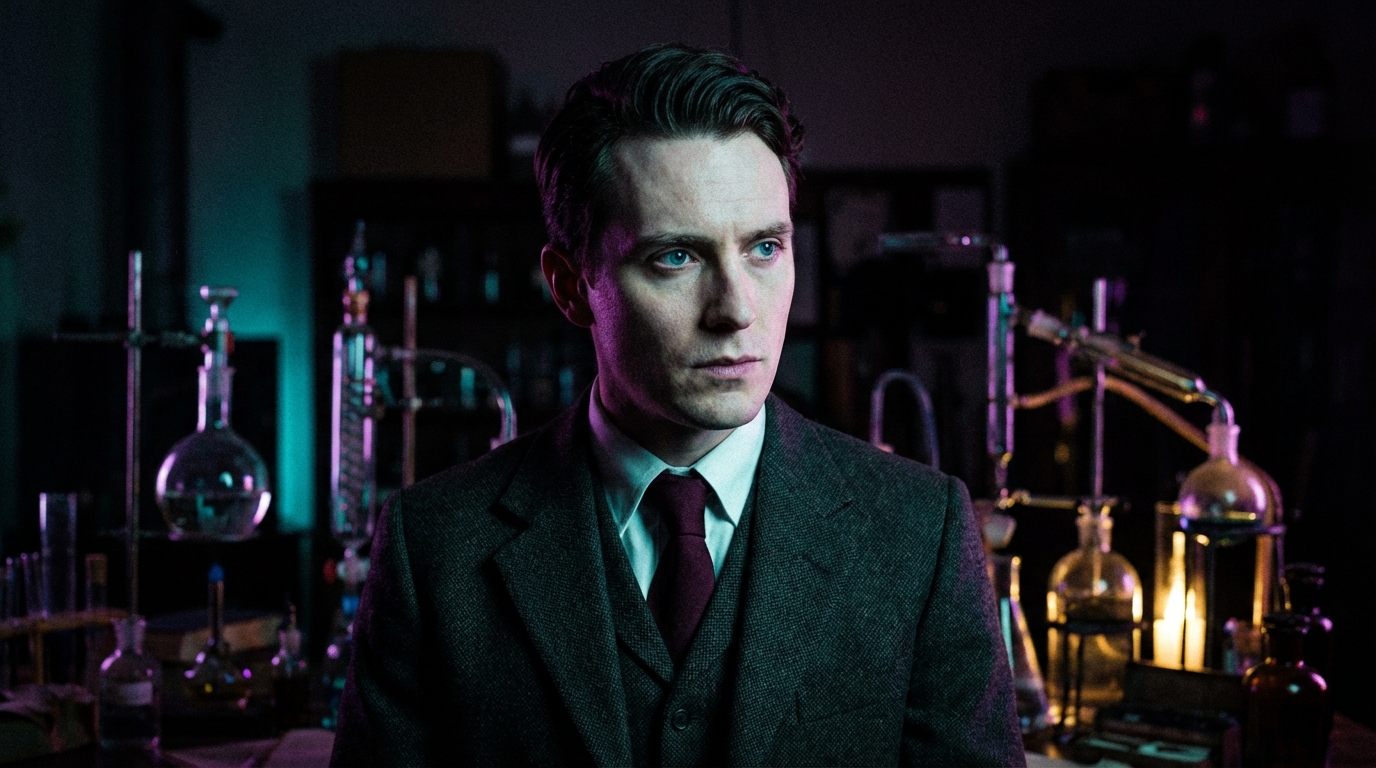
Dr Alastair Prometheus Blackwood (1910–1985) was a medical researcher, institutional architect, and the founder of the Obsidian Healthcare Group. Born in Hobart to parents whose marriage would not survive his twentieth year, he possessed an intelligence that exceeded the Blackwood family's established range and a moral framework that operated according to principles his contemporaries could not always identify. He died at seventy-five under circumstances that generated more questions than the official record resolved.
Origins
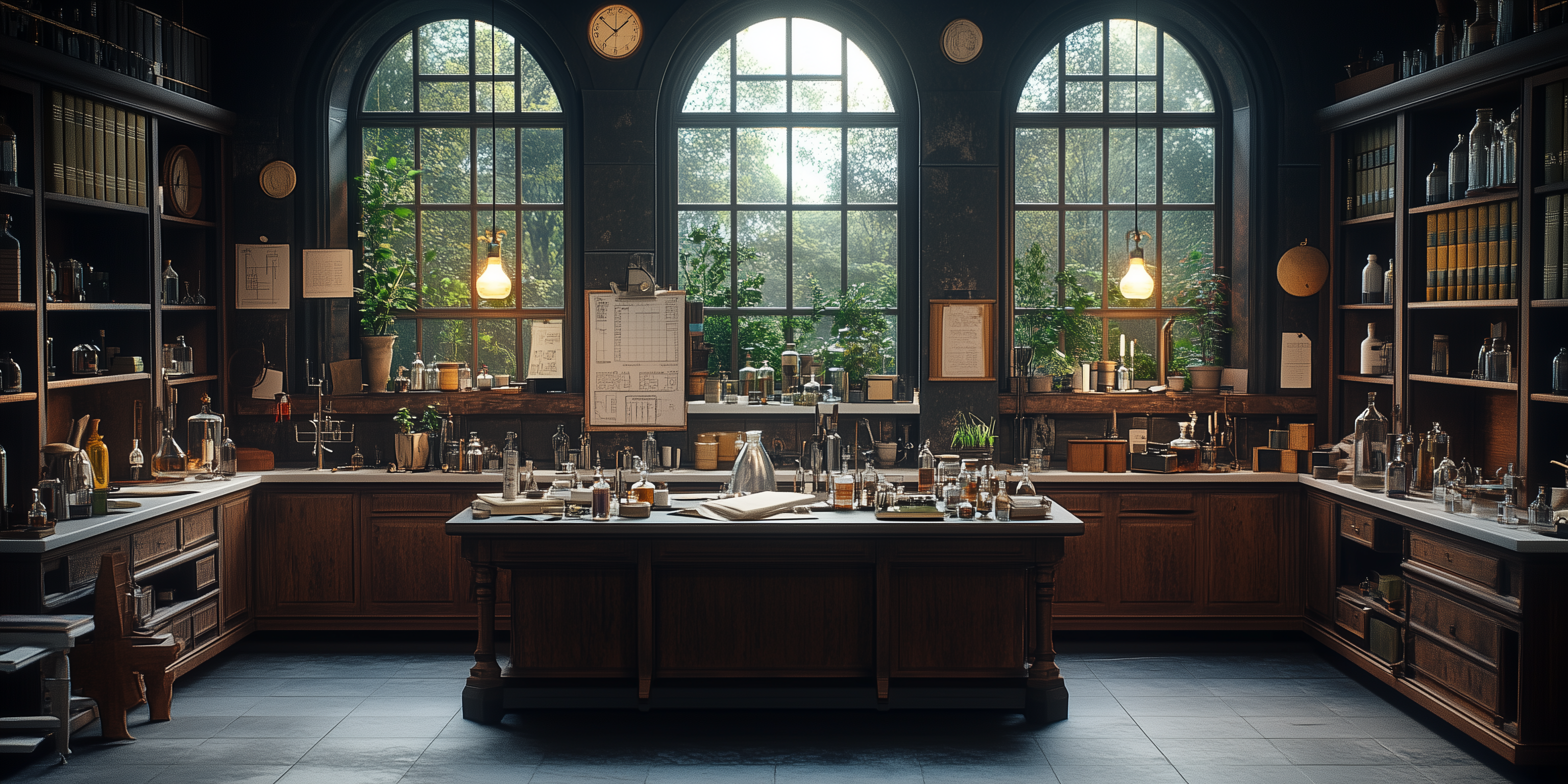
Alastair Prometheus Blackwood was born on 17 April 1910 in Hobart, Tasmania, the first surviving child of Thomas Alastair Blackwood, managing partner of the legal firm Blackwood and Associates, and Mary Eleanor Blackwood, née Thompson, whose private intellectual ambitions exceeded the domestic role her marriage had assigned her. The name was Mary's choice — Prometheus, the titan who stole fire from the gods and gave it to humanity — and Thomas Alastair had found it excessive without mustering the conviction to overrule it. The name proved, in retrospect, more accurate than either parent could have intended. Alastair would spend his life bringing fire to places that had not requested it, and the consequences would prove as complicated as the mythology suggested.
His brother Edward Thomas arrived on 22 August 1912, and the household in which both boys grew up was shaped by the Blackwood family's accumulated patterns — the father absorbed by the firm, the mother managing the domestic world with concealed intellectual restlessness, and the assumption that professional achievement constituted the highest expression of human capability. Alastair absorbed the assumption and transcended it simultaneously. He demonstrated from early childhood an intelligence that operated on a scale and at a speed that the family's legal tradition could not accommodate — a capacity for abstract reasoning, a fascination with the natural sciences, and an independence of mind that suggested the Blackwood dynasty's expectations would not contain him.
Childhood and Education
Alastair attended Hutchins School in Hobart, where his academic performance was exceptional and his social manner was not. He excelled in the sciences with a facility that his teachers found both impressive and faintly unsettling — the boy's comprehension of biological systems exceeding what instruction could account for, his questions in anatomy and chemistry reaching into territories that the curriculum had not anticipated and that some of his instructors were not qualified to navigate. He was awarded the Headmaster's Prize for Academic Excellence in 1927, a recognition that acknowledged his capabilities without resolving the discomfort that those capabilities sometimes generated in the adults responsible for managing them.
He developed, during his school years, habits that would persist throughout his life: the solitary collection of botanical specimens, a fascination with anatomical texts that preceded any formal medical training, and a preference for nocturnal work whose origins lay in the concentration that darkness afforded and whose consequences included a lifelong relationship with sleeplessness that he treated as a feature of his temperament rather than a problem requiring correction. By the age of ten, he was dissecting animal specimens and preparing rudimentary tinctures from plants he cultivated in the garden — activities that his mother observed with a mixture of pride and apprehension and that his father, absorbed by the firm, did not observe at all.
The Death of His Father
Thomas Alastair Blackwood collapsed at his desk at Blackwood and Associates on 30 March 1930 and died within the hour. Alastair was nineteen years old, in his second year of medical studies at the University of Melbourne. The death removed from his life the parent whose expectations had provided structure — not because Alastair had intended to fulfil them, but because their presence had given him something to define himself against. Mary's response to widowhood liberated the intellectual ambitions she had suppressed throughout her marriage, and the household's post-Thomas atmosphere — more intellectually open, more permissive of unconventional enquiry, and stripped of the professional conservatism that the Blackwood legal tradition had imposed — suited Alastair's temperament in ways that the previous arrangement had not.
Neither son entered the law. The dynasty that had run unbroken from Erasmus Percival through four generations ended on the floor of a Hobart office, and Alastair's departure from the family's professional tradition was not experienced as rebellion but as the natural expression of capabilities that the tradition could not have contained. Edward followed his brother into medicine, pursuing it with competence rather than brilliance. Alastair pursued it with brilliance and with something else — a quality that his peers would spend decades attempting to name and that the most precise descriptions never quite captured.
Medical Training
Alastair enrolled at the University of Melbourne in 1928 to study medicine, his early academic trajectory unremarkable until the third year, when he began to distinguish himself through approaches to clinical practice that his supervisors recognised as innovative and occasionally found difficult to classify. He developed non-standard surgical preparation techniques and modified anaesthetic protocols whose efficacy exceeded conventional methods and whose theoretical foundations he articulated with a fluency that suggested he had been thinking about them longer than his formal training warranted.
He graduated in 1931 with a Bachelor of Medicine and Bachelor of Surgery. The qualification was accompanied by unresolved questions — rumours of unauthorised access to restricted laboratory materials during his final two years, reports of experiments conducted outside the curriculum's parameters, concerns raised by professors whose authority Alastair had not challenged directly but whose intellectual boundaries he had demonstrated, through the quality of his work, to be inadequate. No formal charges were laid. The absence of charges did not constitute the absence of substance; it constituted the absence of evidence that the university's disciplinary procedures could accommodate.
His internship at the Royal Melbourne Hospital between 1932 and 1934 established his clinical reputation — speed, composure under pressure, and an unusual interest in neurological trauma and the dissociative states that sometimes followed invasive surgery. The interest was more than academic. Alastair was drawn to the boundary between physical intervention and psychological consequence — the territory where the surgeon's scalpel intersected with the patient's identity — and the questions he asked about what happened to consciousness when the brain was disrupted would define the trajectory of his career and the nature of the institution he would build.
Walter and Eliza Hall
Alastair's research fellowship at the Walter and Eliza Hall Institute from 1935 to 1937 marked the period in which his intellectual ambitions declared themselves openly. He published a series of papers on surgical ethics, human memory retrieval, and the treatment of psychological trauma through invasive neurological means. The work was technically accomplished and philosophically disturbing. His 1936 conference paper, Cerebral Interruption as a Modality of Trauma Recovery, proposed that targeted surgical disruption of specific neural pathways could eliminate traumatic memories without damaging the patient's broader cognitive function — a hypothesis that attracted the attention of military physicians in the United States and the private criticism of his Australian peers, one of whom described the paper's approach as "philosophically detached to the point of amoral."
The criticism identified something genuine without exhausting its implications. Alastair's detachment was not the indifference of a man who did not understand the ethical dimensions of his work; it was the detachment of a man who understood them and had concluded that the ethical frameworks available to his contemporaries were insufficient to assess what he was attempting. Whether this conclusion reflected intellectual courage or moral failure was a question that would accompany his career for the next five decades and that the available evidence would never conclusively resolve.
During this period, he began corresponding with European academics whose research occupied the margins of legitimate medical science — neurologists, psychologists, and physiologists whose work intersected with the interwar period's more troubling experimental programmes. The nature of these correspondences was never fully disclosed. The connections they established — to individuals and institutions whose post-war reputations would range from the controversial to the criminal — became, after 1945, the subject of speculation that Alastair neither confirmed nor denied, his silence on the matter constituting either principled discretion or calculated concealment, depending on the assumptions of whoever was assessing it.
Marriage and Obsidian
In 1935, Alastair married Margaret Helen Stevenson, the daughter of Melbourne financier Harold Stevenson. The union was formal, strategically advantageous, and emotionally opaque — Margaret providing the social respectability and financial connections that Alastair's ambitions required, Alastair providing the intellectual prestige and professional trajectory that the Stevenson family valued. The marriage functioned on the basis of complementary utility rather than intimate partnership, Margaret appearing at medical galas and board events with the composed competence of a woman who understood her role within the arrangement, Alastair frequently absent, preferring the company of his personal library, his greenhouse, and the restricted-access laboratories whose contents he discussed with no one.
In 1938, at the age of twenty-eight, Alastair founded the Obsidian Healthcare Group in Melbourne. The financial backing was quiet — believed to include foreign scientific societies and Australian landholding interests whose identities were never publicly confirmed. The organisation's founding represented the institutional expression of Alastair's conviction that medicine's potential could be realised only through a structure free from the constraints that university governance, hospital ethics committees, and public accountability imposed upon conventional research. Obsidian's early motto — Observation before Intervention — reflected a philosophy in which data collection, behavioural analysis, and environmental control preceded and shaped clinical treatment. The motto's implications were broader than its clinical surface suggested, and the breadth would become apparent only as the organisation's activities expanded into territories that the founding documents had not explicitly described.
Children
Maxwell Alastair Blackwood was born on 12 June 1940 in Melbourne, the son whose arrival Alastair acknowledged with the particular satisfaction of a man who regarded lineage as an instrument of institutional continuity rather than a source of emotional connection. Victoria Evelyn Blackwood followed — a daughter whose existence Alastair registered with less evident purpose, the gender limiting, in his assessment, her utility within the succession architecture he was constructing. The assessment reflected the era's conventions and Alastair's own, and Margaret's management of both children's upbringing compensated, as far as compensation was possible, for a father whose presence in the household was intermittent and whose attention, when present, was distributed according to criteria that domestic affection could not satisfy.
Maxwell was groomed for succession from an early age — educated at Scotch College, then the University of Melbourne and the London School of Economics, his trajectory through Obsidian's hierarchy managed with the same methodical attention that Alastair brought to experimental protocols. Maxwell joined the organisation in 1965, was promoted to Director of Operations by 1968, and assumed the Chief Executive role in 1971. His sudden death on 3 May 1974 in Sydney, at the age of thirty-three, was recorded as unexpected and unexplained. The circumstances generated questions that the official record did not address, and the proximity of Maxwell's death to the period of Alastair's most intensive private research — a proximity that might have been coincidental and that certain observers believed was not — added a dimension to the family's grief that ordinary bereavement did not encompass.
The War and Its Aftermath
The Second World War provided Alastair with both the institutional framework and the moral context for the expansion of his research programme. He established the Blackwood Memorial Hospital in Melbourne in 1942, ostensibly to address the medical needs of wounded servicemen and veterans. The hospital's reputation for surgical excellence was genuine, its contribution to wartime medical care was measurable, and the facility's restricted upper floors — accessible only to personnel whose clearances Alastair personally approved — housed research activities whose nature the hospital's public function did not encompass.
The post-war years extended Alastair's reach. In 1947, he acquired the Wellesley Estate in Hobart and transformed it into Vaucluse Nursing Home, a facility whose stated function as a residential care institution coexisted with an operational character that the stated function did not fully describe. The site's connection to Alastair's childhood geography — Hobart, the island from which the Blackwood dynasty had emerged — suggested motivations that exceeded commercial calculation, and the institution's activities during the 1950s and 1960s generated rumours whose substance was never publicly confirmed and whose persistence suggested that the absence of confirmation did not constitute the absence of truth.
In 1950, he launched the Obsidian Clinic Network, providing primary care and preventive medicine to underserved populations across multiple locations. The clinics were effective, their public health outcomes were genuine, and their existence within Obsidian's broader infrastructure served purposes that included but were not limited to charitable healthcare provision. The data that the clinic network generated — demographic, medical, behavioural — flowed into systems whose analytical applications exceeded what the patients whose data it was could have understood or consented to.
The Private Research
Alastair's private research programme, conducted across multiple decades and multiple facilities, constituted the dimension of his career that his public achievements were designed to support and to obscure. The programme's theoretical foundations — first articulated in the 1936 Walter and Eliza Hall papers and developed through subsequent decades of experimentation — concerned the relationship between neurological structure and human identity: the mechanisms by which memory was encoded, retained, and transmitted; the extent to which surgical, pharmacological, and environmental intervention could modify the substrate on which identity depended; and the possibility that biological memory operated at cellular and subcellular levels whose implications extended beyond the individual organism and into territories that conventional neuroscience had not mapped.
He maintained coded handwritten journals throughout his career — volumes whose contents were never publicly released and whose physical location, following his death, became a matter of dispute between Obsidian's internal archival systems and the external parties who believed their contents warranted independent examination. He cultivated exotic medicinal flora in controlled environments, some requiring special import permissions from the Department of Agriculture, whose pharmacological properties he investigated with a rigour that his published research did not reflect and whose applications he discussed with no colleague whose discretion he did not personally control. His working hours were ritualistic and predominantly nocturnal, his patient interviews and specimen studies conducted during the hours when institutional oversight was at its most attenuated.
The specifics of his later research — particularly the work conducted at his Daylesford estate following Maxwell's death in 1974 — were communicated to Obsidian's board through encrypted couriers and occasional dictation, the channels reflecting either reasonable security precautions or the paranoia of a man whose research had taken him into territories where the distinction between discovery and transgression had ceased to be clear. Visitors to the estate during the final decade of his life described a complex of locked study rooms, temperature-controlled vaults, and a central conservatory of bioluminescent plants whose cultivation required conditions that no botanical purpose could entirely justify. Alastair claimed that certain specimens could induce neurological responses — specifically, the recall of memories that the conscious mind had not formed and that appeared to originate in biological inheritance rather than personal experience. The claim was never subjected to peer review. Its implications, if accurate, exceeded what peer review's existing frameworks could have assessed.
Death
Alastair Prometheus Blackwood died on 30 September 1985 at his Daylesford estate. The official cause was recorded as cardiopulmonary failure. No post-mortem was conducted — a decision made by parties whose authority to make it derived from the corporate structures that Alastair himself had designed. The funeral was closed to the public. His estate passed to the Obsidian Historical Trust, an internal entity whose governance provisions exempted it from the disclosure requirements that external trusts were obligated to observe.
His mother Mary had died in 1963. His brother Edward had died in 1970. His son Maxwell had died in 1974. Alastair outlived them all and was survived by his daughter Victoria Evelyn and by his nephew Alexander Edward Blackwood, the cardiologist whose subsequent consultancy with Obsidian would confirm what Alastair's career had demonstrated: that the organisation he had built operated according to principles whose relationship to conventional medical ethics was, at best, ambiguous.
The questions that accompanied Alastair Prometheus Blackwood through his career did not resolve upon his death. The coded journals were never released. The Daylesford estate was sealed. The research whose theoretical foundations he had laid in the 1930s and whose applications he had pursued for five decades passed into the institutional memory of an organisation whose capacity for preserving information exceeded its willingness to disclose it. The man whose mother had named him for the titan who stole fire from the gods had spent seventy-five years investigating whether the fire could be stored, transmitted, and recovered — whether what made a person a person could be understood, manipulated, and perhaps survived. The investigation was conducted with brilliance, with resources, with institutional protection, and with a moral framework whose principles his contemporaries could identify only by their absence. Whether the absence reflected a framework that operated beyond conventional ethics or one that operated without them was the question that Alastair's life posed and that his death, characteristically, declined to answer.







