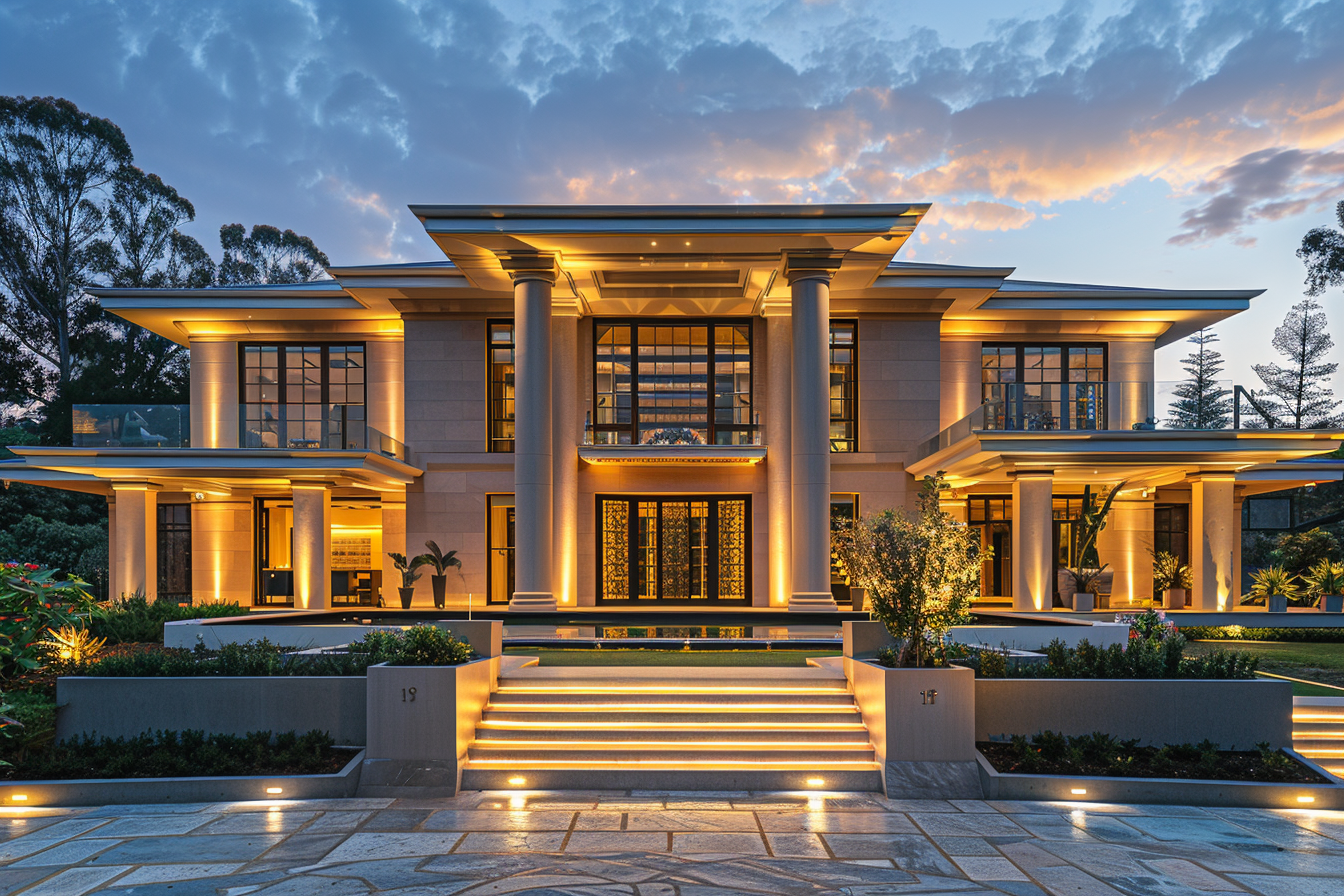
Adrian and Sharon Pafistis Residence, Battery Point
The Pafistis residence at 29 St Georges Terrace in Battery Point stands as a monument to professional triumph and domestic aspiration, its Renaissance columns framing a life built across two continents. Within these walls, Adrian's architectural mastery met Sharon's Cornish warmth, creating a sanctuary where their daughters' laughter echoed through marble halls. Yet in August 2018, this house of carefully constructed dreams became a crime scene of inexplicable emptiness—stripped bare, abandoned, ultimately sold through signatures without bodies to authenticate them.
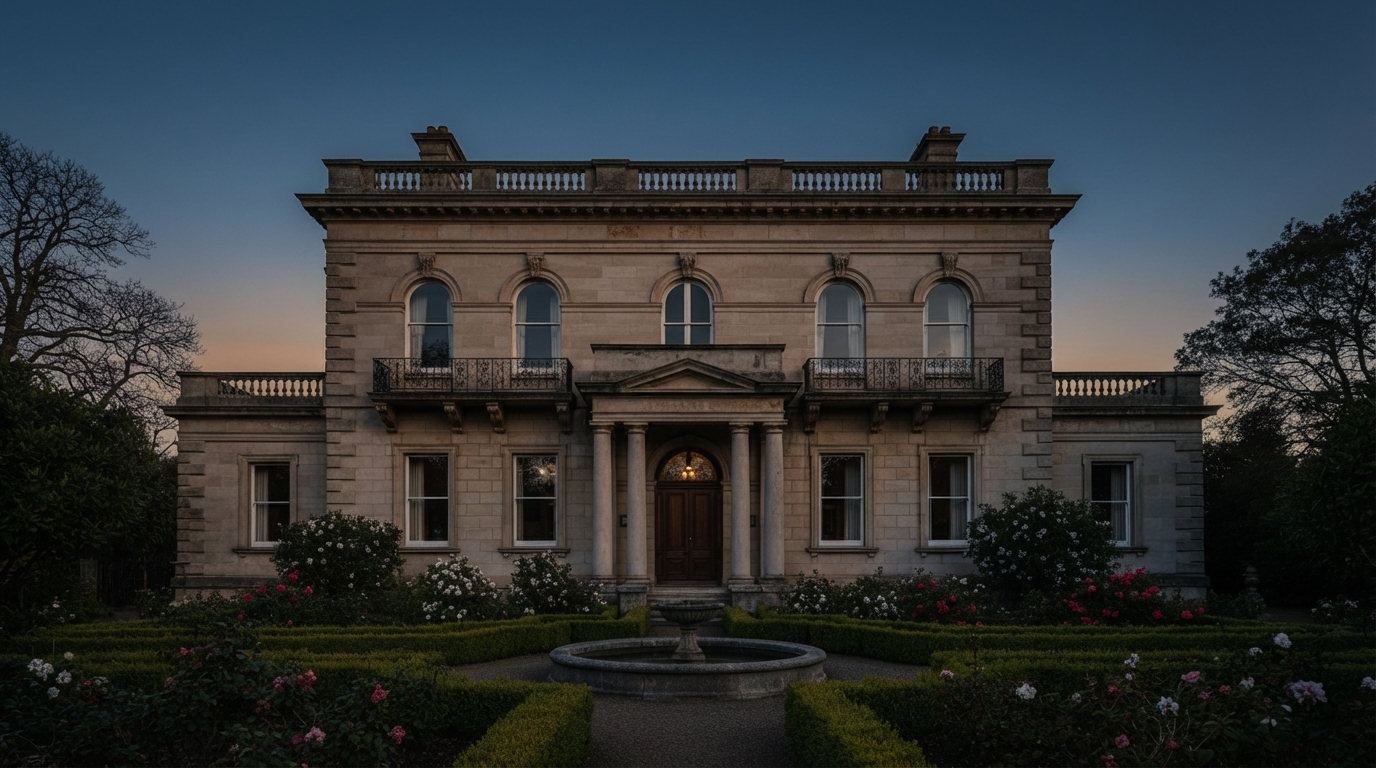
The Architecture of Ambition
The Pafistis family established their residence at 29 St Georges Terrace in the prestigious Battery Point suburb of Hobart in mid-2000, having relocated from Melbourne where Adrian had built his early career in construction management. The location represented more than geographical preference—it signalled arrival, the culmination of professional success and personal vision. Battery Point, with its historic streetscapes and harbour views, its proximity to Salamanca Place's cultural vibrancy and yet removed from the city's commercial urgency, offered the perfect canvas upon which Adrian and Sharon could articulate their shared aesthetic. St Georges Terrace itself, one of Battery Point's most distinguished addresses, provided the generous block size necessary for the ambitious residence they envisioned—space enough for grand architecture, landscaped gardens, a swimming pool, and the privacy that substantial success demanded.
The house itself was no ordinary suburban dwelling. Designed by the renowned Hobart architect Dr Veronica Clark, whose portfolio included several award-winning residences throughout Tasmania's premium suburbs, the property represented the convergence of two exceptional professionals at the height of their powers. Clark, known for her ability to marry classical European aesthetics with contemporary Australian sensibilities, found in Adrian an ideal client—someone who possessed both the technical expertise to appreciate sophisticated design decisions and the willingness to invest in quality execution. The residence was constructed by Adrian's own company, then trading as Horizon Builders before his later establishment of Pafistis Construction Co., making it simultaneously a professional portfolio piece and an intimate family home.
Built on the site of a former historic mansion—the nineteenth-century Carmichael House, which had been demolished in the late 1990s after structural deterioration rendered restoration economically impossible—the property at 29 St Georges Terrace carried within its foundations the weight of Hobart's architectural history whilst proclaiming an unapologetically contemporary vision. This duality—respect for tradition married to modernist conviction—characterised not merely the building's design but the lives lived within it.
The grand entrance made its statement immediately: four Renaissance-inspired columns framed the doorway, their classical proportions offering both gravitas and welcome. These columns were not mere decorative affectation but structural elements, load-bearing testaments to Adrian's belief that beauty and function need never be mutually exclusive. Claark had specified Tasmanian sandstone for the columns, quarried from the same Oatlands deposit that had supplied stone for many of Hobart's historic buildings, creating material continuity between past and present, between the demolished Carmichael House and its contemporary successor.
The spacious foyer beyond, featuring a dramatic chandelier suspended above polished marble tiles imported from Carrara, transformed the threshold experience from simple entry into theatrical arrival. This was a home designed for entertaining, for display, for the performance of success—yet it was also designed for the intimate pleasures of family life, for the quiet moments between public presentations.
Rooms That Spoke of Dual Identities
The main living area embodied architectural ambition at its most confident: soaring ceilings that seemed to lift the eye towards transcendence, floor-to-ceiling windows that dissolved the boundary between interior and exterior, bringing Mount Wellington's presence directly into the domestic sphere. The views from 29 St Georges Terrace were breathtaking—river, mountain, sky in constant dialogue, Tasmania's natural grandeur framed and elevated through thoughtful design. Clark had oriented the living spaces to capture both morning light across the Derwent and afternoon sun warming the western-facing terrace, understanding that luxury meant temporal as well as spatial considerations, that true comfort required attending to how buildings functioned across daily and seasonal cycles.
These windows served multiple purposes beyond their aesthetic impact: they flooded the space with natural light, reducing energy demands whilst creating atmosphere; they connected the home's inhabitants to seasonal and diurnal rhythms; they proclaimed that those who lived here had earned the right to panoramic vistas, to unobstructed horizons. The window frames themselves, crafted from Western Red Cedar sustainably harvested from British Columbia, represented Adrian's commitment to material quality—wood that would age gracefully, that required minimal maintenance, that would outlive cheaper alternatives by decades.
The kitchen represented Sharon's domain made manifest in stone and steel—a chef's dream, as trade magazines would later describe it, featuring top-of-the-line stainless steel appliances that reflected both culinary seriousness and aesthetic refinement. The stone benchtops, sourced from quarries in northern Tasmania near Devonport, brought the island's geology directly into daily food preparation rituals. A large island bench provided ample space for the practical work of meal creation whilst doubling as a casual dining area, the place where family breakfasts unfolded with hurried efficiency on school mornings and where lazy weekend brunches stretched into afternoon. Clark had positioned the kitchen to function as the home's social nucleus, visible from but not dominated by the formal living spaces, allowing Sharon to participate in household conversations whilst attending to practical tasks.
The formal dining room, in contrast to the kitchen's casual functionality, offered ceremonial space for occasions that demanded gravitas. A grand chandelier—a companion piece to the foyer's statement lighting, also imported from a specialist Italian workshop in Murano—cast warm illumination across a custom-made dining table that comfortably seated eight, accommodating the extended family gatherings and professional dinners that were central to both Adrian and Sharon's social practice. Here, Greek and Cornish traditions merged: filoxenia, the Greek sacred obligation of hospitality, met Cornwall's coastal conviviality, creating a uniquely hybrid cultural space where European sensibilities were adapted to Australian contexts.
The Spaces of Leisure and Display
The outdoor areas revealed the residence's commitment to Tasmanian lifestyle aspirations. The alfresco entertaining space, accessible through bifold doors that could be fully retracted to create seamless indoor-outdoor flow, featured a built-in barbecue of professional quality—acknowledgement that Australian social life orbits around outdoor cooking rituals. The luxurious heated swimming pool, its surface reflecting sky and surrounding architecture, offered year-round recreation despite Tasmania's famously cool climate. This was not merely amenity but statement: that comfort need not be constrained by geography or season, that luxury meant controlling one's environment rather than submitting to it.
The substantial grounds at 29 St Georges Terrace, made possible by the generous terrace block, were meticulously landscaped with a combination of native Tasmanian plants and carefully chosen exotics, demonstrating Sharon's particular aesthetic—beauty achieved through biodiversity, visual interest created through textural variety and seasonal change. She had worked with landscape designer Catherine Pemberton, a Hobart-based specialist in native gardens, to create plantings that attracted local bird species whilst requiring minimal irrigation or chemical intervention. The vegetable garden, tucked into the sunny north-facing corner, provided fresh produce for family meals whilst connecting to both Sharon's Cornish childhood memories of her grandmother Iris's kitchen gardens and the broader sustainability ethos that would later define Pafistis Construction Co.'s professional identity. This garden was both practical and symbolic, grounding privilege in labour, reminding the family that even in their grand home, they remained connected to the earth's generative cycles.
The bedrooms occupied the upper level, accessed via a stunning curved staircase whose elegant proportions married form and function. Clark had designed the staircase as a sculptural element as much as a circulation path, its sweeping curve creating visual drama whilst the generous tread width and carefully calculated rise ensured comfortable ascent. The balustrade, fabricated from polished steel with Tasmanian oak handrail, combined industrial modernity with natural warmth—a material dialogue that repeated throughout the residence.
The master bedroom was conceived as a private retreat rather than merely sleeping quarters—a spacious sanctuary with its own private balcony offering unobstructed views across the river and towards Mount Wellington's commanding presence. This balcony became Adrian's favourite refuge, the place where he stood with early morning coffee watching light transform the mountain's complexion, where he retreated after difficult days to decompress beneath Tasmanian stars. Sharon had furnished the space with careful attention to textural richness—linen curtains that filtered afternoon sun, a reading nook with a leather armchair positioned to capture river views, bedding in natural fibres that prioritised comfort over ostentation.
The two teenage bedrooms, each designed to accommodate Sarah and Brooke's distinct personalities, were decorated in a modern and stylish manner that respected the girls' emerging identities whilst maintaining the home's overall aesthetic coherence. Sarah's room revealed artistic inclinations through displayed paintings and sketches, the walls becoming gallery space for her developing talent. Brooke's room echoed with piano practice, the upright instrument positioned near the window where afternoon light streamed across sheet music and keys. These rooms were more than sleeping spaces—they were laboratories of identity formation, the domestic arenas where two young women discovered who they were becoming.
Professional Identity Made Domestic
Sharon's profession as a beauty therapist found physical expression in the home's dedicated spa room, a space that reflected her philosophy that beauty treatments should be calming experiences of renewal rather than stressful transformation projects. The room featured a professional massage table, a carefully curated selection of products from both British and Australian suppliers, and the kind of ambient lighting that communicated care and attention. Here, Sharon occasionally treated private clients, maintaining professional practice whilst enjoying domestic flexibility that benefited her role as a mother. The spa room also served as a retreat space for Sharon herself, the place where she could temporarily set aside the demands of family and business to attend to her own wellbeing.
Adrian's love of automobiles manifested in the three-car garage, a space that housed his prized collection and served as a workshop for weekend tinkering. The vehicles—a restored 1967 Ford Mustang inherited from a Melbourne client, a practical Land Cruiser for Tasmania's backcountry, and Sharon's daily driver, a silver BMW sedan—were meticulously maintained, each chosen for specific qualities of engineering or design. They represented more than transport; they were extensions of Adrian's identity as someone who appreciated craftsmanship, who understood that machines could embody beauty, who found satisfaction in the marriage of form and function that quality automotive design required. The garage was simultaneously a status symbol and a sanctuary, the place where Adrian could work with his hands on projects scaled to human comprehension, unlike the vast construction sites that demanded coordination of dozens of workers and complex systems.
The home also sheltered Zephyr, the family's mischievous ferret, whose sleek silver form darted between Renaissance columns and under custom dining tables with gleeful disregard for the residence's sophisticated aesthetic. Zephyr embodied the beautiful contradiction at the heart of family life: that even the most carefully designed spaces must accommodate chaos, that true homes are never merely museum pieces but living environments where spontaneity and surprise remain possible. The ferret's presence softened the house's grandeur, reminding the Pafistis family that elegance need not preclude playfulness, that perfection could coexist with the delightful disorder of pets and children.
The Social Performance of Success
The Pafistis residence at 29 St Georges Terrace quickly became known throughout Hobart's professional and creative communities as a venue for gathering. Sharon and Adrian hosted regular events—dinner parties for Adrian's construction industry colleagues and architectural professionals, gatherings for Sharon's beauty industry network, multicultural celebrations that brought together Greek-Australian and Cornish-British traditions. These events were never mere social obligations but genuine expressions of hospitality, opportunities to build community through shared food and conversation.
The home was featured in several Tasmanian lifestyle magazines throughout the 2010s, praised for its seamless integration of European aesthetic sensibility with Tasmanian coastal environment. Interior design journalists noted the way natural light animated the spaces throughout the day, how the carefully chosen colour palette echoed Hobart's harbour tones, how sustainability features were integrated invisibly into the luxury experience. A 2014 feature in Tasmanian Home Beautiful described the residence as "proof that environmental responsibility and aesthetic sophistication need not be mutually exclusive," whilst a 2016 profile in Architectural Review Australia praised Clark's "masterful balance between classical reference and contemporary invention" at the St Georges Terrace property.
These magazine features served dual purposes: they elevated Adrian's growing reputation as both a builder and a patron of quality architecture, potentially attracting high-end residential clients, whilst also providing Sharon and Adrian with external validation that their aesthetic choices, their considerable financial investment, had produced something worthy of public recognition.
Yet the house was more than a professional advertisement. It was the physical expression of a bicultural marriage, a space where Sharon's Cornish warmth met Adrian's Greek heritage, where British reserve encountered Australian informality, where traditions from three continents merged into something distinctly Tasmanian. The weekend breakfasts might feature both Greek yoghurt with honey and Cornish pasties, the dinner table conversations sliding easily between discussions of European politics and Australian football, the cultural education of Sarah and Brooke encompassing St Ives fishing villages and Thessaloniki card games, Renaissance architecture and Aboriginal land rights.
The Accumulation of Life
Over nearly two decades, the residence at 29 St Georges Terrace accumulated the comfortable detritus of family life: photographs marking anniversaries and holidays, displayed in carefully chosen frames throughout the public spaces; Sarah's artwork progressing from childhood drawings to accomplished paintings; Brooke's piano recital programmes and music competition certificates; Adrian's construction industry awards and professional certifications; Sharon's beauty industry accolades and thank-you notes from grateful clients. These accumulations transformed the house from an architectural showpiece into lived experience, creating layers of memory and meaning that no designer could anticipate.
The vegetable garden produced seasonal harvests that Sharon transformed into family meals, teaching her daughters the satisfaction of eating food they had cultivated themselves. The heated pool became the site of countless birthday parties, lazy summer afternoons, and late-night swims beneath stars. The curved staircase witnessed Sarah and Brooke's progression from children to young women, their footsteps marking the passage of time. The master bedroom's private balcony sheltered quiet conversations between Adrian and Sharon about business challenges, parenting concerns, hopes and fears for the future.
The home's rooms held within them the full spectrum of family experience: joyful celebrations and difficult conversations, mundane routines and memorable occasions, the comforting repetitions of daily life and the disruptive events that periodically demanded adjustment. The kitchen witnessed homework sessions at the island bench, Sharon reviewing school projects whilst preparing dinner; the living room hosted movie nights where the family sprawled across leather sofas; the spa room offered refuge when teenage dramas became overwhelming; the garage became the place where Adrian taught Sarah to change a tyre, where father-daughter bonding occurred through practical instruction.
July 2018: The Unravelling
On the morning of 30 July 2018, Adrian left the Battery Point residence at 29 St Georges Terrace believing he was attending a routine consultation with a prospective client, Luke Smith, regarding a renovation project in Collinsvale. The house that morning appeared entirely ordinary—breakfast dishes in the sink, Zephyr demanding attention, Sharon preparing for the day's salon appointments, the normal texture of family life proceeding with comfortable predictability. Adrian kissed Sharon goodbye, called out farewells to his daughters, locked the front door behind him, and drove away in his ute. He would never return.
The residence transformed the next day from a family home to an investigation site, from a private sanctuary to a public inquiry space. Sharon reported Adrian missing when he failed to return by the next morning, his silence unprecedented for a man who maintained meticulous communication about his whereabouts.
Detectives Karl Jenkins and Sarah Lahey conducted their first interview with Sharon in the residence's formal living room, the space designed for entertaining suddenly repurposed for official inquiry. Sharon sat on Italian leather furniture she had chosen with such care, surrounded by the architectural details Adrian had specified, answering questions about her husband's habits, his recent behaviour, his business dealings. The detectives noted her composure, her precise recall of timeline and details, the slight grammatical shifts that revealed unconscious awareness that something fundamental had already changed—references to their "happy" marriage shifting between present and past tense, suggesting language's betrayal of hope's erosion.
August 2018: The Inexplicable Evacuation
On 17 August 2018, three weeks after Adrian's vanishing, the Battery Point residence at 29 St Georges Terrace became the site of an even stranger event. Sharon and daughters Sarah and Brooke disappeared from the house without apparent warning, their absence discovered when Sharon's concerned business partner arrived for a scheduled consultation to find the property eerily abandoned. What greeted investigators, however, was not simply absence but systematic erasure.
The residence had been stripped completely bare. Every piece of furniture, every curtain, every carpet, every appliance—removed. The walls bore the rectangular shadows where artwork had hung, the floors showed the indentations where furniture had stood, but the items themselves were gone. The kitchen's expensive appliances had been professionally uninstalled, their absence marked only by capped gas lines and disconnected electrical points. The chandelier that had dominated the foyer—gone. The custom dining table—removed. The beds, the wardrobes, the piano, Sharon's spa equipment, even the children's artwork that had decorated bedroom walls—all vanished.
More disturbing still was the thoroughness of the removal. Carpets had been ripped up, curtains taken down, even the towel rails in bathrooms had been unscrewed and removed. Light fittings remained only where they were permanently attached to electrical wiring. It was as though someone had attempted to extract every removable trace of the Pafistis family's occupation, to reduce the residence from a lived home back to an empty architectural shell.
Detective Sergeant Alexander Stout, who had recently been appointed to lead the investigation following Detective Lahey's tragic death, examined the property at 29 St Georges Terrace extensively with his forensic teams. They found no signs of forced entry, no evidence of struggle, no indication that this systematic stripping had been anything other than methodical, deliberate action conducted over hours or even days. Yet neighbours reported nothing unusual—no moving trucks, no suspicious activity, no explanation for how an entire household's worth of belongings could be removed without anyone noticing. It was as though the contents had simply evaporated, leaving only the building's bones behind.
Detective Stout's subsequent investigation revealed more puzzles than solutions. The removalist companies in Hobart had no record of servicing the St Georges Terrace address during the relevant period. Storage facilities showed no new bookings under the Pafistis name. The family's vehicles—both the Mustang and the Land Cruiser—were allso missing. Where had the furniture gone? Who had orchestrated this evacuation? And most troubling: had Sharon and her daughters participated willingly, or had something more sinister occurred?
The Bureaucratic Impossibility: The 2019 Sale
In March 2019, eight months after the family's disappearance, the Battery Point residence at 29 St Georges Terrace was listed for sale through First Point Real Estate, a prominent Hobart real estate agency. The listing itself was professionally executed, featuring photographs of the empty residence that emphasised Clark's architectural vision now unobstructed by domestic clutter. The marketing materials described the property as "a rare opportunity to acquire a masterpiece of contemporary Tasmanian residential architecture in Battery Point's most coveted location."
What made the sale extraordinary, however, was not the property itself but the signatures on the paperwork. The contract of sale, the authority to sell, the settlement documents—all bore Adrian and Sharon Pafistis's signatures, authenticated by a notary and verified by handwriting experts as genuine. Yet neither Adrian nor Sharon appeared physically to sign these documents. The conveyancing was handled entirely through a Melbourne-based law firm, Kendrick & Associates, who claimed to be acting on instructions from the Pafistis family but who could provide no physical address, no direct contact details, no explanation for their clients' absence beyond vague references to "personal circumstances" and "extended overseas travel."
The purchasers—a professional couple relocating from Sydney—expressed some initial concern about the unusual circumstances but were reassured by their solicitor that all documentation was legally sound, that the title was unencumbered, that settlement could proceed without complication. The sale completed in June 2019 for $2.4 million, funds transferred to an account in the Pafistis name, and the property at 29 St Georges Terrace changed hands without Adrian or Sharon ever appearing in person.
Detective Stout's investigation into the sale reached frustrating conclusions: the signatures were genuine, the legal paperwork was sound, the money trail led nowhere suspicious, yet the fundamental question remained unanswered. How had two missing persons—whose disappearance remained an active investigation—managed to engage lawyers, provide instructions, and complete a multi-million-dollar property transaction without ever appearing physically? Kendrick & Associates maintained client confidentiality, refusing to provide details about how they had received instructions or communicated with the Pafistis family, citing legal professional privilege.
Detective Stout's final report on the matter noted the profound strangeness of the situation whilst acknowledging that no crime could be definitively proven. The signatures were authentic. The family had the legal right to sell their property. Yet the entire transaction felt impossibly orchestrated, as though someone—or something—had managed to navigate bureaucratic requirements whilst remaining utterly invisible to investigative scrutiny.
The House That Remains
The Battery Point residence at 29 St Georges Terrace stands now under new ownership, its physical structure maintained and inhabited, its Renaissance columns still framing the entrance, its marble foyer still reflecting light, its curved staircase still ascending to bedrooms where different children now sleep. The new owners have filled the empty spaces with their own furniture, their own artwork, their own accumulations of domestic life. To them, it is simply a beautiful house in a prestigious location, its previous occupants merely names on settlement documents, its strange history gradually fading into neighbourhood folklore.
Yet for those who knew the Pafistis family, for the investigators who pursued leads that dissolved into impossibility, for Sharon's salon clients and Adrian's construction colleagues, the residence at 29 St Georges Terrace remains haunted not by ghosts but by questions. Where did the family go? How did they orchestrate their disappearance with such thoroughness? Why strip the house of every trace of occupation? And how did they manage to sell property from wherever they had gone, their signatures appearing on documents even as their bodies remained absent from any known location?
The truth that no investigation uncovered was far stranger than abduction or foul play. And the signatures on the 2019 sale documents were indeed authentic.

