Wendy Elizabeth Cramer (née Cradock)
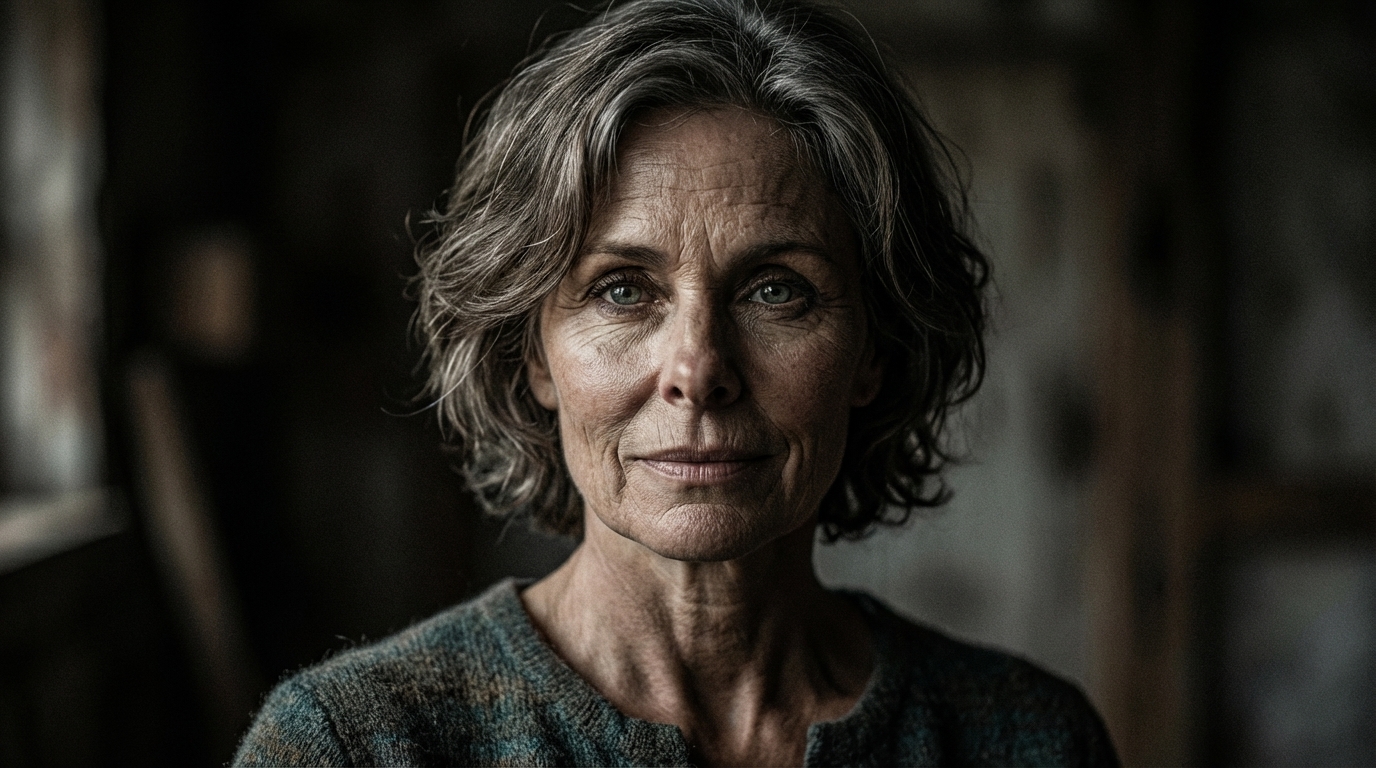
Wendy Elizabeth Cramer, born 8th March 1958 in Bicheno, transformed coastal simplicity into three decades of educational excellence across Tasmania. From fisherman's daughter to innovative primary educator, she wove storytelling passion with pedagogical vision, creating vibrant classrooms where creativity flourished. Married to Brett Cramer since November 1980, she cultivated sanctuary at 8 Lesdelle Street where flowerbeds met workshop, nurturing daughters who would become Guardians. In retirement, she remains fierce protector—slamming doors against Detective Jenkins, weathering impossible truths with characteristic resilience and grace.
Early Life in Bicheno
Wendy Elizabeth Cradock entered the world on 8th March 1958 in Bicheno, a serene coastal town on Tasmania's east coast where the Tasman Sea meets weathered granite shores and fishing boats depart before dawn. Born to Kenneth Alan Cradock, a local fisherman whose life followed the rhythms of tides and seasons, and Irene Lillian Cradock (née Storey), a seamstress and church organist whose hands created both practical garments and soaring music, Wendy grew up understanding that skilled crafts and patient attention could transform modest materials into something approaching grace.
The Cradock household reflected the coastal sensibility of practical beauty—furniture built to withstand salt air, fabrics selected for durability rather than fashion, domestic routines adapted to accommodate Kenneth's unpredictable fishing schedules. Yet within this functional framework, Irene cultivated atmosphere of cultural enrichment that distinguished their home from stereotypical fishing families. The small upright piano occupied pride of place in the living room, its presence testament to Irene's conviction that working-class children deserved exposure to art, music, and literature as much as their wealthier counterparts.
Kenneth's work as fisherman provided modest but generally reliable income, supplemented by Irene's seamstress earnings during periods when weather or poor catches threatened household finances. The family navigated the economic precarity common to resource-dependent communities, experiencing good seasons that allowed small luxuries and lean periods requiring careful rationing. Through these fluctuations, Irene maintained standards of domesticity that bordered on defiant—curtains always clean despite coastal grime, meals prepared with creativity that disguised limited ingredients, and children dressed in hand-sewn clothes that demonstrated skill rather than advertising poverty.
Wendy's brother, Lance Cradock, provided companionship and occasional competition throughout childhood. Lance would eventually pursue a career as aircraft maintenance engineer at Hobart Airport. The siblings shared Bicheno's particular coastal childhood—swimming in diamond-clear waters, exploring rock pools at low tide, developing the weather-sense that came from living where ocean moods determined daily plans.
The influence of Irene's position as church organist at St Paul's Anglican Church shaped Wendy's early exposure to community engagement and performance. Sunday services featured Irene's accomplished playing, transforming simple hymns into musical moments that elevated worship beyond mere routine. Wendy absorbed lessons about the power of artistic expression to create atmosphere, about the discipline required for skilled performance, and about the satisfaction of using one's talents in service of community rather than merely personal advancement.
Bicheno itself—with population hovering around 600 residents through Wendy's childhood—provided education in community dynamics that would inform her later teaching philosophy. In small coastal towns, everyone knows everyone's business, families interconnect through generations, and reputation matters more than wealth. Children learn early that actions have consequences that ripple through tight social networks, that cooperation matters more than competition when storms threaten, and that isolation can be both blessing and burden depending on temperament and circumstance.
Education and the Journey to Teaching
Wendy attended Bicheno Primary School from 1963 through 1970, where her mother occasionally taught, creating complex dynamic of maternal supervision and academic expectation. Being the teacher's daughter brought both privilege and pressure—Irene's presence ensured Wendy received attentive instruction, but also meant that any academic struggles or behavioural issues would reflect directly on family reputation. Wendy rose to these expectations with apparent ease, demonstrating bright mind and compassionate nature that made her genuinely popular rather than merely tolerated.
Her academic strengths emerged primarily in English and History—subjects that rewarded imagination, narrative understanding, and ability to synthesise information into coherent accounts. She excelled at creative writing assignments, crafting stories that revealed sophisticated understanding of character motivation and narrative structure. Teachers noted her inquisitive spirit and love for storytelling, evidenced by countless hours spent reading and creating imaginative tales that blended Bicheno's coastal atmosphere with fantasy elements drawn from whatever books she could access.
The school's modest library became her sanctuary, a collection of perhaps 500 volumes that Wendy systematically explored. She read far beyond her age level, consuming everything from children's classics to historical fiction to the encyclopaedias that represented the school's attempt at reference materials. This voracious reading developed vocabulary, broadened cultural awareness, and cultivated belief that books provided windows into worlds far beyond Bicheno's fishing-dependent economy.
In 1970, completing Year 6 at age twelve, Wendy faced the transition that separated coastal childhood from the broader opportunities and challenges of Hobart's secondary education. Her parents made the significant financial commitment to send her to St Mary's College in Hobart, a decision that required careful budgeting and represented investment in their daughter's future that fishing income barely supported.
From 1971 through 1975, Wendy attended St Mary's College, living initially with relatives in Hobart's northern suburbs before eventually securing boarding arrangement that better accommodated the school's demands. The transition from Bicheno's 600 residents to Hobart's metropolitan environment of nearly 150,000 people represented cultural shock that required significant adjustment. Yet Wendy adapted with characteristic grace, forming lifelong friendships whilst developing keen interest in drama and literature that would shape her professional trajectory.
The school's emphasis on arts education aligned perfectly with her inclinations. She participated actively in drama society, performing in school productions that allowed her to explore theatrical performance and character development. These experiences revealed natural ability to command audience attention, to inhabit characters convincingly, and to collaborate effectively in ensemble performances—skills that would later translate remarkably well into classroom teaching.
Her academic performance at St Mary's remained consistently strong, particularly in English where her creative writing and literary analysis impressed teachers. She began developing the pedagogical philosophy that would define her career: that education should inspire curiosity, encourage exploration, and provide psychological safety necessary for intellectual risk-taking. Even as student, she understood that learning flourished in environments where mistakes were treated as opportunities rather than failures, where diverse perspectives were valued, and where creativity mattered as much as conformity.
University Education and Meeting Brett
In 1976, Wendy enrolled in the Tasmanian College of Advanced Education in Hobart (which would later become part of the University of Tasmania), pursuing teaching qualification in Early Childhood Education. The programme combined theoretical coursework in child development and educational psychology with extensive practical placements in local schools, providing comprehensive preparation for professional teaching career.
The timing proved fortuitous in ways Wendy couldn't have anticipated. The mid-1970s represented period of pedagogical innovation in Australian education, with progressive theories challenging traditional rote-learning methods. Wendy encountered ideas about child-centred learning, the importance of creative expression, and the role of environment in facilitating development—concepts that resonated deeply with her own educational experiences and emerging professional vision.
During this period, she became actively involved in the university's drama society, continuing the theatrical interests she'd developed at St Mary's. The drama society provided social hub for creative students, offering respite from academic pressures whilst allowing artistic expression and collaborative production work. It was here, during rehearsals for a production whose specific details have been lost to time, that Wendy met Brett Cramer.
Brett, then completing his Advanced Diploma in Building and Construction, seemed an unlikely match for the theatrical, literature-loving education student. He attended drama society activities not as performer but as set construction volunteer, his carpentry skills valuable for building stage infrastructure. Yet their connection formed immediately—she the educator nurturing young minds with stories and creativity, he the craftsman shaping spaces with methodical precision. Their shared love of storytelling and community building, though expressed through radically different mediums, created foundation for partnership that would endure four decades.
Their courtship through 1976-1979 unfolded against backdrop of completing respective qualifications and establishing early career trajectories. Wendy graduated with her teaching diploma in 1979 (having begun in 1976) and immediately secured position at Claremont Primary School, beginning work in January 1980. Brett graduated from his Advanced Diploma in December 1979, already working at Premier Construction Group since starting in 1979. By late 1980, both were establishing themselves professionally in Hobart, with Wendy living in modest accommodation near Claremont whilst teaching, and Brett similarly situated nearby.
Marriage and Building Family Life
Wendy married Brett Wayne Cramer on 12th November 1980 at St David's Anglican Church in Hobart. The ceremony reflected both their personalities and financial situations—modest but deeply personal, attended by close family, longtime friends, and colleagues from Premier Construction Group and Claremont Primary School. The reception took place in the garden of Wendy's parents' home in New Town, featuring hand-made decorations and buffet prepared by Edith Cramer and the Cradock family. Rain briefly threatened the afternoon gathering but passed quickly—a moment Brett would reference throughout their marriage as metaphor for weathering temporary storms through enduring commitment.
The newlyweds initially lived in rental accommodation in Claremont, practical decision given Wendy's teaching position at Claremont Primary School and Brett's various construction sites across Hobart. These early years established patterns that would characterise their marriage: Brett's quiet reliability providing structure and stability, Wendy's warmth and social energy creating welcoming atmosphere that drew people into their orbit.
At twenty-two years old, Wendy continued developing her teaching practice whilst navigating the demands of new marriage. Her classroom at Claremont Primary quickly gained reputation as vibrant space filled with creativity and encouragement, where students were inspired to explore their potential and express themselves. She approached teaching with same innovative spirit she'd absorbed during her own education, implementing activity-based learning, incorporating dramatic arts into curriculum, and creating environment where children felt psychologically safe taking intellectual risks.
On 17th August 1981, during a storm that battered Hobart with characteristic winter fury, Wendy gave birth to Gladys May Cramer at Royal Hobart Hospital. The arrival transformed twenty-three-year-old Wendy from teacher of other people's children to mother of her own, adding profound new dimension to her understanding of child development, parental concern, and the delicate balance between protection and encouraging independence.
The choice of names reflected family connections—"Gladys" honouring Brett's cherished aunt, "May" serving as middle name that connected to various family members whilst maintaining flexibility in how the child might choose to identify herself. From infancy, Gladys demonstrated methodical temperament that seemed to inherit Brett's systematic approach more than Wendy's creative spontaneity, though she would develop her mother's sharp intelligence and capacity for careful observation.
In early 1984, Brett and Wendy purchased their first home on Branscombe Road in Claremont, a modest property that Brett immediately began renovating whilst Wendy transformed into welcoming domestic space. The house represented significant milestone—moving from rental accommodation to property ownership, establishing roots in community where they both worked, creating foundation for expanding family.
On 12th February 1985, Wendy gave birth to their second daughter, Beatrix Evelyn Cramer, at Calvary Hospital in Lenah Valley. The name selection again reflected Wendy's literary passions—"Beatrix" after Beatrix Potter, the beloved children's author whose stories had populated Wendy's childhood reading, "Evelyn" honouring family memory whilst providing elegant middle name. The hospital staff noted that Beatrix arrived "unusually alert," a quality that would characterise her entire personality—constantly observing, eternally curious, temperamentally inclined towards testing boundaries that her older sister accepted.
Professional Development and Pedagogical Philosophy
Throughout the 1980s and 1990s, Wendy's career at Claremont Primary School flourished alongside her roles as wife and mother. She developed reputation as innovative educator whose classrooms operated as laboratories for progressive teaching methods. Her approach emphasised hands-on learning, creative expression, and development of critical thinking skills over rote memorisation. Students who passed through her classes remembered the experience decades later—not specific lessons, but the atmosphere of encouragement, the sense that their ideas mattered, the feeling of being genuinely seen and valued.
Her dedication extended far beyond contractual teaching hours. She involved herself extensively in the Parents and Friends Committee, organised literacy programmes for the broader community, and established drama workshops that brought theatrical education to children whose families couldn't afford private lessons. Wendy's conviction that education should be accessible regardless of economic circumstances led her to invest countless unpaid hours ensuring disadvantaged children received opportunities their circumstances might otherwise deny.
In the early 2000s, Wendy's expertise earned her promotion to head of the English department, position that allowed her to influence curriculum development and mentor younger teachers. She championed progressive educational programmes that emphasised critical thinking, creativity, and empathy—values she believed essential for developing not merely literate students but thoughtful citizens capable of navigating complex ethical landscapes.
Her influence extended beyond individual classroom success. Wendy became recognised advocate for arts education, arguing persuasively at staff meetings and community forums that drama, creative writing, and artistic expression weren't frivolous luxuries but essential components of comprehensive education. She organised literacy programmes that integrated dramatic performance, created writing workshops that encouraged students to draw from personal experience, and developed curricula that treated Tasmanian history and folklore as living traditions worthy of creative exploration.
Throughout these professional achievements, Wendy maintained the delicate balance between career ambition and family commitment. She attended Gladys's academic achievements and Beatrix's theatrical performances with equal enthusiasm, hosted countless family dinners that accommodated extended Cradock and Cramer relatives, and created home environment where Brett's quiet workshop pursuits complemented her social energy and constant engagement with ideas.
Creating the Lesdelle Street Sanctuary
In 1993-1994, as Brett designed and constructed the purpose-built home at 8 Lesdelle Street, Wendy's vision profoundly shaped the domestic atmosphere that would transform brick veneer structure into genuine sanctuary. Where Brett focused on sustainable construction and passive solar design, Wendy concentrated on creating environment that would nurture family life, encourage intellectual exploration, and provide welcoming space for the steady stream of students, colleagues, and friends who would inevitably populate their household.
The flowerbed along the driveway became her signature contribution—not through exotic varieties or extensive acreage, but through sustained attention that coaxed exceptional blooms from carefully selected plants. She approached gardening with same gentle intentionality she brought to classroom management: specimens chosen for colour harmony and sequential blooming ensuring visual interest across seasons, maintenance performed with patient regularity, constant subtle adjustments as she learned what flourished in this particular soil and exposure.
The revolving library of children's books throughout the living spaces represented more than professional necessity; it embodied her conviction that homes should overflow with stories, that literacy developed through constant exposure to diverse narratives, and that books belonged in every room rather than confined to formal shelves. Picture books accumulated on coffee tables, chapter books tucked into magazine racks, poetry anthologies appeared in bathrooms as though by spontaneous generation. The house became saturated with stories—physical manifestation of Wendy's belief that literature shaped consciousness as much as formal education.
Her cooking transformed Brett's carefully designed kitchen into command centre for hospitality extending far beyond nuclear family. The dining table—sized generously to Brett's specifications—regularly accommodated students from her class whose parents faced temporary hardships, colleagues navigating professional or personal crises, and steady stream of Cradock family from Bicheno who treated the Claremont residence as reliable destination for connection and comfort. The meals she prepared reflected her seamstress mother's philosophy of making do beautifully: modest ingredients transformed through patient attention into food that nourished body and soul equally.
Motherhood and the Art of Nurturing Wildness
Wendy's approach to mothering reflected her pedagogical philosophy translated into domestic context. She created environment that encouraged exploration whilst providing security, that set boundaries without crushing spirit, that nurtured individual personality rather than attempting to mould daughters into predetermined forms.
With Gladys, this meant recognising and supporting her eldest daughter's methodical nature, her preference for order and systematic approaches to challenges. Wendy provided structure and routine that Gladys craved, celebrated her academic achievements without creating oppressive expectations, and modelled the quiet competence that Gladys would later demonstrate in her professional career at Aurora Energy. The bond between them ran deeper than typical maternal devotion—two methodical souls understanding each other's need for patterns, routines, and the psychological comfort of predictable systems.
With Beatrix, Wendy faced more complex challenge. Where Gladys accepted boundaries and worked within them, Beatrix constantly tested limits with irreverent curiosity that both concerned and secretly delighted her mother. Wendy's gift of display cabinets (actually built by Brett) for Beatrix's strange collections became emblematic of her parenting philosophy—containment without censure, acceptance without surrender. She recognised in Beatrix the wild creativity that needed nurturing rather than taming, the fierce independence that required guidance rather than suppression.
Between nurturing order and Beatrix's rebellious instincts lay profound maternal wisdom—understanding that loving someone exactly as they are, finding harmony not through forcing similarity but through celebrating difference, represented the deepest expression of parental devotion. Wendy's decades of teaching had taught her that children flourished when given space to become themselves rather than conforming to external expectations. She applied these principles to her own daughters with characteristic consistency.
The Long Crisis: 2014-2018
The death of Brody Taylor in August 2014 initiated period of escalating family crisis that would test every principle Wendy had built her life upon. Watching Beatrix's devastation whilst recognising the secret knowledge Gladys carried about what she'd discovered in that Moonah storage unit, Wendy confronted the limitations of maternal protection. Her decades of nurturing young minds, fostering resilience, and creating safe spaces for emotional growth seemed inadequate against trauma that shattered her younger daughter and slowly poisoned her elder.
Gladys's increasing visits to 8 Lesdelle Street after 2014 revealed deterioration that Wendy observed with educator's trained eye and mother's aching heart. The wine consumption that escalated from moderate to concerning, the professional stability that eroded culminating in dismissal from Aurora Energy in July 2018, the careful lies and deflections that characterised Gladys's explanations—all registered in Wendy's consciousness as evidence of suffering she couldn't repair.
The events of late July 2018 brought crisis into their home directly. Beatrix's carrying secrets about Clivilius and Guardian politics, Gladys's disappearance into circumstances beyond comprehension, the mysterious package appearing in Beatrix's room—all intruded upon domestic sanctuary Wendy had cultivated through decades of patient effort.
On 30th July 2018, when Detective Karl Jenkins arrived at their doorstep seeking information about Beatrix, Wendy's transformation from nurturing educator to fierce guardian manifested with startling intensity. Her swift door-slam, the forceful "Fuck off, Karl" that shattered any pretence of polite accommodation, revealed capacity for protective ferocity that years of gentle classroom management had never required. The woman who had spent three decades emphasising critical thinking and empathy now demonstrated that maternal protection overrode every other consideration.
Resilience and the Weight of Impossible Truths
Following Gladys's arrest and Brett's posting of $50,000 bail in August 2018, Wendy navigated emotional complexity with characteristic resilience and grace. She provided unwavering support whilst internally processing the cascade of revelations about Portal Keys, dimensional travel, and Guardian politics that defied every framework for understanding reality she'd developed through sixty years of earthbound existence.
When Gladys or Beatrix returned through Portals from Clivilius, visiting with unpredictable frequency, Wendy received them with grateful equanimity that asked no questions about Guardian duties or inter-dimensional politics. She provided space where her daughters could temporarily suspend their roles as Fourth Guardian of Belkeep and Second Guardian of Bixbus, where they could briefly inhabit simpler identities as simply Gladys and Beatrix—loved unconditionally, fed home-cooked meals, surrounded by a mother's acceptance that required no explanation of impossible truths.
