Virginia May Collins
Virginia May Collins was a Tasmanian nurse and healthcare administrator who dedicated her career to elderly and dementia care. Rising from Registered Nurse to Executive Director of Vaucluse Nursing Home, she navigated clinical excellence and institutional complexity under the Obsidian Healthcare Group. Her leadership through the troubled events of 2018 demonstrated unwavering compassion, leaving a legacy that transformed expectations across Tasmania's aged care sector.
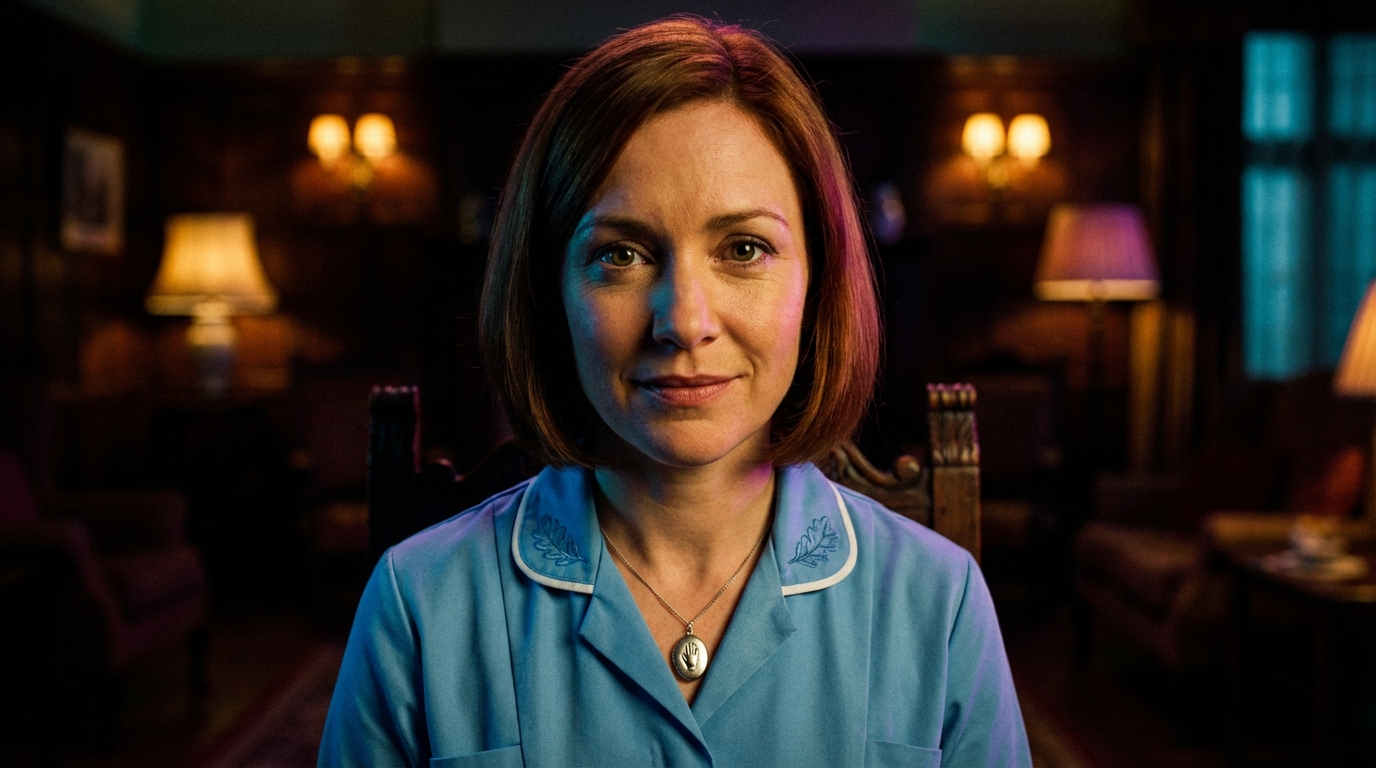
A Hobart Childhood and the Seeds of Compassion
Virginia May Collins was born on 15 April 1970 at Royal Hobart Hospital, the eldest of three children in a family that valued education, community, and quiet service. Her parents, Douglas and Margaret Collins, were both schoolteachers—Douglas at Hobart College, where he taught history and geography for thirty-two years, and Margaret at New Town Primary, where her warmth and patience made her a beloved figure among generations of young students. The Collins household in Lenah Valley was modest but filled with books, laughter, and an unshakeable belief that one's purpose in life was to leave the world gentler than one found it.
From an early age, Virginia exhibited the nurturing spirit that would define her career. Neighbours recalled a child who tended to injured birds with improvised splints, who organised her younger siblings David and Christine into games that invariably involved caring for "patients" fashioned from cushions and dolls. Margaret Collins often joked that Virginia had been born with a nurse's instinct—an observation that would prove prescient. When Virginia was eleven, her grandmother suffered a debilitating stroke and came to live with the family for her final years. Virginia took naturally to helping with her care, learning to read the subtle signals of discomfort and distress that her grandmother could no longer articulate clearly.
Her schooling at Ogilvie High School was marked by academic diligence and quiet leadership. She excelled in the sciences, particularly biology and chemistry, whilst maintaining a genuine interest in the humanities that her father had instilled. A school report from 1986 described her as "possessed of unusual maturity and empathy for her age, with a clear sense of vocation that sets her apart from her peers." She served as a volunteer at the Royal Hobart Hospital's auxiliary from the age of sixteen, wheeling trolleys of books and magazines to patients, learning the rhythms of institutional care, and absorbing lessons that no classroom could provide.
The death of her grandmother in 1987, whilst Virginia was completing her final year of school, crystallised her determination. She had witnessed firsthand both the dignity and the difficulties of eldercare, the ways in which institutional neglect could compound suffering, and the profound difference that compassionate attention could make. When she enrolled at the University of Tasmania the following year to pursue a Bachelor of Nursing, she did so with a clarity of purpose that never wavered.
University Years and Clinical Formation
Virginia entered the University of Tasmania's nursing programme in 1988, joining a cohort that would graduate into a rapidly changing healthcare landscape. The late 1980s saw significant reforms in Australian nursing education, with the profession transitioning from hospital-based training to university degrees. Virginia embraced this shift, combining rigorous academic study with clinical placements that took her across Tasmania's diverse healthcare settings.
Her time at university was marked by a profound dedication to her studies and a growing interest in two specialised areas: geriatric care and mental health. The former drew upon her personal experience with her grandmother; the latter emerged from placements at the Willow Court asylum complex in New Norfolk, where she witnessed the challenges faced by patients with dementia and other cognitive disorders. The conditions at Willow Court troubled her deeply—the institutional neglect, the overreliance on sedation, the absence of dignity in daily care—and she resolved to work toward better models of treatment.
She excelled in her clinical rotations, working in hospitals and nursing homes across Tasmania. Supervisors consistently noted her calm demeanour, her ability to connect with patients who had withdrawn from other caregivers, and her meticulous attention to clinical detail. A placement report from 1990 observed that "Miss Collins demonstrates an unusual capacity to remain composed under pressure whilst never losing sight of the human being within the patient." These qualities would serve her throughout her career, particularly during the difficult events that would eventually define her tenure at Vaucluse.
Virginia graduated in 1992 with honours, her thesis examining the impact of environmental design on dementia patient wellbeing—a topic that was then considered progressive and would later become central to her work. She had emerged from university not merely as a competent nurse but as a healthcare professional with a vision for how elderly care could be transformed.
Early Career and Rising Leadership
Virginia began her professional career in 1992 as a Registered Nurse at Launceston General Hospital, assigned to the geriatric ward where her particular skills could be immediately applied. The work was demanding—understaffed wards, patients with complex needs, families struggling to understand their loved ones' decline—but Virginia found deep satisfaction in providing the kind of care she had witnessed her grandmother lacking. She administered medications with precision, developed rapport with patients whom others found difficult, and quickly distinguished herself as a valuable team member.
Within two years, her talents had attracted attention beyond Launceston. In 1994, she accepted a position as Senior Nurse in the mental health unit at Royal Hobart Hospital, returning to the city of her birth to focus on elderly patients with dementia and other cognitive disorders. The role represented a significant advancement, requiring her to develop patient care plans, coordinate with multidisciplinary teams, and provide leadership to junior staff. Her approach combined clinical rigour with genuine warmth—a balance that earned her respect from colleagues and gratitude from the families she served.
The three years at Royal Hobart deepened Virginia's understanding of the systemic challenges facing mental health care in Tasmania. She witnessed the consequences of underfunding, the bureaucratic obstacles that prevented innovative treatment, and the emotional toll that the work extracted from dedicated staff. Rather than becoming cynical, she channelled her frustrations into advocacy, pushing for improved protocols and championing the needs of her patients within institutional constraints.
In 1997, Virginia made an unexpected move, accepting the position of Nurse Manager at Burnie Community Health Centre on Tasmania's northwest coast. The role represented a departure from acute care toward community-based services, but Virginia saw it as an opportunity to address health challenges before they became crises. She managed nursing staff, oversaw patient care operations, and implemented health programmes focused on improving access to mental health services in the region's underserved communities. Her three years in Burnie taught her the administrative and leadership skills that would prove essential in her later career.
Director of Nursing and the Path to Vaucluse
The new millennium brought Virginia her first executive role. In 2000, she became Director of Nursing at Devonport Nursing Home, a position that placed her in charge of both clinical care and administrative operations. The facility was struggling when she arrived—poor inspection ratings, staff turnover, and a reputation for mediocrity that deterred families seeking quality care for their elderly relatives. Virginia approached the challenge with characteristic determination.
Over the following five years, she transformed Devonport Nursing Home into a model facility for elderly care. She introduced innovative care models that emphasised resident dignity and autonomy, implemented staff training programmes that reduced turnover and improved morale, and ensured compliance with healthcare regulations whilst never losing sight of the human dimension of care. By 2005, the facility had received commendations from the Tasmanian Health Accreditation Authority, and Virginia had established herself as one of the state's most respected figures in aged care administration.
Her success at Devonport attracted the attention of the Obsidian Healthcare Group, the privately held medical conglomerate that owned several aged care facilities across Tasmania, including the historic Vaucluse Nursing Home in Lindisfarne. In 2005, Virginia accepted the position of Operations Manager at Vaucluse, drawn by the facility's reputation, its beautiful grounds overlooking the River Derwent, and the opportunity to implement her vision of compassionate care on a larger scale.
Throughout this period, Virginia continued her professional development with characteristic diligence. She obtained an Advanced Certificate in Geriatric Nursing from the Australian College of Nursing in 2001, completed a Leadership in Healthcare Management Programme at the University of Tasmania in 2006, and earned a Dementia Care Certification from Alzheimer's Australia in 2010. These qualifications underscored her commitment to providing the highest standard of care and positioned her for the leadership role that awaited.
The Vaucluse Years
Virginia's arrival at Vaucluse Nursing Home in 2005 marked the beginning of a relationship that would span the rest of her career. The facility, established in 1947 and owned by the Obsidian Healthcare Group, carried both a distinguished reputation and whispered mysteries that Virginia learned to navigate with pragmatic grace. She focused on what she could control—the quality of care, the wellbeing of staff, the comfort of residents—whilst accepting that certain aspects of the institution's corporate parentage would remain opaque.
As Operations Manager, she oversaw daily operations, managed staff across multiple departments, and implemented policies that measurably improved patient care. She played a key role in integrating specialised dementia care services, building upon the infrastructure established during the 2003 Derwent Suite renovation. Her approach emphasised person-centred care, environmental design that reduced confusion and anxiety, and the emotional support of families navigating the difficult terrain of cognitive decline.
The seven years that followed were marked by steady improvement in Vaucluse's clinical outcomes and staff satisfaction. Virginia developed a reputation for calm, collaborative leadership and an open-door policy that made her accessible to staff at all levels. She championed restorative care models, advocated for mental health support for caregivers experiencing burnout, and forged partnerships with the University of Tasmania's School of Nursing that brought fresh perspectives and research opportunities to the facility.
In 2012, Virginia was appointed Executive Director of Vaucluse Nursing Home, assuming ultimate responsibility for the facility's strategic direction and operational excellence. The promotion recognised not only her administrative capabilities but her embodiment of the values that Vaucluse aspired to represent. Under her leadership, the nursing home continued to thrive, maintaining its reputation for quality care despite the broader challenges facing Australia's aged care sector.
The Events of 2018
The summer of 2018 tested Virginia's leadership as nothing before had done. Within the span of a few weeks, Vaucluse witnessed disappearance, death, and revelations that blurred the boundaries between personal tragedy and institutional crisis. Virginia found herself navigating circumstances that demanded every ounce of her professional composure and human compassion.
Jane Elisabeth Lahey, a ninety-two-year-old former schoolteacher and matriarch of a prominent Tasmanian family, had been resident at Vaucluse since June 2017. Her terminal pancreatic cancer diagnosis meant that Virginia and her staff were providing palliative care, supporting Jane through her final months with the dignity and attention that had become Vaucluse's hallmark. Jane's granddaughter, Detective Sarah Lahey, was a frequent visitor, and Virginia had developed a rapport with the young detective that transcended the usual professional boundaries between staff and family.
On 31 July 2018, Virginia made an urgent call that would alter the course of multiple lives. Jane had awakened from nightmares in severe distress, calling out names connected to Killerton Enterprises—a company that Virginia knew only vaguely but which would prove central to broader investigations. Recognising that Jane needed her family, Virginia contacted Sarah immediately, her voice carrying the weight of decades of nursing intuition. Sarah abandoned her work at the police station and drove to Lindisfarne within minutes.
What followed was a cascade of revelations that Virginia witnessed with helpless compassion. As Sarah comforted her grandmother, connections emerged between Jane's nightmares and Sarah's active investigation into missing persons. When a staff member innocently inquired about the whereabouts of Jamie Greyson—a colleague who had disappeared days earlier—the question unlocked family secrets that had remained buried for decades. Virginia watched as Sarah's professional world collided with deeply personal trauma, as the detective discovered that Luke Smith, her prime suspect, was family.
Virginia's tears that afternoon mirrored Sarah's devastation. For a woman who had spent her career protecting the vulnerable, the moment represented a profound helplessness—the recognition that some wounds cannot be cushioned, some revelations cannot be softened, and the best one can offer is presence amidst the storm. She stayed with Jane and Sarah as long as she was needed, providing the steady anchor that both women required.
Jane Lahey died on 4 August 2018. Robert Hugh Gangley, Jane's longtime friend and fellow resident, followed three days later. The deaths, whilst officially recorded as natural, left questions that Virginia chose not to pursue. She focused instead on supporting her staff through the emotional aftermath, on maintaining the facility's operations during a period of heightened scrutiny, and on honouring the memory of residents whose final days had been touched by circumstances beyond anyone's control.
Leadership and Legacy
The events of 2018 might have broken a lesser administrator, but Virginia emerged with her commitment to compassionate care strengthened rather than diminished. She understood that Vaucluse carried institutional memory—both the kind that heals and the kind that haunts—and she chose to acknowledge rather than suppress that complexity. Staff training modules incorporated discussions of the emotional toll of witnessing family trauma; local history displays in the River Garden Pavilion presented the facility's past with honest ambiguity.
Under her continued leadership, Vaucluse increased its focus on trauma-informed care, recognising that residents often arrived carrying burdens that extended far beyond their medical diagnoses. She championed intergenerational programmes that paired local students with residents for memoir transcription, believing that the stories of the elderly deserved preservation and that young people benefited from connection with those who had witnessed history. "Our strength," she once told ABC Radio Hobart, "is not in pretending we're spotless. It's in knowing we carry stories not just of care, but of consequence."
Virginia's approach to the Obsidian Healthcare Group's corporate oversight remained pragmatic. She advocated for her residents within the constraints she was given, pushed back against policies she considered harmful, and accepted that certain aspects of the organisation's operations would remain beyond her knowledge or control. Whether this represented wisdom or compromise remained a question she herself may not have been able to answer definitively.
Beyond her professional responsibilities, Virginia remained deeply involved in her community. She actively participated in local health initiatives, advocated for improved elderly care services across Tasmania, and mentored young nurses and healthcare professionals with the same patience and encouragement she had once received. As a public speaker, she regularly addressed conferences and seminars on topics related to elderly care, dementia, and healthcare management, sharing the hard-won insights of a career spent at the intersection of medicine and humanity.
Personal Life and Character
Those who knew Virginia personally described a woman whose professional warmth was matched by genuine kindness in her private life. She never married, though she maintained close friendships that sustained her through the demands of her career. Her relationship with her siblings remained strong throughout her life, and she took particular joy in her role as aunt to David's three children, who knew her as a source of wisdom, encouragement, and occasional spoiling.
Her devotion to family extended to her own mother, who in later years became a resident at Vaucluse. The arrangement created an unusual dynamic—Virginia as both daughter and Executive Director—but she navigated it with characteristic grace, ensuring that her mother received excellent care whilst maintaining appropriate professional boundaries. The experience deepened her understanding of what families endured when placing loved ones in institutional care, adding personal dimension to her professional empathy.
Virginia found peace and restoration in Tasmania's natural landscapes. An avid hiker and nature enthusiast, she spent her weekends exploring the trails of Mount Wellington, the beaches of the Tasman Peninsula, and the ancient forests of the southwest. These excursions provided respite from the emotional demands of her work and connected her to the island she had called home her entire life. She also maintained a beautiful garden at her Lindisfarne cottage, finding in horticulture the same satisfaction she found in nurturing human wellbeing—the patience required, the attention to subtle signals, the reward of watching something flourish under careful attention.
Her reading habits reflected her multifaceted personality. Historical novels were her particular pleasure, especially those set in periods of social transformation where individuals navigated institutional change. She saw parallels to her own work in these narratives—the tension between tradition and progress, the human cost of systemic failure, the possibility of dignity preserved amidst upheaval.
