4338.209 · July 28, 2018 AD
The Word Jane Finally Said
Detective Sarah Lahey arrives at her grandmother's unit at Vaucluse Nursing Home determined to cook dinner rather than cancel again. The meal does not go well. Across a small table in a room where a vintage radio plays the evening classical programme, Jane finally says aloud the word neither of them has been willing to say for the week since the doctors told Sarah about the cancer. Sarah's composure cracks. Jane, who has managed rooms her entire life, discovers she has nothing to offer this one except her hand.
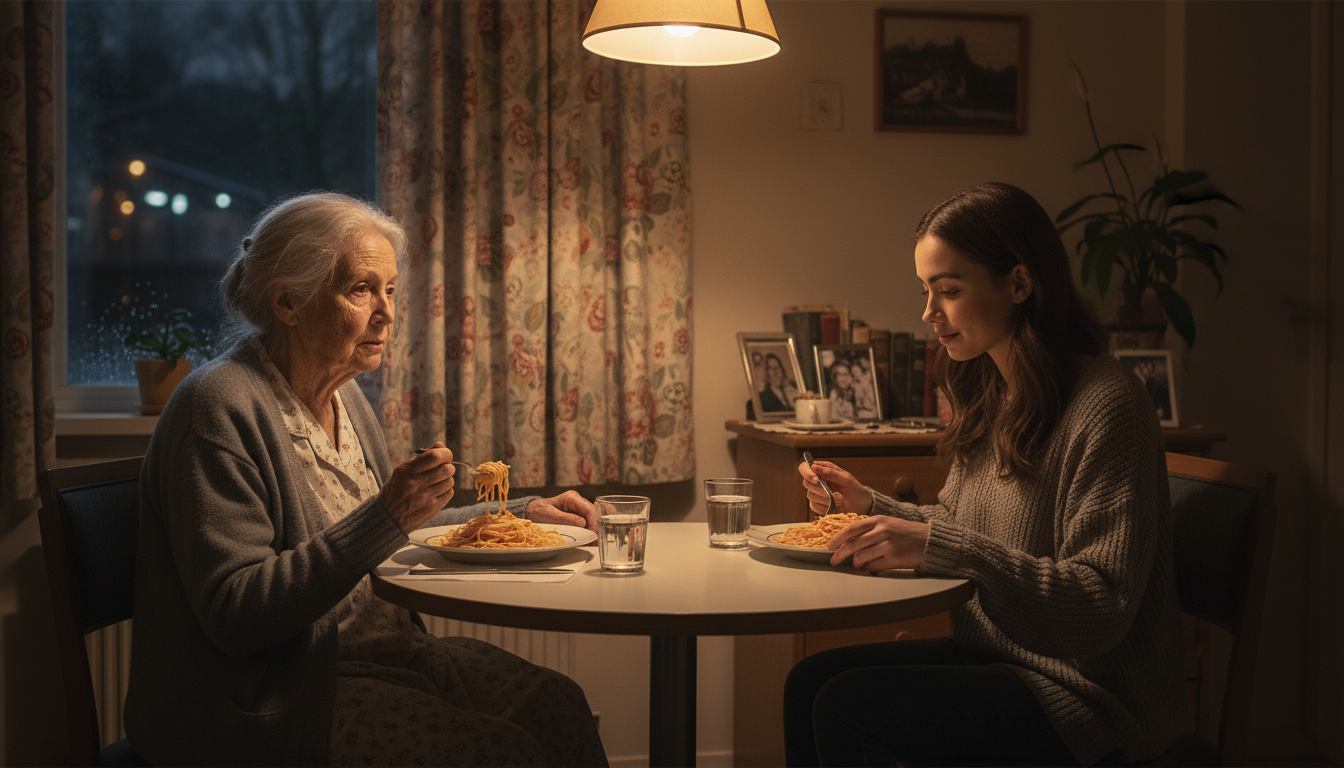
Sarah Lahey let herself into her grandmother's unit with a bag of groceries and a promise she had been repeating to herself all the way from her own house. No takeaway tonight. No cancellation. No apologetic phone call asking to reschedule. She had been rescheduling herself out of her own life for months, and the one person in Hobart who deserved not to be rescheduled again was sitting in the next room with a diary open on her lap and considerably less time left than anyone in the family was prepared to acknowledge out loud.
The kitchen had been Jane's domain for most of a lifetime. Sarah had never become a cook. She had not magically become one tonight. What she was doing at the stove was therefore less about food than about the small awkward stubborn offering a detective with nowhere else to put her love was capable of making with her own two hands on a Saturday evening at the end of a day that had contained Louise Jeffries and a stolen scrap of notepaper and a name from California she could not stop turning over inside her head.
Jane had been writing in her diary when the first clatter came from the kitchen. The diary had been catching up on an afternoon that had contained considerably more than the afternoon had been intended to contain. She closed it, set it beside the small framed photograph of Patrick on the side table, and made her slow way to the kitchen doorway to observe the scene with the particular patient attention of a woman who had been reading kitchens for seventy years.
The observation was brief. The sauce had developed opinions. The pasta was beyond consultation. Her granddaughter's shoulders were set at the angle of a woman losing a negotiation by degrees. Jane kept her face entirely neutral, which took a small amount of effort, and permitted herself to be ushered back toward her recliner by a granddaughter whose need to be the one cooking this evening was written in every line of her. Permission was sometimes the most useful thing a grandmother could offer. Jane had learned this across many decades.
She turned on the vintage radio at her elbow and let the evening classical programme fill the living room at the volume she had chosen for exactly this kind of evening. Sarah resumed the losing negotiation in the kitchen. Neither of them said anything about it.
The meal, when it arrived, had been set on the small dining table with a care that mattered more than the contents of the plates. Napkins folded. Water glasses filled. The sauce jug positioned with a quiet optimism Jane found affecting. Sarah took the first bite as an act of leadership, and what happened to her face across the next several seconds did Jane the small kindness of being genuinely funny, and Jane laughed — cracked, the way her laugh had been cracking for weeks — and her granddaughter's whole face opened in response with the slow familiar motion of a door Jane had been watching open and close in the same face since Sarah had arrived on her doorstep at nine years old.
They ate the disaster. Jane with the full attention it deserved, which had nothing whatever to do with pepper. Sarah with the quiet relief of a woman whose ridiculous cooking her grandmother was eating without complaint. For a short while, across a small table in a room where the classical programme played on unhurried and the Derwent had long since concluded its business with the day, the two of them were simply two women sharing a meal one of them had cooked badly and the other was entirely happy to eat.
Then Jane set down her fork.
They said they told you about the cancer.
Sarah had been carrying it for a week. She had been carrying it inside every conversation she and Jane had shared across the last seven days — the careful small distance she had been keeping around the thing she could not say, the way she had laughed slightly too hard and filled slightly too many silences and held every exchange a precise inch away from the only one that mattered. She had walked through her working day with it sitting inside her chest like a small cold stone she could not put down. And now her grandmother had said the word plainly, across a small table, in the voice of a woman who had authorised the doctors a week earlier to say it to Sarah and had been waiting, in her own time, for it to come back to her.
Sarah's fork left her fingers and hit the plate.
The question that came out of her mouth was not a detective's question. It arrived raw, and it arrived without permission, and it arrived as the thing that had been sitting behind every minute of her working day with nowhere else to go.
Jane had managed rooms her entire life. She had outplayed a man half her age not four hours earlier in this same building. For nine decades her response to a room had been the thing the room needed. She had nothing for this one. She reached across the small table and took her granddaughter's hand, and she sat with the fact that it was the only thing she had left to offer, and she did not dress it up as anything more than what it was.
Sarah wept across the cluttered table. Jane held on. The evening classical programme carried on unhurried in the next room, and neither of them moved.
