4338.209 · July 28, 2018 AD
The Things We Burn for Love
In Jane’s kitchen, Sarah trades crime scenes for saucepans, determined to cook one good meal for the woman who raised her. Between burnt pasta and small talk about her brother, the conversation drifts somewhere she’s not ready to go — toward the truth of Jane’s illness, and the quiet countdown they’ve both been pretending not to hear. When the words finally come, Sarah’s composure collapses, and the detective becomes the granddaughter again, holding on to the only evidence that matters: love, fragile and finite.
"Cooking for someone you love is an act of hope. Even when it goes wrong — maybe especially when it goes wrong."
"What are you doing, Sarah?"
Jane’s voice floated up behind me, close enough to startle. I jumped, just slightly — enough to send a spoon clattering against the side of a pan with a metallic ring that seemed to echo through the small kitchen. Her approach had been unnervingly stealthy, more like a trained ninja than a ninety-two-year-old woman with arthritis in both knees and a hip that clicked audibly whenever she stood up too quickly.
I turned to see her standing in the doorway, backlit by the warm glow from the living room lamp, her slight frame almost ethereal in the golden light. The familiar glint of mischief caught in her eyes — that sparkle hadn’t faded one bit over the years, undimmed by everything time had taken from her. It was the same look she’d had when I was seven and she’d caught me sneaking biscuits before dinner, the same expression when I’d come home at sixteen smelling of cheap wine and lies.
"I'm cooking you dinner," I replied, injecting my voice with more confidence than I had any right to feel, given the state of what was happening on the stovetop.
In truth, the kitchen — Jane’s long-reigning domain, her kingdom of Sunday roasts and perfectly risen scones — felt like foreign territory. I was trespassing, an interloper in a space where Jane had spent decades creating magic from flour and butter, where she’d fed generations of family with the kind of effortless competence I’d never managed to inherit.
The counters were cluttered with my attempts at organisation: opened jars, half-chopped vegetables in varying states of uniformity, a cookbook propped open to a page I’d stopped consulting twenty minutes ago when I’d realised I was hopelessly lost. A dusting of flour covered one section of the counter like snow, evidence of my earlier struggle with what the recipe had optimistically called "simple pasta dough."
"Looks to me like you're burning it," Jane said, peering into the pans with theatrical dismay, her head tilted at an angle that suggested both amusement and genuine concern.
Her tone was playful, but the raised eyebrow told another story entirely. She leaned in with exaggerated scrutiny, making a soft tutting sound under her breath that I’d heard a thousand times before — the same sound she’d made when I’d overcooked rice as a teenager, when I’d added salt instead of sugar to a cake mix, when I’d somehow managed to burn water.
Jane had always possessed a flair for the dramatic, particularly when it came to food. Cooking wasn’t just sustenance for her — it was an art form, a love language, a way of caring for people that transcended mere nutrition. Apparently, her talents extended to kitchen commentary as well, delivered with the precision of a food critic and the gentle mockery of someone who loved you too much to let you fail without trying.
"Go and sit in your recliner," I told her gently but firmly, guiding her away from the crime scene before she could launch into a full critique that would inevitably make me feel worse about my already questionable choices. "It won't be long now."
The lie tasted bitter even as I spoke it. Everything was taking longer than it should have, every step more complicated than the recipe suggested, every timing completely wrong. But Jane didn’t need to know that. Not yet.
She let me usher her across the small space, her footsteps slow but sure, one hand reaching out occasionally to steady herself against the counter, then the doorframe, then the back of a chair. The journey from kitchen to living room that would have taken me five seconds required nearly a minute of careful navigation for her, each step a small negotiation between determination and limitation.
I watched as she lowered herself into her favourite chair — an ancient recliner that sagged in all the right places, its fabric worn smooth by decades of use, stuffing escaping from one corner where the seam had finally given up. The upholstery had once been a vibrant floral pattern, but years of afternoon sunlight streaming through the window had faded it to soft pastels, ghosts of flowers on fabric that felt like butter under your fingers.
Jane claimed it was moulded perfectly to her bones, shaped by thousands of hours of afternoon naps and evening crossword puzzles, and honestly, I didn’t doubt it. I’d tried sitting in it once when she wasn’t looking, and it had felt wrong, like wearing someone else’s well-broken-in shoes. It was Jane’s chair in the same way the kitchen was Jane’s kitchen, the same way this entire unit carried her presence in every corner.
As she settled in with a small sigh of satisfaction, I allowed myself a quiet breath of relief. Her timing had been perfect, breaking the loop of anxious thoughts that had been circling my brain like sharks in dark water — thoughts about Karl, about the case, about the folded paper with the revelation of Killerton Enterprises.
And mercifully, her presence had distracted me from the mounting evidence that I was committing culinary crimes that should probably carry prison sentences.
I was never a good cook. Not even a passable one. That had always been a sore spot for me, a small failure that felt larger because it was so visible, so visceral. You couldn’t hide bad cooking the way you could hide other inadequacies. The evidence sat right there on the plate, undeniable.
I remembered the hours we’d spent together in this same kitchen when I was younger — Jane at the counter rolling pastry with the effortless grace of someone who measured by instinct rather than cups, whose hands knew the texture of dough the way a musician knows the feel of their instrument. Me fumbling beside her, covered in flour that somehow ended up everywhere except where it was supposed to be, my frustration mounting as simple tasks became inexplicably complicated.
Those afternoons had been filled with laughter, gentle corrections delivered with infinite patience, and her steady guidance that never made me feel stupid even when I definitely deserved it. "Try again, love," she’d say, watching me attempt to crack an egg without getting shell fragments everywhere. "You'll get it. Just takes practice."
I’d always believed I’d catch on eventually. That one day the mysterious alchemy of cooking would suddenly make sense, that my hands would develop the muscle memory hers possessed, that I’d be able to look at ingredients and see possibilities rather than potential disasters.
Spoiler alert: I didn’t.
Despite her best efforts — and my occasional bursts of determination usually sparked by guilt or special occasions — my culinary skills remained stubbornly mediocre. Edible, usually. Enjoyable, occasionally. But never approaching the kind of natural competence Jane wielded like other people breathed.
Her meals had heart, history, soul baked into every layer. Mine were... functional. Sometimes. On good days. When I followed the recipe exactly and the universe decided to cooperate.
But tonight, as I stirred what was probably overcooked pasta swimming in something-too-salty that had started life as a promising tomato sauce, I wasn’t trying to replicate her magic. I wasn’t attempting to prove I’d finally learned her secrets or absorbed her skills through osmosis.
I just wanted to return something. A gesture. A bit of care, wrapped in imperfect food and clumsy effort. The knowledge of her diagnosis sat heavy in me, something I’d been carrying since the doctor had told me, his voice professionally gentle as he’d explained what "stage four" meant, what "months rather than years" translated to in real terms.
Jane had raised me when the world had fallen apart, when my parents’ deaths had left me orphaned at nine years old with nowhere to go except into the arms of this woman who’d already raised her own children, who’d already earned her retirement, who’d taken Oscar and me in anyway without hesitation.
The least I could do was try not to poison her dinner.
The kitchen filled with sounds and smells that were becoming increasingly concerning — pasta sticking to the bottom of the pot despite my vigorous stirring, sauce bubbling with aggressive enthusiasm, something beginning to smell slightly scorched despite my constant monitoring. Through the doorway, I could see Jane in her chair, her eyes closed, her chest rising and falling with the steady rhythm of someone completely at peace.
How did she do it? How did she face terminal cancer with such calm, such grace? How did she sit there looking serene while I was falling apart in her kitchen, burning dinner and blinking back tears I couldn’t quite suppress?
"Have you heard from Oscar lately?"
Jane’s voice drifted in from the living room, soft but unmistakable.
The room beyond the kitchen was a quiet shrine to memory. Dozens of framed photographs lined the walls and shelves in careful arrangement — snapshots of lives in progress, caught mid-laughter, mid-adventure, mid-life. Jane and her late husband on their wedding day, impossibly young in black and white. My mother as a child, gap-toothed and grinning. Me at various ages, a progression from chubby toddler to gangly teenager to the woman I’d become.
There were photos of Oscar too, scattered throughout the chronology — my brother in all his stages, his life documented in frozen moments that Jane had curated with the care of a museum curator. Oscar at his graduation. Oscar with his first car. Oscar and me together, arms slung around each other’s shoulders, before distance had carved its quiet canyon between us.
"No, I haven't heard from him for a few months," I called back, raising my voice slightly over the sizzle of the pan. My answer came easily, without thought or defensiveness. It wasn’t out of the ordinary. That was just how Oscar and I operated these days — occasional phone calls when one of us remembered, the odd text message on birthdays or holidays, and long periods of comfortable silence in between.
There was no drama between us. No rift, no falling out, no bitter argument that had fractured our relationship. Just... distance. Geography — him in London, me in Hobart — and time doing what they always did, slowly eroding connection through the simple accumulation of separate days, separate lives, separate worlds that no longer intersected as naturally as they once had.
He had his career, his friends, his life that I only saw in glimpses through social media posts and the occasional catch-up call where we’d talk for an hour and somehow say nothing meaningful. And I had mine — this job that consumed me, this city that had always been home, this woman in the next room who needed me more than my brother did.
"Oh."
That was all she said. Just a single syllable, quiet and a little deflated, carrying more weight than a full sentence could have. It floated out like a thread, tugged at something in me, then unravelled into silence that felt heavier than conversation.
I recognised that "oh." It was the sound of a grandmother thinking about the family she’d raised, wondering where all the connection had gone, mourning the loss of something that had slipped away so gradually no one had noticed until it was already gone. It was the sound of someone counting down their remaining time and realising her grandchildren had drifted apart, that the family unit she’d worked so hard to preserve after our parents’ deaths had quietly fractured under the pressure of adult life and diverging paths.
A few seconds later, I heard the soft click of the old radio being turned on — the vintage one that sat on the side table, the one Jane had owned since before I was born, the one that still worked despite its age because Jane took care of things, made them last.
The familiar hum of classical music seeped into the house like steam — low strings and gentle piano filling the gaps between us, filling the silence I’d left with my inadequate answer about Oscar. I imagined her closing her eyes, letting it wash over her, letting go of the conversation like she always did when she sensed I had no more to give on a subject.
She’d never been one to push. Never demanded more than I could offer, never made me feel guilty for the ways I fell short of being the granddaughter she deserved. She just... let go. Accepted. Moved on to the next thing with grace I’d never managed to cultivate.
In the kitchen, I turned back to the task at hand with fresh determination born of guilt and love in equal measure. Pots clanged as I moved them from burner to burner. Wooden spoons scraped against metal with sharp sounds that seemed too loud. The smells — some pleasant, others increasingly questionable — thickened the air until I felt like I was breathing soup.
I tasted, grimaced, stirred more vigorously. Adjusted seasonings with the kind of desperate guesswork that characterised all my cooking. Watched the pasta like a suspect I didn’t trust, as though staring hard enough would stop it overcooking. Tried to pretend the food wasn’t winning this particular battle.
Oscar’s name lingered in the corners of my mind as I worked — familiar, distant, a presence that hummed like a tuning fork struck once and left to vibrate long after the initial impact.
Still, I made a note in the back of my mind: text him. Soon. Something stupid and warm. Something that didn’t start with "just checking in" or "hey, how's life?" — those hollow phrases that signalled duty rather than desire. Something real, something that might pierce through the polite distance we’d constructed between us.
Later, I told myself, moving a pot off the heat before its contents could cross from overcooked into completely ruined. First, I had a meal to save from complete disaster. And a woman in the next room whose patience, and possibly appetite, was not infinite even if her love appeared to be.
The classical music swelled slightly as Jane adjusted the volume — likely using the controls built into the arm of her chair. Violins and cellos wove together in harmonies that Jane understood in ways I never would, her appreciation of music as natural and instinctive as her skill in the kitchen.
I listened to it as I worked, letting it provide a soundtrack to my culinary struggles, finding an odd comfort in the knowledge that even if dinner was a disaster, at least there would be beautiful music to accompany our disappointment.
"Come on then. Let's get you up to the table," I said, setting aside my culinary concerns for the moment and wiping my hands on a tea towel that had seen better decades.
The food was as done as it was going to get — which was to say, cooked in the technical sense even if not exactly what I’d hoped for. But Jane would eat it anyway, would find something kind to say about it, would make me feel less like a complete failure even if we both knew the truth.
Crossing the small space between kitchen and living room, I bent down and took Jane’s hands in mine, feeling the delicate bones beneath papery skin, the coolness of her fingers despite the warmth of the room. I guided her up from the recliner with a careful steadiness that had become second nature over the past few years, a choreography we’d developed through practice and necessity.
Her movements were slow now — measured and deliberate, each one a quiet negotiation between intention and ability, between the person she used to be and the person time had gradually transformed her into. The woman who once strode across beaches with me at her heels, who’d chased me through parks and taught me to swim in freezing Tasmanian waters, was still there. But muted by time, her pace more cautious, her frame more fragile, her strength rationed carefully to accomplish the simple tasks that used to require no thought at all.
She leaned on me more than she liked to admit, her pride still intact even as her body betrayed her in small ways that accumulated into something undeniable. I could feel the tremor in her hands, the way she had to concentrate on each step, the slight catch in her breathing that suggested even this short walk required effort.
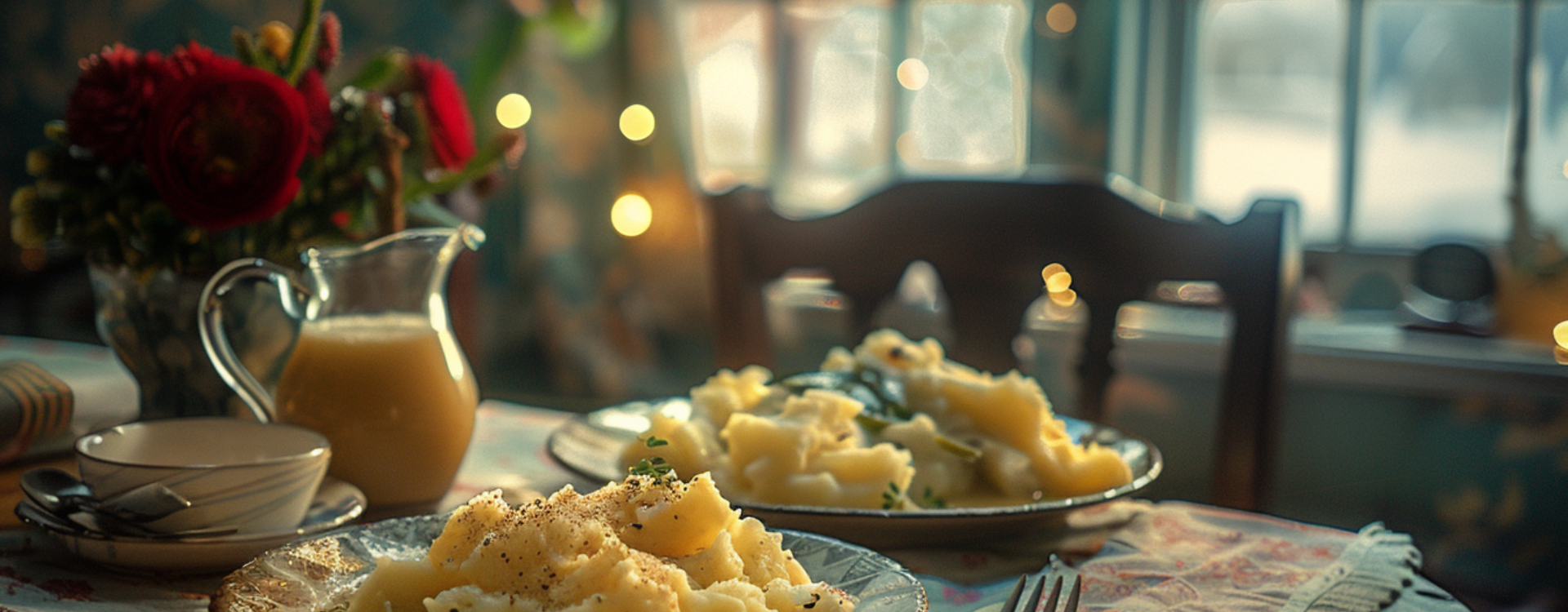
Once I’d helped her to the dining table, easing her into the nearest chair with all the gentleness I could muster, I took my own seat opposite. The table between us was small — intimate, really, sized for a single person or a cosy pair rather than larger family gatherings.
For a moment, I just watched her, tucking a stray napkin onto her lap with shaking fingers, fussing over the placement of her cutlery with the kind of attention to detail she’d always possessed, like the exact angle of a fork somehow mattered, like any of this was normal.
Like we weren’t both acutely aware of the diagnosis hanging over us, the timeline counting down, the reality that these dinners together had an expiration date I couldn’t bear to calculate.
"Smells good," Jane said, smiling faintly, her eyes meeting mine with that familiar twinkle that hadn’t dimmed even as everything else had.
My lips twitched in response, warmed by her eternal optimism, her unwavering kindness even in the face of obvious disaster. She had a way of making even culinary catastrophe sound like a compliment, of finding something positive to say when honesty would have been kinder but harder to hear.
In truth, I suspected the scent drifting from the centre of the table was more chaotic than inviting — an aggressive blend of overcooked pasta, oversalted sauce, burnt garlic, and disappointed hopes. But this was Jane. She knew when to lie with grace, and when to wield the truth like a blade.
If she’d said it looked good, I might’ve fallen off my chair from shock. But "smells good" was diplomatic enough to be kind without crossing into obvious falsehood.
"You better get to eating it then," I said lightly, stabbing at a forkful of pasta and shovelling it into my mouth before my nerves could talk me out of it, before I could talk myself into ordering takeaway and abandoning this whole enterprise.
Instant regret flooded through me.
I coughed, spluttering slightly, eyes watering as the aggressive wallop of pepper exploded across my tongue like I’d somehow managed to season the pasta with pure capsaicin instead of the light dusting the recipe had suggested. My throat burned. My eyes streamed. I reached desperately for my water glass, downing half of it in urgent gulps that didn’t quite wash away the assault.
How had I managed this? How had I turned simple pasta into something that tasted like a punishment, like penance made edible?
Reaching desperately for the sauce jug with shaking hands, I poured a generous — possibly excessive — helping onto Jane’s plate in what I hoped passed as a casual act of culinary enhancement rather than emergency intervention.
"I think you might need some more sauce," I said, my voice raspy, my ego bruised, my pride limping away to die quietly in a corner somewhere.
Jane chuckled. It was a cracked sound now — more wheeze than giggle, roughened by age and the cancer growing in her body — but it carried the same warmth it always had. The laugh that once echoed through beachside picnics and childhood pillow forts and teenage disasters was still there, only older. Weathered. But somehow whole despite everything trying to diminish it.
The sound of it made my chest ache with love and impending loss in equal measure.
We ate in silence after that. A gentle, companionable quiet, broken only by the occasional scrape of cutlery against plates or the soft rustle of sleeves as we reached for water glasses. The classical music continued from the living room, providing an elegant soundtrack that our meal definitely didn’t deserve.
Jane had grown slower at mealtimes lately, I’d noticed. Her hands not quite as sure, her movements more deliberate, her focus concentrated entirely on each bite as though eating had become a task requiring full attention rather than the automatic process it once was. Conversation came at a cost now — the effort of speaking, of chewing, of maintaining social pleasantries while trying to get adequate nutrition — and I didn’t mind paying it with silence.
We didn’t need words to understand one another anyway. That was the kind of bond we had — built over decades, fortified by shared grief, late-night cocoa when I couldn’t sleep, quiet resilience in the face of every storm life had thrown at us. Forged in the fire of loss and tempered by years of choosing each other, day after day, through all the ordinary and extraordinary moments that constituted a life shared.
In truth, these dinners weren’t about food. They were never about food. They were about presence. Ritual. The simple act of sitting together at the end of a day and existing in the same space, breathing the same air, participating in the small ceremony of breaking bread even when the bread was questionable at best.
A love that didn’t ask for proof but showed up anyway, imperfect and faithful and constant as tides.
And then she said it.
"They said they told you about the cancer."
Her voice was steady. Unflinching. Matter-of-fact, like she’d said something about tomorrow’s weather or the state of her garden rather than acknowledging the death sentence growing inside her chest. But to me, it landed like a detonator, the explosion I’d been bracing for without knowing when it would come.
The fork slipped from my fingers, clattering against the plate with a high, brittle ring that seemed impossibly loud in the quiet of the small dining room. A splatter of pasta and sauce — overseasoned and suddenly unimportant — hit the table’s surface like punctuation, like evidence of the moment everything shifted.
I stared down at it, frozen, unable to process the simple act of picking up my fork again, unable to do anything but sit there whilst time seemed to slow and thicken around us.
Then I lifted my gaze.
Jane looked back at me, her eyes catching the soft kitchen light that spilled in from behind me — still the same clear, faded blue I’d known my whole life, the blue of winter skies and old denim, but now ringed with something steely. Not fear. Not sorrow, at least not the overwhelming kind that would have been justified. Just... resolve. Acceptance. The quiet strength of someone who’d already made peace with what was coming whilst the rest of us were still struggling to acknowledge it was real.
For a moment, neither of us spoke. The silence held, filled only with the distant strains of classical music and the sound of my own heartbeat pounding in my ears, too loud, too fast, too immediate.
The world tilted, ever so slightly, my equilibrium thrown off by a single word that changed everything and nothing simultaneously. I’d known — the doctor had told me, his voice professionally gentle as he’d delivered the news I’d been dreading since Jane’s cough had persisted for months, since she’d started losing weight she couldn’t afford to lose, since I’d seen the truth in her eyes before any test confirmed it.
But knowing intellectually and hearing Jane acknowledge it were entirely different experiences, separated by a chasm of grief I hadn’t been prepared to cross.
Something in me broke loose. I felt it unravel — thread by thread — beneath the surface of the composure I’d been desperately maintaining, the professional calm I wore like armour dissolving under the simple reality of my grandmother’s mortality.
"Oh, Jane," I whispered, my voice barely audible, thick with emotion I could no longer contain. "What am I going to do without you?"
The words fell from my mouth without permission, without consideration for whether they were helpful or fair to speak aloud. They were raw and frightened and truer than anything I’d said in weeks, maybe months. They were the question that had been echoing in my head since the news, the fear that woke me in the night and made breathing feel difficult.
My eyes stung. Heat built behind them, pressure that couldn’t be contained. A single tear spilled over, running hot down my cheek before I could stop it, before I could wipe it away and pretend I was handling this better than I was.
Jane reached out and took my hand across the table, her grip firmer than I expected given her frailty. Steady. Anchoring. It reminded me of every scraped knee she’d patched with patience and bandages, every bedtime story she’d read with voices for all the characters, every heartbreak she’d helped stitch closed with tea and tissues and the kind of wisdom that only came from surviving your own share of losses.
With her other hand, she reached across and wiped gently at my cheek, brushing the tear away with a tenderness that shattered me more thoroughly than the tear itself had, that broke something open in my chest that I’d been trying to keep sealed shut.
And we just sat there — two women across a cluttered dinner table, surrounded by the ghosts of meals and memories, by the accumulated history of all the times we’d sat here before — holding on.
Holding on to each other. Holding on to this moment. Holding on to whatever time remained before cancer took her away and left me truly orphaned for the second time in my life.
The classical music swelled from the living room, strings and piano building to something beautiful and bittersweet, and neither of us moved to break the spell of this terrible, precious moment.
