4338.211 · July 30, 2018 AD
The Storm Line
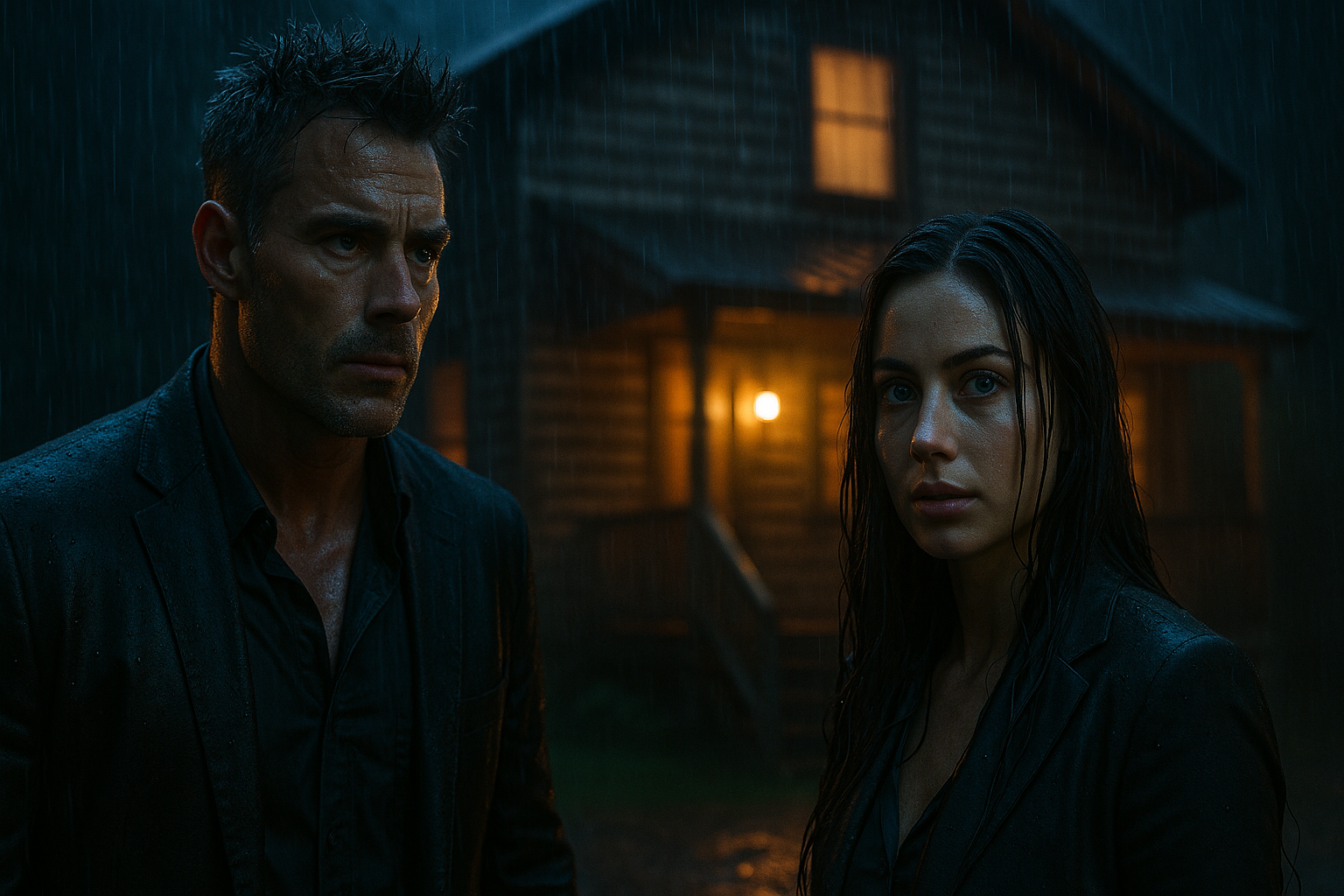
Still reeling from his confrontation with Sarah, Karl wakes in a haze of guilt and exhaustion — but a new lead refuses to wait. When a pair of conservationists vanish near Collinsvale, the details strike too close to the others: another remote house, another truck that doesn’t belong. As Karl and Sarah set out under gathering clouds, the pattern begins to take shape — and the storm that’s been building, both outside and within, finally starts to break.
“You can feel when a storm’s coming — not in the air, but in the way people start to go quiet.”
I had every intention of diving back into the case after leaving the break room—returning to my desk, reviewing files with fresh perspective, tracing links between disappearances, identifying the sliver of concrete evidence Claiborne had demanded. The intention was genuine, the resolution firm. I would work methodically, would build the case properly this time, would prove my instincts weren’t just paranoid delusion.
But intention gave way to exhaustion with surprising speed.
The moment I walked through my flat’s door, the accumulated fatigue hit me hard. The adrenaline that had been sustaining me—through Claiborne’s office, through the conversation with Sarah, through the careful navigation of the bullpen—drained away completely. What remained was a body pushed beyond reasonable limits, a mind that had been running on fumes and excess caffeine for far too long.
I collapsed onto the bed fully clothed, not even bothering to remove my shoes or blazer. The mattress swallowed me with a quiet sigh of defeat, the springs protesting slightly beneath me. Jargus padded up moments later, alerted by some canine sixth sense that told him I was home and in need of comfort. His solid form settled against me with the certainty of absolute loyalty, radiating warmth and something close to understanding.
His sigh mirrored mine as he relaxed into position, the sound more human than canine. A shared exhaustion, a mutual recognition that today had been difficult and rest was necessary.
I didn’t remember closing my eyes. One moment I was staring at the ceiling, mind still churning through case details and conversation fragments. The next, darkness had swallowed everything.
When I jolted awake two hours later, heart racing for no clear reason I could identify, it was with that disorienting sensation of having lost time rather than gained rest. Not the refreshed feeling that should follow adequate sleep, but something closer to temporal dislocation. The kind of sleep where you surface too suddenly, yanked from dreams by some internal alarm, lungs tight with panic you can’t explain, mind still tangled in narratives you can’t quite remember but which leave emotional residue.
My mouth was dry, tongue thick against the roof of my mouth. Limbs heavy, as though they’d been strapped down whilst I slept. And my head felt full of static—thoughts present but not quite coherent, signals trying to resolve into clarity but not quite succeeding.
The afternoon light slanting through the bedroom window had changed quality, gone from the bright clarity of midday to the softer, more angled illumination of mid-afternoon. I checked my watch with fumbling fingers: 1:17 PM. Less than an hour before I was supposed to meet Sarah. Cutting it close.
A shower helped, barely. I stood beneath the spray longer than necessary, letting the water pummel me until the skin along my shoulders turned red, until the heat penetrated deep enough to unknot some of the tension in my muscles. It scrubbed the immediate grogginess from my limbs, brought some clarity back to my thoughts, but not the mental sharpness I needed.
At precisely 2:00 PM, I arrived at Sarah’s desk in the bullpen, a takeaway coffee in hand—her preferred order from the café a block away: flat white, extra shot, no sugar. A gesture, a peace offering. Small, maybe inadequate given the magnitude of what I’d done, but sincere. The best I could manage under the circumstances.
Sarah looked up as I approached, her attention shifting from the computer screen to my face with the kind of assessment that made me feel simultaneously seen and examined. Her expression was unreadable—somewhere between cool detachment and cautious curiosity, maintaining the professional distance she’d established in the break room whilst allowing for the possibility of thaw.
The bruise at her temple had deepened in the hours since I’d last seen her, now a sickly violet beneath her hairline, spreading slightly into the surrounding tissue. The discolouration was stark against her pale skin, impossible to miss, a badge of injury that drew the eye.
My stomach clenched at the sight of it, guilt flaring fresh. A signature I’d left without meaning to, a mark that would fade eventually but which represented permanent damage to something more important than skin.
"You actually slept," she observed, accepting the coffee without ceremony or comment on the gesture.
"How can you tell?" I slid into the chair beside her desk, feeling eyes on us from across the room. Colleagues pretending to focus on their own work but listening with peripheral attention, curious about whether the partnership had survived, whether things were returning to normal or spiralling further into dysfunction.
The bullpen’s ambient awareness of us was palpable, creating a subtle pressure I tried to ignore.
"You look marginally less like death warmed over." A flicker of her dry wit softened the assessment. "Still terrible, but an improvement."
The casual cruelty of the observation would have been offensive from most people. From Sarah, it was almost affectionate—her way of indicating things might be okay, that normal patterns could resume.
I managed a wry smile, the expression feeling rusty but genuine. "Thanks. I think."
"Sleep’s a good start," she said, the levity fading as she leaned forward, elbows on her desk, coffee cradled in her uninjured hand. Her tone shifted—professional now, focused, the detective voice replacing whatever personal interaction we’d been having. "Something’s come up."
The transition was immediate and complete. Whatever existed between us personally was being firmly compartmentalised, set aside in favour of the job. I could work with that. Welcomed it, even. The case was safer ground than emotions.
"What?" I straightened in the chair, attention sharpening despite the lingering fog of inadequate sleep.
"A call just came in that might connect to our case." She dropped her voice, leaning closer, pushing a notepad towards me with quiet urgency. "A distressed neighbour reported not seeing Karen or Chris Owen for several days."
"The conservationists?" The names scratched at the edge of memory—familiar in that way that public figures are familiar, names you’ve heard without necessarily being able to place specific details. Environmental activists of some kind. Public figures in certain circles. People who’d been in the news for… something. Land conservation? Wildlife protection?
My exhausted brain struggled to supply specifics beyond the vague recognition.
Sarah nodded, confirming the identification. "The Owens are well-known figures in Tasmania. They travel a lot—remote locations, restoration projects, wildlife surveys. Normally, their absence wouldn’t raise alarm. People in their line of work disappear into the bush for weeks at a time."
"So why now?" I scanned her scribbled notes, trying to focus on the words, brain slow to process and integrate information. Then a line stood out like blood on snow, jumping from the page with sudden clarity: Small truck making deliveries.
The phrase triggered an immediate recognition. Not just words, but a potential pattern.
"Exactly." Her eyes found mine, held contact with intensity that communicated shared recognition. We didn’t need to say it aloud—the connection hung between us, silent but electric, the kind of investigative synchronicity that good partnerships develop. "The neighbour reported ‘disturbing activity’ at the Owens’ residence, including multiple deliveries by a small truck. Sound familiar?"
The mental chain snapped taut, links connecting with satisfying precision. Jamie’s neighbour—what was his name? Mr Croft?—had mentioned a similar truck. Plain, forgettable, commercial-grade but without obvious branding. Arriving at odd hours with no clear purpose, delivering or collecting something from Luke’s residence.
And now another potential disappearance, another mysterious truck.
"This can’t be coincidental."
"I don’t believe in coincidences," Sarah said flatly, the statement delivered with the certainty of someone who’d seen too many cases where apparent coincidences revealed underlying connections.
A pulse of energy surged through me, clearing away the last of the fog like a strong wind dispersing mist. This could be it. Not just another thread to follow, another dead end to exhaust, but the start of a pattern solid enough to follow to its source. The concrete lead Claiborne had demanded, the evidence that would justify everything.
My heartbeat quickened, mind already racing through implications and next steps.
"When do we leave?"
"Now." She was already pulling on her coat, checking pockets for keys and phone. "I’ve logged it formally. We’re heading to Collinsvale to check it out."
The formality was important—this was official, on the record, properly documented. No unauthorised surveillance, no violations of procedure. Everything by the book this time, following the rules I’d so catastrophically ignored yesterday.
Minutes later, we were in the car heading north-west out of Hobart.
The rhythm slipped back into place with quiet inevitability, finding its groove despite everything that had happened. Despite the assault, despite the injuries, despite the complicated personal feelings neither of us was addressing directly. When the job called, we responded as partners. The rest could be dealt with later, or not at all, but right now the case took priority.
As we drove, leaving Hobart’s suburbs behind for increasingly rural landscape, my gaze wandered to the sky through the passenger window. Wisps of white cloud drifted lazily across the sunlit blue directly above us, the light glinting off the car’s bonnet with that particular brightness that only clear winter days possess. Beautiful, peaceful, the kind of weather that suggested the world was fundamentally benign.
But to the west, visible through breaks in the tree line as the road climbed, dark banks of cloud were gathering on the horizon—dense, low, and rolling in fast with visible momentum. The contrast was stark: brilliance above, darkness approaching. The leading edge of the storm system looked almost solid, a wall of grey-black advancing across the landscape with inexorable purpose.
A change was coming, and not just in the weather—that peculiar pressure shift that precedes a big system, the kind that makes joints ache and old injuries twinge.
"We’d better make quick work of this investigation," I said, watching the clouds churn and collapse into each other with fascinating violence, the turbulence visible even at distance. "I don’t think we have much time before it hits."
Pressure was building out there on the horizon, forces converging, something inevitable rolling in.
Sarah gave a slight nod, eyes fixed on the road. She didn’t speak, but her silence said enough—a tension that had nothing to do with weather patterns and everything to do with the pattern we were pursuing.
The landscape changed as we travelled, the semi-rural outskirts of Hobart giving way to increasingly wild terrain. Eucalyptus forests pressed close to the road, their pale trunks ghostly in the strange light that preceded the storm. Ferns carpeted the understorey, creating layers of green that seemed to absorb sound, that made the world feel muffled and remote.
Collinsvale sat at the edge of proper wilderness—close enough to Hobart for some semblance of civilisation, far enough that isolation was real. The kind of place conservationists would choose, balancing accessibility with remoteness, connection with separation.
The Owens’ disappearance, if that’s what this really was. The recurring truck appearing at multiple sites where people vanished. Luke’s slippery presence and Jamie’s absence. Kain’s disappearance and his vehicle still unrecovered. Nial’s mysterious client meeting. All the scattered pieces that had seemed disconnected were beginning to arrange themselves into something approaching a disturbing pattern.
It all pointed to something. Something bigger than individual disappearances, more organised than random events. I could feel it—not just in my gut now, but in my bones, that deep intuitive certainty that good detectives learn to trust even when evidence hasn’t caught up to instinct.
And yet… another question crept in at the edge of my thoughts, subtle and unwelcome like cold air finding gaps in weatherproofing.
Was it Luke’s presence that had unbalanced me so completely? The specific threat he represented, the connection to Jamie’s disappearance, the evidence of something wrong that only I seemed to perceive?
Or had something deeper been triggered—memories of Jamie himself, of Queensland fifteen years ago, of that flooded riverbank and the man I’d failed to save from whatever darkness had been pursuing him? Had Luke become a proxy for older failures, older guilt, unresolved trauma that had been waiting for the right catalyst to resurface?
I hadn’t figured it out yet. Couldn’t separate the threads clearly enough to understand which were current and which were historical, which represented real threat and which represented projection.
But I was beginning to suspect the truth lay somewhere in the overlap—in the space where past and present blurred together, where Jamie-then and Jamie-now occupied the same ground, and the need to save him fifteen years ago had become confused with the need to find him now.
