4338.211 · July 30, 2018 AD
The Old Fenwick Place
Restless in Clivilius, Beatrix takes on Paul’s errand to retrieve his dog, using the mission as cover to continue her search for Gladys. Testing the limits of the Portals, she drives a car through at the abandoned Fenwick farm, exhilarated by her own audacity—until Gladys’s urgent call pulls her back to Earth with renewed determination.
"Morality doesn't travel well between worlds—cars, on the other hand, apparently do."
The knowledge that I needed to find my sister swirled relentlessly in my mind, rendering my stay in Clivilius a fleeting affair. With a mission from Paul to retrieve his dog, Charlie, in Broken Hill, I found a distraction to keep my restless thoughts and idle hands engaged while I awaited word from Gladys.
In Adelaide, I had become adept at charting Portal locations—an unlikely skill I now performed with the casual precision of someone folding a paper map they no longer believed in. Each new threshold felt less like a marvel and more like a bruise I’d stopped noticing. I re-entered Earth like a draught slipping under a door.
Having fulfilled my daily commitment to the new upgraded settlement housing, a wave of satisfaction washed over me. Manual labour had never been beneath me, so long as it came with quiet and an exit strategy. I ran my hand along the cool timber frame of the last caravan, its corners finally squared, its doors hung straight. It was the kind of simple, tangible accomplishment that stood in polite contrast to the chaos fraying at the edge of my reality.
It was time to seek out transportation.
I opted for a modest, independent car hire company tucked behind a tyre shop, the kind of place that looked as though it had dodged every major brand audit for a decade. Perfect. Their lack of communication and coordination played to my advantage. Having previously deceived the motorhome dealer with a fabricated number, I decided to test my luck once more.
The clerk, a wiry man with the distracted energy of someone mentally renovating a shed, barely glanced at my licence before ticking a box on the form. He didn’t even bother to make a copy. There was something almost touching in his indifference.
A smirk danced on my lips as I hit the accelerator, the open road unfolding before me.
The car, though not the latest model, possessed an essential feature—an inbuilt navigation system pointing me towards Broken Hill. The dashboard light flickered in protest once or twice, but the route held steady, its glowing line tracing a path through the digital emptiness.
My travels had rarely taken me beyond the urban sprawl of the mainland’s major cities, with Melbourne holding a special place in my heart as a favoured retreat—cobblestone laneways, antique fairs, overpriced coffee, the whole curated mess of it. Yet here I was, embarking on an adventure into the vast expanse of the Australian outback, an area uncharted by my own experiences.
The irony of the situation wasn’t lost on me—I was en route to commit a dognapping, of all things!
It would’ve been absurd if it weren’t also strangely on brand.
My mind, ever the relentless wanderer, drifted back to the car I was driving through the vast and quiet landscapes. The highway stretched out in long, patient lines, its faded white markings flashing beneath me like a slow metronome. This vehicle—like the others before it—was destined to join the expanding collection of the Clivilian fleet: unreturned, unnoticed. Its anonymity was its greatest strength.
A part of me revelled in this new norm, this life of subtle defiance where paperwork was a mere suggestion and keys were more permanent in my possession than their owners might ever suspect.
"I really could get used to this life," I whispered to myself, a hint of amusement in my tone as I caught sight of the green road sign heralding my approach to Gawler.
The thought lingered, a smirk playing on my lips, even as a part of me wrestled with the moral implications of my actions. It wasn’t exactly theft—not exactly—but it wasn’t far off either. A thrilling yet unsettling dance between right and wrong, freedom and responsibility, with my conscience occasionally tapping me on the shoulder like an unwanted chaperone at a wedding.
The cabin of the car, filled with the beat of an upbeat track, felt momentarily sealed off from the world outside. The bass thudded gently through the steering wheel, a physical reminder of the music’s insistence on keeping the mood light. Yet my thoughts were elsewhere, skirting the edges of unease.
"She's had plenty of time," I mumbled under my breath, the music’s energy now clashing with my growing impatience and concern.
My fingers, slightly trembling, reached out to lower the volume, silencing the song’s climax in a single decisive twist. Silence—thick and expectant—filled the space where the music had been.
Balancing my phone on my thighs, a sense of urgency took hold as I dialled Gladys’s number.
Activating the loudspeaker, I placed the phone beside me, my eyes flickering between the road and the glowing screen, waiting for that familiar voice to break through the silence.
The phone rang, splitting the car’s stillness. Once. Twice. Thrice. Each chime felt less like a call and more like a countdown—measured beats pulling a taut thread of anticipation tighter and tighter inside my chest. After countless attempts that had ended with voicemail’s sterile indifference, this one felt different. Loaded. As though something—fate, luck, whatever—had finally shifted.
Then—a click. A breath. And Gladys’s voice poured into the car, familiar yet thinned by distance. Relief struck first, keen and almost dizzying, but it was tangled with a rising tide of questions that crashed hard against the shore of my composure.
Without thinking, I veered to the roadside. Gravel popped and shifted under the tyres, the sound oddly final, as though I’d crossed an invisible line. The engine idled, its low purr filling the space between her words and my thoughts.
"Where the hell are you, Gladys?" I screeched into the phone, my voice cracking with a mix of urgency and the pounding rhythm of my heart. "Are you safe? Did they catch you?"
Her answer—"I’m fine, Beatrix"—did little to reassure me. It was the kind of fine that didn’t survive scrutiny, brittle and translucent. Her voice wavered, an audible tremor slipping through the thin veil of composure.
"Please can you come and get me?" she implored.
I glanced out the window, taking in the low-slung suburbs unravelling behind me—weatherboard houses, corrugated sheds, a string of car yards and bottle shops thinning out as I followed the highway north. Gawler wasn’t far now. There were still houses, still people, but the shape of the world was starting to shift—yards giving way to paddocks, bitumen softening at the edges.
It wasn’t empty, not yet, but it felt looser. Like the land was beginning to stretch out, preparing for something broader. The neat grip of the city had slipped, and in its place was a landscape that didn’t seem to care whether I belonged in it or not.
For someone who grew up with mountain mist and forest closing in at every angle, this kind of openness felt almost alien—exposed, indifferent. Not the wildness I knew, but something more skeletal.
A flicker of hesitation rose—an instinctive pause before stepping into unfamiliar ground. But the space it occupied was quickly overrun by something fiercer.
"Of course," I replied, my voice steadier than I felt, each syllable pulled taut by the surge of determination that comes only when blood demands loyalty over sense.
"Where are you?" I inquired.
"I’ll send you my location."
"Great!" I responded, clinging to the promise she offered. The single word carried more relief than I’d admit, but that brief moment of reprieve was torn apart by a sudden, guttural revving of an engine bleeding into the background of Gladys’s call. The sound was raw, aggressive—too close.
My pulse quickened, dread unspooling in my stomach like a coil snapping loose.
"Dickhead!" Gladys’s shout cut through the tension like a flare against the dark. The tone was furious—but it was the context that clawed at me. My mind moved faster than I could breathe, sketching out half a dozen possibilities, each one uglier than the last: a confrontation, a tail, a chance meeting with someone who knew too much—or worse, someone in uniform.
"Gladys?" I called out, my voice tight, laced with the kind of fear you don’t want to give a name to. The spectre of her being caught, cornered, questioned—it rose like a shadow in the cabin with me, a thing I couldn’t shake.
Her sigh came through heavy and unguarded, a gut punch in audible form. It wasn’t just air leaving her lungs—it was resignation, frustration, the pressure of a situation too precarious for comfort.
"Beatrix, please hurry," she urged, her words wrapped in desperation but anchored with a hard, unflinching resolve.
"I’ll find you as fast as I can. I promise," I vowed, the words biting down on the space between us, a pledge meant to carry across whatever distance and danger lay ahead.
The line went dead. The silence that followed was absolute, pressing in on me like a held breath. The stillness of the car was almost mocking—quiet, contained—while inside me, thought and instinct churned like a storm in a bottle.
I inhaled deeply, the air tasting faintly of sun-warmed upholstery and my own unease, and let it out in a steady stream. My fingers curled around the wheel, the leather tacky against my palms. With a deliberate twist of my wrist, I brought the engine growling back to life. The sound was steady, obedient, nothing like the drama that might be unfolding wherever Gladys was.
Pulling back onto the main road, my thoughts began to outpace the hum of the tyres. Every landmark blurred past in my peripheral vision—lean windbreak trees bending slightly under the crosswind, skeletal wire fences tracing the fields, a distant windmill turning slow and indifferent. My mind was running its own race, weaving around possibilities, strategies, and the hundred things that could go wrong before I even saw Gladys again.
I scanned the edges of the road like a predator seeking cover—eyes darting to each lay-by, each dip in the land, each tangle of gums and scrub that might shield me from curious eyes. Somewhere quiet, somewhere I could vanish for a moment without the wrong person noticing.
The thought landed clean and sharp: Gladys would need a ride. And here I was, sitting in a perfectly functional vehicle—temporary in possession, sure, but no less useful for it.
The logic unfolded with dangerous ease. Both Luke’s and my past experiences with transporting inanimate objects between worlds came to mind—crates of supplies, tools, things not meant to move so far, so fast, yet somehow surviving the jump intact. If we could do that…
Why not just use this car?
The idea hit like a spark to tinder. Audacious, yes. Reckless, absolutely. But the times for caution had passed. The road stretched ahead, and somewhere beyond it, my sister was waiting. If bending the rules of two worlds was what it took, then so be it.
As I navigated the outskirts of Gawler, my eyes caught on a narrow side road, peeling away from the main thoroughfare like a whispered invitation. It had that particular look—half-forgotten, barely maintained—promising the kind of seclusion I needed.
With a firm, deliberate twist of the steering wheel, I guided the car off the bitumen and onto the gravel. The tyres crackled over loose stones, the sound crisp and satisfying in the stillness. Dust bloomed behind me in a lazy plume, curling into the air before dissolving into the pale afternoon light.
Marlowe Lane unfolded ahead, a strip of road bordered by paddocks where long grass swayed in ragged, wind-bent clumps. I followed it for a few kilometres until the sagging outline of an old property emerged from the landscape. A weathered sign hung crooked on rusted wire: Old Fenwick Place. The lettering, once proud, was now faded to the colour of old bones, flecked with lichen.
The farm bore the unmistakable weight of abandonment. What had once been orderly rows of crops were now uneven seas of wild grass, waist-high in places, shifting restlessly in the breeze. The air smelled faintly of dry hay and rust, undercut with that peculiar hollowness places acquire when people have been absent for too long.
The structures were surrendering to time—wooden beams warped and split, corrugated roofing peeled back like tin foil, and windows clouded with grime that turned them into blind, sightless eyes.
The barn loomed as the heart of the ruin, its great doors sagging on their hinges. A wide, flat expanse of wall, bleached silver-grey by sun and years, faced the open paddock—unbroken, clean enough of debris to be perfect for what I had in mind. It was the kind of place where no one would wander in by accident, and where, if I was lucky, no one would be watching when the impossible happened.
I pulled up close to the barn’s broad side, the weathered structure rising like a stubborn relic against the sweep of the fields. It stood alone, resolute, as though it had been watching over this patch of land for generations and now found itself conscripted into my extraordinary little venture.
The car’s engine ticked as it cooled, each metallic pop echoing faintly in the quiet. Beyond it, there was nothing but the low sigh of wind brushing through the grass and the faint creak of the barn’s timbers settling in protest at another day of neglect.
With the car positioned, I stepped out, shoes crunching on the grit and straw scattered across the ground. My heart thudded a little too hard.
I held the Portal Key towards the barn’s flat, bleached wall and pressed the activation. The air rippled outward in concentric shimmers, the surface of reality itself warping until it bled into colour and movement. The familiar gateway bloomed into being, its edges blurring into the weathered boards as though it had always been part of them, waiting for me to draw it out.
"This is freaking brilliant!" I couldn’t help but exclaim, my voice startling a bird from the rafters above. A grin broke across my face, unbidden but unstoppable, as I stared at the impossible doorway I had conjured. It stood there, bright and alive against the ruin—a testament to quick thinking, a streak of recklessness, and the stubborn satisfaction of making the improbable look easy.
With no time to lose, I climbed back into the car, the driver’s seat still warm from my brief absence, and eased it forward into the shimmering veil of the Portal. The surface flexed like liquid glass as I crossed, the world folding and unfolding in a heartbeat.
In an instant, the barn’s weathered boards gave way to the ochre sprawl of Clivilius. The tyres bit into the alien earth, spitting up loose dust in pale, swirling clouds as I braked. The horizon shimmered in the strange light, and the air carried that faint metallic tang unique to this place—otherworldly, dry, alive. No one seemed to notice my arrival, which suited me just fine. The fewer questions, the better.
A thrill shot through me, quick and electric—the ingenuity of the move settling in. I’d done it. I’d slipped a car across the seam between worlds as neatly as if it were no more difficult than pulling it into a garage. For a fleeting moment, I allowed myself to revel in it: the rule-bending, the defiance, the proof that reality could be bent if you knew where to push.
But Gladys was out there—waiting, maybe in trouble—and that cut short any indulgence.
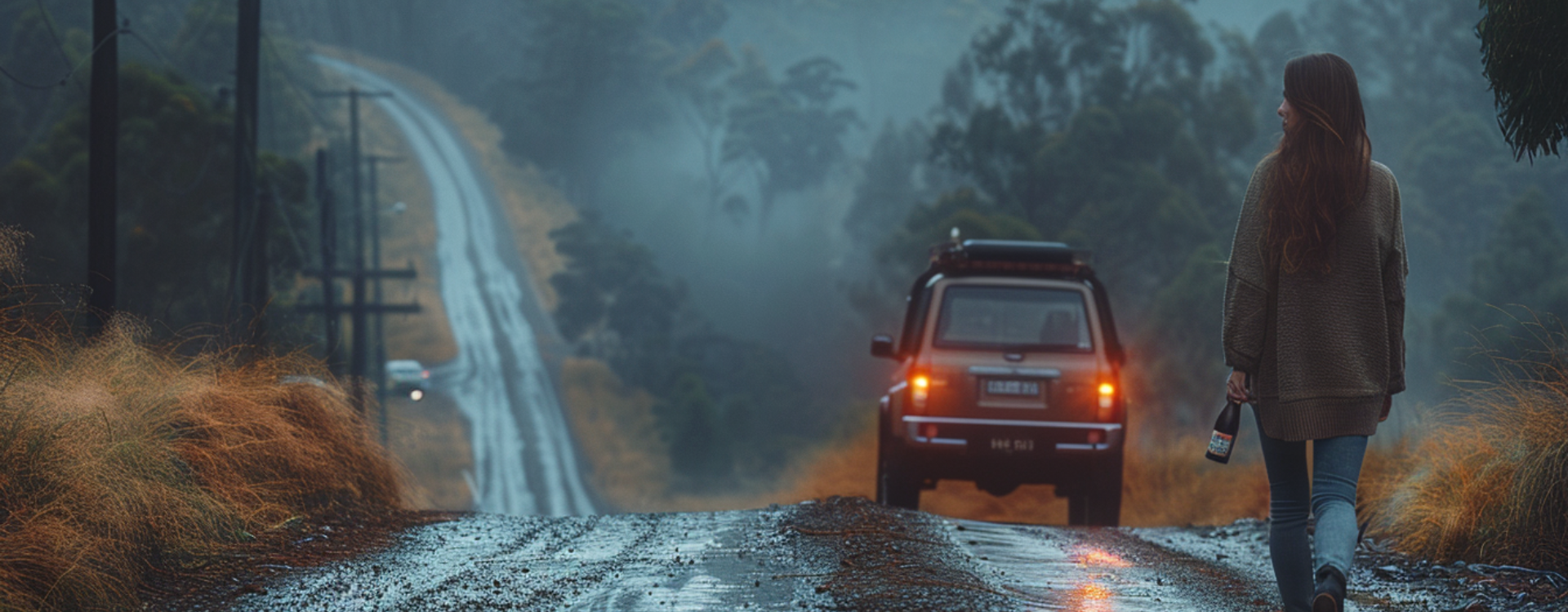
I shifted into reverse, manoeuvring with careful precision to align the car’s nose with the Portal. My mind conjured a fresh Earthbound selection, the familiarity of Luke’s driveway. I eased the vehicle backwards, tracing the same arc small trucks had taken before, the tyres whispering over the threshold and onto Earth’s wet gravel without so much as a jolt.
The shift in air was instant—cooler, heavier, tinged with petrichor. A miracle wrapped in something as mundane as a driveway.
Now Earthbound again, my focus locked on Gladys. Her location pulsed on my phone’s screen like a heartbeat, steady and insistent. I set off, each turn of the wheel propelled by the urgency that now felt like it had taken root under my skin.
The rain was easing as I drove, droplets thinning, the clouds tearing apart to let in hesitant shards of sunlight. It might have been beautiful, had the thought of seeing Gladys—possibly hurt, possibly hunted—not sat like a stone on my chest.
Every kilometre closed the gap between us, and with it, the invisible barrier that had kept us apart. My grip tightened on the wheel. I was coming for her, and nothing—no distance, no world—was going to get in my way.

