4338.206 · July 25, 2018 AD
The Labyrinth
Sitting in his car across from the bank, Luke spirals into a storm of doubt and dread, haunted by Cody’s absence and the chaos left behind. A message from Gladys throws him a lifeline, dragging him back into motion as he grasps for control—but every step forward feels like another turn deeper into a maze of consequence he cannot escape.
“It wasn’t Clivilius that trapped me this time—it was my own head, looping the same question until the answer blurred into madness.”
The car engine's gentle hum was the only thread tethering me to normality, its vibration thrumming through the steering wheel like a pulse in an otherwise lifeless body. Outside, the world continued its casual march forward—shoppers drifted between stores clutching bags, a mother shepherded her child across the street with that particular combination of patience and exhaustion I recognised from watching parents at the supermarket, and the sun stretched the shadows of lampposts and trees into elongated silhouettes across the pavement.
Life moved on, ordinary and untroubled.
But not for me.
I sat motionless behind the wheel, a prisoner to my own spiralling thoughts. The Colonial Bank of Tasmania’s hard façade loomed across the road, its windows reflecting nothing of the turmoil inside me—just the blue Tasmanian sky and the unremarkable shopfronts that lined this stretch of Main Road. My knuckles tightened around the steering wheel, then slackened, an unconscious rhythm of nervous energy betraying the storm beneath my stillness.
The wait for Cody had been like waiting for a ghost—an exercise in hope that slowly, inevitably, curdled into futility. After the Portal had closed, I'd stood there for longer than I should have, half-expecting it to reopen, half-expecting Cody to step back through with explanations that would make sense of everything. When that didn't happen, I'd done the only thing I could think of: I'd opened my own Portal, right there against the gate, and crossed through to Clivilius.
But Clivilius had offered me nothing. No Cody. No truck. No Joel. Just the empty ochre landscape stretching in every direction, the heat pressing down, the silence absolute. I'd called out, feeling foolish even as I did it, my voice swallowed by the empty air. Nothing answered.
That emptiness gnawed at me even now, sitting in Jamie’s car in the most mundane of settings, watching Tasmanians go about their Tuesday errands as though murders and Portals and mysterious strangers were things that happened to other people, in other places, in stories rather than real life.
What else could I do? The question chased itself in circles, an endless loop, a snake eating its own tail. No answer, just motion. A mental labyrinth with no way out. Each time I thought I had a grip on the situation, the ground shifted, leaving me with less certainty than before.
"What else could I do?" I murmured again, this time aloud, startling myself with the sound of my own voice. The words filled the confined cocoon of the car, then evaporated into silence, leaving behind only the faint hiss of the air vents. My own voice sounded disembodied, like it belonged to someone else—someone still trying to convince himself that events had left him no choice.
My gaze locked onto the bank's stone exterior, unyielding, stoic, as if its walls might hold the answers I craved. My eyes roved over its windows, its logo, the people entering and exiting through the automatic doors with their everyday concerns—deposits and withdrawals, home loans and savings accounts. The ordinary machinery of ordinary lives, grinding on whilst mine had derailed completely.
I searched for some sign, some cosmic cue, a crack in the mundane that would whisper direction into my chaos. But there was nothing. Just another building. Just another reminder that the world outside didn't care whether Cody had lied to me, or whether Joel had died because of me, or whether Jamie's heart was about to shatter into a thousand irreparable pieces when he learned the truth.
And still, the hum of the engine went on, as if mocking me with its steadiness.
The sudden beep of my phone split the silence like a thunderclap, sharp and intrusive, dragging me out of the mire of my thoughts. My heart jolted in my chest, a stutter-step that left me breathless for a moment. I lunged for the device, the cool glass screen suddenly more important than air. Any distraction, any interruption, was welcome—anything to stop me circling endlessly around my own confusion.
It was a message from Gladys.
The text was brief: On our way to the final delivery now. G.
Just a few words, nothing extravagant, but they hit me like a rope thrown to a drowning man. There was forward movement, progress, an end in sight to at least one of the day's tangled threads. For a fleeting moment, I allowed myself to believe this was the sign I'd been waiting for—the nudge to break free from inertia, from sitting idle whilst the world conspired around me.
I clutched the phone tighter, almost reverently, as though the device itself had transformed into a talisman. Purpose surged through me, fragile but real, the faintest shimmer of control in a day that had otherwise stripped it bare.
The phone barely had a chance to complete its first ring before Gladys answered, her voice spilling into the cocoon of the car with a familiar tone that carried a casual curiosity jarring against the chaos still gripping my insides.
"Hey Luke. What's up?"
The normality of it—the ease with which she asked—was almost disorienting. For a split second, it was as though we were simply neighbours chatting over a fence, not co-conspirators waist-deep in blood and secrets. As though she hadn't, just hours ago, watched her sister roll a corpse whilst wine dribbled down her chin.
"Hey Gladys, I forgot to ask you earlier," I began, forcing steel into my voice, masking the urgency that lurked beneath. "Can you and Beatrix please collect me a large supply of shelving?"
I hadn't forgotten. The request had only just occurred to me, born from the practical corner of my brain that never stopped planning even when the rest of me was falling apart. We needed infrastructure. We needed to build something in Clivilius that could support more than just camping gear and hope.
There was a pause on the line, just long enough to make me aware of the sweat slicking my palm against the phone.
"In our truck?" she asked finally, a note of surprise lifting her words.
"Yes," I said quickly, perhaps too quickly. "That's probably the best idea."
Automatic. Reflexive. I didn't stop to consider whether it was truly practical or safe. The words left me before I could polish them, fuelled less by logic than by instinct—a half-formed plan trying to solidify under pressure.
The conversation veered in a direction I hadn't anticipated when Gladys's voice, edged with quiet strain, slipped through the line.
"I don't have any more money to spare, Luke. I have the next mortgage payment coming out in a few days."
Her words landed heavily, a stark reminder that even with Portals, dead bodies, and the surreal dangers encroaching upon us, the mundane grind of bills and banks still clawed at her reality. It was jarring—this collision of the ordinary and the extraordinary—yet it grounded everything with a brutal kind of honesty.
Gladys had lost her job at Aurora Energy. She was living on whatever savings remained, whatever the severance payout had been, watching her bank balance dwindle whilst the world demanded she pay for electricity and water and the roof over her head. And now I was asking her to buy shelving for a settlement in another dimension, as though money grew on trees in Clivilius.
"Don't worry. I have money," Beatrix's voice cut in from the background, smooth and dismissive, as though the problem wasn't worthy of the air it took to voice it.
For a moment I became little more than a listener, an eavesdropper to their sibling back-and-forth. Their dynamic spilled out unfiltered—Gladys tethered to practicality, Beatrix dancing on impulse. They sounded like two sides of a coin forever spinning, clattering noisily before landing on whichever face fate chose.
"How do you have any money?" Gladys's scepticism came sharp and quick, tinged with something more—curiosity perhaps, or the faint edge of disbelief.
"Never mind that," Beatrix shot back, her voice quick, decisive. "Let's just get this shit done."
"Yeah, Luke. Beatrix has money. She'll pay for it."
"Anything else?" Beatrix's voice came again, sharper now, brisk and business-like, as though she'd slipped into the rhythm of command.
"Umm. Yeah," I hesitated, measuring the weight of my next request. "I also need you to print me some simple instructions for pouring a slab of concrete for a shed."
The request sounded absurd even to my own ears. Here we were, covering up a murder, evading unknown enemies, navigating inter-dimensional travel, and I was asking for DIY instructions. But Paul needed them. He'd been talking about building properly in Clivilius, about creating structures that would last, and he couldn't do that without guidance.
There was silence on the line for a moment before Gladys broke it, her tone steeped in bemusement.
"Huh?"
"Gladys!" Beatrix snapped, her reprimand cracking through the air like a whip. "The hardware warehouse will be able to give us something. We'll ask them while we're there getting the shelving."
"Oh yeah." Gladys's voice softened, the note of dawning comprehension slipping in.
The call's abrupt end, cut clean without even the courtesy of a goodbye, left a hollow silence reverberating through the confined space of the car. The omission spoke volumes, underscoring the tension and urgency that threaded every exchange between us.
We'd all moved past pleasantries. Past the normal rhythms of conversation. We were operating now in crisis mode, where every word cost energy we couldn't spare.
My gaze drifted instinctively to the bank across the street. Its façade stood immovable, austere stone and glass staring back at me with a cold indifference. The building had no care for what I carried inside my head—it was simply there, solid and unyielding, a mute sentinel watching the theatre of my unravelling.
Yet my eyes locked onto it as though it might yield answers if I only stared hard enough, as if some hidden script of my future were tucked within its walls.
I had money in there. A fair amount, actually—savings from the consulting work that had paid well even when it had drained my soul. The money had been meant for a European holiday, once. For a future with Jamie that had seemed certain before everything had started crumbling. Now it was just numbers on a screen, waiting to be useful.
The effort was futile. The dread was already seeping in, thick and poisonous. I shook my head sharply, as though I could rattle free of it, but the voice was still there—persistent, venomous.
You're going to get caught, Luke. You're all going to get caught.
The words circled, mocking, as though whispered directly into my ear by something that wanted me broken. It was more than just doubt; it was a curse, a mantra worming its way into my bones.
Every line between intention and consequence blurred before me. Our plans, once threads of control, now looked like frayed ropes leading straight into a pit. Each choice carried the promise of exposure, of failure, of lives shattered by a truth too strange to explain.
Joel's family will wonder why he doesn’t come home. His employer would notice the truck that never returns. People would start to ask questions that would eventually lead home, to my quiet Tasmanian suburb, to my driveway where blood had soaked into concrete and a young man had died for seeing something he shouldn't have seen.
The anticipation of what came next warred with the fear of what could follow—an intoxicating brew that made my hands tremble.
All this, whilst I sat in an utterly ordinary street, sunlight stretching shadows across kerbs and shopfronts, the monotony of the world marching on outside my window. The contrast cut deep. How could I be both here—just another car parked across from a bank—and also there, enmeshed in Portals, lies, and the dead weight of a body? It was absurd, surreal, as though my life had fractured into two overlapping stories, each pulling me in a different direction.
I drew in a deep breath, forcing the air down into my lungs, anchoring myself to something physical. It has to be done, I told myself firmly. I repeated it again, sharper, as though sheer repetition might transform fear into resolve.
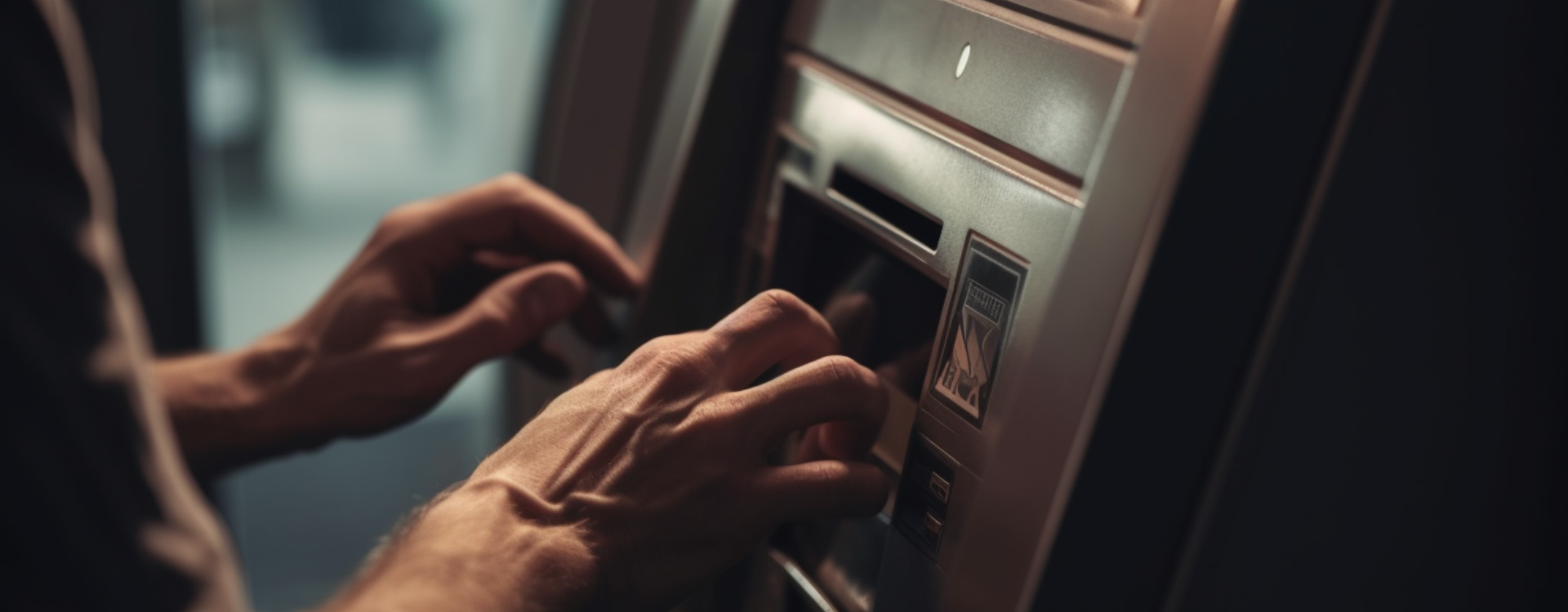
The plan was simple enough. Withdraw cash. Cold hard currency, the kind that left no digital trail, the kind that couldn't be traced back to suspicious purchases at hardware stores.
My arm reached back almost automatically, fingers closing around the strap of the small green backpack resting on the seat. It was deceptively light, the nylon fabric soft beneath my touch. And yet when I lifted it, slung it across my shoulder, it felt impossibly heavy—burdened not by contents, but by intent. Every stitch, every zip seemed stitched with consequence.
This was the moment. The threshold.
I could still turn back. I could drive home, call the police, confess everything. Tell them about Joel, about the Portal, about the stranger named Cody who'd appeared and disappeared like smoke. Let them sort it out. Let the professionals handle the investigation and the evidence and the impossible questions about inter-dimensional travel.
And lose everything.
No. There was no turning back. There never had been, really. From the moment I'd first activated the Portal Key and stepped into that alien landscape, I'd crossed a line that couldn't be uncrossed. Every choice since then had only taken me deeper.
With a final inhale, I pushed the car door open. The outside air rushed in, cool and unremarkable, yet it bit against my skin as though it carried the weight of everything I was about to do. My shoes met the pavement with a hollow finality, the click of the door shutting behind me sounding like the seal of a contract I'd signed without reading the terms.
The street remained unremarkable. Cars passed. A cyclist pedalled by. Somewhere nearby, a kookaburra laughed its mocking call, finding humour in whatever private joke kookaburras found funny.
But I was no longer just a man stepping out of his vanished partner’s car. I was a man stepping deeper into the labyrinth. And somewhere ahead, lost in the twisting corridors of consequence and chance, the Minotaur was waiting.
I just didn't know yet what shape it would take.
