4338.206 · July 25, 2018 AD
Selective Evolution
Inside Glenda’s deserted practice, Luke sifts through cupboards and drawers, turning a burdensome list into a mission of quiet triumph. With each vial, bandage, and stolen scrap of identity, he finds clarity in chaos—naming the process selective evolution, a fragile philosophy to steady his hand as he risks everything for Jamie’s survival.
“Survival isn’t just about what you carry forward—it’s about what you dare to leave behind.”
Returning to the doctor's practice, the shift in atmosphere was immediate. The Portal deposited me against the back wall of Glenda's examination room, and for one heart-stopping moment I stood frozen, not knowing what I'd find.
The room could have been full of people. Michelle from reception could have been standing right there, trying to work out why Dr. De Bruyn had vanished mid-appointment. Police could have been called. The door could have been flung wide open with staff crowding in to investigate the mystery.
But luck—or something like it—had held.
The examination room was empty, the door still closed, everything exactly as I'd left it when I first opened the Portal for Glenda. My breath escaped in a rush of relief so intense it made me dizzy. The sterile scent greeted me, sharp and unmistakable, wrapping itself around me like a familiar second skin. It carried a peculiar comfort, a reminder of order and control, yet beneath it lurked a cold undertone of antiseptic that whispered of wounds and vulnerability.
Beyond the closed door, I could hear the practice continuing its ordinary rhythms. The murmur of voices from the waiting room. The distant ring of a telephone. Footsteps passing in the corridor outside. The building was alive with activity, full of patients and staff going about their afternoon—completely unaware that one of their doctors had stepped through a doorway between dimensions and wasn't coming back.
The faint hum of conversation pressed against the door, amplifying my awareness of how exposed I was. One knock. One person deciding to check on Dr. De Bruyn's room. One curious receptionist wondering why Mr. Smith's appointment was taking so long. Any of it could end this mission before it began.
Afternoon light seeped into the room through the half-closed blinds, falling in angled slats across the floor. The glow lent the space a strange duality: at once warm, almost homely, and yet oppressive in its stillness. Everything here was designed for control—neatly arranged, measured, calculated. Every surface was wiped clean, every instrument in its designated place, every bottle turned label-forward on its shelf.
In contrast, my presence felt disruptive. An intruder moving through a space that demanded quiet reverence, leaving fingerprints and displaced objects in my wake.
I pulled the folded list from my pocket, its weight somehow heavier now than it had been when Glenda had pressed it into my hand. The paper was already softening at the creases, already absorbing the sweat from my palm. My eyes traced the inked words, but the characters wavered faintly as though alive, mocking me with their length and gravity.
Antibiotics—three different types. Sterile gauze, multiple sizes. Surgical tape. Syringes. IV fluids. Suture kits. Analgesics—both oral and injectable. Antiseptic solutions. Forceps. Scalpel blades. The list went on, each item more daunting than the last.
At first glance it felt impossible, an endless climb I had no energy for. The sheer scale loomed over me, pressing down on my chest until my breath came shorter. How was I supposed to find all of this whilst a fully operational medical practice hummed with life just beyond that door? How was I supposed to transport it through the Portal without being caught, without someone walking in, without returning to find Jamie had worsened in my absence?
But necessity is its own kind of fuel. Survival sharpens the mind in ways comfort never can. I forced myself to breathe, to focus, to treat the list not as a burden but as a map. Determination steadied me, feeding into the careful, deliberate part of myself that refused to let panic win.
I moved as quietly as I could, hyper-aware of every sound I made. The scrape of a drawer seemed deafening. The clink of bottles made me freeze, listening for footsteps that might be approaching the door. But the corridor sounds continued unchanged—the practice going about its business, oblivious to the theft occurring in Examination Room Three.
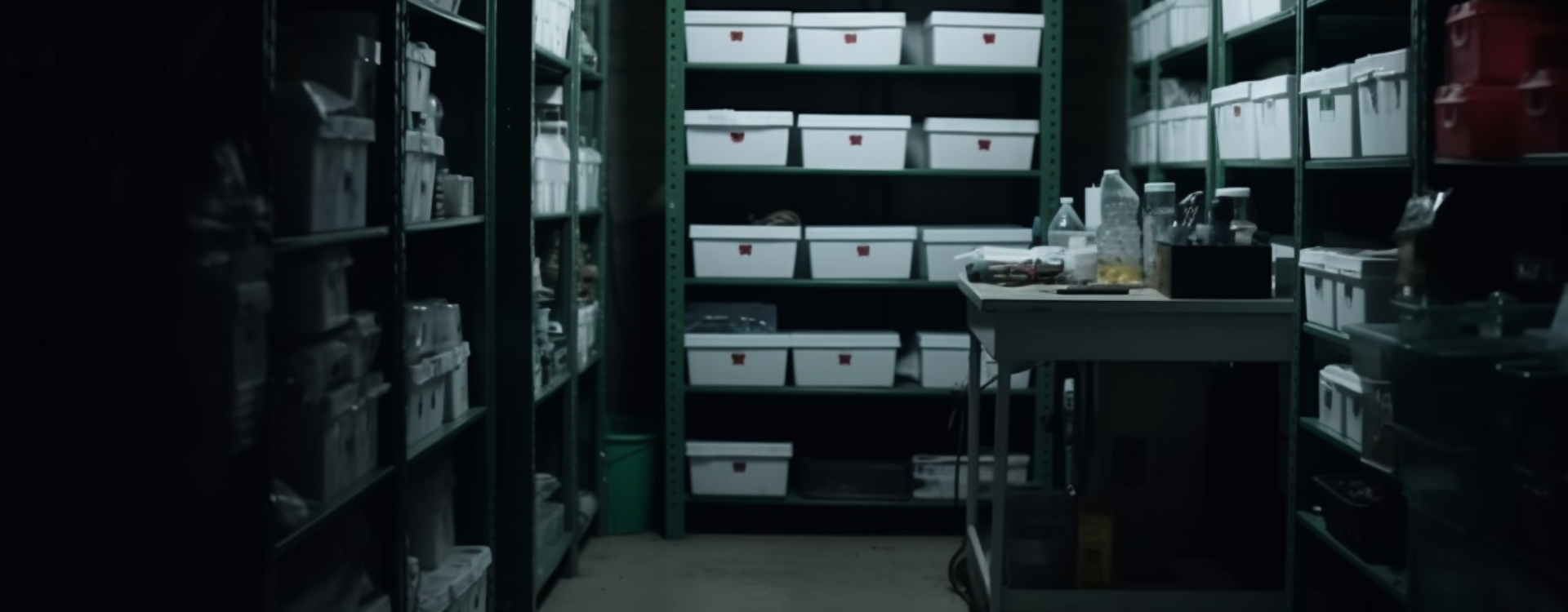
As I scanned the room, clarity struck. There were only six cupboards—six points of possibility.
Six cupboards meant limits, boundaries. What had moments ago seemed endless now had shape, an outline I could trace. The realisation lit within me like a beacon, illuminating a path through the fog of doubt. This was manageable. This was achievable. I just had to move through it systematically, one drawer at a time—quietly, carefully, always listening for the footsteps that could spell disaster.
Moving with purpose but forcing myself to be silent, I pulled open drawers, wincing at each metallic scrape. Dust motes swirled in the bands of sunlight as though disturbed by my intrusion, dancing in the air like tiny witnesses to my trespass. At Glenda's desk, I crouched low, the wood cool beneath my palms, and tugged at the bottom drawer. It resisted at first before giving way with a reluctant groan that made me freeze.
Voices passed in the corridor outside. My heart stopped. I held my breath, waiting, counting seconds that stretched into eternities.
The footsteps faded. The voices moved on. I exhaled.
Inside the drawer, I found them—several bags crammed together, folded and forgotten. A hidden trove of the kind of sturdy medical carry-bags that doctors took to house calls, their canvas worn but serviceable. Relief surged, sharp and unexpected, a victory carved out of danger.
This was exactly what I needed. Something to carry the supplies back through the Portal, something more practical than armfuls of loose bottles and bandage boxes.
My fingers worked quickly but quietly, testing zippers with care to avoid the sound of metal teeth. One bag had a broken strap; I set it aside. Another was smaller than the rest but would work for the delicate items, the vials and syringes that might break if jostled. The largest could hold the bulk supplies—the gauze, the tape, the bottles of antiseptic.
Item by item, the list began to take form in reality. Bottles, gauze, vials, packets—their orderliness once overwhelming, now aligning themselves neatly in my mind. Every object I touched felt like a small triumph, a tangible step closer to what Jamie needed, to what we all needed.
I found the antibiotics in the upper right cupboard, three different types just as Glenda had specified. My fingers hesitated over the bottles, reading labels I barely understood, hoping I was grabbing the correct ones. Amoxicillin. Metronidazole. Flucloxacillin. The names meant nothing to me, but they were on the list, and the list was Glenda's, and Glenda knew what she was doing.
A knock on a nearby door made me jump, my hand knocking against a glass bottle. I caught it before it could fall, my heart pounding so hard I could feel it in my throat. But the knock wasn't for this room—it was somewhere down the corridor, someone else's appointment, someone else's business.
The gauze was easier—clearly labelled packages in varying sizes, stacked neatly in a drawer marked WOUND CARE. I grabbed handfuls, stuffing them into the largest bag until it bulged. Surgical tape. Cotton swabs. Butterfly closures. Antiseptic wipes individually wrapped in their sterile packets.
For a moment, the magnitude of the task no longer crushed me. Instead, it became momentum, a current pulling me forward. Every item crossed off the mental list was a victory. Every bag filled was proof that I could do this, that I wasn't useless, that my contribution to Jamie's survival extended beyond simply loving him.
I exhaled slowly, the breath carrying out more than just air—it released some of the tension that had gripped my shoulders since arriving. For the first time in what felt like hours, I allowed them to relax slightly, rolling them as though shaking free of invisible chains. The urgency that had gnawed at me eased, if only for a moment, and in its place came a fragile calm.
Hope stirred inside me, faint but insistent, like embers discovered in ash that had seemed dead. I knew my limitations—I felt them pressing at the edges of my mind, whispering of risks, of failure, of everything that could go wrong. The unknowns loomed vast, threatening to engulf me if I looked too long at their breadth. And yet, despite all of that, I felt alignment—pieces shifting, locking into place.
I was good at this. Good at moving through spaces where I didn't belong, good at taking what I needed without leaving traces.
From that stillness, a thought rose: selective evolution.
The words surfaced as though they had been waiting for me all along, dormant until this moment when I needed them most. They encapsulated something greater than survival—something intentional, something about choice. The careful pruning of what to carry forward, what to leave behind. It wasn't just about existing; it was about shaping, guiding, building with deliberation.
Evolution wasn't random, despite what people thought. It was about adaptation, about organisms developing precisely what they needed to thrive in their specific environment. The ones that survived weren't necessarily the strongest or the fastest—they were the ones who could change, who could identify what mattered and discard what didn't.
I let the idea steady me. This wasn't random chaos. This wasn't fate battering me about like a leaf in a storm. This was the slow, careful act of shaping a future. Clivilius wasn't just a world to escape to—it was a canvas, and I was being asked to hold the brush. Not alone, but guided by the people I'd chosen to surround myself with, by the resources I was gathering, by the choices I was making minute by minute.
"Selective evolution," I said aloud—then immediately cursed myself for making noise.
I froze, listening. The corridor sounds continued unchanged. No one had heard. But I needed to be more careful. The practice was full of people who could walk through that door at any moment.
The phrase landed in me with surprising solidity nonetheless. It wasn't idle philosophy or intellectual posturing. It was intent. A reminder that every act mattered—not just the bold gestures, but the small movements, the unseen choices, the easily overlooked decisions.
Even gathering supplies, mundane as it might seem, carried ripples far beyond this moment. Every vial, every bandage, every item I tucked into these bags could tilt the scale of what was to come. Jamie's survival. The settlement's development. The futures of everyone who would eventually call Clivilius home.
Rummaging through the papers and oddments cluttering Glenda's desk, and her top drawer, my fingertips brushed across something smooth and rigid. Relief surged through me as I drew it out—a slim rectangle of plastic glinting faintly in the muted light. The elusive ID card.
Glenda had told me it would be here, in her top drawer, and here it was. The key to almost any door in the Royal Hobart Hospital.
I lifted it towards the window, tilting it so the weak shafts of afternoon glow caught the glossy surface. The face staring back at me was Glenda's, captured in the lifeless formality of an identification photograph. Serious expression, professional posture, the unmistakable features of a Swiss-born woman in her mid-forties with decades of medical training behind her eyes.
I studied it, and then, despite the tension coiling in my chest, a wry smile tugged at my lips.
"I don't look anything like her," I whispered, the words barely audible, the sound quickly swallowed by the stillness of the room. The absurdity of the situation hovered in the air, both mocking and dangerous.
Here I was—a man in his thirties, dark-haired, Australian-born, with a face that bore no resemblance whatsoever to the photo on this card—preparing to waltz through a busy practice and into a hospital to use it as though fate itself could be fooled. As though security systems and observant colleagues could be bypassed with nothing but confidence and the right piece of plastic.
The card felt strange in my hand—not heavy, but potent, like a key that could both open doors and seal my fate. Slipping it into my pocket, I told myself what I needed to hear.
"But as long as nobody wants to check it, I should be fine."
The reassurance was thin, fragile, a tissue-paper shield against the very real possibility of discovery. But it was necessary. It nestled against me like a concealed ally, its silence complicit in my deception.
My gaze drifted inevitably to the examination room door. Closed. Impassive.
The supply room lay somewhere beyond that barrier, in the shared areas of the practice. Ten metres away, according to Glenda's hastily drawn map. Ten metres through a corridor that could be empty or crowded, safe or deadly.
My stomach tightened. Beyond that door stretched uncertainty, the kind that couldn't be reasoned with. Every possibility unfurled at once: discovery, accusation, failure. My hand twitched at my side, caught between reaching for the handle and retreating into the comfort of delay.
The supplies Glenda had already gathered for me lay within reach, three bags now packed and ready, containing everything she had indicated could be found in her own examination room. It was substantial—gauze and antibiotics and syringes and antiseptic. More than we'd had before. More than nothing.
But the rest—the critical items marked with asterisks on her list—waited elsewhere. IV fluids. Stronger painkillers. Surgical equipment that wasn't kept in a GP's office. The things Jamie might need if his condition worsened, if the infection had spread further than Glenda's initial intervention could address.
It was a gamble. Every instinct screamed caution, yet another voice—quieter, deeper—pushed me forward. To hesitate now would be to return to Jamie with only half of what he needed, to let him languish in pain whilst I weighed my own fear against his survival.
The thought was intolerable.
"Anything is better than nothing," I murmured, my voice barely a breath. Saying it aloud steadied me, even as unease flickered beneath the words. The idea of coming back to this threshold again, repeating this moment of indecision, loomed like a shadow I didn't want to meet.
Drawing in a deep, steadying breath, I reached for the bags already filled with supplies. The straps dug into my palms, their weight real, tangible—a mix of hope, necessity, and obligation. Each item inside represented a chance, however slim, to hold Jamie back from the edge.
I would take these back first. Deposit them in Clivilius, let Glenda know what I'd gathered so far, give her the tools to continue treating Jamie whilst I made the second, more dangerous run.
Selective evolution, I reminded myself. Adapt or perish. Take what you need and leave behind what holds you back.
I stepped toward the Portal, its colours swirling in welcome, and let it swallow me whole.
