
Nial Phillip Triffett
Born in Hobart in 1986, Nial Phillip Triffett built a thriving fencing business renowned for quality craftsmanship before financial pressures led him to accept a mysterious job offer in July 2018. Lured through an inter-dimensional portal by Luke Smith's calculated deception, Nial was separated from his wife Jenny and son Sammy, becoming Bixbus's essential infrastructure builder before his family's subsequent arrival reunited them in exile, forever separated from their grieving Earth relatives.
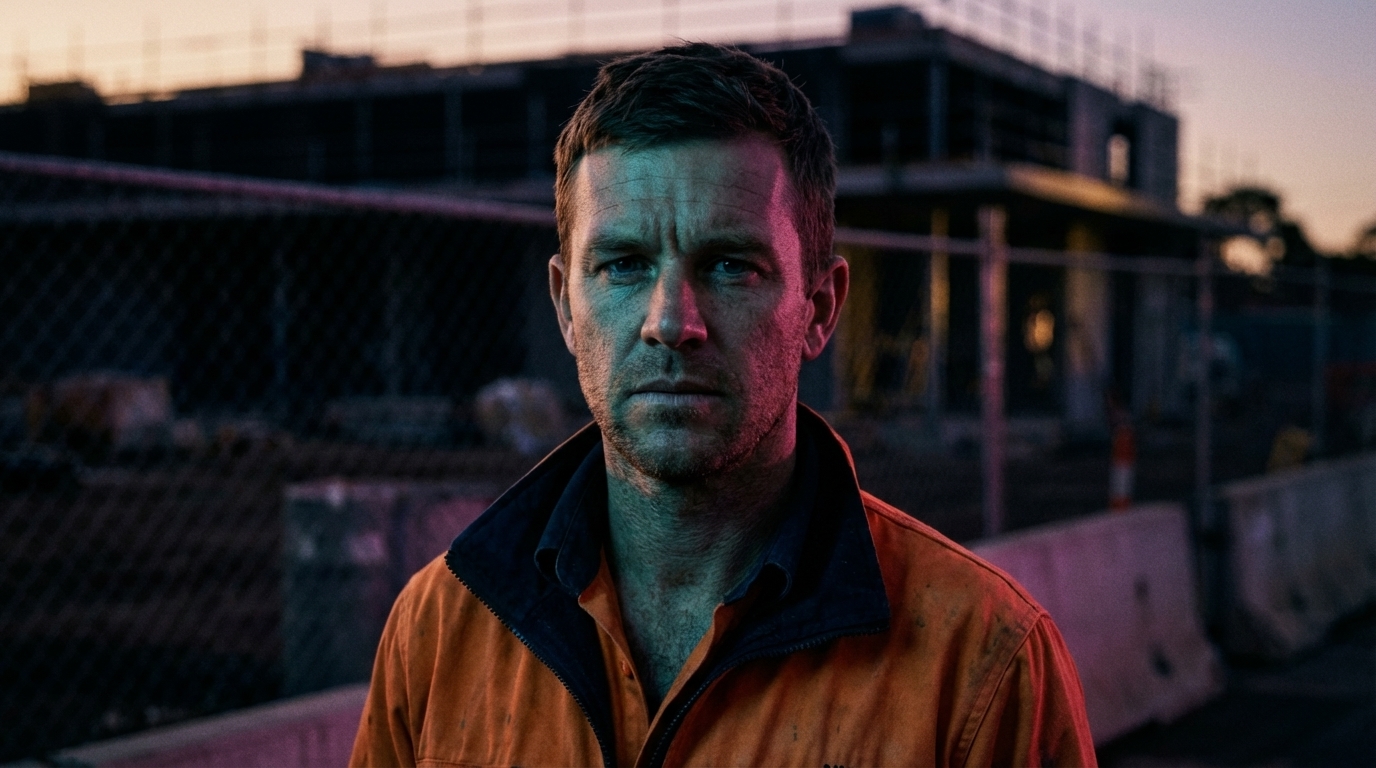
Sandy Bay Foundations
Born on 12 March 1986 at Royal Hobart Hospital, Nial Phillip Triffett arrived as the only child of Gerald and Margaret Triffett, entering a household where practical competence and honest labour formed the foundation of family values. Gerald, a seasoned fisherman who worked Tasmania's waters with steady determination, and Margaret, a devoted nurse whose compassion and pragmatism shaped her approach to both profession and motherhood, created an environment where Nial learnt early that worth was demonstrated through skilled work rather than proclaimed through words.
The family home in Sandy Bay placed Nial within easy reach of both ocean and city, giving him a dual education in Tasmania's natural beauty and urban practicality. Childhood memories centred on accompanying Gerald on fishing trips, watching with fascination as his father maintained boats with the same meticulous care he applied to catching the day's haul. These excursions taught Nial lessons about patience, precision, and the satisfaction of work well done—principles that would define his approach to life and eventually shape his professional identity.
From an early age, Nial exhibited a keen interest in building and construction that extended beyond mere childhood play. Where other boys might dismantle toys carelessly, Nial approached every object with a craftsman's curiosity—how was it assembled, what principles governed its structure, could he improve upon its design? Gerald recognised this inclination and encouraged it, involving Nial in increasingly complex DIY projects around their home. Together they built garden sheds, repaired fences, tackled plumbing problems—a practical education that complemented formal schooling whilst providing father-son bonding that neither possessed vocabulary to articulate but both deeply valued.
Sandy Bay Primary School (1992-1994) provided Nial with a solid academic foundation without particular distinction. He performed well in mathematics—numbers making intuitive sense to his systematically-oriented mind—and adequately in other subjects, but his true engagement came through hands-on activities. Shop class, science experiments requiring construction, any opportunity to build rather than merely theorise captured his full attention. Teachers noted his infectious smile and genuine warmth, recognising that whilst Nial might not become an academic star, he possessed interpersonal skills and practical intelligence that would take him far in life.
Drama, Jenny, and Finding Balance
Hobart College (1994-2000) represented Nial's transformation from skilled boy to capable young man discovering unexpected dimensions to his identity. His muscular build—the result of years helping Gerald with physical labour and maintaining an active outdoor lifestyle—made him a natural for rugby and athletics, sports where he excelled without particular passion. The physicality satisfied something in him, but didn't engage his mind or spirit the way building projects did.
The revelation came through the drama department, where inspiring teacher Ms Eleanor Whitford introduced Nial to theatrical performance's transformative power. Initially enrolling to satisfy an arts requirement, Nial discovered that acting offered a different kind of construction—building characters, creating emotional structures, collaborating to produce something greater than individual contribution. His warm brown eyes and natural charisma translated effectively to the stage; his genuine personality meant performances carried an authenticity that technical training alone couldn't provide.
More importantly, the drama department was where Nial met Jenny Hodgman, the middle child of Wayne and Rowena Hodgman whose theatrical passion matched his growing interest whilst her creative intensity complemented his practical steadiness. Their relationship developed through shared rehearsals and late-night study sessions, conversations ranging from performance theory to life philosophies, discovery that they balanced each other in ways neither had experienced before. Jenny brought Nial deeper into artistic worlds he'd barely known existed; Nial grounded Jenny's sometimes abstract creative inclinations in a practical reality that helped her translate vision into achievement.
University Years and Professional Foundation
The Bachelor of Business at the University of Tasmania (2000-2004) represented Nial's pragmatic approach to translating interests into a sustainable career. Whilst Jenny pursued Theatre Studies with artistic single-mindedness, Nial recognised that his future lay in combining practical craftsmanship with the business acumen necessary to succeed as an independent contractor. The degree provided a framework for understanding markets, managing finances, coordinating projects—knowledge that transformed a skilled tradesman into a potential business owner.
Characteristically, Nial didn't merely study business theory whilst planning eventual application. In 2002, he began an apprenticeship with Hobart Home Builders, developing foundational carpentry and construction skills whilst continuing university studies. The dual commitment meant exhausting schedules—classes during the day, construction work in afternoons and weekends, study squeezed into remaining hours—but Nial thrived on the challenge. Theoretical business concepts gained immediate practical application; construction site experiences informed his understanding of how businesses actually operated beyond classroom abstractions.
The apprenticeship revealed Nial's particular affinity for precision work requiring both technical skill and aesthetic sensibility. Fencing especially captured his interest—the mathematics of proper spacing and structural integrity, the satisfaction of creating boundaries that were both functional and visually appealing, the client interaction that combined consultation, education, and service. Where some tradesmen viewed fencing as merely functional necessity, Nial recognised it as a craft requiring genuine expertise to execute well.
By 2004, when he graduated with his business degree, Nial had already been promoted from apprentice to junior tradesman, earning respect from colleagues who valued both his work quality and his affable personality. His trajectory through Hobart Home Builders followed a steady arc: Junior Foreman by 2006, managing small teams and coordinating daily operations; Senior Foreman by 2009, overseeing larger projects with responsibility for quality workmanship and timely completion.
Building Triffett Fencing Solutions
In 2010, aged twenty-four, Nial founded Triffett Fencing Solutions. The business specialised in custom residential and commercial fencing projects, combining Nial's technical expertise with the business acumen developed through university and practical experience. Start-up challenges were substantial—establishing a client base, managing cash flow, balancing quality standards with competitive pricing, building a reputation in a market already populated by established competitors. But Nial possessed advantages beyond mere skill: his genuine warmth made clients comfortable, his attention to detail ensured satisfied customers became repeat customers and referral sources, his commitment to honest pricing built trust that transcended individual transactions.
The company's early years demanded everything Nial could give. He was simultaneously craftsman, business manager, marketing department, and customer service representative. Days began before dawn and often extended past sunset. Weekend work was standard rather than exception. Financial margins remained perpetually tight as Nial balanced reinvestment in equipment and materials against the need to draw sufficient income for personal expenses. Yet despite the pressures, he loved the work—seeing projects through from initial consultation to final installation, witnessing clients' satisfaction with fences that combined functionality with aesthetic appeal, building a business that bore his name and reflected his values.
Marriage, Family, and Expansion
The wedding to Jenny on 25 June 2015 represented the culmination of a relationship that had spanned their entire adult lives. The ceremony reflected their shared creative sensibilities—theatrical elements carefully integrated with genuine emotional authenticity, a celebration that honoured both their families' values whilst establishing their own identity as a couple. For Nial, marrying Jenny meant finally formalising a commitment that had existed informally for years, creating a family unit that would become his deepest source of meaning even as business consumed his daily energies.
They settled into a comfortable home in Fern Tree, a suburb perched on kunanyi/Mount Wellington's eastern slopes where urban Hobart dissolved into wild Tasmanian bush. The pale blue weatherboard house, built in 1974, became their sanctuary—Nial maintaining its structure with a craftsman's care whilst Jenny filled its rooms with artistic warmth. Together they created a space that reflected both their identities whilst symbolising something new they were building together.
Samuel—"Sammy"—Triffett's birth on 24 October 2014, actually preceded the wedding by several months, but the sequence didn't trouble Nial. Fatherhood transformed him in ways he couldn't fully articulate, awakening protective instincts and tender emotions that existed beneath his capable exterior but rarely found expression. Those warm brown eyes inherited from father to son represented a visible connection, but deeper bonds formed through guitar lessons, weekend adventures exploring Tasmania's remarkable landscapes, quiet moments when Sammy's small hand grasped Nial's calloused fingers with complete trust.
By 2015, Triffett Fencing Solutions had established a solid reputation, allowing Nial to expand services to include landscape design and deck building. Between 2012 and 2015, contracted work for the Tasmanian Department of Parks and Wildlife added prestige whilst providing a steady income stream—conservation and park infrastructure projects that enhanced public access and safety, work that combined Nial's technical skills with genuine pride in contributing to Tasmania's environmental preservation.
The business grew methodically—additional staff hired, larger commercial contracts secured, reputation solidified through consistent quality and reliable service. By late 2017, Buffy, their beloved Dalmatian, joined the family, bringing joyful chaos that balanced the increasingly serious demands of business ownership and parenthood. Nial was building something sustainable, something he could eventually pass to Sammy if his son chose that path.
The Unravelling: 2017-2018
The accounting error that emerged in 2017 initially seemed manageable—a discovered discrepancy in the previous year's books, requiring adjustment but not catastrophic. But as accountants dug deeper, the problem's scope became terrifyingly apparent. Systematic errors spanning multiple years meant tax obligations significantly larger than anticipated, penalties for improper filing, potential investigations that could destroy the business's reputation regardless of Nial's actual innocence of deliberate fraud.
The financial strain manifested immediately. Cash flow problems that had always been challenging became critical. Contracts that would normally provide comfortable margins barely covered expenses after factoring in catch-up tax payments. Investments in equipment and materials that seemed prudent months earlier now looked like dangerous overextension. Nial found himself juggling creditor payments, delaying some whilst prioritising others, watching his carefully built business stability crumble despite working harder than ever.
He hid the full extent of the troubles from Jenny, a decision born partly from pride, partly from a genuine desire to shield her from worries whilst she focused on her teaching career and Sammy's unsettling behavioural changes. Their conversations became shorter, less emotionally substantive. Nial's usual warmth dimmed beneath mounting stress. His confident craftsman persona felt increasingly like a performance masking desperation beneath.
By July 2018, Triffett Fencing Solutions teetered on the edge of collapse. Creditors were threatening legal action. Outstanding invoices couldn't be collected fast enough to meet immediate obligations. The reputation Nial had built through eight years of quality work risked destruction through financial failure having nothing to do with his actual craftsmanship. He needed a miracle—a major contract that could provide a cash injection large enough to stabilise the situation whilst he restructured debt and rebuilt sustainability.
The Call and the Cottage
When Luke Smith's call came on the morning of 28 July 2018, Nial was already mentally preparing for business failure. The voice was familiar—Luke had been a client two years earlier, a straightforward residential fencing job completed to mutual satisfaction. But this call offered something different: an urgent commercial fencing project requiring immediate start, substantial scope, and most importantly, one hundred thousand dollars cash payment upon completion.
The offer was too good to be reasonable. Commercial projects at that scale involved contracts, payment schedules, formal processes. Immediate start suggested desperation on the client's part. Cash payment that large raised questions about legitimate business practices. But Nial's own desperation overwhelmed scepticism. One hundred thousand dollars would save Triffett Fencing Solutions, would clear immediate debts, would provide breathing room to rebuild properly. He convinced himself he was merely hearing details, just exploring an opportunity, maintaining professional due diligence.
Arriving at the cottage, Luke's demeanour shifted subtly. Still friendly, still apparently legitimate, but something beneath the surface that Nial's instincts registered as danger even as his desperate hope pushed him forward. The hallway artwork that caught Nial's attention—a strange shifting painting that seemed to pulse with impossible light—became the last thing he properly remembered before reality fractured completely.
The push itself was forceful, momentum carrying him forward into a painting that wasn't a painting but a portal between dimensions.
Threshold Crossing and Bixbus
Nial's integration into Bixbus began with shock slowly transforming into reluctant acceptance. The settlement Paul described existed in desperate circumstances—fewer than a dozen people, minimal infrastructure, predatory fauna that made Tasmania's extinct thylacine seem benign by comparison. The Shadow Panther's severed head at the camp's perimeter served as a grotesque welcome, physical proof that this world's dangers transcended Earth experience.
His initial contributions were practical rather than passionate. Shell-shocked and grieving, Nial worked because working prevented thinking, because building fences required attention that temporarily displaced crushing loss. But gradually, purpose emerged from mechanical action. These people—traumatised, terrified, clinging to survival—needed what he could provide. His expertise in creating secure boundaries literally meant the difference between life and death here.
The fencing materials arrived through a bizarre supply chain involving Beatrix Cramer's motorhome heists and portal transfers—materials stolen from Nial's own Earth supplies. The irony cut deep: Nial was building Bixbus's protective barriers using materials purchased for Tasmanian projects he'd never complete, funded by a business that would fail without him, implemented through skills that couldn't save what mattered most. Yet the work was good, necessary, something he could take pride in even whilst grieving everything it represented.
Family Reunion in Exile
Jenny and Sammy's arrival in Bixbus several weeks after Nial's own transition should have been a joyous reunion. Instead, it represented a complicated collision of relief, trauma, and guilt. Relief that his family survived, that they were physically present rather than lost forever. Trauma from recognising they'd been subjected to the same forced displacement he'd experienced. Guilt that somehow his actions—accepting Luke's offer, getting trapped—had created circumstances that pulled them through the portal as well.
The reunion wasn't a clean emotional resolution but a messy beginning of new challenges. Jenny had endured weeks not knowing whether Nial lived or died, had fought police bureaucracy and social judgement, had maintained composure whilst privately terrified. Sammy at four years old couldn't fully comprehend what had happened but clearly recognised something fundamental had changed. They were together again but not restored—more like survivors of separate disasters attempting to coordinate recovery whilst processing individual traumas.
Parenting in Clivilius demanded different skills than parenting in Fern Tree. Basic safety concerns dominated—teaching Sammy which areas were dangerous, which creatures were threats, which rules couldn't be broken without severe consequences. The guitar lessons and weekend adventures that had defined their father-son relationship transformed into survival training disguised as play, moments of normality carved from circumstances profoundly abnormal.
The marriage required conscious reconstruction. Jenny and Nial had to re-learn each other after experiences that changed them both. Trust needed rebuilding—not because of betrayal but because trauma had created emotional distances requiring deliberate bridging. Intimacy felt complicated by shared knowledge that ordinary couple problems were trivial compared to their situation whilst simultaneously feeling more important precisely because nothing else could be taken for granted.
When Alexander Javier Martinez joined their household—a young boy separated from his biological parents during the Brisbane School Bus tragedy—the Triffett family expanded beyond its original boundaries. Parenting a traumatised child from a different family tested Jenny and Nial in ways biological parenthood hadn't, forcing them to become a family capable of absorbing others' pain whilst processing their own. Alexander's presence both complicated their adjustment and oddly stabilised it—caring for him gave them a shared purpose beyond merely surviving, reminded them that a functioning family could exist even in impossible circumstances.
The Builder's Evolution
As Bixbus evolved from a desperate camp to a functioning settlement, Nial's role expanded beyond merely building fences. His construction expertise became essential to all physical development—installing generators, establishing water systems, planning settlement layout with an eye towards sustainable growth. The business acumen developed through Triffett Fencing Solutions translated directly into infrastructure planning, resource allocation, project coordination. Skills that seemed specific to the Tasmanian construction industry proved surprisingly transferable to an alien world's different but analogous challenges.
His contributions to housing development allowed the settlement to absorb new arrivals without overwhelming existing infrastructure. Each residential structure built meant families could establish private spaces rather than communal camping. Each properly constructed building demonstrated that Bixbus was becoming an actual settlement rather than an emergency encampment. Nial's standards ensured quality construction that would endure rather than require constant maintenance or rebuilding.

