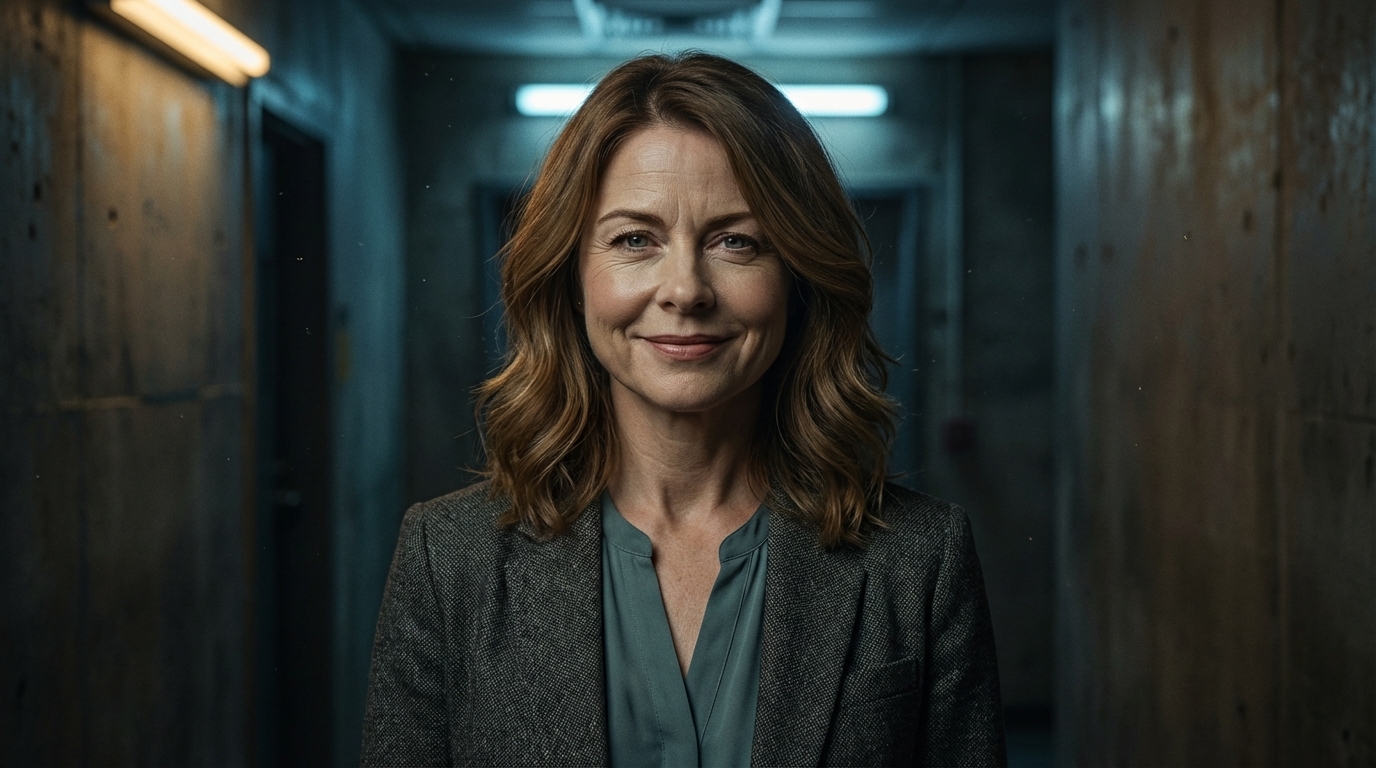
Linda Marie Hodgman (née Patterson)
Linda Marie Hodgman (née Patterson), born 23rd October 1990 in Hobart, Tasmania, is the front-desk receptionist at the Hobart Police Station on Liverpool Street — a position she has held since 2013 and which she performs with the particular competence of someone who understands that the front desk of a police station is not where bureaucracy begins, but where the world arrives before it knows what it needs. She is married to historian Kevin Arthur Hodgman and is the mother of two young children, Elizabeth and Michael.
The Patterson Household
Linda Marie Patterson was born on 23rd October 1990 at the Royal Hobart Hospital, the first child of David Alan Patterson and Margaret Leanne Patterson (née Kirby). The family lived in Lenah Valley, in a modest cream-brick house on a quiet street that climbed gradually toward the lower forested slopes of kunanyi/Mount Wellington — close enough to feel the mountain's weather but well within the comfortable domestic geography of a suburb that had always suited families of middling income and steady habits. Alan, as he was known by everyone except his mother and the Department of Premier and Cabinet, worked in state government administration and had done so for the entirety of his working life with the patient, unhurried competence of a man who had decided early that reliable service in an unsexy role was its own form of contribution. He was not ambitious in the conventional sense and was entirely at peace with this, which was a quality Linda absorbed before she had the vocabulary to name it. Margaret taught primary school in Moonah, three classrooms and twenty-odd seven-year-olds at a time, and brought home the specific brand of patience that primary school teachers develop or don't last: the capacity to hold a great deal of noise in a relatively small space without becoming either furious or numb.
Linda was an only child until her brother, Christopher David Patterson, arrived in April 1993, by which point Linda had spent two and a half years as the sole focus of a household that was warm, organised, and entirely unprepared for the particular negotiations that two children in close proximity required. She adapted — she was, from an early age, a pragmatist rather than a fighter — but the arrival of Christopher recalibrated her position in the household in ways she did not entirely consciously register until much later: she became the one who managed the situation, who noticed what was needed, who smoothed the edges between the competing demands of two people who both wanted something at the same time. This was not resentment. It was simply what the role required, and she was good at it.
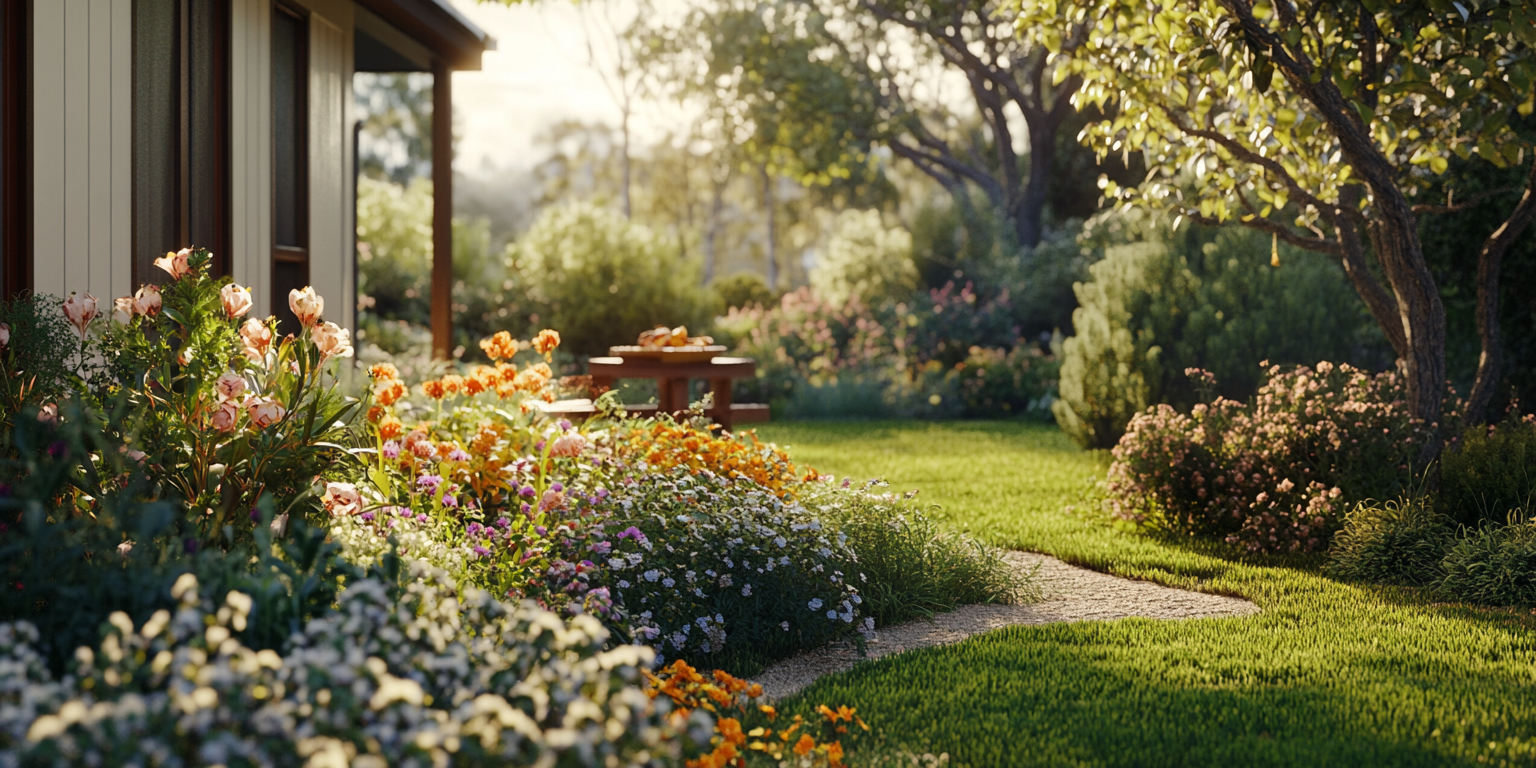
The Lenah Valley house was comfortable and essentially happy: Saturday morning hikes up the Organ Pipes track when the weather allowed, summer evenings in the backyard with the portable barbecue, the annual drive down to Huon Valley for the apple festival which the family attended every year without fail and which Linda found genuinely absorbing and Christopher found increasingly tedious as he got older. Alan read military history on the back porch and Margaret maintained a large vegetable garden that produced more zucchinis than any family of four could reasonably consume. These were ordinary pleasures and Linda understood, even as a child, that there was something worth attending to in the ordinariness — that the households which functioned quietly were doing something that took effort to sustain, even when it looked effortless from the outside.
School and University
Linda attended Moonah Primary School, where her mother's proximity to the profession — though Margaret taught in a different school — gave Linda a certain orientation to the classroom as a managed environment rather than a mysterious one. She was a steady student: attentive, thorough in her work, socially capable without being socially dominant. She was not the loudest person in the room and did not particularly want to be. She was the person who noticed when the group assignment was drifting and quietly redirected it, which her teachers appreciated and which her classmates found reassuring without always realising what she was doing.
She continued to Hobart College for Years 11 and 12, completing her TCE in 2008. She was competent across most subjects and genuinely engaged by humanities — history in particular held her attention in the way that subjects did when they were about the present as much as the past, when the material offered a framework for understanding the behaviour she was observing around her rather than simply cataloguing events at a safe remove. She was not a debater or a public speaker; she was more comfortable in the position of reader and analyst, the person who had formed a view and expressed it carefully to a small number of people rather than performing it for a room.
In 2009 she enrolled in a Bachelor of Arts in History at the University of Tasmania's Sandy Bay campus, partly from genuine interest and partly because the degree was capacious enough to contain several directions she had not yet decided between. It was there, in the first semester, that she encountered Kevin Arthur Hodgman — a fellow first-year history student from West Hobart with an easy manner and the particular quality she noticed before she had consciously registered noticing it, which was that he listened to conversations rather than waiting for his turn in them. They were placed in the same tutorial for a unit on colonial Tasmanian history and were partnered for a source analysis assessment that they completed in the Menzies Building cafe over two and a half hours and two rounds of coffee, at the end of which neither of them was in any doubt that the conversation was not primarily about colonial history.
They were together throughout their degrees, navigating the ordinary complications of a student relationship — the differing schedules, the periodic pressures of assessment, the slow realignment of social lives around a shared centre — with the mutual ease of two people whose temperaments were complementary in the specific way that mattered: Kevin was more expansive, more willing to pursue a speculative idea to its furthest edge before pulling back; Linda was more grounding, more attentive to what was actually workable, more likely to ask the question that turned an elegant theory into a practical problem. Kevin's sister Jenny, three years younger, was in Hobart through this period studying drama education and overlapped with them frequently enough that Linda came to know her as a person before she was formally a family member — which made the relationship comfortable in the easy, unforced way of connections that had not been managed into existence.
Linda graduated in November 2012 with a Bachelor of Arts. She had not gone to university with a specific career in her sights and had not found one during the degree, which she regarded without much anxiety. She had the skills, the temperament, and the instinct for people that would be useful in a range of contexts; the specific context would become clear when it did.
Marriage and the Path to Liverpool Street
Linda and Kevin married on 20th June 2012 — the date falling between the end of their final semester and graduation, a compression of milestones that felt characteristic of the way they both operated, which was without a great deal of ceremony about the sequencing of significant events. The wedding was small and unhurried, held at a venue in the Huon Valley with immediate family and close friends, Margaret's vegetable garden represented on the table decorations in a way that was Kevin's idea and which Linda found genuinely touching. Kevin's mother and father came from West Hobart; Alan made a speech that was three minutes long and entirely sincere; Jenny sat at the family table and cried in the way of people who are not performing but simply cannot help it.
They rented a flat in North Hobart and Kevin began a Graduate Diploma in Education that he had deferred twice and now completed with the relief of a commitment finally honoured. Linda, in the months after graduation, moved through two administrative roles — a brief stint at a Salamanca retail business handling bookings and customer management, and then a front-desk and administrative position at a medical practice in Battery Point — developing, without having set out to develop it, a specific expertise in the management of people who were in some form of distress. The medical practice was useful preparation for nothing she could have named in advance and everything the subsequent role required.
She applied for the receptionist position at the Hobart Police Station on Liverpool Street in late 2012 and was offered it in early 2013. The application had been partly practical — the position was stable, the public-sector employment conditions were better than the private roles she had occupied, and the institutional environment suited her temperament — and partly something she could not have fully articulated at the time, which was a sense that the front desk of a police station was a place where things that mattered happened first, before they acquired their official names.
The Work at Liverpool Street
The role of front-desk receptionist at a major urban police station was, in the experience of most people who held it briefly and left, either less demanding than they had anticipated or considerably more. Linda fell into neither category because she arrived without expectation and found, in the weeks and months of the initial period, that the position was several positions simultaneously — administrative processor, first point of contact, informal triage node, institutional memory, and occasional pressure valve for members of the public who had arrived at the end of their capacity and needed the first person they encountered to be both professional and human at once. She was, without design, well suited to all of these things.
She learned the rhythms of the station quickly: the shift changes, the officers whose names to attach to which cases, the categories of visitor that required what kind of attention. She developed a working knowledge of police procedure not through formal training but through the accumulated observation of a front desk that was the threshold between the outside world and the investigative apparatus of the Southern Division — watching who was sent to which room, listening to what was said at the counter and what was not said but meant, understanding over time the difference between a complaint that would go somewhere and one that would not, between a person who was frightened and a person who was performing fright, between the routine missing persons report and the one that felt different in some quality she could not name but had learned, across years, to attend to.
She did not discuss the work at home in any detail. This was not concealment — Kevin knew the general tenor of her days — but a practical division she had established early and maintained without particular effort, because the people who came to the front desk deserved to remain at the front desk rather than becoming anecdotes at the dinner table. Alan Patterson, who had spent his own career handling sensitive government material with a similarly unremarkable discretion, would have recognised the instinct immediately.
Elizabeth Hodgman was born in 2014, a straightforward birth at the Royal Hobart Hospital on a Tuesday morning in April. Linda took four months of parental leave and returned to the station part-time through the remainder of the year, transitioning to full-time hours in 2015. Michael Hodgman arrived in June 2016, and Linda took a similar leave, returning to Liverpool Street at the start of 2017. Kevin had by then taken up a lecturing role in the UTAS history department on a fixed-term contract that was renewed twice before becoming more stable, and the household settled into the particular organised complexity of two working parents with two children under school age — the logistics of childcare, the negotiated mornings, the evenings that were productive and the evenings that were simply about getting everyone fed and into bed.
Kevin's sister Jenny married Nial Triffett in June 2015 — a fencing contractor from Glenorchy, quietly solid in the way of people who did physical work and took it seriously — and Linda attended the Huon Valley ceremony with the genuine pleasure of someone who had been fond of Jenny long before the relationship became official. The four of them were not close in the intensive social way of some sibling households, but they shared Christmas and Easter with the Hodgman parents in West Hobart, and Nial had helped Kevin move furniture on at least two occasions which was, as currencies of goodwill went, a reliable one.
July 2018
On the morning of 29th July 2018, a Monday, Linda was at her position at the front desk of 47 Liverpool Street when Jenny Triffett came through the entrance door. Nial had been missing since Saturday. There had been a text message sent from his phone on Saturday afternoon; Linda, applying the standard advisory she had given to dozens of relatives in the same position, explained the policy on waiting periods and the significance of the text as evidence of voluntary departure. She was following procedure, which was what the procedure was for. She was also watching her sister-in-law's composure deteriorate in real time across the width of the front counter.
Jenny's fist came down on the counter. Heads turned in the lobby. The lobby always had people in it. The lobby always had people in it who would remember what they saw.
Detective Karl Jenkins stepped forward from somewhere behind her and took the matter over. He walked Jenny deeper into the station for a proper interview. Linda sat back down at her desk and put her fingers on the keyboard and did not immediately type anything.
The policy had been correct. The text message was legitimate evidence of contact. She had done what the role required. She had also watched a woman she knew and liked — a woman who had cried at her wedding — go to pieces at the front desk of a police station that Linda worked at, and had responded with the officially appropriate information, and then sat behind the desk while someone else took Jenny through to the room where the information might actually help.
She did not articulate this to herself in those terms at the time. She went back to work. Kevin called that evening when he heard about Nial; she told him what she could, which was not very much and was also less than she knew, and they sat together in the kitchen after the children were asleep without saying everything that was in the room.
The day before, on 28th July, Louise Jeffries had come to the front desk with a missing persons report. Linda had begun the standard advisory, and then Louise had given the address — Jeffries Manor — and the name, and something in the station's institutional memory, which was partly Linda's own memory, had registered. She had escalated directly to Detective Sergeant Charlie Claiborne rather than processing the report through the standard channel. That was a different kind of judgement: not personal, but something accumulated over years at the front desk that told her when a situation needed to skip a step.
The weeks that followed were the weeks in which the station changed around her in ways that were perceptible at the front desk before they became visible anywhere else. The 2018 events — Karl Jenkins' disappearance, Sarah Lahey's death at Myrtle Forest — were in the atmosphere of the building long before they were on any official report that would cross the front counter. Linda was not inside those events in any operational sense. She was the person who watched the officers who were inside them pass through the lobby every morning, who answered the phones when journalists began calling, who registered without recording the specific quality of silence that descended on the building in August and did not entirely lift.
2018 to 2026
The years after 2018 continued in the shape they had established: the Liverpool Street desk, the Lenah Valley house Kevin's parents had helped them purchase in 2020, the children moving through the school years with the specific velocity of children whose parents were paying attention. Elizabeth was eleven in 2026, in Year 5, in possession of opinions she expressed without apparent awareness that they might be controversial, and currently engaged with a project about Tasmanian convict history that Kevin had encouraged with perhaps slightly more enthusiasm than was entirely pedagogically neutral. Michael was nine, less interested in history than in the construction and subsequent destruction of Lego configurations, and had recently developed a passion for the Hobart Hurricanes that Linda found mildly perplexing but entirely supportable.
Alan Patterson retired from the Department of Premier and Cabinet in 2022 and had since become a committed and slightly too present presence in the Lenah Valley vegetable garden, which Margaret maintained with the same quiet authority she had always brought to it and which she defended from Alan's more ambitious interventions with the patience of someone who had been managing the difference between intention and execution for three decades. Linda visited most Sunday afternoons; Christopher, who had stayed in Hobart and worked in IT project management, came when he could, which was less frequently but without ill will.
Jenny Triffett was still in Hobart, still teaching drama, navigating the aftermath of Nial's disappearance in the way of someone who had been through something that did not resolve cleanly and who had decided, with some difficulty, to continue. The relationship between Linda and Jenny had a texture in 2026 that it had not had before July 2018 — not damaged, but differently weighted, as two people who had been on opposite sides of a counter at an important moment and who had not fully found the words for it since. They were still family. The affection was still genuine. Some things were simply held without being spoken, which was, Linda had learned over the years, often how the things that mattered most were carried.
She was still at the front desk at Liverpool Street at thirty-five, which was both a simple fact and a more complicated one. She had been offered a supervisory administrative role twice and had declined both times, which people who did not understand the position tended to read as an absence of ambition and which was, in fact, a considered decision: the front desk was where the work was, the work she was good at, the specific intersection of institutional function and human need that she had spent twelve years learning to navigate. She was not certain there was a better version of her professional self somewhere further up the administrative structure. She was certain there was not a more useful one.

