4338.206 · July 25, 2018 AD
Ledger of Survival
On a quiet jetty in Glenelg, Cody Jennings reunites with his long-lost mentor Jeremiah, whose sudden return shatters three years of silence and peace. As news of Port Stower’s destruction ripples through both worlds, Cody is thrust back into impossible decisions — torn between loyalty to Clivilius, his dwindling settlement, and a revelation that could rewrite everything the Guardians believe.
“Numbers don’t lie—but they don’t comfort either. They just sit there, reminding you how fragile your world really is.”
I awoke early, the faintest threads of pre-dawn light seeping through the curtains, a pale wash that softened the edges of the room.
The glow was muted, hesitant, as though the sun itself was reluctant to intrude. For a moment, I lay still, caught between the warmth of the bed and the cold clarity of the day ahead. The sheets held the ghost of Jamie's absence—his side untouched, his pillow still plump where it should have been dented by his head.
The weight of my to-do list pressed on me even here, invisible yet tangible, a burden that settled heavily across my chest before I had even risen. There was so much to do. So many threads to hold, so many spinning plates to keep from crashing.
Urgency gnawed at me, urging me to spring into action, to tackle what waited.
But instead, I allowed myself a breath, a pause carved out of the stillness. Reflection demanded its due.
The past twenty-four hours replayed in my mind with merciless clarity, a montage I could not silence. Jamie and Paul—my partner, my brother—now confined to Clivilius, that strange and enigmatic realm whose very rules I barely understood. Their absence here was a hollow space, an ache threaded with guilt.
I had put them there. However it had happened, however the Portal had trapped them, the responsibility was mine.
Then Gladys, drawn deeper into my clandestine operations, her knowledge no longer superficial but dangerously intimate. Her presence in the secret weighed on me: she was unpredictable, a variable I had not wanted.
And beneath all this—the safe hidden under the floorboards of my bedroom. The stash of phones secured within it had become more than contraband; they were lifelines, the fragile infrastructure of my communication strategy.
Last night, driven by the need to claw back some sense of control, I had opened a blank spreadsheet.
I had listed, counted, tracked—every asset, every tool, every resource I could lay claim to. The act was mundane, even dull, but beneath its simplicity lay necessity.
Building a world from nothing—especially one as unpredictable and demanding as Clivilius—required more than ingenuity and will. It required resources, and those I had in painfully short supply.
The figures glared back at me from the screen, uncompromising in their verdict.
Our earthly assets, finite and fragile, would scarcely stretch far enough to cover the basics of survival, let alone the monumental task of creation. I had tallied everything: the tents already ordered, the supplies already purchased, the credit still available, the savings still untouched. The mathematics were brutal. Three people needed food, water, shelter, clothing, tools. They needed medicine and sanitation and a thousand other things I hadn't even thought of yet.
And all of it had to come through me. All of it had to be bought on Earth and ferried through the Portal, piece by piece, dollar by dollar.
The truth sat heavy: we were underprepared. Alarmingly so.
And yet there was no turning back.
With a heavy heart, I accepted what could no longer be ignored.
The financial reserves—the lifeblood of everything I had built, everything I was still building—had to be mobilised without delay. Today's first order of business was daunting, yet non-negotiable. I needed to begin the process of draining bank accounts, stripping them bare, and liquidating whatever limited assets I could still lay hands on.
The very idea carried with it a bitter taste, the sense of dismantling a life to fund another.
Years of careful saving. The emergency fund Jamie and I had built together, dollar by dollar, month by month. The modest investments. The buffer that had always made me feel secure, that had stood between us and the chaos of financial uncertainty. All of it would have to go.
Yet the survival, even the very existence, of Clivilius depended on it.
The risks loomed large, crowding my mind like shadows at the edge of firelight. Every transfer, every withdrawal, would leave a trail—fragile footprints across a financial landscape already brittle beneath me. Banks noticed patterns. Banks asked questions. One wrong step could fracture it completely, could bring scrutiny I couldn't afford, could unravel the careful fiction I was constructing around Jamie's "illness" and Paul's "visit."
And yet there was no choice.
Clivilius demanded more than intention; it demanded sacrifice—tangible, immediate, relentless.
I rubbed at the knot between my brows, furrowing deeper as I reached for the laptop perched on the bedside table.
Its cold shell felt heavier than it should, a portal of its own—into a world of figures and balances where numbers determined survival. The reality waiting inside was stark.
The screen flickered to life, casting pale blue light across the rumpled sheets. I navigated to the banking app, fingers moving with the reluctance of someone approaching a wound that needed examining. The numbers loaded, settling into their columns with the quiet finality of a verdict.
Purchasing the tents had nearly bled us dry.
What should have been minor outlay had, in context, gouged a chasm into already shallow reserves. On the credit card, a meagre sum lingered: one thousand dollars. Insignificant, almost insulting, given the scale of what lay ahead. That figure hovered in my thoughts like morning mist over a lake, soon to burn away under the harsh, unyielding sun of need.
I'm going to have to get creative, I thought grimly, my fingers suspended above the keyboard, poised yet unwilling to commit the first keystroke.
Financial gymnastics had become the new survival instinct, each manoeuvre more precarious than the last. Every risk multiplied, every decision teetered closer to collapse. Yet failure was unthinkable.
Clivilius had to be fed, even if it meant hollowing out the foundations of everything I had once thought secure.
I scrutinised the remaining accounts with the sharpness of a jeweller inspecting flawed gems, each figure weighed for its potential to save or sink us.
Relief—thin, fleeting—slipped through me when the numbers settled.
We weren't destitute yet. Twenty-five thousand dollars. A sum that, in other contexts, might have felt secure, now reduced to a fragile lifeline stretched taut across turbulent waters. It was everything we had. The combined savings of two working adults, accumulated over years of modest living and careful planning.
And I was about to spend it all on concrete mix and camping supplies.
My hands moved with a moment of hesitance, executing a swift transfer to consolidate the dwindling funds into the access account. It was a simple manoeuvre, but it carried the weight of strategy. From there, I could extract the money, convert it into cash—fluid, pliable, anonymous.
Cash carried no trails, no echoes in digital ledgers, no scent for the banks to sniff out. In a venture where secrecy was everything, invisibility was the only currency that mattered.
The transfer processed. Confirmed. Twenty-five thousand dollars now sat in a single account, waiting to be withdrawn in chunks small enough not to trigger suspicious activity reports. I'd have to do it carefully—a few thousand at a time, spread across different branches, never enough in one go to raise eyebrows.
The planner in me was already mapping it out. The part of me that still remembered what normal life felt like was quietly mourning.
I stole a glance at my phone perched on the bedside table.
The hour was still premature, the bank's doors firmly locked against early risers like me. Yet waiting gnawed at me. Inertia felt intolerable, indulgent even. Time, always a merciless adversary, seemed more aggressive now, every minute unspent a small betrayal of Clivilius's fragile beginnings.
My gaze drifted briefly in the direction of the driveway.
Despite the walls that obscured it from view, I knew that the small truck still sat there, its silhouette framed against the dull grey light of morning. It was a solid, reassuring shape—a tangible reminder of Gladys's contribution. Those goods, stacked and waiting, were more than supplies. They were sustenance, structure, the very lifeblood of a world struggling to find its feet.
Concrete mix. A cement mixer. Post hole diggers. A mattock. All the things on Paul's written list, gathered and delivered despite Gladys's confusion, despite her half-formed suspicions. Whatever she thought was happening, she'd still helped. That counted for something.
Today I would need to get those supplies through the Portal. Today I would need to face Jamie and Paul again, to see how they'd survived their first full night in Clivilian darkness. Today I would need to begin the slow, painstaking work of building something from nothing.
With a surge of determined urgency, I rolled out of bed, the sheets pulling reluctantly from my skin.
The cool morning air prickled across my arms, shocking me into alertness. Duke lifted his head from where he lay at the bottom of the bed, ears pricked, watching me with the patient curiosity of a creature who knew something was different but couldn't quite parse what. Henri, predictably, didn't stir—just continued his gentle snoring, oblivious to the weight of the day ahead.
Dressing was quick.
I pulled on a plain t-shirt, its fabric worn soft with familiarity, and paired it with my black jeans—the ones I trusted, comfortable yet practical. Nothing flashy, nothing to draw eyes. The attire of a man set on meeting the day's demands head-on, prepared to shoulder the weight of what was essential.
In the mirror, I caught my own reflection and paused.
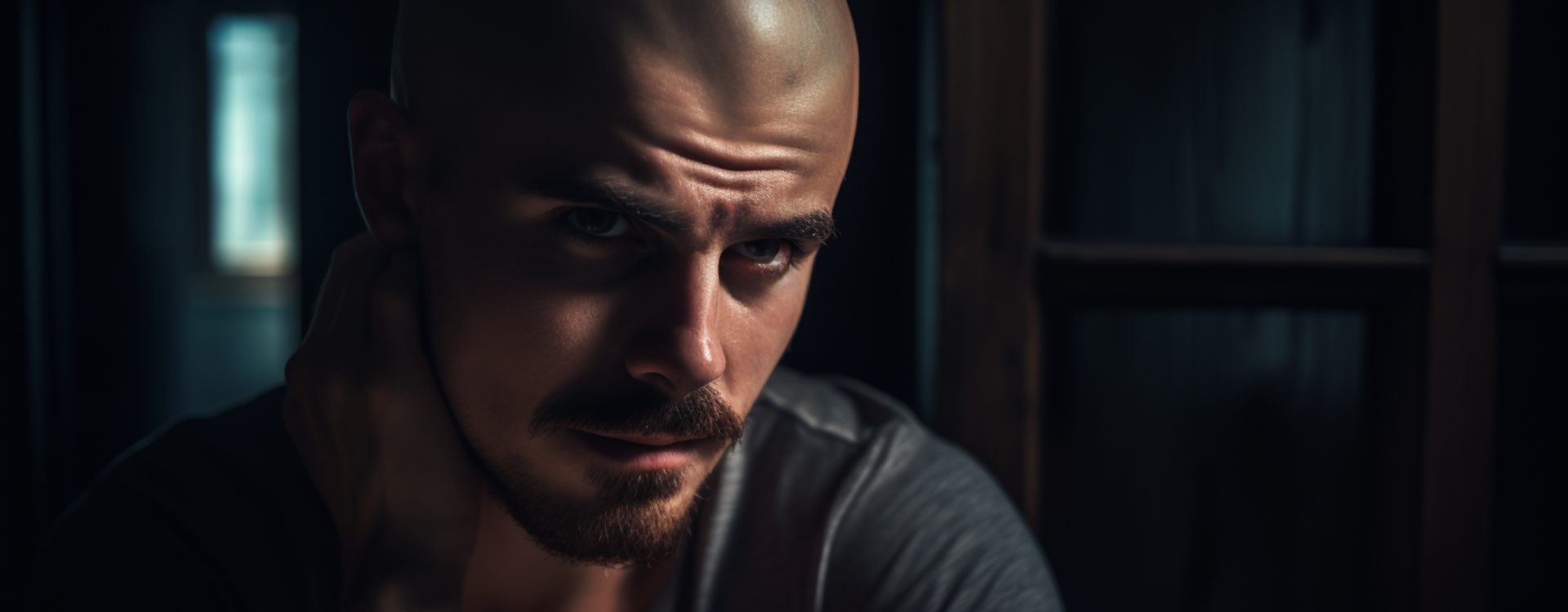
The man staring back looked tired. Dark circles shadowed his eyes, and there was a tightness around his mouth that hadn't been there yesterday. He looked like someone carrying too much, juggling too many impossible things, pretending he had everything under control when the truth was far more precarious.
You can do this, I told him silently. You have to do this.
The reflection offered no argument. Just that same tired, determined stare.
I turned away and headed for the door. The day was waiting, and it would not wait long.
