4338.211 · July 30, 2018 AD
Leather, Lies, and a Phone Call
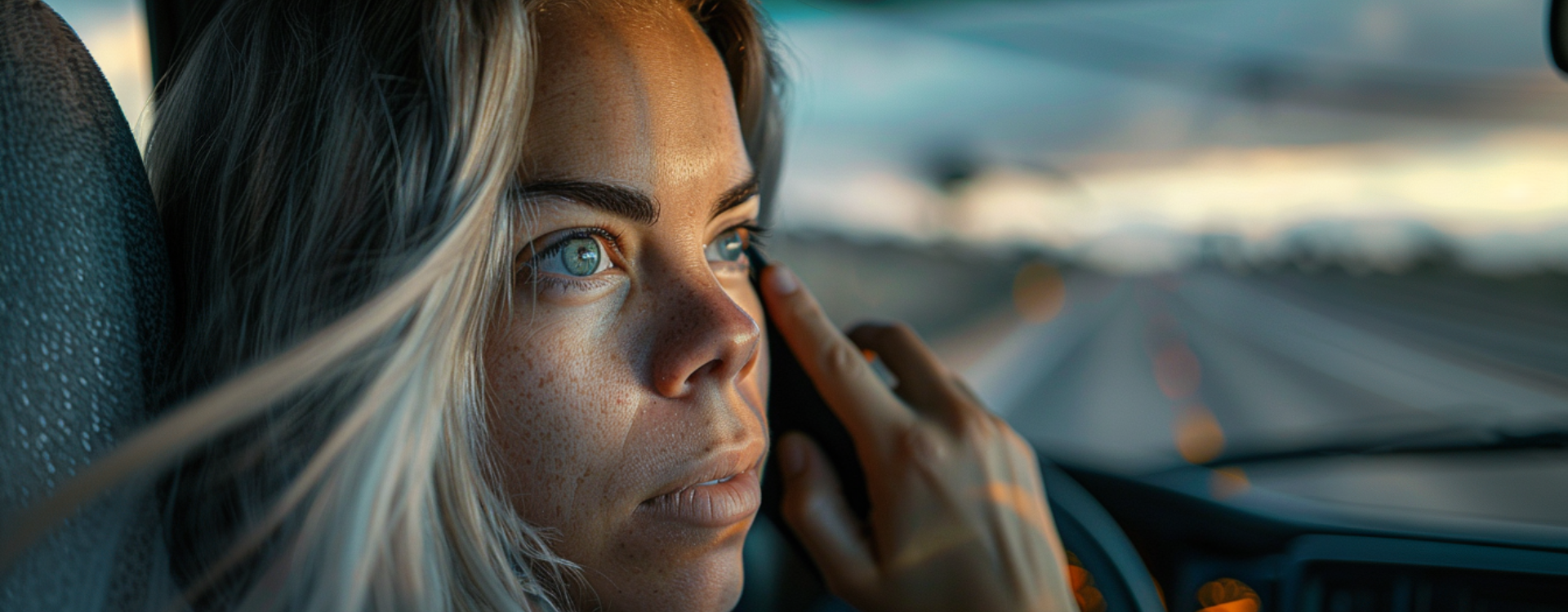
Beatrix commandeers a motorhome under the guise of a test drive, her mission to retrieve Paul’s dog colliding with the thrill of deception. But when a call from Sergeant Charlie Claiborne cuts through the hum of the engine, news of her sister and a pointed question about the Guardians leave her with more to fear than getting caught on the road.
"Every good getaway smells of new leather and bad decisions."
Inhaling deeply, I drew in the rich, intoxicating scent of the motorhome’s fresh new leather interior—equal parts adhesive and artifice, with a hint of showroom desperation. It was the kind of smell that screamed aspiration. A synthetic promise, carefully stitched and piped. It curled around my senses like expensive perfume on someone else’s coat.
"Idiot," I murmured with a smirk, my voice tinged with that familiar cocktail of amusement and faint contempt, watching the dealership owner shrink in the side mirror with each metre I claimed. He waved like he was seeing off a niece on a gap year, utterly unaware that he’d just lent a six-figure vehicle to a woman with no intention of returning it.
Perched smugly in the driver’s seat, I shifted slightly, letting the faux-leather embrace me in its overconfident plushness. It gave beneath me with the eager compliance of something that hadn’t yet learned disappointment. My hands gripped the wheel with casual authority—this wasn’t my first illicit rodeo—and the indicator ticked with that smug, rhythmic certainty, a mechanical countdown to my clean getaway. Each blink felt like a wink.
I turned onto the main road, the motorhome’s weight settling into the bitumen with a groan of new suspension. "You're never going to see us again," I chuckled softly, my words dissolving into the hum of the engine. The laugh sat warm in my chest—a blend of thrill and guilt, mischief and inevitability. My cheeks tingled, not with shame, but the radiant heat of a well-executed lie. Somewhere between highway lines and the speed limit, I felt it: the bright, heady joy of getting away with it.
The plan hadn’t so much formed as lunged into being—spurred on by necessity, restlessness, and the kind of desperation that makes boldness feel like common sense. I’d given myself an early start, knowing full well the road ahead wouldn’t just be long—it would be a logistical siege. Finding Paul’s beloved dog and somehow delivering her back to Clivilius wasn’t your average pet rescue; it was an inter-dimensional retrieval mission with sentimental attachments and no margin for error.
Last night’s flight from Hobart to Adelaide had been a blur—no time to second-guess, no time to breathe. Just a one-way ticket and a tight jaw. The kind of journey you make with your coat buttoned too high and your thoughts moving faster than the plane.
This morning, I hit the ground running. The airport still smelled faintly of disinfectant and overpriced pastry when I slipped into a hire car and made my way across the waking city, eyes scanning for a suitable mark. I had originally planned on something smaller—more discreet. A caravan or two. Maybe even a ute with a canopy and plausible deniability. But patience has never been my forte, and something about rows of gleaming motorhomes under a sky bruised with morning cloud stirred the gambler in me.
Why play it safe when you can steal the show?
Seated in the back of a taxi, I watched as Adelaide slid past in fragments—glass facades winking in the early light, café awnings still yawning open, a cyclist scowling at a driver with righteous indignation. Morning had that particular hush to it, the kind that belonged to surgeons and thieves—people with plans and not enough sleep.
I tracked the shifting light absently, eyes narrowed, mind elsewhere. The motorhome. An unapologetically excessive choice, gleaming like an overfed beetle under dealership floodlights. It was ludicrously conspicuous—far from the pragmatic caravan I’d first pictured—but something about its audacity appealed to me. There was power in choosing something so blatantly unsuitable and making it work. Like stealing a chandelier to light a campfire.
The taxi lurched at a red light, jolting me forward slightly. I adjusted the seatbelt with a click and inhaled slowly, centring myself. This wasn’t just about transport. It was theatre. A mobile stage for what came next. I wasn’t just ferrying a dog through the outback—I was rewriting a script mid-performance, one with shifting acts, reluctant players, and no applause.
I had no intention of parting with a single cent. The salesman could keep his brochures and bonhomie. The motorhome wasn’t a purchase; it was a requisition. And the longer I sat in that cab, the more I convinced myself that the end more than justified the means.
Besides, I told myself—quietly, firmly—the new inhabitant of this motorhome would thank me. Eventually. Paul’s beloved Charlie wouldn’t be spending her days in a flimsy tent swaying in the wind like a bad decision. No. She’d have climate control, cushioned flooring, and the illusion of civilisation. A moving palace for a very good girl.
The justification slid in easily, like a well-oiled drawer. I stepped out of the taxi with purpose, my shoes striking the kerb with more confidence than I felt, and approached the dealership like I had every right to be there. And maybe I did. That morning, the line between performance and intent had all but vanished.
The lot was laid out like a strategy board—caravans and motorhomes arranged in quiet formation, their mirrored windows reflecting possibilities back at me. A sea of fibreglass and potential.
The dealership itself had that faded optimism peculiar to places that dealt in long-term dreams—retirees’ fantasies, road-trip romances, the promise of escape in polyester upholstery. It smelled faintly of sunscreen and filtered coffee. The old man behind the desk stood when I entered, his jumper a little too tucked, his smile several watts too bright. I gave him what he needed: warm eye contact, a breathless laugh, just enough hesitation to make the whole thing feel unscripted.
He talked too much. They always do when they think they’re charming. I nodded at the right times, asked a few technical questions I already knew the answers to, and let him believe he was leading the dance. Meanwhile, I steered us both to exactly where I needed us to be.
When the keys dropped into my palm, cool and ordinary, I almost smiled at the simplicity of it. These weren’t just keys—they were leverage. A prop in the next act. I closed my fingers around them, felt their heft, their promise. Metal and plastic, sure—but also freedom. Also risk.
Also the beginning of something I couldn’t yet name.
Liberation and deception. They’d always been twin threads in my tapestry.
And I’d never been particularly bothered by which one I pulled tighter.
With every kilometre that stretched behind me on this so-called "test drive", a low thrum of exhilaration pulsed through my veins, mingling with something quieter—thinner. Guilt, perhaps. Or the early echo of consequence. It was faint, like a thread snagged on a nail, tugging just enough to remind me that I wasn’t driving away from the world so much as carving a hairline fracture through it.
Still, I pressed on.
In the grand scheme of my endeavours, these moments of doubt were background noise—flecks of grey among broader, bolder strokes. Regret was for the indecisive. I had purpose now, hardened by necessity and shored up with the kind of makeshift courage I’d always been good at faking until it felt real.
The motorhome hummed steadily beneath me, a steel beast purring its approval. The wheel sat firm in my grip, reassuringly solid. I was cocooned in faux-luxury and tinted windows, gliding through the world like a mobile anomaly. And for a moment—an unrepentant, deeply satisfying moment—I allowed myself to feel untouchable.
Not just Beatrix. Not just the woman who used to know the scent of lemon oil on antique oak and could outbid a man twice her size without blinking. No. Here, on this stretch of bitumen, I was conductor and composer both, orchestrating a symphony of movement and subterfuge. Every decision, every turn, a note played in pursuit of something just out of reach.
And then—because of course—life intervened with its usual graceless sense of timing.
The road ahead constricted like a belt cinched too tight. Fluorescent signs loomed from the verge, warning of temporary delays with the sort of corporate smugness that suggested they’d been placed there not to inform, but to punish. The hum of forward momentum gave way to the aggrieved sputter of impatience as I slowed to a crawl, the illusion of flight dissipating like fog under high-beam headlights.
Roadworks.
An orange-vested man with a lollipop sign rotated it towards me with the slow disdain of someone who hated his job just enough to enjoy mine being inconvenienced. Traffic ahead thickened into a sluggish procession—an endless mechanical conga line, led by a ute carrying a plastic water tank and zero hope.
I exhaled sharply, my fingers drumming the wheel. The motorhome, built for comfort but not for subtlety, hissed in quiet protest as I braked again. The adrenaline that had buoyed me up until now began to curdle into restlessness.
The digital display on the dash glowed a sterile blue. The numbers stared back with clinical indifference, each minute a tick louder in the theatre of my mind. Time wasn’t on my side. It never was when you were gambling with borrowed wheels and fake phone numbers.
Which reminded me—
How long before the dealership owner, all ruddy cheeks and earnest good intentions, reached for the handset and dialled the number I’d given him? The one that led precisely nowhere. A burner I’d long since dismantled and tossed into a Hobart wheelie bin, sandwiched between banana peels and yesterday’s newspaper.
A shiver ran through me. Not cold, not fear exactly—more a tightening. The kind you feel when a perfectly balanced stack begins to tilt. I shifted in my seat, suddenly all too aware of how temporary this victory was. The plan, cobbled together in the brittle hours before dawn, had no room for missteps. And here I was, trapped behind a row of brake lights and budget trailers, watching time eat itself.
The fragility of it all pressed in like altitude. Every detail, every bluff, every misdirection—it was all hanging by a thread. And somewhere back in Adelaide, a man was about to tug it.
For a fleeting moment, doubt slipped in sideways, quiet but insistent, settling in my chest. It didn’t shout—it rarely did—but it had a way of leaning close and speaking in low, unpleasant truths. Questions about morality, consequence, and the fragile scaffolding of my plan brushed against the fringes of my thoughts like cold fingertips.
"The guy did take a copy of your licence," I muttered to the empty air. It was worry wrapped in irritation, frustration tempered by the awareness that I might have overlooked something crucial. The hum of the engine felt louder in the pause that followed, the road ahead stretching long and unhelpfully straight.
My fingers betrayed me before I could rein them in—restless, impatient—drumming the edge of the steering wheel in a staccato beat that mirrored the pace of my spiralling thoughts. The tapping grew into a rhythm, part Morse code, part nervous tell, as if the wheel itself might absorb my unease.
Then, like snapping a taut string, I forced the shift. A flick of an internal switch, the kind you learn after years of tight corners and quick exits. I summoned the familiar cadence of a pep talk, one I’d perfected in the mirror of dim motel bathrooms and late-night car parks.
"But I’m not in Tasmania now," I told myself, injecting the words with an artificial calm I didn’t entirely feel. The geography was flimsy comfort, but I held on to it anyway, picturing the map as a physical barrier—an expanse of ocean and bureaucracy between me and the potential fallout. A distance measured not just in kilometres, but in the improbability of anyone bothering to connect the dots.
With each kilometre the motorhome devoured, the earlier unease thinned. The tyres hummed a low, steady note against the tarmac, a sound I began to treat as affirmation. I leaned into the thought, layering it over the doubt until it muffled.
"Once I’ve taken the motorhome to Clivilius, there will be absolutely no evidence." I let the words sit in the air, a mantra wrapped in certainty, even if it was built from wishful thinking. In this game, belief was as important as truth. Sometimes more so.
The ends would justify the means. They had to. And if the scales tilted under the weight of my choices, I’d pretend not to notice.
Besides, the police were already investigating Luke. The thought slid in like a knife between ribs, cold and oddly reassuring. Perspective—my transgression was nothing compared to the labyrinth he was navigating. A drop in a reservoir already clouded with larger, darker deeds.
"If we are going to keep the settlement alive and supported—" I began, my voice carrying the ring of conviction, even as the sentence fractured mid-air, the rest hanging unspoken.
My foot slammed the brake in a sharp, muscle-deep reflex, the belt biting against my shoulder as the motorhome lurched forward. The horn erupted under my palm—an abrasive, guttural bellow that ripped through the morning air, sharp enough to rattle my own teeth. A driver in a dented sedan was nosing into my lane with all the entitlement of a cat taking someone else’s seat.
"My vehicle’s bigger than yours!" I bellowed, the words spilling out, muffled by the glass, the tone a cocktail of indignation and raw, territorial rage. I doubted he could hear me, but that wasn’t the point. It was the principle. The audacity of some people—thinking they could slip in unnoticed, undermine my presence, diminish my space. My grip on the wheel tightened, leather biting into my palms, a physical refusal to be moved.
The intrusion dissolved as quickly as it had flared. He fell back, a reluctant surrender, and the road smoothed under my tyres again. My heartbeat settled into a steadier rhythm, though my mind kept moving, resuming its churn through more pressing, far less predictable threats.
"It’s only a matter of time before the police come after both of us," I muttered, letting the words tumble into the cabin like loose change. Saying it aloud didn’t make it feel any less inevitable; it simply anchored the thought, made it real.
My gaze flicked down to the Portal Key, wedged safely between my legs, looking harmless in the way a snake might look harmless when it’s coiled and still. Its shape was unassuming, almost banal, but every time I looked at it my stomach tightened. The kind of power it held was dangerous not because it tempted you—it was dangerous because it convinced you that you were untouchable.
It’s our ultimate escape, I told myself, pushing the thought into my mind like a stake in soft earth. A trapdoor. A failsafe. With this much power, getting caught would be nearly impossible. The reasoning was clean, precise. Almost comforting—until it wasn’t. The logic evaporated as quickly as it formed, leaving behind only that thin aftertaste of uncertainty.
Luke’s recent close call slid uninvited into my thoughts, vivid and cinematic. I saw again the shimmer of the Portal hanging open too long, the hum in the air shifting from promise to warning, and Detective Jenkins parked across the road just metres away. Luke had been lucky—absurdly, undeservedly lucky. Luck was not a strategy.
The image clung to me, tightening across my shoulders until it shivered there, a reminder that power didn’t erase risk. It only made you bold enough to think it might.
I needed somewhere quiet. Secluded. Out of sight long enough to get this motorhome to Paul without drawing the wrong kind of attention. Every glance at the clock shaved seconds off the luxury of planning, turning urgency into a living thing in my chest.
The illusion of calm fractured with the shrill, tinny ring of my phone—jerking my focus away from the curve of the road. The noise was unwelcome, invasive, a reminder that solitude was only ever temporary in this business.
My eyes flicked to the passenger seat, where the phone was shimmying against the upholstery like it was trying to wriggle free. The vibration was relentless, insistent, as though the device itself knew that whatever was on the other end would be trouble. The screen glared up at me—Unknown Number—two words that, in my experience, rarely meant anything good. It pulsed like a warning light, a harbinger of complications I had neither the energy nor the appetite to entertain.
I exhaled, the sound coming out as a sigh laced with resentment, the kind you give to a chore you’ve been putting off for too long. One hand on the wheel, I snagged the phone with the other, its smooth weight cool against my palm.
Reluctantly, I answered, pressing the speakerphone icon so the voice would fill the cabin. The sound echoed slightly in the confined space, as though the motorhome itself was eavesdropping. I balanced the phone on my thigh, keeping it steady with the edge of my hand—a small, awkward act of control in a situation where control was already slipping.
"Beatrix?"
The voice was familiar in the way a half-remembered tune is—nagging at the edges of recognition without slotting neatly into place. My reply came out guarded, the single syllable tight. "Yeah."
Even as I said it, my mind was working, combing through memory, running the voice through a mental rolodex of allies, informants, and irritants, trying to predict the angle before it revealed itself.
"It's Sergeant Charlie Claiborne."
The name landed like a fist to the sternum—blunt, direct, entirely unwelcome. My chest contracted, a rush of heat crawling up my neck as my body reacted before my brain caught up. The phone wobbled on my thigh, nearly slipping to the floor as my lips shaped the only appropriate reply.
"Shit!" The word came out as a hiss, not loud but loaded, a thin release valve for the spike of adrenaline tightening every muscle.
Claiborne’s voice crackled through, tinny now, as though the sudden rush of blood in my ears was warping the sound. "Beatrix, don’t hang up!" Urgency roughened his tone, breaking clean through the static.
I slowed my movements deliberately, denying him the satisfaction of a quick response. Fingers closing around the phone, I lifted it to my ear with a languidness I didn’t feel, bracing myself for whatever mess was about to come spilling through the line.
Outside, the world blurred into irrelevant motion—the snarl of traffic, the flicker of sunlight on glass, the churn of tyres over tarmac. All of it faded to backdrop. The real scene was here, in the curve of my hand around the phone, in the tightening coil in my stomach.
Something was coming. I could hear it breathing through the line.
"What do you want?" I asked, the words drawn out, my tone thick with reluctance, like each syllable cost me something to spend.
"Your sister is in trouble."
Charlie’s voice was flat, deliberate—enough to make the muscles in my stomach tighten as if bracing for impact.
"Gladys?"
"Yes."
The single confirmation landed harder than I’d expected. I exhaled—long and slow—my sigh filling the cabin like steam, a thin veil between me and the sudden, unwelcome churn in my head. My thoughts tried to scatter, but I corralled them with the practised precision of someone used to hearing bad news mid-drive. I locked my eyes briefly on the road, clinging to the white lines and the sweep of the asphalt as though they might hold me steady.
"There’s been an incident at the Owens’ property in Collinsvale," Charlie continued, slicing through the fragile silence I’d been holding onto.
The name hit like a splash of cold water to the face. Collinsvale. The Owens’ property. Both together in the same sentence carried an air of inevitability I didn’t like at all.
"What do you know about that?" I snapped, the question escaping harder than intended, barbed with irritation I couldn’t disguise. Fear was already in the mix, muddling my tone, making me sound more combative than curious.
"Not a lot. Forensics are there now."
The word forensics uncoiled something low in my spine—a slow, crawling shiver that climbed its way upward. That wasn’t a word you used for misunderstandings or minor altercations. That was the language of crime scenes. Of blood and evidence bags.
"Forensics?" My voice pitched higher without my permission, the ragged edge betraying the panic beginning to claw its way through me. "Where’s Gladys?" The urgency in my own tone startled me—raw, protective, and unwilling to imagine a world without her in it. She was infuriating, unyielding, and one of the few fixed points in my life I trusted to stay put.
"Apparently she’s involved in an ongoing pursuit."
The words landed like a blow, knocking the air out of my lungs. Pursuit. The mind goes straight to sirens, dust clouds, and bad endings.
My eyes widened, vision momentarily narrowing around the road ahead. "What the hell does that mean?" It came out as both demand and plea, a frantic need for something solid to hold onto before my imagination ran entirely unchecked.
"I don’t have any further details."
The admission was meant to be factual, but it carried the same hollow thud as a door closing in my face. No details meant no control. And without control, I was left adrift in a tide of speculation, all of it dragging me towards places I didn’t want to go.
"What the fuck are you doing, Gladys," I whispered under my breath, the words barely more than steam on the glass. My grip tightened on the wheel as the motorhome began to slow, the heavy chassis dipping slightly with the deceleration. I eased it off the main road, tyres crunching over loose gravel, steering towards a narrow avenue flanked by towering gums.
The trees arched overhead like conspirators leaning in to listen, their shadows pooling thick across the tarmac until it felt like I was driving into a throat. Branches swayed just enough to let the light flicker through in fractured slices, each one catching the edge of the windscreen before dissolving into the gloom. The quiet deepened, pressing against the windows, matching the unease creeping up the back of my neck.
"I know I shouldn’t be so direct on this type of line, but I need to know, Beatrix. Is Gladys a Guardian?"
My fingers stilled on the wheel. The gravity in his tone told me this wasn’t idle curiosity. It was a deliberate probe, and one I hadn’t been braced for.
His unexpected reach into our world jarred me, and for a beat I just sat there, mind running the calculus of risk and disclosure. How far could I trust him without tripping something I couldn’t unpick later?
"Not that I know of," I said finally, keeping my voice balanced on that tightrope between caution and candour. We were playing the same game—trading truths like counterfeit currency—and I wasn’t ready to show the watermark on mine.
"If Gladys isn’t going to go to Clivilius, she needs to be careful. She needs to get the cops off her tail. And don’t ever return to that Collinsvale property."
The words came down hard. Warning, advice, or both—it didn’t matter. They were already embedding themselves in the back of my mind.
"You’re the sergeant," I shot back, my frustration slipping into the open. "Can’t you call off the chase?"
"There’s only so much more I can do to protect you all. They’re onto me, Beatrix."
The tone in his voice left no room for misinterpretation—it was the sound of someone at the edge of their rope, counting the frays.
"What do you mean they?" I pressed, leaning into the word like it might force him to define it.
But he sidestepped cleanly. "Don’t try and make any contact with me, Beatrix."
My mouth opened, but nothing came out. The words I needed stayed stuck somewhere between my lungs and my tongue, drowned by the rush of thoughts tripping over each other in my head.
"Be careful, Beatrix," he added, softer now, a scrap of concern left behind like a note tucked into a pocket you wouldn’t find until later. Then the line went dead.
Silence swelled in its wake, filling the cabin until it felt almost physical. The motorhome’s engine offered only a muted hum, the sound dulled further by the soft, repetitive brush of leaves against its sides—like the trees were testing the perimeter, checking if they could close in entirely.
