Jane Elisabeth Lahey (née Lewis)
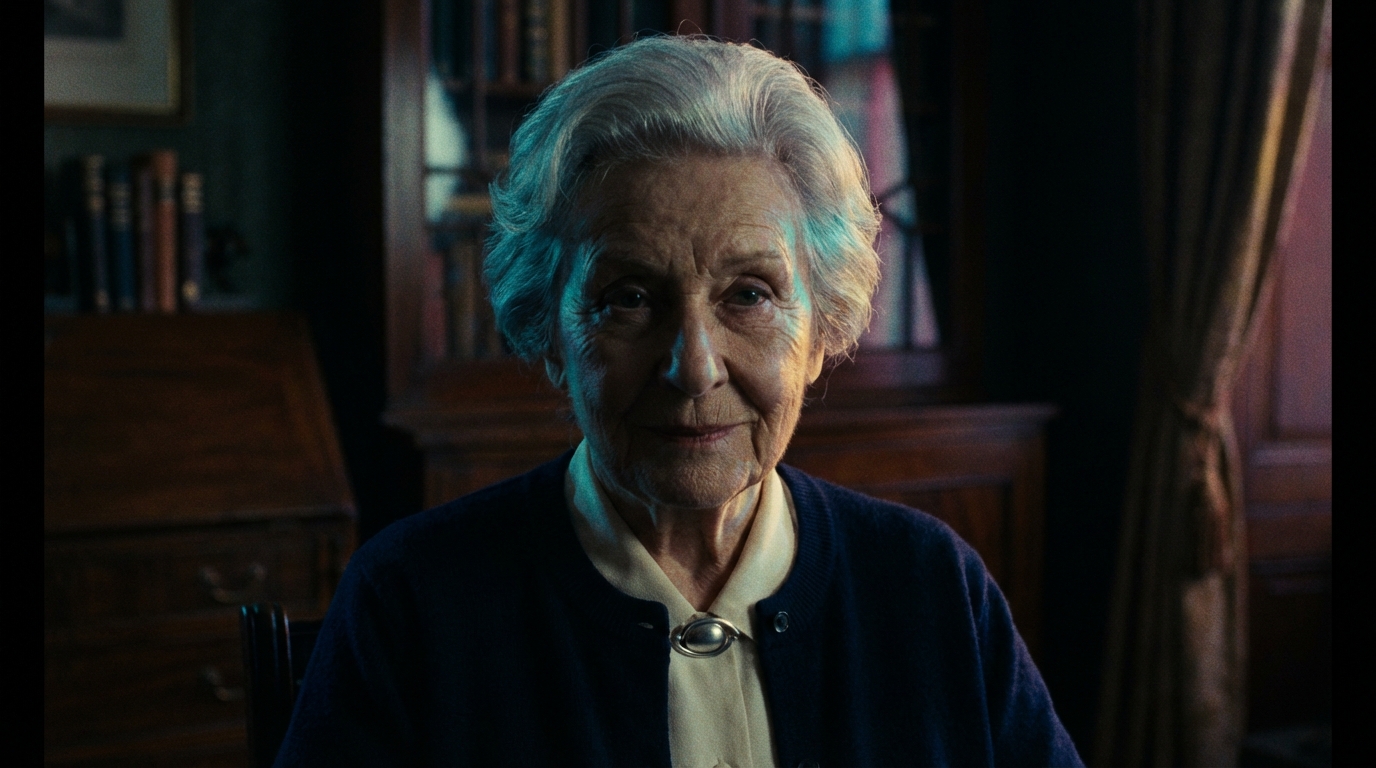
Jane Elisabeth Lahey (née Lewis) embodied the resilience and mystery of Tasmania itself—a woman whose ninety-two years interwove ordinary domesticity with extraordinary secrets, transforming personal tragedy into profound guardianship, and carrying hidden truths that would only surface in her final days. Born into the rugged beauty of Tasmania in 1926, she navigated a life marked by enduring friendships, complex relationships, and a remarkable capacity to reinvent motherhood across generations.
Early Years and Tasmanian Roots (1926-1945)
Jane Elisabeth Lewis arrived on 14th March 1926 in a modest weatherboard cottage on the outskirts of Hobart, the third child of Thomas William Lewis, a timber mill foreman, and Margaret Rose Lewis (née McKenzie), a district nurse whose gentle competence would profoundly shape her daughter's character. The Lewis household, though not wealthy, valued education and community service—principles that would anchor Jane throughout her remarkable life.
Growing up amidst Tasmania's untamed landscapes, Jane developed an early fascination with the island's hidden corners. Her childhood unfolded against the backdrop of the Great Depression, yet the natural abundance of Tasmania's forests provided both solace and adventure. She attended Hobart Primary School, walking four miles daily through bushland that would become her sanctuary. Teachers noted her exceptional observational skills and her peculiar habit of recording detailed notes about everything she witnessed—a practice that would evolve into her lifelong diary keeping.
The summer of 1942 marked a pivotal transformation. At sixteen, Jane encountered Thelma Rose and Robert "Bob" Hugh Gangley during a church youth expedition to the Tasmanian rainforest. Thelma, a year Jane's senior, possessed an adventurous spirit that complemented Jane's quiet determination. Bob, two years older and already showing signs of the curmudgeonly wit that would define him, completed their unlikely trio. Their friendship, forged amongst ancient ferns and towering eucalypts, transcended typical adolescent bonds. They created elaborate maps of secret trails, discovered hidden waterfalls, and shared dreams that seemed impossibly grand for three working-class Tasmanian teenagers.
Jane's education at Hobart Technical College (1943-1945) focused on secretarial studies and bookkeeping, practical skills her parents deemed essential for a woman's independence. Yet her true education occurred in the rainforest expeditions with Thelma and Bob, where she learned to read the landscape's subtle languages and navigate both physical and metaphorical shadows. During these formative years, Jane also developed her talent for observation that bordered on the uncanny—she could recall conversations verbatim weeks later and noticed details others invariably missed.
The Jeffries Introduction and Marriage (1946-1957)
In February 1946, Jane made a decision that would alter multiple lives: she introduced her dear friend Thelma to James Jeffries III, whom she'd met through her clerical work at a Hobart law firm. James, heir to the Jeffries fortune and master of the imposing Jeffries Manor, seemed an unlikely match for the spirited Thelma. Yet Jane recognised something in their interaction—a complementary energy that might transform them both. The introduction succeeded beyond expectations; Thelma and James married in 1947, with Jane serving as maid of honour.
Rather than creating distance, Thelma's marriage deepened the friends' bond. Jane became a regular presence at Jeffries Manor, where her observational skills and discretion made her invaluable to James's increasingly complex business dealings. She never spoke of what she witnessed during those visits—the late-night meetings, the coded telegrams, the locked rooms that even Thelma couldn't enter. Her diary from this period, discovered decades later, contains cryptic references to "the necessity of selective blindness" and "the weight of unspoken knowledge."
It was during the winter of 1947, at a midwinter ball at Jeffries Manor, that Jane met Patrick Joseph Lahey. Patrick, born 3rd March 1925, worked as a marine engineer at the Hobart docks—a man of steady temperament and quiet strength who saw through Jane's reserved exterior to the passionate soul beneath. Their courtship unfolded slowly, with Patrick patiently earning Jane's trust through consistent presence rather than grand gestures. They married on 15th November 1948 in a modest ceremony at St. David's Cathedral, with Thelma and James hosting the reception at Jeffries Manor—a gesture that spoke to the complex web of relationships defining Jane's life.
The early years of marriage brought both joy and challenge. Jane suffered two miscarriages before successfully carrying Nicholas to term in 1947. The relief and gratitude she felt transformed into fierce protectiveness. Patrick's work at the docks provided stable income, allowing Jane to focus on creating the nurturing home environment she'd dreamed of. They purchased a cottage in Sandy Bay, where Jane cultivated a remarkable garden that became locally famous for its rare Tasmanian native plants.
Their family expanded with deliberate spacing: Nicholas Patrick arrived on 22nd September 1947, followed by Fiona Margaret on 8th July 1949, Solomon Thomas on 15th April 1953, and finally Philippa "Pip" Rose on 3rd December 1957. Each child reflected different aspects of their parents—Nicholas inherited Patrick's methodical nature, Fiona possessed Jane's love of nature, Solomon displayed his mother's gift for observation, whilst Pip embodied a free spirit that delighted and occasionally worried her parents.
The European Secret (1961-1962)
The year 1961 brought an unexpected disruption to Jane's carefully ordered life. Patrick's engineering expertise earned him a six-month contract with a shipping company in Hamburg, Germany. Jane accompanied him, leaving the children—Nicholas (thirteen), Fiona (eleven), Solomon (eight), and Pip (three)—with Thelma and Jane's sister. The European sojourn, initially planned as an adventure, became something far more complex.
In Hamburg, Jane encountered Ferdinand Morrison, an enigmatic Australian expatriate working in international shipping logistics. Their meeting at a harbour-side café on 12th November 1961 sparked an immediate and overwhelming connection. Ferdinand, unmarried and twelve years Jane's senior, possessed a combination of worldly sophistication and profound loneliness that spoke to something hidden within Jane. What began as innocent friendship during Patrick's long working hours evolved into something that would haunt Jane for the remainder of her life.
The affair lasted three months. Jane's diary from this period, discovered only after her death, reveals a woman torn between duty and desire, writing: "I have become someone I don't recognise, yet perhaps someone I've always been. The guilt is matched only by the terrible aliveness I feel." When Jane discovered she was pregnant in February 1962, the fantasy shattered. Ferdinand, despite his protestations of love, revealed he couldn't leave his complicated business arrangements.
Jane, devastated and terrified, confessed everything to Patrick. The revelation should have destroyed their marriage—Patrick had every right to rage, to leave, to condemn her for the betrayal that had shattered their vows. Instead, he listened. Then, with the steady reliability that had always defined him, he helped her navigate the impossible situation she'd created.
Patrick proposed a solution that would protect both Jane and the unborn child: his younger sister Patricia and her husband Laurence Atwell, married for three years and unable to conceive, would adopt the baby. Patricia, living in Adelaide and desperate for a child of her own, agreed immediately. The arrangement would keep the child in the family whilst maintaining the fiction of Jane's fidelity, protecting their acknowledged children from scandal whilst giving the baby a stable home.
Jane and Patrick returned to Tasmania in March 1962, resuming their lives with a secret that bound them in ways their wedding vows never had. Jane maintained regular correspondence with Patricia throughout the pregnancy, ostensibly sisterly concern but actually monitoring her own child's development from a distance that felt both necessary and unbearable.
On 3rd October 1962, Jane travelled to Adelaide under the pretence of visiting Patrick's family. She gave birth to a daughter—Heather Marie—in a private clinic, holding her only briefly before Patricia and Laurence took her home as their own. Jane returned to Tasmania three days later, telling curious neighbours she'd suffered from food poisoning during her visit.
The secret burrowed deep, manifesting in Jane's increased devotion to her acknowledged children and her intensified involvement in community service. She never spoke of Ferdinand again, though she kept a single photograph hidden in a hollowed-out book—a picture of Hamburg harbour at sunset, taken during those three months when she lived a parallel life. Patrick never mentioned the affair or Heather's existence, his silence both forgiveness and burden. Their marriage continued, built now not just on affection but on shared complicity, on Patrick's remarkable capacity for grace, and on Jane's gratitude that transformed into a different kind of love—one forged through survival rather than romance.
Community Service and Hidden Depths (1963-1997)
Returning from Europe, Jane threw herself into Tasmanian community life with remarkable vigour. She volunteered at the Hobart Hospital, organised fundraisers for local schools, and became a founding member of the Tasmanian Native Plant Conservation Society. Her public persona—the devoted wife, loving mother, and pillar of community service—never wavered.
Yet beneath this conventional surface, Jane's involvement with the Jeffries family deepened into something more complex. Her diary entries from the 1970s reference "necessary tasks" and "obligations to history." She accompanied Thelma on mysterious errands, always returning with mud on her shoes and evasive explanations. Bob Gangley, now a postal clerk with access to interesting information, became their unlikely accomplice in activities that remained deliberately undocumented.
The friendship between Jane, Thelma, and Bob evolved into something beyond conventional friendship—they became keepers of each other's secrets, bound by shared knowledge that couldn't be spoken. Their regular bushwalks continued, though now they carried sealed envelopes that disappeared into hollow trees, and their conversations included coded references that would have meant nothing to outsiders.
Patrick, dear Patrick, noticed his wife's occasional distant moods but attributed them to the challenges of raising four children. He supported her community work, proud of the respect Jane commanded throughout Hobart. Their marriage, built on genuine affection if not complete transparency, provided stability that allowed Jane to maintain her various roles. Patrick's steady presence anchored her during periods when the weight of secrets threatened to overwhelm.
The 1980s brought professional accomplishment as Jane trained as a nurse, following her mother's path at age fifty-four. She specialised in palliative care, drawn to the threshold between life and death where truth often emerged. Her patients frequently confessed secrets they'd carried for decades, recognising in Jane someone who understood the burden of hidden knowledge. She never judged, only listened, adding their stories to her own complex understanding of human nature.
Jane's work with James Jeffries intensified during this period, though the exact nature remained obscure. Her diary mentions "the Killerton matter" and "protecting the necessary infrastructure." She developed a reputation for being able to solve problems that couldn't be officially acknowledged. Local authorities occasionally consulted her about situations requiring "discrete resolution," recognising her unique combination of intelligence, connections, and absolute discretion.
Tragedy and Transformation (1998-2012)
The 21st of October 1998 shattered Jane's world. The phone call came at 3:47 AM—Swiss authorities reporting that Pip and her husband Greg had died in a helicopter crash in the Alps. Jane's youngest daughter, her free-spirited Pip who'd inherited her mother's adventurous soul, was gone. The grief arrived like a physical blow, leaving Jane unable to speak for three days.
Yet grief transformed into purpose when nine-year-old Sarah and twelve-year-old Oscar arrived at their doorstep two weeks later, orphaned and traumatised. Jane, at seventy-two, became mother again. She converted Pip's old bedroom for Sarah, keeping elements of their mother's childhood whilst making space for new memories. Oscar took the guest room, which Jane gradually transformed into a teenager's sanctuary.
Sarah proved particularly challenging—angry, rebellious, testing every boundary Jane established. The child's grief manifested as rage, directed primarily at the grandmother who'd survived whilst her mother hadn't. Jane weathered these storms with remarkable patience, understanding that Sarah's anger masked devastating loss. She introduced her granddaughter to the Tasmanian wilderness, the same forests that had shaped her own youth. Slowly, amongst ancient trees and hidden streams, grandmother and granddaughter found common ground.
Oscar, quieter and more introspective, bonded with Patrick over engineering projects in the garage. Yet it was Jane who noticed his midnight wanderings, who sat with him during anxiety attacks, who helped him process survivor's guilt no twelve-year-old should carry. She taught him her observation techniques, showing him how to find patterns in chaos—skills that would serve him well in his later career as a systems analyst.
The years raising her grandchildren revealed new dimensions of Jane's character. At an age when most sought peaceful retirement, she navigated teenage rebellion, school crises, and the complex psychology of traumatised children. She attended parent-teacher conferences in her seventies, learned about social media to monitor Sarah's online activities, and somehow found energy to maintain her community obligations whilst providing stable home life.
Patrick's support during these years deepened their bond beyond anything their original marriage had contained. He became "Pop" to the grandchildren, his steady presence providing crucial male influence. When his health began declining in 2009, Jane managed his care whilst maintaining the illusion of normalcy for Sarah and Oscar. She protected them from the full extent of Patrick's deterioration, bearing that burden largely alone.
Patrick Joseph Lahey died on 14th February 2013, Valentine's Day—a date that seemed to mock their fifty-five years of marriage. Jane held his hand as he passed, whispering gratitudes for a life shared if not completely revealed. His funeral packed St. David's Cathedral, testament to a life well-lived. Jane spoke briefly, saying Patrick had been "the harbour that allowed her ship to sail far whilst always knowing where home was."
Final Years and Revelations (2013-2018)
Widowhood brought unexpected freedom alongside profound loneliness. Jane, now eighty-seven, moved to a smaller cottage in New Norfolk, maintaining independence despite her children's concerns. She increased her diary writing, as if racing to document memories before they faded. These late entries revealed more than earlier circumspect accounts—names appeared uncoded, events were described with startling clarity.
The 20th of February 2016 found Jane at Jeffries Manor for Thelma's surprise eighty-ninth birthday party. The two women, now the sole survivors of their original trio (Bob having become increasingly reclusive), spent hours in Thelma's private study. Katie Jeffries, Thelma's great-granddaughter, later reported hearing them discussing "the weight of carrying others' sins" and making arrangements for "when the time comes."
She entered Vaucluse Nursing Home on 15th June 2017, choosing a room overlooking the Derwent River. The facility, with its mysterious ownership and whispered history, seemed fitting for Jane's final chapter. She arranged her few possessions carefully—photographs, her mother's nursing pin, and several journals she instructed should remain sealed until after her death.
Bob Gangley occupied a room down the corridor, their friendship enduring even as his characteristic grumpiness intensified. They took tea together daily at 3 PM, their conversations ranging from shared memories to current events, though certain topics remained deliberately unmentioned. Bob's presence provided unexpected comfort—someone who knew her stories, who didn't require explanation.
Sarah visited daily when work permitted, sleeping in Patrick's old recliner beside Jane's bed. These final weeks brought unprecedented honesty between them. Jane spoke about her marriage, her friendships, the burden of secrets. Yet even then, she held back the complete truth about Luke Smith, the grandson she'd never acknowledged, whose existence Sarah discovered through investigation rather than confession.
By early 2018, Jane's health began deteriorating rapidly. A routine check-up in March revealed advanced pancreatic cancer—weeks, not months, the oncologist gently explained. Jane received this news with remarkable equanimity, telling Sarah (now Detective Sarah Lahey): "I've lived three lifetimes, dear one. It's enough."
On 28th July 2018, Jane experienced vivid nightmares about "Killerton," calling out names Sarah didn't recognise. When confronted about Luke Smith—whom Sarah was investigating for serious crimes—Jane finally broke. Through tears, she revealed the European affair, the secret adoption, the decades of denial. She begged Sarah to understand that Luke's crimes weren't hereditary, that nature needn't determine destiny. The revelation shattered Sarah's world, forcing her to reconcile the grandmother she'd idealised with the complex woman who'd made devastating choices.
Jane's final days blurred between lucidity and medication-hazed confusion. She spoke to people who weren't there—Ferdinand, asking forgiveness; Pip, promising to "see her soon"; Patrick, thanking him for never asking questions he knew she couldn't answer.
Jane Elisabeth Lahey died on 4th August 2018.
The Complex Truth
Jane's funeral on 7th August 2018 filled New Norfolk's Anglican Church to capacity. Thelma Jeffries, despite her own declining health, delivered a eulogy that hinted at depths few understood: "Jane Lahey lived with uncommon courage, keeping faiths that couldn't be spoken, protecting truths that weren't hers to tell."
The complete truth emerged only through subsequent investigation. Jane's hidden daughter, Greta Anne Smith (née Morrison), had lived her entire life in Adelaide, unaware her adoptive father's brother was her biological father. Luke Smith, Greta's stepson through marriage, was therefore Jane's step grandson—a connection that explained Jane's desperate attempts to influence his trajectory through anonymous interventions over the years.
The Jeffries connection proved equally complex. Jane's involvement in James's clandestine activities included serving as courier for sensitive documents related to post-war refugee resettlement, some of which involved legally questionable but morally defensible actions.
Bob Gangley died three days after Jane's funeral, on 7th August 2018, as if he'd been waiting to ensure his old friend was properly farewelled. His death, officially from heart failure, surprised no one who'd witnessed his decline after Jane's passing. Thelma Jeffries went missing shortly after the Jeffries Manor Massacre, presumed dead. The original trio who'd explored Tasmania's hidden places as teenagers were finally reunited, their secrets buried with them.
Sarah Lahey died on 8th August 2018, merely twenty-nine years old, during a covert operation that may have been connected to her investigation of Luke Smith. The timing—so soon after Jane's death—suggested connections that remained unproven. With Sarah's death, many of Jane's secrets became permanent mysteries, protected by the ultimate silence.
Jane Lahey's life defied simple categorisation. She was simultaneously a devoted wife who kept profound secrets from her husband, a loving mother who denied one child whilst fiercely protecting others, a community pillar who engaged in clandestine activities, and a woman who found ways to honour both duty and desire across nine remarkable decades. Her story reveals how ordinary lives can contain extraordinary complexity, how secrets shape families across generations, and how love—in all its flawed, human manifestations—endures beyond death, beyond truth, beyond judgment.
