James William Longey
James William Longey, born 24 October 1991 in Hobart, was a cybersecurity and forensic specialist with Tasmania Police. The eldest son of Detective Senior Sergeant Richard Longey and primary school teacher Linda Longey née Lahey, he built his career in the basement at Hobart Police Station, where his technical skill served official investigations and a private appetite for watching that drew the attention of an organisation he knew only as the Clivilius Secret Service.
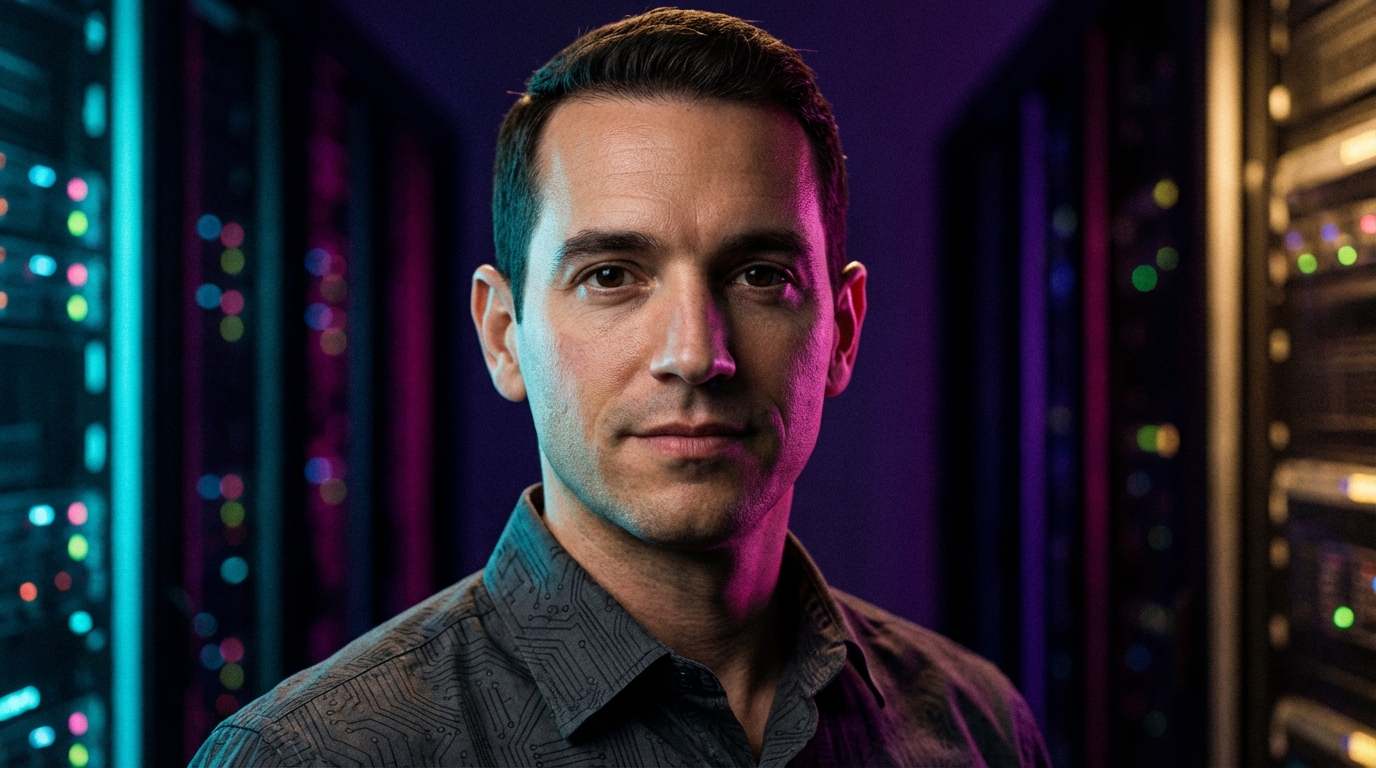
A Hobart Childhood
James William Longey was born at 4:42pm on 24 October 1991 at Royal Hobart Hospital, after eight years of marriage, several miscarriages, and a wait long enough that his arrival rearranged the meaning of the rooms in the rented Moonah cottage Richard and Linda had been renovating around the absence of him. Richard Longey, then thirty-two, was a detective with the Southern Division of Tasmania Police; Linda Longey, then thirty, taught at Moonah Primary School and would not return to a classroom for almost a year. James was, for the first three years of his life, the only child in a household that had spent the better part of a decade preparing for him, and the attention he received in that period set the temperature of how he would relate to other people for the rest of his life. He was watched, closely and constantly, by two adults who had wanted nothing else, and he learned the shape of being observed before he learned the shape of language.
His brother Thomas Edward Longey arrived on 7 September 1994 and his sister Emily Jane Longey on 15 April 1997, and the household reorganised itself around two younger children whose needs were louder and whose bodies took more space. The family moved during this period from the Moonah cottage to a small weatherboard in Lenah Valley, chosen for its proximity to the primary school where Linda would soon take up a part-time post and for the long sloping back garden that Richard had decided his children needed. James settled, without ever appearing to choose it, into the role of the watchful eldest. Where Thomas would grow into the family's negotiator and Emily its emotional centre, James was the one who sat at the edge of the room and noticed who looked at whom and for how long. Linda, who knew her son better than she ever quite said, told Richard once that the boy reminded her of her own father — a man who had stood behind a grocery counter in New Norfolk for forty years and could have written down what every customer in the shop was thinking without being asked.
By the time James was four, the back room of the Lenah Valley house had quietly become his laboratory. Richard, who had grown up in industrial Glenorchy and knew the value of a child with his own project, kept feeding him broken radios, dead clocks, and the carcass of a Sanyo cassette player that had belonged to his uncle Peter. James took each one apart on a folded towel and laid the components out in straight lines, naming nothing, because there was no one watching to perform for. He was not interested in fixing them. He was interested in understanding, before he put a hand on anything, what every part had been for.
St Mary's, Greg, and the Helicopter
James began at St Mary's Primary School in February 1997, four months after Emily's birth, and was assessed in his first term as exceptionally able in mathematics, exceptionally patient with structured tasks, and almost entirely silent in unstructured ones. His Year 3 teacher, Mrs Catherine Walsh, noted in a report that James "approached every task like a detective investigating a case — methodical, thorough, and remarkably persistent," a sentence Richard quoted at family dinners for years afterwards without ever quite hearing the rest of what it said about his son.
On the night of 21 October 1998, three days before James's seventh birthday, the phone call came through to the Lenah Valley house from Switzerland. Linda's brother Greg Lahey — six years her senior, her childhood protector, the sibling she had loved most in a family of eight — and his wife Pip had been killed when their helicopter went down in the Bernese Oberland. Their daughter Sarah, then nine, and their son Oscar, then five, were eventually taken in by Pip's parents Patrick and Jane Lahey, who lived in New Norfolk among the wider Lahey clan. James watched his mother fold quietly in half at the kitchen table on the night the call came, watched his father place a hand on her back without speaking, and watched, the next morning, the way the household reorganised itself around something that had no shape and could not be addressed directly. It was the first time he understood that the most important things people felt were also the things they would never name out loud — and that an attentive observer could read them anyway, from a safe distance, without ever being asked to participate.
Sunday dinners at the Longey house expanded after the funeral to include Sarah and Oscar, and from late 1998 onwards James spent every weekend in close company with the cousin who would, over the following decade, become something closer to an elder sister than a relative. Sarah was two years older, sharper-edged, more obviously hurt, and she chose James — quietly, without announcement — as the person in the room she wanted next to her. They sat together at the table. They walked together in the garden. They did not need to talk much, because both of them were the kind of children who preferred watching to speaking, and they recognised each other for it. James, who had until then organised his interior life around the assumption that no one else in the world would ever quite see what he saw, began to allow that there might, perhaps, be one exception.
Hobart High
James moved to Hobart High School in February 2004 and almost immediately became the school's unofficial IT department. Teachers came to him with frozen interactive whiteboards and corrupted USB drives. Students came to him with locked phones and nothing to say afterwards. James helped them all, calmly and well, and never asked to be friends with any of them. By Year 11 he had stopped being lonely about it. The watching, by then, had begun to organise itself: a few boys whose schedules he knew without having asked, two teachers whose patterns he could have drawn from memory, the assistant librarian who arrived at exactly 8:14 every Wednesday and Friday morning and never on Mondays. It was all entirely harmless. He was twelve before he had a name for the pleasure of it, and seventeen before he understood that other people did not feel it.
His relationship with Sarah deepened across these years. She was at the University of Tasmania by then, studying criminology, and visited the Lenah Valley house often enough that her absence at a Sunday dinner was something Linda remarked on. James and Sarah developed a habit of walking the long way around the garden after the meal, talking about almost nothing in particular, and James later understood — though he never said so to anyone — that those walks were the only conversations of his adolescence in which he had not, at some level, been performing.
The University of Tasmania
James enrolled in a Bachelor of Computer Science and Information Technology at the University of Tasmania in February 2010, and within a fortnight had decided on cybersecurity and digital forensics as his specialisation. His cohort largely streamed toward software development, where the salaries were higher and the work more visible. James chose the basement-discipline on instinct. The framing he gave Richard, and partially believed himself, was that technical skills gained meaning when applied to protecting others. The truer reason was harder to admit: forensics was the legitimate name for what he had been doing in his head since he was seven. The job description was *watch carefully and don't get caught*, and they were going to pay him for it.
His honours thesis, Encryption Protocols in Law Enforcement: Balancing Privacy Rights with Investigative Necessity, was supervised by Dr Michael Chen of the School of Information and Communication Technology, and was awarded a high distinction in November 2013. Chen described it in his final report as "graduate-level work," and praised James in particular for the way he handled the ethical tensions in the material — not collapsing them into a position, but holding them open. James had not found this difficult. He had simply written about both sides because he could feel the appeal of both sides. The thesis examiner read it as ethical sophistication. Chen, who knew him better, read it as ambivalence wearing a suit.
Outside coursework, James kept to himself. He competed in two ethical hacking events, finishing third in one and quietly winning the other under a pseudonym he never claimed. In January and February 2012 he completed a six-week summer placement with the Hobart City Council's IT team, where he was given temporary administrative access to the council's CCTV management system and discovered, for the first time, what it felt like to watch a city from above with permission. He returned the access on the last day of the placement. The wanting did not return with it.
The Basement at Hobart Police
James joined the Tasmania Police technical team in February 2014 and was assigned to the basement of Hobart Police Station on Liverpool Street, in the windowless room everyone in the building called the Lair. His role on paper was forensic computing and infrastructure security. In practice, by the end of his first year, he had become the Southern Division's first call for any case involving recovered hard drives, encrypted devices, or anomalous CCTV footage. He worked methodically and without complaint, and his supervisor, Senior Sergeant Mark Petrov, came to think of him as the most reliable specialist the unit had ever had.
By 2016, James had begun running a quieter operation in the same chair after the building emptied. The targets were modest at first. A man from his university cohort whose work email he had retained the credentials for. A woman from a forensic accounting course he had attended in Melbourne. The new tenant in the unit downstairs from his small flat in West Hobart, whose Wi-Fi password he had identified in eleven minutes from a coffee-shop laptop. He told himself it was practice — that maintaining the skills demanded he keep them sharp on real targets, that the alternative was atrophy. He half-believed it. The other half knew that the careful arrangement of the watching, the silence around it, the proximity to being caught, were the parts that gave it weight. He was always two log entries away from a misconduct hearing. He kept the logs immaculate.
His relationship with Sarah, who had joined Tasmania Police in 2009 and made detective in 2016, grew quietly more important during this period in a way neither of them spoke about. She was the one person from his childhood whose company he had never had to ration, and her presence in the same building — even three floors up, even on a different floor entirely — registered with him constantly. When she came down to the Lair for technical assistance, he gave her more than the unit's protocols required. Better priority, faster turnaround, results she would not have got from anyone else. He told himself this was because she was Lahey and Laheys looked after Laheys. He was not yet old enough to recognise that he was making, for the first and only time in his adult life, a deliberate exception to his own rule about distance — and that the exception was not new. He had been making it since he was seven.
Cousin Sarah
On 29 July 2018, Sarah arrived at the Lair carrying a hard drive she had not booked through the system, lifted from a contact named Duncan Flack and containing several thousand hours of CCTV footage from the period of the Hobart disappearances. She did not explain how she had obtained it, and James did not ask. Family first, he said quietly, and accepted the drive without paperwork. He began the upload that night, and within forty-eight hours had built her a pattern-recognition pass that could surface anomalies in the footage faster than any human review.
The footage from the K9 unit kennel, timestamped 03:47:23 on the morning of a missing German Shepherd named Jargus, was the first thing James reviewed that he could not file. A silver-haired woman appeared in the kennel without entering it, moved across the floor with an unnatural fluidity, approached the dog without alarming him, and was gone. James ran the file dozens of times. He pulled it apart frame by frame the way he had once pulled apart his uncle Peter's cassette player, and found nothing. The timestamps held. The background static held. There was no edit, no splice, no manipulation. He reported what he had found in the language his job required, and recorded none of what it had done to him in the process. Forensic computing had been built on the premise that technology did not lie. The footage had not lied. Something else had.
Sarah died on 8 August 2018, at twenty-nine, in Myrtle Forest. The official notification reached the Lair through Detective Sergeant Alexander Stout, who came down the stairs in person rather than send word, and James knew before Stout reached the bottom step that Sarah was gone. The circumstances were classified, the file sealed at a level Richard could not access even as a senior detective, and the Longey household would never receive a clear account of what had happened in those last hours. James attended the funeral at St David's Cathedral in a dark suit Linda had bought him, sat one row behind his mother, and did not speak. In the days that followed, the coldness he felt was not grief in the shape he had expected. It was clarity. Sarah had been the one exception, the one human being he had let close enough to register as a peer rather than a subject, and the exception had cost her. The lesson was not that closeness hurt. The lesson was that the basement had been right all along, and the part of him that had been quietly watching for two decades no longer needed an apology.
The Approach
The contact came through an encrypted channel on the night of 14 November 2019. James had not been looking for it. The message was brief, the sender's name unresolved, and the offer was not framed as recruitment so much as recognition: the writer had observed his work, knew which case files he had handled, and was prepared to compensate him for periodic assistance with technical problems that fell outside the jurisdiction of any Earth-based agency. The compensation was not money. It was access — credentials to systems James had only read about in classified briefings, with a quiet promise of more if the early work went well. He replied within nine minutes. He did not hesitate, and the lack of hesitation did not surprise him.
Over the following months, James came to understand his employer in broad terms as the Clivilius Secret Service, an intelligence organisation operating from a place he had been told existed but would never visit. He inferred the framing from technical signatures, operational language, and one or two oblique references he was probably not meant to catch. Almost all communication remained anonymous — cleanly routed, untraceable, signed only with operational designators — and on the rare occasions a human voice came through it was a different one each time. He never met a handler. He never received a name. He never asked for confirmation of who he was working for, because the arrangement worked precisely because nothing was named.
The work itself was simple enough: data extraction from Earth systems, occasional surveillance pulls, signal analysis on intercepts whose source he never asked about. He completed every task cleanly. In return, the access he had been promised began to appear in his own systems — administrative privileges he had no business owning, monitoring capability that had previously belonged only to national agencies, foreign infrastructure rendered as accessible to him as the Hobart Police network. By the middle of 2020 the city he lived in had become glass under his hand, and the lid he had spent thirty years quietly holding down on the after-hours operation was simply gone. There had been no decision to remove it. It had stopped being there one night and never come back.
The Fingerprint
In late February 2021, James found a trace in a system only he had touched. It was small. The kind of thing a less careful operator would have missed and a more anxious one would have rationalised away. It was left in a place where only someone of his calibre could have left it, and it had been put there using a technique he recognised as one of his own — an asymmetry in a log file, the absence of an entry that should have been present, the kind of negative-space signature he himself favoured because it could not be searched for. He understood at once what it meant, and roughly for how long it had likely been true, and he understood also that he could have worked out the exact duration by sitting down with the relevant logs for an hour. He did not sit down with the logs. He did not want to know.
The first week after the discovery, he tried to stop. He locked himself out of two of the access points the CSS had given him, deleted three monitoring routines he had built for personal use, and went home from the Lair at the same time as the rest of the team for four nights running. On the fifth night he was back in the chair at half past nine. The watching, by then, was no longer something he chose. It was a pressure that built when he resisted it and released when he gave in, and the relief of giving in was indistinguishable from the relief of breathing after holding his breath too long. He told himself, calmly and repeatedly, that the next session would be the last. There were always more sessions.
He did not stop providing work to the CSS. He did not raise the trace with anyone. He did not change his methods, because changing his methods would have been an admission, and the watcher — whoever they were — would have read the change as confession. The decision he made was the only one a man like him could have made: to continue exactly as before, more carefully, and to refuse to look at the size of what he was now standing inside.
The Years After
In the years that followed, James's life narrowed in ways only the people closest to him noticed. Richard, still serving as Detective Senior Sergeant in his fortieth year on the force, began to remark to Linda that their eldest seemed thinner about the edges — present at family gatherings but increasingly difficult to reach, polite at the table but often gone before the dishes had been cleared. Linda, who had retired from Lenah Valley Primary at the end of 2023 after thirty-eight years in classrooms, recognised the pattern from her own brother and worried in silence rather than asking James a question she did not want answered. She had buried Greg, and then Sarah, and she had learned that the kind of grief that hollowed out a Lahey from the inside did not respond to direct questions. Thomas, by then a senior accountant with KPMG in Melbourne, saw James less often than either of them. Emily, working as a paediatric nurse at the Royal Hobart Hospital under the same roof as their aunt Catherine, saw him most, and noticed least, because she was tired.
His professional standing at Tasmania Police continued to grow. He was promoted to senior forensic analyst in 2023, led the design of new digital evidence handling protocols that were adopted across the state, and ran training sessions for detectives that earned consistent praise. His colleagues knew him as patient, exacting, and reserved, and when they speculated about his private life — which they occasionally did, because someone so eligible surely had one — James offered them nothing to work with, and they read his silence as discretion rather than absence. He hiked alone on weekends in the highlands south of Mount Field, on the same trails where his parents had picnicked during their courtship forty years earlier, told no one which routes he took, and returned each Sunday evening with the same composed expression he had left with.
The watching, by 2026, had become the structure of his interior life. He had not identified the watcher. He had not stopped working for the CSS. He had not stopped opening the next feed. The Lair was still his chair, the basement was still his basement, and the long second life he ran from it had grown to encompass acquaintances, passing colleagues, the woman who served him coffee on Murray Street four mornings a week, and a dozen others whose ordinariness was, increasingly, the part that drew him. He was thirty-four years old. He had told no one. He believed himself, on his calmer evenings, to be still inside the time before something happened. He was not entirely sure he was right.
