Guardians of Bixbus
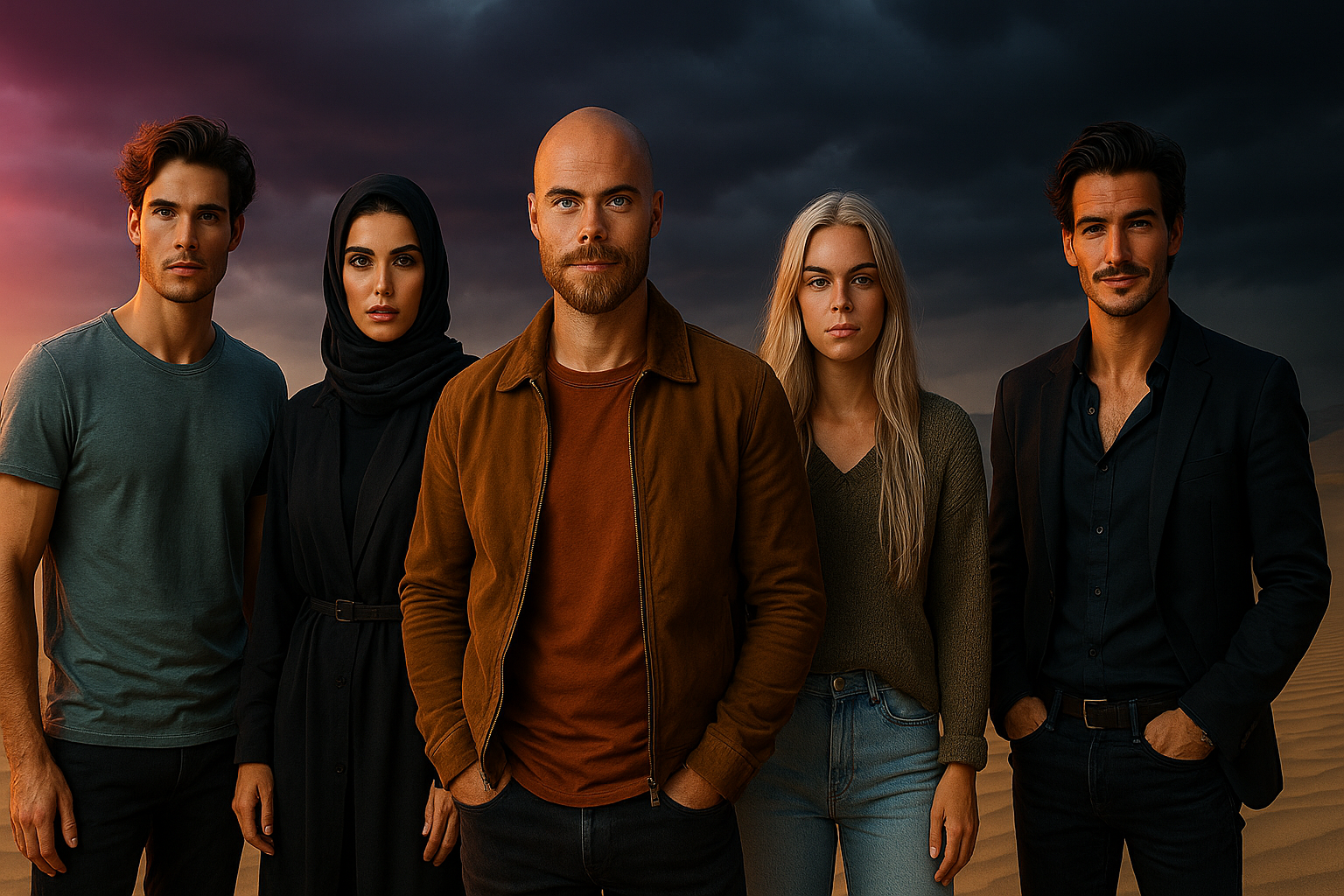
The Guardians of Bixbus represent the vanguard of humanity's most audacious experiment in inter-dimensional settlement—five individuals bound by blood-activated Portal Keys who transformed Clivilius's barren wasteland into a thriving sanctuary. Founded in July 2018 by Luke Nathaniel Smith following his mystical communion with Clivilius, this elite fellowship comprises visionaries and pragmatists, dreamers and dealers, each contributing unique expertise to forge civilisation from dust. Operating through five canonical portals that mirror their bearers' souls, the Guardians navigate the profound tension between Earth-based clandestine operations and Clivilian stewardship, preserving humanity's legacy whilst cultivating an uncertain future.
Genesis and Mystical Foundation
The Guardians of Bixbus emerged not from careful planning but from the collision between mystical imperative and desperate necessity. Their story begins with Luke Nathaniel Smith, born 19 July 1984 in Adelaide, whose childhood dreams carried whispers from Clivilius itself—an otherworldly consciousness that haunted and guided him through three decades of preparation he only dimly understood. Raised in a devout Mormon family that relocated to Broken Hill, Luke's formative years were marked by vivid lucid dreaming and persistent visions that transcended conventional religious frameworks. The voice of Clivilius became his constant companion, promising purpose beyond the physical realm whilst simultaneously fracturing his ability to fully inhabit either world.
Luke's path to guardianship wound through missionary service that broadened his spiritual vocabulary without resolving his internal contradictions, then to Tasmania where he reunited with childhood friend Jamie Greyson and attempted to build something resembling ordinary life in Berriedale. Yet domesticity proved insufficient to contain the forces building within him. On 23 July 2018, the Portal Key materialised in Luke's study—a mystical artefact that defied conventional physical description, simultaneously technological and organic, responding to intention as much as manipulation. That same day, Luke made his first conscious crossing into Clivilius, stepping from familiar suburban comfort into a starless desert expanse whose silence and vastness redefined his understanding of isolation and possibility.
The Portal Key's appearance validated decades of mystical preparation whilst simultaneously thrusting Luke into a role requiring skills his isolated upbringing had never developed—leadership, community organisation, ethical decision-making under impossible circumstances. He possessed visionary capacity but lacked practical wisdom, mystical conviction but insufficient humility, passionate purpose but deficient emotional intelligence. These contradictions would define not merely Luke's individual guardianship but the entire fellowship's character, establishing patterns of noble intention intertwined with morally questionable execution that became the Guardians' operational signature.
Luke's first recruits arrived through calculated deception rather than informed consent. On 24 July 2018, he orchestrated circumstances that led his brother Paul and partner Jamie through the Portal without fully explaining that Clivilius had already decided they would be staying far longer than they imagined. This founding betrayal—justified in Luke's mind by conviction that Clivilius required people, that building something sustainable superseded conventional moral boundaries around autonomy—established a troubling precedent. The Guardians would be born from lies told in service of what their founder believed to be transcendent truth.
The Five Canonical Guardians
The Guardians of Bixbus eventually crystallised into five core members, each wielding a blood-bound Portal Key that created their unique gateway between worlds. This configuration wasn't arbitrary but reflected Clivilius's own design—Guardian groups operate in units of up to five, known as Guardian Atum Ra-Ling, with each member assuming specialised roles that ensure their settlement's survival and prosperity.
Luke Nathaniel Smith remained the fellowship's spiritual and practical anchor through Sanctum Lukei, the primary portal of record used for high-level infrastructure, civic supplies, and ceremonial affairs. His Mormon upbringing's moral foundation anchored Bixbus's ethos whilst his mystical communion with Clivilius provided guidance that transcended mere pragmatism. Yet Luke embodied the Guardians' central paradox—a dreamer whose visions birthed collective hope, simultaneously saviour and deceiver, guide and kidnapper, mystic prophet and practical logistician. His legacy within the fellowship remained perpetually contested, acknowledged for creating possibility whilst condemned for the autonomy he'd violated in service of that creation.
Beatrix Evelyn Cramer brought shadow expertise through Crux Beatrix, handling complex high-risk logistics including rare items, black-market salvage, and diplomatic goods requiring discretion conventional channels couldn't provide. Her troubled past—illegal exotic animal trading, antique dealing in morally grey markets, personal tragedies that honed resilience through suffering—became invaluable assets in Clivilius's harsh environment. Where others followed protocol, Beatrix operated through instinct and subterfuge, transforming her antique dealer's eye for hidden value into strategic cunning that secured what formal procurement couldn't. Her irreverent brilliance and adaptive chaos represented the Guardians' necessary darkness, acknowledging that preserving Earth's legacy sometimes required navigating spaces between right and wrong that more conventional members couldn't stomach.
Eli Matthew Smith, Luke's younger brother, embodied environmental conscience through Verdant Eliad, dedicated to sustainable technology, environmental science assets, and eco-based provisioning. With a background in environmental science and academic pursuits that equipped him with unique perspectives on natural systems, Eli channelled Earth's ecological wisdom into Clivilian survival strategies. His 2018 transformation from university student to Guardian bridged scholarly pursuit of environmental harmony with visceral reality of settlement survival, ensuring revolutionary mission remained grounded in Earth's natural wisdom rather than purely extractive exploitation. Through Verdant Eliad's green-shimmered gateway whispered the Guardians' most hopeful aspiration—that Bixbus might not merely endure harsh landscape but nurture it into magnificent flourishing.
Jarod Michael James represented opportunistic pragmatism through Gambit Jarodan, handling unconventional cargo, high-reward trade, cultural materials, and field rations acquired through channels that defied conventional documentation. Born and raised in Hobart, Jarod's early involvement in exotic animal trading and gambling provided street smarts and adaptability that proved essential when formal supply chains failed. His transition to Guardian status, influenced significantly by Beatrix's guidance, marked a journey from exploitation to protection—past transgressions becoming a foundation for future safeguarding. The "hustle vault" mirrored the Guardians' own transformation, proving that sometimes civilisation's future depends on those who dance closest to its edges, wielding chaos as a tool for survival rather than mere disruption.
Leila Grantley (née Al-Rashid) brought archaeological expertise and humanitarian focus through Astra Grantley, specialising in medical, psychological, and humanitarian supplies whilst serving as primary channel for intelligence flow. Her violent arrival into Clivilius—Portal Key activated during a gunfight, inadvertently bringing Earth's chaos with tragic consequences—marked a harrowing introduction that contrasted sharply with other Guardians' more calculated crossings. Yet in that desperate moment, there emerged the recognition of a kinship forged through trauma. Leila's accidental portal breach became a crucible transforming fugitive into Guardian, her guilt becoming the foundation of future dedication. Known quietly as 'the Mercy Gate', her portal embodied the Guardians' understanding that true strength lies not in conquest but in courage to remain fundamentally human whilst shepherding civilisation across impossible distances.
Portal Architecture and Operational Philosophy
The five canonical portals of Bixbus represent more than mere transportation infrastructure—they embody the Guardians' collective soul, each gateway mirroring its bearer's fundamental character whilst contributing specialised capacity to the settlement's survival. The blood-bound activation ritual that initiated each Portal Key created sacred covenants transcending ownership, forging intimate connections between Guardian and gateway that defined operational roles whilst preventing unauthorised access. No one could use another Guardian's Portal Key; the technology responded to specific genetic markers established during first activation, when the device pricked the user's finger and collected blood samples that bound device to individual permanently.
This personalisation extended beyond mere security to functional specialisation. Luke's Sanctum Lukei, once visible to all as symbol of Bixbus's founding, eventually retreated into Vault A's secured depths as the settlement's governance matured, handling ceremonial affairs and civic infrastructure with gravitas befitting the primary portal of record. Beatrix's Crux Beatrix, shrouded in Vault C's eastern shadows, operated as the 'silent gate' for morally ambiguous operations that acknowledged pragmatic necessity whilst maintaining operational secrecy. Eli's Verdant Eliad pulsed with soft green luminescence, channelling Earth's ecological assets with attention to sustainability that ensured extraction didn't become exploitation. Jarod's Gambit Jarodan facilitated opportunistic bounty without manifests, cultural salvage from forgotten corners, impromptu trades that kept Bixbus fed when formal channels failed. Leila's Astra Grantley, secured beneath biometric locks in Vault B, flowed healing balms and intelligence with tender precision, preserving the Guardians' fundamental humanity amidst survival's harsh demands.
Together, these portals created a complementary network that wove Earth's resources into Clivilius's fabric, each specialised lifeline addressing needs the others couldn't meet. The system's elegance lay in its recognition that settlement sustainability required diverse capabilities—infrastructure and subterfuge, sustainability and opportunism, governance and mercy—rather than a monolithic approach that would inevitably fail through inflexibility. The Guardians didn't merely operate portals; they embodied them, becoming living bridges whose individual expertise crystallised into collective mastery.
Earth Operations and Clandestine Networks
The Guardians' relationship with Earth evolved from Luke's initial isolated supply raids into sophisticated clandestine operations requiring extensive terrestrial networks. Their challenge was fundamental—how to channel resources, knowledge, and materials across dimensional boundaries without attracting attention that would expose their entire enterprise. The solution emerged through multiple complementary strategies, each carrying its own ethical complications and practical risks.
The alliance with The Black Nexus represented perhaps the Guardians' most morally complex terrestrial partnership. Born from Luke's desperate fuel seizure in 2018, this relationship transformed Elias Blackwood's underground empire into an unlikely lifeline for Bixbus. Where Portal Keys once carried only visions and blood-bound destinies, they now ferried tankers and construction crews sourced from Earth's forgotten margins. The Black Nexus specialised in moving unmovable things through channels conventional logistics couldn't access, providing infrastructure support that formal procurement would have rendered impossible. This symbiosis revealed how even ethereal settlements required earthly shadows—noble mission intertwining seamlessly with expertise in circumventing regulations, avoiding scrutiny, and operating in spaces between legal and illegal that conventional organisations couldn't navigate.
Establishing Earth-based company relationships required different approaches. What began with desperate fuel needs blossomed into sophisticated bi-weekly rituals of request and fulfilment, each Portal delivery carrying blueprints of ambition alongside construction materials. Through various networks, the Guardians learned to navigate Earth's commercial labyrinth, transforming blood-bound Portal Keys into instruments of economic diplomacy. They established front companies, cultivated strategic partnerships with conservation groups through Project Terra Nova, developed procurement channels that appeared legitimate whilst serving purposes their terrestrial partners never fully understood. This evolution marked profound transformation from mystical pioneers to pragmatic traders, merchants of two worlds who balanced otherworldly resources with homegrown ingenuity.
The Guardians' Earth operations demanded constant deception—maintaining elaborate cover stories through carefully timed phone calls and manufactured evidence, justifying absences and explaining unusual financial transactions, preventing premature discovery of what they were orchestrating. Each lie required supporting fabrications, each omission created vulnerabilities threatening to expose the entire structure. Families experienced their actions as inexplicable disappearances requiring investigation. Police became involved, missing persons reports were filed, suspicions accumulated. The Guardians walked a perpetual tightrope between maintaining necessary secrecy and managing human costs of that secrecy on those left behind.
Settlement Development and Infrastructure Mastery
The Guardians' primary achievement lies in transforming Clivilius's barren desolation into Bixbus—a thriving settlement that has evolved from desperate survival camp into a model of sustainable urban development. This metamorphosis required expertise spanning construction, logistics, environmental science, resource management, and community organisation, capabilities the five Guardians assembled through complementary skills rather than individual mastery.
Early infrastructure development followed systematic progression from July through December 2018, addressing fundamental survival needs before advancing to more sophisticated civic amenities. Initial efforts focused on roads and pathways—clearing 3 kilometres of main routes and primary paths using bulldozers and compact loaders fuelled by precious diesel supplies ferried through portals. Temporary perimeter fencing provided security against wildlife threats whilst watch towers offered strategic vantage points for monitoring. Solar-powered lighting enhanced nighttime safety without depleting fuel reserves. These foundational measures established basic habitability, creating framework upon which more ambitious development could build.
Power generation became critical infrastructure priority, with solar panels and wind turbines complementing diesel backup generators. The Guardians recognised early that sustainability required renewable energy sources despite initial investment costs. Solar arrays and wind turbines installed throughout late 2018 and early 2019 created a distributed power network that reduced dependence on fuel supplies whilst acknowledging intermittency challenges through strategic backup capacity. This hybrid approach balanced environmental consciousness with practical reliability, ensuring critical systems maintained operation during renewable generation gaps.
The transition from temporary structures to permanent architecture marked Bixbus's evolution from survival camp to actual settlement. The Arlington residential towers, completed in 2019, represented luxury and sustainability integrated into housing infrastructure designed for long-term habitation rather than mere emergency shelter. The Bixbus to Brierly Railroad, completed in 2020, revolutionised transportation between the historic agrarian town and modernising capital, facilitating trade and cultural exchange whilst demonstrating the Guardians' capacity to execute monumental infrastructure projects across Clivilius's difficult terrain.
By 2024, Bixbus had transformed into bustling community featuring Unity Plaza—a monumental hub of governance, culture, and commerce—alongside Clivilius National University with cutting-edge faculties spanning Architecture, Applied Sciences, and Humanities. The Bixbus Greenway Project created networks of parks, walking trails, and bike paths enhancing quality of life whilst demonstrating commitment to green infrastructure. The settlement's evolution from barren wasteland to thriving city represented the Guardians' most tangible achievement, proof that visionary leadership combined with practical expertise could forge civilisation from dust.
Ethical Paradoxes and Contested Legacy
The Guardians of Bixbus embodied profound ethical contradictions that defied simple moral categorisation. Their founding emerged from Luke's calculated deception—bringing people through portals without informed consent, justifying autonomy violations through conviction that Clivilius required population, prioritising transcendent purpose over conventional morality. This original sin infected the entire enterprise, creating unresolved tensions between noble intentions and questionable methods that would never fully reconcile.
Within Bixbus itself, Guardian legacy remained perpetually contested. Some arrivals viewed them with genuine gratitude, recognising that whatever their methods, they had created possibility and purpose in otherwise desperate situations. The settlement's evolution from survival camp to thriving city validated Guardian vision whilst demonstrating their capacity to execute ambitious development despite limited resources. Others saw them as architects of exile—individuals whose mystical convictions overrode others' autonomy, fracturing lives irrevocably whilst cloaking coercion in language of salvation. Most occupied complex middle ground, acknowledging both harm and help in actions they struggled to categorise simply.
The Guardians themselves wrestled with these contradictions daily. Each clandestine Earth operation, each deception maintained to preserve settlement security, each decision to prioritise collective survival over individual preference, reinforced patterns established through their founding whilst simultaneously advancing goals they believed transcended personal morality. They wielded immense power—Portal Keys granting capacity to preserve Earth's legacy, shape Clivilian development, determine who crossed dimensional boundaries—yet this same force risked unravelling delicate fabric between worlds they were sworn to protect.
Their operational philosophy balanced visionary ambition with pragmatic necessity, environmental consciousness with extractive requirements, transparency with operational security, individual autonomy with collective survival. These tensions generated constant friction requiring navigation rather than resolution. The Guardians learned to operate perpetually suspended between worlds in more than merely physical terms—belonging fully to neither Earth nor Clivilius, bridging dimensions whilst remaining fundamentally displaced from both.
Transformation and Evolution
The Guardians' story represents ongoing evolution rather than completed achievement. From Luke's solitary mystical communion with Clivilius through Beatrix's shadow operations, Eli's environmental stewardship, Jarod's opportunistic pragmatism, and Leila's humanitarian focus, the fellowship demonstrated how individual expertise crystallises into collective capability exceeding what any single visionary could accomplish alone.
Their greatest achievement lies not in Bixbus's physical infrastructure but in proving inter-dimensional settlement's viability despite enormous obstacles. They transformed barren wasteland into a thriving community, established sustainable power generation and transportation networks, cultivated relationships with Earth-based partners providing essential resources, created educational and cultural institutions preserving human knowledge whilst adapting to Clivilian realities. This represented revolutionary accomplishment, demonstrating that with sufficient vision, expertise, and willingness to navigate profound ethical complexities, humanity could establish a permanent presence beyond Earth's boundaries.
Yet their success carried costs they continued measuring. Families mourned disappeared loved ones. Individuals brought to Clivilius without full consent grappled with the trauma stemming from autonomy violations. Earth authorities investigated suspicious activities generating scrutiny threatening exposure. The Guardians operated knowing their entire enterprise balanced precariously between salvation and catastrophe, one exposure away from intervention that could terminate everything they'd built.
