Gertrude Elizabeth Thompson (née Green)
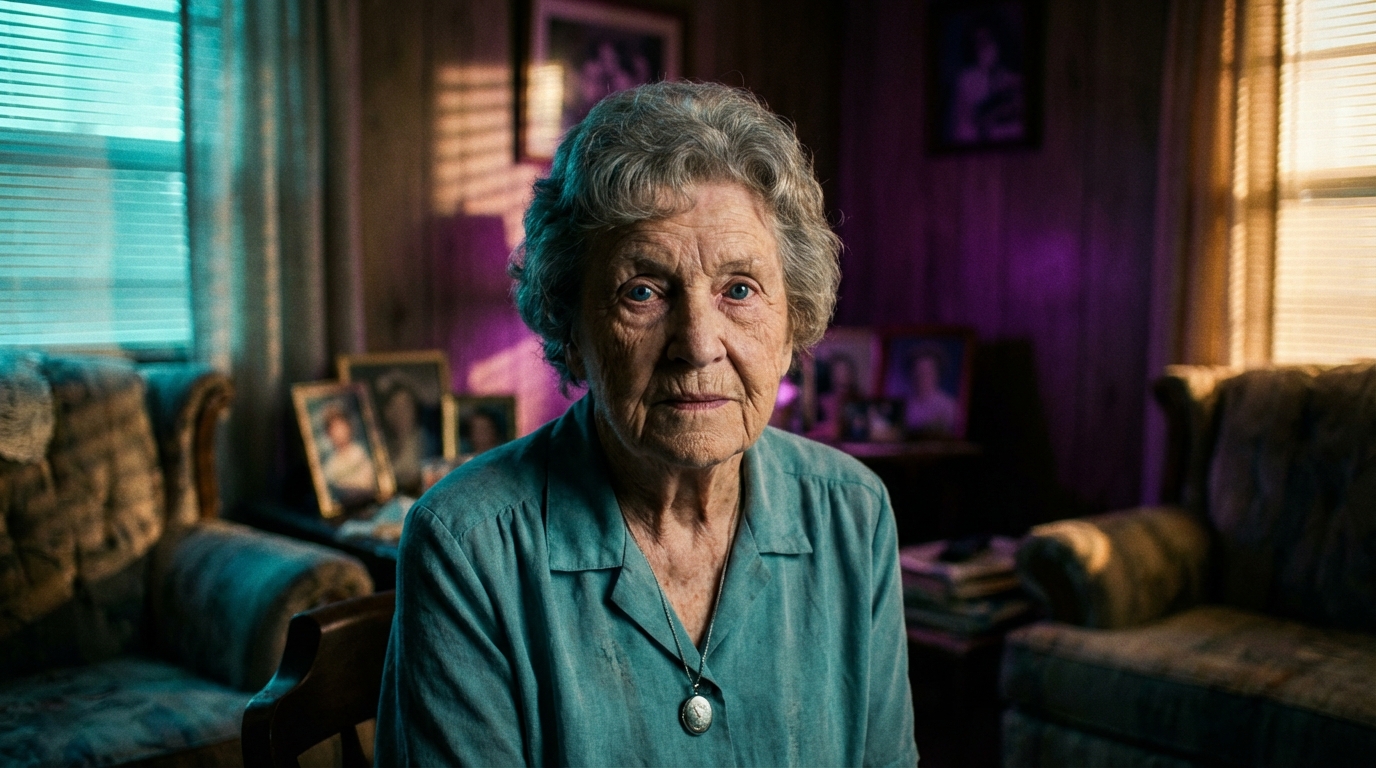
Gertrude Elizabeth Thompson, née Green (8 March 1951 – 23 November 2018) was a long-time resident of Broken Hill, New South Wales, known for her keen observational nature. Eldest daughter of postmaster Harold Green and wife Margaret, she moved from Bourke to Broken Hill in 1969, married railway worker George Thompson, and raised daughter Lucy. Widowed in 2009, her final months were consumed by disturbing events at the neighbouring Smith residence.
Birth and Family Origins
Gertrude Elizabeth Green was born on 8 March 1951 in Bourke, a small rural town in north-western New South Wales, situated on the Darling River approximately eight hundred kilometres from Sydney. The town, with its population of barely three thousand souls, served as a service centre for the surrounding pastoral stations and exemplified the particular character of outback Australian communities—tight-knit, transparent, and possessed of the peculiar intimacy that came from everyone knowing everyone else's business.
Her father, Harold Arthur Green, served as Bourke's postmaster, a position that placed him at the centre of the town's communications network. Every letter that arrived, every telegram that passed through, every parcel that awaited collection came under Harold's purview. The role demanded discretion but inevitably cultivated awareness of the community's affairs—who corresponded with whom, which families received bad news, whose bills went unpaid. Harold performed his duties with professional reserve, but the knowledge accumulated nonetheless, shaping the household's understanding of their neighbours' circumstances.
Her mother, Margaret Anne Green, née Sullivan, managed the family household and maintained a vegetable garden that supplemented their table throughout the year. She had grown up on a sheep station west of Bourke, absorbing the self-sufficiency that remote living demanded. Her garden provided more than produce; it offered lessons in patience, observation, and the satisfaction of cultivating growth from careful attention. These lessons would prove foundational for her eldest daughter.
Gertrude was the first of four children. Her brother Harold Junior arrived in 1953, followed by sister Dorothy in 1955 and brother William in 1958. As eldest, Gertrude bore responsibilities for younger siblings from an early age, developing the practical competence and watchful attention that would characterise her adult life.
The family occupied a modest weatherboard house within walking distance of the post office, their dwelling distinguished by Margaret's flourishing garden and the particular orderliness that Harold's professional habits imposed. Gertrude grew up absorbing both parents' inclinations—her father's awareness of community affairs and her mother's patient cultivation of living things.
Childhood in Bourke
From her earliest years, Gertrude displayed a curiosity about other people's lives that exceeded typical childhood interest. She noticed details that others overlooked—whose car was parked where it shouldn't be, which neighbours visited each other with unusual frequency, what the particular tone of a conversation suggested about its content. Her siblings dubbed her "Nosey Gertie," a nickname that combined affection with recognition of her distinctive characteristic. The name would follow her throughout her life.
The small town environment perfectly suited her observational nature. Bourke's transparency meant that little remained truly private; information circulated through networks of conversation that connected every household to every other. Gertrude learned early that knowledge was currency, that awareness of others' circumstances conferred a form of social power that transcended more obvious hierarchies. She listened when adults spoke, remembered what she heard, and developed the capacity to construct coherent narratives from fragmentary observations.
Her father's position provided particular advantages. The post office served as Bourke's information hub, and whilst Harold maintained professional discretion, Gertrude absorbed understanding of how communication networks functioned, who corresponded with whom, and what patterns of correspondence suggested about relationships and circumstances. She never violated her father's trust by sharing specific information, but she developed instincts for reading situations that would serve her throughout life.
Her education proceeded through Bourke's local schools, where she proved an adequate if undistinguished student. Academic achievement interested her less than social dynamics—who was friends with whom, which teachers favoured which students, what alliances and conflicts shaped the school's social landscape. She possessed intelligence that standardised testing failed to capture, an emotional acuity that manifested as understanding of human behaviour rather than mastery of curriculum content.
Departure for Broken Hill
Upon completing her schooling at Bourke High School in 1969, Gertrude faced the limited options that rural Australian towns offered young women of her generation. She could remain in Bourke, find local employment, marry a local man, and reproduce her parents' circumstances. Or she could leave, seeking opportunities that Bourke's small economy could not provide.
She chose departure, relocating to Broken Hill approximately three hundred and fifty kilometres to the south. The mining town, whilst still remote by metropolitan standards, offered employment prospects and population scale that Bourke could not match. Its silver-lead-zinc mining operations had created prosperity that supported a diverse service economy, and young people from surrounding regions gravitated toward the opportunities it represented.
Gertrude secured employment as a clerk with Hartley & Associates, a local accounting firm whose clients included mining operations, pastoral properties, and the small businesses that served Broken Hill's population. The work was administrative—filing documents, managing correspondence, maintaining the orderly systems that professional practice required. But it also provided access to the financial details of the firm's clients, exposing the young clerk to information about local affairs that her curiosity found irresistible.
She learned which businesses struggled and which thrived, whose personal finances revealed problems their public presentation concealed, what the flow of money through the community suggested about relationships and circumstances. The knowledge accumulated without deliberate intent; Gertrude simply noticed what passed through her hands and remembered what she noticed. The habit of observation, cultivated in Bourke, found new application in Broken Hill's larger and more complex social landscape.
Marriage to George Thompson
In 1972, Gertrude met George William Thompson at a social function organised by the Broken Hill Workers' Club. George was a railway worker, employed by New South Wales Government Railways maintaining the track and infrastructure that connected Broken Hill to the broader network. He was twenty-six years old to Gertrude's twenty-one, a quiet man whose steady employment and reliable character represented the security that sensible young women of that era sought in prospective husbands.
Their courtship proceeded conventionally—dances at the Workers' Club, pictures at the Broken Hill Cinema, Sunday afternoon drives through the surrounding landscape. George was neither passionate nor particularly demonstrative, but he was dependable in ways that mattered. He arrived when he said he would, did what he promised, and offered the stability that Gertrude's practical nature valued.
They married on 19 October 1974 at St Patrick's Catholic Church in Broken Hill, a modest ceremony attended by family members who had travelled from Bourke and George's relatives from nearby towns. The reception at the Workers' Club featured the customary speeches and dancing, the ritual celebration of a union that seemed unremarkable but solid.
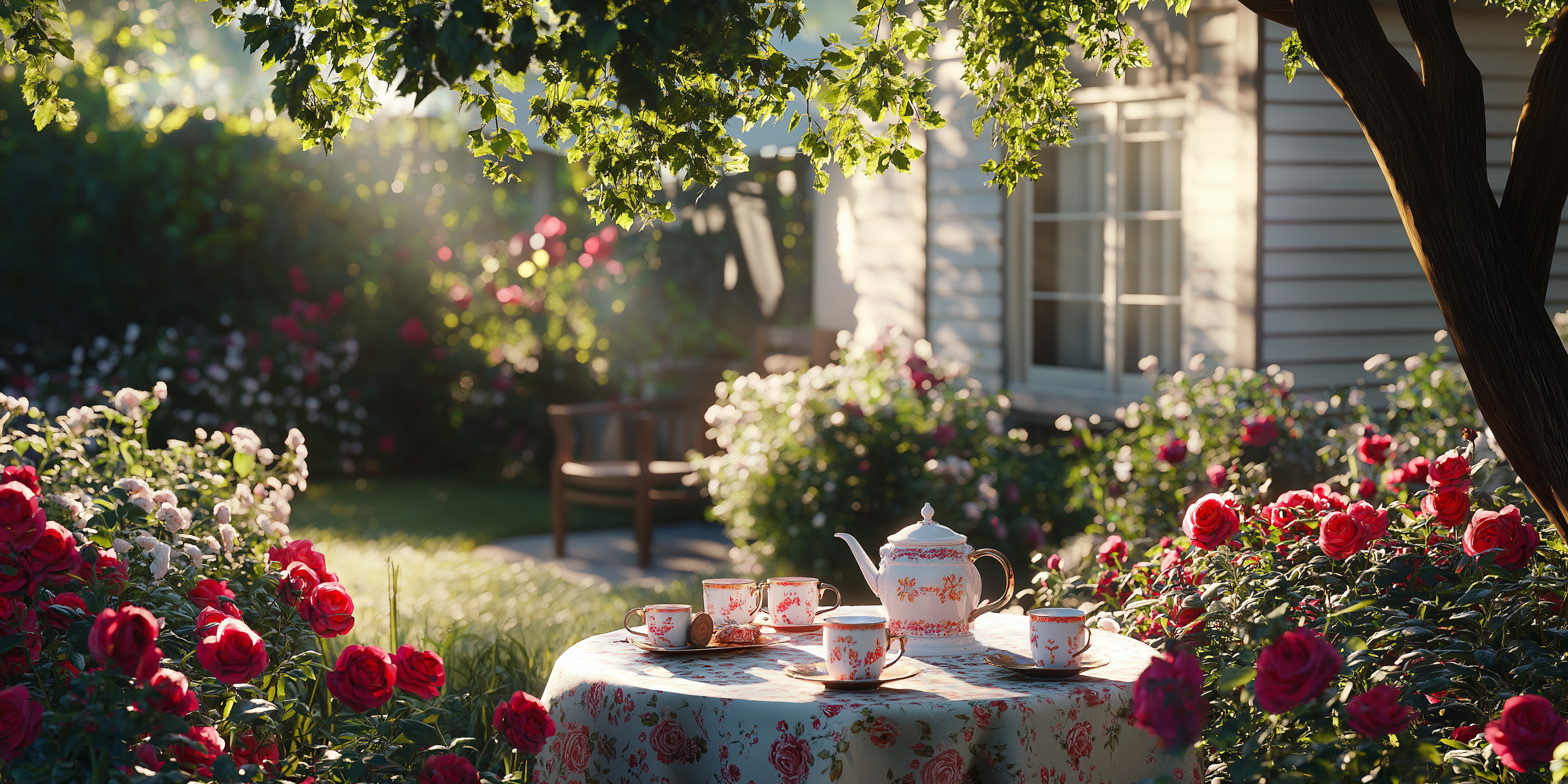
The newlyweds established themselves in a modest house on Broken Hill's outskirts, a weatherboard dwelling that George had purchased the previous year in anticipation of marriage. The property featured a yard large enough for the garden Gertrude immediately began cultivating, continuing the horticultural traditions her mother had established. Roses became her particular passion—their cultivation demanding the patient attention she naturally possessed, their blooms providing beauty that enhanced the otherwise utilitarian property.
Motherhood and Domestic Life
Their daughter, Lucy Margaret Thompson, arrived on 14 July 1977, after a pregnancy that proceeded without significant complication. Gertrude had hoped for multiple children, imagining a household filled with the sibling dynamics she remembered from her own childhood. But subsequent pregnancies ended in miscarriage—two in 1979 and 1981—and eventually the couple accepted that Lucy would be their only child.
Gertrude devoted herself to Lucy's upbringing with the attentiveness that characterised her approach to everything. She monitored her daughter's development, tracked her friendships, maintained awareness of her activities that some might have considered excessive. Lucy, possessed of her mother's intelligence but her father's reserved temperament, sometimes chafed at the surveillance but generally accepted it as evidence of parental concern rather than inappropriate intrusion.
The household settled into routines that decades would refine but never fundamentally alter. George departed for railway work each morning and returned each evening, his days defined by infrastructure maintenance and the physical labour it required. Gertrude managed the household, maintained the garden, and pursued the social connections that kept her informed about community affairs. Lucy progressed through Broken Hill's schools, eventually demonstrating academic capabilities that exceeded her parents' achievements.
Gertrude's reputation as the neighbourhood's unofficial observer developed during these years. Her garden provided the perfect vantage point for monitoring comings and goings, and her friendly demeanour encouraged neighbours to share information that less approachable residents would never have received. She hosted afternoon teas that served as information exchanges, gatherings where local news circulated amongst women who appreciated both the refreshments and the gossip.
The Garden Club and Community Recognition
In 1985, Gertrude joined the Broken Hill Garden Club, an organisation that would provide community connection and personal recognition throughout her remaining years. The club's monthly meetings combined horticultural education with social interaction, whilst its annual shows offered opportunities for members to display their achievements and compete for recognition.
Gertrude's roses became locally renowned. Her cultivation techniques, refined across years of patient experimentation, produced blooms of exceptional quality that consistently placed in competition. She won her first ribbon in 1987 for a hybrid tea rose of particular symmetry; subsequent years brought additional recognition as her skills developed and her gardens matured.
The awards provided satisfaction that exceeded their modest material value. Gertrude had never achieved academic distinction or professional prominence; her life had unfolded in the domestic sphere that women of her generation typically occupied. The garden club recognition validated capabilities that other measures failed to capture, confirming that her patient attention produced results worthy of acknowledgment.
Her collection of teapots, accumulated across decades, reflected similar aesthetic sensibilities. Each piece possessed particular character—patterns, shapes, and histories that she could recount to interested visitors. The collection occupied dedicated display space in her home, evidence of a life organised around domestic arts that consumer culture increasingly dismissed but that Gertrude valued as expressions of refinement and continuity.
George's Death and Widowhood
George Thompson died on 3 August 2009, at the age of sixty-three, from complications following a heart attack suffered whilst performing routine maintenance work. The death came suddenly, without the gradual decline that might have permitted preparation. One morning George departed for work as he had done for decades; by afternoon Gertrude was a widow.
The loss devastated her in ways that surprised those who had observed the couple's apparently unemotional marriage. George had never been romantic, never expressed affection in the demonstrative manner that contemporary culture celebrated. But he had been present—reliably, consistently present—for thirty-five years. His absence created a void that exceeded anything his quiet companionship had seemed to occupy.
Gertrude was fifty-eight years old, facing decades of potential widowhood in a house suddenly too large and too quiet. Lucy, now thirty-two and established in Sydney's marketing industry, offered to help her mother relocate closer to the city. Gertrude refused. Broken Hill was her home; the garden she had cultivated for thirty-five years could not be transplanted; the community she knew could not be replicated elsewhere.
She adapted to solitary existence with the practical determination that characterised her approach to all challenges. She maintained the garden, continued attending Garden Club meetings, sustained the social connections that kept her informed and engaged. The afternoon teas continued, providing structure and purpose that widowhood might otherwise have eroded. Her role as neighbourhood observer intensified, perhaps compensating through external awareness for the internal loss she had suffered.
The Smith Household
Sometime in 2015, Paul and Claire Smith became Gertrude's neighbours, purchasing the property adjacent to her own and establishing a household that would consume her final years' attention.
The Smiths' marriage was turbulent in ways that Gertrude's own had never been. Arguments echoed across property boundaries, voices raised in conflict that the modest distance between houses could not contain. Claire's distress was audible; Paul's responses suggested volatility that Gertrude found troubling. The observer who had spent decades monitoring neighbours' affairs now found herself unwilling witness to domestic dysfunction that exceeded anything her previous experience had encompassed.
She documented what she observed with the thoroughness that decades of attention had cultivated. She noted when Paul's car departed and returned, tracked visitors whose presence seemed unusual, registered patterns of behaviour that suggested the household's internal dynamics. The documentation was not systematic—she kept no formal records—but her memory retained details that would eventually prove significant.
Her concerns deepened across months of observation. The arguments intensified; Claire's demeanour suggested fear that exceeded ordinary marital discord; Paul's behaviour patterns indicated something beyond the typical difficulties that marriages sometimes experienced. Gertrude shared her observations with other neighbours, her afternoon teas acquiring an undertone of genuine concern beneath the customary gossip.
The Night of Paul's Departure
In late July 2018, Gertrude witnessed something that transformed her from observer to potential witness. Unable to sleep—insomnia had troubled her increasingly since George's death—she noticed unusual activity at the Smith residence. From her bedroom window, she watched Paul climb through the bedroom window rather than exiting through normal doors, carrying a bag whose contents she could not determine.
He moved with the furtive urgency of someone avoiding detection, loaded the bag into his car, and departed into the darkness. The behaviour was inexplicable by any innocent interpretation. Why would a man exit his own home through a window? What required such secrecy that normal departure was insufficient? Where was he going at such an hour, and what was he taking with him?
Gertrude remained at the window, watching for Claire's response, for any indication of what was occurring within the household. None came. The house remained dark and silent, offering no explanation for what she had witnessed.
She did not sleep that night. Her mind constructed scenarios that attempted to explain Paul's behaviour, each more disturbing than the last. She debated whether to contact authorities, uncertain whether what she had witnessed constituted genuine concern or merely suspicious imagination. By morning, she had decided to wait, to observe further, to gather additional information before taking action that might prove embarrassing if her interpretation was mistaken.
The Investigations
The following days brought developments that confirmed her worst suspicions. Claire departed the household, her manner suggesting flight rather than ordinary departure. Police arrived, their presence indicating that something beyond domestic dispute had occurred. Charlie, the Smiths' child, was taken into protective custody. The dog, abandoned in the empty house, barked its distress whilst investigators examined the property.
Felicity Massey and Brock Polden arrived seeking information about Paul's whereabouts. Gertrude approached them at the fence line, unable to contain observations that might prove relevant. She described what she had witnessed—Paul's nocturnal window exit, his subsequent disappearance, the absence of any explanation for behaviour that defied innocent interpretation.
Her testimony transformed her from gossip to potential witness. The information she provided offered investigators a timeline they had not possessed, evidence of Paul's departure that might otherwise have remained unknown. The woman dismissed as merely nosey held knowledge that could help unravel whatever had occurred within the Smith household.
Days later, a woman calling herself Sophie appeared—letting herself into the Smith house with a key that seemed inappropriate, emerging with bags whose contents clinked and bulged. Gertrude watched from behind her roses, her instincts recognising deception that the stranger's friendly manner could not entirely conceal. Something was wrong; the certainty accumulated from decades of observation told her that this "Sophie" was not what she claimed to be.
Final Weeks
The events of July and August 2018 took a toll that exceeded Gertrude's physical resilience. The stress of witnessing potential crime, of providing testimony that might implicate neighbours in serious wrongdoing, of recognising that her quiet suburban street harboured secrets darker than anything her gossip had previously encompassed—all of this weighed upon a woman already worn by years of solitary widowhood.
She experienced chest pains in early September that her doctor attributed to anxiety. Sleep became increasingly difficult; the insomnia that had permitted her observation of Paul's departure now denied her the rest that aging bodies required. Her appetite diminished; the garden that had always provided solace now reminded her of proximity to horrors she preferred not to contemplate.
Lucy visited in October, alarmed by her mother's deterioration during telephone conversations. She found Gertrude diminished—thinner, paler, possessed of a fragility that contrasted sharply with the vital woman she remembered. She urged her mother to consider relocation, to leave the house that now held traumatic associations. Gertrude refused, as she had always refused, insisting that Broken Hill remained her home.
Her final garden club meeting occurred on 8 November 2018. Her roses had not performed well that season—the distraction of neighbouring events had disrupted the patient attention they required—but she attended nonetheless, maintaining routines that had structured her life for decades. Friends noted her diminished condition but attributed it to the natural decline that women in their late sixties sometimes experienced.
Death
Gertrude Elizabeth Thompson died on 23 November 2018, at the age of sixty-seven, in Broken Hill.
The death came suddenly, though not unexpectedly to those who had observed her decline. She suffered a massive heart attack whilst tending her roses on a warm spring morning, collapsing amongst the blooms she had cultivated for forty-four years. A neighbour discovered her body when unusual silence from the Thompson property prompted investigation.
Lucy arranged the funeral, held at St Patrick's Catholic Church where her parents had married forty-four years earlier. The service drew attendees from across Broken Hill's community—garden club members, former colleagues, neighbours who had shared her afternoon teas and absorbed her observations across decades. The eulogy celebrated her community involvement, her horticultural achievements, her friendly presence that had made her a neighbourhood fixture.
She was buried beside George in Broken Hill Cemetery, reunited with the husband whose quiet companionship she had mourned for nine years. Her rose garden, tended by neighbours until Lucy could arrange its disposition, bloomed through the summer that followed, the final expression of decades of patient cultivation.
Her teapot collection passed to Lucy, who displayed selected pieces in her Sydney apartment as remembrance of a mother whose domestic arts had shaped her childhood. The house was sold to new owners who knew nothing of its history, nothing of the woman who had watched from its windows, nothing of the observations that had ultimately contributed to understanding events that Broken Hill's community preferred to forget.
Gertrude Elizabeth Thompson had spent sixty-seven years observing the lives around her, accumulating knowledge that ranged from trivial gossip to potentially crucial evidence. Her final observations—of midnight departures and suspicious strangers—connected her to events that exceeded anything her previous experience had encompassed. The stress of that connection, combined with the accumulated toll of aging and grief, proved more than her heart could sustain.
