Freya Gwyneth Jennings
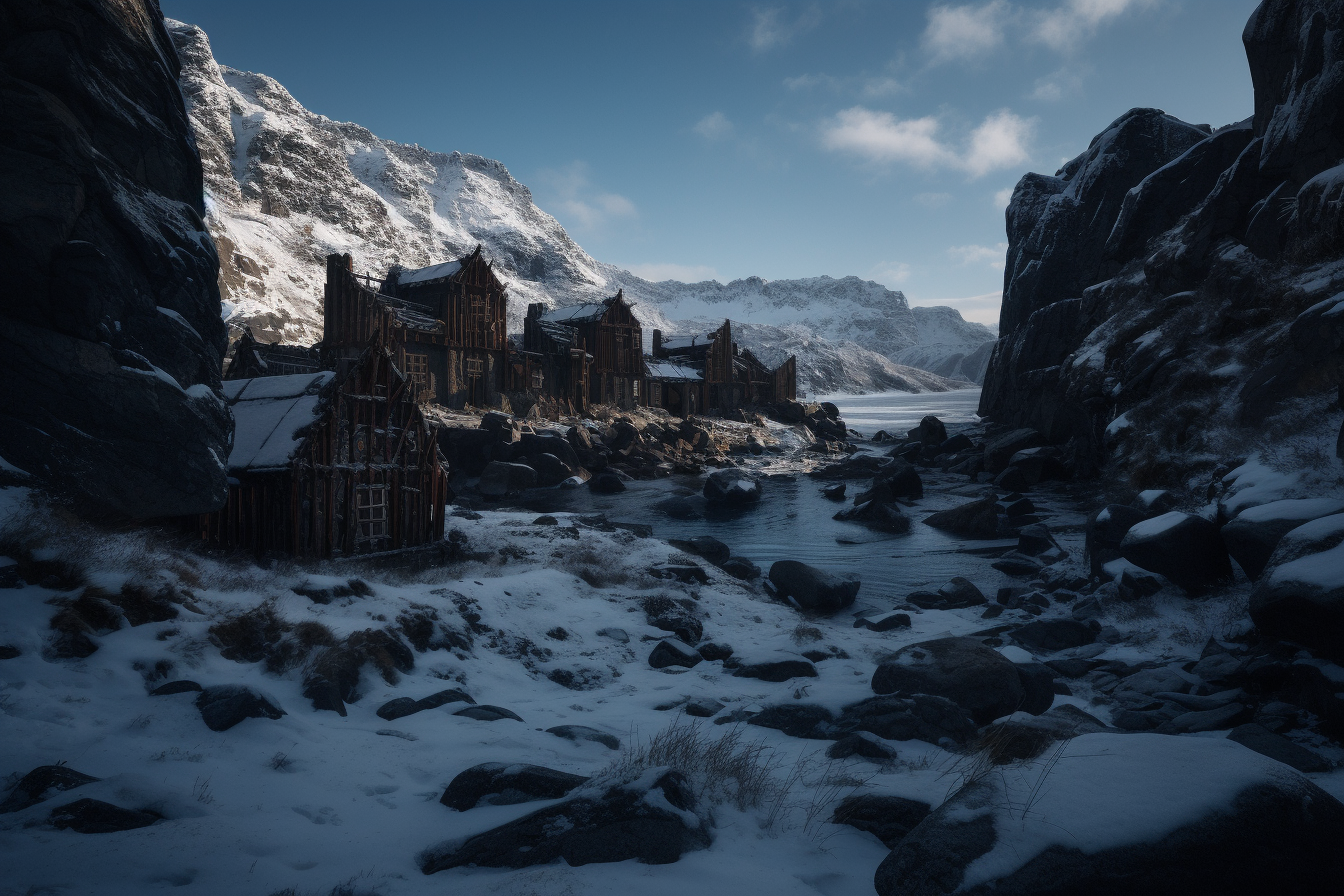
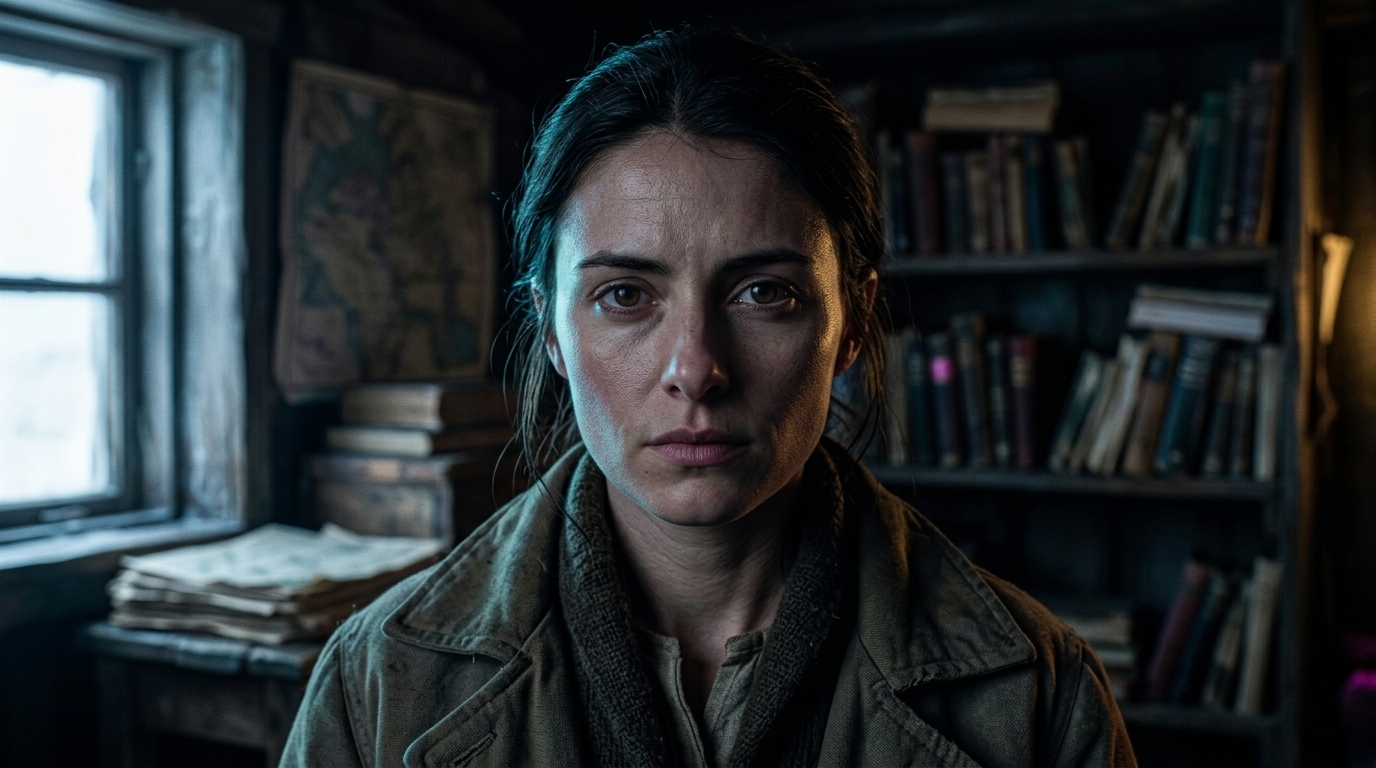
Freya Jennings (born 1993) was the sceptic daughter of Belkeep's founding Guardian, Cody Jennings, and of Grace née Levis, who died bearing her and her twin brother Fryar. Where Fryar kept their father's faith in the Luke Smith Prophecy and the sea, Freya doubted every promise and studied Earth—her dead mother's unreachable world—instead. She raised the orphaned child Krid as her own, buried her father in 2018, and lived to see the isolation she had never believed would end broken by Bixbus in 2027.
Born in Belkeep
Freya Gwyneth Jennings was born in Belkeep on the 15th July, 1993, one of twins delivered into the frozen settlement in the same days that her mother died. Grace Eleanor Jennings, née Levis, survived the birth of her son and daughter only briefly before succumbing to complications that Belkeep, with its crude and improvised medicine, had no means to treat—but she lived long enough to name them, and gave her daughter the middle name Gwyneth after her own mother, a Welsh grandmother Freya would never meet.
Freya grew up with no memory of her mother and only the settled knowledge of how she had died and of what her arrival had cost. She resembled Grace closely, having inherited her mother's dark, near-black hair, and that resemblance followed her through the household for the whole of her father's life—a likeness he found difficult to look at directly and never learned to ignore.
Her father was Cody Brian Jennings, the South Australian farmer who had opened the Portal that founded Belkeep and served as its first Guardian. In a settlement cut off from the rest of Clivilius, the fact that shaped Freya's childhood was a simple one: her father could leave, and she could not. A Guardian's Portal Key granted Cody passage back to Earth, and he used it often, disappearing for days at a stretch on business he rarely explained. Freya and her brother were bound to the valley without exception. They belonged wholly to the one place their father could always leave behind.
The Guardian's Household
Cody raised the twins alone, in the residence that carried the family name, and by every account he loved them without reservation. But he was frequently away, and the shape of Freya's early life was defined as much by his departures as by his presence. She learned young to keep a household running in the gaps he left, and she learned, too, to hold his assurances lightly, because a father forever on his way back through the Portal made a great many promises and kept only some of them.
Much of what Cody did give them was practical. In the stretches he was present he taught the twins what a Belkeep childhood required—how to read the ice, how to keep clear of the water, how to make a scarce thing last—and in the long stretches he was not, Freya took on more of that work herself, minding her brother and the household with a seriousness the settlement's adults remarked on and that she never entirely set down. She was competent before she was grown, in the way children in Belkeep generally had to be, and more self-possessed than most.
What Cody offered his children in place of a steady presence was Earth. He had been an unremarkable young man from Gawler, north of Adelaide, before Clivilius claimed him, and the Earth he described to Freya and Fryar was correspondingly ordinary and particular—the wheat fields of the family farm, the warmth of the sun on bare skin, the small specifics of a life he had walked out of at nineteen and never quite stopped missing. Alongside the stories he gave them the Luke Smith Prophecy: the old Clivilian promise that a man would one day come to unite Earth and Clivilius and end the isolation that was slowly killing settlements like theirs. Cody believed it, or needed to. Fryar came to share the belief. Freya did not.
The Doubter
Scepticism was the defining feature of Freya's character, and it settled on her early and hardened with age. The Prophecy at the centre of her father's hope described a saviour who never appeared. Across the whole of her life there was no sign of him and no evidence that the promised deliverance amounted to anything more than a story that made the cold easier to bear, and Freya could not bring herself to believe in it simply because belief was expected of her. Where her brother heard a promise, she heard consolation, and she said as much, even when saying it wounded her father.
Her doubt was not coldness, though it was sometimes mistaken for it. It was closer to a refusal to deal in anything that could not be shown to be true, formed in a place where false comfort had real consequences. Freya had watched people in Belkeep sustain themselves on hope and then break when the settlement failed to deliver what they had hoped for, and she concluded early that encouragement offered without grounds was a kind of cruelty. She preferred the harder honesty of the things that could be counted: the stores, the weather, the work, the dead. It was a bleak position for a young woman to hold, and she held it because Belkeep had taught it to her and because nothing she ever saw contradicted it.
Earth
If her doubt closed one door, her curiosity opened another. From childhood Freya studied Earth—her parents' world, and her dead mother's in particular—assembling what she could of its history and its peoples from her father's recollections and from the small number of books that had come through the Portal in the settlement's earliest years and been read to pieces in the decades since. It was study with no prospect of use. A Belkeep-born woman held no Portal Key and had no means of reaching Earth; the world she was learning was one she would never be allowed to see.
She pursued it anyway, and pursued it seriously. She measured her father's fond, imprecise recollections against the harder detail of the books, corrected the one by the other, and built for herself a considered picture of a place she knew only at second hand. The work was partly grief, Earth being the nearest she could come to the mother she had never met, and partly the ordinary hunger of an intelligent person walled into a valley of ice. Belkeep offered her one frozen settlement and a slow communal decline; the books offered her a whole living world, and she took what they offered and wanted more.
She kept the study largely to herself. It sat awkwardly against her scepticism—a woman who dismissed her father's Prophecy as wishful thinking, quietly giving her hours to a world she could no more visit than he could summon his saviour—and she was not blind to the contradiction. But the two were not, to her mind, the same thing. The Prophecy asked her to believe in something for which there was no evidence; Earth was documented, particular, and real, and merely out of reach. She could bear being denied a true thing. It was false ones she would not carry.
The Twins
For all that they were opposites, Freya and Fryar were seldom truly apart, and the bond between them was the steadiest thing in either of their lives. She inclined to Earth and to doubt; he was drawn to the sea and held to their father's faith; and beneath the difference ran the plain closeness of two people who had shared a birth, a dead mother, and every hard year of Belkeep since. Freya could usually sense her brother's state without being told—a twin's familiarity rather than anything stranger—and she worried about him constantly, because his nature drew him toward the one part of Belkeep most likely to kill him.
Fryar loved the sea. He took boats out along the island's coast and among its coves, into waters that had drowned a great many of the settlement's people, and Freya spent much of her adult life braced against the day he might not come back from one of them. It was an old disagreement between them, never settled: she thought his voyages reckless, and he thought her caution a smaller way to live. Neither persuaded the other. They simply went on, each unwilling to lose the other, keeping their opposite temperaments in the same close orbit they had held since before they were born.
The settlement had long since stopped expecting them to be alike. The Jennings twins were a familiar pairing in Belkeep—the girl with her books and her doubts, the boy with his boats and his certainties—and if the community found Fryar the more immediately likeable of the two, it was Freya it turned to when something needed doing rather than believing in. She was used to that and did not resent it. She had decided young that being relied upon was worth more than being liked, which was as well, because Belkeep gave her a good deal more of the former than the latter.
Krid
The warmth that Freya's scepticism tended to conceal had one clear object, a Belkeep-born child named Krid Louwa. Krid had been orphaned young, in the long grief that settled over the settlement as it declined, and had been raised in a loose fashion by the community as a whole. By the ordinary logic of Belkeep she ought to have grown up narrow and grim. She had not: she was quick, bright, and stubbornly cheerful, and at some point she attached herself to Freya and did not let go. To Krid, Freya became an older sister, a teacher, and something close to a mother, and Freya gave the child the patience and tenderness she rationed carefully everywhere else.
It was the plainest evidence that her hard practicality had a limit. Freya taught Krid, watched over her, and quietly built for her the family the settlement's losses had taken away, and in the child's company she was steadier and gentler than the rest of Belkeep tended to see her. Krid, for her part, had an uncanny way of knowing things she had no ordinary means of knowing—she would sense a person's state at a distance, or name a thing before it came to pass—and where others were unsettled by it, Freya took it seriously. Her scepticism had always been aimed at stories and promises, not at the people she loved, and she was not about to tell a child she trusted that what the child plainly knew could not be known.
Her Father's Death
On 31 July 2018 Cody Jennings died on Earth. He was killed in a fall, in the course of the tangled and half-secret business that had occupied his final weeks, and he did not come back through the Portal alive. His body was brought home to Belkeep by Gladys Cramer—the woman Cody had lately been drawn to on Earth, and who had taken up a Portal Key of her own to become one of Belkeep's newest Guardians. Freya and Fryar received their father back as a body, carried through the Portal by a woman they had never met.
For Freya the loss carried the particular bitterness of confirming what she had long suspected. She had loved her father and seen through him in equal measure, had known him as the warmth of her childhood and as the man perpetually departing on errands he would not explain, and in the end he had died on exactly such an errand, far away, among Earth affairs his children had no part in. He left them the Prophecy she had never believed and a settlement with few years left in it. At twenty-five, having never known her mother, Freya was now without her father as well. She grieved him and carried on, because Krid still needed her, and Fryar still needed watching, and Belkeep still needed people prepared to look at it clearly.
Gladys did not deliver the body and vanish, as the twins might have feared. She stayed, bound now to Belkeep as their father had been, and became a fixture of the settlement's final years—the outsider from Earth who had arrived bearing Cody's body and remained to share the place he had left them. Freya's dealings with her were wary at first, as with anyone who came into Belkeep from the world beyond it, but Gladys proved practical and unsentimental in a way Freya could respect, and in time the Guardian who had carried her father home became one of the few adults in the settlement she counted as reliable.
The Long Decline
In the years after Cody's death, Freya was among the steadier figures in a shrinking settlement. She and Fryar managed without their father—she with her clear sight, he with his sea and his faith—and between them held together what remained of the family their parents had made. Belkeep contracted around them. Its births had all but ceased; its people aged and thinned; Chief Lewyyd Drikarsus died in 2021 and was not replaced, and the Council of Stewards carried the settlement collectively through the years that followed.
She took on work, too, that the settlement could no longer spare anyone else to do. Belkeep's long-serving teacher had died in the same year as Cody, and with the settlement's children by then few in number, it fell to Freya as much as to anyone to see that they were taught—Krid above all, but the others as well. She was not warm in the way the old teacher had been, but she was thorough and she was honest, and she gave the last children of Belkeep what she had given herself: a picture of a world larger than the valley they had been born into.
Freya expected none of it to end well. She had never believed rescue would come and had shaped herself accordingly, and she watched the decline with the level, unsurprised steadiness of someone who had prepared for precisely this. She kept the household. She kept Krid close and went on teaching her, determined that the child would at least grow up with some knowledge of the wider world, in the way the settlement's books had once given that world to Freya. If Belkeep was going to end, she intended to meet the ending with her eyes open.
The World Found Them
The end she had prepared for did not come. In 2027 the settlement of Bixbus located Belkeep—reached across the geography that had kept the valley hidden and alone since Cody first opened its Portal—and the isolation that had defined every year of Freya's life was broken. It had not come across her brother's sea, and it had not come as the Earth of her own study; it had come overland, through cartographers and a relay line, the patient work of a distant settlement that had spent years reaching out across the regions to the places no one had known were there. But the settlement that found them was Bixbus, and Bixbus had been founded, and was guarded still, by a man named Luke Smith.
That was not a small thing for Freya, of all people, to take in. The Luke Smith Prophecy she had spent her life dismissing as her father's wishful thinking—the promise of a named man who would come and end the isolation—had, in the plainest possible terms, turned out to be true. The man was real. The isolation had ended. The story she had refused to be comforted by described, with an accuracy she could not argue away, more or less exactly what had happened.
She did not pretend otherwise; pretending otherwise would have been its own kind of false comfort, and false comfort was the one thing she had never allowed herself. She had always said her father's hope was not evidence, and she had been right about that. She had simply not expected the evidence, when at last it came, to bear the hope out.
The relocation that followed, carried out between 2028 and 2030, emptied Belkeep and moved its surviving people out to Bixbus, bringing decades of isolation to an end. For most of them the desert capital was overwhelming—a city of millions where a valley of a few hundred had been the whole of the known world—but Freya, alone among Belkeep's people, arrived half prepared for it. She had spent her life refusing to forget that a wider world existed, and now she was standing in it, and the knowledge she had gathered from second-hand fragments in a locked valley proved, to her own surprise, to be worth something.
She stayed. Where her brother's nature drew him on toward the coast, Freya's kept her in Bixbus, among its universities and its records and the work of a settlement that was actively drawing the scattered places of Clivilius back together—and that maintained, for the first time in her experience, real and working ties to Earth itself. Her mother's world was still not one she could set foot on, for she held no Portal Key and that door stayed shut.
But in Bixbus it was no longer a closed subject studied in secret from a handful of ruined books; it was a place people crossed to and from, wrote about, worked with. The scholar of a world she had never been allowed to see had come, in the end, to live at the one edge of Clivilius where it was near enough to study in the open—and, being Freya, she set about doing exactly that.
