Finn Maurice Montgomery
Dr. Finn Maurice Montgomery, born 14 July 1982 in Hobart, Tasmania, is Head of Emergency at Royal Hobart Hospital, renowned for trauma management expertise and crisis leadership. Following medical training at the University of Tasmania and Monash University, he achieved FACEM fellowship in 2011. Married to paediatrician Kaitlyn Foster with two children, Finn balances demanding emergency medicine with clinical teaching, whilst maintaining passions for sailing, wilderness exploration, and classical piano.
Medical Heritage and Early Formation
Dr. Finn Maurice Montgomery was born on 14 July 1982 at the Royal Hobart Hospital—the same institution where he would later build his distinguished career in emergency medicine. His birthplace carried significance beyond geography; Hobart, Tasmania's capital city, possessed a medical heritage stretching back to its colonial origins, and the hospital itself had witnessed nearly two centuries of healing practice. That Finn would enter the world within its walls seemed prophetic, though none could have predicted how central this institution would become to his life's work.
Finn was the youngest of five children born to Dr. Alistair Montgomery, a renowned cardiologist, and Margaret Montgomery (née Collins), a dedicated registered nurse. The Montgomery household in Battery Point embodied medical vocation—discussions of patient care, clinical challenges, and medical advancements formed the soundtrack of family life. Alistair's cardiology practice meant irregular hours and frequent weekend consultations, whilst Margaret's nursing career provided complementary perspective on healthcare delivery. Their children absorbed lessons about service, professional dedication, and the profound responsibility of caring for others during their most vulnerable moments.
Growing up as the youngest sibling in such an environment, Finn developed early awareness of medicine's demands and rewards. His older brothers and sisters pursued various careers, but Finn demonstrated particular fascination with his father's work. Weekend mornings often found young Finn accompanying Alistair on hospital rounds, observing patient interactions with quiet attention whilst his father explained cardiac conditions in language accessible to a child's understanding. These early exposures planted seeds that would later blossom into genuine calling rather than simply following familial expectation.
Battery Point's heritage architecture and close-knit community provided an idyllic childhood setting. The Montgomery home overlooked the Derwent River, offering views of the waterway that had carried convict ships in Tasmania's colonial era and now hosted recreational sailing and commercial shipping. The neighbourhood's historic character—sandstone cottages, narrow lanes, maritime heritage—connected Finn to Tasmania's past whilst the presence of Mount Wellington's dramatic summit reminded him daily of the island's wild beauty beyond urban boundaries.
Education and the Path to Medicine
Finn's academic journey began at Hutchins School, one of Tasmania's most prestigious independent institutions with educational traditions stretching back to 1846. The school's emphasis on both academic rigour and character development suited Finn's temperament perfectly. He excelled across subjects, demonstrating particular aptitude in the sciences whilst maintaining strong performance in humanities that would later inform his patient communication skills.
His final years at Hutchins (1996–2000) revealed emerging leadership capabilities. Finn served as a prefect, participated in the school's extensive co-curricular programme, and graduated as dux in 2000—an achievement recognising not just academic excellence but contribution to school community. Teachers noted a student who combined intellectual capability with genuine interest in others' wellbeing, who asked thoughtful questions about ethical implications of scientific knowledge, who seemed drawn towards professions requiring both technical competence and human connection.
The decision to pursue medicine felt inevitable rather than deliberate. Finn enrolled in the Bachelor of Medicine, Bachelor of Surgery (MBBS) programme at the University of Tasmania in 1998, beginning his formal medical education whilst still completing his final year at Hutchins School through an accelerated pathway available to exceptionally qualified students. The university, Tasmania's oldest (founded 1890), offered integrated clinical exposure from early years, allowing students to engage with patients alongside theoretical study.
Finn's undergraduate years (1998–2004) were characterised by academic excellence tempered with genuine engagement in broader medical community. He served actively in the University Medical Society, helping organise clinical skill workshops and social events that built cohort solidarity. More significantly, he volunteered extensively with the university's rural health initiative, travelling to remote Tasmanian communities to provide basic medical support under supervision. These experiences exposed him to healthcare delivery challenges beyond metropolitan centres, to patients whose access to care depended on itinerant services, to the reality that medicine required adaptability as much as knowledge.
His academic performance remained consistently strong across all rotations—surgery, internal medicine, paediatrics, psychiatry, general practice. Supervising clinicians noted a student who demonstrated unusual maturity in patient interactions, who could explain complex medical concepts in accessible language, who maintained composure during challenging clinical scenarios. Finn graduated with honours in 2004, his academic transcript reflecting both theoretical mastery and exceptional clinical competence.
Foundation Years and Emergency Medicine Calling
Finn commenced his internship and residency at Royal Hobart Hospital in 2004, returning to the institution where he'd been born and where his father continued practising cardiology. The rotational programme exposed him to various specialties—general medicine, surgery, paediatrics, emergency medicine—each offering different perspectives on healing practice. During these foundation years, Finn discovered his particular aptitudes and interests, testing his responses to different clinical environments whilst developing fundamental skills applicable across all specialties.
The emergency department rotation proved transformative. Something about the environment resonated deeply with Finn's capabilities—the requirement for rapid assessment under uncertainty, the need for decisive intervention whilst maintaining diagnostic flexibility, the constant variety of presentations preventing routine, the satisfaction of providing immediate relief during acute crisis. Emergency medicine engaged his analytical skills whilst requiring emotional intelligence that purely technical specialties didn't demand. He observed senior emergency physicians managing chaos with systematic competence, transforming overwhelming situations into manageable problems through triage, prioritisation, and coordinated team response.
In 2006, Finn received the Intern of the Year award, recognising exceptional performance across his rotational placements. The honour reflected not just clinical competence but collegiality, teaching ability, and the kind of professional maturity that distinguished future leaders from merely competent practitioners. Supervisors praised his calm under pressure, his willingness to seek guidance when uncertain, his ability to communicate effectively with both patients and multidisciplinary teams.
By 2007, Finn had committed to emergency medicine as his specialist pathway. He pursued a Master of Emergency Medicine at Monash University in Melbourne (2007–2010), one of Australia's premier programmes for emergency physician training. The three-year course combined advanced clinical education with research requirements, pushing Finn to develop both practical expertise and academic rigour. His research focused on rapid response teams in emergency departments—studying how systematic interventions could prevent patient deterioration and improve outcomes during critical incidents.
The Monash years proved intellectually demanding and professionally formative. Finn completed rotations across multiple Melbourne hospitals, experiencing different emergency department cultures and operational approaches. He studied under leading emergency physicians whose research was shaping national protocols, absorbed advanced techniques in trauma management and resuscitation, and developed sophisticated understanding of emergency medicine's complexities—the balance between speed and thoroughness, the art of clinical decision-making under uncertainty, the systems thinking required to manage patient flow through overcrowded departments.
His master's research culminated in publications in peer-reviewed medical journals, contributing to evidence-based understanding of rapid response team effectiveness. The academic work demonstrated Finn's capacity for rigorous analysis whilst his clinical rotations confirmed exceptional practical competence. He completed his master's degree whilst simultaneously advancing through fellowship training requirements, positioning himself for consultant-level practice.
Fellowship and Ascending Leadership
In 2011, Finn achieved Fellowship of the Australasian College for Emergency Medicine (FACEM), the culmination of years of structured training and examination. The FACEM designation represented more than credential—it signified recognition by peers that Finn possessed the knowledge, skills, and professional judgment required for independent emergency medicine practice at the highest level. His fellowship training had included advanced courses in disaster medicine and pre-hospital care, areas where he would later make significant contributions to Royal Hobart Hospital's capabilities.
Finn returned to Hobart and Royal Hobart Hospital in 2010 as a Senior Registrar, bringing expertise gained during his Monash years back to his home institution. The return felt appropriate—his medical journey had begun here during childhood rounds with his father, his formal training had started here as an intern, and now he returned as an experienced emergency physician ready to contribute at senior levels.
His progression through consultant ranks was steady and well-deserved. By 2013, Finn had been appointed Consultant Emergency Physician, joining the senior medical staff responsible for overseeing department operations, training junior doctors, and managing the most complex cases. His clinical judgment earned trust from colleagues, his teaching ability made him a sought-after supervisor, and his systematic approach to crisis management demonstrated leadership potential that didn't go unnoticed.
In 2016, Finn became Head of the Emergency Department—a position recognising his clinical excellence, administrative capability, and vision for how emergency services could be enhanced. At just thirty-four years old, he assumed responsibility for one of Tasmania's busiest emergency departments, managing medical staff, coordinating with hospital administration, implementing protocol improvements, and maintaining personal clinical practice that kept him connected to frontline realities.
His tenure as department head brought measurable improvements. Finn introduced Advanced Trauma Life Support (ATLS) courses for staff, ensuring consistent high-quality response to trauma presentations. He refined triage protocols to improve patient flow during periods of overcrowding. He led the department through several mass casualty incidents, demonstrating exceptional crisis leadership that maintained order whilst ensuring appropriate care for overwhelming numbers of patients. He championed the hospital's implementation of telemedicine services, improving emergency care access for rural Tasmanians who couldn't easily reach metropolitan facilities.
In 2018, Finn received the Royal Hobart Hospital's Excellence in Clinical Leadership Award, formal recognition of his contributions to both patient care and departmental development. The honour came from peers who'd observed his steady leadership through challenging periods, who'd benefited from his mentorship, who'd witnessed his commitment to maintaining excellence whilst managing the constant pressures inherent in emergency medicine.
The Art of Emergency Medicine
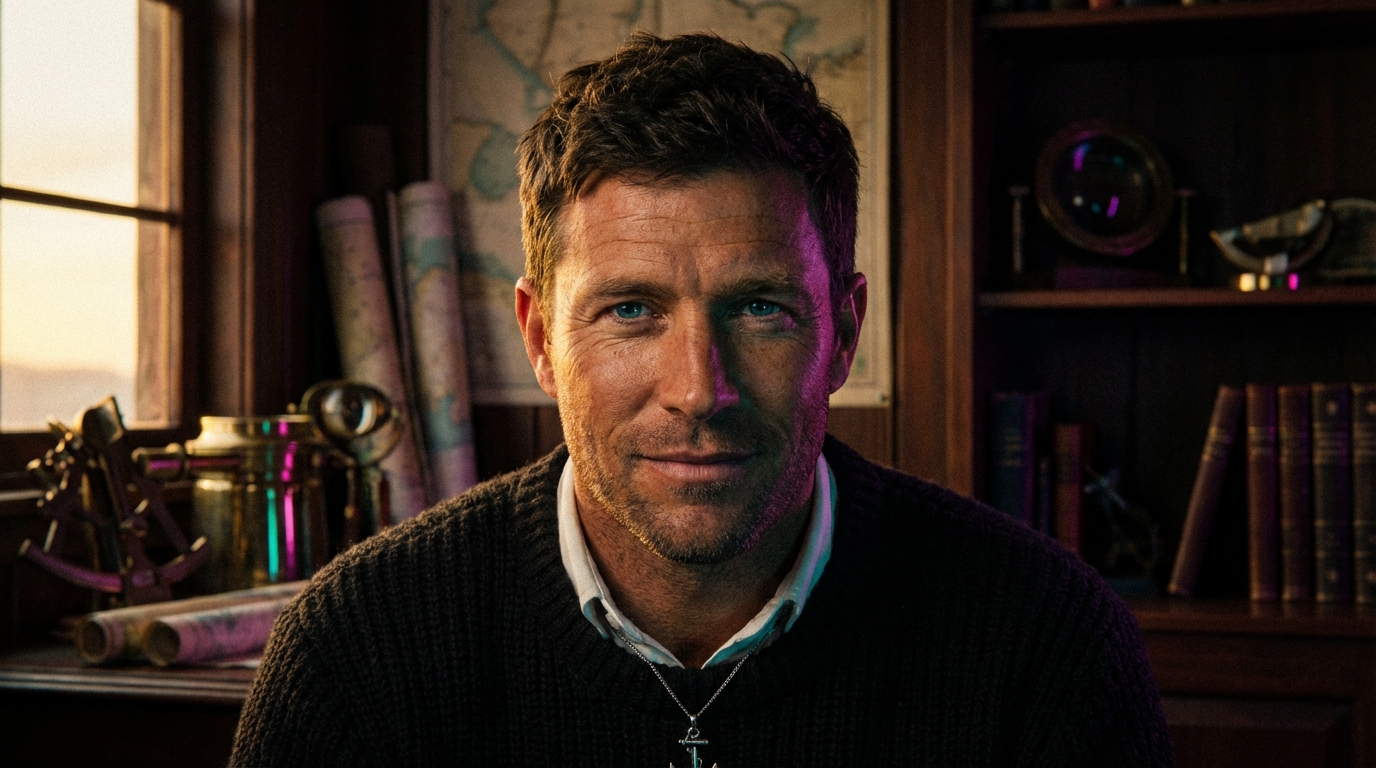
Finn's approach to emergency medicine combined technical excellence with profound understanding of the human dimensions of crisis. His physical presence—tall (six foot two), lean and athletic, with piercing blue eyes that conveyed both intensity and warmth—commanded immediate respect whilst his calm demeanour reassured frightened patients. Colleagues noted how Finn's composure seemed to spread through the department during chaotic shifts, how his systematic approach provided structure when situations threatened to overwhelm, how his voice remained measured and authoritative even during the most critical interventions.
His clinical judgment reflected years of pattern recognition honed through thousands of patient encounters. Finn had developed the emergency physician's crucial skill of assessing rapidly whilst maintaining diagnostic flexibility—forming initial hypotheses quickly enough to guide immediate intervention, whilst remaining alert for information that might require complete reassessment. He could triage effectively, distinguishing truly emergent presentations from those that appeared dramatic but carried less immediate risk. He communicated with patients and families with unusual skill, explaining complex medical situations in accessible language whilst maintaining honesty about uncertainties inherent in emergency care.
The encounters with Detective Sarah Lahey on 29 July 2018 exemplified Finn's comprehensive approach to emergency medicine. When examining Sarah's concussion and lacerated palm, he recognised immediately that her injury pattern didn't align with the fall she'd described. His training in reading trauma mechanics—understanding how bodies move during falls, what injury patterns different force applications produce—made the inconsistencies obvious. But rather than confronting her directly, Finn balanced medical assessment with awareness of complex personal dynamics that might prevent honest disclosure.
He'd treated enough police officers to understand professional culture's impact on injury reporting—the tendency to minimise symptoms, the reluctance to admit vulnerability, the particular complications when violence occurred within professional relationships. His story about the earlier patient who'd concealed partner assault served dual purposes: offering Sarah an opportunity to recognise parallels whilst demonstrating that Finn understood the complexities she faced. When she maintained her fiction, Finn documented his clinical concerns in her medical record—ensuring permanent notation of injury pattern inconsistencies whilst respecting her immediate choice not to disclose.
This approach characterised Finn's broader practice philosophy. He believed emergency physicians had responsibilities beyond immediate medical intervention—to recognise patterns suggesting deeper problems, to document concerns that might prove significant later, to offer pathways for disclosure whilst respecting patients' autonomy over their own narratives. He couldn't force people to tell truth, but he could create records that prevented complete concealment, that flagged concerns for other healthcare providers, that established foundations for later intervention if circumstances allowed.
Teaching, Research, and Professional Contributions
Since 2015, Finn has served as Clinical Lecturer at the University of Tasmania's School of Medicine, teaching emergency medicine to both undergraduate medical students and postgraduate trainees. His approach to education reflects his own formative experiences—combining rigorous theoretical instruction with extensive clinical exposure, emphasising systematic thinking alongside practical skills, fostering professional development that produces not just competent technicians but thoughtful practitioners.
Students consistently rate Finn's teaching highly, appreciating his ability to explain complex concepts clearly, his willingness to engage with questions no matter how basic, his skill at facilitating learning from clinical encounters. He supervises research projects, mentors junior doctors navigating specialist training pathways, and participates in curriculum development that shapes how future doctors are educated. Many of his former students have progressed to successful medical careers, crediting Finn's mentorship as foundational to their professional development.
His research contributions continue beyond his master's thesis. Finn has published numerous papers on trauma management, emergency department operations, and crisis response protocols. He presents regularly at national and international emergency medicine conferences, sharing insights from Royal Hobart Hospital's experiences managing mass casualty incidents and implementing innovative care delivery models. He contributes to Australasian College for Emergency Medicine policy development, helping shape standards that guide emergency practice across Australia and New Zealand.
His work on telemedicine implementation has proven particularly significant. Finn recognised that Tasmania's geography—dispersed population, remote communities, limited specialist availability—made the state ideal for pioneering telehealth approaches to emergency care. Under his leadership, Royal Hobart Hospital developed systems allowing rural clinicians to consult with emergency specialists during complex cases, improving outcomes for patients who couldn't immediately access metropolitan facilities. The model has informed broader Australian approaches to rural emergency medicine.
Personal Life and Sustaining Balance
In 2010, Finn married Dr. Kaitlyn Foster, a paediatrician whose career paralleled his own—medical family background, University of Tasmania education, specialist training, and commitment to Tasmanian healthcare. Their relationship developed during their university years, though both pursued specialist training separately before reuniting professionally and personally. Kaitlyn's work with children complemented Finn's emergency practice, their combined expertise covering much of the human lifespan from different clinical perspectives.
The couple's two children—Eleanor, born 2012, and Tristan, born 2015—brought both joy and practical challenges common to dual-medical-career families. Managing childcare around unpredictable shift patterns, coordinating on-call responsibilities, ensuring family time received protection despite professional demands required constant negotiation. The Montgomery family resides in a heritage home in Battery Point—the same historic suburb where Finn grew up, now viewed through adult eyes whilst his own children explore its narrow lanes and waterfront parks as he once did.
Finn's passion for sailing provides crucial counterbalance to emergency department intensity. The D'Entrecasteaux Channel, south of Hobart, offers excellent conditions for recreational sailing, and Finn spends weekend hours on the water when schedules permit. The activity demands complete attention—reading weather, managing sail trim, responding to wind shifts—that prevents mental occupation with work concerns. The physical challenge, the natural beauty, the family time aboard combine to renew his capacity for the emotional demands of emergency practice.
His interest in classical piano, cultivated since childhood, offers different restoration. The precision required for proper technique, the intellectual engagement with complex compositions, the creative expression through interpretation—all provide outlets for aspects of himself that emergency medicine doesn't fully engage. Finn maintains a regular practice schedule despite professional demands, finding that musical focus provides meditative quality that reduces accumulated stress from clinical work.
The Weight of Witnessing
Emergency medicine's psychological toll accumulates subtly across years of practice. Finn has treated countless trauma patients—motor vehicle accidents, farming injuries, assaults, suicide attempts, industrial incidents, the endless variety of ways human bodies can be damaged. He's witnessed deaths that could have been prevented with earlier intervention, deaths that occurred despite excellent care, deaths that resulted from violence or negligence or simple terrible luck. He's delivered devastating news to families, watched grief transform people instantly, observed how crisis reveals both humanity's resilience and its fragility.
His involvement with cases like the Jennings murder investigation and the shooting of Kate Gibbons exposed him to violence's aftermath in particularly acute ways. These weren't anonymous patients passing through his department—they were community members whose stories intersected with Hobart's close-knit society, whose tragedies rippled through networks that included people Finn knew personally or professionally. The intersection of medical responsibility and community connection created complications that purely clinical relationships didn't generate.
Finn manages this cumulative exposure through various strategies. He maintains clear boundaries between professional and personal life, protecting family time from work concerns. He engages in regular debriefing with colleagues after particularly difficult cases, recognising that processing trauma requires articulation rather than suppression. He takes advantage of the hospital's staff support services when necessary, understanding that seeking help demonstrates strength rather than weakness. And he finds meaning in the work itself—in the lives saved, the suffering relieved, the competent intervention during crisis that makes outcomes better than they would have been without his presence.
