
Charlie Edward Claiborne
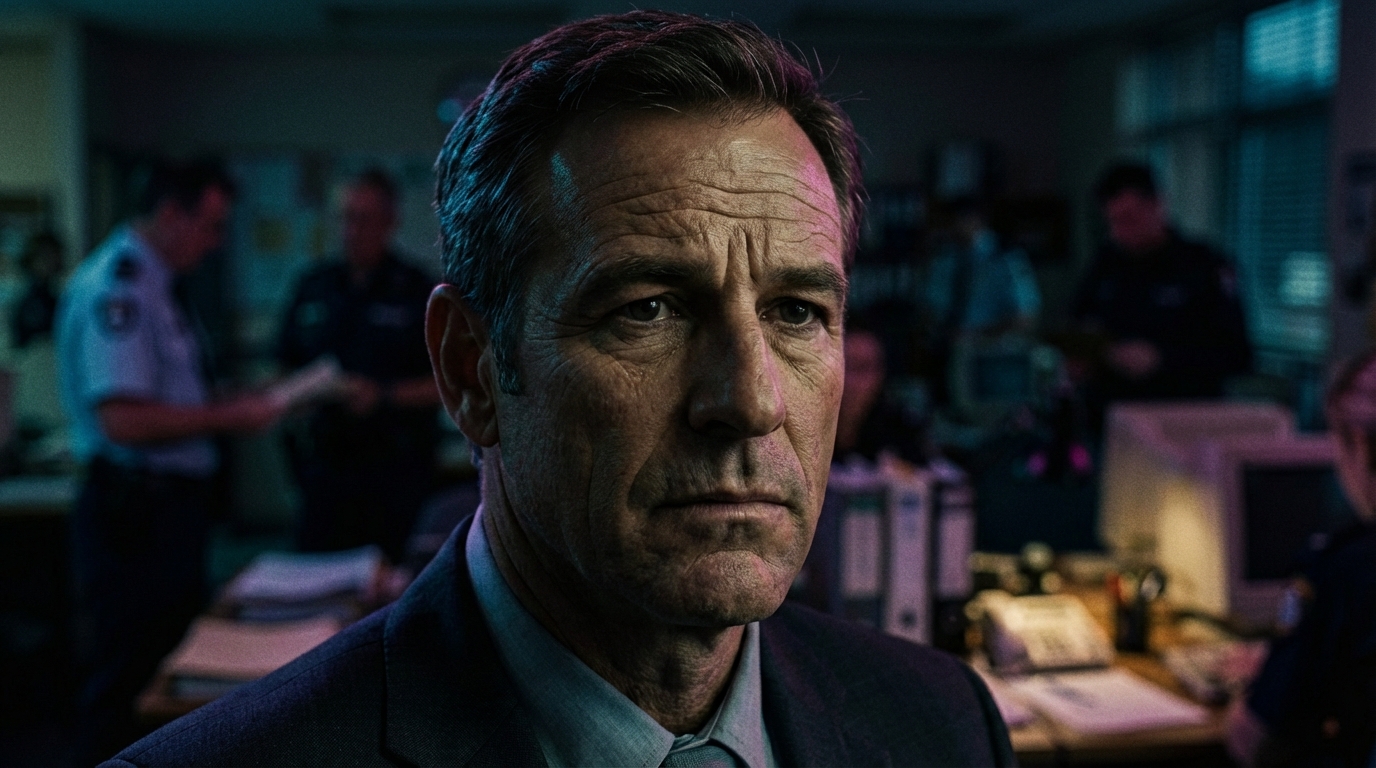
Charlie Edward Claiborne, born 15 August 1970 in Melbourne, stands as one of Tasmania's most decorated and complex law enforcement officers. A Detective Sergeant whose career spanned over three decades, Charlie embodied both the nobility and burden of public service—a man whose dedication to justice came at considerable personal cost, leaving fractures in both his psyche and his family life that would ultimately shape the trajectory of his final years in the force.
Birth and Early Melbourne Years
Charlie Edward Claiborne was born at 11:47 PM on 15 August 1970 at the Royal Women's Hospital in Melbourne, Victoria. The second of four children, he arrived during a particularly cold winter night that had his father, Thomas Richard Claiborne, pacing the hospital corridors in worn work boots still dusty from that day's construction site. His mother, Margaret Jean Claiborne (née O'Shea), endured a difficult seventeen-hour labour that the midwives would later describe as "stubborn"—a trait that would manifest profoundly in her second son.
The Claiborne household at 42 Bell Street, Coburg, was a cramped weatherboard that Thomas had partially renovated himself, never quite finishing the back sunroom that remained covered in plastic sheeting throughout Charlie's childhood. The house bore the hallmarks of working-class struggle: mismatched furniture, a kitchen table scarred from years of use, and Margaret's Singer sewing machine permanently stationed in the corner of the lounge room, its rhythmic clatter providing the soundtrack to family life.
Charlie's siblings shaped his early understanding of responsibility and protection. His older brother Richard James "Rick" Claiborne (born 23 March 1966) was already four when Charlie arrived, a boisterous child who would grow into a solid, dependable diesel mechanic. Louise Mary Claiborne followed on 8 November 1972, and Anthony John Claiborne completed the family on 14 June 1975. The age gaps meant Charlie often found himself mediating between Rick's rough play and the younger children's vulnerability.
The Weight of Early Responsibility
Margaret's diagnosis with systemic lupus erythematosus came in 1976, though the symptoms had plagued her for years prior. The disease transformed the household dynamics fundamentally. Charlie, at six years old, learned to recognise the signs of his mother's flare-ups: the swollen joints, the butterfly rash across her cheeks, the days when she couldn't rise from bed. He became adept at preparing simple meals—Vegemite sandwiches, tinned spaghetti on toast—and developed a quiet efficiency in managing household tasks that belied his age.
Thomas Claiborne responded to his wife's illness by working longer hours, taking on dangerous demolition work and night shifts at building sites across Melbourne. His absence created a vacuum that Charlie partially filled, checking Louise's homework whilst Rick tinkered with engines in the backyard shed. The family's financial situation deteriorated when Thomas suffered a back injury in 1978, forcing him onto reduced duties. Pride prevented him from claiming full disability benefits, a stubbornness that meant Charlie often wore shoes held together with electrical tape and school uniforms mended multiple times over.
The defining moment of Charlie's childhood came on 23 May 1980. Walking home from Coburg North Primary School, he witnessed three older boys cornering a small Pakistani boy named Rashid Ahmed behind the milk bar on Sydney Road. Without hesitation, ten-year-old Charlie intervened, placing himself between the bullies and their victim. The confrontation left Charlie with a broken nose and two cracked ribs, but Rashid escaped unharmed. The incident gained attention when shopkeeper Mrs. Elena Kostas witnessed the event and contacted both the school and local newspaper. Charlie refused all interviews, uncomfortable with the attention, but the event established his reputation as someone who would stand against injustice regardless of personal cost.
Adolescence and the Move to Tasmania
Charlie's teenage years at Coburg High School (1983-1987) were marked by academic mediocrity but athletic excellence. He played flanker for the school's rugby team with a tenacity that earned respect from teammates and opponents alike. His PE teacher, Gerald "Gerry" Morrison, became an informal mentor, recognising something in Charlie beyond his working-class exterior. Morrison encouraged Charlie to consider police work, seeing in him the combination of physical capability and moral clarity the profession demanded.
The family's situation shifted dramatically in 1987 when Charlie's aunt, Nora O'Shea, offered him accommodation in Hobart whilst he attended university. Nora, Margaret's older sister, had married well—her husband owned three pharmacies across Tasmania—and she had no children of her own. The opportunity seemed providential, though leaving Melbourne meant abandoning his role as family protector. The guilt of this decision would resurface throughout his life, particularly after Anthony's later struggles with heroin addiction.
University Years and Finding Direction
At the University of Tasmania (1988-1992), Charlie initially struggled with the academic demands of his Bachelor of Arts in Criminal Justice. The theoretical frameworks and sociological abstractions seemed divorced from the street-level realities he'd known. However, professors like Dr. James Whitfield, who combined academic rigour with practical experience from his years as a Crown prosecutor, helped Charlie bridge this gap.
Charlie threw himself into university life with characteristic intensity. He captained the university rugby team to three consecutive intervarsity championships, earning the nickname "The Wall" for his defensive play. More significantly, he joined the University Legal Aid Society, where he assisted in preparing cases for disadvantaged clients. Working alongside law student Eleanor Blackwood (later Justice Blackwood of the Federal Court), Charlie discovered his ability to connect with people from troubled backgrounds, drawing out crucial information through patient, non-judgmental listening.
His honours thesis, "Policing the Margins: Law Enforcement Responses to Domestic Violence in Rural Tasmania," demonstrated a sophisticated understanding of how geographical isolation and limited resources created unique challenges for both victims and police. The research required extensive fieldwork, including ride-alongs with rural officers that gave Charlie his first real taste of operational policing. The thesis earned a First Class Honours and a commendation from the Dean, but more importantly, it confirmed Charlie's career path.
Police Academy and Early Career
Charlie entered the Tasmania Police Academy in January 1993, part of Squad 47, a cohort of twenty-eight recruits. The physical demands posed no challenge—years of rugby and construction work during university breaks had maintained his fitness. The academic components, covering criminal law, evidence procedures, and police powers, came easier than expected, his university preparation proving valuable. However, it was in scenario-based training that Charlie truly excelled.
Sergeant Instructor Ferdinand Hayward noted in Charlie's assessment that he possessed "an unusual ability to de-escalate confrontational situations whilst maintaining command presence." This skill became evident during a training exercise involving a domestic violence scenario where Charlie, playing the responding officer, managed to separate the roleplaying couple and secure evidence whilst providing genuine emotional support to the 'victim'—going off-script in a way that impressed the assessors.
Charlie graduated from the Academy on 18 November 1994, receiving the Commissioner's Award for Leadership and the Physical Training Prize. His first posting to Burnie Police Station on Tasmania's north-west coast began on 5 December 1994. The industrial town, struggling with economic decline and rising unemployment, provided a harsh introduction to operational policing.
The Burnie Years and Meeting Sandra
As a probationary constable in Burnie (1995-1998), Charlie encountered the full spectrum of human misery and resilience. His first major incident came on 17 February 1995, when he responded to a house fire in East Devonport. Arriving before the fire brigade, Charlie heard children screaming from inside the weatherboard cottage. Without hesitation, he entered through a bedroom window, navigating by touch through thick smoke to locate three-year-old Emily Watson and her five-year-old brother James, passing them through the window to gathering neighbours before the ceiling collapsed. The children's mother, who had been trapped in the bathroom, did not survive. The incident earned Charlie a commendation for bravery but also introduced him to the weight of being unable to save everyone.
His supervisor, Senior Sergeant Michael Torres, became a crucial influence, teaching Charlie that effective policing required understanding the community's underlying dynamics. Torres insisted his officers attend local football matches, school fetes, and council meetings—not as enforcement presence but as community members. This philosophy shaped Charlie's approach throughout his career.
On 14 December 1996, Charlie attended an art exhibition opening at the Burnie Regional Art Gallery, part of Torres's community engagement strategy. There he encountered Sandra Elizabeth Harris, a twenty-one-year-old dancer and emerging painter from Hobart who was exhibiting a series of abstract works exploring movement and stillness. Charlie, attempting to appear cultured, made an embarrassingly incorrect observation about her technique. Rather than mockery, Sandra responded with genuine delight at his attempt to engage with art beyond his comfort zone. They talked until the gallery closed, then continued over coffee at an all-night truckers' café, discussing everything from police work to Kandinsky's colour theory.
Their courtship unfolded against the backdrop of Charlie's increasingly complex police work. Sandra would drive from Hobart on weekends, bringing paintings to work on whilst Charlie completed shifts. She introduced him to contemporary dance performances, experimental theatre, and the writings of Helen Garner. In return, Charlie shared the realities of policing—not the dramatic arrests but the mundane sadness of elderly people dying alone, of children failed by every system meant to protect them, of the thin line between order and chaos in struggling communities.
Marriage and Hobart
Charlie proposed to Sandra on 21 December 1996, during a camping trip to Cradle Mountain. The proposal, planned to coincide with sunrise at Dove Lake, instead occurred in their tent during a torrential downpour when Charlie, overcome by certainty, couldn't wait for better weather. Sandra's "yes" was immediate and accompanied by laughter that Charlie would later describe as the sound of his life clicking into place.
They married on 15 May 1997 at St David's Cathedral in Hobart, a ceremony that bridged two worlds. Charlie's side filled with police officers, rugby players, and his Melbourne family who'd travelled for the occasion. Sandra's side brought Hobart's artistic community—painters, musicians, dancers, and writers whose bohemian appearance contrasted sharply with the formal police dress uniforms. Thomas Claiborne, despite declining health, served as Charlie's best man, whilst Sandra's sister Helena, a cellist with the Tasmanian Symphony Orchestra, was maid of honour.
The reception at the Grand Chancellor revealed both families' warmth beneath surface differences. Thomas and Robert Harris, Sandra's father, bonded over their shared experience of manual labour—Robert had worked as a theatre stagehand before becoming a music teacher. Margaret Claiborne, wheelchair-bound by this stage, wept openly during Charlie's speech when he thanked her for teaching him that strength wasn't about never falling but about always getting back up.
Charlie's transfer to Hobart's Criminal Investigation Branch came through in January 1999, partly due to his excellent record in Burnie but also through Sergeant Torres's recommendation. The move allowed the couple to establish their first real home together—a cottage in Battery Point that Sandra transformed into a living artwork, each room painted in colours that shifted with the light, creating what she called "emotional weather."
Fatherhood and Family Life
Liam Thomas Claiborne was born on 3 September 2001, two weeks early, during one of Hobart's worst September storms. Charlie, racing from a crime scene in Glenorchy, arrived just as Sandra entered final labour. The birth was complicated—Liam was breech, requiring an emergency caesarean. Those hours of uncertainty, Charlie would later confide, were the most frightening of his life, surpassing any operational danger he'd faced.
Liam proved a challenging infant, colicky and resistant to sleep schedules. Charlie, working rotating shifts in CIB, would often take the 3 AM feeds, pacing the cottage's narrow hallway whilst reading case notes aloud—the monotonous recitation of evidence logs apparently soothing to his son. Sandra, recovering from a difficult birth whilst trying to maintain her artistic practice, struggled with what was later diagnosed as postnatal depression. Charlie took unprecedented leave—three weeks—to support his family, a decision that raised eyebrows amongst older officers but which Charlie never regretted.
Amelia Rose Claiborne arrived on 15 March 2003, a much easier birth that Sandra described as "Amelia's courtesy to a tired mother." Where Liam had been difficult, Amelia was serene, sleeping through the night from six weeks old. Her early contentment allowed Sandra to return to painting, converting the cottage's garden shed into a studio where she could work whilst the children napped.
The dynamics of a two-career family with young children created constant negotiations. Charlie's work in Major Crime often meant sudden departures, missed dinners, cancelled plans. Sandra's exhibitions and performances required evening availability just when Charlie might be processing arrests. They developed complex childcare arrangements involving Sandra's parents, a family daycare in South Hobart, and occasionally, Charlie's colleagues' families.
Professional Evolution and Major Cases
Charlie's promotion to Detective Senior Constable in 2004 coincided with his assignment to the Violent Crime Unit. Here he encountered the darkest aspects of human behaviour—child abuse, sexual violence, murder. The work required developing emotional compartmentalisation skills that would later prove both essential and destructive.
The case that established Charlie's reputation came in March 2006: the disappearance of eight-year-old Rebecca Barwick from Launceston. Charlie, leading the southern team coordinating with northern districts, noticed inconsistencies in the stepfather's timeline that others had dismissed. His patient, methodical questioning over fourteen hours eventually broke the man's story. Rebecca was found alive, imprisoned in a concealed basement room. The case earned Charlie the Tasmania Police Medal, but the image of Rebecca's eyes when they found her—vacant, traumatised—joined his growing catalogue of indelible memories.
His approach to interrogation became legendary within Tasmania Police. Charlie never raised his voice, never threatened, never played elaborate psychological games. Instead, he created space for suspects to reveal themselves, using silence and steady observation to generate pressure. Defence lawyers both respected and feared him, knowing he built cases on meticulous evidence rather than coerced confessions.
Promotion to Detective Sergeant in 2008 brought leadership responsibilities Charlie initially resisted. He preferred investigative work to management, but Senior Inspector David Carmichael mentored him through the transition. Under Carmichael's guidance, Charlie learned to develop his team's capabilities whilst maintaining operational involvement. His unit's clearance rate for major crimes reached 78%, the highest in Tasmania Police history.
The PTSD Incident and Recovery
On 14 July 2010, Charlie responded to a hostage situation at a Moonah pharmacy. Adrian Fletcher, a mentally ill man who'd stopped taking medication, held pharmacist Jennifer Liu and two customers at knifepoint, demanding drugs. Charlie, as negotiator, spent six hours building rapport with Fletcher, learning about his deceased mother, his lost job, his desperation. Just as Fletcher seemed ready to surrender, a miscommunication led to tactical team movement that Fletcher perceived as betrayal. He slashed Jennifer Liu's throat before Charlie could react. Though paramedics saved Liu's life, the incident shattered Charlie's confidence in his ability to protect people.
The aftermath was devastating. Charlie couldn't sleep, replaying those final seconds endlessly. He became hypervigilant at home, checking locks obsessively, startling at sudden movements. During Amelia's school concert, the sound of a door slamming sent Charlie diving for cover, terrifying surrounding parents. Sandra found him one night sitting in Liam's room with his service weapon, "protecting" his sleeping son from threats that existed only in Charlie's fractured psyche.
Sandra's intervention proved decisive. She contacted Dr. Rymond Kirkpatrick, a psychiatrist specialising in first responder trauma, and presented Charlie with a choice: get help or lose his family. The ultimatum wasn't cruel but necessary—Sandra had researched PTSD extensively, understanding that without treatment, Charlie's condition would worsen.
Treatment involved eighteen months of intensive therapy, including EMDR (Eye Movement Desensitisation and Reprocessing) and cognitive behavioural therapy. Charlie learned to identify triggers, develop coping strategies, and most difficultly, to forgive himself for not achieving impossible perfection. The police force proved surprisingly supportive, with Commissioner Patricia Walsh personally ensuring Charlie's position remained secure during treatment.
Return to duty in January 2012 required courage. Charlie initially worked cold cases, avoiding operational pressures whilst rebuilding confidence. Gradually, he returned to active investigations, though with new awareness of his psychological limitations and the importance of mental health maintenance.
Professional Standards and Integrity Challenges
Charlie's 2013 transfer to Professional Standards Command represented both career advancement and philosophical challenge. Investigating fellow officers required navigating complex loyalty dynamics whilst maintaining investigative integrity. His first major case involved Senior Constable Bradley Mitchell, accused of stealing drugs from evidence. Mitchell had been Charlie's Academy classmate, a friend who'd attended Amelia's christening. The investigation revealed Mitchell's gambling addiction and desperate circumstances but also clear criminality. Charlie's thorough investigation led to Mitchell's conviction, earning Charlie respect for his integrity but also isolation from officers who felt he'd betrayed the "brotherhood."
The work exposed Charlie to police corruption's corrosive effects. He uncovered networks of officers protecting illegal bookmaking operations, investigated excessive force complaints that revealed systemic cultural issues, and documented how senior officers had buried complaints against politically connected individuals. Each investigation extracted a toll, forcing Charlie to confront the gap between police service ideals and operational realities.
His 2016 report on systemic corruption within Tasmania Police's Northern District triggered the establishment of an independent integrity commission. The report, though heavily redacted publicly, documented how organised crime had compromised multiple officers through a combination of bribery, blackmail, and gradual ethical erosion. Charlie received death threats, requiring temporary relocation of his family to a safe house in Strahan. Sandra and the children spent three months in isolation whilst Charlie testified before closed hearings.
The Simmons Case and Moral Compromise
Charlie's return to Major Crime Division in 2017 as Detective Sergeant represented a desire to return to "clean" investigative work. However, the Derek Simmons case in July 2018 would test Charlie's integrity in ways Professional Standards never had.
The discovery of Simmons's body at the State Theatre, posed theatrically in the front row, immediately felt wrong. The invitation found on the body to a MONA gala where Charlie was the host and organiser, created personal entanglement. Charlie recognised the staging as a message but couldn't decipher its meaning. The investigation's sudden classification and pressure from above to minimise public attention confirmed Charlie's suspicions about Simmons's intelligence connections.
Charlie made his first compromise by withholding the invitation from evidence logs, telling himself it was to protect the investigation from contamination. Each subsequent decision—meeting with Ellen Lowe from intelligence, accepting the directive to redirect Simmons's death certificate, keeping crucial information from his team—deepened his moral descent. The appearance of a woman at a school fundraiser who claimed connection to Simmons, then vanished, suggested Charlie was being manipulated by forces beyond his understanding.
The strain manifested at home. Charlie became withdrawn, spending hours in his study ostensibly reviewing cases but actually paralysed by indecision. Sandra noticed but attributed it to work stress, unaware of the magnitude of Charlie's ethical crisis. His children found him increasingly absent even when physically present.
Community Involvement and Public Face
Despite professional pressures, Charlie maintained significant community involvement. The Bridge Builders Trust, established in 2014, provided scholarships for at-risk youth to attend vocational training. Charlie personally mentored recipients, sharing his own working-class background to demonstrate possibility beyond circumstances. By 2018, forty-three young people had received support, with most successfully completing training and finding employment.
His work with MensLink proved particularly meaningful. Charlie spoke openly about his PTSD experience, breaking policing culture's traditional silence around mental health. His presentations to police recruits about psychological injury prevention became mandatory training components. Fellow officers, initially sceptical, gradually began approaching Charlie privately about their own struggles, creating informal support networks that probably saved several lives.
Charlie's musical performances at Hobart's Irish Murphy's pub on Thursday nights offered glimpse into his interior life. His repertoire mixed Irish folk songs learned from his mother with 1970s rock, delivered in a weathered baritone that carried both warmth and sadness. Regular patrons knew not to request "The Parting Glass"—Charlie only sang it on his mother's death anniversary, and never without tears.
Physical and Psychological Decline
By late 2018, Charlie's health reflected accumulated stress. The knee injury from 2009 required constant medication, creating dependency concerns. His hypertension medication dosage increased twice yearly. Sleep came only with assistance from prescription aids that left him groggy and disconnected. Sandra found him once at 3 AM, standing in their backyard in his underwear, apparently searching for something he couldn't name.
Psychological pressure manifested physically. Charlie developed a persistent eye twitch, his hands trembled during fine motor tasks, and colleagues noticed his formerly excellent memory becoming unreliable. He missed important meetings, forgot his wedding anniversary for the first time, and once drove to the wrong crime scene, arriving at a Glenorchy address from a five-year-old case.
The snow globe's arrival in July 2018, containing black snow and a date that aligned with both the Simmons case and personal significance, pushed Charlie toward breakdown. He began seeing patterns everywhere—in routine communications, casual conversations, even his children's school activities. The paranoia wasn't entirely unjustified given the intelligence involvement, but Charlie could no longer distinguish genuine threats from anxiety projections.
Final Months in Service
Charlie's last operational period demonstrated both his enduring capability and terminal exhaustion. He solved three cold cases through pattern recognition that had eluded younger detectives, his experience compensating for diminished capacity. Yet he also made critical errors—contaminating a crime scene through procedural lapse, missing crucial evidence during an interview because his attention wandered to memories of similar cases.
The relationship with Sandra reached crisis point in October 2021. She discovered Charlie had hidden significant financial decisions, had been lying about his whereabouts, and had installed surveillance equipment in their home without her knowledge. The confrontation was devastating—Sandra didn't threaten divorce but something worse: she expressed pity. Her words, "I don't recognise you anymore, Charlie. And I don't think you recognise yourself," precipitated Charlie's decision to seek early retirement.
His final case involved a murdered teenager found in the Derwent River. Charlie worked it obsessively, seeing in the young victim echoes of every child he'd failed to save. He solved it through brilliant intuitive leap, recognising the killer's signature from an interstate case through details others missed. The arrest brought no satisfaction, only exhaustion so complete Charlie couldn't drive home, sleeping in his office chair whilst colleagues completed paperwork.
Retirement and Uncertain Future
Charlie's retirement on 20 December 2022 was deliberately low-key. He refused the traditional farewell gathering, instead clearing his desk at 5 AM when the station was nearly empty. He left his service medals in his desk drawer, taking only a photo of Sandra and the children and a coffee mug Liam had made in primary school pottery class.
Post-retirement life proved challenging. Without work's structure, Charlie struggled to find purpose. He attempted various projects—renovating the cottage, writing a memoir, establishing a vegetable garden—but abandoned each as concentration failed. Sandra, attempting to support whilst maintaining her own career, found Charlie increasingly difficult to reach. He spent hours walking Hobart's streets, following routes from old cases, visiting crime scenes now transformed into cafes and apartments.
The children noticed their father's absence differently. Liam, at university, found Charlie eager to engage but unable to sustain conversation beyond superficial topics. Amelia, still at home, watched her father fade into himself, present but unreachable. Her art during this period grew darker, abstract paintings that Sandra recognised as expressions of grief for a father still living but somehow lost.
Charlie began attending a support group for retired first responders, finding unexpected comfort in shared experience. These men and women understood the weight of accumulated trauma, the difficulty of releasing operational vigilance, the challenge of defining self beyond professional identity. Slowly, tentatively, Charlie began discussing his experiences, though always withholding the classified elements that continued to burden him.
By early 2025, Charlie existed in liminal space—no longer a police officer but unable to become anything else, carrying secrets that prevented full disclosure even to mental health professionals, maintaining vigilance against threats that might have been real or imagined. His story remained unfinished, suspended between the man he had been and whatever he might still become, if redemption remained possible for someone who had compromised everything he once believed sacred in service of complexities he still didn't fully understand.


