
Brock George Polden
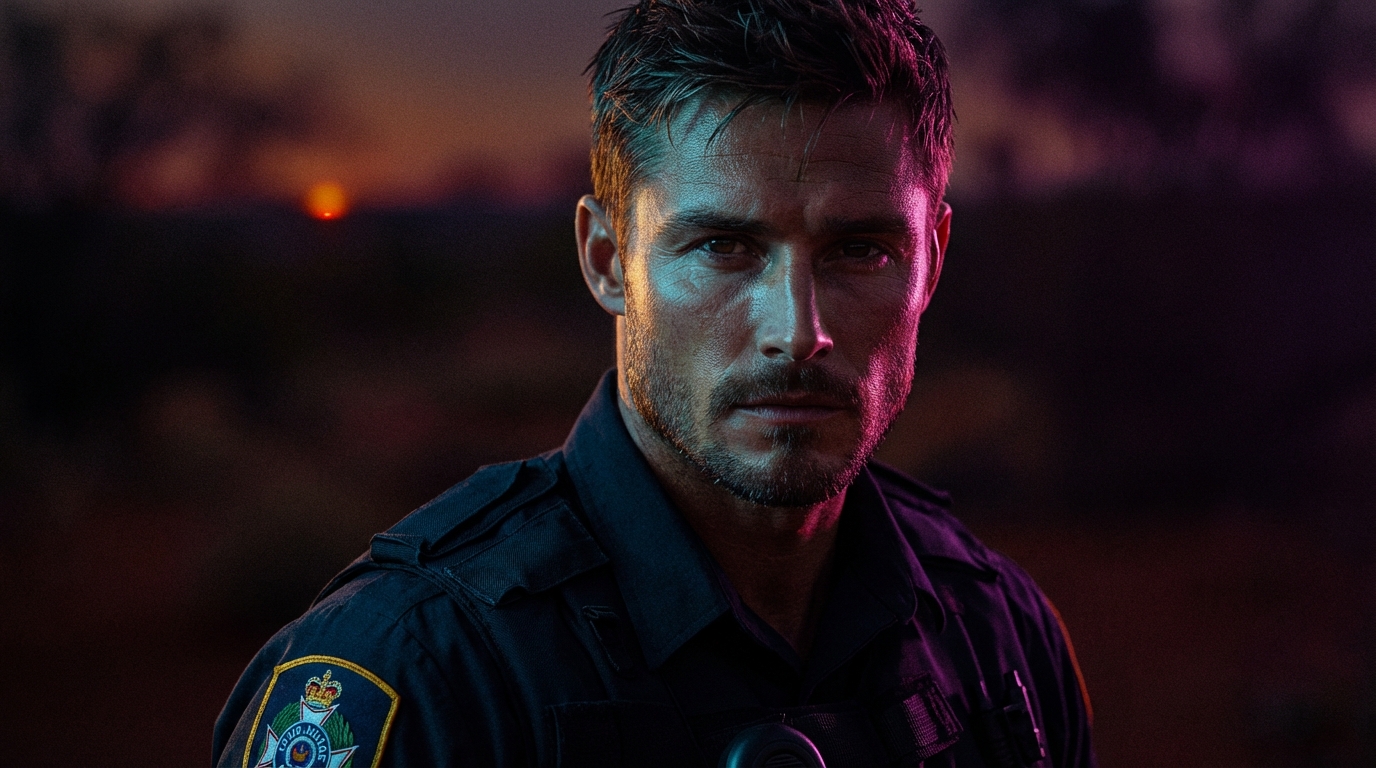
Senior Constable Brock George Polden embodies the steadfast spirit of rural Australian policing—a man whose deep roots in the red earth of Broken Hill anchor him as firmly as the mine shafts that pierce the landscape. Born to farming stock and raised amongst the Outback's vast horizons, Brock returned home after urban policing experience to serve the community that shaped him, bringing methodical observation skills honed through geocaching to bear on rural crime investigation.
Early Years and Family Foundation
Brock George Polden entered the world on 12 May 1985 at Broken Hill Base Hospital, the first child of Robert and Susan Polden. His parents operated a modest sheep and cattle property on the outskirts of Broken Hill, where the rhythm of rural life—early mornings, seasonal cycles, and the constant negotiation with harsh landscape—formed the foundation of his character. The Polden homestead, weathered but solid, sat fifteen kilometres from town, close enough for schooling but far enough to instil genuine connection with the land.
Robert Polden, a third-generation farmer, taught his eldest son practical skills alongside harder lessons about drought, market fluctuations, and the delicate balance required to coax life from unforgiving soil. Susan, who'd trained as a nurse before marriage drew her to the farm, brought order and education to the household, insisting her boys would have choices their isolation might otherwise deny them. She drove them into town for library visits, swimming lessons, and school activities, determined that geographic remoteness wouldn't mean intellectual poverty.
Six years after Brock's arrival, Andrew James Polden—quickly nicknamed Drew—was born on 27 October 1991. The age gap meant Brock often played protector and guide rather than playmate, though this dynamic would evolve into genuine friendship as both boys matured. Where Brock inherited his father's pragmatic steadiness, Drew displayed their mother's curiosity about the wider world, constantly questioning and imagining beyond their immediate horizons.
School Days and Emerging Leadership
Brock's formal education began at Broken Hill Public School in 1991, where the shy farm boy initially struggled with the town's social dynamics. However, his natural athleticism and quiet reliability soon earned respect. Teachers noted his methodical approach to problems and ability to remain calm when other children grew frustrated or distracted.
The 1998 transition to Broken Hill High School marked a significant shift. Now thirteen, Brock entered Year 7 alongside Mason Edward Bellamy, who would become his closest mate throughout secondary school. The high school's larger population and diverse activities offered opportunities the farm couldn't provide. Brock discovered geocaching through a geography teacher who used GPS treasure hunts to make coordinate systems tangible. This blend of outdoor exploration, problem-solving, and patient observation resonated deeply, becoming a passion that would endure beyond adolescence.
Academic records from 1999 through 2003 track Brock's progression through Years 8 to 12, each enrolment snapshot capturing his growing confidence. He served on the student representative council from Year 9, not through natural charisma but through demonstrated reliability. Peers learnt that Brock's word meant something—if he committed to organising the athletics carnival or coordinating the Year 10 formal fundraiser, it would happen efficiently and without drama.
His athletic pursuits centred on swimming and cross-country running, sports that rewarded endurance over flash. Weekend geocaching expeditions often stretched into twenty-kilometre treks through scrubland, developing navigation skills and environmental awareness that would later prove invaluable. These solo adventures, punctuated by occasional trips with Mason or his brother Drew, offered respite from the social pressures of small-town adolescence.
The summer between Years 11 and 12 brought unexpected responsibility when his father injured his back during shearing. Seventeen-year-old Brock managed the property for three months, coordinating contractors, negotiating livestock sales, and maintaining operations whilst completing his studies. This premature taste of adult responsibility crystallised his understanding of duty and community interdependence.
University and Urban Awakening
Graduating from Broken Hill High School in December 2003, Brock surprised many by choosing law enforcement over agricultural studies. His decision to enrol in Charles Sturt University's Bachelor of Policing Practice programme at the Goulburn campus reflected pragmatic calculation rather than childhood dreams of becoming a cop. He recognised that Broken Hill needed skilled professionals who understood rural complexities, not just city-trained officers posted reluctantly to the regions.
The 2004-2007 university years exposed Brock to broader perspectives whilst reinforcing his connection to home. Goulburn, whilst hardly metropolitan, felt overwhelming after Broken Hill's familiarity. Academic challenges came not from the criminology or law units, which his methodical mind absorbed readily, but from communication and psychology subjects requiring emotional articulation foreign to his upbringing.
Summer breaks saw Brock returning to Broken Hill, splitting time between helping on the family farm and interning at the local police station. These internships, arranged through a family friend, provided practical context for theoretical studies. Senior Sergeant Michael Patterson, a twenty-year veteran, became an informal mentor, sharing the realities of rural policing—domestic disputes exacerbated by isolation, youth crime born of boredom, and the delicate balance required when everyone knew everyone.
University social life remained peripheral to Brock's focus. He joined the bushwalking club, finding kindred spirits who appreciated silence and scenery over parties. His geocaching hobby evolved with access to better equipment and online communities, though he preferred creating caches to finding them, carefully crafting puzzles that required genuine skill to solve.
Sydney Crucible
Following graduation in November 2007, Brock entered the New South Wales Police Force Academy for intensive training. The twelve-week programme at Goulburn refined academic knowledge into practical skills—defensive tactics, firearms proficiency, pursuit driving, and scenario-based decision making. His steady temperament and physical fitness saw him excel, though public speaking exercises remained uncomfortable.
The 2008 posting to Sydney's Parramatta Police Station represented calculated career development. Brock understood that urban experience would enhance his credibility and skills before returning to rural service. The city's pace initially overwhelmed—more calls in a shift than Broken Hill might see in a week, crimes of sophistication and violence beyond his previous exposure.
Probationary Constable Polden adapted through disciplined routine. He rented a small flat in Westmead, maintaining spartan conditions that reminded him of home. Weekends were spent exploring Sydney's surprising number of bushland reserves, geocaching in Lane Cove and Royal National Parks. These expeditions provided psychological balance whilst maintaining the observational skills urban policing threatened to blunt.
The Parramatta years from 2008 to 2014 forged Brock into a capable officer. He worked general duties initially, responding to everything from shoplifting to serious assaults. His rural background proved unexpectedly valuable—the ability to remain calm during chaos, to read situations without preconception, and to communicate across cultural divides translated well to Sydney's diversity.
The 2012 hostage situation that earned him a commendation revealed abilities Brock hadn't known he possessed. A domestic dispute in Harris Park escalated when an estranged husband barricaded himself with two children in a flat. While negotiators talked, Brock noticed geocaching equipment in the man's car—a Garmin GPS and logbooks. This observation led to establishing rapport over shared outdoor interests, eventually contributing to peaceful resolution. The commendation citation noted his "exceptional observational skills and innovative approach to crisis resolution."
Homecoming and Purpose
Despite professional success, Sydney never felt like home. Phone calls from Drew, now studying journalism in Adelaide, carried news of Broken Hill—drought impacts, mine layoffs, youth crime increases. His parents, approaching their sixties, struggled with farm maintenance. When a rural crime specialist position opened at Broken Hill Police Station in 2014, Brock applied immediately.
The return journey along the Barrier Highway in March 2014 felt like exhaling after holding his breath for six years. Broken Hill had changed—some shops closed, others opened, faces aged or absent—but the essential character remained. Taking a small house on Oxide Street, walking distance from the station, Brock settled into rhythms that felt natural rather than imposed.
Rural crime investigation suited his skill set perfectly. Stock theft, illegal hunting, farm equipment theft, and cannabis cultivation required patience, environmental knowledge, and community connections—all strengths Brock possessed. His geocaching hobby proved unexpectedly valuable, providing legitimate reasons to explore remote properties and maintain geographic familiarity across the station's vast jurisdiction.
The partnership with Detective Inspector Jeremy Harding, who'd arrived from Adelaide around the same time, proved particularly effective. Where Harding brought metropolitan investigative techniques and strategic thinking, Brock contributed local knowledge and rural pragmatism. Their contrasting styles—Harding's systematic analysis and Brock's intuitive understanding—complemented rather than conflicted.
Senior Constable and Community Guardian
Promotion to Senior Constable in 2017 felt less like advancement than acknowledgment of the role Brock had already assumed. He'd become the officer locals sought for serious matters, knowing he'd treat their concerns with gravity whilst maintaining discretion. His approach balanced enforcement with understanding—a teenager caught stealing might face charges or might find himself helping with station maintenance every Saturday for two months, depending on circumstances and attitude.
The working relationship with newer officers proved more complex. Constable Felicity Jane Massey, arriving fresh from academy training, brought enthusiasm that both impressed and exhausted Brock. Her determination to investigate every report thoroughly, including Claire Smith's dramatic claims about her husband Paul's disappearance, conflicted with Brock's experience-honed ability to distinguish genuine crimes from domestic theatre.
The Paul Smith case exemplified these tensions. Claire Smith, known throughout Broken Hill for manipulation and drama, reported her husband missing after an argument. While Felicity pursued the matter earnestly, Brock's crude dismissal—calling Claire "a real cunt" over Friday afternoon beers—reflected years of dealing with her false reports and manufactured crises. His instinct proved partially correct when neighbour testimony revealed Paul had climbed out a window and left voluntarily, though the case would later reveal darker complexities.
Professional duties increasingly involved serious crimes that challenged Broken Hill's image as a peaceful rural town. The January 2023 murder of Naomi Simmons at the John Dynon Gallery in nearby Silverton marked a watershed moment. Arriving at 7:40 AM with Felicity to find Naomi's body staged amongst outdoor sculptures, Brock's geocaching-trained eye immediately recognised deliberate positioning suggesting premeditation rather than spontaneous violence.
Brotherhood and Balance
The relationship with his brother Drew evolved from protective to reciprocal as Drew returned to Broken Hill after completing his journalism degree. Working for the Silver City Sentinel, Drew brought idealistic energy that both amused and concerned Brock. Their regular meetings at the Silver Crown pub became rituals of connection, two brothers navigating different paths through the same small town.
The dynamic revealed their complementary natures—Brock's pragmatism tempering Drew's enthusiasm, Drew's curiosity challenging Brock's assumptions. When Drew pursued controversial stories about mining company environmental violations or police misconduct in neighbouring towns, Brock found himself caught between fraternal loyalty and professional obligation. These tensions, never fully resolved, reflected the broader challenges of maintaining integrity in interconnected communities.
Drew's presence also highlighted what Brock had sacrificed for career and community service. At thirty-eight, he remained unmarried, his social life restricted to colleague drinks and geocaching expeditions. Drew's questions about romantic prospects met deflection or silence, though both brothers understood the isolation their chosen paths imposed.
The Weight of Service
The accumulation of serious cases began taking its toll. After Naomi Simmons came two more murders within six months, suggesting a serial killer operating in the region. Each crime scene required Brock to shift from community guardian to investigator, viewing familiar places through the lens of violence. The outdoor spaces he'd explored for geocaching became potential body dump sites; the neighbours he'd known since childhood became persons of interest.
The investigation's pressure revealed cracks in Brock's stoic facade. His dismissive attitude toward certain community members like Claire Smith, while often justified by experience, occasionally blinded him to genuine threats. His reliance on established patterns—this person always lies, that family always fights—risked missing when circumstances genuinely changed.
Yet these same patterns provided investigative advantages. Brock's deep community knowledge meant understanding motivations outsiders might miss. He knew which families harboured generations-old grudges, which properties provided isolation for illegal activities, which individuals possessed skills or temperaments capable of violence. This intimate understanding, combined with modern investigative techniques, made him invaluable to cases requiring both technical expertise and cultural translation.
Professional Philosophy
Years of experience crystallised into a policing philosophy prioritising prevention over punishment where possible. Brock understood that in small communities, every arrest rippled through family networks, potentially destabilising fragile social ecosystems. A domestic violence intervention might require considering the perpetrator's role as primary breadwinner, the victim's lack of alternative support, and the children's educational needs—complexities that urban policing could ignore through anonymity.
This didn't mean tolerating serious crimes or ongoing abuse. Rather, it meant calibrating responses to achieve lasting positive change rather than temporary compliance. A youth caught with cannabis might face charges, or might find himself enrolled in an outdoor education programme Brock helped coordinate, depending on which approach seemed more likely to prevent recidivism.
His geocaching hobby influenced his investigative methodology. Just as finding hidden caches required patience, observation, and thinking beyond obvious solutions, solving rural crimes demanded similar skills. Evidence might be scattered across vast distances, witnesses reluctant to formally cooperate, and motivations rooted in conflicts predating his arrival. Success required persistence and willingness to explore unlikely connections.
Contemporary Challenges
By 2018, Brock faced evolving challenges that traditional rural policing hadn't prepared him for. The arrival of sophisticated criminals exploiting Broken Hill's isolation for drug manufacturing and distribution required adapting investigative techniques. Cybercrime increasingly affected rural victims, with online scams targeting elderly residents and cyberbullying devastating teenage social dynamics.
The July 2018 interaction with "Sophie"—actually Beatrix Cramer operating under false identity—exemplified these new complexities. Her enquiries about Charlie's whereabouts, presented with convincing distress, activated Brock's protective instincts whilst triggering professional suspicion. The business card he provided, ostensibly helpful, also served as a test—would she follow up, revealing more about her true intentions?
Such encounters highlighted the increasing difficulty of distinguishing genuine victims from sophisticated criminals. Rural Australia's traditional social controls—everyone knowing everyone, reputation mattering, and geographic isolation limiting anonymity—eroded as technology and mobility increased. Brock found himself investigating crimes where perpetrators and victims might never have physically met, challenging every assumption about rural law enforcement.
The bizarre news from Queensland about kidnappings involving inter-dimensional portals pushed these challenges to surreal extremes. Watching footage of buses vanishing through impossible apertures, Brock's methodical mind struggled to process information that defied rational explanation. His geocaching experience had taught him that seemingly impossible puzzles had logical solutions, but this exceeded any framework for understanding.
Personal Costs
The accumulation of traumatic cases, community expectations, and professional obligations extracted a price Brock rarely acknowledged. Sleep became elusive, his mind replaying crime scenes and victim interviews. The geographic spaces he'd once explored for pleasure now carried associations with violence—a particular ridge where a body was dumped, a creek bed where evidence was hidden, a abandoned mine shaft that might conceal further horrors.
His parents' 2010 retirement from farming added caregiving responsibilities to his load. Though they maintained independence, medical appointments, property maintenance, and gradual physical decline required increasing attention. Drew helped when possible, but his journalism career demanded irregular hours and occasional travel. The son who'd left for Sydney to build his career found himself anchored by the very family obligations he'd sought to transcend.
Social isolation deepened despite surface-level connections. Friday drinks with colleagues, community event attendance, and family dinners maintained the appearance of engagement whilst genuine intimacy remained elusive. Women occasionally expressed interest—a teacher from the high school, a nurse from the base hospital—but Brock's emotional availability had been mortgaged to professional duty.
Technology and Tradition
Brock's relationship with technology remained pragmatic rather than enthusiastic. He mastered systems necessary for modern policing—database queries, digital evidence handling, GPS tracking—whilst maintaining scepticism about technology's ability to replace human judgment. His geocaching hobby required technological proficiency, but he valued it primarily as a tool enabling outdoor exploration rather than an end in itself.
This balanced approach proved valuable when investigating crimes involving both traditional and modern elements. Stock theft might involve satellite imagery analysis and DNA testing alongside reading track patterns and understanding seasonal movement patterns. Drug manufacturing operations required understanding both chemical processes and the social networks that protected them.
The clash between technological capability and rural reality often frustrated him. Surveillance cameras were sparse, mobile phone coverage patchy, and internet connectivity unreliable outside town centres. Investigations that might resolve quickly in Sydney through CCTV analysis and digital forensics required traditional techniques in Broken Hill—interviewing witnesses, understanding relationships, and patient observation.
Mentorship and Legacy
As Senior Constable, Brock found himself reluctantly thrust into mentorship roles. Younger officers like Felicity Massey looked to him for guidance navigating rural policing's unique challenges. His teaching style reflected his personality—practical demonstration rather than theoretical discussion, patience with honest mistakes but intolerance for laziness or indifference.
He tried to instil understanding that rural policing required becoming part of the community whilst maintaining professional boundaries. Officers needed to shop at local stores, attend community events, and build genuine relationships whilst remaining capable of arresting those same neighbours when necessary. This balance, difficult to achieve and harder to maintain, defined successful rural law enforcement.
The legacy he built extended beyond arrest statistics or case clearances. Brock's contribution lay in maintaining social fabric whilst addressing crime, preventing problems through early intervention, and building trust that encouraged cooperation. Young people who might have drifted toward crime found alternative paths through programmes he supported. Families experiencing difficulties received connection to services before situations escalated to violence.
