4338.210 · July 29, 2018 AD
Breathalysed
A routine wine run turns unexpectedly high-stakes when Gladys is pulled over and questioned by police. As lies pile up and a detective’s interest sharpens, the road ahead becomes less about traffic laws—and more about what, exactly, she’s driving them all toward.
"Nothing says ‘normal afternoon’ like being breathalysed while your emotional support Shiraz judges you from the passenger seat."
"What a prick," I mumbled under my breath, addressing the two bottles of wine as I gently placed the brown paper bag on the passenger seat with the reverence of a peace offering. The bag let out a soft crinkle as it settled, a kind of sympathetic rustle. I imagined it agreeing with me.
The door of the car slammed shut with more force than I'd intended—though not enough to count as dramatic, just… cathartic. The kind of slam that told the world I’m not shouting, but I could. I slipped the keys into the ignition, and the engine started with a rumble that matched the grumble in my chest.
"All I wanted him to do was go and check out the back for another bottle. It really wasn't that difficult." I spoke aloud, my tone petulant, like a primary school teacher narrating the sins of an underperforming student to the staff room kettle.
The interior of the car was quiet—apart from the intermittent whirr of the air vents and the squeak of my jeans against the driver’s seat—and the two wine bottles sat silently beside me, their foil tops gleaming slightly in the afternoon sun.
"Thank you for listening," I added, glancing sideways at them as I eased the car out of the bottle shop car park. The bag shifted slightly as I turned, pressing softly against the passenger seat. I took it as encouragement. "You never do disappoint."
It was, frankly, more than I could say for most men. Or portals. Or sacred Guardian duties that interrupted perfectly good Sundays.
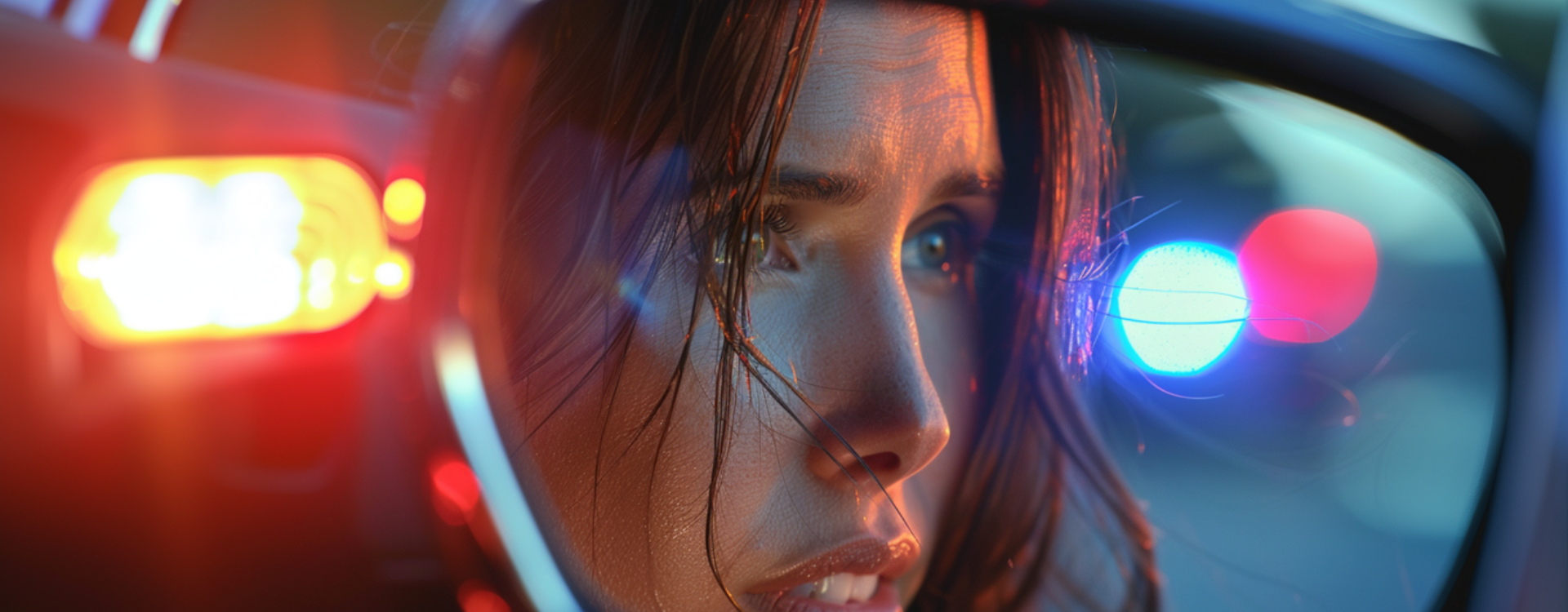
The road stretched ahead, quiet and suburban, framed by eucalypts and the occasional bin set out for collection. The illusion of calm began to settle over me—until the rearview mirror lit up like a Christmas nightmare.
Bright red and blue lights flashed behind me, slicing through my mildly tipsy reverie. An unmarked police car. My stomach dropped with the efficiency of a freight elevator.
I blinked. "No, no. That’s fine. They’re just passing," I muttered, flicking on my left indicator with the practiced optimism of someone who always assumed police presence was a collective punishment for society’s ills and not anything to do with me.
But they didn’t pass. They stayed.
My brow furrowed as I slowed to a crawl. Still there. Still flashing. Come on, I thought, go around. I’m being very considerate here.
Then, the siren blared—a short, sharp wail that ricocheted through the car like someone had slapped me across the face with a metal ruler.
"Shit!" I hissed, gripping the steering wheel harder than necessary. The realisation hit with cold clarity. It was me they wanted.
I pulled over slowly, as if dragging myself to confession. The car settled with a soft sigh, and so did I.
I glanced at the paper bag. It was still there, dignified, calm. I envied it.
Was I speeding? No. Probably not. Had I rolled through a stop sign? Possibly. But I hadn’t opened the wine. I hadn’t. It was still sealed. I checked the tops compulsively—both intact. Though I wondered if the police would see the same innocent charm in my fermented passengers.
My fingers drummed lightly on the wheel. Was this about the wine? Or something more Guardian-related? Something worse?
I let out a long, slow breath and tried to rehearse what I’d say. But all I could think was: don't mention Joel. Or the portals. Or Luke. Or Clivilius. Or the fact that your closest emotional confidants are, currently, two Shiraz bottles in a paper bag.
Because that would, I suspected, not go down well.
Sitting there, waiting for the police officer to approach, my heart pounded like it had something to prove. I stared straight ahead, jaw clenched, the engine ticking quietly as it cooled. I’d pulled over properly, indicated like a model citizen, and hadn’t even touched the wine. Surely, that had to count for something.
The last thing I needed right now was trouble with the law. I had enough on my plate—inter-dimensional politics, a moody Guardian with a broken Portal Key, and now, apparently, a criminal record pending for reckless driving with a side of grape-related companionship.
In the rearview mirror, the patrol car’s door opened. A uniformed figure stepped out, mirrored sunglasses catching the light just enough to make my stomach sink another few inches. My grip tightened on the steering wheel, palms slightly damp. The officer walked towards me at a steady, deliberate pace, and I braced myself.
A thousand things raced through my head: Was this about Joel? Had someone seen the Portal shimmer? Or was it just… an actual traffic thing? Like in the real world, where Guardians and glowing walls don’t exist, and people just get pulled over because they’re inattentive and emotionally fragile with two bottles of Shiraz riding shotgun?
I took a deep breath. Steady, Gladys. Keep it together. Whatever this was, I was determined to handle it like a responsible adult. Albeit one with questionable coping mechanisms and slightly crumpled trousers.
You’ve got nothing to worry about, I told myself, as if the lie might become true with repetition. My hands betrayed me, sticky against the leather of the steering wheel. I glanced at the brown paper bag beside me, still quietly loyal, still unopened. The sight of it gave me a strange sort of reassurance. A friend in the passenger seat. A deeply passive friend, but comforting nonetheless.
The window slid down smoothly as the officer arrived. A young woman—mid-thirties at most—with dark hair pulled back in a tight ponytail, a belt full of tools, and an expression that suggested she wasn’t new to this but still enjoyed the thrill of being in charge.
"Licence, please," she said, crisp and direct.
There was a twitch at the corners of her mouth, like she hadn’t quite mastered the stern facade. A sliver of amusement, or maybe something more performative—like she was a school prefect who’d just caught someone smoking behind the art block and wasn’t sure whether to be smug or strict.
I shook off the impression. It was probably just my nerves. I’d become hyper-aware of everything lately—tones of voice, flickers of expression, the glint of steel in someone’s hand. My whole life had turned into one long episode of Paranoia Weekly.
I reached across to the passenger seat, wincing slightly as I leaned over the centre console. My handbag had fallen in a heap down by the pedals—of course it had—zip half-open, contents threatening to spill like a miniature disaster. "Did I do something wrong, officer?" I asked, as I finally retrieved my licence and handed it over, trying to keep my tone neutral. Pleasant. Slightly baffled but not guilty.
"Well, you almost hit a parked car back there when you turned out of the bottle shop," she replied, her eyes scanning my licence with calm efficiency.
I blinked. "I did?" My brow creased as I turned to glance behind us, though there was nothing immediately suspect. Just an empty kerb and a rather smug-looking bin. No sign of an offended vehicle nursing a dent.
"Have you had anything to drink this afternoon?" she asked next, her tone dipping into something slightly more pointed. Professional, yes—but curious too, like she enjoyed catching people just before they told a lie.
"No," I said—too quickly. The word popped out like a cork under pressure.
I cleared my throat, tried again, this time with less panic. I offered a small smile and patted the brown paper bag on the seat beside me. "That’s why I was out getting these lovelies," I said, aiming for light-hearted, innocent, and possibly just a touch charming. The bag rustled obligingly, like a sidekick doing its bit for the alibi.
The officer didn’t smile. But she didn’t frown either. Just stood there, holding my licence, eyes flicking from me to the bottles and back again. I resisted the urge to make a joke about how the Shiraz wouldn’t be driving anytime soon.
The silence stretched. I could feel the pressure rising—between the flashing lights in the mirror, the stilted quiet of the road, and the vague threat of paperwork looming.
I hadn’t done anything truly wrong. At least… not today. Not in a way that could be reported. But the situation wrapped around me, slow and total, thick with possibility. The officer’s presence, the clipped questions, the throb of the siren still echoing faintly in my ears—it all made me feel like a child caught playing a game I wasn’t supposed to understand.
And under all that unease, the only thing I could think—absurdly, pathetically—was God help me if she asks to smell my breath and all she gets is lingering Shiraz from last night.
"Gladys Cramer," the officer announced with brisk clarity, her tone clipped and polished. From somewhere on her utility belt—part magician, part bureaucrat—she produced a breathalyser device with a fluid motion that suggested she’d done this hundreds of times. The way it appeared in her hand was so swift and seamless, I half-expected a puff of smoke to follow.
"I just need you to blow into this tube here until I tell you to stop," she said, holding the little machine out like it was a microphone and I was about to perform.
I nodded, trying to muster the right expression—compliant, sober, maybe just a touch offended at the implication. You've nothing to hide, I reminded myself for the fifth time in as many minutes. Last night’s Shiraz doesn't count. That’s history. Distant history. Practically ancient.
Still, as I reached for the device, I became acutely aware of my lipstick—dark plum, my "serious errands" shade—and how it was likely about to leave an incriminating ring on the pristine white plastic. Oh well. If I was going down, at least I’d do so stylishly.
I wrapped my lips around the tube. Elegantly, I hoped.
"Okay, now blow," she instructed.
I inhaled sharply, bracing myself as though I were about to inflate an inflatable mattress. Then I exhaled into the tube with all the breath I could muster, cheeks puffing out in a most undignified way. The sound of my breath rushing through the machine filled the confined space of the car, far louder than I’d expected—like a deflating balloon of anxiety.
The officer watched the breathalyser as if willing it to betray me.
I kept going. And going. How long is this meant to take? I wondered. Was I doing it wrong? Too hard? Not hard enough? It suddenly occurred to me that I had no idea how these things worked. For all I knew, I was about to blow a reading that suggested I’d drunk a vineyard.
"Stop," she said at last, and I did, grateful for the reprieve.
As I pulled back, I noticed something flicker across her face. A small crease between her brows. A twitch at the corner of her mouth. Was that… disappointment?
"One moment please, Ms Cramer," she said, her tone neutral, but something about it sent a ripple of doubt through me. She didn’t look alarmed, but she didn’t look entirely satisfied either.
I watched her retreat through the rearview mirror, her ponytail bouncing with a rhythm far too confident for someone leaving me in suspense. She returned to the patrol car and leaned into the driver’s side, where another officer sat.
Sitting there, boxed in by silence and the now slightly judgemental-looking wine bottles on my passenger seat, I felt a swirl of curiosity. What are they discussing? Was there an error with the machine? Had it printed out a number that meant "mildly tipsy in spirit, if not in blood"? Or was this something else entirely? Something more than a standard check?
I adjusted my grip on the steering wheel. My knuckles had gone white.
Then, the second officer emerged.
He was tall—absurdly tall—and broad in that unmistakably intimidating "we don’t need to chase suspects, we just walk through walls" kind of way. His mirrored sunglasses glinted even though the day was overcast, and his gait had the easy calm of someone who knew he was about to become the centre of attention.
My stomach twisted slightly, that peculiar blend of apprehension and nosiness sharpening my senses. This is getting out of hand, I thought. I glanced again at the brown paper bag.
It sat there, dignified, mute, as if to say, We had nothing to do with this.
I know, darlings, I thought. You’ve been nothing but loyal.
And as the second officer neared my window, I braced for whatever strange turn my day was about to take—wine bottles, lipstick prints, and all.
"Gladys Cramer?" he inquired, holding my licence aloft like a courtroom exhibit, his sharp eyes flicking between it and my face.
"Yes," I confirmed, trying to keep my voice from catching in my throat. "Have I done something wrong?"
"I'm Senior Detective Karl Jenkins," he said, clipped and authoritative, like someone who never needed to ask twice. "Is this your car, ma'am?"
I blinked. For a moment, something niggled at the edge of my memory. The name—Karl Jenkins—it wasn’t new. Familiar, yes, but not in a friendly way. Then it clicked. He’d been involved in the investigation into Brody’s death… the one that hovered around Beatrix like a storm cloud with a clipboard. They’d been close, as close as Beatrix ever got to anyone who wasn’t a wine bottle or an alibi.
Odd, though, that he didn’t recognise me. But then again, I’d always existed on the fringes of Beatrix’s dramas, just close enough to mop up the edges but never centre stage.
Still, his presence now, here, standing at my car window with a detective’s badge and a breathalyser still warm from my lip gloss, sent a chill trickling down my spine. If I passed the breath test, why is a detective suddenly interested in me?
Something wasn’t sitting right.
"No," I replied after a pause, too sharp, too bare. I cleared my throat and elaborated, hoping to smooth the wrinkles in the story. "It’s a friend’s car. He told me I could use it to go to the bottle shop. We were planning on having a trashy movie binge session, but then we realised we didn’t have any drinks to go with it. He’s at home cooking now, which is why I went to get the wine."
I exhaled, trying not to sound too rehearsed. It was true, at least most of it. The parts that mattered. And it sounded so blissfully normal when said aloud—movies, dinner, wine. The kind of Sunday afternoon setup you’d expect from someone entirely unconnected to glowing portals and missing persons.
But Karl Jenkins didn’t blink. His brow furrowed, and the silence that followed began to swell—thick, uncomfortable, like the heavy pause before bad news.
My mind scrambled. Believe me. Just believe me and go away.
"Who is this friend of yours?" he asked, breaking the silence with an edge of casual precision that immediately put me on alert.
I nearly said Luke’s name. It was right there on the tip of my tongue. But something in the detective’s tone—something too pointed—made me veer off at the last second.
"Oh. Jamie Greyson, of course. This is his car," I said, adding the name smoothly, trying to keep my tone airy. Logical. Truthful. But not too detailed. The kind of detail that said I have nothing to hide, while hiding everything important.
"Jamie Greyson, did you say?" he repeated, his tone sharpening like the click of a seatbelt before a crash.
"Yes," I confirmed, the knot in my stomach tightening. There was a faint twinge of nausea now, just behind my ribs. Surely they already knew whose car this was, I thought. Vehicle registration is one of the few things left in life that still works properly.
"Well, how’s that for timing," Jenkins said with an enthusiasm that felt all wrong. Too bright. Too staged. "We’ve been trying to contact Jamie for the last few days. We’ll just follow you back to his house, if you don’t mind."
My stomach dropped. There it was. The moment when the ordinary afternoon unravelled at the seams.
I turned slightly, looking at the wine bottles in the passenger seat as if they might whisper a solution. The paper bag crinkled softly under my gaze, loyal and silent. My darlings, we may be headed into a hostage situation, I thought grimly. Hold your corks.
The knot of dread expanded, pressing against my diaphragm. Of all the times for Jamie to be unreachable, for the Portal Key to be faulty, for reality to be buckling under Guardian pressure—it had to be now. Of course.
I looked back at Jenkins, mustering a tight-lipped smile with every scrap of theatrical training I didn’t have.
"Not at all," I said brightly. A lie so tidy it barely wrinkled my lips.
"Alright then," he replied, giving the frame of my car a light tap with his knuckles before turning away.
I watched him go, the forced smile draining from my face the moment his back turned. The interior of the car, just minutes ago a safe haven for me and my cabernet confidantes, now felt stifling. The brown paper bag on the passenger seat, once a symbol of comfort and dignity, suddenly seemed too loud, too obvious. The bottles sat there in polite silence, like witnesses to a crime yet to be committed.
I turned the key in the ignition. The engine hummed back to life, but it did nothing to drown out the churn of thoughts inside my head. Jamie. Jenkins. Guardians. False names. Bad timing. Wine. My thoughts tangled like vines—dense, creeping, and utterly inescapable.
And I couldn’t help but wonder, bleakly, whether the wine would survive the night unopened—or if I’d end up clutching one of them like a holy relic behind police tape.
As Jenkins returned to his car, a wave of apprehension rolled through me, cold and heavy. Leading the police to Jamie’s house felt like escorting trouble to the front door and offering it a drink. But what choice did I have? Refusing would only make things worse. I had to look casual, like someone with nothing to hide—just a woman picking up wine for a night of mediocre films and reheated pasta.
"Shit," I muttered, fingers fumbling clumsily with the ignition as if coordination had suddenly abandoned me. The absurd notion flashed through my mind—Should I offer them the wine as a bribe?—and it sent a real, involuntary shiver down my spine. What would that even look like? Two bottles of Shiraz in exchange for your silence, detective?
I turned onto Berriedale Road, jaw clenched, each bend in the road feeling like a countdown to disaster. My mind raced ahead of the car, thinking of Jamie’s house, Luke’s unpredictable mood, and what state the place would be in when we arrived. Would it look like someone lived there? Or like someone was hiding something?
With one hand on the wheel, I reached for my phone and hit Luke’s name. The line rang and rang. My grip tightened. No answer. Of course. The man could dodge voicemails with the skill of a professional boxer.
"Luke!" I shouted into the phone as the voicemail tone played. "The police are following me back to your place. They’re expecting to find Jamie. What do I do?" I hung up, knowing it was pointless. Luke and voicemails had an unspoken agreement to ignore each other forever.
My brow furrowed so hard it ached. My palms were slick against the wheel. Texting while driving—especially with a police car in your rearview—was the kind of thing that got you on the evening news. But not texting felt worse. Do something. Say something. Warn him.
With reluctant determination, I snatched up the phone and started to tap out a message, fingers trembling as the car climbed the hill. My spelling was atrocious. Autocorrect took one look at me and gave up entirely. But there wasn’t time for finesse.
Then—Flash. Flash. Blue and red lit up the interior of the car like a low-budget disco.
"Shit!" I hissed through clenched teeth, glancing up at the mirror. Jenkins' car was signalling for me to pull over.
I kept typing. I had to finish the message. It was garbled, frantic, possibly incomprehensible, but I hit send anyway, hoping that Luke, of all people, could decipher the intent through the chaos.
As the message whooshed off into the ether, I instinctively deleted it. No evidence. Just in case. There was something disturbingly satisfying about erasing the digital trail.
I flicked the indicator, heart hammering, and guided the car to the side of the road. The tyres crunched softly against the gravel verge. I sat perfectly still for a beat, gripping the wheel like it was the only thing tethering me to the moment.
Stay calm, Gladys. Normal. Composed. Like a woman who doesn’t routinely talk to wine bottles or meddle in inter-dimensional affairs.
The window slid down with a soft whir as Detective Jenkins approached again. I turned to face him, every nerve ending wide awake, every facial muscle straining toward neutrality.
Outside, the road was quiet. Inside, I was screaming.
This moment—how I spoke, how I looked, what I did—mattered. And I knew it.
Even if I didn’t know why.
My heart thudded erratically as Detective Jenkins leaned down toward the car window, his posture rigid, eyes sharp and unflinching. The air between us crackled with something unpleasant—authority, suspicion, perhaps just a bad gut feeling on both our parts.
"Gladys," he began, his tone devoid of anything resembling warmth, "Why were you texting while driving?"
"I wasn’t texting," I replied, too quickly, too firmly. The words tumbled out with a boldness I certainly didn’t feel. I could feel the heat rising in my cheeks, my grip tightening on the steering wheel like it might anchor me to my lie.
"But you were," he said, flatly. Not angry, just immovable. "My partner and I could see you do it while we were following behind you. We watched you almost run off the road. You could have done yourself some serious harm had you gone over the embankment."
I blinked. Run off the road? That was a bit dramatic. It had been more of a wobble. A minor incident. An expression of mild stress at best. But now wasn’t the time to argue semantics with a man who could probably have me strip searched for a typo.
"I already told you. I wasn’t texting anyone," I repeated, louder this time, the lie doing laps inside my head like a restless goldfish.
"Gladys," he said again—lower now, firmer. He had a way of saying my name that made it sound like a warning.
"Who were you texting?"
His eyes bore into me, unblinking, the kind of stare that made people confess to things they hadn’t even done. I swallowed hard, then sighed. I reminded myself there was no evidence—at least, none left. I had deleted the message. I was safe, wasn’t I?
Reluctantly, and with the grace of someone passing over their firstborn, I unlocked my phone and held it out. "Look, I wasn’t texting anyone," I said, trying to channel the breezy indifference of someone with absolutely nothing to hide. "Here, check for yourself."
I pushed the phone into his hands and watched him thumb through it with the concentration of a man searching for a landmine.
He squinted slightly, eyes scanning. "I see you haven’t messaged Jamie since yesterday," he said slowly.
My stomach tightened. This was beyond the original brief. That wasn’t part of the deal. Just a quick peek—recipient only—wasn’t that the unspoken rule of invasive on-the-spot searches?
"Did he call you?" Jenkins added, without looking up.
That was enough.
"Of course, he did," I snapped, snatching the phone from his grip before I could talk myself out of it. My voice had gone a bit sharp, a bit brittle. "I’m on my way to his house in his car, aren’t I?"
The words were out before I could stop them, each one like a little breadcrumb leading directly to the lie I’d just so desperately tried to keep vague. My stomach dropped.
"Our mistake then," Jenkins said after a pause, his expression softening a fraction. Maybe it was meant to put me at ease, but all it did was make my nerves itch. "Shall we continue?" he asked, gesturing up the road with a casual wave of the hand.
I bit down on my lower lip, teeth pressing hard. I nodded slowly, managing a tight smile that tasted like regret. My mind was galloping ahead of the car, already trying to anticipate the disaster waiting at the end of this drive.
As I merged back onto the road, a silent, suffocating dread began to settle over me like dust on an untouched shelf. I couldn’t shake the image of us pulling up at Luke’s house, Jenkins stepping out, expecting to see Jamie emerge with a cheerful wave and a believable explanation—and finding only silence, maybe a confused Luke, maybe a half-boiled pot of pasta and a strong smell of burning.
How am I going to explain Jamie’s absence?
Nothing about this felt manageable anymore. What had started as a simple wine run now felt like a carefully staged trap, one I’d wandered into holding a bag of Shiraz like a guilty bouquet.
The car climbed higher into the hills. Every corner felt sharper. Every second, heavier. My mind—usually a fertile ground for overthinking—was distressingly blank. No plan. No exit. Just me, a detective with too many questions, and a destination full of wrong answers.
Beside me, the bottles rustled faintly in their bag, either judging me or bracing themselves for sacrifice. I patted the paper gently, as though to reassure them. Or myself.
"I’ll get us through this," I muttered under my breath. "Probably."
But the truth was, with every turn of the wheel, the cloud above me thickened—dense with anxiety, fraught with uncertainty. And I knew that whatever was waiting at Luke’s house, it wouldn’t be something a splash of red wine could fix.


