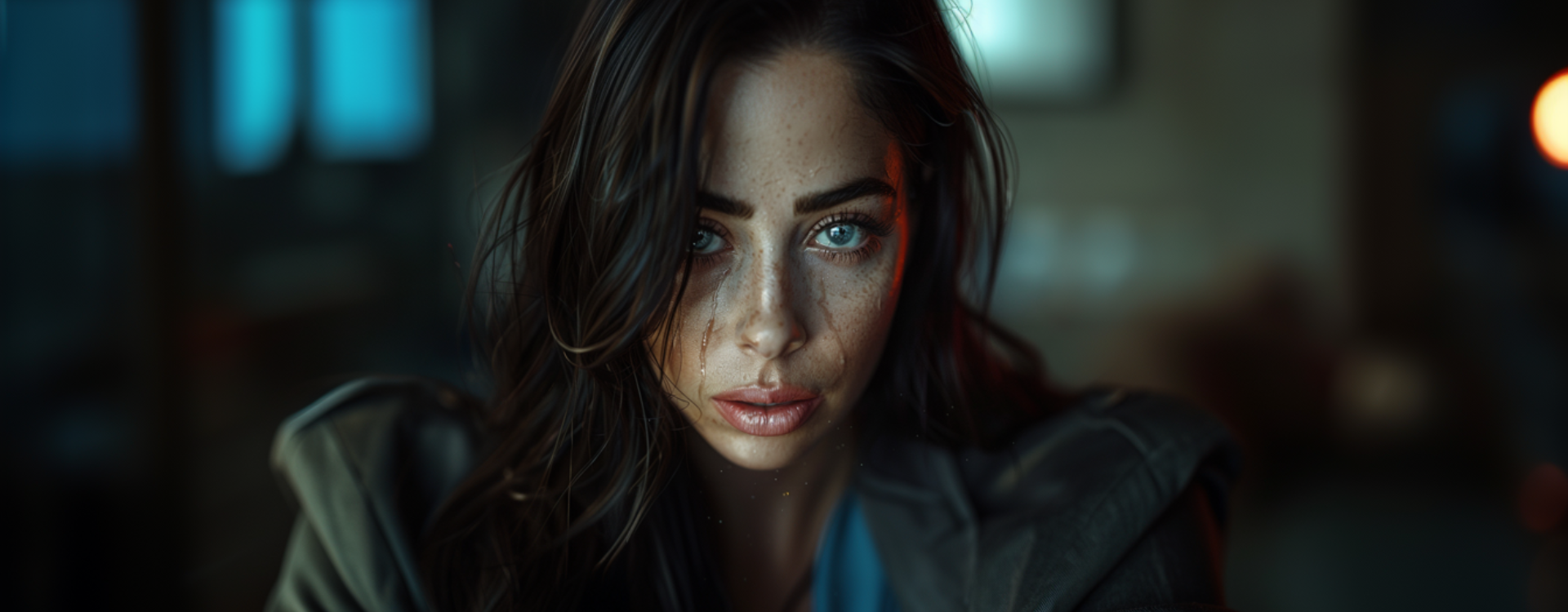
4338.212 · July 31, 2018 AD
Blood and Burden
A distressing call from Vaucluse nursing home brings Detective Sarah Lahey rushing to her grandmother Jane's bedside, where what begins as comfort after a nightmare rapidly unravels into something far more complicated. As Jane's distress connects to names from Sarah's active investigation, the detective finds herself confronting family secrets that have remained buried for decades—revelations that will fundamentally alter her understanding of both her case and the people she thought she knew best.
"Funny how the people closest to you can carry secrets heavy enough to crush you both."
"Thank you for coming so quickly," Virginia said as she greeted me at Vaucluse's entrance, her relief palpable even through the professional composure she maintained.
The automatic doors had barely opened before she was there, waiting — clearly she'd been watching for my arrival, anticipating my urgency. Her face carried that particular expression of healthcare workers delivering difficult news: compassionate but braced, kind but worried about what came next.
"Any time, Virginia. You know that." The words came automatically. But my voice betrayed me, firm on the surface whilst anxiety threaded through every syllable. "Where is she?"
"She's in her suite," Virginia replied, falling into step beside me as I moved immediately toward the corridor that led to Jane's wing. Then she paused, just fractionally, her expression shifting into something more complicated. "Mr Gangley is with her."
The way she said it — with that slight cringe, that apologetic tone — made me stop mid-stride.
"Oh dear," I sighed, shaking my head. How many times do I have to tell that old man to stop filling Jane's head with wild stories?
Bob Gangley was... well, Bob was Bob. Cantankerous, opinionated, possessed of the kind of unfiltered worldview that came from nine decades of not particularly caring what anyone thought. He and Jane had been friends since before I was born — since before my mother was born, if family stories were accurate — and their relationship had that particular quality of people who'd known each other too long to bother with politeness.
Which meant Bob said whatever popped into his head, regardless of appropriateness or effect. And Jane, despite her usual good sense, sometimes got caught up in his rambling narratives about conspiracies and government cover-ups and God knew what else he'd cobbled together from late-night radio and selective interpretation of current events.
The last thing she needed right now was additional stress or confusion.
"Tell me what happened," I urged Virginia as we moved briskly down the corridor.
The nursing home carried that distinctive institutional smell — cleaning products attempting to mask less pleasant odours, commercial meals being prepared somewhere in the depths of the building, the vague medicinal scent that clung to all healthcare facilities regardless of how nice they tried to be. Vaucluse was nicer than most — the artwork on walls, the carpet rather than linoleum, the attempts at creating a homelike atmosphere — but underneath it was still a place where people came to die with whatever dignity remained available.
Virginia, slightly out of breath from trying to match my pace, explained: "We believe she had a nightmare during her afternoon nap." Her voice reflected genuine concern, the kind that came from actually caring about residents rather than just completing tasks. "She woke very distressed, calling out. We couldn't calm her down properly even after she was fully awake."
"What was she saying?" I asked, though part of me didn't want to know. Nightmares suggested deterioration, confusion, the kind of mental fragmentation that signalled the end approaching faster than any of us wanted to acknowledge.
"She kept saying something about Kell... Kellry... Killery—" Virginia struggled with the pronunciation, clearly trying to recall the exact word Jane had used.
"Killerton?" The name slipped out before I could stop it, sharp and immediate, cutting through Virginia's fumbling attempt. My stomach dropped the moment I said it aloud.
Killerton Enterprises.
The scrap of paper currently sitting amongst other files and paperwork on my dining table, stolen from Claiborne's desk, containing the two words I wasn't supposed to know. And I still didn't know its significance.
And now Jane was having nightmares about it.
"Yes, that's it," Virginia confirmed, her eyes meeting mine with sudden curiosity. "You've heard of it before?"
I tried to play it down, to maintain professional detachment even as my detective brain struggled to make the connections. "Vaguely," I said, aiming for nonchalance.
The grimace that pulled at my face probably undermined any attempt at casualness. My poker face had never been particularly good, and exhaustion made it worse.
Why would Jane be dreaming about Killerton? How would she even know that name?
The questions multiplied faster than I could take them in, professional instinct warring with personal concern. This wasn't just grandmother's confusion — this felt like something more specific, more directed. And the timing, given everything else happening with the disappearance cases...
We reached Jane's door. I could hear voices inside — Jane's soft murmur, Bob's distinctive raspy drawl, the quiet sounds of people occupying shared space. For a moment I hesitated, hand on the doorknob, bracing myself for whatever waited inside.
Virginia touched my arm gently. "She was asking for you specifically. I think... I think she needs to tell you something."
I nodded, took a breath that didn't quite fill my lungs properly, and opened the door.
The room was exactly as I remembered from my last visit — the bed with its institutional white sheets, the small table and chairs where Jane took her meals, the window overlooking Vaucluse's gardens where magpies foraged in the mornings. Afternoon light filtered through thin curtains, casting everything in that particular golden quality that made even mundane spaces feel momentarily precious.
Jane sat at the table, her frail frame somehow looking even smaller than usual, as though the nightmare had physically diminished her. Bob occupied the chair opposite, his weathered face creased with concern that sat oddly on features usually set in cantankerous disapproval.
"Hello, Sarah," Bob's voice greeted me — old and croaky, roughened by decades of cigarettes he'd finally quit ten years too late. His keen eyes took me in with the thorough assessment of someone who noticed everything. "You don't look so well."
The observation, delivered with Bob's characteristic bluntness, somehow felt less intrusive coming from him. He'd earned the right to directness through sheer longevity and the kind of friendship with Jane that pre-dated my entire existence.
"It's been a long week already, Mr Gangley," I replied, offering a tired smile that probably looked as exhausted as I felt. His comment, though accurate, only reinforced awareness of how wrecked I must appear — the visible evidence of injuries not yet healed, exhaustion not quite hidden, emotions not quite contained.
Jane rose gingerly from where she was seated, her movements careful and deliberate, negotiating the space between intention and capability. Each motion seemed to require conscious thought, her body no longer responding with the automatic grace that youth took for granted.
"Oh, Sarah, I am so glad you came," she said, and her voice carried relief so profound it made my chest ache. She opened her arms wide for a hug.
I crossed to her quickly, bending slightly to accommodate her diminished height, wrapping my arms around her with the careful gentleness required by her fragility. She felt like paper and bird bones beneath my hands, all the substance of her reduced to this delicate architecture that seemed too insubstantial to contain the formidable woman I'd known my entire life.
"She's dreaming of Killerton again," Bob said, his tone serious, cutting through the moment with characteristic lack of social grace.
I pulled back from the hug, turning toward him sharply. "Again?" The word came out more forcefully than I'd intended, surprise evident in my voice. "You mean it's happened before?"
My tone took on an edge I couldn't quite suppress, professional mode asserting itself despite the personal context. The poorly concealed expression on my face mirrored my growing unease — if Jane had been dreaming about Killerton multiple times, this wasn't confusion or random nightmare imagery. This was a pattern. This was significance.
Jane tugged at my arm firmly. "Oh, you just ignore that old man," she said dismissively, her voice carrying that particular quality of forced lightness. "Bob's suffering from old age. He doesn't know what he's talking about."
The deflection was too quick, too practiced. I recognised it immediately — Jane trying to protect me from something, trying to maintain boundaries she'd carefully constructed. The same tone she'd used when I was young and asking questions about my parents' death that she judged me too young to process.
"Don't I, Jane?" Bob drawled in response, his face drawn out and serious. The way he looked at her carried challenge and something else — disappointment, maybe, or frustration at secrets maintained too long.
His reaction suggested depths to this situation I hadn't begun to understand. Bob wasn't confused. Bob wasn't rambling. Bob knew something, and Jane was trying to keep him quiet about it.
I observed them both closely. The dynamics between them had shifted, the comfortable familiarity replaced by tension that crackled in the air.
I caught the stern gaze Jane directed toward Bob — a clear warning not to divulge any more information. She wasn't exactly subtle about it, her eyes communicating the firm message: Shut up. Not now. Not like this.
But Bob held her gaze with equal determination, his jaw set in that stubborn line I'd seen countless times when he decided principle outweighed comfort.
A short knock at the open door pulled my attention away from their silent confrontation.
A young woman I didn't recognise stood in the doorway — clearly staff, wearing Vaucluse's distinctive uniform, nervously tugging at her sleeve in a gesture that broadcast anxiety. She couldn't have been more than twenty-five, probably new to the facility given how uncomfortable she appeared interrupting.
"Excuse me, Virginia. Sorry to interrupt." Her voice carried that particular quality of someone who knew they were intruding but had no choice. "But have you seen Jamie Greyson at all this afternoon?"
The name hit me like a physical impact.
Jamie Greyson.
The missing person at the centre of our investigation. The nursing assistant who'd vanished without trace, whose disappearance had set everything else in motion, whose bank account showed activity after he'd gone missing, whose face appeared in ATM security footage except it wasn't him using his card — it was Luke Smith.
I jumped in before Virginia could reply. "Jamie Greyson?" I repeated, needing confirmation, needing to be absolutely certain we were talking about the same person.
"Yes," the girl confirmed, oblivious to how crucial her casual inquiry was.
"He works here, dear," Jane said, tugging at my arm, trying to gently steer me away from the door and the conversation. Her action, though well-intentioned, only heightened my focus.
He works here. Present tense. As though he might walk through the door at any moment. As though he wasn't missing, wasn't potentially dead, wasn't the subject of an investigation that had consumed my professional life for days.
"You knew?" I asked her, turning my full attention back to Jane. My tone carried bewilderment that bordered on accusation. How had this connection been right in front of me, yet I'd been completely oblivious?
The nursing home where my grandmother lived. The facility I visited regularly. The place where I'd spent countless hours over recent months as Jane's health declined. And somehow I'd never known that Jamie Greyson — our missing person, our case, our mystery — worked here. Visited Jane. Was part of her world in ways I'd never imagined.
Jane gave a gentle shrug of her frail shoulders, that simple gesture carrying weight beyond its physical execution. "Of course," she replied, as though this were completely obvious, completely normal. "He's not assigned to me, but he and his partner come to visit me at least once a week."
The revelation hit hard. Jamie Greyson. Regular visitor. Not just staff performing duties but someone who made time for Jane, who sought her out, who'd built a relationship beyond professional obligation.
He and his partner.
The phrase registered a beat late, puzzle pieces suddenly slamming together with horrible clarity.
"You mean Luke Smith?" I asked, my voice taking on an edge of disbelief, of growing horror at implications I was only beginning to process.
Jamie and Luke. Together. Partners. Both connected to Jane in ways I'd never suspected. Both now missing or wanted or involved in something that had turned my investigation from professional duty into personal nightmare.
The young staff member, still standing at the door, interrupted again with innocent persistence. "Well, have you seen Jamie?" Her question was direct, her expression carrying genuine concern that suggested she actually cared about her colleague's whereabouts.
Virginia shook her head in response. "No," she said simply. "I haven't seen him all week."
All week.
Which aligned perfectly with when Jamie had gone missing, when his disappearance had been officially reported, when everything had started unravelling in ways none of us could have predicted.
I turned back to Jane, feeling a growing sense of urgency, of pieces falling into place in patterns I desperately needed to understand. "You know Luke Smith?" I asked again, needing Jane to acknowledge this connection explicitly rather than through implication.
Jane's response was silence. Heavy, weighted silence that spoke volumes. She closed her eyes, and when they opened again, I saw tears brimming over her eyelids, threatening to spill — that particular shine of moisture that meant emotions could no longer be contained.
The sight of Jane crying — Jane, who'd weathered every storm with composed grace, who'd buried her daughter and raised her grandchildren and faced terminal cancer with dignity that humbled me — hit with force that made my own eyes sting in sympathy.
"I'll be gone soon," she began, her voice quivering with emotion that finally broke free of whatever control she'd been maintaining. The words emerged raw and honest and devastating. "I suppose you should know."
My face grew hot immediately, that distinctive sensation of blood rushing to cheeks and forehead, pressure building behind eyes that meant tears weren't far behind. A whirlpool concoction of anger, fear, and heartbreak swirled within me — emotions too tangled to separate, too powerful to suppress, threatening to overwhelm the professional composure I'd barely managed to maintain.
I could feel myself teetering on the edge of complete emotional collapse, the fragile control I'd exercised all day finally cracking under everything that had piled onto it — too much revelation, too much loss, too much complication in spaces that should have remained simple.
Virginia, still standing beside us, was already wiping at her own eyes, her empathy for Jane evident in every gesture.
"Know what?" I managed to ask, my voice barely above whisper. Part of me was afraid to hear the answer, terrified of what truth Jane was about to reveal, what final secret would shatter whatever remained of my understanding about my family, my case, my world.
The case that had consumed my professional life was now entangling itself in my personal world in ways I'd never imagined, couldn't have predicted, didn't know how to navigate.
I knew that whatever Jane was about to reveal would change everything — both in terms of the investigation and in our family dynamics. The air in the room felt charged with imminent disclosure, and I waited, heart pounding, for what was to come.
Jane's eyes met mine, and I saw decades of burden suddenly visible in her gaze — all the secrets she'd carried, all the truths she'd withheld, all the complicated choices that had brought us to this moment.
"Luke Smith is my grandson," Jane stated bluntly.
She averted her eyes after speaking, as if the revelation was too much to bear whilst facing me directly, as if she couldn't watch my reaction to this information that rewrote everything I thought I knew about my family.
The words landed with devastating impact. Time seemed to slow, the room tilting slightly on its axis as my brain struggled to process what I'd just heard.
Grandson.
Luke Smith. The suspect in our investigation. The man whose name appeared in connection with multiple disappearances. The person whose photo I'd seen using Jamie Greyson's bank card. The individual we were trying desperately to find, to question, to possibly arrest.
Was Jane's grandson.
Which meant he was my...
"Holy shit!" The profanity burst out before I could stop it, volume and intensity inappropriate for the setting but perfectly calibrated to my shock. "Please don't tell me he's my brother."
The question emerged in a rush of anxiety and disbelief, that worst-case scenario my brain had immediately jumped to because nothing about this day had gone according to plan and why wouldn't my suspected criminal also turn out to be my previously unknown sibling?
Jane, despite the gravity of the situation, managed a little croaky chuckle. "No, Sarah. He's your cousin."
Cousin.
Not brother. Cousin. The clarification offered relief so minimal it barely registered against the enormity of the revelation itself. He was still family. Still connected by blood and history and all the invisible threads that bound people together whether they wanted them or not.
"Luke's mother was my firstborn," Jane continued, and her voice took on that particular quality of someone finally releasing a burden carried too long. "I fell pregnant to a handsome young British fellow whilst I was travelling in Europe. He cared for me in England until the baby was born, and then we gave her up for adoption. I came straight back to Australia after that. I was broken-hearted, but I knew it was for the best."
The words were delivered with a mixture of sadness and nostalgia, pain and acceptance — emotions that had been processed over decades but never fully resolved.
I listened with a growing sense of surreal disconnection, as though this were happening to someone else, as though I were observing this scene from outside my own body. The grandmother I'd known my entire life — devoted wife to Patrick, loving mother to my own mother, pillar of community respectability — had lived an entirely different life I'd never suspected.
Secret pregnancy. European affair. Child given up for adoption. All of it hidden beneath the surface presentation of conventional domesticity, buried so deep that no one had ever suspected what lay beneath.
A torrent of emotions washed over me. Shock at the revelation itself. Empathy for what Jane must have experienced — young, pregnant, far from home, facing impossible choices with no good options. Anger that she'd kept this from me, that Luke had known whilst I'd remained ignorant, that I'd been investigating my own cousin without realising the connection.
And beneath it all, growing dread about what this meant for the case, for my role in it, for the boundaries between personal and professional that had just been obliterated entirely.
My mind raced, trying to reconcile this newfound family connection with the professional role I had to play, trying to separate detective from granddaughter, trying to understand how I was supposed to investigate someone who shared my blood.
As I stood there, reeling from Jane's confession, a question formed through the chaos of competing thoughts and emotions. Why has she kept it secret for so long? The years of untold stories seemed to hang in the air between us, decades of silence finally broken but leaving more questions than answers.
"And how does Luke know?" I finally managed to ask, my voice a mixture of curiosity and apprehension, needing to understand the full scope of this deception, needing to know who had known what and when.
"Oh, he tracked me down several years ago," Jane explained, and there was unmistakable pride in her voice — that particular quality of a grandmother pleased by a grandson's resourcefulness, completely divorced from the reality of what that resourcefulness might mean in the context of current investigation. "He's rather resourceful, that boy. There was no denying the evidence he'd collected. DNA tests, adoption records, all very thorough. And now he visits me every week."
Her face lit up as she spoke about these visits, genuine happiness transforming her features in ways that made the revelation even more painful. She loved him. Truly loved him, with all the uncomplicated devotion grandmothers were supposed to feel. To her, Luke wasn't a suspect or potential criminal — he was the grandson she'd never expected to meet, the connection to a daughter she'd given up, redemption for choices that had haunted her for decades.
I stared at Jane, my mind struggling to reconcile the image of the man we were investigating with the person she described. The contrast was too stark, too incompatible. In my professional world, Luke Smith was a monster — connected to disappearances, using stolen bank cards, part of something dark and dangerous we were desperately trying to stop.
But in Jane's world, he was a beloved grandson who brought books and spent afternoons in conversation, who'd made the effort to find her after decades of separation, who filled a void she'd carried since giving up his mother for adoption.
The dichotomy was unbearable.
"No," I said defiantly, my voice rising with emotion I could no longer contain. "Luke Smith is a monster!"
The words burst out with all the accumulated frustration and fear and professional certainty I'd developed over days of investigation. I couldn't hold back the tears that began streaming down my face — hot and immediate, evidence of the breaking point finally reached.
Everything was too much. The case, Karl's abandonment, my injuries, Jane's cancer, and now this — this revelation that shattered any remaining boundary between work and life, that made the professional deeply, impossibly personal.
"No, Sarah," Jane spoke softly, her voice filled with calm conviction that only made everything worse. "You have it all wrong."
The certainty in her tone, the absolute belief that she understood Luke in ways I couldn't, that her truth superseded the evidence we'd collected — it felt like betrayal layered on top of deception layered on top of shock.
How could she defend him? How could she not see what we saw? How could she choose to believe in someone connected to disappearances, to crimes, to activities that threatened innocent people?
"And does he know about me?" The question slipped out — a thought I hadn't even realised I was having until that moment. I looked into Jane's tear-stained eyes, searching for truth.
Had Luke known, all along, that the detective investigating him was his cousin? Had he watched me from a distance, knowing the connection that I didn't? Had he used that information somehow, manipulated circumstances with knowledge I'd been denied?
A grimace pulled at Jane's weary mouth, her bottom lip quivering with the weight of confession. "Yes," she said, voice barely above whisper.
That single syllable hit like a physical blow.
He knew.
Luke Smith had known about me whilst I'd remained ignorant. He'd had information I'd been denied, advantage I hadn't realised existed. The asymmetry of it felt profoundly unfair, added another layer to a sense of betrayal that already threatened to overwhelm me.
"I have to go," I said, the words barely audible as I turned to leave.
I couldn't stay. Couldn't process this here, in this room, with Jane's tears and Virginia's sympathy and Bob's knowing silence. Couldn't reconcile the grandmother I loved with the woman who'd kept these secrets, who'd allowed me to stumble blindly through an investigation that intersected with our family in ways I'd never imagined.
"Sarah!" Jane's voice echoed with desperation as I moved toward the door, but I didn't look back.
I couldn't. If I looked back, if I saw her face, I'd crumble completely. And I needed to hold together long enough to get out of this building, to reach my car, to find somewhere private where I could fall apart without an audience.
The corridor stretched ahead of me — too long, too bright, populated by other residents and staff who didn't know or care about the personal catastrophe unfolding within its walls. I walked quickly, boots striking linoleum with sharp sounds that seemed too loud, my breathing coming faster than it should, tears blurring my vision in ways that made navigation difficult.
Behind me, I heard Jane calling my name again, heard Bob's lower rumble saying something I couldn't make out, heard Virginia's softer voice attempting comfort or explanation or something that didn't matter because nothing could make this better, nothing could undo what I now knew.
Each step away from Jane felt both necessary and agonising.
But I couldn't stay. Couldn't sit there and pretend this was okay, that I understood, that professional and personal could somehow coexist peacefully when they'd just collided with devastating force.
The automatic doors at Vaucluse's entrance slid open with a soft hiss, admitting me back into afternoon sunlight that felt too bright, too normal, too indifferent to the chaos churning inside me.
I stopped just outside the building, hands on knees, breathing hard like I'd been running instead of just walking. The physical symptoms of a panic attack were unmistakable — racing heart, tight chest, hands trembling, vision swimming with tears and adrenaline and too much sensation all at once.
Get it together, I told myself firmly. You're a detective. You have a job to do.
But the internal pep talk felt hollow. I wasn't just a detective anymore — I was a granddaughter who'd just discovered her family included the prime suspect in an active investigation. I was a woman who'd spent days chasing someone who turned out to be her cousin. I was someone whose grandmother had kept life-altering secrets for decades.
Professional duty and personal devastation had merged into something I didn't know how to navigate.
I straightened slowly, wiping at my face with the back of my hand — probably smearing tears and making myself look even more wrecked than I already did. My car waited in the parking area, offering escape and isolation in equal measure.
But before I reached it, before I could collapse into the driver's seat and properly fall apart, I forced myself to think like a detective again. To separate emotion from action. To focus on next steps rather than spiralling into grief and confusion.
There's someone else who owes me answers.
Luke Smith knew about me. Had known for years, apparently. Which meant Jamie probably knew too. Which meant this connection — whatever it was, however it worked — ran deeper than Jane's weekly visits and pleasant conversations about books and music.
I turned back toward Vaucluse's entrance with renewed determination, wiping away the last of my tears with more force than necessary. The breakdown would have to wait. Right now, I needed information. Evidence. The kind of professional documentation that would help me understand exactly what I'd stumbled into.
The automatic doors opened again, admitting me back into the cool interior with its institutional smells and soft lighting. The receptionist looked up as I approached, probably having witnessed my hasty exit moments earlier, clearly uncertain whether to acknowledge what she'd seen or maintain professional distance.
I pulled my badge from my pocket, flashing it with the kind of authority that came from years of practice and the current desperate need for control over something, anything. "You record details of all visitors?" I demanded, my voice firm despite the rawness in my throat.
The receptionist withered slightly under my glare — not because I was trying to intimidate but because something in my expression probably broadcast exactly how unstable my emotional state was, how close I was to losing whatever remained of my composure.
"Yes, we do," she replied nervously, fingers already moving toward paper and pen.
"Good. I need the contact details for Luke Smith and Jamie Greyson," I stated, tone leaving no space for questions about why or whether this was appropriate or whether I should go through proper channels.
This was family. This was my case. This was personal and professional colliding in ways that made proper procedure feel like a luxury I couldn't afford.
The receptionist looked up, offering a sheet of paper with the requested information scrawled across it with haste. "Here you are, Detective."
"Thank you," I managed, taking it with hands that weren't quite steady. And I walked away before she could ask questions I couldn't answer, before the weight of everything finally crushed whatever remained of my ability to function.
The afternoon sun hit me again as I exited Vaucluse for the second time, the paper crumpled slightly in my grip, Jane's voice still echoing in my memory — Luke Smith is my grandson — those few words that had rewritten everything.
I reached my car, climbed inside, and closed the door against the world.
