Adrian Louis Pafistis
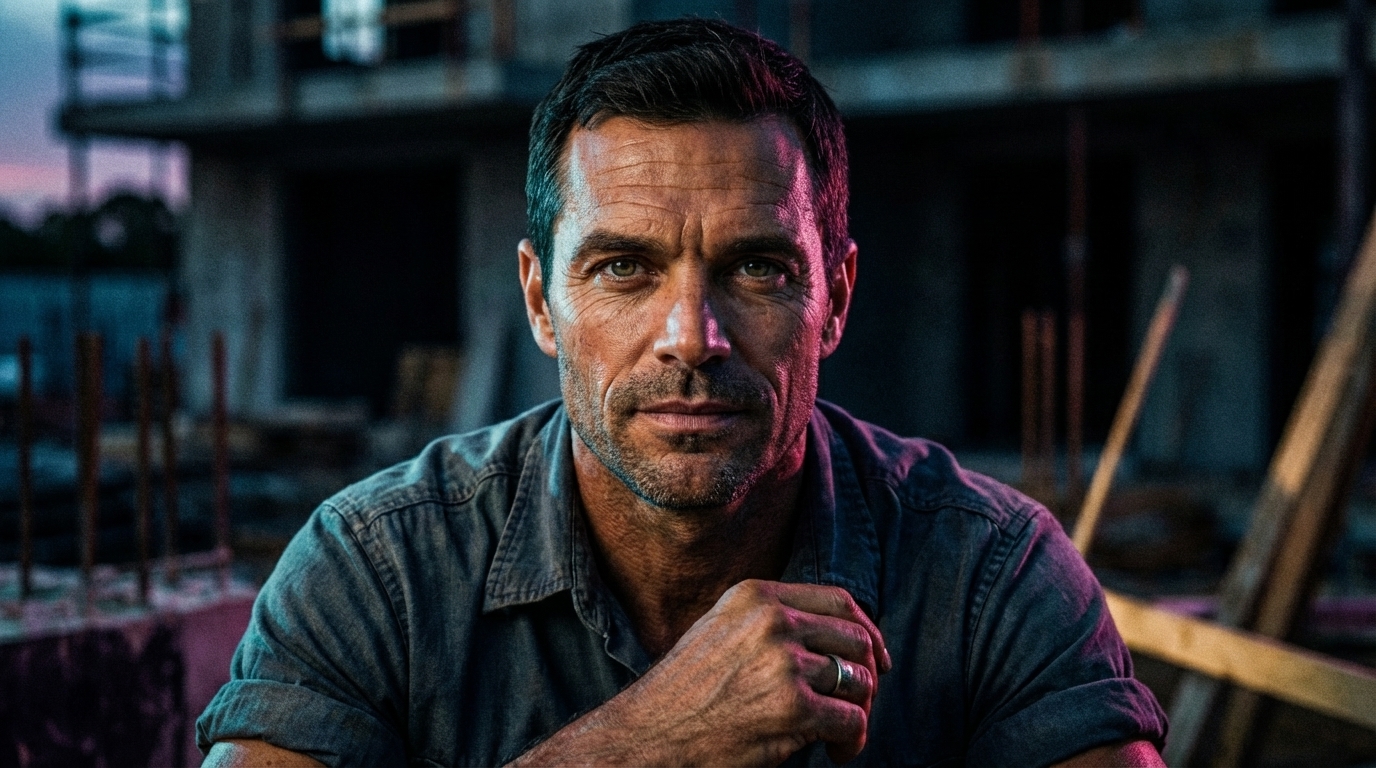
Adrian Louis Pafistis, born 15 October 1975 in Melbourne, is an Australian master builder and project manager whose career spanned sustainable architecture across Victoria and Tasmania. Founder of Pafistis Constructions in Hobart, he built a reputation for precision craftsmanship before his mysterious disappearance in July 2018. Forcibly taken through a Portal into Clivilius, Adrian became an early contributor to the Bixbus settlement's development, briefly serving on the Clivilius Lead Council and later contributing significantly to major residential projects including The Arlington and The Alexus.
Born into Craftsmanship and Calculation
Adrian Louis Pafistis entered the world on 15 October 1975 at St Vincent's Hospital in Melbourne, Victoria, the second of three children born to Konstantinos "Kostas" Pafistis and Helen Margaret Pafistis (née Nicolson). The family resided in a modest post-war brick home on Hope Street, Brunswick East, a suburb characterised by its rich migrant history and working-class resilience. This was a household where Greek traditions met Australian pragmatism, where card games taught probability theory, and where intellectual curiosity was encouraged alongside physical discipline.
Adrian's father, Kostas, had been born in Thessaloniki, Greece, in 1943, emigrating to Australia in 1967 under the assisted migration programme. A former mathematics student who had found his true calling in the calculated risks of professional gambling, Kostas made a steady living as a semi-professional poker player across Melbourne's inner-north clubs. His reputation at venues like the Carlton Metropole Hotel and Moonee Valley RSL was built on analytical precision and controlled silence—a tactical approach that young Adrian would observe and unconsciously emulate throughout his life. Kostas was meticulous in record-keeping, maintained a quiet code of honour amongst fellow players, and treated each game as an exercise in probability, patience, and psychological warfare.
Adrian's mother, Helen Nicolson, was born in Carlton North in 1948, the daughter of a Scottish-Australian tram conductor and a librarian. A graduate of the Melbourne College of Education, Helen taught Year 3 at Princes Hill Primary School for nearly 25 years, where she became known for her warmth, no-nonsense classroom management, and passion for storytelling. Her literary enthusiasms—ranging from Banjo Paterson to Ursula Le Guin—infused the Pafistis household with a quiet intellectualism that balanced Kostas's more unconventional professional pursuits. Where Kostas taught odds and angles, Helen taught empathy and narrative, creating a home environment that valued both analytical rigour and creative expression.
Adrian was raised alongside two siblings who would each chart their own distinctive paths. Sophia Elaine Pafistis, born in 1972, was the eldest—a talented musician who would later pursue music therapy and relocate to Byron Bay in the early 2000s. Throughout their childhood, Sophia played piano and violin, often enlisting Adrian as her reluctant stagehand for impromptu home concerts. Marcus Dean Pafistis, the youngest, born in 1979, would become an IT technician with a reputation for eccentric inventions. Adrian and Marcus shared a bedroom for years, their relationship characterised by the typical tensions of brothers in close quarters, yet maintaining a bond that would endure into adulthood.
The rhythms of childhood in the Pafistis household were structured yet never rigid. Evenings might feature poker simulations at the kitchen table—Kostas patiently explaining odds whilst Helen graded student papers nearby—or spirited debates over dinner about everything from Australian politics to the merits of various science fiction authors. Adrian was encouraged to think critically and question assumptions, developing an early aptitude for mathematics, spatial logic, and pattern recognition. By age eleven, he was outperforming older students in mental arithmetic competitions, displaying a quiet confidence that teachers found both impressive and occasionally challenging.
At age thirteen, Adrian began accompanying Kostas to observe poker tournaments at the Northcote Social Club. Though technically too young to play, he was allowed to watch, sometimes recording patterns in opponents' betting behaviours. By fourteen, he was participating in informal late-night card games—small-stakes, smoke-thick affairs that served as an early education in risk assessment, discipline, and human psychology. These sessions taught him to read microexpressions, to maintain composure under pressure, and to understand that success often came not from brilliant individual moves but from consistent application of sound principles.
Simultaneously, Adrian was drawn to physical discipline. In 1989, he joined Brunswick Gym, encouraged by local coach Joe "Big Joe" Anagnos, who recognised potential in the wiry teenager's coordination and quiet intensity. Adrian began training in amateur boxing, focusing particularly on footwork and endurance. He rarely fought competitively, preferring sparring sessions that tested tactical agility over brute force. Boxing, like poker, offered him structure and inner control—a duality that would later define his leadership style in both the construction industry and, unexpectedly, in Clivilius.
Though never formally religious, Adrian grew up surrounded by the rituals of Greek Orthodoxy through his father's family. Easter gatherings, name day celebrations, and the occasional visit to St George's Greek Orthodox Church in Thornbury added quiet cultural continuity to his upbringing, grounding him in a dual identity that was both proudly Australian and consciously Hellenic. This bicultural foundation would later inform his approach to architecture and community—an understanding that structures must honour both tradition and innovation, belonging and transformation.
By adolescence, Adrian Pafistis had become a distinctive amalgam—thinker and maker, intuitive yet analytical, physically adept but inwardly contemplative. His early life established foundations for a man who could assess risks at a glance, weigh options without sentimentality, and find purpose in both logic and creation. These qualities would eventually define not only his professional trajectory but his unlikely destiny beyond Earth.
Education and the Formation of Expertise
Adrian's formal education began at Princes Hill Primary School in Carlton North, Melbourne, in February 1981. The school—a progressive, community-focused institution—provided an environment that suited his temperament perfectly. From early years, Adrian displayed quiet aptitude for mathematics, pattern recognition, and problem-solving. He had particular fondness for number puzzles, often completing arithmetic exercises far ahead of schedule and spending remaining time drawing geometric shapes in workbook margins. Teachers described him as self-motivated but reticent, content to work alone yet always absorbing classroom dynamics with quiet precision.
In Year 3, he was mentored by Ms Loretta Kaye, a passionate educator who introduced Adrian to logic-based games like Tangrams and Mastermind. These became his playground obsessions, and he would later credit Ms Kaye with sparking his interest in applied thinking and spatial logic—skills that would form the core of his future as a builder and project manager. By Year 5, Adrian was placed in an accelerated mathematics programme run across a consortium of local schools, attending weekly extension sessions at the University of Melbourne's Carlton Learning Centre, where he was introduced to early computing modules and basic architectural drafting.
Despite a relatively solitary social profile, Adrian enjoyed the school's Lego Engineering Club and regularly won merit awards in class-based problem-solving challenges. He left Princes Hill at the end of 1987 with a solid academic foundation and was offered a partial academic scholarship to Melbourne Grammar School, commencing in February 1988.
At Melbourne Grammar School, a prestigious independent institution in South Yarra, Adrian quickly distinguished himself in Mathematics, Physics, and Economics. He particularly excelled in problem-solving competitions, joining the Australian Mathematics Trust Challenge in both 1991 and 1992, earning distinctions in both years. His form tutor, Mr Colin Braithewaite, once described him as "the quietest boy in the room, but the first to see the answer when no one else could." Adrian was equally competent in economics, often debating supply chain ethics and sustainability—topics well ahead of their time in the school's 1990s curriculum.
Though not overtly social, Adrian was respected by peers and teachers alike. He captained his Year 10 Engineering Club project, designing a self-stabilising platform for use on uneven terrain—a prototype inspired by his father's tales of makeshift card tables in remote Greek villages. He also participated in cross-country running and was known to split his afternoons between the school library and his father's card den in Brunswick. Adrian graduated in 1993 with strong final grades, including High Distinction in VCE Mathematics Methods and Physics, and B+ in English.
Rather than pursue a traditional university degree immediately, Adrian chose a more hands-on path, enrolling in a Carpentry Apprenticeship programme at TAFE Victoria, with training based at their Preston campus. His decision was influenced by a desire to work directly with materials and structures, and to gain real-world experience in the construction industry—a route often overlooked by his peers from Melbourne Grammar. Over two years (1993-1995), Adrian completed his Certificate III in Carpentry, mastering key competencies including framing systems, structural joinery, blueprint interpretation, and site safety compliance. He undertook his work placement with Bayside Joinery & Build, a small family-run business in Brighton, where supervisor Frank Mulholland later described him as "the kind of apprentice who asked three times as many questions as anyone else—and remembered all the answers."
During this period, Adrian began documenting construction projects in notebooks, sketching both structural ideas and noting inefficiencies—habits that would become central to his professional methodology. He graduated in late 1995, ready to bridge technical skill with strategic thinking.
In early 1996, Adrian was accepted into the Advanced Diploma in Building and Construction programme at RMIT University in Melbourne's CBD. The course combined high-level project management theory with applied construction knowledge, proving ideal for Adrian's skillset. He specialised in Project Management Methodologies, Sustainable Building Practices, Budgeting and Procurement, and Regulatory Compliance. His final-year project, titled "Passive Thermal Control in Mid-Density Residential Units," used a hybrid approach of solar capture, thermal insulation, and modular airflow. Conducted in partnership with EcoStruct Consulting, it earned commendation from Professor Lina Eastwood, head of Sustainable Architecture, and the Victorian Green Build Alliance. RMIT classmates remembered him as methodical, often reserved but deeply respected, particularly regarding practical applications of complex theories. He graduated in December 1997 with top-tier marks and field recommendations, setting the stage for rapid advancement in Melbourne's building sector.
Building a Career, Building a Life
Adrian Pafistis's professional trajectory reflects consistent upward progression—from hands-on tradesman to respected project manager and, ultimately, to a builder whose name became synonymous with quality, innovation, and sustainable craftsmanship. Known for pragmatic intelligence and quiet professionalism, Adrian built his reputation one project at a time, with a portfolio that stretched from Melbourne's suburbs to Tasmania's coastline—and, eventually, beyond Earth.
Following graduation from RMIT in 1997, Adrian began his formal career at Builders United, a mid-sized construction firm operating primarily across Melbourne's northern suburbs. As a Junior Carpenter, he worked on residential developments in Reservoir, Coburg, and Essendon. His supervisors quickly noted his technical proficiency and eye for structural integrity. Tasks included timber framing, interior fit-outs, and installation of architectural features. He often stayed late to assist foremen with material counts and scheduling—early signs of his interest in project coordination. His quiet reliability and adaptability earned him rapid promotion.
By 1999, Adrian had advanced to Lead Carpenter at Builders United, managing small teams across multi-dwelling townhouse builds and boutique renovations in Eltham and Kew. He was given client-facing responsibilities, liaising with homeowners and architects to ensure finish quality aligned with expectations. Notable achievements included leading precision restoration of a 1920s weatherboard in Fitzroy North, earning praise from heritage officers, and piloting the use of low-VOC materials on a new eco-home in Alphington. Adrian's growing familiarity with high-end clients would later influence the custom-home ethos of his own company.
In 2002, eager to broaden his experience, Adrian accepted a supervisory role at Victoria Constructions, where he oversaw full residential project sites. Responsibilities included managing subcontractors, coordinating material deliveries, handling procurement, and ensuring OH&S compliance and site readiness for inspections. Projects ranged from duplex developments in Glen Iris to mid-density apartments in Footscray. He began drafting internal reports recommending efficiency improvements, several of which were adopted across the company.
From 2004 to 2007, at Elite Constructions, Adrian transitioned into a full Project Manager role, coordinating luxury builds for high-profile clients in Toorak, Brighton, and South Yarra. This period marked a shift from execution to strategic oversight. Highlights included managing a $2.7 million French Provincial-style home for an international client, introducing passive solar design principles to riverfront homes in Warrandyte, and implementing client feedback loops to improve design integration. This role significantly elevated his profile, making him a sought-after figure in the custom home market.
After relocating to Hobart with wife Sharon in early 2007, Adrian joined Horizon Builders during a period of market expansion. As Construction Manager, he applied his Melbourne experience to create homes that harmonised with Tasmania's natural beauty. Key contributions included developing energy-efficient homes on Mount Nelson using reclaimed stone and recycled timber, and spearheading redesign of a boutique guesthouse in Sandy Bay, balancing modern amenities with historic façade preservation. This period refined Adrian's design sensibilities and fuelled his growing interest in sustainability.
In 2010, Adrian founded Pafistis Construction Co., headquartered in Battery Point, Hobart. The company was born from Adrian's vision for an architectural practice that would fuse European aesthetics, sustainable building principles, and Tasmanian environmental sensitivity. With an initial staff of three, including a junior draftsman and site coordinator, the business grew rapidly in reputation and output.
The company's inaugural project was refurbishment of a historic waterfront property in Battery Point, completed in December 2010. The design blended restored sandstone foundations with minimalist Scandinavian interior finishes, earning acclaim for its seamless integration of heritage and modernism. In 2012, completion of Franklin Manor, a luxury multi-unit complex in Sandy Bay featuring rooftop solar installations, rainwater harvesting systems, and energy-efficient ventilation, won the Tasmanian Master Builders Award for Excellence in Residential Construction.
By 2014, Pafistis Construction Co. had expanded significantly, onboarding Nathaniel Grant as Project Manager and Isabelle Longey as Lead Architect, whose eco-conscious design ethos helped solidify the company's identity. In 2016, the launch of Aurora Business Centre in Hobart's CBD marked the company's expansion into small commercial developments, positioning Pafistis Construction Co. as a versatile builder capable of delivering technically complex builds with human-centred design.
In 2017, Adrian and Isabelle introduced the Green Living Initiative, formalising the company's commitment to use of recycled and locally-sourced materials, low-carbon construction techniques, and project-specific sustainability certifications. Adrian's leadership remained hands-on but empowering. He was often seen on-site in steel caps with blueprint folders underarm, maintaining direct relationships with clients and holding weekly design reviews with his senior staff.
Beyond his company work, Adrian dedicated time to nurturing the next generation. From 2015 to 2018, he volunteered with TAFE Tasmania's Young Builders Programme, leading site visits, hands-on training workshops, and career development mentoring for regional students. He became a regular guest speaker during final-year presentations, known for emphasising long-term integrity in both workmanship and professional ethics. From 2016 to 2018, Adrian maintained membership in the Australian Institute of Building, attending annual conferences and contributing a paper in 2017 on "Mid-Scale Passive Thermal Residential Design in Coastal Environments."
In the months leading up to his disappearance, Adrian had begun offering freelance consultancy on boutique restoration projects, including a sandstone wine cellar conversion in Margate and full reworking of a 1910 Federation-style home in Lenah Valley. He was reportedly in negotiations to partner with a local architect on a hybrid timber-steel eco lodge in the Huon Valley—a project left uncompleted after July 2018.
Marriage, Family, and the Architecture of Home
Adrian met Sharon Reynolds during a 1996 trip to the United Kingdom, whilst working temporarily in Penzance, Cornwall. Introduced by a mutual acquaintance at an art gallery event in Newlyn, the couple quickly formed a bond over their shared appreciation for detail, design, and craftsmanship. Sharon, a young British hairdresser from St Ives with her own burgeoning career aspirations, recognised in Adrian a kindred spirit—someone who understood that beauty lay in precision, that quality was never accidental.
Following a year-long long-distance relationship punctuated by transatlantic phone calls and letters, Adrian proposed in September 1997 during a weekend getaway in the Dandenong Ranges. They were married on 15 August 1998 in a scenic ceremony at St Michael's Mount, Cornwall—a romantic outdoor wedding attended by over eighty guests, including Sharon's extended family from Cornwall and Adrian's family who travelled from Australia.
The couple initially lived in Melbourne, where Sharon began building her professional reputation whilst Adrian advanced through the construction industry. In early 2007, they relocated to Hobart, Tasmania, where Adrian had accepted a senior role at Horizon Builders. Sharon saw the move as opportunity to establish herself in a growing, vibrant community, eventually founding her own salon, Serenity Hair and Beauty.
They settled in Battery Point, in a luxurious custom-designed home that Adrian had both designed and built—a personal manifesto of his architectural philosophy. The modern mansion blended contemporary design with classic European elegance, featuring a grand entrance with Renaissance-inspired columns, spacious foyer, expansive living area with soaring ceilings and floor-to-ceiling windows providing breathtaking views. The property included a luxurious heated pool, built-in BBQ for entertaining, and meticulously landscaped gardens with a vegetable garden reflecting Sharon's passion for fresh produce.
Their first daughter, Sarah Louise Pafistis, was born on 17 March 2002 at Royal Hobart Hospital. Sarah inherited artistic sensibilities from both parents, developing early interests in visual arts and physical wellness. Their second daughter, Brooke Isabella Pafistis, followed on 9 November 2006—a spirited child known for her musical talents, particularly piano, and adventurous nature. The family also had a mischievous pet ferret, often mentioned fondly in family anecdotes.
Adrian was a hands-on father, deeply involved in his daughters' lives despite demanding professional commitments. Weekends were filled with family outings—hikes on Mount Wellington, visits to Salamanca Market, beach trips along Tasmania's stunning coastline. He taught Sarah to recognise quality craftsmanship in buildings they passed, helped Brooke with early piano practice, and maintained strong commitment to being present in ways his own father hadn't always managed.
The Battery Point home became a hub for both family life and hospitality, reflecting the Greek tradition of filoxenia—the sacred obligation to welcome others. Adrian and Sharon hosted regular gatherings, blending Sharon's Cornish warmth with Adrian's Greek heritage, creating a uniquely bicultural household where both daughters learned to embrace their complex ancestry.
Community, Character, and Connections
Beyond the worksite and family home, Adrian maintained active community involvement. His mentorship at TAFE Tasmania extended beyond formal teaching—he became a trusted advisor to young builders navigating career decisions, often meeting apprentices for coffee to discuss long-term career strategy. He delivered occasional guest lectures at the University of Tasmania's School of Architecture, speaking on sustainable design principles and the practical realities of translating theoretical concepts into built environments.
Adrian supported heritage building grants in Hobart's older suburbs, believing passionately that preservation of architectural history was as important as innovative new construction. He was regular attendee at local industry events, maintaining professional networks whilst building reputation as someone whose word was reliable, whose estimates were accurate, and whose completed projects consistently exceeded client expectations.
His professional ethos combined traditional Greek values—honour, craftsmanship, commitment to excellence—with modern environmental consciousness and Australian pragmatism. Colleagues and clients alike noted his calm demeanour under pressure, his ability to mediate disputes between subcontractors, and his genuine interest in understanding what clients truly needed rather than simply what they requested. Despite intense work ethic, Adrian maintained reputation for generosity, kindness, and personal integrity that extended well beyond professional obligations.
The Disappearance That Wasn't
On the morning of 30 July 2018, Adrian left his Battery Point home to attend what he believed was a routine consultation with a new client, Luke Smith, regarding a renovation project in Collinsvale. He never returned. Sharon reported him missing later that day, triggering an investigation led by Detectives Karl Jenkins and Sarah Lahey, who uncovered unsettling parallels with another disappearance—Nial Triffett, who had also been in contact with Luke Smith.
Despite months of investigation and media coverage, Adrian's whereabouts remained unknown. No foul play was formally confirmed, though the case remained open, joining a growing list of mysterious disappearances in Tasmania that authorities could never quite explain.
The truth, however, was far stranger than any investigation could have uncovered. Adrian was not lost—he had been taken.
Violent Threshold: The Crossing
On 30 July 2018, Adrian departed his home intending to meet Luke Smith at the Owens' property outside Collinsvale, Tasmania. What he believed was a site consultation for construction work was actually orchestrated Portal extraction, designed by Luke and Gladys to bring Adrian to Clivilius under false pretences.
Adrian's state was one of guarded scepticism. Having consumed cannabis prior to the meeting—a detail that would compound his initial disorientation—his confusion was multiplied by the bizarre and evasive behaviour of Luke and Gladys. Tensions escalated rapidly. After Adrian attempted to leave, Luke pursued him by car, culminating in violent confrontation during which Gladys struck Adrian with her vehicle. Injured, confused, and furious, Adrian was pulled into final confrontation that ended when Luke, in desperate act, activated a Portal on the wall of Myrtle Creek Forest's toilet block and drove Adrian's ute directly through it, transporting both men into Clivilius.
Adrian's arrival was therefore abrupt and involuntary. He appeared within the settlement of Bixbus, still inside his vehicle, disoriented, bruised, and wholly unprepared. His first moments were marked by disbelief and rage. Accounts describe him as combative and stunned, demanding explanations from Luke whilst refusing any cooperation with settlement authorities for several days.
However, in time, Adrian was offered medical attention, privacy, and degree of autonomy in exchange for temporary work contract assisting with the fledgling settlement's urgent infrastructure needs. Despite the trauma of forced transition, Adrian gradually stabilised, setting foundation for his pivotal role in shaping the architectural identity of Bixbus—and ultimately, reuniting with the family who believed him lost.
Adaptation and Architecture in a New World
On 17 August 2018, weeks after Adrian's arrival, Sharon and daughters Sarah and Brooke were brought through the Portal in carefully orchestrated secondary transition event. The reunion was complex—joy tempered by trauma, relief complicated by anger at circumstances of their forced migration. Yet the presence of his family transformed Adrian's relationship with Clivilius from imprisonment to investment. If his family was here, then this place needed to become more than survival camp—it needed to become home.
Recognised for his construction expertise, project delivery record, and composed demeanour under pressure, Adrian was nominated by Paul Smith, Lead Strategic Operations Coordinator, to join the newly-formed Clivilius Lead Council in August 2018. At that time, the Council was still formative, convening regular sessions to shape foundational policies of rapidly expanding Bixbus settlement.
Adrian served as Construction Engineer, though his tenure was brief.
Colleagues noted his pragmatic approach and resistance to political posturing, often favouring field-tested practicality over theoretical design. He played key role in reviewing early proposals for The Arlington and helped draft initial structural compliance benchmarks now used by the Bixbus Urban Development Authority.
On 28 August 2018, at the third sitting of the Clivilius Lead Council, Adrian was appointed founding Chief Construction Coordinator of the Bixbus Founding Architecture Project (BFAP) — a new body created at the Council's recommendation as the execution arm for the construction priorities the CLC had set at its first meeting two weeks earlier. The BFAP would, in time, become the institutional vehicle through which Adrian led the actual building of Bixbus, including the major residential projects of The Arlington and The Alexus. From its founding, Adrian served on both the CLC and at the head of the BFAP — a parallel arrangement that would prove unsustainable within six weeks.
On 20 October 2018, Adrian informed Paul Smith that he would be stepping down from the Council, citing personal preference for hands-on project work rather than bureaucratic governance. His final Council meeting was on 23 October 2018. His departure was handled with mutual respect, and he continued to provide informal advisory support to the Urban Design Committee in months following resignation. His exit from the CLC allowed him to fully commit to major construction projects in Bixbus through the BFAP, where his influence would become even more visible in the built landscape of the region.
Following his council resignation, Adrian focused full-time on building up Bixbus, one of the region's fastest-developing settlements.
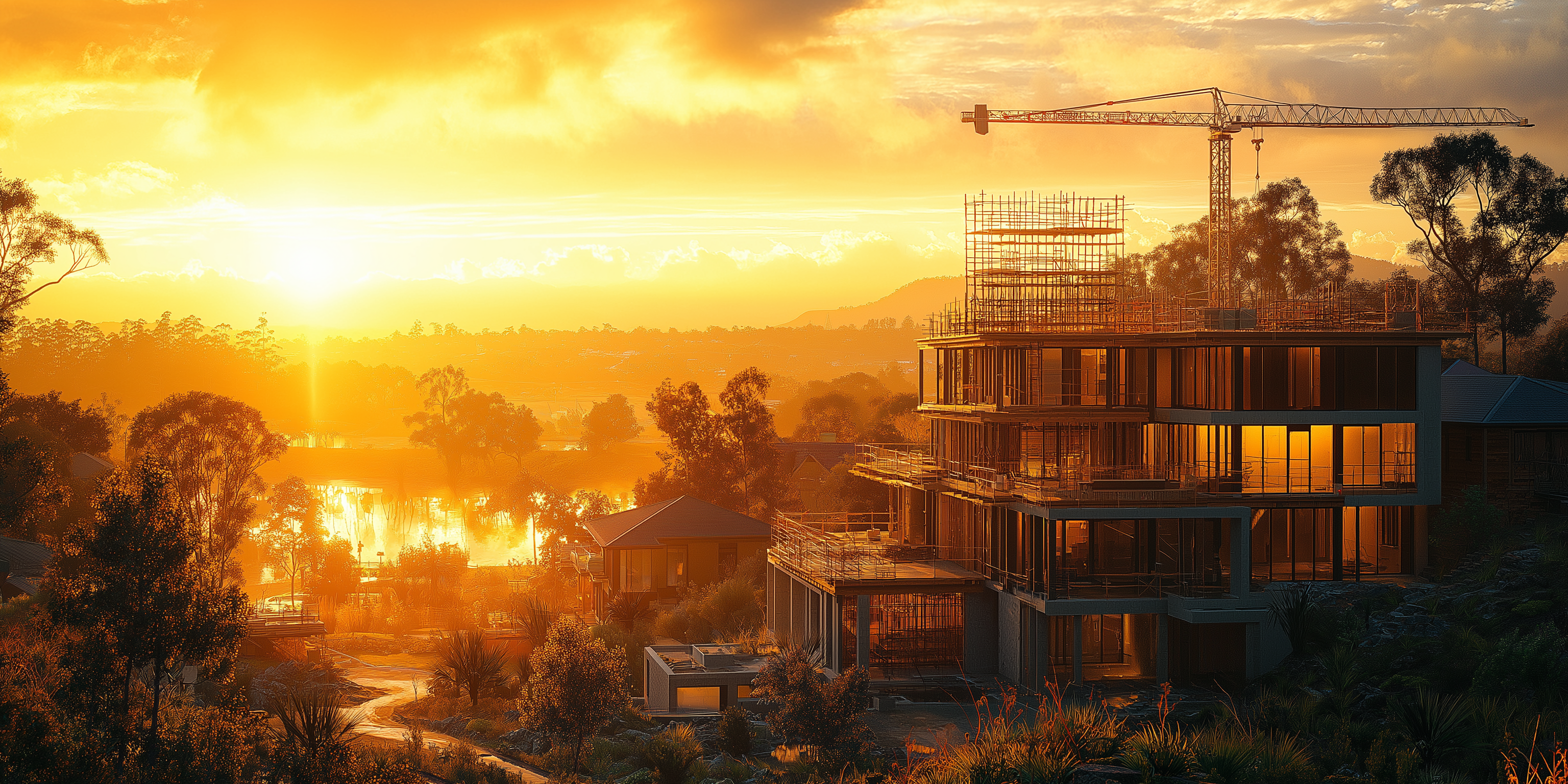
These construction projects marked turning point in Bixbus's transition from survivalist outpost to urbanised living zones. Adrian's reputation as a "Citysmith" grew significantly within infrastructure circles. The man who had built homes across two Australian states was now building entire residential towers across dimensions—applying decades of Earth-based expertise to the challenges of the world of Clivilius, creating structures that would shelter families like his own who found themselves in circumstances beyond comprehension.


